A Country Who Turned Its Artists Into Applicants
Britain has no natural legal right to artistic expression recognised in law. Every public performance, mural, gig, comedy set, and film screening exists only because the state has not yet withdrawn permission. The English people cannot sing without a licence because the state can't help itself.
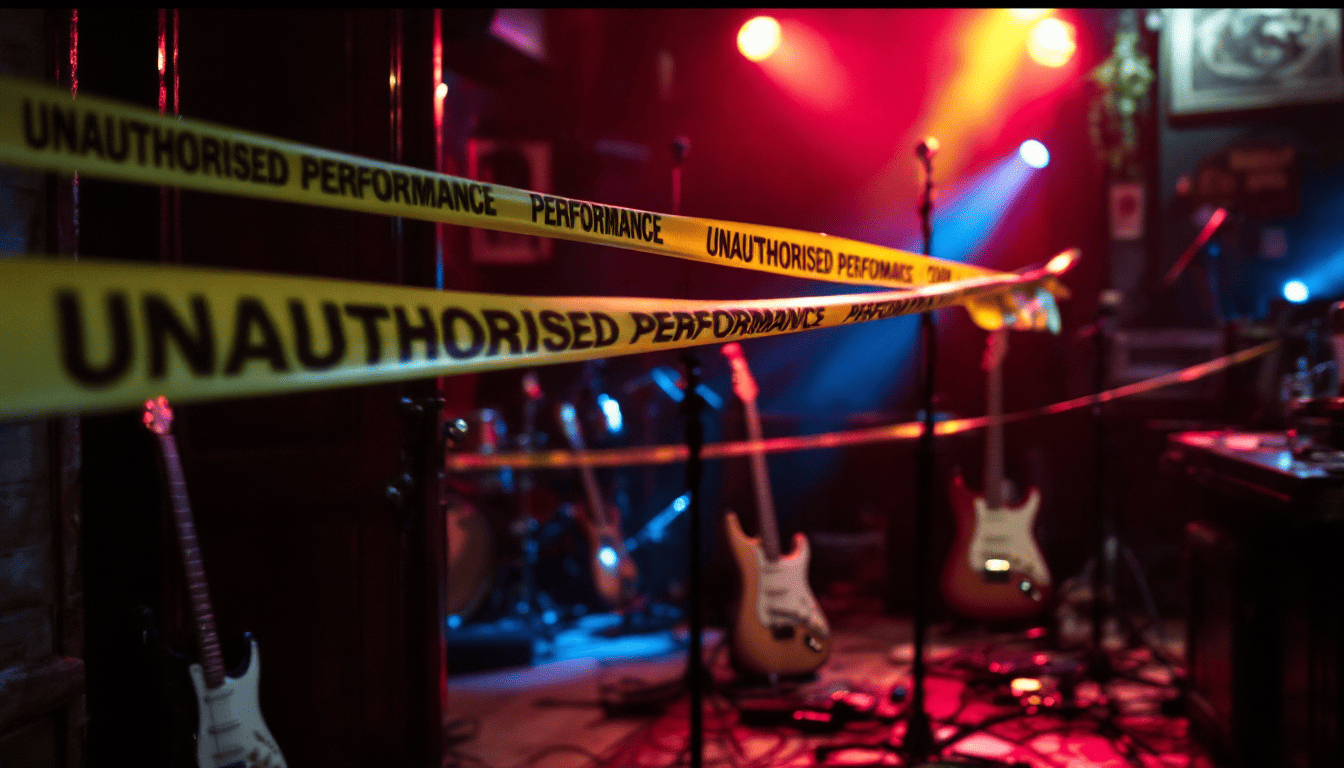
Pick up a guitar. Walk to your nearest high street. Play a song. You have just committed — depending on your local authority, volume, and the mood of the nearest council officer — what may amount to a criminal offence. Not a fine. Not a caution. A criminal offence, prosecutable in a magistrates' court, for the act of playing music where other people can hear it. Most British people would find this absurd. Most British people would also be wrong about what the law actually permits them to do, because busking — the practice woven so deeply into the mythology of British street life it feels ancient, inalienable, and free — is none of these things.
Under Blair's Licensing Act 2003, any amplified performance in a public space is classified as "regulated entertainment" and requires either a premises licence or a Temporary Event Notice. Local authorities across the country operate permit schemes, approved-pitch systems, audition requirements, time-of-day restrictions, volume caps, ticketing regulation, and industry-operated behavioural codes — all enforceable by council officers or police. Breach is not a civil matter. It is a criminal offence. A busker in modern Britain does not exercise a freedom. He participates in a tolerance, revocable at the discretion of a council licensing committee whose members are not required to know, or care, what music is.
And nobody told him.
This is the quiet constitutional scandal at the heart of British cultural life. Not the dramatic suppression of a banned novel or a censored play — but the slow, bureaucratic encirclement of every form of public artistic expression by a state apparatus so vast, so dispersed, and so boringly administrative it has become almost invisible.
The Law Does Not Know What Art Is
British law contains no definition of art. There is no statute, no regulation, no judicial test establishing what constitutes artistic expression. The law does not ask whether you are making art. It asks whether you are making noise, occupying space, obstructing a highway, causing distress, breaching planning consent, or failing to hold the correct licence.
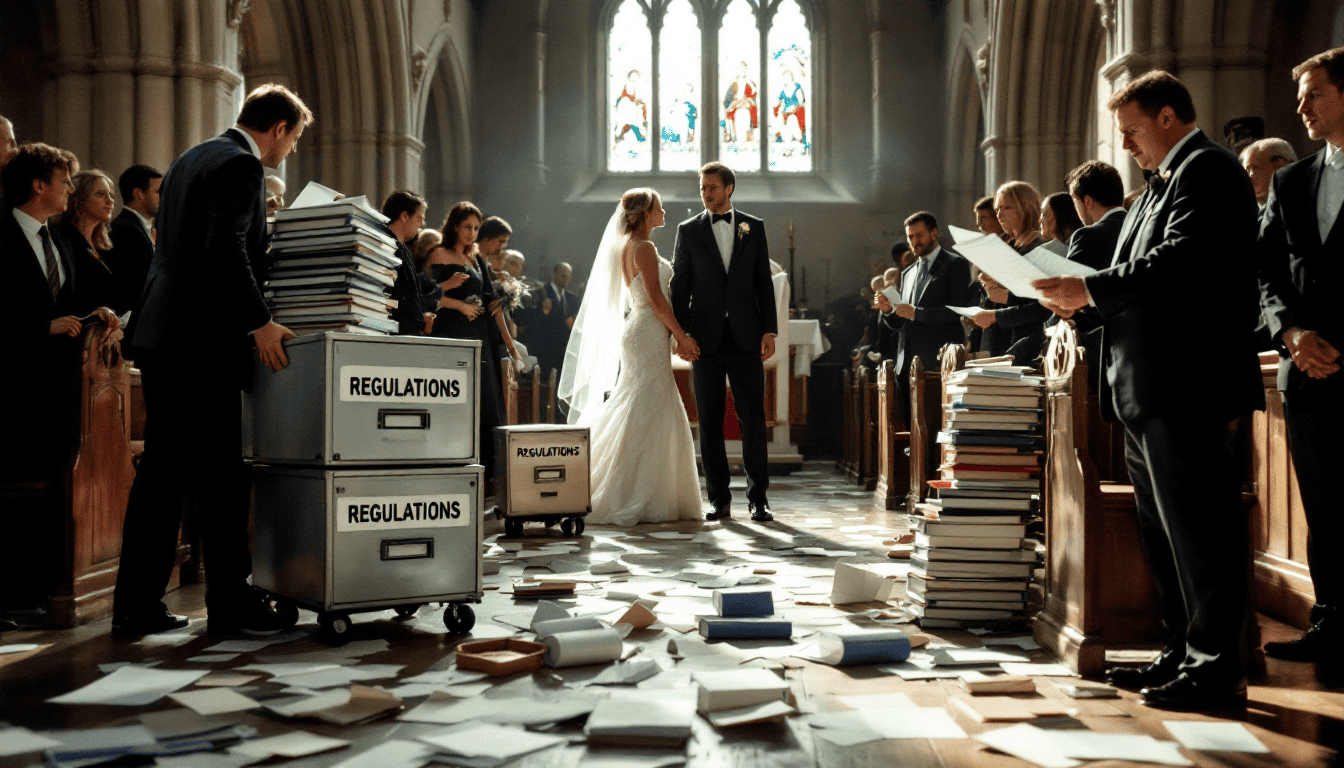
A painter working alone in a studio is free. The moment she carries her canvas into a public park, she enters a web of planning law, property permissions, advertisement regulations, and public order provisions. If she paints a mural on a wall — even with the owner's consent — she may require planning permission under the Town and Country Planning Act 1990 and advertisement consent under the Control of Advertisements Regulations. Without both, the work is unlawful. If she paints without consent, it is criminal damage under the Criminal Damage Act 1971, regardless of its merit, its beauty, or its meaning.
Banksy does not survive because British law protects him. He survives because British authorities choose not to prosecute him. Remove the fame, and his work is vandalism. The legal architecture makes no distinction between a spray-painted masterpiece and a scrawled obscenity. There is no artistic exception. There never has been.
The Licensing Act 2003: A Masterpiece of Administrative Coercion
If you wanted to design a single piece of legislation capable of reaching into every pub, café, community hall, and open-air space in the country and making spontaneous artistic expression functionally illegal, you could hardly improve on the Licensing Act 2003.
Its scope is breathtaking. "Regulated entertainment" under the Act encompasses live music, recorded music, dance, theatre, comedy, spoken word, and — buried in the statutory language — any performance before an audience "for the purpose of entertaining." The Act does not distinguish between a symphony orchestra and a man with a ukulele. Both require authorisation. Both, without it, are committing offences.
The four licensing objectives — prevention of crime and disorder, public safety, prevention of public nuisance, and protection of children from harm — are drafted with such elasticity they can justify virtually any condition a council wishes to impose. A licensing committee may legally regulate maximum sound levels, hours of performance, genres of music, whether amplification is permitted, whether dancing is allowed, and the conduct of performers. These are not guidelines. They are enforceable conditions, breach of which carries criminal penalties.
For a band wanting to play a gig in a pub, the compliance chain runs roughly as follows.
- The venue must hold a premises licence authorising live music performance, with conditions specifying permitted hours, volume thresholds, and capacity.
- If the venue lacks the correct authorisation, the organiser must obtain a Temporary Event Notice — of which a personal licence holder may issue only fifty per year, and a non-holder only five.
- The performance remains subject to noise abatement powers under the Environmental Protection Act 1990, meaning a single complaint can trigger enforcement action regardless of whether the licence conditions have been met.
- Police, as a "responsible authority," may make representations against any event they believe may compromise public order.
And throughout all of this, no official at any level is required to consider — or even acknowledge — the artistic value of what is being performed.
A comedian faces the same licensing requirements, plus an additional layer of legal exposure most performers never consider. Stand-up comedy, which operates almost entirely through offence, exaggeration, taboo, and provocation, sits in permanent tension with the Public Order Act 1986. Sections 4A and 5 of the Act criminalise language or behaviour likely to cause "harassment, alarm, or distress" — terms so capacious they could cover half the Edinburgh Fringe on a good night. There is no comedy defence. There is no satire exemption. There is no "artistic context" clause. Whether a joke crosses from lawful to criminal depends not on the comedian's intention, the audience's consent, or any artistic standard, but on the judgment of the police officer standing at the back of the room.
The Ghost of the Lord Chamberlain Still Walks the Boards
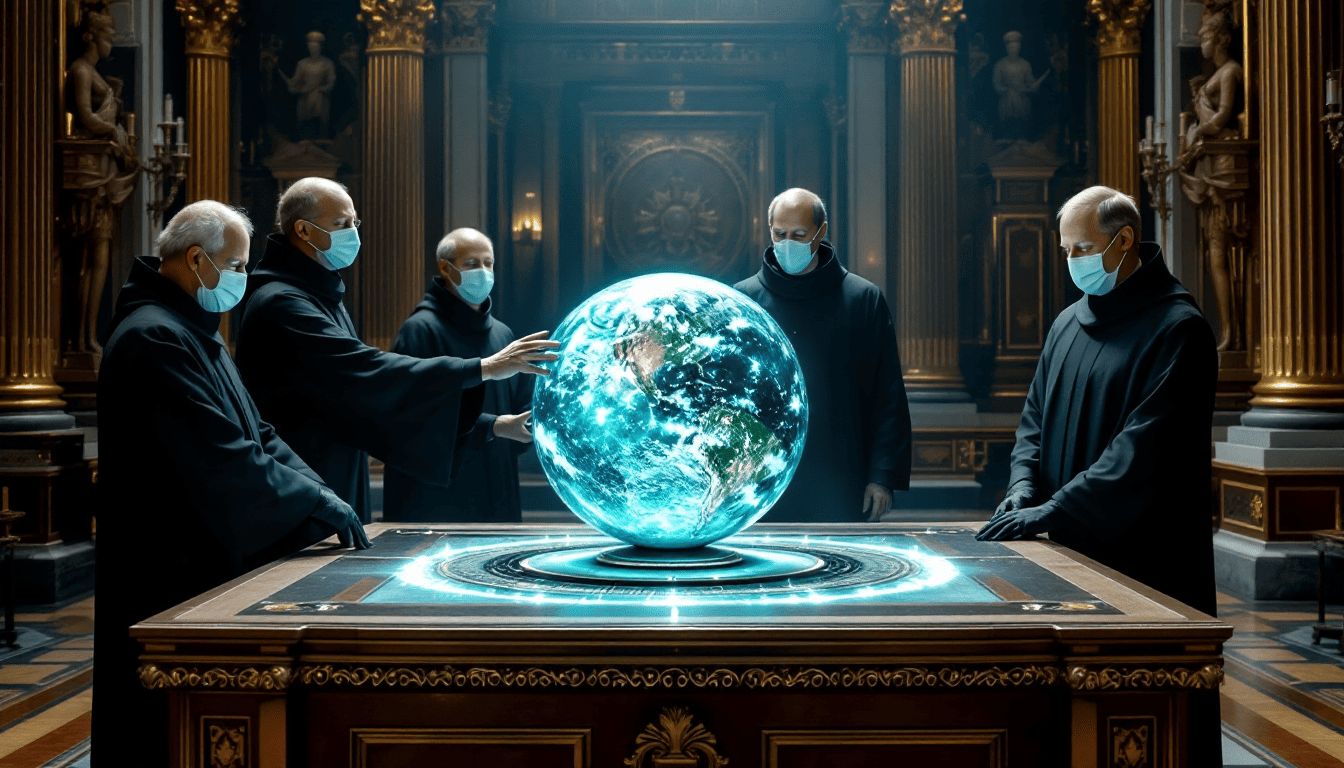
The abolition of the Lord Chamberlain's theatrical censorship in 1968 is frequently cited as the moment Britain liberated its stage. It is a comforting story and it is largely false. What happened in 1968 was not the abolition of censorship but its redistribution. A single, visible censor was replaced by a constellation of dispersed controls — licensing committees, venue insurers, police forces, and public order provisions — which collectively exercise the same restraining function without any single body bearing the name.
- A theatre company wishing to stage a new play must first secure a licensed venue, subject to conditions imposed by the local authority.
- The venue's insurer may impose its own restrictions, particularly on content deemed controversial or likely to attract protest.
- Police retain standing authority to intervene on public order grounds before, during, or after a performance.
- And the licensing authority itself may review conditions at any point, triggered by complaints, police representations, or its own initiative.
The result is a system in which no one is formally the censor, yet censorship is everywhere. Plays dealing with terrorism, state misconduct, religion, or sexual politics have faced venue withdrawals, police "advisory visits," and insurance refusals — none of which register as state censorship because none involve a government minister issuing an order. The Lord Chamberlain had the decency to sign his name. The modern system is faceless.
The Film Board: Prior Restraint With a Polite Smile
Under the Video Recordings Act 1984, the public exhibition of film in Britain requires prior classification. The 1912 British Board of Film Classification (originally the "British Board of Film Censors" working with the "National Council of Public Morals") — despite its name, a private body later related to the Ministry of Information's Films Division — operates this system by delegated convention, but it is local authorities who hold the final legal power. A council may refuse to permit a screening, impose conditions, restrict audiences, or override the BBFC's own classification.
This is, in functional terms, prior restraint: the state (or its local delegate) must approve a work before the public is permitted to see it.
The national censor has historically gone well beyond obscenity. Films have been refused certificates, delayed, or required to make cuts on grounds of political sensitivity, religious offence, sexual content falling well short of obscenity, and perceived social harm. These interventions did not target unlawful material. They targeted material the Board, or the authorities behind it, considered inappropriate. The distinction between "obscene" and "inappropriate" is precisely where administrative censorship thrives — in the grey zone where no clear legal standard applies and discretion is king.
How the State Learned to Steer
Outright prohibition is crude, visible, and politically costly. Modern governments discovered something far more effective: selection pressure.
Arts Council England, the single most powerful "cultural funding body" outside the BBC, operates on the so-called "arm's-length principle" — the government sets the budget, the Council distributes it independently. In practice, governments issue strategic priorities, and funding criteria are shaped accordingly. It's a useless Soviet quango, after all.
In recent decades, these priorities have increasingly framed art not as aesthetic production but as a tool of social policy — community cohesion, regional rebalancing, access agendas, skills pipelines. Artists quickly learn to match their proposals to the prevailing language. Over time, this produces cultural convergence without anyone issuing an instruction. No minister calls. No directive is published. The ecosystem simply tilts.
The current ACE website lists – unbelievably – its 10-year plan is built on four "equality objectives":
We will continue our commitment to achieving a more equitable distribution of our investment to improve cultural and creative opportunities for everyone across England, especially individuals and organisations from under-represented protected characteristics groups
This apparently has something to do with green energy.
The Arts Council’s long-term focus on and investment in environmental responsibility is supporting the cultural sector to lead the change in reducing our carbon footprint and contributing to the Government’s mission around becoming a clean energy superpower.
What any of this has to do with art, is still yet to be determined. Billions of pounds for "national pride", or such.
The absurdity is, as always, is punctured by Yes, Minister:
Tax relief operates similarly. The Treasury administers film, theatre, orchestra, and museum exhibition reliefs — among the most generous creative-sector subsidies in the world. But eligibility frequently requires passing a "British cultural test," administered through the BFI, awarding points for British subject matter, UK settings, and "cultural contribution." The state is explicitly defining what is sufficiently British to deserve public money. This is industrial policy applied to culture, and it is nakedly normative.
Charity law adds a further layer. Major arts institutions operating as charities under the Charities Act 2011 must demonstrate "public benefit," avoid "political" activity, and submit to Charity Commission oversight. Programming choices, exhibition themes, speaker invitations, and partnerships are all potentially subject to scrutiny. The Commission rarely prohibits — it issues guidance, opens compliance cases, pressures trustees. The effect is institutional risk aversion: boards steer away from anything likely to attract regulatory attention. Art is not banned. It is discouraged by the weight of governance surrounding it.
Between funding criteria, tax engineering, and charity regulation, the British state has constructed an architecture of incentive and compliance so comprehensive it barely needs to censor anything. Why suppress a film when you can ensure it is never funded? Why ban a play when you can make the theatre's charitable status contingent on avoiding controversy? Why prosecute a sculptor when you can deny planning consent?
Engineering Culture at Source
Perhaps the most consequential intervention of all operates long before a work of art is conceived. Government controls the conditions under which future artists are trained — through curriculum design, school performance metrics, university funding, and student loan structures.
When arts subjects were removed from certain school league table measures, many schools reduced their provision dramatically. Music, drama, and visual art — expensive to deliver, difficult to quantify, and irrelevant to the metrics by which headteachers are judged — were quietly deprioritised across thousands of institutions. No minister banned painting. But a generation of children lost routine access to it, because the bureaucratic incentive structure pointed elsewhere.
This is supply-side cultural engineering. It does not target expression. It targets the capacity for expression. By the time the regulatory apparatus described above encounters an artist, it encounters one who has already been shaped — or not shaped — by an educational pipeline the state designed.
Spycatcher, D-Notices, and the Security Shadow
The legal principles governing artistic suppression extend beyond licensing and planning into the domain of state security, where the mechanisms are quieter and the stakes are higher.
The Spycatcher affair remains the canonical example. Peter Wright's memoir of MI5 operations was not obscene, not defamatory, and not unlawful in its content. The Thatcher government sought to suppress it anyway, using breach-of-confidence claims and seeking injunctions against newspapers reporting its contents. British courts initially granted those injunctions — upholding prior restraint of a lawful publication. The suppression failed only because the book was published in Australia, making the injunctions unenforceable. But the legal principle was asserted and, for a time, enforced: the state claimed authority to prevent a British citizen from reading a legally unobjectionable book.
The same doctrines — breach of confidence, national security, official secrecy — apply with equal force to documentary film, investigative theatre, memoir, and installation art. Any artistic work drawing on leaked or sensitive material is potentially subject to the same injunctive power.
Alongside formal legal mechanisms sits the Defence and Security Media Advisory Committee — the D-Notice system. Technically voluntary, practically almost universally obeyed, D-Notices request editors and publishers to withhold material the state considers security-sensitive. They carry no force of law. But ignoring one risks prosecution under other statutes, loss of official access, and reputational consequences. The system produces anticipatory compliance — the most efficient form of censorship there is. No courtroom is needed. Only the shadow of one.
From Broadcasting to Every Screen on Earth
For decades, broadcasting regulation was quarantined. Radio and television operated under Ofcom's authority because spectrum was scarce, licences were required, and broadcasters were few. The public accepted content rules — on harm, offence, impartiality — because the medium seemed to warrant special treatment. Ofcom was, of course, another invention of the Blair government.
The disastrous Online Safety Act 2023 represents the moment this logic broke containment.
Ofcom is now tasked with overseeing duties on globally accessible platforms — including those headquartered in other countries — relating to illegal content, child safety, and systemic risk. The Act effectively exports broadcasting-era regulatory assumptions into the open internet, applying them to platforms whose content is produced not by a small number of licensed broadcasters but by billions of individuals worldwide.
This of course, has been universally ignored and mocked by any organisation without a presence in the UK, angered the United States, driven potential businesses away from the UK, forced the market to invest in VPN circumvention, and shut down any small business unable to afford the compliance costs.
Trebles all round.
Their response?
Pensioners in Parliament voting to ban or age-check VPNs.
While having tremendous fun at their expense, the glorious Preston Byrne – friend of The Restorationist and maverick extraordinaire – put all the "hamster bedding" out rather bluntly:
American businesses do not surrender their First Amendment rights because a foreign bureaucrat sends them an email. Under settled principles of US law, American courts will not enforce foreign penal fines or censorship codes.
The philosophical continuity is unmistakable. In the twentieth century, the state controlled the venue. In the twenty-first, it controls the platform. The distributor, not the speaker, is the chokepoint — and always has been. A theatre could be shuttered by revoking its licence. A website can be suppressed by imposing duties on its host. The mechanism has changed. The logic has not.
"Harm" — The Word That Raped Liberty
If the history of British cultural governance could be reduced to a single trend, it would be this: the gradual replacement of specific legal thresholds with the all-purpose concept of harm.
Earlier regulatory regimes at least attempted precision. Obscenity law asked whether a work had a "tendency to deprave and corrupt." Blasphemy law asked whether the sacred was profaned. Sedition law asked whether the state was incited against. These were narrow, testable, and — however imperfectly — justiciable.
Modern governance has abandoned specificity for something far more powerful. "Harm" requires no proof, only a reasonable belief in its possibility. It is predictive rather than retrospective. It is subjective rather than defined. And it is infinitely expandable — psychological distress, community tension, radicalisation risk, public alarm, social division, safety anxiety — each term broad enough to justify intervention, none precise enough to constrain it.
Harm, of course, is different to injury. The latter is objective; the former is subjective.
The migration from punishment of unlawful speech to management of harmful environments is the defining shift in post-war British governance. It transforms the question from "Has a crime been committed?" to "Why take the risk?" — and in doing so, it transfers power from courts to administrators, from judges to licensing officers, from law to policy.
Consider the practical chain. A police officer attends a comedy night and judges a joke to be potentially distressing. He does not need to prove distress occurred. He does not need to identify a victim. He needs only to believe, on reasonable grounds, harm might follow. The comedian's intent, the audience's consent, the artistic tradition, the satirical context — none are legally determinative. "Harm" swallows them all.
The word is a bureaucrat's dream: morally unanswerable, legally unassailable, and infinitely elastic. No politician will vote against preventing harm. No regulator will apologise for excessive caution. And no artist, confronted with the choice between creative risk and administrative compliance, can be certain where the line falls — because the line does not exist. It moves with the weather of institutional anxiety.
A Thousand Small Permissions
Stand back far enough and the pattern resolves into something coherent and deeply troubling.
Private art is mostly free.
- The moment it becomes public, it is permitted.
- The moment it is performed, it is licensed.
- The moment it is organised, it is regulated.
- The moment it enters a charitable institution, it is steered.
- And the moment it becomes disruptive — the one quality every great artistic movement in history has shared — it is restrained.
This is not a conspiracy. It is worse. It is a system — assembled over decades by separate departments, councils, quangos, and regulators, none of whom set out to suppress artistic freedom, all of whom contributed to a regime in which artistic freedom has no constitutional standing and exists only at administrative pleasure.
Britain has never trusted art. It has patronised it, managed it, taxed it, licensed it, and occasionally celebrated it — but it has never afforded it the constitutional dignity of a right.
The United States, for all its faults, embedded artistic expression within the First Amendment's protection of speech. Britain did not. It built, instead, a labyrinth of arm's-length bodies and local licensing committees, each exercising a fragment of authority, none accountable for the whole, and called it tolerance.
Applicants Who Should Be Citizens
The deepest damage is not to any single artwork, performance, or exhibition. It is to the relationship between the citizen and the state.
When every public expression of creativity requires a licence, a permit, a classification, a risk assessment, or the tacit approval of a council officer — the citizen ceases to be a free person exercising a liberty and becomes a supplicant requesting permission. The musician is an applicant. The comedian is a potential offender. The muralist is a planning case. The filmmaker is a classification file. The theatre director is a licensing matter. None is presumed free. All must demonstrate compliance before they are allowed to begin.
This is not the relationship a free society should tolerate between its people and its government. The entire apparatus — the Licensing Act, the Public Order Act, the planning regime, the classification system, the funding criteria, the charity oversight, the security advisory machinery — rests on a single, unspoken assumption: art is an activity to be managed, not a liberty to be exercised.
And because this assumption was never debated, never voted on, and never challenged in any constitutional settlement, it has hardened into structural reality. The British artist does not ask, "May I express myself?" He asks, "Am I licensed, tolerated, insured, quiet enough, inoffensive enough, and interruptible?" If the answer to any of these is no, then what he has is not a freedom. It is a concession.
Every statute cited here can be repealed. Every licensing condition can be revoked. Every arm's-length body can be dissolved. Every D-Notice advisory committee can be abolished. What cannot be so easily undone is the mentality — in Whitehall, in town halls, in police stations, and in the arts institutions themselves — which has come to regard permission as normal and liberty as exceptional.
The question is not whether Britain censors its artists. By any classical definition, it rarely does. The question is whether a country in which no one may sing, paint, perform, screen, sculpt, joke, or dance in public without navigating a web of licences, conditions, risk assessments, and discretionary powers can honestly call itself free.
The answer, if we are honest, is no.
And the remedy is not another commission, another review, another arm's-length body, or another strategy document. The remedy is constitutional. It is the explicit, statutory, enforceable recognition of artistic expression as a fundamental liberty — prior to licensing, superior to administrative convenience, and beyond the reach of any council officer, police constable, or quango functionary who has decided, on behalf of the rest of us, what we are allowed to hear.
Until Britain does this — until it writes into law what every civilised nation should take for granted — its artists will remain applicants, its stages will remain licensed premises, and its streets will remain silent until somebody fills in the correct form.
The guitar case is open. The pavement is there. The song is ready.
All we need is a country brave enough to let it be heard, who are brave enough to endure a single question: would you like hear some music you can dance to without the government being involved in it?