We Are Not Neutral
We Are Not Neutral
Deep Understanding First
The Treasury's groupthink has a clear and traceable lineage which begins during the Blair administration of the late nineties. By 2007 it was formalised as doctrine, and it still dominates bureaucrat thinking today. Why do voters always get more immigration when they vote against it?
An Invisible State
A programme that cannot define its terms, validate its instruments, or name the authors of its definitions has spent two decades reading the inner lives of British citizens through the vocabulary of the hospital ward. Fifty prisoners supplied the science. Children supply the caseload.
A Reimagined Heath System
Nottingham did not lose its way. It ran at a fixed level of danger for thirteen years while every board minute reported improvement. Mid Staffs said the same in 2013, Morecambe Bay before it, Shrewsbury after. The compensation bill is now the only part of the system that tells the truth.
Deep Understanding First
For 3 years the polite position was anyone saying "biolab" was a Kremlin stooge. Then America's own spy chief declassified slides listing the funding, the pathogens, the builders, and the wartime panic. Moscow's wildest claim stays unproven, but the silence indicates questions need answering.
A Taxless 10 Trillion Economy
Britain is not running out of money. It is running out of buyers, time, and the nerve to do anything about either. The Debt Management Office has to find buyers for £749m of government IOUs every single morning. Britain’s national debt is about to pass £3tn for the first time.
We Are Not Neutral
Our first year produced 315 multi-thousand word essays for 3860 subscribers, no matter what storms came. A sincere thank you from the bottom of our hearts to all of our readers and contributors. For sticking with us and standing up for us. Now it's time to go somewhere very different.
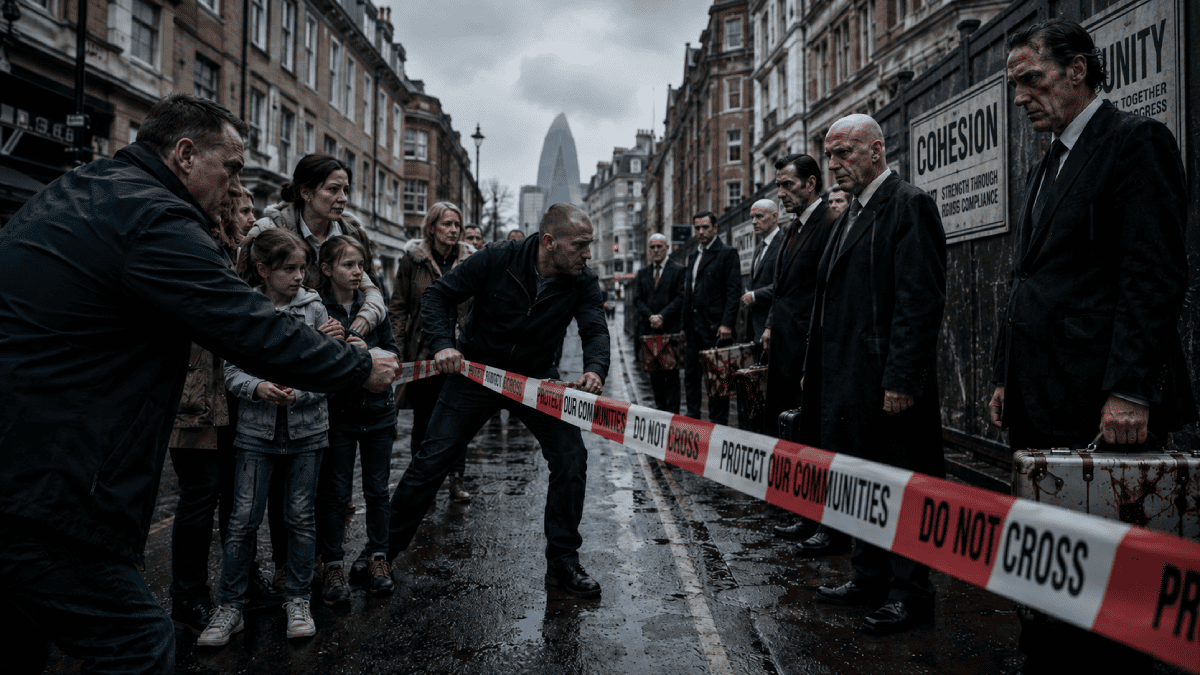
An Englishman's first duty is to God and his conscience, not to government policy. He owes no unity to officials who lie to him, no calm to institutions which betrayed him, and no silence to spare a failed settlement its reckoning. Cohesion is not the highest good. Truth is.
A doctrine is not a wish list of kit. It is what to buy, what to cut, how to organise, and how to kill. Britain has documents and concepts by the shelf-yard and no such rule. Buy the effect, pack it lethal, spread the risk, and put one terrifying force where three squabbling tribes used to be.
The state hands the old a weekly cheque and calls it kindness. It buys just enough to survive alone in a quiet house, then leaves the funeral and the probate to your children. There is a larger answer: owned capital, mutual societies you vest into for years, and an old age among people who know you.
Over 10 years, Britain could establish 100 Hong Kongs as a peripheral global network state, each chokepoint a node in a thin empire for the price of a single day of NHS spending. The Five Keys that lock up the world become a hundred, bringing technology and aid to the undeveloped corners of Earth.
Three discoveries in physics and a few months of NHS spending stand between Britain's place as a second-rate power and a hundred years of global dominance. Whomever solves these problems will control the chokepoints of human development and make both American and Chinese size irrelevant.
Healthcare that compounds wealth for your grandchildren. Competition that ends waiting lists. Coverage that protects everyone absolutely. The Restorationist presents the Universal Health Framework: Singapore's savings discipline with European choice. Britain's third way.
Substances categorised by therapeutic index and addiction risk. Universities maintain an independent peer-reviewed register binding on the government. Apothecaries dispense to citizens 21+ only with severe enforcement. Science replaces politics in drug policy, and Britain breaks free of the US/UN.
Remember, Remember, the Fifth of November; Restoration, Revolution, and Rot; I know of no reason why England should ever be forgot. Today we publish 1000+ pages of primary legislation doctrine in 7 key bills to reverse a century of decline in a single day, and pursue a new future into the unknown.
US/UK Journalism Protected By The First Amendment
An Englishman's first duty is to God and his conscience, not to government policy. He owes no unity to officials who lie to him, no calm to institutions which betrayed him, and no silence to spare a failed settlement its reckoning. Cohesion is not the highest good. Truth is.
If our idiot political class are having trouble “making the most of post-Brexit opportunities,” we can help. Instead of slithering and oozing like social democrat weasels, how about no fishing rights, no union, no alignment, no tariffs, no taxes, and total war until we win or they beg us to stop?
At 5:21pm on a Friday in June, Washington reached across the Atlantic and switched off two of the most capable machines on earth. AI was created in England, but America commercialised it. Britain helped invent the architecture of parallel computing, then sold it. We must own every part of the chain.
If you are otherwise able, but not willing to create new humans which continue Britannic civilisation, what claim do you have to it and the rights it gifts you through petition? The bill for indulgently renouncing participation as a generational terminus is now due. Who will pay your balance?
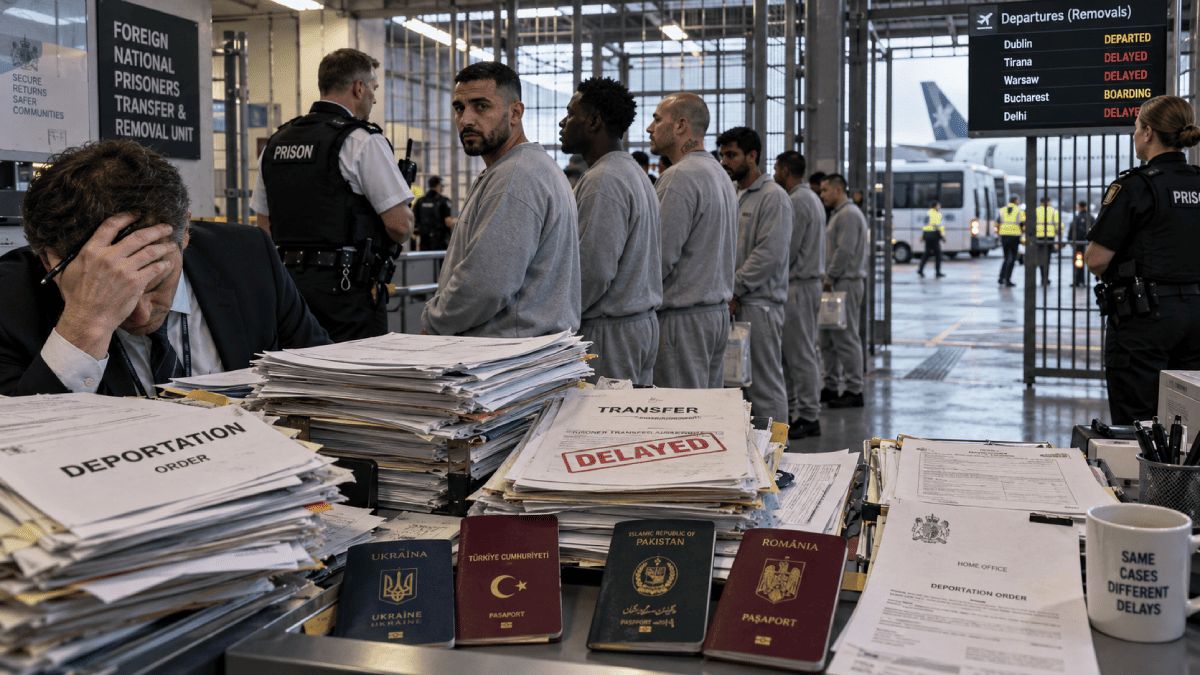
Foreign tyrant Shabana Mahmood, who has publicly declared her intention to develop Britain into a panopticon, is learning a difficult lesson about the Home Office: it doesn't matter what party you come from, the Civil Service always get its way. This time, it's employing pressure from
A doctrine is not a wish list of kit. It is what to buy, what to cut, how to organise, and how to kill. Britain has documents and concepts by the shelf-yard and no such rule. Buy the effect, pack it lethal, spread the risk, and put one terrifying force where three squabbling tribes used to be.
A chimp virus boarded a riverboat in Cameroon, found a colonial capital with reusable syringes, and reached Manhattan bathhouses six decades later. The textbook is thinner than the footnotes suggest, and the footnotes are stranger than the textbook.
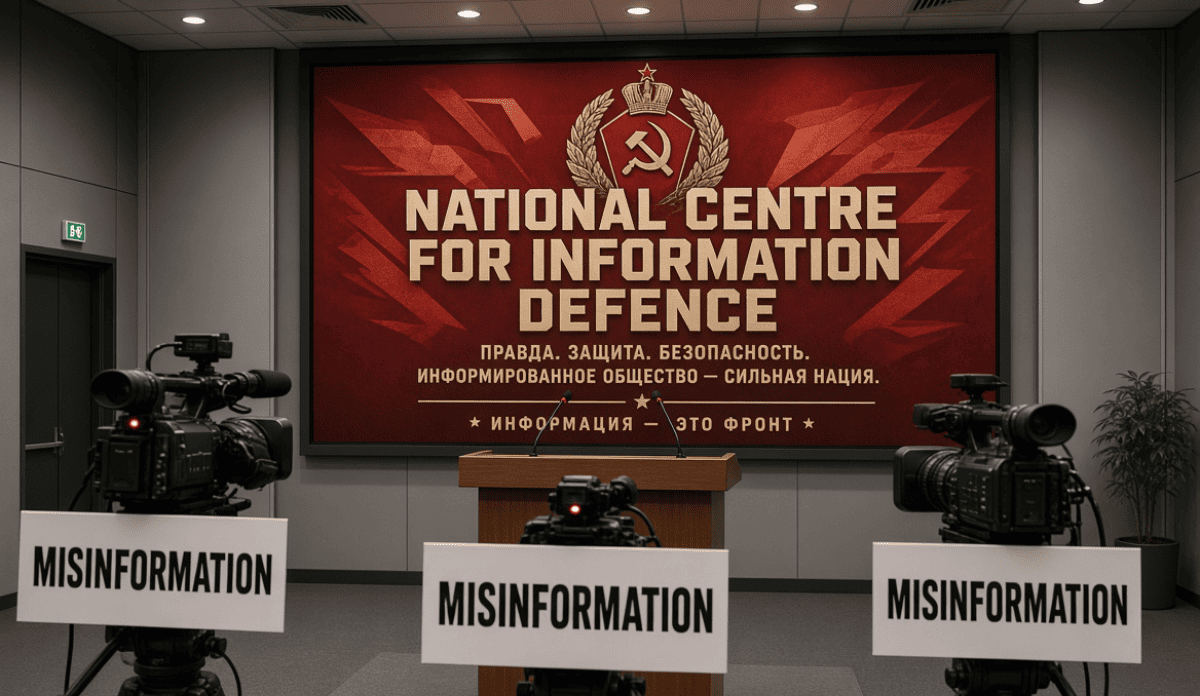
A 22-person Home Office team. £70 million of declared spend in five years. A contractor roster comfortably north of £100 million. PR firms, behavioural science houses, social-media analytics vendors and undercover production agencies. Boybands, hashtags, fake bystanders, and family statements.
The state hands the old a weekly cheque and calls it kindness. It buys just enough to survive alone in a quiet house, then leaves the funeral and the probate to your children. There is a larger answer: owned capital, mutual societies you vest into for years, and an old age among people who know you.
For half a century an entire pharmacological class sat in regulatory exile. Reopening the cabinet has revealed plasticity triggers, addiction interrupters, network destabilisers, and several embarrassing failures. Pharmacy is rediscovering what was confiscated, and the answers are uneven.
PFI was only the prototype. Britain has learned to turn hospitals, bills, children's homes, data platforms and public contracts into private income streams backed by compulsion, regulation and the impossibility of walking away.
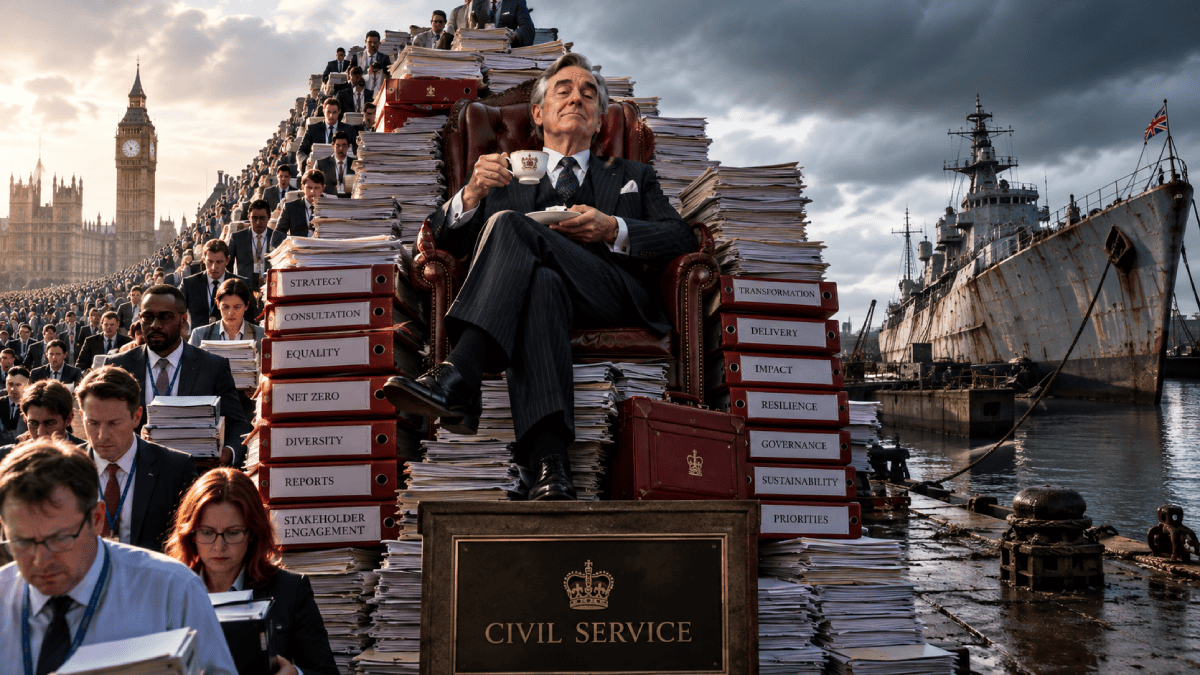
Britain spends over £400bn a year through procurement. When contracts fail, inquiries rage, reforms arrive, and ministers swear it will never happen again. The contractor class survives anyway. Not because it is competent, but because the state has become too hollow to replace it.
The old PFI trapped Britain inside expensive buildings. The new version traps it inside private platforms. A £330m NHS data contract with a US surveillance firm is the test case for whether the state still controls its own operating system.
Councils carry the legal duty and pay £320,000 per placement. Private equity controls the beds and extracts 22% profit. Children are moved through a system shaped not by need but by scarcity, margin, and desperation. This is not a market. It is a distress auction.
Sizewell C costs £38 billion, will not generate power until 2039, and may not repay consumers until 2064. Households began paying for it last November anyway. The charge sits on your electricity bill, buried among network costs and policy levies. Nobody asked permission.
Britain killed PFI in 2018 because the brand was toxic. Seven years later, the same trick is being reassembled under friendlier language. More quangos. More insane spending. The debt hasn't gone. The temptation hasn't gone. Only the acronym changed.
Up to £81bn lost to fraud and error in a single year. DWP accounts qualified by auditors for 37 consecutive years. A buried Cabinet Office dossier reportedly found £28bn reached hostile states, criminals and terrorists. Britain does not have a fraud problem. It is the fraud problem.
Asylum hotels cost £144.98 per person per night because the Home Office could not process claims at £23.25. Contractors took £383 million in profit. The department forgot to collect what its own contracts said it was owed. The total bill hit £15 billion.
In 2011, the Home Office set out to replace Britain's emergency radio system with a cheaper, modern 4G network. Fifteen years, three resets, five billion pounds and one monopoly supplier later, the old radios are still there, the replacement still is not, and the bill is heading for eleven billion.
Britain fills nearly two million potholes a year and the roads are still getting worse. The backlog has hit a record £18.62 billion. The state is not failing to fill holes. It is failing to maintain roads. And the cause is underground. It is all connected.