A Declaration Of Independence
A century ago, the Great War birthed an administrative state which never surrendered its wartime powers. We declare our independence—not from the Crown, but from the technocratic regime which governs without consent, rules without law, and perceives us with contempt.

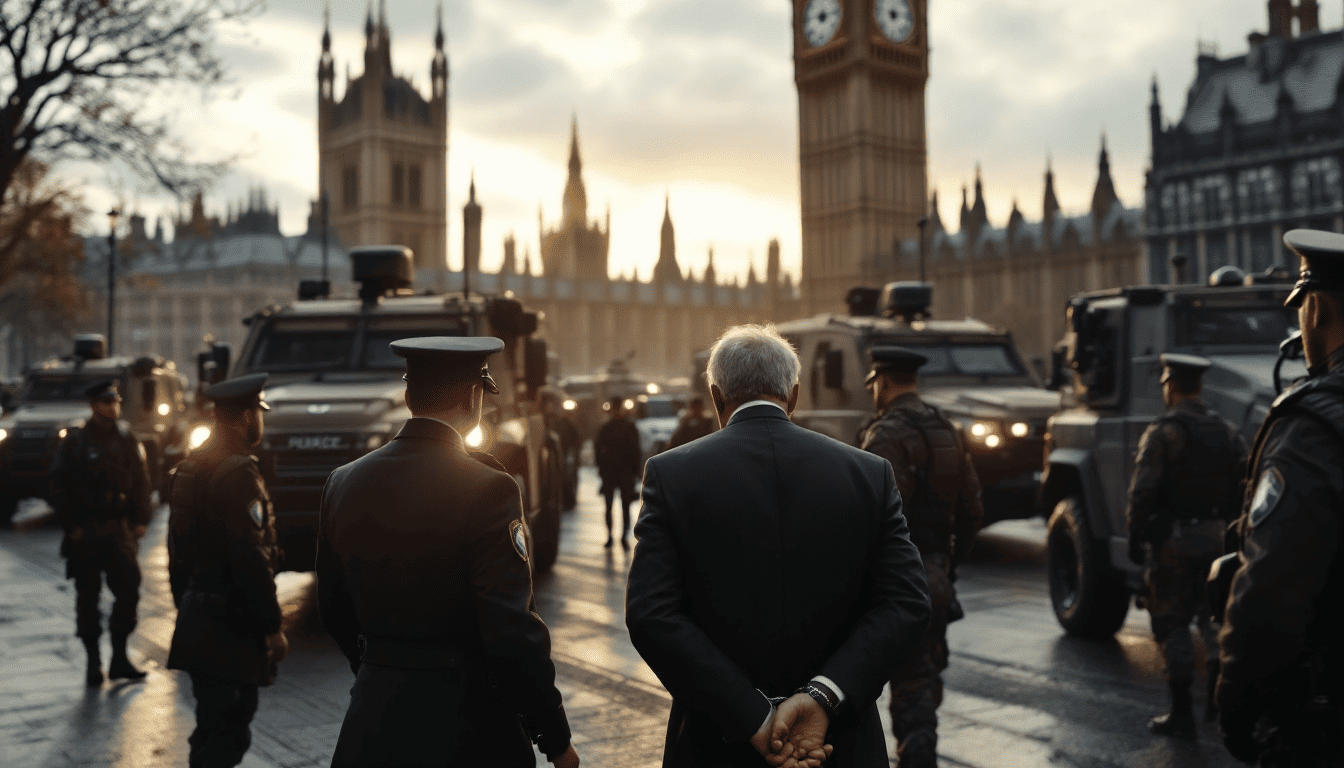
When in the course of a nation's long descent there arrives a moment of recognition—when the customs of submission fall away and the people perceive the true character of their condition—prudence and honour alike demand an accounting. Not insurrection: we are not insurrectionists. Not the overthrow of lawful authority: we remain subjects of the Crown and inheritors of the common law. But an accounting nonetheless, sober and particular, of the injuries sustained, the liberties extinguished, and the constitution subverted by those who swore to uphold it.
We address ourselves to our countrymen as conservatives in the original sense of that abused word: as persons who hold that society is a partnership between the living, the dead, and those yet to be born; that liberty is not a grant from the state but a birthright recognised by it; that law derives its authority not from the will of ministers but from the prescription of ages; and that the constitution of England, though unwritten, is no less binding upon those who govern than the parchment constitutions of newer nations bind theirs. We hold, with Dicey, that the rule of law admits of no arbitrary power, that every man whatever his station is subject to the ordinary law and the ordinary tribunals, and that the principles of the constitution arise from the judicial protection of individual rights. By these doctrines we measure the present regime, and by these doctrines we find it wanting.
There exists no single tyrant against whom we level these charges—no Nero, no Charles Stuart, no revolutionary tribunal. The tyranny we suffer is of a different and more insidious character. It is the tyranny of procedure over law. Of circular over statute. Of the unelected over the elected. Of a permanent administrative class that governs in the interstices of democracy, that## legislative power from Parliament and judicial power from the courts, that rules through guidance and protocol and the quiet threat of compliance, and that has, by degrees so gradual as to escape notice, converted a free people into a managed population. It is not despotism of the sword but despotism of the stamp—the rule of those whose authority derives not from the people but from their position within a machinery of governance that no vote can touch and no election can reform.
Against this regime—this administrative state—we now declare our injuries.
I.
They have made of Parliament a rubber stamp and its members combatants for patronage. Where once the Commons served as the grand inquest of the nation, jealous of its privileges and vigilant against executive encroachment, it now processes what is placed before it. Bills arrive from departments pre-drafted, their thousand clauses unread by those who vote them into law. Ministers present; members divide; Royal Assent follows as formality follows formality. The backbencher who questions is a nuisance; he who rebels, a traitor to his prospects. The payroll vote swells with each administration until the legislature is colonised by the executive it was meant to restrain.
They have buried the common law beneath a mountain of statute. That ancient inheritance—the accretion of centuries, the distillation of ten thousand judgments rendered in the light of precedent and the facts of particular cases—has been supplanted by the endless production of Acts, each broader than the last, each more careless of liberty, each drafted by officials unknown to the public and unaccountable to any electorate. Parliament does not deliberate upon principles; it ratifies text. The law is no longer discovered by judges through the reason of the thing; it is manufactured by departments and stamped by a compliant House.
They have delegated the legislative power to ministers who rule by decree. The statutory instrument—that humble servant of administrative convenience—has become the principal mechanism of governance. Thousands issue forth each year, laying duties upon the subject, conferring powers upon officials, creating offences and prescribing penalties, all without meaningful debate and beyond practical scrutiny. The Executive legislates; Parliament pretends not to notice. We are governed by footnotes to Acts that no citizen has read, in a language no plain man can parse, by a procedure that no vote can interrupt.
They have made of emergency the permanent condition of the state. From the Defence of the Realm to the Civil Contingencies Act, from wartime regulation to pandemic decree, each crisis has deposited new powers in the hands of ministers—powers never surrendered when the crisis passed. Necessity is invoked; precedent is established; the exception becomes the rule. We have been governed by emergency for so long that we have forgotten what it meant to be governed by law. The Public Health Act permitted ministers to close churches, shutter businesses, confine the healthy to their homes, and criminalise the gathering of families—all without a vote of the Commons, all by the stroke of a pen. The powers remain on the books, awaiting the next necessity.
They have centralised authority in bodies beyond the reach of the franchise. Quangos, regulators, arm's-length bodies, inspectorates and commissions—six hundred and more at last count, spending hundreds of billions, employing hundreds of thousands, making decisions that shape the lives of every citizen—operate beyond democratic recall. Their members are appointed, not elected. Their proceedings are opaque. Their power is real; their accountability is theatre. When the people vote, they choose which politicians shall preside over a machinery they cannot control.
They have replaced the rule of law with the rule of guidance. What once required an Act of Parliament now requires only a departmental circular. What once demanded a court order now demands only a compliance notice. The subject's rights have become "entitlements" subject to "eligibility criteria" administered by officials whose discretion is final. Liberty has been reframed as licence—granted, conditioned, and revoked at the pleasure of the state. We are free to do what we are permitted to do; all else is prohibited or, worse, awaits a determination that never comes.
II.
They have surrendered the legislative supremacy of Parliament to foreign courts and supranational bodies. For fifty years, directives flowed from Brussels to be transposed into British law without meaningful consent. The European Court of Justice claimed supremacy; British courts acquiesced. Even now, extracted from that arrangement, we remain bound by the European Convention and subject to the Strasbourg court—a tribunal of foreign judges whose writ runs in British territory and whose judgments British courts are expected to heed. Parliament may legislate; the Convention may override. The sovereignty of the Crown-in-Parliament has become a constitutional fiction.
They have disposed of British territory without the consent of those who inhabit it. The Chagos Islanders were expelled from their homes to accommodate an ally's convenience; their islands have now been signed away to a foreign power without their participation in the decision. The precedent is established: British subjects may be removed from British soil and British soil may be alienated from the Crown when diplomacy finds it expedient.
They have permitted the borders of the realm to dissolve. Daily, boats cross the Channel bearing persons who enter without inspection, remain without permission, and cannot in practice be removed. Those who arrive claim asylum; those whose claims fail remain nonetheless. No law authorises this; no electorate has consented; it simply occurs, month after month, while ministers speak of stopping it and do nothing effectual. The state that once controlled who entered the realm now merely processes whoever arrives.
They have reduced the armed forces of the Crown to a size incompatible with the defence of the realm. The Army could not today retake the Falkland Islands. The Navy cannot patrol the waters it nominally protects. The Royal Air Force struggles to maintain a credible deterrent. Recruitment collapses while resources flow to programmes of political signalling. The first duty of the state—the protection of the realm and its people—has been subordinated to the management of decline.
III.
They have imposed upon the subject the heaviest burden of taxation since the late war, yet the subject sees no improvement in the services he funds. He is taxed upon his income before he receives it. He is taxed upon his expenditure when he spends what remains. He is taxed upon his savings by the inflation that erodes their value. He is taxed upon his death when he would transmit to his children what he accumulated in life. He is taxed upon the energy that heats his home and powers his travel. At every stage of life and every species of transaction, the state extracts—yet the hospitals decay, the roads crumble, and the police do not come when called.
They have taxed by stealth what they dared not tax openly. Fiscal drag—the failure to raise thresholds in line with inflation—has drawn millions into tax brackets never intended for them. What was levied upon the prosperous is now extracted from the ordinary. The tax code runs to thousands of pages; its complexity is itself a form of oppression.
They have created a healthcare monopoly and prohibited alternatives. The National Health Service, that post-war settlement, has become not a provider but a jealous god. To treat patients outside its system is to invite the hostility of the state. To suggest that other arrangements might deliver better outcomes is heresy. The patient waits; the waiting is called virtue. The service rations; the rationing is called fairness. Those who can afford escape purchase it abroad; those who cannot, suffer and are told to be grateful.
They have subjected the use of energy to an ideology that prizes symbolism over security. Coal was abolished without replacement. Nuclear development was obstructed for decades. Domestic extraction was criminalised while imports continued. The grid grows fragile; bills grow ruinous; and the working family is instructed that its suffering serves a planetary cause whose benefits will accrue to persons not yet born in countries that make no reciprocal sacrifice.
IV.
They have surveilled the public in a manner and to a degree without precedent in the history of free peoples. Cameras watch every street. Number plates are logged and journeys recorded. Biometric data is captured and retained. Communications are intercepted under authorities so broad that the ordinary subject cannot know whether he is watched. The ULEZ and its siblings do not merely tax the motorist; they track him. The state knows where its citizens go, with whom they associate, what they purchase, and what they say in what they imagine to be private communications. Privacy has become an anachronism—a relic of the age before the database.
They have policed opinion and criminalised dissent. Speech that offends is now speech that may be prosecuted. The hate crime, that elastic concept, expands to encompass whatever the authorities wish to suppress. Men have been visited by police for posts on social media. Women have been arrested for silent prayer. The offence is not what was done but what was thought, and the proof of the thought is the perception of the offended. We are one step from the prosecution of heresy.
They have disarmed the law-abiding while the criminal remains armed. The firearms Acts, progressively tightened after each atrocity committed by persons who ignored the law, have confiscated from the peaceable subject the means of self-defence while doing nothing to disarm the predator. Possession has been conflated with intent. The farmer, the sportsman, the householder who would defend his family—all are suspects. The gangster retains his weapon.
They have abolished the jury trial for entire classes of offence. That ancient safeguard—the judgement of twelve, the citizen's shield against oppression—has been set aside in the name of efficiency. Summary justice has been expanded. Thresholds have been lowered. The right to be tried by one's peers has become a privilege to be rationed. The courts process; they do not adjudicate.
They have socialised the losses of the reckless while privatising their gains. When the banks failed, the public purse rescued them. When the rescues were complete, the bonuses resumed. The doctrine of moral hazard—that those who take risks should bear their consequences—was suspended for the benefit of institutions deemed too large to fail. The saver was punished by rates held artificially low; the speculator was rewarded by assets inflated beyond reason. The lesson was taught: prudence is for the little people.
V.
They have replaced equality before the law with a hierarchy of protected characteristics. Where once the law recognised no distinction among British subjects—where justice was blind and the courts weighed acts, not identities—there now exists a taxonomy of grievance in which some are more equal than others. Offences are aggravated when committed against certain groups; the same act is punished more lightly when the victim lacks the relevant designation. This is not equality; it is caste by statute.
They have captured the institutions of public life for ideological ends. The civil service, the universities, the professional bodies, the charities, the quangos, and increasingly the private corporations have adopted a catechism of approved belief. Dissent from this catechism is career-ending. The result is a governing class homogeneous in outlook, hostile to the values of the population it purports to serve, and insulated from challenge by its control of hiring, funding, and professional credentialing.
They have taught the young to despise their inheritance. The history of Britain is presented as a chronicle of crime. The heroes of the national story are recast as villains. Empire is not assessed but condemned. The accomplishments of ancestors are measured solely by the degree to which they fall short of contemporary piety. The young are taught guilt for deeds they did not commit and encouraged to repudiate a civilisation whose benefits they enjoy but do not acknowledge. A nation that cannot honour its past will not defend its future.
VI.
But the injury that comprehends all others—the one offence from which all the rest derive—is this: they have severed the partnership between the living, the dead, and those yet to be born.
Burke taught us that society is a contract, but not a contract like any other. It is a partnership in every virtue, in all perfection, in all science and art. It is a partnership between those who are living, those who are dead, and those who are to be born. The state is not a mechanism to be redesigned at will; it is an inheritance to be cherished and transmitted.
This inheritance they have squandered. The liberties secured by Magna Carta they have qualified out of existence. The parliamentary supremacy established by the Glorious Revolution they have delegated away. The common law accumulated across centuries they have buried under statute. The property protected by the law of the land they have taxed and regulated until ownership has become a form of licensed use. The borders of the realm they have opened. The armed forces of the Crown they have diminished. The Church they have marginalised. The family they have redefined. The county, the parish, the guild, the chartered corporation—every intermediate institution that once stood between the individual and the state—they have weakened or abolished.
In place of a nation they have left us an administrative territory. In place of citizens they have made us clients. In place of law they have given us procedure. In place of liberty they have offered us services. In place of government by consent they have established government by management.
This we declare: that the administrative state, by its long train of usurpations, has forfeited any claim to legitimacy; that the constitution it has subverted may lawfully be restored by those who inherit it; that the liberties it has extinguished may lawfully be reclaimed by those from whom they were taken; and that we, the undersigned, pledge ourselves to that restoration by every lawful means, in Parliament and without, in the press and in the streets, in the courts and in the councils of the nation.
We do not seek revolution. We seek recovery. We do not propose to build a new Britain on the ashes of the old. We propose to unearth the old Britain from beneath the rubble that has been heaped upon it. The constitution lives; it has merely been buried. The liberties remain; they have merely been confiscated. The people endure; they have merely been taught to forget.
It is time to remember.