Chagos, Gibraltar, Now Cyprus, Tomorrow The Falklands
Parliament is sovereign. Not courts. Not treaties. International law has been elevated from a tool of statecraft to a governing philosophy, and the results are now visible. Territories are being surrendered. Allies are being alienated. And the vultures have noticed.
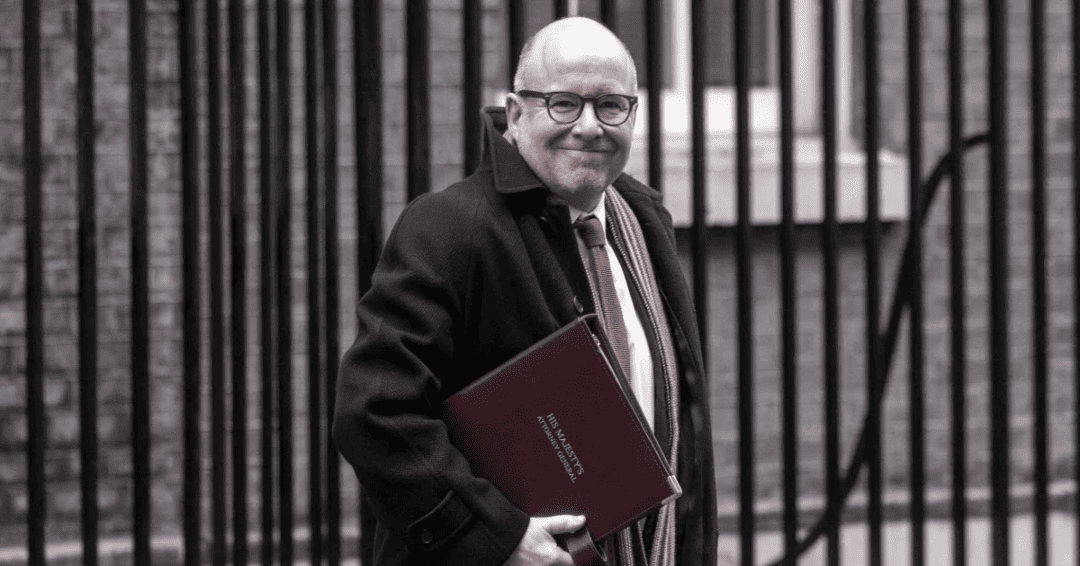
Our current Attorney General, Richard Hermer, did not arrive in government by accident. He was handpicked by Keir Starmer, who knifed his own shadow Attorney General to install him. Starmer knew what he was getting. Everyone did.
Hermer's career before entering government is not a matter of interpretation. It is a matter of record. He represented Gerry Adams against IRA bomb victims. He represented Shamima Begum, the schoolgirl who joined Islamic State and wanted back in. He acted for Abu Zubaydah, a Guantanamo detainee accused by the CIA of being a senior al-Qaeda operative, against the British government — and the government he later joined paid Zubaydah "substantial" compensation. He represented Mustafa al-Hawsawi, described as Osama bin Laden's right-hand man. He argued against the deportation of convicted al-Qaeda operative Abid Naseer. He acted for convicted terrorist Rangzieb Ahmed. He represented Sri Lankan asylum seekers who tried to reach Britain via the Chagos Islands — the very territory he would later help surrender.
Every time, on the same side. Every time, against the British state.
His defenders invoke the cab-rank rule: barristers must take the cases offered to them. His own friend and colleague, Ben Williams KC, demolished the defence in public. Hermer was "an open activist throughout his career," Williams said. The cab rank, he noted, is a polite fiction in chambers full of lawyers who proudly declare they will not represent certain clients.
The idea that one can't extrapolate revealed preferences from a career of acting only for a specific demographic is absurd.
Before the law, there was the politics. As a student at Manchester, Hermer was an activist volunteer for Searchlight magazine, a publication founded by Gerry Gable, a former Communist Party member convicted of burglary in 1964 and later responsible for a BBC Panorama documentary so defamatory the corporation lost the libel case and paid damages. Hermer did not drift away from Searchlight after university. He was recommended for its management committee in 1996, three years after being called to the bar. He attended meetings alongside Nick Lowles, who would go on to found Hope Not Hate. Searchlight itself described Hermer as "an active and dedicated anti-fascist" and noted he remained a patron of Searchlight Research Associates. He omits all of this from his public biographical statements.
None of this is disqualifying in itself. Lawyers take unpleasant cases. Students have radical phases. Searchlight is what it is; Hermer is individually free to associate as he wishes and hold whatever beliefs and views he likes – even if he denies them to others as a matter of routine. The point underneath is Searchlight is a highly partisan organisation which is not even close to neutral or impartial. By very definition, it is composed of radicals.
The pattern matters when the same man is now the most powerful unelected legal officer in the British state and is using the position to impose, across the entire machinery of government, the very worldview his career was built upon.
Parliament Must Seek Hermer's Approval First
The Telegraph obtained and published the guidance Hermer issued to government lawyers upon taking office, alongside the previous version issued by Suella Braverman in 2022. The comparison is instructive.
Braverman's guidance told civil service lawyers it was "rarely the case" a legal risk would prevent policy proceeding, and warned them not to become a "perceived block" by focusing on minor issues. Her instruction was clear: identify mitigations. Help ministers achieve their objectives within the law.
Hermer deleted those lines. He inserted 23 new references to international law. He expanded the document from three pages to five. He added two entirely new sections on international legal obligations. He instructed government lawyers to treat international treaties with the same weight as domestic law. He told them to assume every ministerial decision would be legally challenged. And he inserted what critics have called a "snitch clause" — an instruction requiring civil servants to report ministers to the Attorney General if they propose to proceed against legal advice.
Sir Michael Ellis, a former Conservative Attorney General, described the changes as "empire building" amounting to an "effective veto over all government business." Alex Burghart, shadow Chancellor of the Duchy of Lancaster, called it a "surrender charter."
Cabinet ministers have complained, publicly and privately, of Hermer blocking their decisions with legal objections. He advised Starmer against joining American and Israeli strikes on Iran on the grounds of international law. His guidance explicitly banned the government from using Parliament to override international agreements — the mechanism Rishi Sunak's government used to prevent the ECHR from destroying the Rwanda deportation plan.
Read the last line again. Don't skim.
The Attorney General issued formal guidance prohibiting Parliament from exercising parliamentary sovereignty.
The Iran Test: Whose Side Are We On?
Hermer's Manchester speech did not accidentally emerge from his backside. It was the public expression of a doctrine already applied with catastrophic consequences.
On 28 February 2026, the United States and Israel launched Operation Epic Fury against Iran. Trump had requested permission to use two British bases (Diego Garcia and RAF Fairford) as staging grounds for strikes on Iranian nuclear infrastructure.
Hermer advised Starmer the strikes would violate international law. Starmer, like any good judge in a courtroom, refused the request and ran into the protective bosom of the EU.
Trump reacted with fury. "He ruins relationships," the President said. "This is not Winston Churchill that we're dealing with." He called Britain "very, very uncooperative." He described the relationship as "obviously not what it was." France — yes, that France — was singled out for praise over Britain.
The consequences were immediate: Iran launched retaliatory strikes across the Gulf. A drone hit RAF Akrotiri in Cyprus. Three hundred British personnel were within yards of a missile strike on a base in Bahrain. A hundred thousand British citizens were stranded in the region. And Britain had placed itself on the outside of its own most important alliance.
Starmer eventually reversed course, allowing "limited defensive use" of British bases after Iran's retaliatory strikes endangered British lives. But the damage was done. The initial refusal, driven by Hermer's legal advice, had told the world two things:
- Britain would not stand with America in a crisis, and
- it would not stand with America because its own Attorney General had decided the war was illegal.
Lord Wolfson, the shadow Attorney General, called the position "amoral evasion dressed up as legal principle." He noted the law was "contested rather than settled" and Hermer had chosen the interpretation most hostile to British interests. The Jewish Chronicle observed Britain had:
chosen an interpretation of the law that overlooks not only the national security interests of its allies, but also its own.
Even Chatham House acknowledged Starmer's decision had "hurt the special relationship." They identified the deeper consequence: Gulf states began "questioning the UK's privileged position through the Special Relationship" and what it meant for hosting British forces on their territories. Hermer's legal advice had not merely damaged one alliance. It had begun to erode the entire network of basing arrangements on which British power projection depends.
The law on pre-emptive strikes against Iran was not settled. It was contested. Multiple credible legal opinions held the strikes were defensible under collective self-defence, humanitarian intervention, or the doctrine applied by Britain itself in Syria in 2018. Hermer did not follow the law. He chose a particular interpretation of the law: the interpretation most hostile to American action, most constraining of British freedom of manoeuvre, and most damaging to the alliance. He chose the interpretation consistent with his career, his ideology, and his worldview.
A country has interests before it has moral opinions. The Attorney General's job is to advise on how to pursue those interests within the law. Not to substitute his moral opinions for the country's interests.
When The AG Speaks Like China
It's important to look more deeply at Hermer's ridiculous speech, and not let it pass by. It may well be considered the zenith of this arrogant ideologue's attempts at steering a nation who never elected him.
Not on its own, but in its context. This wasn't a standalone rant about the socialist brotherhood of nations, international law in and of itself, or America as the Great Capitalist Satan. It was in the middle of a war.
British bases in Cyprus had been struck by Iranian drones three weeks earlier. Donald Trump had publicly insulted Starmer as "not Winston Churchill" after the Prime Minister initially refused to let the United States use British bases for strikes on Iran. Trump told the UK press the relationship was "not what it was." France, by contrast, had been "great." The special relationship, the single most important strategic alliance Britain possesses with the most powerful economy and military on Earth, was in visible, public, documented crisis.
And the Attorney General went to Manchester to lecture about human rights and the ECHR.
The speech is remarkable not for what it contains but for what it reveals. In the middle of the most serious rupture in Anglo-American relations since Suez, at a moment when British military bases were under attack and British citizens were stranded across the Middle East, the country's chief legal officer chose to deliver a thinly veiled rebuke to the President of the United States.
He did not name Trump. He did not need to. The target was unmistakable.
He framed the speech as a defence of what he calls "the international rules-based order" against those who believe "might makes right." He invoked Hobbes and Plato's Thrasymachus.
Disregarding the ethical implications for a moment, adopting a ‘might is right’ approach to global affairs might theoretically work fine when we deal with weaker states.
But it either then requires us to accept that we will need to surrender our national interest whenever challenged by a stronger state - or we must choose to ally ourselves so closely with a stronger state that we radically dilute our own sovereignty.
What does this man think Brexit was about?
The Attorney General, a man obsessed with the EU and "international law," is describing the special relationship with the United States as a form of sovereignty dilution. This is not a legal opinion. It is a geopolitical manifesto delivered in the middle of a war. By an unelected official, against the wishes and interests of Britain's most important ally, at the precise moment when the alliance most needed repair.
This idiocy was compounded with absurdly incoherent assertions such as serving the opinion of competitors and adversaries serves oneself:
Thirdly, compliance with international law serves the national interest because it helps guide and inform wise policy decisions. The compass by which any national leader navigates such stormy geopolitical waters such as the present conflict should be a clear-eyed sense of our own national interest. It is here that the international rule of law becomes so important because as leaders, as a nation, we are more likely to navigate these choices effectively, to reach the correct destination, if that compass is calibrated with regard to legal obligations.
No. Statecraft is not a legal compliance office.
Hermer went further. He attacked the Conservative opposition and Reform UK by name, claiming they would have "put planes and artillery into battle on Day 1, only to seek to withdraw them on Day 3." He described criticism of the ECHR as echoing tactics used to "spread myths about the European Union." He praised Starmer's handling of the Iran crisis as "steely." He said he "frankly dreads" what would happen if the opposition were in charge.
Words like this only run out of the mouth of a snake:
International law is, if you like, the operating system of the modern world.
No. Parliament is the operating system of the Britannic world.
This was not a speech about international law. It was a party political address laundered through legal authority. And it was delivered at the worst possible moment for British interests.
Parliament Must Not Think Itself Sovereign
Strip the Manchester speech to its operating principles and you have a complete governing philosophy:
- International law is not a tool of statecraft. It is "the operating system of the modern world."
- National leaders should use it as "a sage guide" — not a constraint to be balanced against other considerations, but a compass calibrating decision-making itself.
- Under pressure, nations should "double down" on their legal commitments — not recalibrate.
- The alternative to this framework is either submission to stronger states or sovereignty-destroying dependence upon them.
The last point is the most revealing. The Attorney General is arguing Britain must choose between his version of international law and subordination to America. He presents this as principled independence, but it is nothing of the kind. It is the substitution of one form of dependence for another: dependence on legal frameworks interpreted by unelected officials like himself, enforced through international courts Britain did not design which Parliament does not answer to, and applied by a doctrine the British electorate has never endorsed.
The speech invokes Churchill as the founder of the Council of Europe. It neglects to mention Churchill would not have asked a lawyer's permission before supporting his primary ally in a war. Churchill understood something Hermer does not: international law is a product of power, not a substitute for it. Britain helped write the rules because Britain had the power to enforce them. A nation shorn of its alliances and unable to project force does not uphold the rules-based order. It becomes subject to it.
Parliament Is Sovereign. Or It Is Not.
The British constitution is clear on one matter above all others: Parliament is sovereign. International law has force in the United Kingdom for one reason and one reason only: because Parliament chooses to give it force. International law is not foundational. It is not an "operating system." It is not a "guide," a "sage," or a "compass." It is a body of agreements to which Parliament has selectively consented, and from which Parliament may selectively withdraw.
Hermer's position inverts this. He treats compliance as foundational rather than contingent. He redefines the role of the Attorney General from legal adviser to policy gatekeeper. And the consequences are not theoretical. They are visible in ruined alliances, surrendered territories, and British bases under drone attack while the Attorney General lectures about the ECHR.
Moreover, Hermer is trying to replace the EU's former position with "international law." He is simply substituting a political fiction (Brussels) for an abstract one.
Once that framework is adopted, something fundamental shifts. Parliament no longer decides the extent to which the state is bound by external obligations. It operates within limits already drawn: drawn by an unelected law officer, interpreted through a doctrine the British public has never been asked to endorse, and enforced through guidance issued to civil servants instructing them to report their own ministers.
This is not the rule of law. It is the rule of lawyers.
Diego Garcia: Delivering The Tory Plan
The Chagos Islands were the first test, and the first surrender of the weaker form of the uniparty. The Conservatives' started it; Labour delivered it.
In October 2024, the Starmer government announced it would transfer sovereignty of the entire Chagos Archipelago to Mauritius. The disgracefuul treaty was signed in May 2025. The cost: £101 million per year for 99 years (approximately £10 billion) to lease back our own property, the island hosting the joint UK-US military base which was the entire reason for retaining the territory.
Britain has controlled the Chagos Archipelago since 1814. In 2019, the International Court of Justice issued a non-binding advisory opinion stating the UK should return the islands to Mauritius. In 2024, the Starmer government treated an advisory opinion as a binding instruction and surrendered, when it should have ignored or rejected it.
Hermer's personal connections to the case run deep. He represented Sri Lankan asylum seekers who attempted to reach Britain via the Chagos Islands and challenged their treatment by British authorities. He then entered government and helped oversee the territory's transfer, which made lawyers in London very wealthy. Robert Jenrick, the shadow justice secretary, questioned whether Hermer recused himself from the Zubaydah compensation decision. The pattern recurs: the man who built the legal case against the state now sits inside the state making its decisions.
What happened after Chagos was predictable. In November 2024, the Maldives staked a surprise claim to the Chagos Islands, challenging the deal. A country with no historical claim to the archipelago saw an opportunity and took it. The former Maldivian president described the handover as "unacceptable." The signal was clear.
And then the EU arrived.
A European Commission report published this month reveals Brussels believes the sovereignty transfer "could further increase the relevance" of its existing fishing agreement with Mauritius: opening the 640,000 square kilometre Marine Protected Area around the Chagos to French and Spanish trawlers. For more than a decade, the Royal Navy has policed these waters, preserving one of the planet's largest ecological refuges for overfished species. Now the Commission is watching Britain's surrender with the calm attentiveness of a buyer at an auction.
The EU already pays Mauritius for fishing licences in its waters. Once sovereignty transfers, the Chagos waters fall within scope. Mauritius has published its own version of the marine protection zone which would open 96% of the existing protected area to fishing.
Policy Exchange has warned Mauritius has "no obligation whatsoever" to maintain the MPA under the treaty and a "dismal" record on marine protection.
So the pattern completes. Britain surrendered strategic territory to satisfy an advisory legal opinion. The Maldives staked a claim. The EU is positioning to strip the fisheries. And the marine environment Britain spent a decade protecting will be dismantled by French and Spanish mega-trawlers hauling nets two kilometres long through waters the Royal Navy once guarded.
Sovereignty, once treated as negotiable, does not stabilise. It cascades. And predators do not need to be invited. They need only to observe the absence of a fence.
Gibraltar: EU Re-Entry Groundwork
Gibraltar was ceded to Britain in 1713 under the Treaty of Utrecht. Its people voted to remain British by 99% in 1967 and 98% in 2002. Spain has never accepted British sovereignty.
In June 2025, the Starmer government announced a political agreement with the EU on Gibraltar's future relationship. The treaty text was published in February 2026. It is presented as a practical solution to avoid "border disruption following Brexit."
Look closer.
Under the agreement, Gibraltar enters a customs union with the European Union. Spanish border officials will conduct Schengen area checks at Gibraltar's airport and port. Spain, governed by socialists, gains the reported ability to veto the entry of British travellers into Gibraltar and to refuse Gibraltar residency permits on security grounds. Gibraltar must match its indirect taxation with EU minimum standards, raising its transaction tax towards EU VAT levels within three years. EU environmental, labour, and state aid regulations will apply.
The treaty contains a sovereignty clause stating it does not affect sovereignty. Spain's official socialist position, published the same day, states it "maintains its claim to sovereignty." The socialist Spanish government described the agreement as "eliminating the border fence" — a phrase chosen with care. The 1909 fence was not an obstruction. It was a symbol of British sovereign control. Its removal is being celebrated in Madrid as a diplomatic achievement.
The socialist UK government says sovereignty is protected. The socialists of Spain say its claim is maintained. Both cannot be correct. What is certain is this: functional authority over Gibraltar's borders, customs, taxation, and entry permissions is being shared with, or delegated to, entities that do not accept British sovereignty. Sovereignty is not always transferred in a single act. Sometimes it is diluted until the question of who actually controls the territory becomes unanswerable.
Cyprus: Military Consequences Arrive
On 1 March 2026, a drone struck RAF Akrotiri on Cyprus: the first direct attack on a British sovereign base area. Within days, the Cypriot president demanded negotiations over the future of the British bases. He described them as a "colonial consequence." He told the EU summit his government had taken legal advice on the 1960 Treaty of Establishment. Hundreds marched in Nicosia under banners reading "Cyprus is not your launchpad" and "British bases out."
The sovereign base areas of Akrotiri and Dhekelia cover 98 square miles — 3% of Cyprus. They were retained by Britain when Cyprus gained independence in 1960 under a treaty signed by Britain, Greece, Turkey, and the Cypriot communities. The UK Ministry of Defence has stated the bases' status is "non-negotiable."
But the cascade has arrived.
The Cypriot government is not inventing a grievance. It is following a logic. If the United Kingdom treats an ICJ advisory opinion on the Chagos Islands as binding and surrenders sovereignty, then any international legal challenge to a British overseas territory becomes a precedent. If Gibraltar's functional sovereignty can be diluted through customs unions, border-sharing, and tax alignment, then the argument for similar arrangements over military bases becomes available. If Britain signals consistently territorial positions are conditional upon international legal approval, then every territory is in play.
And there is a darker irony. The Akrotiri drone strike occurred precisely because of the Iran crisis: the same crisis Hermer's legal advice had prevented Britain from fully supporting its ally in addressing. His doctrine produced the refusal to support America, which produced the Iranian retaliation, which produced the attack on Cyprus, which produced the Cypriot demands for renegotiation. The feedback loop is closed.
Cyprus is not yet a concession. It is where the logic arrives next.
The Vultures Smell Carcass
Diego Garcia established British sovereignty can be relinquished by cowards under international legal pressure, even when the relevant opinions are advisory and non-binding.
Gibraltar demonstrated sovereignty can be diluted without formal transfer by ideologues: through customs unions, shared border controls, and regulatory correspondence with entities which reject the sovereignty in question.
Cyprus is now the site of active political demands for renegotiation, triggered by a military crisis, backed by legal advice on the foundational treaty, and framed explicitly in the language of colonialism and international law.
The Maldives, a country with no capacity for military force, and no historical claim to the Chagos Archipelago, felt confident enough to stake one.
Argentina, which has never accepted British sovereignty over the Falklands, is watching.
So are the governments responsible for overlapping claims in Antarctica.
In nature, scavengers do not create weakness. They detect it.
The question is not why others are circling. It is what signal told them to start.
What Is The Word For Someone Who Always Takes The Other Side?
Hermer did not create the conditions for territorial retreat. Britain's strategic position has been weakening for decades. But he has given the weakness a doctrine, a vocabulary, and a mechanism.
When the Attorney General publicly declares international law to be the "operating system" of state decision-making, he is not merely expressing a view. He is telling every government, every claimant, every opportunist on the planet exactly how Britain will respond when pressure is applied through legal channels.
When he issues guidance prohibiting Parliament from overriding international agreements, he is removing the ultimate democratic backstop: the mechanism by which a sovereign legislature can say, in the final instance: no.
When he inserts reporting requirements ensuring civil servants inform his office if ministers propose to act against legal advice, he is centralising decision-making power in the hands of an unelected official whose entire career was spent acting against the state he now serves.
When he advises against supporting America in a war and then goes to Manchester to rebuke the concept of "might is right" while British bases smoulder, he reveals priorities so inverted they would be farcical if the consequences were not so serious.
When he fast-tracks the prosecution of Lucy Connolly (a childminder jailed for 31 months for a social media post deleted within four hours) while declining to review a rapist's 28-month sentence as unduly lenient, he reveals the priorities of a system in which certain forms of speech are treated as more dangerous than certain forms of violence.
When he calls criticism of two-tier policing "frankly disgusting" and "offensive to our courts," he is not defending the justice system. He is immunising it from scrutiny by declaring the question itself illegitimate.
When he tells Kemi Badenoch she must clarify whether she would also oppose Jewish prayer in Trafalgar Square (a question designed not to illuminate but to insinuate) he is operating not as a legal adviser but as a political combatant deploying identity as a weapon.
When his own friend describes him as "an open activist" and acknowledges fair political criticism of his career, the pretence of neutrality collapses entirely.
This is not a man who changed when he entered government. This is a man whose arguments changed location.
The Tyranny Of Weak Little Men
The territorial cascade is the visible symptom of a deeper condition. That condition is the replacement of political authority with legal process, i.e. the subordination of democratic decision-making to frameworks administered by unelected officials, interpreted through doctrines the electorate has never endorsed, and enforced through institutional mechanisms which bypass Parliament.
It is the same pattern this publication has documented for months. The same substitution. The same displacement. Local competence replaced by centralised process. Elected authority replaced by appointed expertise. Democratic accountability replaced by legal compliance.
And in every case, the same outcome: the people who are supposed to be in charge discover they are not.
Ideology is laundered through legal and administrative machinery until it becomes structural, or embedded so deeply in guidance, frameworks, and statutory duties it no longer requires democratic consent.
Hermer's elevation of international law above parliamentary sovereignty is one instance. The government's repugnant plan to reinstate the Marxism Act's "socio-economic duty" on every public body in England is another. Under this measure, every strategic decision made by schools, hospitals, police forces, and councils must:
have due regard to the desirability of exercising [their functions] in a way that is designed to reduce the inequalities of outcome which result from socio-economic disadvantage.
"Equality of outcome" is communist theory. Not in the abstract or the imagination: it is a core shared derivative of all strands of Marxian thought. It has killed tens of millions. But here we are again, in 2026.
It was originally brought in under the Equality Act 2010 and immediately, rightly scrapped by the incoming government as "ridiculous."
Starmer is resurrecting it. The unelected Cabinet Office is drawing up statutory guidance.
Once embedded, it will not require a vote. It will simply be how every public body in the country is required to think. Marxist doctrine imposed not through manifesto but through compliance framework: the same architecture, the same displacement of democratic authority, the same substitution of ideology for judgment. The Marxism Act's "equations" have already been responsible for the collapse of Birmingham Council.
This is insanity. That is the only word for it. Folly isn't strong enough. But it is the logical continuance of cowardice by men like Hermer and Starmer.
The Telegraph's increasingly-vicious editorials summarise it in scorching fashion of treachery in this species of individual:
Every time Sir Keir takes the international stage, we seem to find ourselves humiliated and taken advantage of by countries with far cannier negotiators than a former human rights lawyer who still believes the world runs on legal fables.
It serves only to underline the one consistent thread in Sir Keir Starmer’s premiership: no matter what issue he finds himself confronted with, no matter the constraints he is operating under, the Prime Minister will find a way to make sure Britain’s interests are undermined.
Parliament, the elected legislature of the United Kingdom, decides when, whether, and how far international obligations apply. No unelected official, however clever, however credentialled, however personally convinced of his own righteousness, has the authority to redraw those boundaries.
A country has interests before it has moral opinions. The Attorney General's job is to help the country pursue its interests within the law: not to redefine the country's interests to fit his morality.
Parliament is sovereign. Or it is not.
If it is, then the Attorney General advises. He does not govern.
If it is not, i.e. if international law truly is the "operating system" and Parliament merely a user, then the question is no longer legal. It is political and constitutional.
The vultures will keep circling until someone gives them a reason to stop. The vultures know why.