Deprogramming the Deprogrammers: The Unfalsifiable Mythology of DEI
DEI doesn't fail because it is badly implemented. It fails because its axioms are circular, its evidence is absent, and its structural logic guarantees the production of the very conditions it claims to prevent. The question is not whether it works. The question is why anyone believes it could.
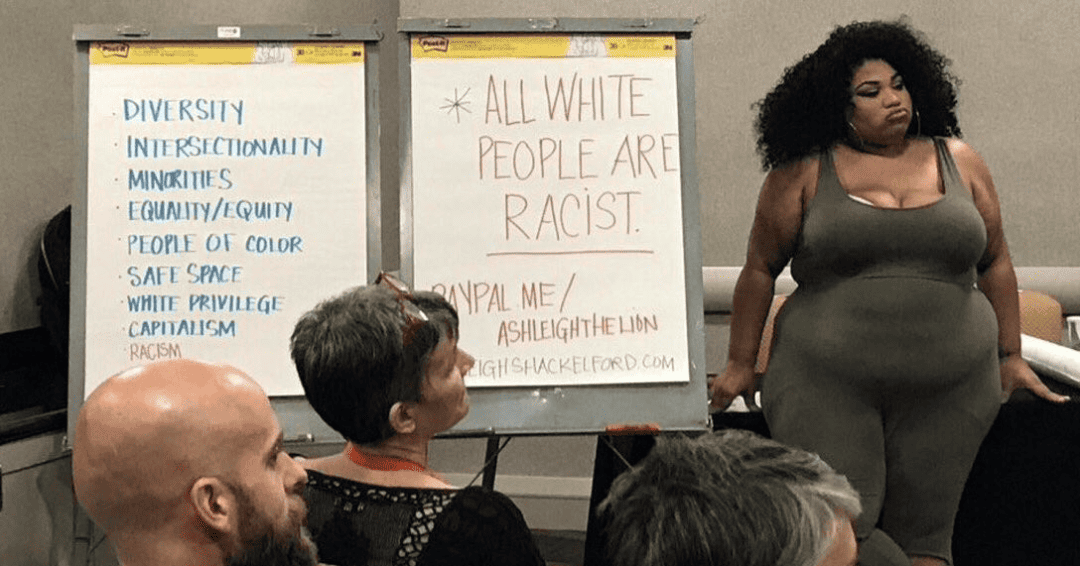
Imagine a pharmaceutical company marketing a drug it has never tested. Not a drug whose trials were inconclusive, or whose side effects proved troublesome, or whose efficacy was marginal — a drug for which no clinical evidence of any kind has ever been produced. Imagine the company's response to scepticism was not to conduct trials but to accuse the sceptic of being diseased. You would call it fraud. You might call it criminal. You would certainly not call it science.
Now imagine this company employed tens of thousands of sales representatives in every major institution in the Western world. Imagine these representatives had been trained exclusively at a small number of university departments whose entire academic output consisted of literature explaining why the drug was necessary. Imagine the representatives had secured the legal authority to compel every employee in every organisation to take the drug annually, and to terminate those who refused. Imagine the company's own measurement criteria for the drug's success were designed so no possible outcome could indicate failure.
You would not be imagining. You would be describing the DEI apparatus as it exists across corporate HR departments, university sociology and psychology faculties, government equalities bodies, and the compliance industry which feeds them — an infrastructure employing, by conservative estimates, hundreds of thousands of professionals across the English-speaking world, none of whom have ever been required to demonstrate their interventions produce the results they promise.
The question is not whether unjust discrimination on the basis of race is wrong. Of course it is. The question is not whether workplaces should treat people decently. Of course they should. The question — the one this entire apparatus has spent thirty years refusing to answer — is breathtakingly simple: does any of this actually work?
And if not, why does anyone believe it will?
Post-War Reprogramming and the Cure Myth
The intellectual ancestry of compulsory diversity training is rarely examined with the seriousness it deserves, which suits its advocates, because the roots are considerably less flattering than the sales pitch.
After 1945, the Western Allies faced an unprecedented problem in occupied Germany: a civilian population marinated in totalitarian ideology for twelve years. The denazification programme was the West's first modern attempt at mass psychological reprogramming — the conviction, held with missionary certainty, one could educate an entire society out of its beliefs through compulsory re-education, public confession, and the systematic prohibition of forbidden language and symbols.
It is treated as a triumph. The reality is considerably less convenient.
Denazification was abandoned in the late 1940s. Partly because it was bureaucratically unworkable. Partly because the Cold War made former Nazis useful. Partly because the programme itself was generating resentment and defiance rather than genuine conversion. West Germany's transformation into a stable democracy owed far more to the economic miracle of the 1950s, to generational turnover, and to the sheer exhaustion of a ruined nation than it did to compulsory seminars on democratic "values." The model on which all subsequent "deprogramming" efforts rest was quietly shelved by its own architects within five years.
But here is the critical point: the method survived its own failure. The formula — compulsory education, linguistic policing, institutional oversight, public confession — migrated from post-war occupation policy into American civil rights enforcement, from civil rights enforcement into university sociology departments, from sociology departments into corporate HR, and from corporate HR into the global DEI industry. At each stage of transmission, the same question went unasked: is the patient actually recovering, or have we simply refined the paperwork?
The people who built this pipeline were not villains. They were sociology professors at schools of education, organisational psychologists building consulting practices, and HR directors searching for defensible compliance frameworks after the liability landscape of employment law expanded in the 1970s and 1980s. The pipeline was built by reasonable people solving institutional problems — and at no point did any of them stop to ask whether the solutions were achieving anything beyond their own perpetuation.
Ask yourself: if denazification didn't work on actual Nazis, why would its diluted corporate descendant work on middle managers in Swindon?
The Civil Rights Paradox: When a Moral Victory Becomes an Unlimited Warrant
The Civil Rights Act of 1964 dismantled legally enforced racial segregation in the United States. It was a moral and legal achievement of the first order, addressing a specific, identifiable, measurable evil: state-enforced racial hierarchy backed by law, custom, and violence.
DEI addresses something entirely different. It addresses diffuse social attitudes, subliminal preferences, and statistical disparities in outcome — and it does so using sketchy "tools" designed for the original, far more concrete problem. This is a philosophical bait-and-switch of extraordinary audacity, and it works because almost nobody is willing to be seen questioning the lineage.
Because legal segregation was wrong, we are asked to accept compulsory "unconscious bias" training is necessary. Because state-enforced racial hierarchy was evil, we are asked to believe statistical disparities between demographic groups can only be explained by hidden prejudice. Because the Voting Rights Act was just, we are asked to agree a multinational corporation's diversity quotas are morally equivalent.
But consider South Africa — a country which dismantled a legally enforced racial hierarchy more recently and more dramatically than the United States. The result was not the post-racial society the reformers envisioned. South Africa;s politicians now claim she has more race-based legislation than she did under Apartheid, catastrophic institutional decay, and levels of communal violence which dwarf anything in the late Apartheid period. It is a demonstration dismantling hierarchies is not a universal formula with guaranteed results. It can succeed or fail depending on circumstances, culture, institutional capacity, and a hundred other variables DEI's universalist ambitions cannot accommodate.
The DEI advocate treats the Civil Rights Act as a precedent establishing the permanent right to engineer social outcomes by institutional fiat. It was no such thing. It was a specific remedy for a specific injustice — and the belief it licenses unlimited social engineering is the same species of error as believing a successful appendectomy proves the surgeon should be allowed to redesign the entire digestive system.
The Three Axioms, and the Structural Reasons They Consume Themselves
DEI rests on three foundational premises. Each of them is presented as self-evident. None of them survive contact with their own implications.
Diversity: The Pluralism Presumption
The claim: demographic pluralism in organisations produces superior cohesion, creativity, and operational effectiveness.
This is an empirical claim. It ought to be testable. So test it.
Robert Putnam — a Harvard political scientist sympathetic to diversity — published a landmark study in 2007 finding increased ethnic diversity in communities was associated with decreased social trust, decreased civic engagement, and increased social isolation. People in diverse communities, Putnam found, "hunker down." They withdraw. The finding was so unwelcome Putnam delayed publication for years while searching for a way to frame it constructively.
This is why realtors refer to black neighbourhoods in coded language, with entire lexicons evolving with terms such as "tertiary area."
This does not prove diversity is destructive. But it obliterates the presumption diversity is automatically constructive. The relationship between demographic composition and social or organisational performance is wildly variable. Denmark and Japan — strikingly homogeneous societies — are among the most successful, safe, and cohesive nations on earth. India and Brazil — extraordinarily diverse — are plagued by precisely the communal tensions diversity was supposed to dissolve.
Ask yourself a question DEI literature never asks: are non-white societies less racist or tribal than white ones? Anyone who has lived in East Asia, the Middle East, South Asia, or sub-Saharan Africa knows the answer. Tribalism is not a Western pathology. It is a human default. It is endogenous. It exists in every society, in every era, on every continent, regardless of the demographic composition of the population. If "diversity" were a solvent for tribalism, the most "diverse" societies on earth would be the least tribal. They are not. They are, frequently, the most tribal of all.
According to DEI logic, Africa is the most "diverse" place on planet earth.
The honest conclusion is there is no reliable general law connecting demographic composition to organisational or social performance. The first axiom of DEI is not a finding. It is a wish.
Equity: The Redistribution Shell Game
Equity does not mean equal treatment. It does not mean equal opportunity. It is the self-evidently Marxist notion of equal outcomes — or, more precisely, demographically proportional outcomes.
Some DEI advocates are candid about this. One widely circulated pro-DEI guide states with remarkable frankness:
DEI does shift power dynamics by removing unearned privilege and dismantling barriers that have historically benefited certain groups at the expense of others. This means that while opportunities may be redistributed, it is to create a fairer and more equitable system.
This is pure sociology jargon garbage: ahistorical, dog-whistle magical thinking.
Strip the euphemism. "Opportunities may be redistributed" means someone who would have received a position does not receive it, and someone who would not have received it does, on the basis of demographic group membership. Whether one considers this just or unjust is a political question. Pretending it is merely "removing barriers" is a confidence trick — and not a very elegant one.
But equity collapses into absurdity the moment you extend the principle beyond its comfortable applications, and asking these questions is the surest way to watch its defenders change the subject.
Is it desirable to have equitable representation of men in nursing? DEI has no interest.
Is it desirable to have equitable representation of white people — 10-12% per cent of the global population — in Indian or Nigerian workplaces? DEI finds the question incomprehensible.
Is it desirable to have equitable crime statistics, such that conviction rates must be demographically proportional regardless of offending rates? DEI would rather you didn't ask.
Should dating applications force demographically proportional profiles on users whose romantic preferences do not conform to equitable distribution? If a Nigerian woman does not find Korean men attractive, what is the moral justification for overriding her preference in the name of equity? Is her taste a form of bigotry requiring correction?
The principle is applied selectively, to favoured groups, in favoured directions. This selectivity reveals it is not a principle at all. It is a preference wearing the language of universalism, and it undresses the moment anyone asks it to be consistent.
And we have not even approached the Pareto distribution — the empirical observation, confirmed across almost every measurable domain of human performance, outcomes are distributed according to a power law, not a bell curve. A small number of people in any field produce a disproportionate share of the output. This is true of scientific citations, athletic performance, musical composition, business revenue, and virtually everything else. Demographic proportionality in outcomes is not merely difficult to achieve. It is mathematically incompatible with the way human performance actually distributes. Equity is not fighting prejudice. It is fighting arithmetic.
Inclusion: The Kindergarten Fallacy
Inclusion is the softest of the three axioms and, for this reason, the most difficult to challenge — which is precisely why it requires the most forceful challenge.
"Inclusion" is a kindergarten concept. It is the language a primary school teacher uses when one child will not let another join a game. Applied to five-year-olds in a playground, it is appropriate and kind. Applied to adult professionals in complex organisations, it is infantilising — and, more importantly, it conceals a logical void.
Inclusion is not an automatic moral good. Including an underqualified surgeon in an operating theatre is malpractice. Including a student who cannot pass examinations in a graduating class is fraud. Including another person in your marriage is adultery. Including poison in food is a criminal offence. The word is morally empty until you specify who is being included, where, on what basis, and at whose expense.
DEI fills this void with the assumption inclusion is intrinsically virtuous — and if you disagree, you are by definition an excluder, which is to say a bigot, which is to say someone who must themselves be excluded.
Ask yourself whether you have ever heard a DEI advocate explain when inclusion is not appropriate, or where the principle should stop. You have not, because the principle has no limiting condition. It is an axiom — unquestionable by design, self-justifying by construction, and defended not by evidence but by the social cost of dissent.
The Unconscious Mind: Theology in a Lab Coat
The single most important theoretical pillar of modern DEI practice is the concept of "unconscious bias." It is also the most intellectually bankrupt.
"Unconscious bias" rests on a specific chain of claims: human beings harbour prejudices of which they are unaware; these prejudices systematically distort their decisions; these prejudices can be identified by standardised testing; and these prejudices can be corrected through training. The primary instrument for identification has been the Implicit Association Test (IAT), developed in 1998 by Anthony Greenwald, Mahzarin Banaji, and Brian Nosek.
The IAT has been substantially abandoned by its own field. A 2019 meta-analysis in the Journal of Personality and Social Psychology found it was a poor predictor of discriminatory behaviour. Its test-retest reliability — the probability of producing the same result on repeated administration — is so low it would be rejected as a diagnostic instrument in any medical, engineering, or legal context. Calvin Lai and colleagues had already found in 2016 the interventions designed to reduce IAT scores showed no lasting effect on behaviour. The instrument on which billions of pounds of corporate training expenditure has been justified does not reliably measure what it claims to measure, does not predict the behaviour it claims to predict, and cannot be shifted by the interventions it was designed to justify.
Every HR department running "unconscious bias" training is administering a programme built on a test its own academic community has walked away from. This is not a disputed frontier of science. It is a product recall the customer never received.
But the problem is deeper than the test. It is the premise itself.
"The unconscious" as a coherent causal agent — an entity inside the mind generating beliefs and behaviours beyond the reach of introspection — has no empirical basis. It is mythology and pseudoscience. This is not a fringe position. It is a straightforward observation Karl Popper made sixty years ago: an explanatory entity which can never be directly observed, whose effects can be attributed to any behaviour whatsoever, and whose absence can never be demonstrated, is not a scientific hypothesis. It is unfalsifiable. It is the secular equivalent of the soul — invisible, unmeasurable, responsible for everything, and conveniently immune to disproof.
Autonomic neurological processing exists. Priming effects exist. Heuristic shortcuts exist. The cognitive science of automatic processing is robust and well-replicated. But there is an ocean of difference between "the brain uses shortcuts" and "a hidden agent inside you harbours racist beliefs you cannot access, which a two-hour corporate seminar delivered by a psychology graduate with a clipboard can reprogramme." The first is neuroscience. The second is faith healing with a lanyard.
And even if "unconscious bias" existed exactly as described — even if every human being carried a hidden reservoir of prejudice detectable by a reliable instrument — an extraordinary further leap would be required to justify the coercive alteration of those biases by an employer or the state. The existence of a preference, even an irrational one, does not generate a right in anyone else to correct it by force. No-one has a right to interfere with lawful private conscience if the resulting actions prejudice no-one else. DEI does not merely claim the authority to identify your hidden thoughts. It claims the authority to change them. The constitutional and philosophical implications of this claim are staggering, and they are almost never discussed — because to discuss them would be to admit the entire project rests on a foundation of compulsion dressed up as enlightenment.
Contact Theory, Smallpox, and the Naïveté of Exposure
A secondary theoretical foundation is Gordon Allport's bizarre "contact hypothesis" (1954): the claim prejudice between groups diminishes when members interact under conditions of equal status, common goals, institutional support, and cooperative interdependence.
The conditions Allport specified are critical, because they are almost never met in DEI practice — and the history of human contact without those conditions is rather less encouraging than a faculty reading list might suggest. European contact with the indigenous Caribbean produced genocide. British contact with the Zulu Kingdom produced war. The partition of India — contact between Hindu and Muslim populations without the institutional scaffolding Allport specified — produced one of the largest mass murders in human history.
"Exposure broadening" — the DEI-adjacent practice of algorithmically presenting people with demographic groups they have not chosen to interact with — rests on a cartoonishly simplified version of contact theory in which mere exposure produces tolerance. Any twelve-year-old with a sibling could explain why this is nonsense. Familiarity breeds contempt at least as often as it breeds affection, and forced familiarity breeds resentment faster than either.
Ask yourself: has anyone in the history of human courtship ever fallen in love because an algorithm decided they ought to be exposed to someone they were not attracted to? Has any friendship in human history begun because an institution mandated the parties spend time together? Compulsory exposure is not a relationship. It is a hostage situation with better catering.
Why DEI Structurally Guarantees Its Own Failure
Here is perhaps the most devastating flaw in the entire DEI apparatus, and it is remarkable how rarely anyone identifies it. It is not a political objection. It is a structural one — a problem of logic so fundamental it would survive even if every other criticism were withdrawn.
Diversity policy, by design, favours a specified demographic group within a given domain. If successful, it increases the representation of the favoured group. If very successful — if the policy achieves exactly what it claims to want — the favoured group becomes the majority.
At this point, the policy stops. It does not reverse. It does not apply the same diversity principle to the now-homogeneous result. It has no correction mechanism. It cannot have one, because the group in question remains "protected" regardless of its proportional representation.
Consider a technology company where diversity initiatives increase the representation of a particular demographic from fifteen per cent to sixty per cent. The company is now less diverse than when the policy began — but the policy will not be applied in reverse. The machine can only turn in one direction. It replaces one form of demographic concentration with another and calls the result diversity.
This is not a slippery-slope argument. It is a description of the mechanism's own logic. A system designed to increase the representation of Group A cannot, by its own rules, subsequently reduce the representation of Group A when Group A becomes dominant. The output of diversity policy is, by structural necessity, a new homogeneity — the precise condition the policy was designed to prevent. It is a machine for manufacturing the disease it was prescribed to cure.
The same structural problem applies to "protected characteristics" themselves. The more finely you carve demographic categories — race, sex, "gender identity," "sexual orientation," disability, "neurodivergence," socioeconomic background, regional origin — the more combinations you produce, until the logical terminus of the process is the individual: a unique combination of traits shared with no-one. At which point the categorical apparatus collapses into the very thing it was supposedly fighting for — treating people as individuals rather than members of groups.
DEI's logical endpoint is the abolition of DEI. It simply lacks the self-awareness to notice.
The Audit Machine: Why the Industry Cannot Stop
If the theoretical foundations are this weak, the structural logic this circular, and the evidence base this thin, why does the apparatus persist? Why do HR departments employ diversity officers? Why do corporations spend billions annually on training programmes built on discredited tests? Why do universities maintain entire departments dedicated to producing literature justifying a practice no-one can demonstrate works?
The answer has nothing to do with justice and everything to do with three mundane institutional incentives.
- First, liability. The corporation does not need its employees to stop being prejudiced. It needs to demonstrate, in the event of a lawsuit, it took "reasonable steps" to prevent discrimination. DEI is not a programme for human improvement. It is a litigation shield. The training modules, the diversity officers, the annual reports — they exist to generate a paper trail proving the organisation tried. Whether the trying achieved anything is, from the corporation's legal department's perspective, beside the point.
- Second, employment. Psychology and sociology departments at Western universities produce tens of thousands of graduates annually whose training consists almost entirely of the theoretical frameworks underpinning DEI. These graduates enter corporate HR departments, design and deliver training programmes based on those frameworks, measure the success of those programmes using metrics derived from the same frameworks, publish internal reports confirming the programmes are necessary, and recommend expansion. They then hire more graduates from the same departments. The pipeline is self-sustaining. The demand for DEI professionals is generated by DEI professionals. The academic departments which train them are funded by the industry which employs them. It is a closed economic ecosystem masquerading as a public good.
- Third, auditability. DEI persists because it generates documents. Training completion certificates, diversity reports, representation statistics, policy manuals, compliance dashboards. It is legible to bureaucracies in a way genuine human decency is not. You cannot audit kindness. You cannot file a quarterly report on whether your employees treat each other with dignity. But you can file a report showing forty-seven per cent of new hires were from underrepresented groups, ninety-two per cent of staff completed "unconscious bias training", and the organisation's Diversity Index Score increased by four points year-on-year.
None of this tells you whether the organisation is a decent place to work. None of it tells you whether people of different backgrounds collaborate effectively, respect one another, or produce better outcomes together. It tells you the treadmill is spinning. It does not tell you whether anyone has gone anywhere.
And this creates the system's most insidious feature: it has no failure condition. If diversity increases, DEI is working. If diversity does not increase, more DEI is needed. If employees report feeling included, the training is effective. If employees report feeling excluded, the training is more necessary than ever.
There is no conceivable outcome which would cause the apparatus to conclude its own premises are wrong. This is not the hallmark of an empirical programme. It is the hallmark of a faith — and faiths, unlike policies, do not accept refutation.
The Confessional Booth in the Open-Plan Office
A brief digression into the frankly absurd, because the absurd sometimes clarifies what sophistication obscures.
Every corporate employee in the Western world has sat through compulsory sexual harassment training. The premise is an adult professional might not know sexual aggression against a colleague is wrong, and a forty-five-minute online module will correct this ignorance.
Is this believable? To anyone? Even for a moment?
Ignorance of the law is no defence to it, because the law presumes everyone knows the law. The person who sexually harasses a colleague is not suffering from an information deficit. They know it is wrong. Many do it precisely because it is wrong — because the exercise of power is the point, not an unfortunate by-product of insufficient education. Evil is not a knowledge problem. A rapist does not rape because nobody explained the rules. A bully does not bully because he missed the seminar.
The function of this training is not educational. It is liturgical. It is the corporate equivalent of confession — a ritual act of purification which changes nothing in the soul but everything on the ledger. The company can now demonstrate it took "all reasonable steps." The certificate was signed. The liability was discharged. Whether anyone's behaviour changed is a question no-one in the compliance department has ever asked, because the answer is irrelevant to the purpose.
The purpose was never to stop harassment. The purpose was to document the attempt. DEI operates on precisely the same principle, at vastly greater scale and cost.
Identity as Recognition, Not Incantation
DEI has also imported, and weaponised, a catastrophic confusion about the nature of identity.
Identity, properly understood, is a matter of recognition — not declaration. Barack Obama did not "identify as" President. He took an oath and held an office recognised by the constitutional order. A surgeon does not "identify as" a surgeon. She passed examinations, completed residency, and received credentials from a licensing body. Elon Musk does not "identify as" a billionaire. His wealth is independently verifiable. Identity is conferred by external validation — by institutions, communities, and the observable facts of qualification and conduct.
The contemporary formula "I identify as..." inverts this entirely. It locates identity in subjective self-perception and demands external recognition follow. But self-perception without external verification is not identity. It is imagination. If you arrive at a Chinese embassy as a Haitian national claiming to be natively Han Chinese, you will be refused, because the state does not recognise subjective self-identification as evidence of anything. This is not cruelty. It is the basic epistemological requirement of institutional function.
"Representation" in DEI terms does not mean the presence of qualified individuals who belong to a particular demographic group. It means the demographic tribe itself must be made visible, proportional, and affirmed — regardless of qualification, relevance, or preference. The engineer who happens to be a woman is not, in DEI's framework, an engineer who happens to be a woman. She is a Woman In Engineering — a category, a statistic, a data point in a representation report.
Every brilliant, talented professional you have probably worked with from every conceivable background would be mortified by the indignity of being reduced to a demographic token in someone else's compliance spreadsheet. DEI does not liberate people from being judged by their demographic characteristics. It makes demographic characteristics the primary perspective through which every professional is permanently viewed, catalogued, and counted. It is the very thing it claims to oppose — and it cannot see this, because, like postmodernism, it has never once turned its own analytical tools on itself.
Hierarchy, Competence, and the Primate Problem
One further structural impossibility deserves attention, because it reaches beyond policy into the deep architecture of human social behaviour.
Human beings are coalition-forming primates. We generate hierarchies spontaneously, instinctively, and with extraordinary speed. Every organisation, every movement, every informal social group produces leaders and followers, insiders and outsiders, status distinctions and pecking orders.
This is not a Western phenomenon. It is not a capitalist phenomenon. It is not a patriarchal phenomenon. It is a biological constant observed in every human society ever recorded and in every primate species ever studied.
DEI's implicit promise is this tendency can be engineered away — and not merely constrained or moderated but fundamentally restructured through training, policy, and institutional design. Status differentiation, the evidence suggests, re-emerges faster than any institution can suppress it. Every movement which begins by opposing hierarchy generates its own leadership structures. Every movement which begins by opposing exclusion generates its own in-groups.
Thomas Sowell called the pattern a racket: the professional anti-discrimination industry generates the demand for its own services. But the problem is more fundamental than rent-seeking. It is the simple fact human social organisation does not work the way DEI's theoretical models require it to work. The premises assume a blank-slate malleability of human nature — the conviction, borrowed from the losing side of the nature-nurture debate in the 1990s science wars, behaviour is overwhelmingly determined by social conditioning and therefore infinitely re-engineerable.
The science settled this. It settled it comprehensively, and not in the direction the sociology departments wanted. Human beings are not blank slates. Coalition-forming behaviour is not a product of insufficient training. Tribalism is not a software bug to be patched. It is the operating system.
This does not mean hierarchies should be abusive, or frozen into caste, or detached from competence. The legitimate concern — the serious concern — is whether hierarchies remain permeable, accountable, and tied to demonstrated ability rather than inherited status. This is a question of genuine moral and political weight. It deserves serious engagement.
What it does not deserve is the bureaucratic equivalent of homeopathy administered by a compliance department staffed with people whose entire professional existence depends on the medicine never being tested.
The Treadmill Stops Here
DEI is not a failed policy. A failed policy is one which was tested, measured, found wanting, and reformed or abandoned. DEI has never been tested. Its premises have never been validated. Its outcomes have never been measured against a control. Its theoretical foundations — unconscious bias, contact theory, the causal relationship between demographic composition and performance — range from the unproven to the actively disowned by the researchers who developed them. Its structural logic guarantees the production of new homogeneity in place of old. Its categorical apparatus collapses into individualism — the very thing it was designed to supersede. Its self-reinforcing institutional incentives ensure it can never conclude its own premises are wrong.
It is, in the most precise philosophical sense, unfalsifiable. No evidence can confirm it, because it does not specify what confirmation would look like. No evidence can refute it, because every failure is attributed to insufficient implementation rather than flawed premises. It is a closed epistemic loop — a doctrine generating its own justification, employing its own priests, defining its own heresies, and excommunicating its own dissenters.
Good doctrine bears good fruit. Healthy ideas withstand scrutiny without institutional protection. Sound policy survives contact with evidence. If DEI's premises are true, they should welcome the hardest questions anyone can ask, because the truth defends itself.
So ask.
- Ask the HR director to show you the study proving "unconscious bias" training changes behaviour.
- Ask the "diversity consultant" to name the falsification condition — the result which would demonstrate the programme is not working.
- Ask the sociology professor to explain why the most "diverse" societies on earth are not the most harmonious.
- Ask the "equalities officer" why "diversity" policy is never applied in reverse when it produces a new demographic majority.
- Ask the compliance department whether the purpose of the training is to change people or to generate a paper trail.
- Ask anyone, anywhere in the apparatus, one simple question: how would you know if you were wrong?
Watch the silence. Listen to it carefully.
It is the sound of a doctrine which has never been asked to defend itself — and which has spent thirty years ensuring nobody is permitted to ask.
The treadmill has been running for a generation. It is time — long past time — to step off and look at the odometer. It reads zero. It has always read zero. And the people selling the treadmill have always known.