Dividing The Church Is Worth It For The Fashion Points
The Church of England has disastrously followed the Church of Wales' footsteps in open rebellion against the Word of God. Female leadership and human "progress" are a terminal harbinger of divine abandonment, which should alarm us all. Being the "first" into hell and ruin is not an achievement.

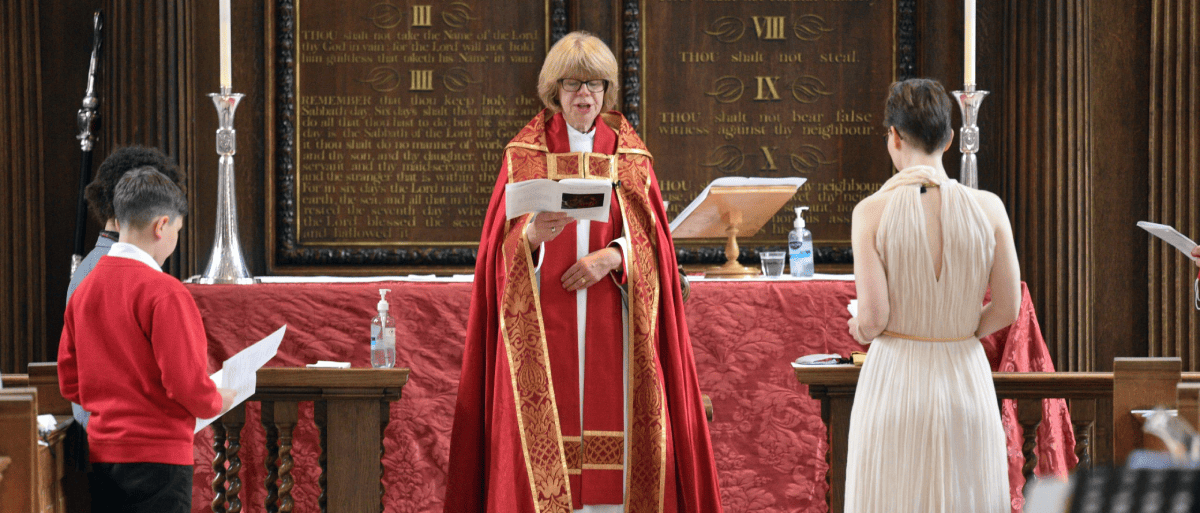
She wears the habit of a public servant and the robes of empire, but make no mistake: Dame Sarah Mullally has spent a career trading doctrinal steadiness for managerial consensus — and the Church of England is the poorer, and the perplexed, for it.
The Church of England has adopted its first female Archbishop of Canterbury. At fashionable atheist Green Party dinners, this is cynically referred to as social "progress." In biblical terms, it is nothing less than absolute scriptural disaster, and a dire warning of the country's moral situation.
This horrendous curse and the distress it signifies is brutally outlined in Isaiah 3:12, as an oracle of judgment. God is about to remove the capable and gifted people from Judah, including the ruling classes of Jerusalem (Isa. 3:1–4). This is exactly what happened in the early sixth century when the Babylonians invaded Judah and began deporting their best and brightest. Anarchy and extortion would follow from those who remained.
In this verse, Isaiah acknowledges with sadness the people of Israel are his people and cries out about the condition they have fallen into because of their sinfulness. The inversion of the divine order is not in itself sin, it is a punishment for sin.
Youths oppress my people, women rule over them. My people, your guides lead you astray; they turn you from the path.
Mullally is a career nurse who climbed the Whitehall ladder to become Chief Nursing Officer and then slipped into episcopal life, Her bureaucrat CV dazzles: NHS leadership, a fast track through the hierarchy, House of Lords seat and, most recently, the shiny new title of Archbishop of Canterbury. The headlines present a historic first — the first woman to hold the job —and that will be the shell journalists trot out. Inside that shell, however, sit a record of choices and pronouncements that warrant hard questions, not hosannas.
On sexuality, Mullally has been a steady architect of change. She was centrally involved in steering the Church towards allowing blessings for same-sex civil "marriage" — a seismic doctrinal shift that many traditional Anglicans saw as the first step in a wholesale redefinition of marriage liturgy and theology.
The bible is clear: marriage is about the heritage of children, and those who unrepentantly practice same-sex behaviour are excluded from Heaven alongside thieves, idolaters, drunks, and adulterers.
She has publicly framed the issue in terms of “inclusion” and pastoral care rather than painful theological wrestling, and in doing so she has chosen pastoral accommodation over doctrinal clarity. For those who believe the church’s role is to conserve theological anchors rather than drift with the social tide, that is a profound failing.
The bible is clear: Heaven is not "inclusive."
When it comes to the killing of children, her voice is no steadier. Mullally has described herself as situated on a continuum — “pro-choice rather than pro-life” in general, she has said, while conceding she might personally “lean towards pro-life” if the decision were hers. God doesn't.
That kind of hedging may play well in committee rooms and broadcast interviews where nuance is applauded; it plays far less well in pulpits, parish halls and among the anguished mothers and fathers who look to religious leaders for moral clarity. To present vacillation as wise pastoral sensitivity is to mistake ambiguity for leadership.
The bible's position on foeticide is clear and unequivocal: it is murder.
Her pulpit language on resurrection and hope is plush and consoling — comforting, even — and that is not to be sneered at. Mullally’s Easter messages speak of God’s presence in “darkness” and the transforming work of resurrection. Yet such high Christian rhetoric jars with a practical record which often privileges institutional reputation management and bureaucratic compromise over prophetic confrontation. To preach resurrection while shepherding an institution which is still mired in safeguarding scandal and lost moral authority is, at best, tone-to-tone dissonance.
And here lies the greater danger: the Church of England does not stand alone. As the Established Church, its Archbishop answers not just to synod and state, but to the King himself — the Defender of the Faith. That duty extends beyond England’s shores to the vast and diverse 110 million-strong Anglican Communion, from Africa to Asia to the Americas. The decision to elevate Sarah Mullally has not reckoned with that reality.
For many Anglicans worldwide, particularly in the Global South, her record on marriage, life, and doctrine will be seen not as bridge-building but as betrayal. A communion already fracturing may now split entirely. In this light, the decision is parochial, politically convenient, and fatally short-sighted.
The Global Fellowship of Confessing Anglicans (Gafcon), who claim to represent more than 80% of the 50 million Anglicans worldwide, gave a statement posted to their website, writing in part:
It is with sorrow that Gafcon receives the announcement today of the appointment of Dame Sarah Mullally as the next Archbishop of Canterbury. This appointment abandons global Anglicans, as the Church of England has chosen a leader who will further divide an already split Communion.
…Due to the failure of successive Archbishops of Canterbury to guard the faith, the office can no longer function as a credible leader of Anglicans, let alone a focus of unity.
Make no mistake: Dame Sarah is shrewd and politically nimble. She is a bridge-builder, and in a church riven by factions such a quality has value. But there is a difference between building a bridge and changing the river’s course. Where many conservatives see a determined cultural shift enacted from the centre — an ecclesiastical class altering doctrine with the civility of committee language — others see a church quietly abandoning ancient anchors. And when the anchors go, the ship becomes a public relations vehicle with stained-glass windows.
So here’s the inconvenient truth for those polishing the commemorative programs: being the first woman to hold the primacy of the Church of England is not an automatic warrant for reverence. Historical firsts can be admirable and still be misapplied. The office confers duties beyond being the progressive face of the institution; it requires theological stewardship, courageous pastoral clarity and a willingness to risk unpopularity when conscience and doctrine demand it. On the evidence to date,
Mullally has preferred the safer political route. Her tenure will be judged — harshly, I suspect — by those who want the Church to be the Church, not an arm of fashionable consensus.
Never have those words ment more now than ever — Will someone rid us of this turbulent Priestess?