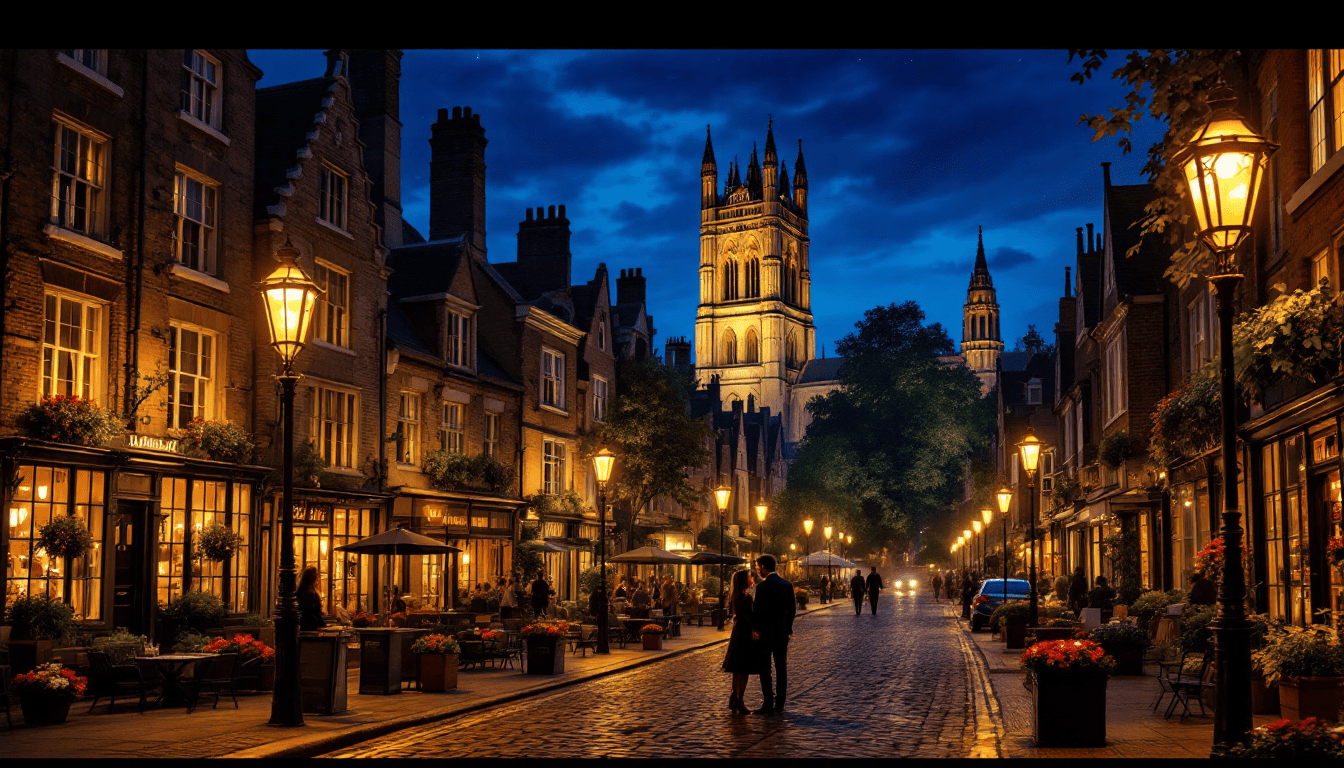
Engineering The World's Most Beautiful Country
Italy and Cartagena look like postcards, but Britain has the Shire. No country has ever set out to deliberately author the most beautiful place on Earth. Ugliness is not fate or progress; it is what happens when engineering forgets civilisation. Britain can transform modernist horror into glory.

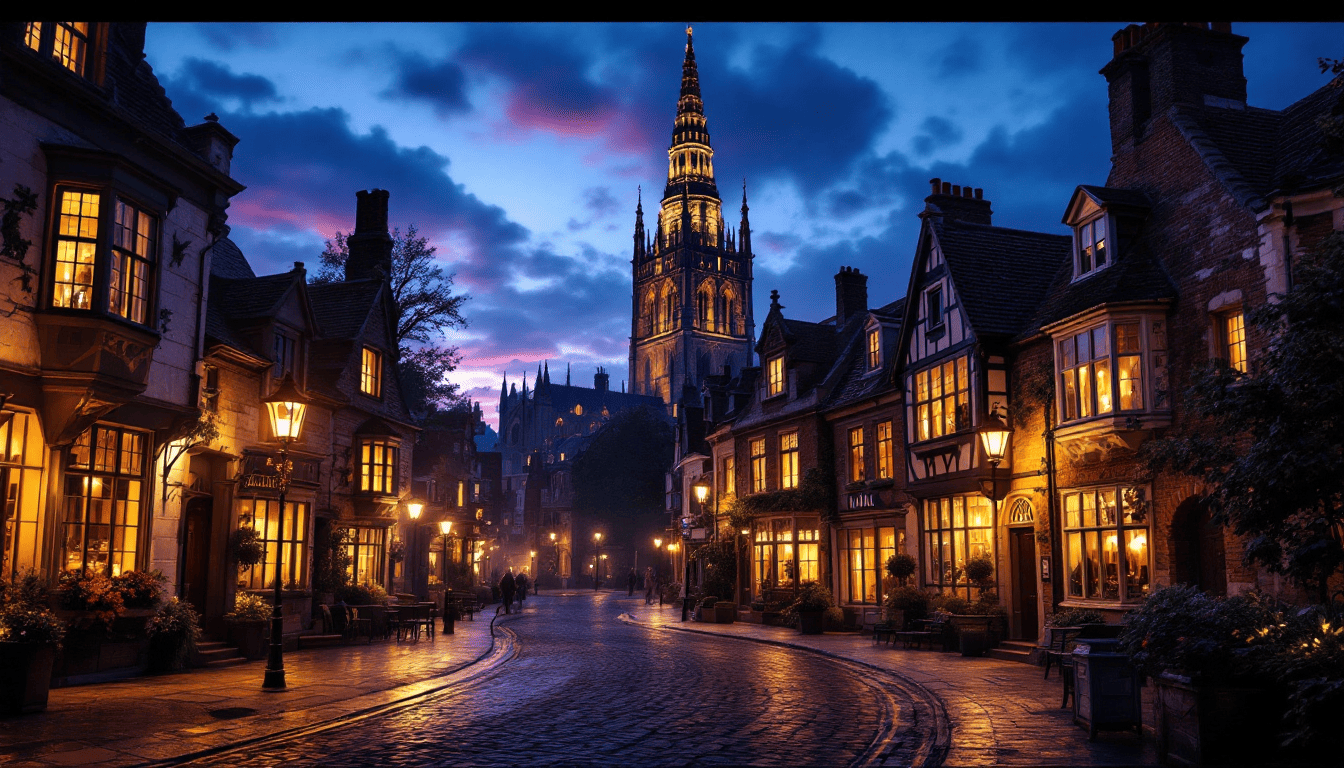
Britain has the Shire. Not the film set in New Zealand, but something far more powerful: an imagination of what a country could become if every hedge, every cottage, every church spire, every winding lane conspired together in quiet harmony. The English mind has produced the most beloved vision of landscape beauty in human history, exported through Tolkien and Austen and Constable to every corner of the Earth, and yet England itself has become one of the ugliest developed nations on the planet.
Italy looks like a postcard because Italians never stopped building like Italians. Cartagena glows amber at sunset because the Spanish left behind walls and plazas designed to glow amber at sunset. The hill towns of Tuscany have been painted so often they seem to exist primarily as backdrops for watercolours. But these places did not set out to be beautiful; they inherited beauty, or stumbled into it, or preserved it through poverty and stagnation.
Luck is the residue of design, and beauty is the evidence of it.
No nation has ever stood before its people and declared: we will make this the most stunning place any human being has ever seen. We will engineer it deliberately, stone by stone, wire by wire, tree by tree, until travellers from distant centuries speak of our landscapes the way we speak of Florence.
Britain could be the first.
The Anatomy Of A Wasteland
The ugliness is not fate and it is not the price of progress.
Walk through any Yookay town substantially rebuilt after 1945 and you will encounter the same vocabulary of failure repeated with crushing consistency: concrete slabs stained by decades of rain, clumps of wire erupting from every surface, plastic fascias peeling from shopfronts, forests of pylons marching across open countryside, retail sheds the colour of institutional despair, car parks like bomb craters filled with tarmac instead of rubble.
This is Milton Keynes. This is Cumbernauld. This is Croydon and Coventry and the ring roads of a hundred market towns which survived eight centuries only to be gutted in the 1960s by men who sincerely believed they were improving them.
The catastrophe had causes, and the causes were not mysterious.
After the war, the architectural establishment fell under the spell of Continental modernism — a movement born in the rubble of defeated empires which declared war on ornament, on tradition, on everything the past had built. Le Corbusier wanted to demolish central Paris and replace it with towers in a park. The Bauhaus proclaimed decoration a crime. These ideas, developed by men who had watched civilisation tear itself apart twice in thirty years, promised a clean break from history, and in Britain, where German bombs had already begun the demolition, the new architecture offered something even more seductive than ideology: speed.
Prefabricated panels could go up in weeks. Traditional craftsmanship took years, cost money, and required skills the war had killed or scattered across the Commonwealth.
The towers rose.
But ideology alone cannot explain why the ugliness persists half a century after brutalism fell from fashion. The deeper pathology is economic, and it has never been treated. Britain optimises for first cost, not whole-life cost. A building clad in plastic and structural silicone costs less to erect than one wrapped in brick and stone. A development without trees costs less than one with mature planting. Overhead wires cost less than underground cables — or so the spreadsheets say, because the spreadsheets measure only the year of construction and ignore the decades of maintenance, the storms which bring down poles, the visual squalor which degrades property values and civic pride in ways no accountant bothers to quantify.
The system rewards cheapness at every stage and then walks away. What happens in ten years, or twenty, or fifty, is someone else's problem.
The result is a nation covered in structures designed to pass planning approval and turn a profit on sale, but never designed to be maintained, never designed to age gracefully, never designed to give pleasure to anyone who has to look at them.
The rain comes. The sealant fails. The render cracks. The plastic yellows.
Nobody repairs anything because repair was never part of the business model. And so the ugliness accumulates like calcium in an artery, slowly choking the life out of places which once had character, until even the people who live there cannot remember what beauty looked like or believe it possible again.
It is possible again.
Conceal The Guts
The transformation begins not with architects but with engineers, because the ugliest features of the British landscape are not buildings but the machinery we have allowed to sprawl across every surface.
Consider what you actually see when you walk down an ordinary British street:
Wires sag between poles in drooping parabolas. Substations squat on corners in housings of bare galvanised steel. Mobile phone masts bristle from rooftops like antennae on dying insects. Cabinets in battleship grey cluster at junctions — one for broadband, one for telephony, one for cable television, one for traffic signals, each installed by a different contractor in a different decade with no consideration for the others. The pavement is a patchwork of black scars where trenches have been dug and refilled, never quite matching the original surface. Bins overflow. Signage shouts. Nothing relates to anything else.
This is not complexity. This is chaos — the visual residue of a hundred separate systems, each built for function and cost, none built to be seen.
The first law of beauty is therefore architectural only in the oldest sense of the word: do not show the machinery.
Every civilisation which has built lastingly beautiful environments understood this instinctively. The Romans buried their aqueducts when they entered cities and raised them on arches only in the countryside, where the structures themselves became monuments. The Georgians hid their servants' quarters behind uniform façades. The Victorians ran their sewers beneath streets so magnificent the world still copies them. Only the twentieth century decided the intestines of modern life should be displayed on the skin.
We can undo this. We can bury the wires and silence the substations and clear the poles from the horizon. And we can do it not as an aesthetic indulgence but as an engineering programme which pays for itself in resilience, in reduced maintenance, in the increased value of land no longer blighted by visual squalor.
One Dig To Rule Them All
Britain needs to lay fibre-optic cable to every building in the country. This is happening anyway, in the usual British fashion: piecemeal, competitive, duplicative, with three or four companies digging up the same streets in sequence to lay their own cables in their own shallow trenches, each trench cut as cheaply as possible and refilled with whatever material comes to hand. The result will be a nation threaded with fragile glass filaments in inaccessible ducts, requiring the pavement to be excavated every time a cable fails, every time capacity must be upgraded, every time a new technology emerges which demands new physical infrastructure.
There is another way.
Imagine a single national programme — not run by the government, not run for profit, but operated by an independent infrastructure trust charged with building the permanent physical substrate beneath British streets. A trust with a hundred-year planning horizon. A trust which digs once, digs deep, and never digs again.
The specification would be simple: large-diameter utility corridors, walkable or at minimum crawlable, with modular internal racking for fibre, for electrical distribution, for gas, for district heating, for every service which currently requires its own trench and its own maintenance schedule and its own periodic disruption. Access points every two hundred metres, like the inspection chambers of Victorian sewers. The electronics change; the glass is upgraded; new services are added — but the corridor remains, silent beneath the street, invisible and eternal.
This is not fantasy engineering. This is how Singapore built its nationwide fibre network, through a single passive infrastructure company providing open access to competing operators. This is how Scandinavian cities distribute heating through tunnels which also carry power and data. This is how the Victorians built sewers which still function after a hundred and fifty years while the plastic pipes we laid in the 1980s are already failing.
The numbers are comprehensible. Twenty-nine million premises. One to three million kilometres of cable. Two hundred thousand to four hundred thousand kilometres of access routes. A project on the scale of the Victorian railway network, or the postwar motorway programme, or the original electrification of the country — but one which, unlike those projects, would leave the surface of Britain more beautiful than it found it.
Because here is the opportunity the fibre programme creates: if we are digging anyway, we can bury everything else at the same time.
The Day The Wires Came Down
The electricity distribution network was built for a different age. Wooden poles were cheap. Copper wire was manageable. The countryside was empty and nobody much minded if a few wires crossed the horizon. But the poles rot and the wires sag and the storms bring them down with increasing frequency, and every pole is an admission of defeat, a statement this landscape was not worth the cost of dignity.
The argument against undergrounding has always been expense. Burying cables costs more per kilometre than stringing them from poles, and the maintenance is harder because you cannot see when something fails. But this argument assumes the current model: shallow trenches, direct burial, each circuit in its own duct, each repair requiring fresh excavation.
In a shared utility corridor, the calculation changes entirely. The civil engineering cost — the expensive part — is paid once and shared across every service the corridor carries. Fibre, electricity, gas, heating, water, future technologies not yet invented: all of them benefit from a single dig, a single tunnel, a single century of maintenance-free operation. Fault isolation becomes trivial because engineers can walk the corridor and inspect every metre. Upgrades become trivial because new cables can be pulled through without excavation. The marginal cost of adding electrical distribution to a fibre corridor is a fraction of the cost of burying it separately.
And the visual benefit is absolute. No poles. No wires. No substations in steel boxes.
The countryside returns to the horizon. The villages return to their medieval silhouettes. The towns regain vertical space for trees, for façades, for light, for sky.
Monuments In Disguise
Some infrastructure cannot be buried. Mobile communications require antennae. Broadcast transmission requires height. Navigation and weather monitoring require sensors mounted above the roofline. Even in a future where wires have vanished, some structures must rise above the landscape — and these structures present not a problem but an opportunity.
Because if something must be seen, it can be made worth seeing.
Iceland understood this. When the country needed new electricity pylons, designers proposed the Land of Giants: transmission towers shaped as monumental human figures, striding across the volcanic landscape with their arms raised to carry the cables. The figures would march toward Reykjavik from the mountains, growing larger as they approached the city, as if an army of benevolent colossi were bringing power down from the glaciers as a gift. The proposal was not built, but the idea was sound: infrastructure which must be visible should be designed as architecture, not as equipment.
Norway understood this. The National Tourist Routes programme treats roads as civic art, commissioning architects to design rest stops and viewpoints and bridges as sculptural objects integrated with the landscape they occupy. A toilet block becomes a glass pavilion cantilevered over a fjord. A bus shelter becomes a wave of weathered steel echoing the mountains behind it. The roads themselves become reasons to visit, because someone decided utility deserved dignity.
Copenhagen understood this. The Amager Bakke waste-to-energy plant processes the city's rubbish and generates electricity, and instead of hiding this function behind blank walls, the architects wrapped the incinerator in an artificial ski slope. Citizens ski down the building in winter and hike up it in summer and children play on its lower terraces, and the whole structure has become a beloved landmark — proof a power station can be a public park.
Britain could go further than any of them.
Consider the mobile phone mast — the most ubiquitous and most despised of modern intrusions, bristling from rooftops and churchyards and beauty spots across the kingdom, always the same galvanised lattice, always the same collection of grey drums, always the same studied indifference to every landscape it defiles.
Now consider what a mast could be.
A slender campanile in white stone, rising beside a village church, its antennae concealed behind louvres echoing the belfry windows. A lighthouse form on a coastal headland, flashing at night to guide ships and streaming data inland by day. A clock tower in a market square, telling the time to shoppers and connecting their phones simultaneously. An obelisk on a hilltop, commemorating some local battle or benefactor, its bronze cladding hiding the equipment which makes it a node in the national network.
These are not fantasies. The technology fits easily within architectural shells. The cost premium is modest compared to the visual transformation. The only obstacle is habit — the habit of treating infrastructure as merely functional, the habit of letting engineers specify equipment without reference to context, the habit of believing beauty costs more than the country can afford.
Beauty costs less than ugliness. We simply measure the costs wrong.
Reclaiming The Night
If the poles and wires vanish, something must illuminate the streets — and here again the opportunity exceeds the obligation.
Modern street lighting in Britain comes mostly from columns designed for car parks: tall aluminium poles with horizontal arms and bulbous luminaires, flooding the pavement with harsh white light while leaving façades in shadow and the sky orange with wasted photons. The columns are cheap. The light is adequate. Nobody complains because nobody remembers what streets looked like before the car park aesthetic colonised every road in the country.
But lighting is architecture. The Victorians understood this — their gas lamps were cast iron columns with decorative brackets and glass lanterns, scaled to the pedestrian rather than the motorist, producing pools of warm light which made walking at night feel like moving through a series of outdoor rooms. The light was dimmer than what we tolerate now, but the experience was incomparably richer, because the infrastructure itself was beautiful and the darkness between pools was part of the composition.
Modern technology makes this achievable again without sacrificing safety or efficiency. LED luminaires can be tuned to any colour temperature, shaped to cast light downward without spill, dimmed dynamically based on movement and time. The columns which hold them can be designed as civic objects — wrought iron or powder-coated steel, fluted or tapered, fitted with brackets for hanging baskets or seasonal decorations, scaled to the street width rather than standardised across every context from country lane to dual carriageway.
Lighting standards could become a matter of national regulation, not to impose uniformity but to impose quality. Warm white only. Maximum heights specified by road classification. Minimum spacing to ensure rhythm. Approved column designs for conservation areas, for new developments, for rural roads, for city centres — not one design but a grammar of designs, a family of forms appropriate to different contexts, all of them meeting technical requirements while treating the streetscape as a composition rather than a problem to be solved.
And if the columns must carry more than light — sensors for traffic and air quality, small cells for mobile coverage, cameras for security — then let them carry these things invisibly, within housings designed to look like lanterns rather than surveillance equipment.
The night itself becomes a civic project. The country which perfects this will own the darkness.
The Bones Of The Street
The pavement is not a leftover. The pavement is the most valuable land in the country.
This is literally true in economic terms — prime retail frontage in central London sells for more per square foot than any other surface on Earth — but it is also true in experiential terms. The street is where public life happens. The street is where strangers encounter each other, where commerce displays itself, where the city reveals its character. A country with beautiful buildings and ugly streets is a country which has missed the point.
The Victorian street was designed as a room. The buildings formed the walls. The trees formed the ceiling. The pavement was wide enough to walk comfortably, narrow enough to feel enclosed. The carriageway was scaled to horses and carts, which moved slowly and yielded to pedestrians. The furniture — lamp posts, bollards, pillar boxes, drinking fountains — was cast iron, decorated, designed as ornament rather than equipment.
The modern British street is designed as a traffic conduit. The carriageway expands to fill available space. The pavement shrinks to a strip between building and kerb. The furniture is aluminium and galvanised steel, standardised across the country, installed wherever it fits rather than where it composes. Signs multiply: directional signs, regulatory signs, advertising signs, temporary signs, signs warning of other signs. The trees, if present at all, are planted in pits too small for their roots and die within a decade.
Fixing this requires statutory intervention at national level. Streets should be classified not by traffic volume but by civic importance, and each classification should carry proportional requirements for width, planting, furniture, and surfacing. Primary retail streets should have continuous tree canopy, stone paving, unified furniture from approved catalogues, and strict limits on signage. Residential streets should have verges or tree pits sized for mature growth, consistent lighting, and surfaces which can be patched without creating permanent scars.
The furniture itself should be treated as architecture. A borough should have one family of lamps, benches, bollards, bins — not one design, but one design language, variations on a theme, related forms appropriate to different locations. The goal is not uniformity but coherence: the sense of walking through a place which has been considered, where someone has thought about how every element relates to every other.
Substances Worthy Of Rain
Style is less important than substance. The reason Victorian buildings still look handsome and postwar buildings look derelict is not primarily a matter of design but of materials and maintenance. Brick weathers. Stone weathers. Slate weathers. They stain and soften and acquire the patina of age, and provided the building is kept watertight, they look better at a hundred years than they did when new. Concrete stains. Render cracks. Plastic yellows and warps. Aluminium oxidises to a chalky grey. These materials do not weather; they decay — and once the decay begins, nothing short of complete replacement can reverse it.
A beautiful country requires a material covenant: an understanding, enforced by regulation and incentive, that buildings must be made of things which age gracefully or be maintained so diligently the question never arises.
This does not mean banning concrete. Concrete can be beautiful — the Romans built the Pantheon from it, and it still stands. But Roman concrete was faced with brick and marble and travertine, materials which protected the structural core and gave the surface its dignity. Modern concrete is often left exposed because exposure is cheaper than cladding, and the result is grey walls streaked with watermarks within a decade.
The rule should be simple: no exposed concrete on any surface visible from public space. Concrete must be patterned, pigmented, faced, or clad — with stone, with brick, with terracotta, with precast panels moulded to resemble masonry, with anything which accepts the weather gracefully. The structural material does its structural job. The surface material does its aesthetic job. Neither compromises the other.
The same logic applies to every component of the building envelope. Roofs should be slate or tile or lead or copper or green planting — not plastic membranes which fail after twenty years and cannot be patched. Windows should be timber or painted metal or aluminium clad in durable finishes — not raw extruded sections which oxidise to the colour of neglect. Shopfronts should be timber or painted steel with signage in paint or applied lettering — not plastic fascias illuminated from within, turning every high street into a strip mall.
The Redemption Of The Car Park
Britain has approximately eighteen thousand multi-storey car parks. Most of them are among the ugliest structures ever built.
Raw concrete decks exposed to the weather. Spiral ramps like intestines turned inside out. Stairwells stinking of urine. Façades of wire mesh or precast panels in colours chosen, apparently, to maximise despair. These buildings occupy prime urban land — often town centres, often waterfronts, often the sites of medieval structures demolished to make way for them — and they return nothing to the city except parking revenue and a view best avoided.
And yet car parks are structurally among the easiest buildings to transform. The floor plates are large and flat. The load capacity is immense — designed to carry vehicles, they can support almost anything. The column grids are generous. The access is already built. These are buildings waiting to become something else.
The cheapest intervention is the façade wrap: a new skin applied over the existing structure to give it a face worth looking at. This could be brick panels hung from the deck edges. This could be perforated metal screens patterned to recall the Georgian proportions of the buildings nearby.
This could be living walls, irrigated and planted, turning dead concrete into vertical gardens which cool the air and clean it. This could be semi-transparent photovoltaic glass, generating electricity while filtering daylight into the decks behind.
More ambitious interventions add programme to the structure. The roof becomes a public park. The ground floor becomes retail, opening onto the street with windows and doors. The middle floors remain car parking but are lined with offices or flats or studios, their habitable rooms facing outward while the cars hide behind. The building ceases to be a car park and becomes a city block with parking inside it — which is, after all, exactly what a traditional city block has always been, with stables and later garages tucked behind the façades.
Britain does not lack urban land. Britain lacks the imagination to see the urban land it has. Eighteen thousand car parks, reformed, could house half a million people and transform the skylines of every town in the country.
Trees As Infrastructure
Nature is not decoration. Nature is infrastructure. A tree does not merely look pleasant. A tree intercepts rainfall and reduces flooding. A tree shades pavement and reduces the urban heat island. A tree absorbs carbon dioxide and releases oxygen. A tree provides habitat for birds and insects. A tree increases property values and reduces crime and improves mental health and extends lifespans. The benefits of urban trees have been quantified in study after study, and they exceed by orders of magnitude the cost of planting and maintenance.
And yet Britain plants trees as an afterthought, in pits too small for their roots, surrounded by compacted soil which starves them of water and air. The trees struggle. The trees die. The stumps are removed and not replaced. The streets grow barer with each decade, and everyone agrees trees would be nice while doing nothing which would actually let trees survive.
The engineering solution is simple and proven: continuous soil trenches beneath pavements, running the length of the street, filled with structural soil or suspended pavement systems which bear the load of the surface while leaving space for roots to grow. The trees are planted in this continuous medium and can spread their roots along the entire block rather than fighting for survival in an isolated pit.
Stockholm has done this. Melbourne has done this. Singapore has done this on a vast scale, integrating tree planting with stormwater management in a programme which treats the urban forest as essential infrastructure rather than optional ornament.
Britain should do this systematically, as part of the utility corridor programme, installing tree trenches whenever streets are opened for fibre and electrical undergrounding. The cost is marginal. The benefit is transformational. Within a generation, British streets could have the continuous canopy of a French boulevard or an American parkway — not because someone decided trees were pretty, but because someone understood trees are engineering.
Rain As Public Art
Britain has rain. Britain has always had rain. Britain will continue to have rain, and more of it as the climate changes and storms intensify.
The traditional response to rain is drainage: collect the water in gutters, channel it to drains, pipe it underground to rivers or treatment plants, get it out of sight as fast as possible. This works until it doesn't — until the storm exceeds the capacity of the pipes, until the drains back up, until the streets flood and the basements fill and the sewage overflows into waterways because Victorian combined sewers cannot cope with Victorian cities expanded to five times their original population.
The engineering solution is to stop treating rain as waste and start treating it as resource.
Green roofs absorb rainfall and release it slowly, reducing peak flows in the drainage system. Rain gardens — planted depressions in the landscape — capture runoff from pavements and parking areas, filter it through soil, and allow it to percolate into the ground or evaporate into the air. Permeable pavements let water pass through their surface into storage layers beneath, eliminating puddles and reducing flood risk. Bioswales — vegetated channels replacing concrete gutters — slow and clean stormwater while providing habitat corridors through urban areas.
These are not experimental technologies. Philadelphia has rebuilt its entire stormwater system around green infrastructure, avoiding billions in tunnel costs while creating parks and gardens across the city. Copenhagen has redesigned its streets as linear water parks, able to hold cloudbursts in attractive public spaces rather than flooding homes and hospitals. Portland has made rain gardens a standard feature of every new development and many retrofitted streets.
Britain could adopt these techniques as national infrastructure standards, requiring green roofs on all flat-topped buildings, mandating permeable surfaces for car parks, integrating rain gardens into every street reconstruction. The drainage system becomes a landscape system. The flood defence becomes a park. The infrastructure disappears into amenity, and the country becomes more beautiful because it decided to take water seriously.
The Land Of Brontë And Wordsworth
Beyond the towns lies the countryside — and here Britain possesses something no engineering programme can create but every engineering programme can destroy or preserve: a landscape shaped by two thousand years of human habitation into something unlike anywhere else on Earth.
The English countryside is not wilderness. It has not been wilderness since the Romans drained the fens and the Saxons cleared the forests and the Normans planted their hunting chases. Every hedge was planted by someone. Every dry stone wall was laid by hand. Every copse and spinney and shaw exists because someone decided a wood should stand there, for timber or for shelter or for sport. The patchwork of fields and lanes and villages is an artefact as deliberately made as any cathedral — just made slowly, over centuries, by thousands of hands with no master plan except the accumulated wisdom of people who lived on the land and loved it.
This is the landscape of the Brontës and Wordsworth, of Constable and Turner, of Hardy and Housman. This is the landscape which made Tolkien weep with homesickness in the trenches of the Somme, the landscape he transmuted into the Shire and embedded forever in the imagination of the world. It is beautiful not because it is natural but because it is cultivated — cultivated in the old sense, meaning cared for, tended, shaped by culture over time.
And it is dying. The hedges are grubbed out for industrial agriculture. The stone walls crumble and are replaced with wire fences or nothing. The copses are felled and not replanted. The villages are ringed with executive housing in styles which belong nowhere. The lanes are widened for lorries and lose their enclosure. The views which once stopped at the next hill now stop at the nearest pylon, the nearest wind turbine, the nearest distribution warehouse squatting on greenfield land because brownfield was too expensive.
Preserving this landscape requires more than conservation orders and planning restrictions. It requires active cultivation — a national programme to restore and maintain the infrastructure of rural beauty just as deliberately as the infrastructure of urban beauty.
Hedgerows should be replanted on a massive scale, not merely for ecological benefit but for visual structure, to restore the enclosed intimacy of lanes which once felt like green tunnels. Dry stone walls should be rebuilt and maintained by a permanent corps of wallers, their skills passed down and their wages paid from public funds as surely as the wages of road crews. Copses and woodlands should be expanded according to a national forest strategy, connecting fragments of ancient woodland into corridors visible from space, turning the patchwork landscape into something even richer than what the Victorians inherited.
The villages themselves need protection from the creeping suburbanisation which has already destroyed so many. New housing should be built in local materials according to local patterns — not pastiche, not theme park reproduction, but honest buildings which belong to their place because they were designed for their place by people who understood what belonging means. The gaps between villages should remain gaps, green belts enforced with absolute rigour, so settlements remain settlements rather than merging into the endless sprawl which has already consumed so much of the South East.
This is not nostalgia. This is the recognition Britain's countryside is its greatest cultural asset — worth more than the oil we have pumped and the coal we have burned and the financial services we have exported. Worth more because it is irreplaceable, because no other country has it, because people will travel from the ends of the Earth to see it and will pay whatever it costs to live within sight of it.
Crowning The Mountains With Fire
But preservation is not enough. Britain has the opportunity not merely to maintain its beauty but to create new beauty — to add to the inheritance of the ages rather than merely protecting it.
Snowdonia rises from the Welsh coast in peaks which have inspired poets since the bards first sang. The Lake District folds into itself in valleys Wordsworth walked until he knew every stone. The Scottish Highlands stretch north in a landscape so vast and empty it feels like the edge of the world. These places are already magnificent, already protected, already loved. But they are not yet marked — not yet shaped by human intention into something which declares: we were here, we saw this, we made it ours.
The ancients understood this impulse. The Greeks built temples on promontories visible for miles out to sea. The Celts raised standing stones on hilltops to catch the sunrise. The medieval church crowned every significant summit with a chapel or a cross. These were not intrusions on the landscape but completions of it — the human voice answering the voice of the land, saying: we see you, we honour you, we add our small mark to your eternity.
Modern Britain has forgotten this language. When we build on high ground now we build transmitter stations, military installations, weather monitoring equipment — functional objects designed to be ignored, squatting on summits like embarrassed guests at a party to which they were not invited.
Imagine instead a programme of light masts — structures designed from the beginning to be seen, to be beautiful, to mark the high places of Britain with points of fire visible for miles.
Not floodlights. Not the harsh glare of security installations. Warm light, soft light, light which glows rather than blazes — beacons in the oldest sense, recalling the chain of fires which once warned of invasion, now repurposed to celebrate rather than alarm. Each mast designed for its specific location by architects who have walked the ground and studied the sightlines. Each mast carrying telecommunications equipment within, serving the practical function of connectivity while serving the poetic function of presence.
From the summit of Snowdon, you would see the lights of the Carneddau and the Glyderau answering across the valleys. From the shore of Derwentwater, you would see Skiddaw crowned with a gentle glow. From the ferry crossing the Minch, you would see the Cuillin ridge picked out in points of amber against the black Atlantic sky.
This would be infrastructure which creates wonder. Infrastructure which gives people a reason to travel, to climb, to stand on cold hillsides at night and feel themselves part of something larger than their own lives. Infrastructure which says: this is a country which takes its landscape seriously, which believes the mountains deserve more than indifference.
The Luminous Sea
And the coast — that ragged edge where Britain meets the water, the longest and most varied coastline in Europe, the white cliffs and the black rocks and the golden sands and the grey shingle — the coast could become something unprecedented in the history of human settlement.
Every maritime nation has lighthouses. Britain has more than most, and finer than most, because the British built their lights when they still believed public works should be public art. The towers of the Stevensons and the Douglasses are monuments to engineering and monuments to aesthetics simultaneously, structures which do their job of guiding ships while standing as sculptures on the headlands they occupy.
But the lighthouse network was built for an age of surface navigation, when ships needed visible marks to find safe passage. Modern vessels navigate by satellite. The old lights are maintained for tradition and tourism, but the system is no longer expanding. The coast, from a lighting perspective, has gone dark.
It could blaze again — not for navigation but for celebration.
Imagine the entire coastline of Britain marked with light: not continuously, not monotonously, but rhythmically, a necklace of beacons spaced along the shore to catch the eye of anyone looking seaward. Some would be the old lighthouses, restored and relit. Some would be new structures on headlands and harbour walls, designed to complement the Victorian heritage while speaking in a contemporary voice. Some would be simple: obelisks or columns, casting their glow from the cliff edge. Some would be complex: spiralling towers, sculptural forms, structures which become destinations in themselves.
The effect, seen from a ship entering British waters, would be unlike anything else on Earth: a nation which had decided to illuminate its own edge, to declare itself visible, to welcome the world with light rather than hiding behind the darkness which has settled over most developed coastlines.
And from the land — from the coastal paths and the beach towns and the fishing villages — the effect would be equally transformative. The sea at night would no longer be a void but a partner in the composition, the black water reflecting the marks we had made along its shore.
New Wonders Of A Modern World
The ambition should be explicit: to create structures which will be listed among the wonders of the world.
Not by accident. Not by hoping something beautiful emerges from the usual process of budgets and compromises and planning appeals. But deliberately, as a matter of national policy, with competitions and commissions and the kind of investment usually reserved for Olympic stadiums and royal weddings.
Britain has done this before. The Crystal Palace was a wonder of the world — a building so unprecedented the language had to invent a word for it. The Thames Tunnel was a wonder of the world — the first tunnel under a navigable river, a feat of engineering visitors paid to descend and marvel at. The Forth Bridge is a wonder of the world — still, after a hundred and thirty years, one of the most photographed structures on the planet, a hymn to the beauty of functional form.
We stopped. We stopped believing public infrastructure deserved that level of ambition. We started building purely for function, and function understood in the narrowest possible way — not function as in how this structure will function in the life of the nation for the next two centuries, but function as in does this thing do the minimum required to justify its budget line.
The result is a country where the most memorable structure built in the last fifty years is probably the Gherkin, a private office tower, or the Shard, a private mixed-use development — buildings admired for their engineering but serving no public purpose, expressing no collective ambition, embodying no shared vision of what Britain means or wants to become.
The light masts on the mountains. The beacons on the coast. The great utility corridors beneath the streets. The continuous tree canopy of the boulevards. The reformed car parks bursting with gardens. The villages restored, the hedgerows replanted, the dry stone walls rebuilt mile after mile across the uplands. Taken together, these would constitute a wonder: not a single structure but a transformation, a country which had decided to become beautiful and then actually done it.
The tourists would come. They already come for the history and the pageantry and the fragments of loveliness which survived the twentieth century. Imagine what they would do if Britain offered them something unprecedented: not the preserved beauty of the past but the created beauty of the present, a living demonstration of what a wealthy, technologically advanced civilisation can do when it chooses to take aesthetics seriously.
The Archipelago Of Christian Fire
Imagine the British Isles seen from space at night. Today you would see the orange smear of sodium lighting, the white blaze of motorway junctions, the scattered sparkle of villages and the dense glow of cities — the same view as any developed nation, the same visual signature of electricity carelessly spent.
Now imagine a different pattern.
You would see the coast first: a necklace of lights marking headlands and harbour entrances, not the functional blink of navigation beacons but the warm steady glow of architectural monuments. You would see the mountains next: single points of brightness on prominent summits, marking the high places of the landscape the way bonfires once announced victories and coronations. You would see the threads of major roads, not as continuous glare but as rhythmic pulses, the spacing of light masts visible as a tempo, a heartbeat across the countryside. And you would see the towns as warm clusters, their streets glowing at human scale, their civic buildings gently illuminated, their waterfronts reflected in harbour water.
This is not a lighting plan. This is a national identity made visible from orbit.
The infrastructure required to achieve it already exists in fragmented form: the mobile network, the broadcast towers, the weather stations, the navigation aids. What is missing is the decision to treat these necessities as opportunities — to say when we build a mast, we build a landmark; when we light a street, we compose a scene; when we illuminate a bridge, we create a ceremony.
The technology is trivial. The cost is marginal. The only requirement is intent: the decision, taken at national level and enforced through planning standards, that Britain will use light as architecture.
History Remembers The Builders
We remember the Romans for their roads and aqueducts, structures which made civilisation possible across an empire and which still stand two thousand years later. We remember the medieval cathedral builders for creating stone vessels of light which have never been surpassed. We remember the Victorians for their railway stations and their sewers, their town halls and their parks, their conviction that public infrastructure deserved public grandeur. We do not remember the penny-pinchers. We do not remember the corner-cutters. We do not remember the men who said it was too expensive or too difficult or not worth the trouble.
Britain has the opportunity to be remembered as the country which decided beauty was not optional. The country which buried its wires and planted its streets and lit its hills and turned its car parks into gardens. The country which proved modernity and loveliness were not enemies, that engineering and civilisation were the same discipline, that a nation could choose its face and wear it with pride.
The programme would take a generation. The fibre corridors, the electrical undergrounding, the tree trenches, the rain gardens, the light masts, the façade standards, the street furniture reforms, the countryside restoration — none of it happens overnight. But infrastructure is always generational. The Victorians spent fifty years building the railway network. The Georgians spent a century building Bath and Edinburgh and the squares of London. The timeline is not an obstacle; the timeline is the nature of the work.
The cost would be large in absolute terms and trivial in relative ones. The fibre programme alone could run to tens of billions of pounds; the electrical undergrounding to tens of billions more; the street reconstructions and building regulations and maintenance bonds and lighting standards to whatever fraction of national infrastructure spending we choose to allocate. But these are costs we already pay — we simply pay them badly, in duplicated digs and premature replacements and remedial works and flood damage and the slow haemorrhage of property values in blighted areas. Spending money well is not more expensive than spending money badly. It only seems that way to accountants who measure nothing beyond the current fiscal year.
What the world would see, when the work was done, is a country which had taken itself seriously. A country where the trains arrived in stations worthy of the journey. A country where the villages nestled in landscapes unbroken by poles and wires. A country where the cities glowed at night with the warmth of considered light. A country where the streets were rooms and the buildings were walls and the trees met overhead in green vaults worthy of any cathedral. A country where the mountains bore fire and the coasts blazed welcome and the whole archipelago shone in the dark Atlantic like a jewel in the hand of God.
The Shire, finally real. The imagination made stone. The world's most beautiful country, engineered on purpose, by a people who remembered what civilisation was for.
Britain can do this. Britain should do this. The only question is whether we have the courage to begin.
Would you like your country to look like this?