From Electrician, To NHS Doctor, To Engineer
The England i grew up in sponsored the mavericks. It was a place where a working class eccentric lad on a construction site could learn Latin at a grammar or qualify for medical school if he got the marks. Then Blair happened. Stories like mine don't happen for Gen Z anymore. They should.
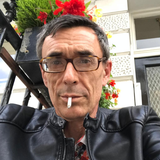
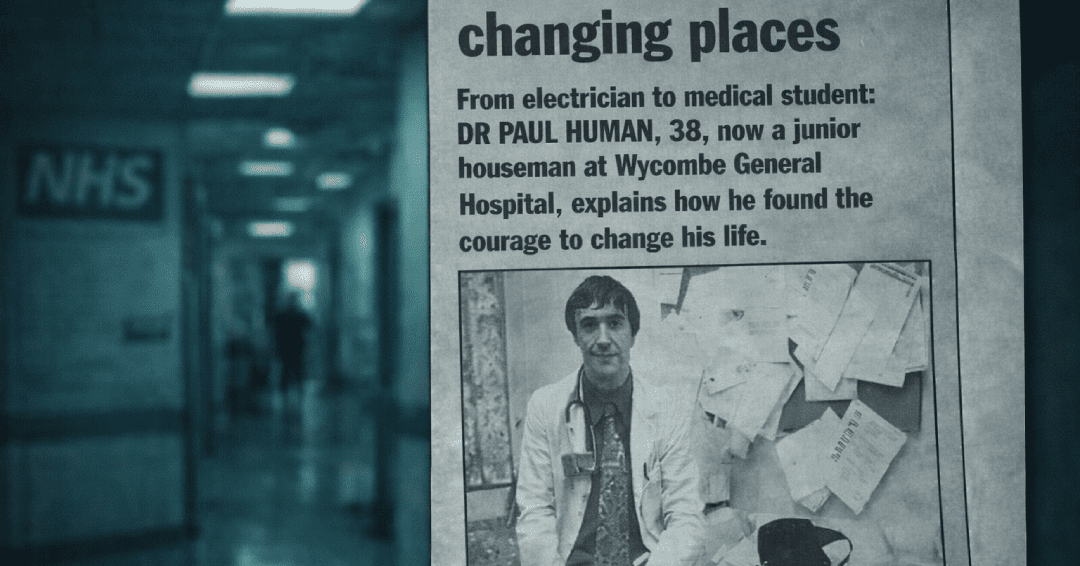
I was born in 1962, an Englishman through and through, with my grandfather hailing from Limehouse in the East End of London. I was always told England was a great country that had done an enormous amount for the world. That pride stuck with me, even if life didn't quite follow the script I expected.
I missed out on grammar school because the system had switched to comprehensives in the 1970s, part of sweeping educational reforms aimed at equality but often criticised for diluting standards. The raising of the School Leaving Age in 1972 to 16 meant I stayed in education longer, but instead of proper O-levels, I did watered-down versions for CSEs—just science and modern maths, but not at the depth I might have had. After school, I drifted into construction because my dad was a bricklayer and builder. He had a flash car and had built us a big house himself. I thought, "Work hard, earn good money, that's the way." So I did—for about ten years. I became a qualified electrician, went to Farnborough Technical College, did City and Guilds 236 Parts 1 and 2, and then, on a whim really, took three A-levels in chemistry, physics and human biology. Ended up with A, A, B.
That late-in-the-day push into A-levels while working as a sparky and builder made me a bit of a talking point at the college. Word got around, and one day I got summoned to see the principal. He sat me down and said something along the lines of: "Your story is interesting. You've got a baby on the way, you're academically talented enough to study medicine, and you've clearly made up for lost time through sheer determination. Do you want to go to Oxford?"
I was stunned. "How come you can offer me that?" He explained that Oxford had contacted the college—there was a push in those days to mix up the student body at top-tier universities, bringing in more from working-class backgrounds, mature applicants who'd shown grit and self-made progress. I fitted the bill perfectly: no silver spoon, no private schooling, just hard graft catching up.
I declined. Politely, but firmly. I felt I wouldn't fit in at such a fine institution—didn't want to be the token working-class lad parachuted in. Plus, it smacked of a free ride, and I could see no reason why I couldn't slug it out through the normal UCAS chaos like everyone else. When I told my classmate—who was doing chemistry, human biology and psychology, also gunning for medicine—he looked at me like I'd lost my mind. "Are you f**king mental? You turned down Oxford?"
England's Magical Doors That Opened
A year later, he had an offer from UCL. I got a full house: five rejections, including an interview at UCL but no offer. Bit disappointed, but I decided to change tack and use my A-levels for another STEM degree. Before the madness of UCAS clearing back in the day, I sent off letters in envelopes with stamps—references, predicted grades, brief cover letter, and crucially, the number to the phone screwed to the wall of my house. A week later, I come home from work, and my Mrs hands me a phone number for a chap who'd got my letter and wanted to chat about his course in biophysics.
We had a long natter about the topic, its relevance as the new millennium rapidly approached. He wanted me on his course and played his trump card: a year's work placement in year three of a four-year stretch. At NASA. I said yes—builder to rocket scientist seemed a solid second place for a working-class have-a-go hero.
But fate quirked again on results day. I went up to college for the A-level envelope: A-A-B. Good enough for med school. So I rang UCL to see if I could reapply with actual grades, not predictions. Instead of the admissions secretary, it was answered by Professor John Foreman—a legendary pharmacology professor at the medical school, who had joined UCL as a student himself, earning his BSc and PhD there before rising to prominence. He remembered me from a talk he'd given at Farnborough about applying to medical school; he knew my story. He pulled my interview file, read it, and put me down for next year's admission. I told the NASA man about my miraculous reprieve. He was pleased, wished me luck. I joked: at least I'd be guaranteed a job as a surgeon in five years. How wrong that diagnosis was. That phone call was a branch point in spacetime, shaping the next 30 years and beyond.
The Prof's decision gave me a gap year to bridge—I'd already quit my job expecting to start med school straight away, so I needed work. That very night, my dad rang about a job that had come up through a builder mate: full-time electrician for a major remodel and refurb of a large country house. Five days a week on site, sorting electrics while the builders demolished and rebuilt wing by wing—the clients could stay in the untouched parts during the work.
More quirky fate: the client was the renowned ophthalmologist Mr Eric Arnott, FRCS, a pioneering innovator in cataract surgery and one of the first in the UK to embrace laser refractive surgery. He was at the pinnacle of his field—magnetic, hugely intellectual, and forward-thinking. Apart from the house project, he was investing in an innovative surgical ophthalmology clinic on Harley Street. I'd fallen into the rose petal bed, as they say. When the house finished a year later, I headed to London for med school and moonlighted as a builder/electrician for my new mentor at his Harley Street setup—a perfect synchronicity, a glitch in the matrix if ever there was one.
I kept the moonlighting quiet from the medical school until second year, when the medical dissertation came around. I went to see my supervisor and pitched my off-campus project: centred on medical physics, using Excimer lasers—originally from the SDI "Star Wars" programme—to reprofile the cornea and correct astigmatic refractive errors via PRK (photorefractive keratectomy) . The look on his face when I said it would be in Harley Street was priceless. The ex-builder bloke had landed a gig in bloody Harley Street. It became a bit of a legend among the students. I learned an enormous amount from Eric—our backgrounds were worlds apart, but meritocracy prevailed, opportunity felt truly equal, and outcomes came down to effort plus a modicum of luck.
Those eccentricities—glitches in the matrix, call them what you will—steered the path when logic alone would have led elsewhere. A principal who spots potential and dangles Oxford; a professor who picks up the phone on the right day; a builder's call that lands you working for Eric Arnott in a country house that turns into a Harley Street apprenticeship. They remind me that life isn't always a straight technocratic line; sometimes it's the random collision of people and moments that opens doors no application form could.
That's what made England magical. We are a big messy village where coincidences easily happen.
Sparky Surgeon On The Frontline
I completed the standard five-year MBBS at UCL's medical school. My clinical years, spent rotating through NHS hospitals, coincided with Tony Blair's New Labour sweeping to power in 1997 on a landslide, promising to "save the NHS" after 18 years of Conservative rule. As a student on the wards, I saw the early signs of strain: funding stayed tight initially, bed shortages persisted, and morale dipped. That's when I reckon the long slide began—grand promises met with bureaucracy and squeezed resources that set the stage for tougher years ahead. I graduated in 1999 and got full GMC registration in 2000, stepping into a world tilting into the new era.
After five years of hard-core training and burning the midnight oil, I couldn't wait to start working. I was out of money and needed a paying job to start paying people back who had lent me cash in those last few months of study. The placement matching for pre-registration house officers seemed to have gone awry, so I only had the first six months in medicine secured, with six months in surgery to find before we would all rotate to new positions.
My first stint was three months in general medicine and endocrinology, then I would move firms—same hospital but doing care of the elderly. The first day, from 9 a.m. till lunchtime, we were given instruction on how to request X-rays and scans, how to use the hospital computer system, how to look up results, how to write discharge summaries, and the basics of prescribing safely. All very procedural—forms to fill, codes to learn, passwords to remember.
Then we had a sit-down lunch and met the rest of our teams: the consultant, registrar and the senior house officers. During the lunch nobody came to claim me! At 2 p.m. there was only me and the lady who had all the pagers in a box. I went up and said, "It looks like I'm on my own." She said yes—your consultant is away on a course, your registrar is on holiday, and the house officer left some time ago. She handed me the bleeper—the black blister of death—and under the clip was a piece of paper with the names and DOBs of the patients. There were 32! I scanned the list. It was short and sweet: just name and terms such as PE, MI, UTI, chest infection. Well, at least I wasn't on call. My firm was on a couple of days before, hence the lengthy list of punters.
The phrase "You said you could do it when you wrote in" came to mind—that saying came from a guy called Bob Price who was entertainment manager at Butlins Bognor when I was a red coat in 1982. If anybody moaned, they'd get that punch line from Bob. So I thought, oh well, a baptism of fire it is then.
Off I went on my rounds. It took me ages. I spent a lot of time introducing myself to the sisters and nurses before I did the same to my patients. I didn't look at the notes until I'd seen them. I got the story directly from the horse's mouth. A lot of the clinicians I trained with said, "If you listen, the diagnosis will come out of their mouth." That was one thing that was always true.
There were a couple of patients who I could have sent home with outpatient appointments, but I thought best to keep them till the top boys turn up. I put some blood forms out ready for the next day, took samples for troponin T and D-dimer on some of the more poorly punters, and sent them off in the blood chute. Wrote up a ton of fluids. By the time I'd seen them all and written up the notes it was 11 p.m.
I went back to my room. My girlfriend had come back from north London Uni and was sitting there waiting for me. She went, "Bloody hell, you're late back." I said yep! It's been a total disaster, I was on my bloody own. She said, "Are you OK?" I laughed and said I should have been a rocket scientist instead. I thought it can't get any worse. It did.
The next day was better—I had a registrar and an SHO. We met in the doctors' mess then went round. They were quite impressed that I'd done some tests and the results were on the system. The registrar handed me an ECG and said, "What's going on here then?" I looked at the trace—I'd seen this before. It's Wolff-Parkinson-White syndrome, an aberrant myocardial conduction pathway. It boosted my confidence no end when he turned to the SHO and said, "He'll do very nicely, he knows the drill."
Those early postgraduate years were intense. The jobs were often split-site. The consultant and registrar would be off in another hospital doing electives in theatre, while I was left on my own on call all day and night. Proper hard-core stuff: 1 in 3 rota meant every third night and every Wednesday 24 hours on, then another full day after that. One weekend in four I'd start Saturday at 8 a.m. and finish Monday at 8 a.m. when the next firm took over. I did four years of that, often pulling shifts that blurred into one endless day, fueled by coffee and adrenaline. The hours were mental. I was on 1.75 times SHO salary because of the intensity. I was a late baby boomer who ended up living a proper Gen X life—gritty, sleep-deprived, on-call room existence.
I remember 9/11 like it was yesterday. I was on a ward round with Sister and the nurses—no consultant or registrar, as per usual—watching a tiny TV on wheels at a patient's bedside. I saw the second plane go in live. I said straight away, "That's going to change the world. That is far from normal." The whole ward went quiet. You could feel it in the air—palpable shock.
One night I had a 102-year-old chap with a fractured neck of femur. Born in 1899, his thick notes bore a bold red "Y2K?" query from August 1999, scribbled by some tech-savvy SHO with a note underneath in black: "We already thought of that error trap." They wouldn't take him to ITU, so I sat with him in the side room, filled him up with blood and fresh frozen plasma, flushed the anaesthetic out of his system. By 9 p.m. he was out of the woods. Another legendary rabbit pulled out of the hat.
Nobody ever saw that locum reg again. That was the thing with locums back then—especially in those early 2000s gaps when rota holes were common and the European Working Time Directive hadn't fully bitten yet. The NHS trust would phone an agency, someone would turn up for a shift or two, and then vanish as quickly as they arrived. You never knew quite what you were going to get. Some were perfectly competent but treated the place like a temporary gig: they'd spend long stretches in the doctors' mess, happy to let the juniors run the show because they weren't invested in the long-term outcome. Other times, though, a real diamond would appear. Well-skilled, hardworking, with a great sense of humour, a proper bedside manner that put patients at ease, and a bar-side manner that made the mess feel like a proper team. Those were the ones you remembered fondly, the ones who made the chaos bearable and even enjoyable for a shift or two.
Waking Up From Exhaustion
After five years of that life—living pretty much 24/7 in on-call rooms, earning in a month what I used to make in a day as a sparky—I came to a rather bleak realisation: the whole thing had morphed into something disturbingly cult-like.
A rigid hierarchy where consultants are basically high priests, their word is gospel, and questioning it risks getting you sidelined faster than you can say "refer to radiology." Loyalty to the cause—the endless service provision, the rota gaps you "just have to cover because patient safety"—is demanded with almost religious fervour. Deviate, complain about burnout, or (heaven forbid) suggest better work-life balance, and you're suddenly the heretic who doesn't "get" medicine. The unspoken rule? Keep your head down, sacrifice your weekends, your relationships, your sanity, and maybe—just maybe—you'll ascend to the inner circle one day. It's devotion or exile, with very little middle ground.
Burnout? Oh, it's not a bug; it's a feature. Surveys keep telling us trainees are dropping like flies—50%+ burnout rates in some studies—but the system shrugs and says, "That's just surgery, love. Toughen up." And the bullying? Subtle undermining in theatre, "helpful" comments that leave you questioning your entire career choice, or outright toxicity in certain trusts—it's all normalised under the banner of "training." I once joked to a colleague the NHS motto should be "Suffer in silence, or suffer publicly with a performance review." We both laughed… then went quiet because it wasn't actually funny.
By the time the Blair-era hangover fully hit—the targets, the micromanagement, the endless restructurings, the illusion of putting "doctors in the driving seat" while actually handing the wheel to bureaucrats—I was living a nightmare. Endless red tape, frozen posts, rota chaos that somehow always landed on the juniors, and a creeping sense patient care was becoming secondary to hitting meaningless metrics. The dream I'd signed up for—saving lives, mastering the scalpel—had been buried under layers of corporate NHS nonsense.
New Zealand looked like paradise: proper hours, decent salaries, good postgraduate training. My girlfriend and I decided Christchurch was the place. So I finished my last six-month SHO contract and we were off. No-brainer.
Bricklayer To Green Seats
So I did what any self-respecting disillusioned surgeon would do: I became an engineer for the pay cheque—because let's be honest, the money's better and the hours don't require you to pretend 80-hour weeks are "character-building." Engineering: predictable problems, actual solutions, and—no joke—people who say "thanks" without it sounding like a threat to your ARCP.
But medicine's a hard habit to kick. I kept studying on the side—journals, courses, the odd conference—and I still dip in for the occasional grey-area cases. The weird diagnostic puzzles or complex decisions where my surgical brain still lights up. It's like being an ex-cult member who sneaks back for the hymns once in a while, but now I leave before the collection plate comes round.
While those early 1990s encounters put me in the orbit of true pioneers—men like Eric Arnott who brought excimer lasers and phacoemulsification to British eyes when the rest of the world was still catching up—the momentum stalled. The Blair years promised renewal but delivered layers of targets, bureaucracy, and chronic underinvestment that choked innovation at source. Great minds passed on—Arnott himself in 2011—and the new generation found themselves hindered by policies which prioritised short-term metrics over long-term vision, by misdirected capital, and by a regulatory environment that frustrated rather than facilitated. England, once the cradle of so much ophthalmic and medical progress, suffered a quiet but relentless brain drain. As of 2023, around 18,000 UK-trained doctors were practising overseas—a 50% rise since 2008, with one in seven working abroad. Recent years saw 20,286 secondary care doctors leave NHS England in the year to March 2025, up sharply from a decade prior, while surveys show over a third of doctors considering exit, and nearly half of juniors planning to leave.
Looking back, the NHS didn't break me—it just showed me its true face: a sprawling, well-meaning institution that's become as much about survival and conformity as it is about healing. I escaped the cult, kept the knowledge, and now I get paid to fix things that don't bleed. Best decision I ever made. If you're still in the trenches feeling the same, know you're not alone—and sometimes, walking away is the sanest move of all. But it broke my heart, broke my relationships, but my mind remains intact.
This country needs saving. So my next move is to put my bum on the green seats of the house and restore our institutions to the glory days that Bevan had in mind. I'm sure they're going to call me names. But hey, I've had good training in that.
If you work in the NHS, or previously did, we'd love to hear from you if you want to speak up anonymously. If you'd like to talk to Paul, we'd be happy to forward your message on. Email: [email protected] .