Our Ancient Home Is Not An Economic Improvement Zone For The Third World
Before Britain was a market or a social experiment, it was a home. No sane civilisation apologises for wanting to remain recognisable to its own children. Hospitality has limits. Survival is not hatred. And the people were never asked. The moral case against mass immigration needs to be made.

Immigration debates proceed along two exhausted tracks. The first is economic: labour shortages, GDP projections, demographic decline, pension fund arithmetic. The second is emotional: compassion, guilt, historical debt, redemption through national self-abnegation. Spreadsheets on one side, moral blackmail on the other.
What remains permanently unspoken is the moral counter-argument. Not the hostile one. Not the nativist caricature. The ordinary moral intuition governing every other human obligation in existence—the intuition duties are not owed equally to all eight billion people on earth but are structured, layered, and ordered by proximity, relationship, and shared life.
You owe more to your children than to strangers. More to your family than to your neighbour. More to your neighbour than to someone on the other side of the planet.
This is not cruelty. It is the basic architecture of moral existence, recognised by every serious ethical tradition in human history. Yet modern Western states increasingly behave as though this hierarchy is not merely wrong but shameful—as though prioritising one's own people requires apology.
The aim of what follows is to articulate, carefully and without hysteria, the moral case against out-group preference at political scale. The argument does not rest on economics, though the economics are damning. It does not rest on practicality, though the practical failures are obvious. It rests on something prior: the structure of moral obligation itself, the nature of political community, and the question of who owes what to whom—and who has a right to what in the first place.
The Battle Of Rights Nobody Agreed To Fight
At the heart of the immigration question lies a conflict of claims so fundamental it is rarely stated plainly: the right of a people to their own home versus the asserted right of others to access it.
This is not a disagreement about policy. It is a collision of entirely different moral frameworks—one ancient and intuitive, the other novel and imposed.
The first framework needs no elaboration because it needs no defence. A people who have inhabited a land, built its institutions, buried their dead in its soil, and passed it to their children have a right to it. Not an arbitrary claim. Not a mere preference. A right—grounded in labour, inheritance, memory, and the simple fact of continuous possession across generations. This is how property works at every other scale of human life. The family home belongs to the family. The farm belongs to those who worked it. The nation belongs to those who made it and maintain it.
The second framework is newer, stranger, and arrives dressed in the language of universal humanitarianism. It holds national borders are morally arbitrary—accidents of history conferring no legitimate claim. It asserts anyone, anywhere, has an equal right to the economic opportunities of any nation, and restricting access is a form of injustice. In its stronger forms, it suggests prosperous nations owe their prosperity to exploitation, and opening borders is merely returning stolen goods.
This doctrine now saturates international institutions, human rights jurisprudence, and the assumptions of the governing class. It is spoken of as though it were settled moral truth, the inevitable conclusion of ethical progress.
It is nothing of the kind. It is an ideology—a specific, contestable, historically recent ideology—and the people now expected to live by it never agreed to it.
No British citizen voted to abolish the moral significance of borders. No referendum endorsed the principle economic migrants have a right to settlement equivalent to the rights of citizens. No election was fought on the proposition attachment to one's own country is mere prejudice, while the desire of strangers to exploit its opportunities is sacred.
Yet here we are. An entire framework of supposed abstract "rights" has been constructed above the heads of those it displaces—rights conjured by theorists, embedded in treaties, enforced by courts, and presented as unchallengeable. The rights of the in-group, grounded in soil and history and blood and memory, are treated as embarrassing atavisms. The rights of the out-group, grounded in nothing but desire and the intellectual fashions of the postwar academy, are treated as moral absolutes.
This is the battle we are fighting, whether we acknowledge it or not. And the first step toward winning it is stating plainly what our opponents will not: we do not recognise these invented artificial "rights." We did not consent to them. And we are not obliged to surrender our home because someone else wants what we have.
Why Duties Are Not Universal
The foundational premise of open borders ideology is moral universalism—the claim obligations are owed equally to all humanity, regardless of relationship or proximity. This premise is false, and demonstrably so.
Aristotle, in the Nicomachean Ethics, treats the polis—the political community—as the natural unit of moral life. Justice, for Aristotle, exists within a community before it exists between communities. The bonds holding a city together are not contractual but affective: philia, political friendship, the mutual goodwill arising from shared life and common purpose. Moral obligations emerge from this shared existence. They do not float free of it.
"The state exists not only for life," Aristotle writes, "but for the good life." The good life (eudaimonia) is not an abstraction available anywhere. It is achieved within particular communities, among particular people, through particular inherited practices. A state's first duty is to its members, because only members participate in the shared project which gives the state meaning.
David Hume arrives at the same conclusion from the opposite direction. In the Treatise of Human Nature, Hume observes sympathy—the foundation of moral feeling which moderns incorrectly label "empathy"—is strongest toward those closest to us and weakens with distance. This is not a defect requiring correction. It is human nature. Policies demanding equal concern for strangers and family alike run against the grain of human moral psychology, which is why they require coercion, propaganda, and moral shaming to sustain.
Thomas Aquinas codifies this insight theologically as ordo amoris: rightly ordered love. Charity, for Aquinas, begins with those nearest—family, neighbours, fellow citizens—and extends outward in diminishing intensity. Universal love does not negate particular duty; it presupposes it. The man who claims to love all humanity while neglecting his own children has not achieved higher virtue. He has abandoned virtue altogether. His love is not larger but emptier—a performance of universal compassion which dissolves into caring for no one in particular.
This is the first pillar of the argument: moral obligation is ordered, not flat. A nation which treats its duties to citizens and non-citizens as identical has not transcended parochialism. It has abdicated moral seriousness.
And notice: nowhere in this tradition does there appear a "right" of outsiders to the fruits of a community they did not build. Charity may be extended. Mercy may be offered. But these are gifts, not entitlements. The stranger has no claim upon them. The doctrine asserting otherwise is an invention—and a recent one.
The Distinction Between Charity And Duty
Mass immigration ideology performs a sleight of hand so fundamental it often escapes notice: it transforms what should be charity into what is presented as duty, and what should be gift into what is demanded as right.
Charity is voluntary. It flows from abundance toward need, with the giver retaining discretion over its extent, duration, and recipients. A family may take in a distressed neighbour. A church may feed the hungry. A nation may offer refuge to the persecuted. These are gifts, freely given, and there is honour in giving them.
Duty is different. Duty is binding. It arises from relationship, contract, or membership in a community whose obligations are mutual and reciprocal. You have a duty to your children because they are yours. The state has a duty to its citizens because they constitute it, fund it, and must live under its authority.
The ideological trick is to present mass immigration as a moral duty—something citizens must accept, must fund, must celebrate, on pain of being declared morally deficient. Simultaneously, it presents access to Western nations as a right held by anyone who desires it—a right which overrides the wishes of those already there.
But this inverts every proper relationship. Charity which becomes compulsory is no longer charity. It is extraction. Rights which exist only because intellectuals declared them into being are not rights at all. They are demands wearing borrowed clothes. And when the "charity" in question involves permanent restructuring of a society—its culture, its demographics, its future—without the consent of those who must bear the consequences, it is not merely extraction. It is dispossession dressed as virtue.
A nation may choose to be generous. It is not obliged to be suicidal. It may extend welcome. It is not required to recognise an unlimited right of entry held by everyone on earth. And the conflation of these positions is not moral progress. It is moral confusion weaponised against those who would resist it.
The Lie Of Historical Debt
The moral case for mass immigration frequently rests on a claim of historical liability from whacky sociology: Western nations committed sins—slavery, colonialism, exploitation—and now owe restitution to the descendants of those they wronged. Borders must open because ledgers must balance. The right of former colonial subjects to settle in former colonial powers is presented as simple justice—the reversal of historical theft.
This argument fails on multiple grounds.
First, moral responsibility is not transferable across generations without consent. John Locke, in the Second Treatise of Government, grounds political obligation in inheritance and continuity. Citizens are trustees of a political inheritance, not owners with unlimited right to alienate it. But trusteeship implies limits in both directions: one generation cannot bind its successors to debts those successors never incurred.
No one alive today enslaved anyone. No British citizen under sixty was alive when the Empire held significant territory. No one living voted for colonialism, endorsed it, or benefited from it in any traceable way. To declare today's citizens have inherited moral liability for acts committed centuries before their birth—acts they did not commit, did not sanction, and cannot undo—is not justice. It is collective punishment without trial, imposed on people whose only crime is having been born in a particular place.
Second, even if historical wrongs created obligations, those obligations would not translate into a right of settlement. Debts, where they exist, can be discharged in many ways. Reparations might be paid. Development aid might be offered. Trade advantages might be extended. The leap from "wrong was done" to "therefore anyone from the wronged region may settle permanently in the wronging nation" is not logical inference. It is ideological assertion disguised as moral reasoning.
Third, the logic applies with suspicious selectivity. The Ottoman Empire conquered, enslaved, and subjugated populations across three continents for six hundred years. No one demands Turkey open its borders in atonement. The Arab slave trade lasted longer and moved more human beings than the Atlantic trade. No moral debt is presented to Saudi Arabia. History is saturated with conquest and cruelty, yet no nation outside the West is expected to dissolve itself in penance.
Why not? If historical guilt is inheritable and open borders are the required payment, the principle should apply universally. That it applies only to Western nations reveals it as something other than a moral argument. It is a political weapon dressed in ethical language—and the "rights" it generates are fictions serving those who assert them.
Indonesia does not reorganise itself around the needs of outsiders. Peru does not. Angola does not. Japan does not. They are permitted moral self-interest. They are permitted to say: this place exists for us.
Why is the same sentiment forbidden here?
Burke And The Claims Of The Dead And Unborn
The question of what one generation may do to those who follow is not abstract. It is the central question of political legitimacy—and it bears directly on what rights the living may recognise or invent.
Edmund Burke, in Reflections on the Revolution in France, defines society as:
a partnership not only between those who are living, but between those who are living, those who are dead, and those who are to be born.
This is not mysticism. It is a precise description of how civilisations actually function.
The dead built the institutions we inherit. They fought the wars, established the laws, constructed the churches and universities and hospitals. They did not do this for abstract humanity. They did it for their descendants—for us, and for those who will come after us. We received this inheritance without payment. We hold it in trust.
The unborn will inherit what we leave them. They have no voice in current debates, no vote in current elections, no power to prevent decisions made in their name. Yet they will live with the consequences of those decisions for longer than we will. To transform their inheritance beyond recognition—to dissolve the nation they would have received into something unrecognisable, because ideologues declared strangers have a "right" to it—is not progress. It is a betrayal of people who cannot defend themselves.
This is why the invented "right" of outsiders to economic opportunity in Western nations is so pernicious. Even if those currently living were willing to surrender their claim—which they are not—they have no authority to surrender the claims of those who came before and those who will come after. The right to the land is not theirs alone to give away. It belongs to the dead who built it. It belongs to the unborn who should inherit it. The generation which dissolves this inheritance because fashionable theory demands it is not progressive. It is treasonous to its own posterity.
Burke saw the French Revolution as precisely this kind of betrayal: intellectuals so intoxicated by abstract theory they felt entitled to destroy what centuries had built. The results were catastrophic. Mass immigration enacted without democratic consent follows the same pattern—ideological certainty overriding inherited wisdom, imaginary rights trumping real ones, radical transformation justified by theories the population never endorsed.
Reform, Burke argued, must be gradual, consensual, and organic. It must respect what exists before attempting to replace it. What we have instead is revolution by bureaucratic accumulation—each year another increment, each increment too small to resist, until one day the transformation is complete and irreversible. And all of it justified by "rights" no one voted for and no tradition recognises.
Democracy Without The Demos
The question is simple. The answer is damning. There was no referendum on demographic transformation. No manifesto commitment to prioritise outsiders over citizens. No electoral moment when any party said plainly: we intend to change the composition of this country permanently, and we seek your mandate to do so.
James Madison, in the Federalist Papers, is explicit about what representative government exists to do: it represents a particular people, not humanity in the abstract. Government derives legitimacy from the consent of the governed—specific people who constitute the political community, pay its taxes, and must live under its laws.
When representatives act against the settled will of those they represent—when they implement irreversible changes without consent, when they justify it through moral superiority rather than mandate—they cease to be representatives. They become what Madison called a faction: a group pursuing its own interests at the expense of the common good.
The mechanisms are now well established. Administrative decisions made by officials insulated from electoral consequence. Judicial rulings expanding definitions of asylum and "rights" beyond anything the framers intended. Treaty obligations accumulated without parliamentary scrutiny. International bodies generating new "rights" with each passing declaration, rights which then filter into domestic law as though they had democratic legitimacy. Each step too technical to generate opposition, each step compounding until the cumulative effect is transformation no voter ever chose.
This is how the "rules-based international order" actually operates. Not as a neutral framework for cooperation between sovereign nations, but as a mechanism for generating obligations no electorate approved—obligations dressed as rights, imposed from above, and enforced against the very populations whose consent was never sought.
The British people never voted to join a global system in which their nation is an economic resource for anyone who can reach it. They never endorsed a framework in which the rights of outsiders to opportunity trump the rights of citizens to their own country. These doctrines were developed in universities, embedded in treaties, interpreted by courts, and implemented by bureaucracies—all while the people whose lives they transformed were assured nothing fundamental was changing.
This is not democracy. It is government by fait accompli. And the betrayal is not merely political. It is moral. A government who acts on behalf of abstract humanity rather than its actual citizens, which recognises rights invented by theorists over rights grounded in history and soil, has broken faith with the only people who gave it authority to act at all.
The Paradox Of Tolerance: Where Welcome Becomes Surrender
There is a boundary between hospitality and capitulation, and modern liberalism has lost the ability to locate it.
Karl Popper, in The Open Society and Its Enemies, identifies the trap:
Unlimited tolerance must lead to the disappearance of tolerance.
A society which tolerates everything—including movements dedicated to its destruction—will not remain tolerant. It will be replaced by whatever force proves willing to exploit its openness.
This is not a paradox to be admired. It is a warning to be heeded. Tolerance, to survive, must be conditional. It can extend to difference, eccentricity, disagreement, dissent. It cannot extend to those who reject the fundamental premises on which the tolerant society rests.
Aristotle arrives at the same boundary from different premises. Political friendship—the philia binding a community—presupposes shared commitment to the common order. Those who do not share this commitment are not enemies by default. But they are not entitled to reshape the community they have entered. Friendship requires reciprocity. A guest who despises his host's household is not a friend. He is something else entirely.
Here is where the line falls:
A nation may welcome those who wish to join it—who accept its customs, embrace its loyalties, and commit to its future. It may offer refuge to the persecuted, within limits it alone determines. It may trade, cooperate, and maintain friendship with the world.
But it is not obliged to welcome those who reject its foundations. It is not obliged to tolerate the intolerant. It is not obliged to recognise a "right" of entry asserted by those who feel entitled to the economic fruits of a civilisation they had no part in building and no intention of maintaining.
Hospitality presupposes ownership. Tolerance presupposes boundaries. A society who cannot say "no" to anyone—because theorists have declared everyone has a "right" to yes—will soon belong to whoever is willing to say "yes" to themselves.
From Mercy To Mass Entitlement Courtesy Of The United Nations
Asylum was once a morally serious act: rare, discretionary, and bounded by the expectation of return. England sheltered Voltaire. It took in Victor Hugo, Karl Marx, generations of religious refugees and political exiles. These were acts of sovereign mercy—individuals fleeing genuine persecution, offered refuge because the host nation chose to offer it. The guest understood the gift. The host remained the host. And the assumption was always temporary: conditions would change, and the exile would go home.
The postwar transformation of asylum into bureaucratic entitlement bears no resemblance to this tradition.
The establishment of the UNHCR and associated treaty architecture converted discretionary mercy into standardised obligation. What had been a gift became a "right"—asserted, litigated, enforced. Scale exploded from individuals to populations. Temporary refuge became permanent settlement. And the host nation was informed it no longer had authority to determine the terms of its own generosity.
There are over one hundred million displaced people on earth. No Western nation could absorb even a meaningful fraction without ceasing to exist as itself. A moral doctrine which cannot be universalised, cannot be limited, and cannot be reversed is not moral at all. It is theatre—the performance of virtue without confrontation of consequence.
Consider what this system actually accomplishes. It drains the most capable people from societies who desperately need them. It relieves corrupt governments of pressure their own populations might otherwise create. It converts temporary crisis into permanent dependency, freezing dysfunction in place. It abandons the hope—once central to asylum's meaning— the displaced might return to rebuild what was broken.
This is not compassion. It is the same error made by those who buy drinks for alcoholics or prevent wild animals from ever returning to the wild: cruelty disguised as kindness, indulgence mistaken for care. And underpinning it all is the same invented "right"—the right of anyone, anywhere, to the opportunities of nations built by others.
The truly compassionate response to displacement is restoration, not absorption. Helping people go home. Supporting the conditions which make home possible. Refusing to accept dysfunction is permanent. This is harder than opening a border. It generates less moral applause. But it is honest—and it preserves something the current system destroys: the hope suffering might end rather than simply relocate.
The Sentimental Core: Home
Behind all the philosophy, beneath all the arguments from consent and obligation and democratic legitimacy, there is something simpler. Something the intellectual class has laboured to make unspeakable.
A country is a home.
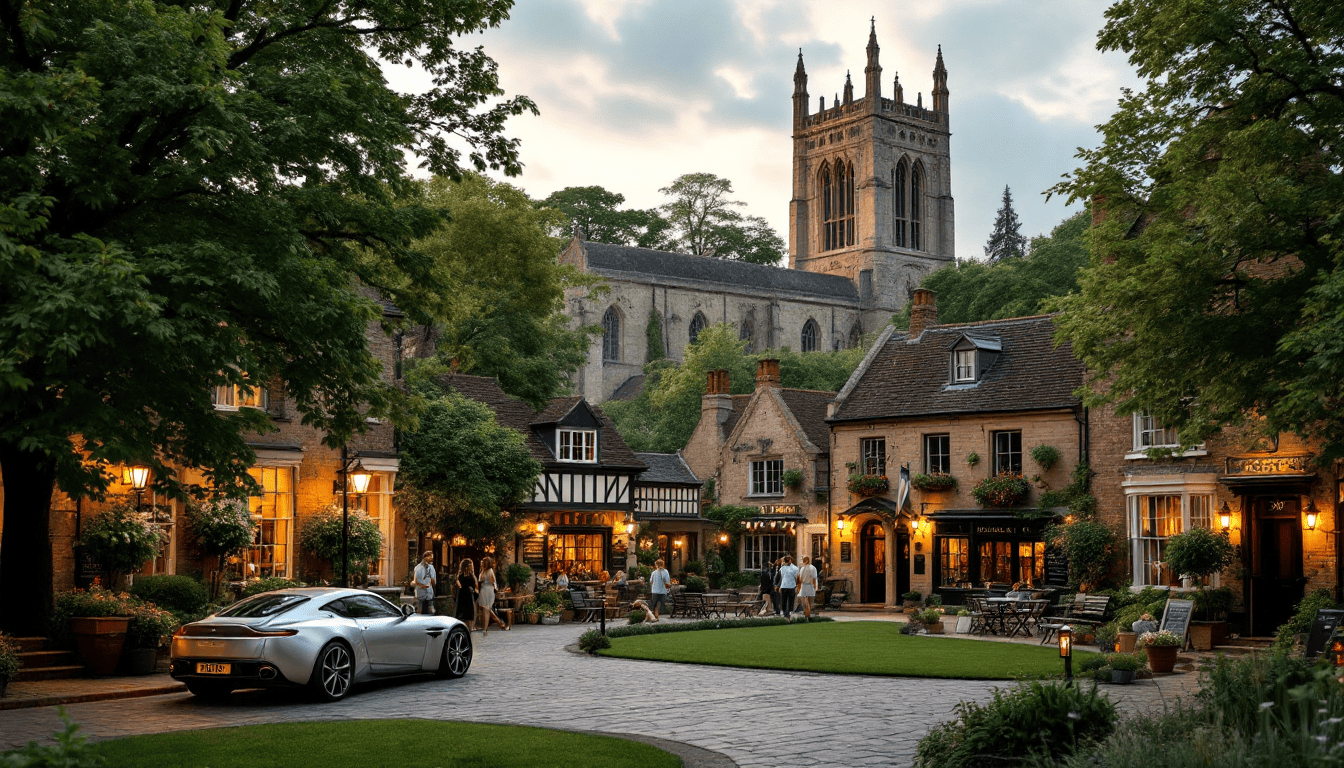
Not a market. Not an economy. Not an "economic zone" for the world's aspiring migrants. A home—the place where memory lives, where the dead are buried, where accents make sense and customs need no explanation. The place you defend not because you can justify it in seminar terms but because it is yours, and you received it from people who expected you to keep it for those who come after.
Walk through any English churchyard. The weathered stones bear the same surnames across centuries. Generation after generation returned to the same soil, lived under the same sky, were buried beside their fathers and mothers. They did not think of their country as a platform for global labour mobility. They did not imagine their descendants would be told strangers have an equal "right" to it. They thought of it as home—and they would be baffled, and then furious, to learn what has been done with their bequest.
This sentiment—attachment to place, loyalty to one's own, the desire for continuity—is not a prejudice to be overcome. It is the emotional foundation on which all political order rests. Every revolution, every war of independence, every act of national preservation has drawn its energy from this feeling. It is older than philosophy and more powerful than policy.
The modern governing class treats this sentiment as suspect—evidence of backwardness, parochialism, latent bigotry. They are wrong. The love of home is not hatred of others. The desire for continuity is not fear of change. The wish to remain oneself is not a crime against humanity.
A people may welcome guests. They are not obliged to surrender their house. And when policy is made by those who feel no attachment to any particular place—who move between global cities as interchangeable nodes, who consider rootedness a form of provincial ignorance—the result is precisely what we see: a governing class mystified by the attachments of those it governs, confidently asserting "rights" those people do not recognise, and an electorate increasingly certain its rulers hold it in contempt.
A Reckoning Avoided, But Not Cancelled
The final question modern politics refuses to answer: what penalty do those who gamble with national cohesion pay when they lose?
The politician who imports a decade's population growth in a single term will not live in the affected neighbourhoods. The academic theorising about universal rights and global justice will not compete for housing or school places. The journalist sneering at voters' concerns will not use the strained services. Those who make decisions and those who bear consequences occupy different worlds, connected only by the contempt of the former for the latter.
This asymmetry is the engine of catastrophe. When elites bear no cost for failure, failure becomes tolerable. When policies cannot be reversed, mistakes become permanent. When popular objection is dismissed as bigotry, consent becomes irrelevant.
Historically, three mechanisms held rulers accountable for such failures.
- Electoral reversal—now difficult when the electorate itself has been altered.
- Legal liability—never applied to policy consequences.
- Reputational destruction—neutralised when institutions conferring reputation are controlled by those who created the problem.
What remains is a governing class insulated from its own decisions, free to double down indefinitely because it never pays the price of being wrong. They do not live with the consequences. They do not intend to. And they have arranged matters so they never will.
But pressure which finds no legitimate outlet does not vanish. Grief forbidden expression does not heal. Consent ignored does not become consent obtained. The bill accumulates. The reckoning is deferred, not cancelled.
And when it arrives, those who refused to listen will discover imaginary rights evaporate rather quickly when confronted by people who have remembered what real ones look like.
The Right You Already Possess
Let us end where we began: with the structure of moral obligation itself, and with the question of rights—real rights, not invented ones.
You owe more to your family than to strangers. Your nation owes more to its citizens than to the world. This is not cruelty. It is the way moral duty has been understood by every serious thinker in every serious tradition: Aristotle's ordered community, Aquinas's ordered love, Hume's ordered sympathy, Burke's ordered trust between generations, Locke's stewardship of inheritance, Madison's representation of a particular people, Popper's conditional tolerance defends itself or dies.
And here is the right which follows from this duty: the right of a people to their own home.
Not a "right" invented by academics and declared into existence by international bodies. Not a "right" existing only because powerful people find it convenient. A right grounded in something solid: in the labour of ancestors, in the inheritance of generations, in the simple and profound fact this place is ours because we made it, we maintain it, and we intend to pass it on.
This right does not depend on the permission of the United Nations. It does not require validation from human rights lawyers. It does not need to be balanced against the invented "rights" of those who want what we have built. It exists prior to all of that—prior to the treaties, prior to the declarations, prior to the entire apparatus of post-war internationalism which has been deployed to shame people out of defending what belongs to them.
Your country is not an economic zone for the world's overflow. It is not a guilt offering for sins you did not commit. It is not a canvas for theories you did not endorse. It is a home—your home—inherited from the dead who built it, held in trust for the children who will receive it.
You have every right to keep it.
The moral tradition says so. The democratic tradition says so. The simple human truth of belonging says so. The invented "rights" asserted against you have no ground to stand on except the confidence of those who assert them—and confidence is not authority.
The only question which remains is whether you will act on what you already know, or continue pretending you do not know it because the cost of speaking seems too high.
The cost of silence is higher. Your ancestors paid for what you have. Your children will inherit what you preserve—or lose what you surrendered. The choice is yours, and it is not difficult.
Keep your home. It is your right. It always was.