Our NHS: Dead Mothers & Brain-Damaged Children
Stillbirth rates remain 50% above target. Maternal deaths climb. The midwives meant to catch you are vanishing—and when things go wrong, the same failures repeat in hospital after hospital. Nobody in power is willing to name what's breaking the system.
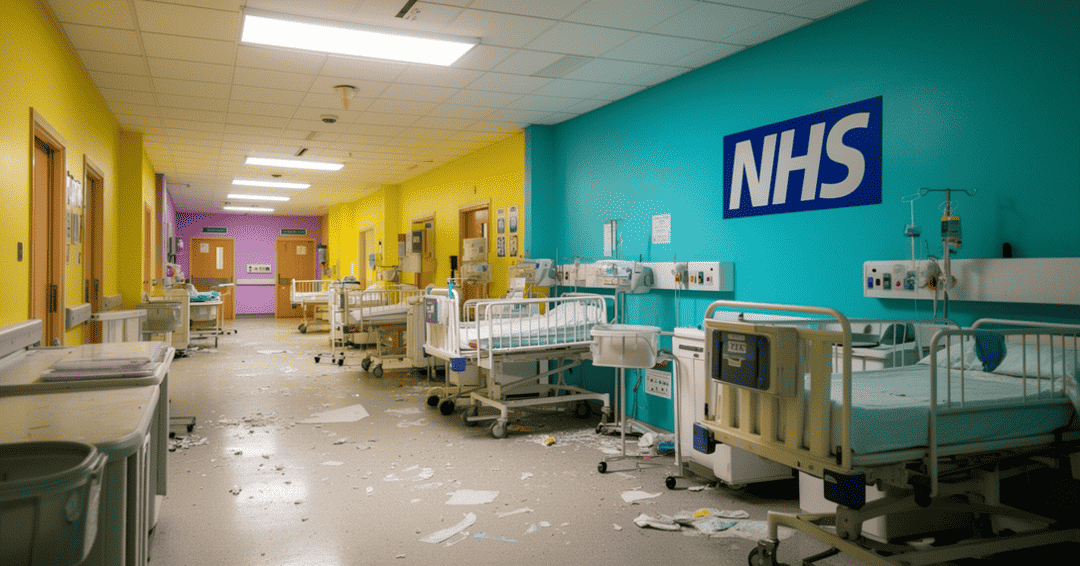
Picture a tightrope walker crossing Niagara Falls. Now imagine the safety net below has systematic gaps—not tears from age or accident, but designed absences, predictable weak points where the rope simply isn't there. When someone falls, investigators arrive, examine the body, write detailed reports about "lessons learned," and then carefully avoid mentioning the holes are still there for the next person.
This is England's maternity system in 2026.
The numbers speak with brutal clarity. England's stillbirth rate stands at 3.9 per 1,000 births—fifty percent above the stated national ambition of 2.6. For every thousand babies expected, nearly four are born dead. The neonatal mortality rate sits at 1.4 per 1,000 live births against an ambition of 1.0. These aren't abstract statistics. They're children who should be starting school, learning to read, annoying their siblings.
Between 2020 and 2022, 275 women across the UK and Ireland died during pregnancy or within six weeks of giving birth. The maternal death rate reached 13.56 per 100,000 maternities. More damning still: investigators concluded this rise from the previous three-year period remains statistically significant even when COVID-19 deaths are excluded. Women are dying at higher rates, and the pandemic isn't the explanation.
Understaffed, Burnt Out, Negligent
Midwives occupy a strange position in the medical hierarchy. They're not quite nurses, not quite doctors, but something else—guardians of a physiological process older than civilisation itself. They notice the subtle signs: the way a woman holds her abdomen, the slight confusion in her eyes, the tone of voice when she says "something feels wrong." Pattern recognition honed over thousands of births.
Yet in 2025, these professionals are working 100,000 hours of unpaid overtime every week just to keep services functioning. Not thriving—functioning. The Royal College of Midwives reports 87% of midwives say their units aren't safely staffed. Forty-five percent report burnout "often or always." Only 16% feel there are enough staff to do their job properly.
When the Nursing and Midwifery Council released its register data for September 2025, the figures revealed something stark. Growth in the nursing and midwifery register had slowed to 0.8% in the six months from April to September 2025, down from 1.8% in the same period a year earlier. The reason? International recruitment—the pipeline keeping the system alive—had collapsed by nearly half. First-time joiners from overseas dropped from 12,534 in April-September 2024 to just 6,321 in April-September 2025. A 49.6% fall. The lowest six-month intake in five years.
Ask yourself this: why should English babies be dying because not enough foreigners are being imported?
The RCM estimates England needs roughly 2,500 more midwives just to reach adequate staffing. But the inflow sustaining the workforce has been cut in half. The maths doesn't work.
Devastating Reports And Patterns
Walk into any major maternity scandal inquiry and you'll find the same script, performed with minor variations.
- Shrewsbury and Telford: 1,486 families, 1,592 clinical incidents spanning decades.
- East Kent: 202 cases reviewed, 97 where outcomes could have been different if nationally recognised standards had been followed.
- Morecambe Bay: a "dysfunctional" unit where serious failures of clinical care led to unnecessary deaths.
The Ockenden report—examining Shrewsbury and Telford—delivered a damning verdict in ten words: the service:
...failed to investigate, failed to learn and failed to improve.
Read the inquiry reports and certain failure modes appear with the regularity of a metronome.
Cardiotocography—CTG monitoring, the electronic tracking of the baby's heartbeat during labour—is consistently misinterpreted or ignored. Ockenden found "many cases where an antenatal CTG was incorrectly classified." These aren't obscure diagnostic challenges. CTG interpretation follows clear national guidelines. The tracings show whether a baby is coping with labour or sliding into distress. Midwives and obstetricians are trained to read them. Yet hospitals keep getting it wrong.
Then there's escalation—or rather, the absence of escalation. At East Kent, a midwife explained why she didn't call the consultant directly about a pathological CTG:
I didn't escalate directly to the consultant because it wasn't the culture… difficult to call them… about a pathological CTG… if the registrar was busy.
The baby's heart trace was showing distress. The consultant was the appropriate person to call. But the "culture"—that word again—meant she didn't.
The pointless Health Safety Investigation Branch describes "sociocultural barriers to escalation within the department." Translation from socialist idiotspeak: junior staff are frightened to bother senior doctors, even when a baby's life depends on it. Hierarchy trumps physiology.
Mums Treated With Contempt
Eighteen percent of women surveyed by the useless Care Quality Commission in 2025 said they were not taken seriously by other women midwives when they raised concerns during labour and birth. Nearly one in five. Imagine any female reader's lack of surprise the sisterhood isn't, in fact, real. Regardless, these are women in the most vulnerable position imaginable—in pain, frightened, often unable to advocate forcefully for themselves—telling professionals something is wrong, and being dismissed.
The East Kent report found "strong evidence… of a failure to listen to women and their families." It listed "indicative behaviours" including "not listening… resulting in a failure to recognise warning signs or a deteriorating situation."
How this plays out in practice: a woman says she feels something isn't right. The midwife, overworked and managing multiple patients, offers reassurance. The CTG trace shows ambiguous signs. Nobody escalates. Hours pass. By the time someone finally calls the consultant, the baby is starved of oxygen. Brain damage is permanent. The family receives a letter years later explaining the trust has learned lessons.
Google this topic – if you dare – and you will be staggered by the amount of stories of brain damaged or dead children because of midwife negligence.
The duty of candour—the legal obligation to be open and honest when things go wrong—repeatedly fails. East Kent found "a collective failure to be open and honest or to comply with the duty of candour" and "a tendency… to fail to take responsibility for errors." Families are left "feeling ignored… after a serious event."
When the system does investigate, it often investigates badly. Ockenden argued delays in learning increase the risk of repeating failures and demanded investigations be independently chaired with findings introduced into practice within six months. Yet the useless Health Safety Investigation Branch quango, unsurprisingly, found in August 2025 precisely the opposite: "too many recommendations and limited implementation," plus systemic weaknesses in "the quality of local investigations after harm."
Reports pile up. Recommendations multiply. Nothing fundamental changes.
Sixty Billion In Liability Claims
Another useless quango, the National Audit Office, published a report in October 2025 examining the costs of clinical negligence. The provision for future liability—the sum the government must set aside to pay claims already notified—has risen from £14.4 billion in 2006-07 to £60 billion in 2024-25.
An increase of £45.6 billion.
Why does this matter for maternity? Because maternity negligence dominates the liability landscape entirely disproportionate to its share of NHS activity. NHS Resolution—yet another useless unelected quango handling clinical claims—reports 42% of all clinical negligence payments in 2024-25 related to maternity. That's £1.3 billion out of £3.1 billion total. When measured by the value of notified claims, maternity represents 53%—£3.5 billion.
The highest-value claims are typically brain injuries during birth. The average compensation for obstetrics cerebral palsy or brain damage claims in 2024-25 was £11.2 million. These claims represent 2% of cases by volume but 68% of total costs.
Think about what this signal means. The negligence system—for all its flaws—is a rough market price for harm. When maternity represents around 11% of clinical claims received but 53% of claim value, the system is screaming a message: the harm happening in maternity is catastrophic, life-altering, and preventable.
Every £11.2 million payout represents a child who will never walk, never speak, never live independently. A family whose entire existence is reorganised around 24-hour care. The money doesn't fix anything. It just acknowledges the scale of what was lost.
A Broken System Reliant on Foreigners
Here's where the conversation becomes uncomfortable, because it involves confronting a fact the political class would rather ignore: the NHS maternity system—like much of the health service—has been kept operational by large-scale immigration of healthcare professionals.
Midwifery is explicitly listed on the Health and Care Worker visa eligible occupations list under code 2231. For years, this route allowed trusts to recruit internationally when domestic training places couldn't fill the gap. When British-trained midwives burned out or left the profession, trusts turned to overseas recruitment to plug the holes.
The numbers show how dependent the system became. When international first-time joiners to the nursing and midwifery register fell by 49.6% in the first half of 2025, overall register growth slowed dramatically. The pipeline wasn't supplementing the workforce—it was sustaining it.
Consider what happens when that pipeline constricts. Vacancies widen. Remaining staff work longer hours. Burnout accelerates. More staff leave. The spiral tightens. The research evidence is clear: a 2024 peer-reviewed study found registered midwife understaffing was associated with an 11% increase in harmful incidents.
This isn't an argument about immigration per se, before the "remigration" crowd seize on it. It's an observation about system design. When your maternity services depend on continuous international recruitment to function, you haven't built a sustainable system. You've built a Ponzi scheme where growth requires ever-expanding inflows. The moment recruitment slows—whether from policy changes, visa restrictions, or global labour market shifts—the system doesn't adjust gracefully. It breaks.
The alternative would have been to train enough midwives domestically, pay them properly, and structure the work so they don't burn out after five years. But training takes time and costs money upfront. Recruiting from overseas is faster and shifts the cost elsewhere—to the countries losing their own trained professionals and to the workers themselves navigating visa systems and professional registration.
Now the chickens are roosting. International recruitment has fallen off a cliff. The RCM says England needs 2,500 more midwives. The Care Quality Commission's review of maternity services in 2022-24 found 47% rated either "requires improvement" or "inadequate." Under the newer 2024 assessment framework, two-thirds of services in the early sample were inadequate or requires improvement.
Didn't Listen, Won't Fix
The Care Quality Commission—the unelected useless Soviet quango responsible for hospital safety—has conducted multiple sweeps of maternity services. The results are grim. In its 2022-24 national review programme, not a single service inspected was rated "outstanding" for safety. For the specific question of whether maternity units are "safe," 18% were rated inadequate, 47% requires improvement, 35% good.
When you walk into a maternity unit in England, there's roughly a one-in-five chance the "regulator" has deemed it inadequate for safety. Nearly half require improvement. Only just over a third are good. None are outstanding.
What does "inadequate" mean in practice? It means basic safety standards aren't being met. Equipment isn't properly maintained. Staff aren't adequately trained. Incident investigations are poor or non-existent. Governance is weak. These aren't minor administrative failures. They're the foundations of safe care.
The August 2025 Health Safety Investigation Branch exploratory review identified recurring system issues requiring deeper investigation: complex national infrastructure with inconsistent collaboration, too many recommendations with limited implementation, local governance isolated from wider trust governance, persistent problems recognising and responding to clinical risk, and weaknesses in local investigations when things go wrong.
Translation: the system for learning from failure doesn't work. Recommendations are issued, mostly ignored, then reissued after the next scandal. Trusts operate in silos. National bodies issue guidance with no enforcement mechanism. When disasters happen, investigations are conducted by people with conflicts of interest who produce reports hospitals can safely file and forget.
The Consultant Who Wasn't There
One pattern recurs across multiple inquiries: the absent consultant. Not physically absent—they're somewhere in the hospital, often dealing with another emergency—but functionally unreachable. Midwives face deteriorating situations and lack clear pathways to escalate. Registrars are overstretched. The culture discourages "bothering" senior doctors.
Labour and delivery don't respect office hours. Most births happen outside 9-to-5. Nights and weekends are when staffing is thinnest and seniority lowest. A woman goes into labour at 2am. The CTG trace shows ambiguities. The on-call registrar is in theatre. The consultant is at home, theoretically available but realistically difficult to reach. The midwife makes a judgment call. Sometimes the judgment is right. Sometimes it isn't.
The East Kent report linked poor teamworking directly to escalation failures: "Failure to work effectively together… In maternity services, it leads to staff failing to escalate clinical concerns promptly." When teams don't function, information doesn't flow. Warning signs accumulate. By the time someone senior enough reviews the full picture, irreversible damage has occurred.
Ockenden emphasised the need for sustainable workforce planning, noting "significant pressures… in the recruitment and retention of midwives and obstetricians." But "sustainable workforce planning" is policy-speak. In practice, it means: train enough people, pay them properly, and structure rotas so they're not destroying their health to keep services running.
None of this has happened.
After The Quangoes, Another Useless Taskforce
In June 2025, the government launched a national independent investigation into maternity and neonatal services, chaired by Baroness Valerie Amos. A National Maternity and Neonatal Taskforce was established with staged outputs through spring 2026. This follows Ockenden's Shrewsbury and Telford report in March 2022, the East Kent report in October 2022, the Morecambe Bay investigation before it, and numerous smaller inquiries into individual trust failures.
The pattern is depressingly familiar.
Scandal breaks. Families campaign. Media coverage intensifies. Government announces inquiry. Inquiry produces detailed report identifying systemic failures. Report issues recommendations. Government accepts recommendations "in principle." Recommendations are mostly ignored. Years pass. Next scandal breaks. Repeat.
Interestingly, the Health Safety Investigation Branch explicitly named this problem: "too many recommendations and limited implementation." The system drowns in recommendations while the underlying failures persist. Why? Because recommendations are cost-free. Implementation requires money, political will, and sustained pressure. Money is scarce. Political will evaporates when headlines fade. Sustained pressure requires organised constituencies with power, and dead babies don't lobby.
A trust faces a negligence claim. It settles quietly, often with non-disclosure agreements. The specific failures never become public. The same trust faces another claim. Another settlement. The pattern continues until something so egregious happens—often a cluster of deaths close together—it can't be contained. Then the inquiry process begins.
This has been going on since at least the 1970s in the NHS. It's pure Civil Service muck.
But by the time the inquiry reports, years have passed. Staff have moved on. Leadership has changed. The new management promises lessons have been learned. Recommendations are "implemented"—which often means policies are written, training slides are created, and boxes are ticked. Whether actual practice changes is a different question.
What Breaking Looks Like
When a system breaks, it doesn't announce itself with sirens and flashing lights. It degrades gradually. Response times lengthen. Corners are cut. Informal workarounds become standard practice. Staff stop reporting concerns because nothing changes. The gap between policy and reality widens until it becomes unbridgeable.
England's maternity services are in this state now.
- Stillbirth and neonatal death rates aren't falling toward ambitions—they're stuck well above them.
- Maternal deaths are rising.
- Two-thirds of maternity services are inadequate or require improvement.
- Midwives are working 100,000 unpaid hours weekly.
- International recruitment has collapsed.
- The negligence bill is £60 billion and climbing.
These aren't separate problems. They're symptoms of the same underlying failure: a system running beyond sustainable capacity, maintained by exploitation (of midwives working unpaid overtime) and importation (of overseas professionals filling staffing gaps), now colliding with demographic and policy realities it can't overcome.
The response from the political class has been to commission more reports. The response from NHS management has been to reorganise structures and issue new guidance. Neither addresses the fundamental mismatch between resources and demand, or the cultural failures allowing preventable harm to repeat across hospitals. East Germany learnt this lesson decades ago.
The Price of Pretending
Sixty billion pounds. One point three billion of taxpayer money paid out in a single year for maternity negligence alone. These sums are so vast they lose meaning. But every pound represents a failure the system has acknowledged in the only language it truly understands: money.
When a child suffers permanent brain damage because a CTG trace was misread, a consultant wasn't called, and a woman's concerns were dismissed, the negligence system translates this into a lifetime care package worth millions. The calculation is coldly actuarial: how many years of life, how many hours of care, how much adaptive equipment, how much therapy, how much lost earning potential. From cradle to the grave, as the welfare state says: the shorter the better for the bookkeepers.
The irony is savage. The same system that won't fund adequate staffing—that allows midwives to work 100,000 unpaid hours weekly—will eventually pay millions in compensation. The money exists. It's just spent on damage control rather than prevention.
There's a further irony. The £60 billion provision isn't sitting in a vault. It's a liability on the government's balance sheet, a promise to pay. When those claims are settled, the money comes from general taxation. Every taxpayer is funding the consequences of failures the system refuses to prevent.
What Would Actually Work
The evidence is clear enough. Proper staffing prevents harm. The solution seems obvious: train them.
But training midwives takes three years. Political cycles run on much shorter timeframes. No health secretary wants to announce they're investing heavily in training for professionals who won't qualify until after the next election. Far easier to issue guidance, reorganise structures, and hope international recruitment picks up.
Escalation protocols could be made mandatory and auditable. Every maternity unit could be required to demonstrate how a midwife can reach a consultant within fifteen minutes at any time of day or night. Compliance could be inspected. Failures could trigger enforcement action. This would cost money—it requires senior doctor availability—but less than the settlements being paid out.
CTG interpretation could be subject to mandatory external review. Units with high rates of misclassification could face immediate intervention. Again, this requires money for additional training and oversight. But the alternative is the current situation: hospitals keep making the same interpretive errors, babies keep suffering brain damage, and the negligence system keeps paying millions per case.
Listening to women could be made a measurable safety standard. When a woman says something is wrong, protocols could require escalation and documentation. Failure to escalate could trigger automatic review. The CQC could inspect this specifically. Currently, at least a fifth of women – the real total almost certainly much higher – say their concerns during labour weren't taken seriously. This is measurable and improvable.
The immigration dependency could be addressed honestly. If the system requires continuous international recruitment to function, that should be stated explicitly as a matter of national policy, with visa routes maintained and professional registration streamlined. Alternatively, if the goal is domestic self-sufficiency, training numbers must increase dramatically and working conditions must improve enough to retain staff. The current approach—pretending the system can function while simultaneously restricting immigration and failing to train enough domestically—is fantasy.
Socialist Healthcare Can't Pay
The uncomfortable truth is this: safe maternity care is expensive. It requires enough midwives to provide continuity of care, enough obstetricians to ensure senior decision-making is always accessible, enough theatre capacity for emergency interventions, enough neonatal beds for babies needing intensive care. It requires robust governance, effective training, functioning escalation pathways, and a culture where raising concerns is rewarded rather than punished.
All of this costs money. Money for salaries, equipment, facilities, training, and oversight. The current approach is to pretend services can be run on the cheap, with midwives donating 100,000 hours weekly and overseas recruitment filling the gaps. This pretence is now colliding with reality.
The scandals will continue. More families will receive life-altering news. More inquiries will produce detailed reports. More recommendations will be issued and mostly ignored. The negligence bill will keep climbing. The sixty billion will become seventy, then eighty.
Unless someone in a position of authority decides to tell the truth: the emperor has no clothes. The maternity system is breaking. The workforce is exhausted. The recruitment pipeline has collapsed. The outcomes are deteriorating. And no amount of reorganisation or guidance will fix a problem rooted in insufficient resources and broken culture.
The question is whether anyone with power cares enough to say it.
Something Has To Change
If you're pregnant or planning to be, ask your midwife directly: is this unit safely staffed? Request clear escalation pathways—who will you see, when, and how quickly can a consultant be reached? Document everything. If you raise a concern and it's dismissed, insist it's written in your notes.
If you're a healthcare professional working in maternity, report unsafe staffing through every available channel. Use the whistleblowing protections. Document everything. When corners are being cut, say so.
If you're a voter, demand your MP answers a simple question: how many midwives does England need, how many are we training, and when will the gap close? Accept no waffle about "workforce transformation" or "efficiency savings."
The system won't fix itself. It's broken by design—by decisions to underfund, understaff, and under-regulate while pretending everything is under control. It will only change when the pretence becomes impossible to maintain.