Play FPTP Colonel Blotto In Our Electronic Dashboard
You don't win British general elections by getting the most votes. You win them by optimising your spread and strategically contesting enough open battlefields. 650 available; 326 to win. You can't win them all. The Restorationist's Colonel Blotto dashboard is a way of learning and practicing FPTP.

We've written a lot about first-past-the-post elections and the whiners who endlessly lose because they don't understand how the game is played. We've written about how Colonel Blotto is a perfect model for them, and how understanding game theory is crucial for political success. But it's not enough to read academic theory. You need to play it in the pub and practice by getting it wrong.
We all know what winner-takes-all is, and the analogy to horseracing. We all know there are 650 MPs who we vote for in arbitrary areas. But nobody sits you down at school and explains how this game actually works. Which is so clearly evident from the insane amount of political wannabes in the UK who think our elections work by volume and spoils, like an American movie. It doesn't. Our system is brutal. It punishes underdogs and encourages coalition beforehand, not after. But the underdog can also win unexpectedly.
Read Before You Dive In
The dashboard is for the man in the pub or the bookies, who doesn't care about game theory but wants to know how the game is played – and have a go at it a few times. It's also designed for seasoned political thinkers who want to test how much they know about winning the 326 seats needed to change anything.
It's useful to browse previous Restorationist articles first. Click the article links below for a good read of what we're talking about.
 Chris Woodhouse, Esq
 Alex Coppen
 Alex Coppen
Exploring the Colonel Blotto Dashboard
There's a lot on display here, so let's go through it gently. Unlike our previous dashboards, this one isn't as self explanatory.
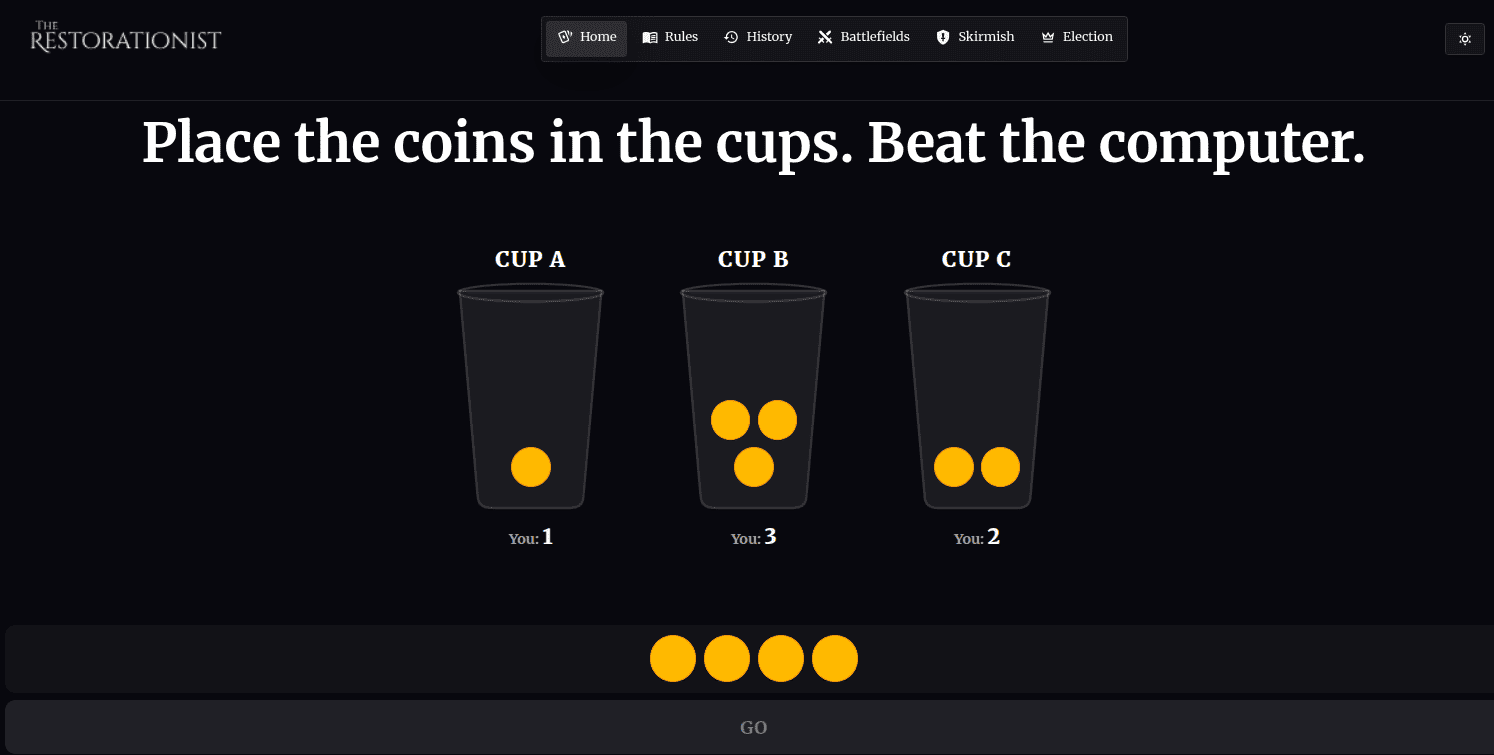
Playing cups and coins
This one is simple and teaches resource allocation. You can try this in the pub to learn the basics. There are two players. You have to win two of the cups against the other guy. The "the other guy" here is the computer (the page).
Historical constituency data
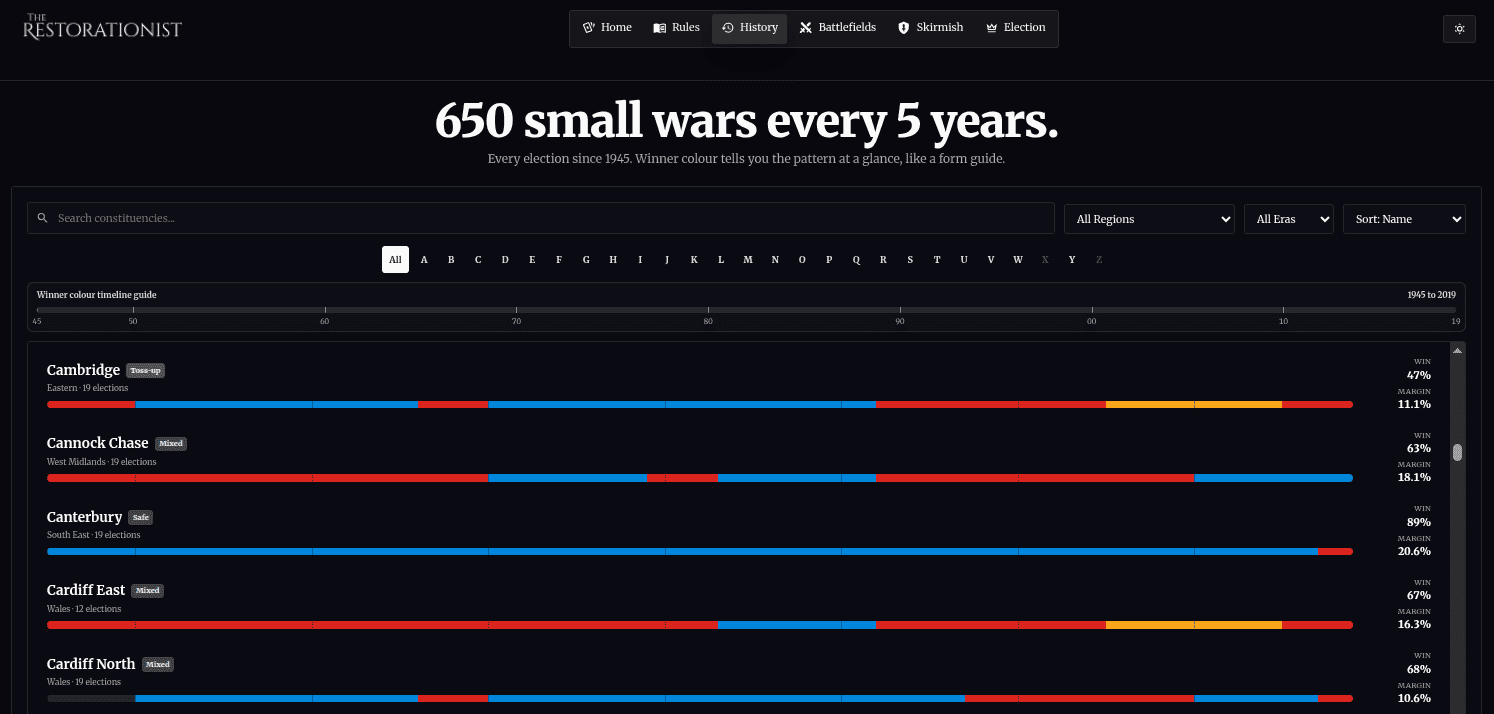
This can seem a little overwhelming at first, but it's a visual guide to all the election results since 1945. You can see which parties won them, and how.
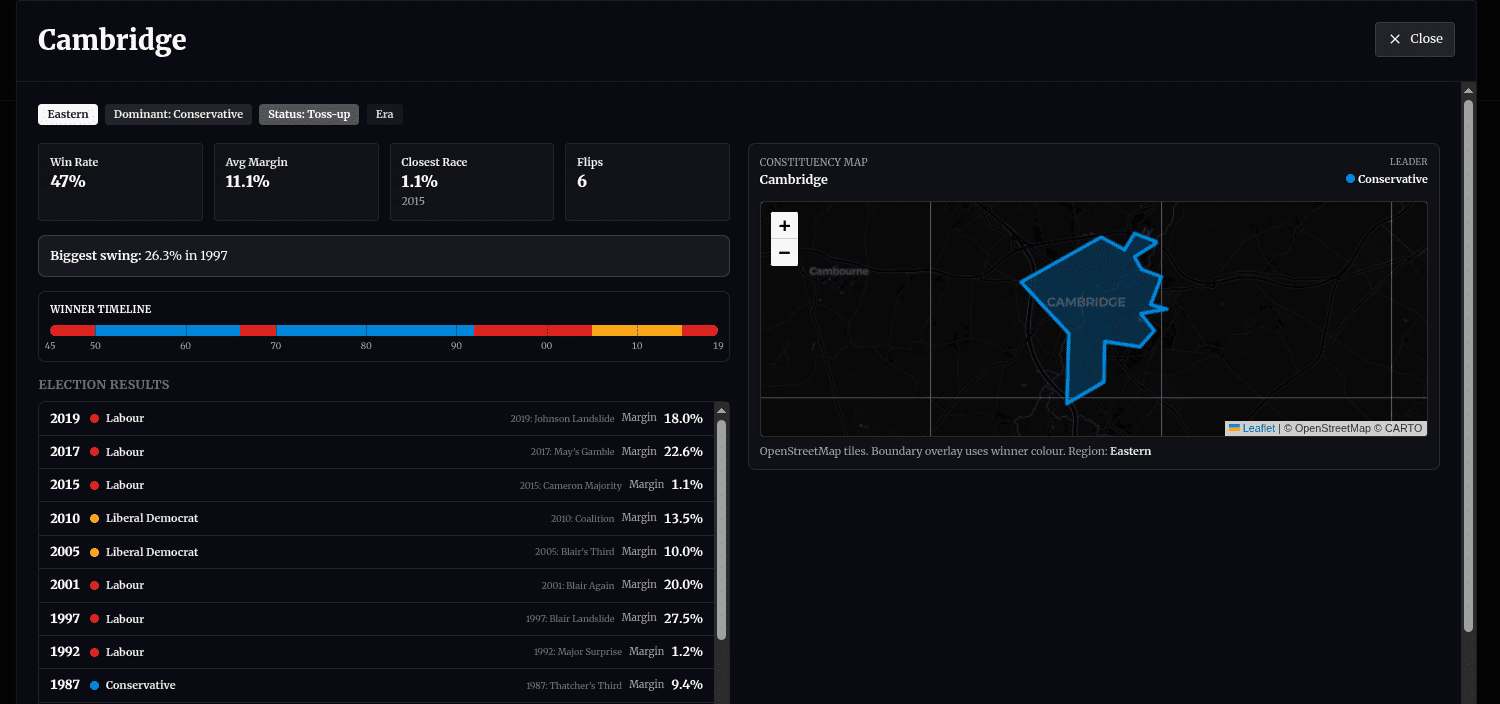
When you click on each, you'll see the breakdown: where it is, how each race went by year, and how it was won.
Blotto Battlefields
Because you can't play every game or win every battle, you have to focus on those which are winnable/contestable. We need to know how many coins to place in each cup, and which cups to play.
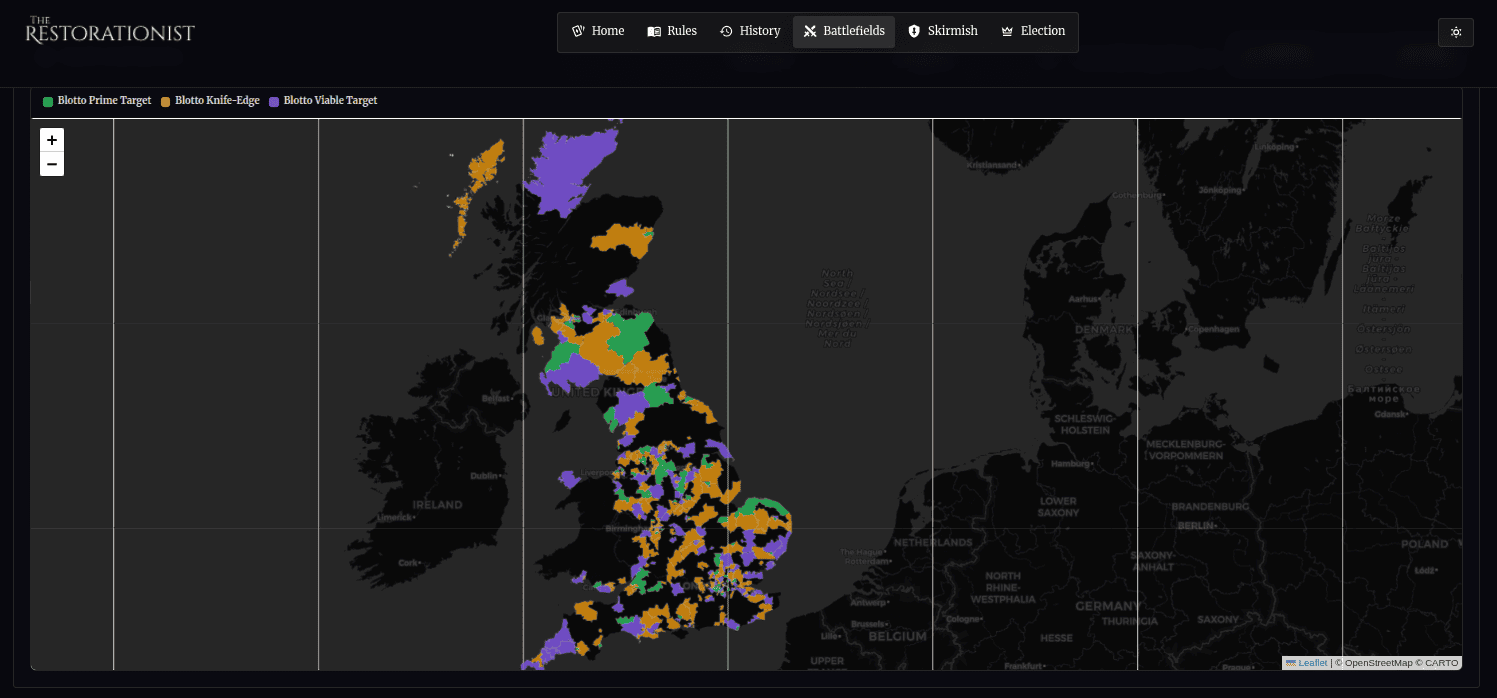
You can also see these visually across the UK.
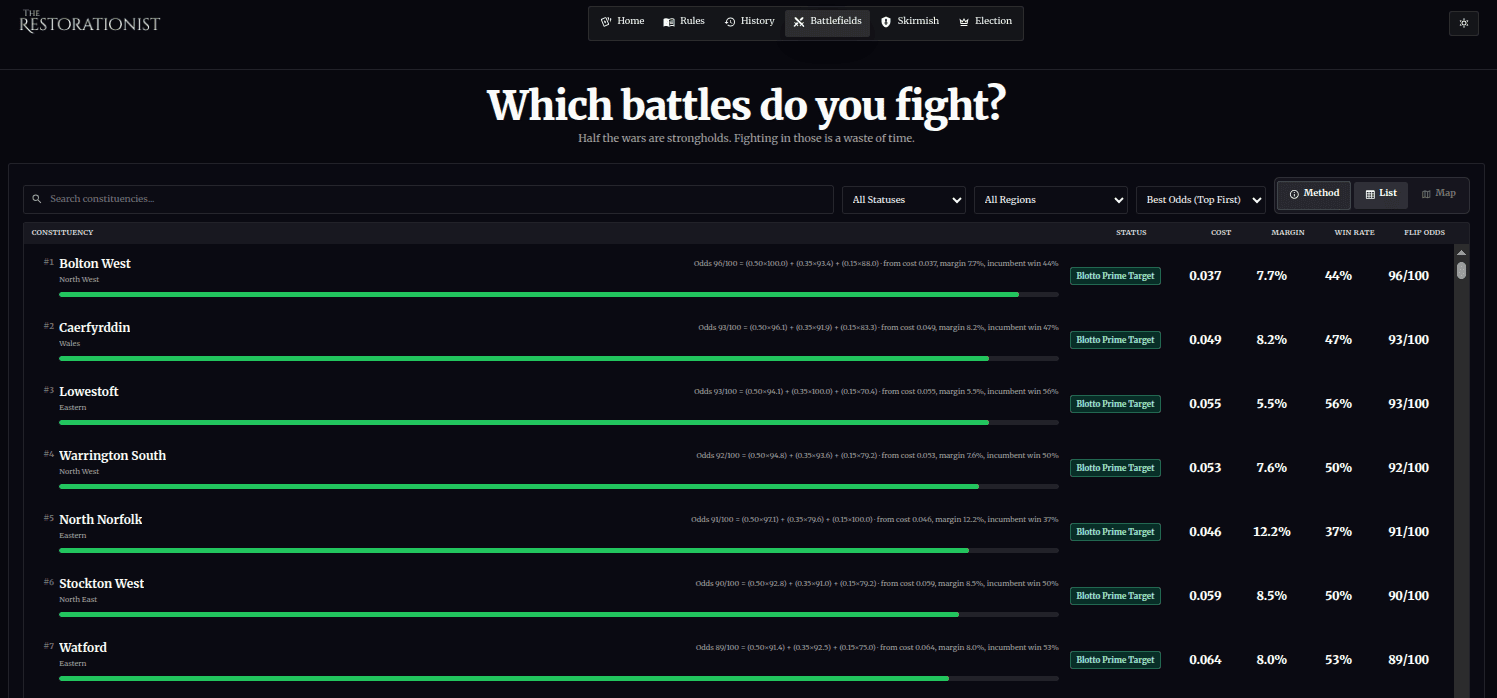
Here you'll get data which is a lot more like being at a bookies, explaining how winnable the seat is and why. For example:
Odds 96/100 = (0.50×100.0) + (0.35×93.4) + (0.15×88.0)
from cost 0.037, margin 7.7%, incumbent win 44%
Weighted sum = 50.0 + 32.7 + 13.2 = 95.9
The methodology we used is given here. Each input is converted to a 0-100 factor where lower is better, then combined:
flip_odds = (0.50 × cost_factor) + (0.35 × margin_factor) + (0.15 × win_rate_factor)
Every seat row shows its exact numbers and exact weighted calculation.
- Cost (50%): given the biggest weight on purpose.
- Campaigns usually run on limited cash and people. Expensive seats can drain resources quickly, so cost matters most.
- Margin (35%): strong secondary signal
- A tighter margin usually means fewer voters need to move to flip the seat.
- Win Rate (15%): useful, but lighter
- History gives context, but it can lag current reality. So we include it with a smaller weight.
These weights are a deliberate targeting rule for this board, not a mathematical law. If campaign strategy changes, the weights can be tuned.
Turning the coins/cups into constituencies
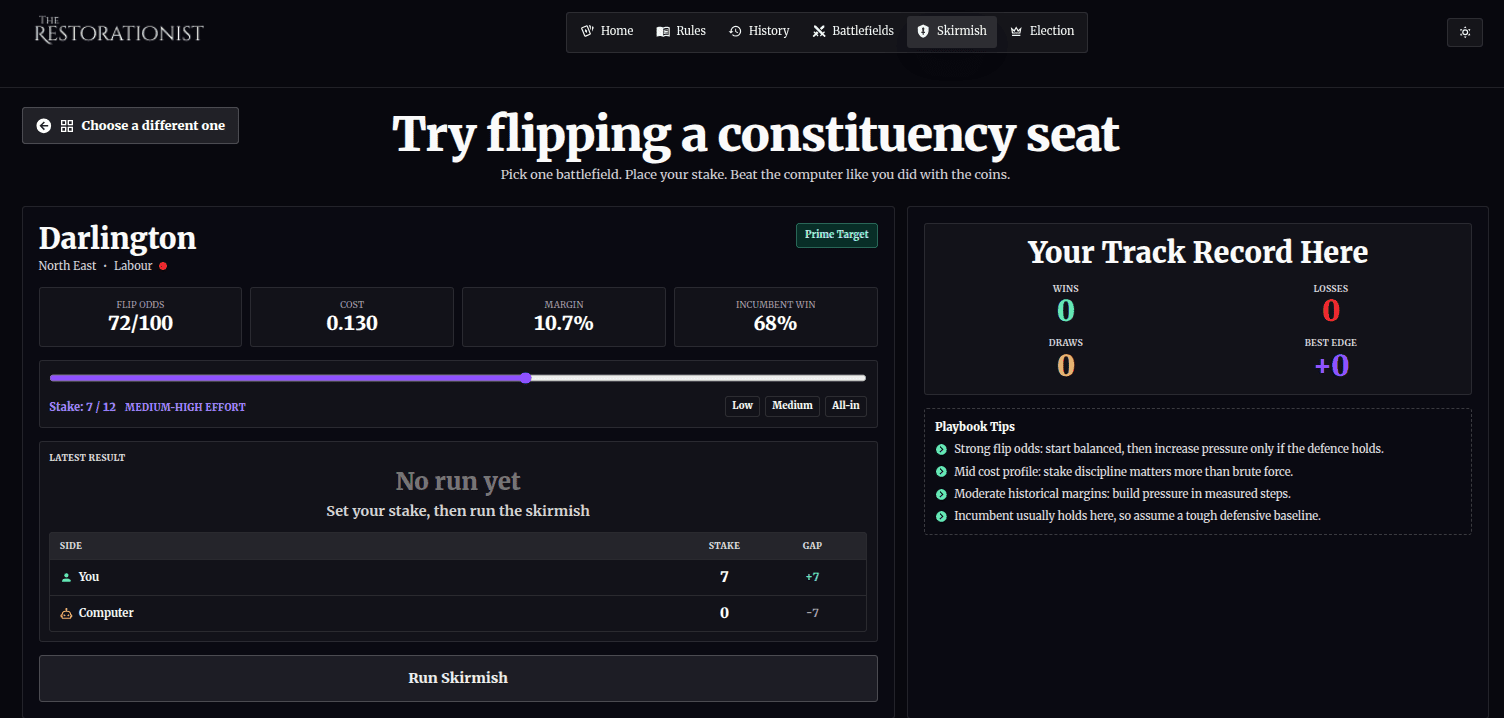
Next, we go to the next level: real results, real constituencies, and a best-effort simulation of how a local election is won. You're playing the computer again, but this time in a real electoral ground.
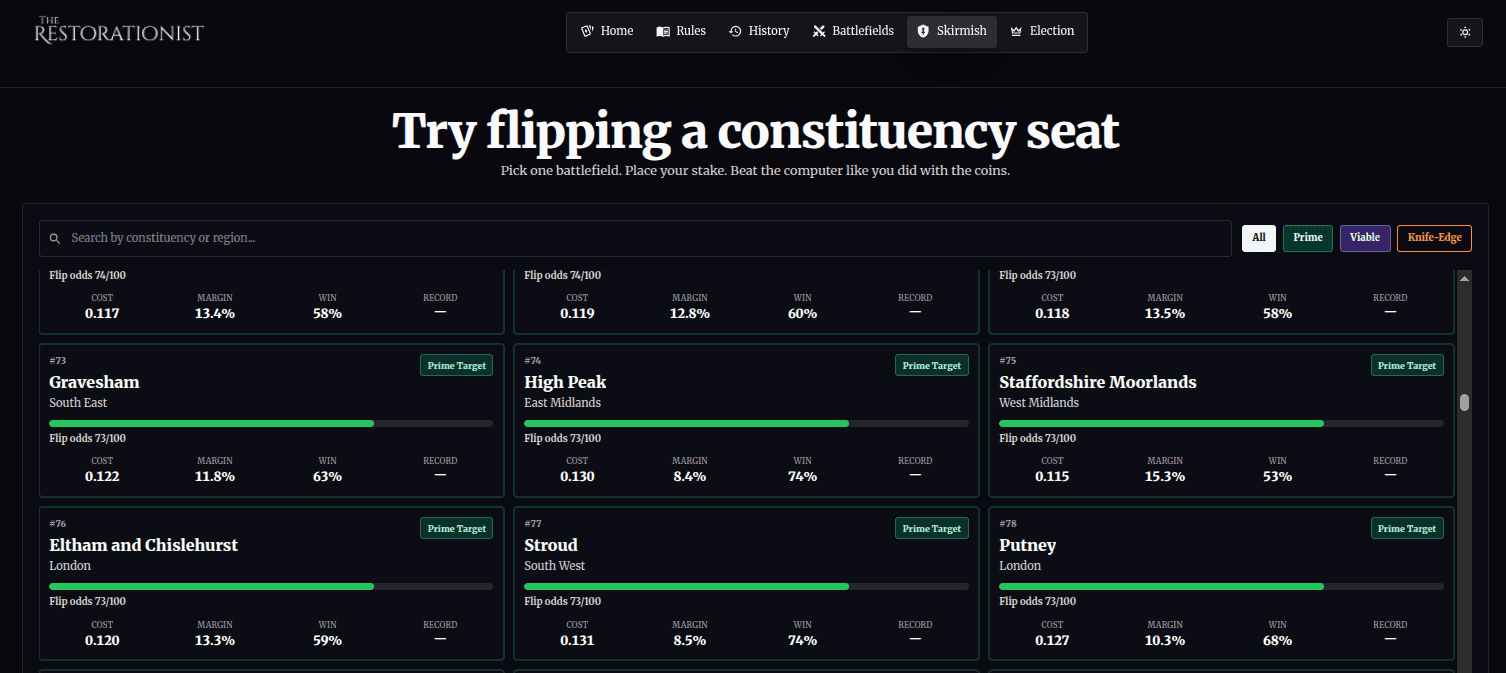
These are the winnable marginals, not the safe seat strongholds. You simply can't win these battles – well, rarely – so you need to focus what resources you have in the places it will matter most. You have limited funds, volunteers, advertising, or name recognition. Put these together, and we call them effort.
The computer (the page) will play you. Decide what level of effort you're going to put in. Play as many times as you like to see how the results change.
Can you win 650 races simultaneously?
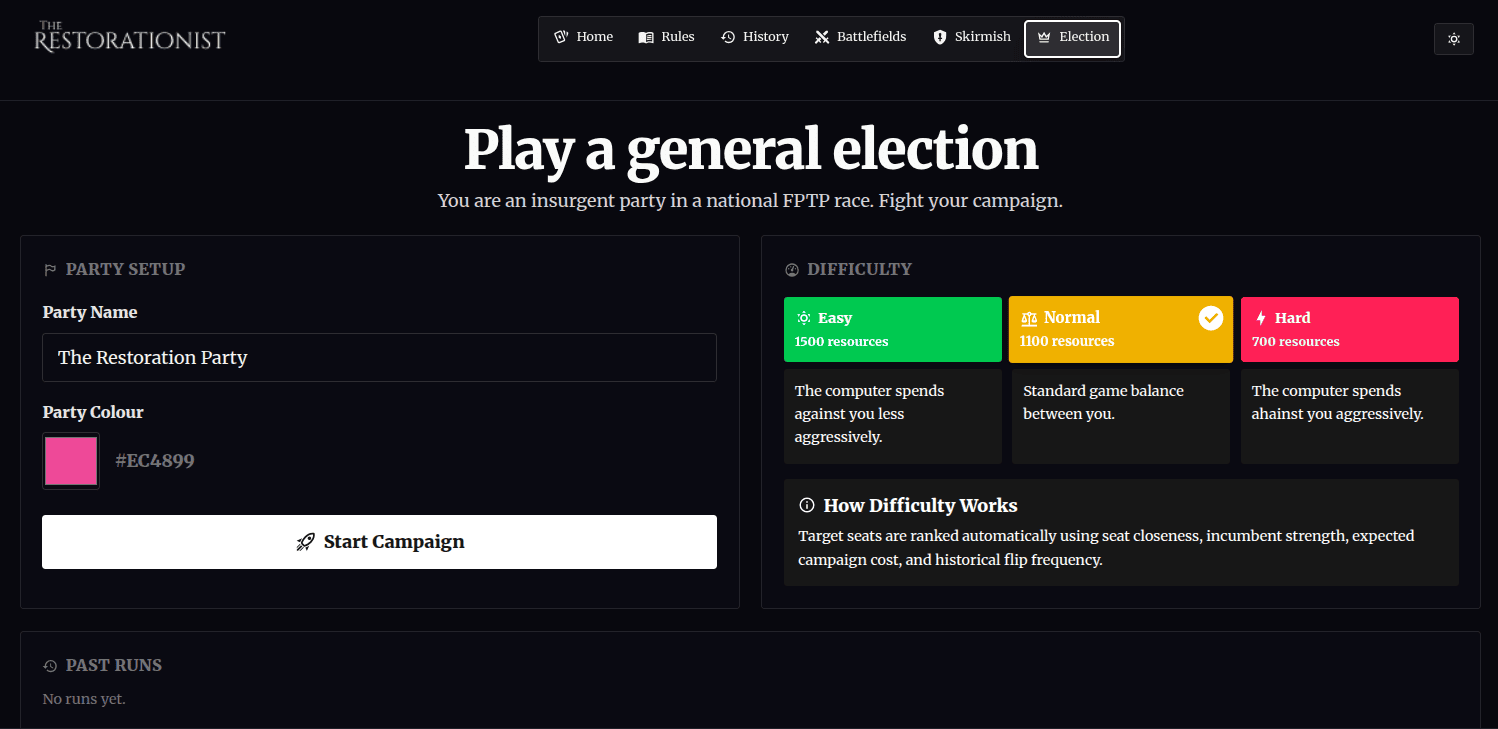
Finally, we come to the Big One. You have to win a general election Blotto-style. There are 650 Blotto games, as a game-of-little-games. You are a new insurgent party taking on the monoculture duopoly. Pick a name and a colour. Then pick how aggressively you want the computer to bet against you.
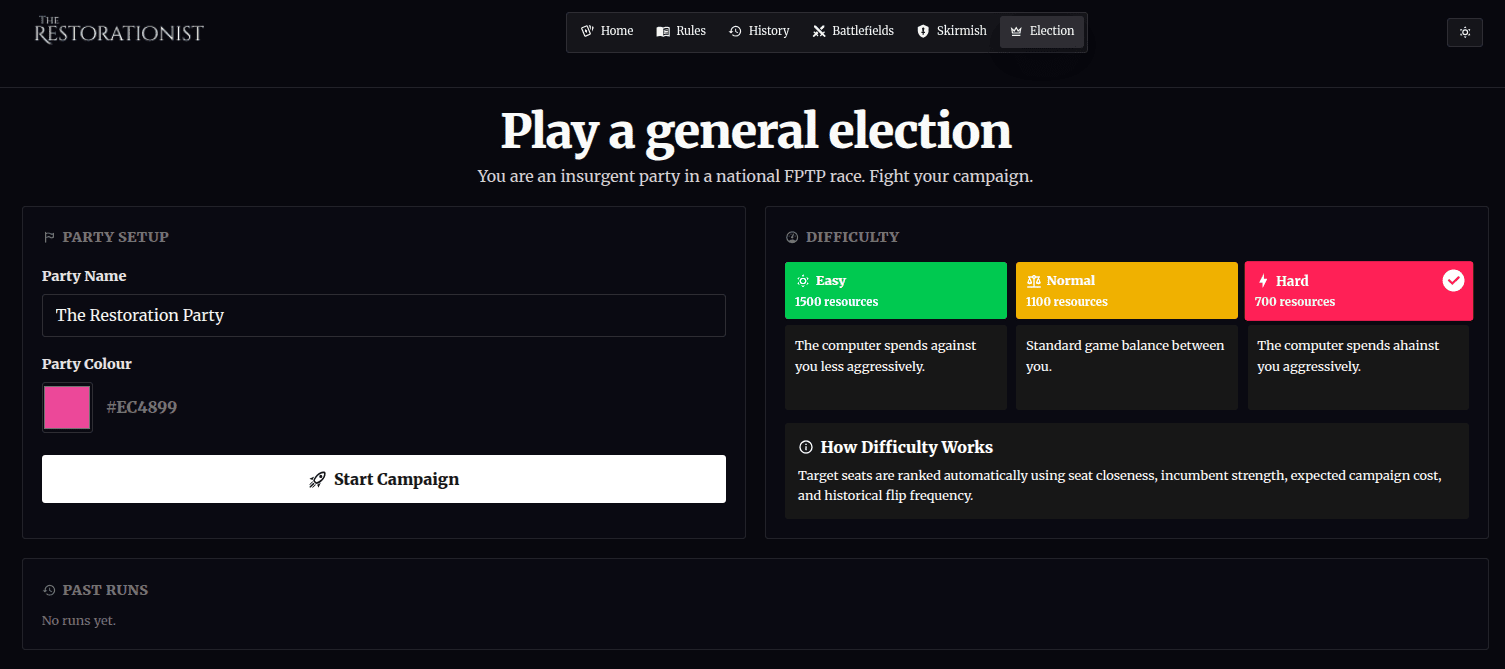
This is where all the learning counts. In each constituency, you need to decide how much effort you are going to put in to win it. You don't play all 650 seats. You can if you want to, but read the rules and laws of the game again. Your resources are finite. You can't win those 550 strongholds we defined as the battlefields.
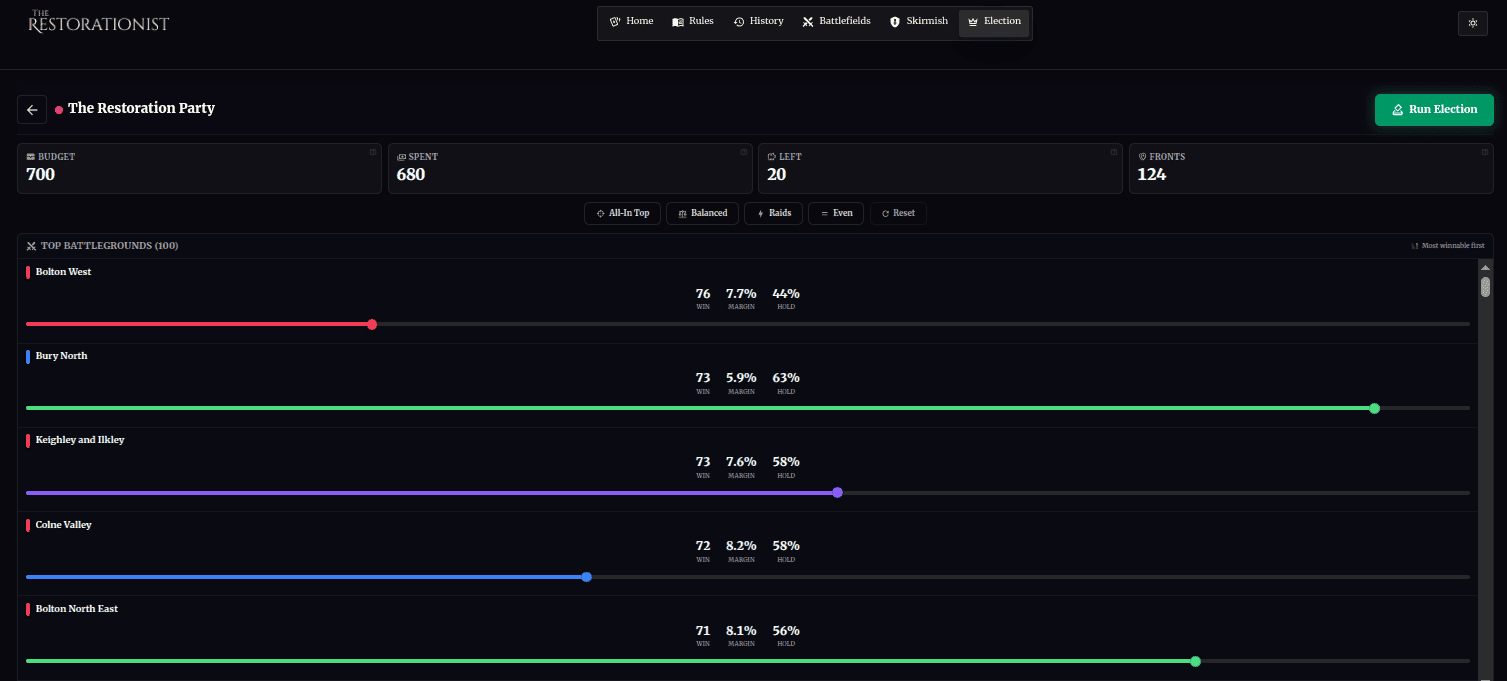
In this screen, we're not putting much effort into Bolton West, but we are going for Bury and Bolton East.
How does this play out?
Give it a go and see: https://blotto.restorationist.org.uk