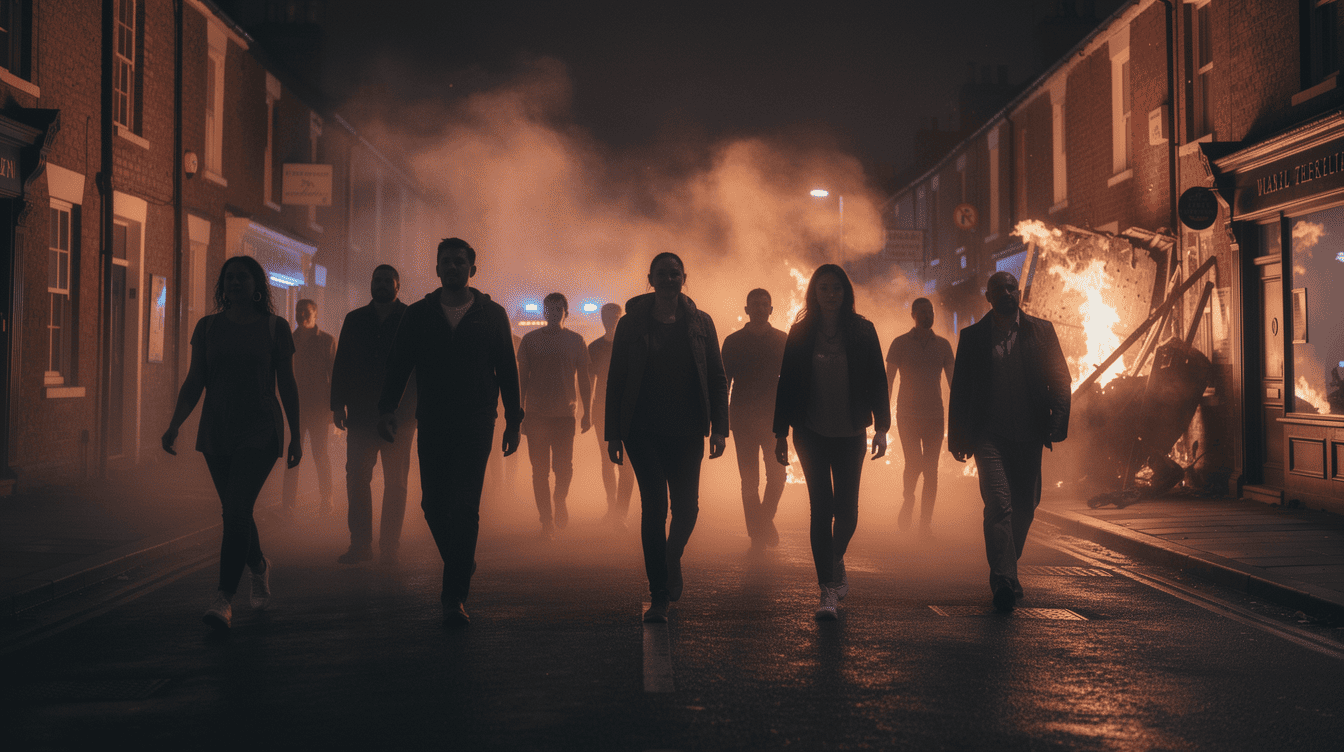
The 2025 Political Darwin Awards
SEO analysis describes the Restorationist's "in-house" style as "dry, surgical, British, and quietly devastating." This Christmas, in that vein, we humbly present our first annual collection of the worst 25 moments when British politics selected itself out.


There is a certain genre of failure that transcends mere incompetence. It is not the failure of the man who trips on a pavement crack, nor even the failure of the man who trips on the same crack twice. It is the failure of the man who, having tripped twice, commissions a review into pavement crack diversity, establishes a Crack Awareness Unit, arrests a pensioner for complaining about cracks on Twitter, and then announces that the real problem is public attitudes towards falling over.
Welcome to Britain, 2025. What follows is a cross-party audit of self-inflicted wounds so spectacular they deserve commemoration.
These are not the failures of evil men—evil, properly executed, requires a certain competence. These are the failures of people who attended the right schools, sat on the right committees, and somehow emerged from this rigorous filtration process with the collective survival instincts of a lemming with a death wish and a government grant.
The judging criteria were simple: the incident must have been entirely predictable, loudly predicted by people subsequently ignored, and the sort of thing that would get you sacked from any job not located within the M25.
Miserable Failure During 2025: The Full List Of Awards
What follows is a comprehensive catalogue of institutional self-harm, presented without favour to any party, faction, or ideological tendency. Left and right, devolved and central, elected and appointed—all have earned their place through merit alone.
The selection criteria were rigorous: each entry must represent a failure so predictable it was predicted, so avoidable it was flagged in advance, and so consequential that ordinary citizens will be paying for it long after those responsible have retired to consultancy roles and the House of Lords. If you recognise yourself in these pages, perhaps consider that the private sector is always hiring, though admittedly it does expect results.
1. David Lammy's Jury Trial Abolition Awarded for Saying the Quiet Part Out Loud

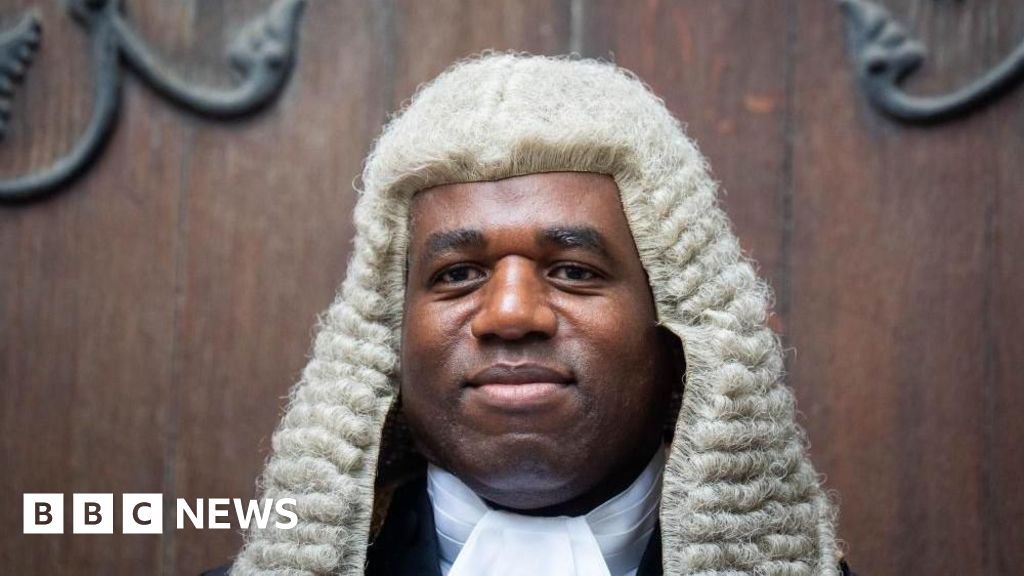
The Foreign Secretary publicly questioned the practicality of jury trials—the foundation of English common law since the Magna Carta—whilst holding one of the highest offices of state. The reasoning was "efficiency": trials take too long, courts are backlogged, and frankly it would be much simpler if professionals handled the whole messy business of deciding whether the state can imprison people.
Why not just get rid of juries? Genius.
The suggestion that ordinary citizens judging the powerful might be inconvenient for the powerful was not, apparently, intended as self-parody. Lammy defended democracy abroad whilst querying whether its most fundamental domestic safeguard was really worth the bother. The backlog he cited was caused by decades of government underfunding, now to be solved by removing the constitutional check that might notice.
2. Jess Phillips's Compulsory Misogyny Training Awarded for Radicalising Your Target Demographic


Jess Phillips championed compulsory "misogyny education" for schoolboys—a policy framework treating adolescent males as a pre-criminal class requiring state intervention before they inevitably offend. The training would explain to twelve-year-olds why they are part of the problem, delivered by the same educational establishment that has spent a decade telling them their futures are less important than correcting historical injustices they did not commit.
Muslim rape gangs will not have to undergo this critical Soviet engineering of the human soul. Neither will women who attack men.
Behavioural scientists have long noted that treating a demographic as inherently suspect tends to produce resentment rather than rehabilitation. This research was presumably not consulted. The boys will sit through the sessions, learn nothing except that the state considers them guilty by chromosome, and emerge either radicalised or cynical. Both outcomes will be blamed on "insufficient training."
3. "Male Models" Torching Starmer's Property Awarded for Superinjunction Use To Disguise Sexual Impropriety
 BBC News
In one of the year's more surreal moments, handsome Ukrainian models targeted property linked to the Prime Minister—the inevitable byproduct of years of establishment voices describing protest arson as "fiery but mostly peaceful" and property destruction as "legitimate expression of anger." The rhetoric that excused such behaviour when directed at approved targets proved less charming when the target changed.
Starmer's response involved condemning political violence in terms his own party had carefully avoided when the violence was ideologically convenient. The cognitive dissonance was noted by approximately everyone except those required to maintain it professionally. The mob, having been taught that property destruction is speech, continued speaking. Starmer has no idea who they are, apparently.
4. The Afghan Data Breach Catastrophe Awarded for Incompetence Plus Secrecy Equals Betrayal


The UK government exposed personal data of thousands of Afghan allies—names, locations, family details—to the Taliban, then attempted to suppress reporting on the breach. The people who had risked their lives trusting British assurances discovered that British data security operated at roughly the level of a provincial estate agent, and British transparency operated at roughly the level of the regimes they had helped oppose.
The cover-up attempt converted a catastrophic accident into deliberate betrayal. Those exposed now live in hiding or worse. Those responsible for the breach have not been named. Those responsible for the suppression have not been disciplined. The strategic lesson—that helping Britain may be fatal and Britain will hide the evidence—has been absorbed by every potential ally considering future cooperation.
5. UK Trade Deal Success Over Speech Laws Awarded for Sacrificing Global Trade for Domestic Censorship
 Connor Stringer
Washington quietly froze trade negotiations, explicitly citing the UK's Online Safety Act and broader speech restrictions as incompatible with American constitutional principles. The special relationship, already strained, discovered a new limit: America will not sign trade agreements with countries that criminalise opinions, even allied ones, even politely.
British negotiators reportedly expressed surprise that other democracies might object to Britain's novel approach to regulating expression. The trade deal that Brexit was supposed to enable remained unenabled. The speech laws that were supposed to make Britain safer made it poorer. The connection between the two outcomes was not acknowledged in any official statement.
6. Starmer's "Island of Strangers" Speech Awarded for Real-Time Discovery That Rhetoric Cannot Substitute for Policy
 Rowena Mason
The Prime Minister delivered a speech on immigration so badly misjudged it achieved the rare distinction of pleasing absolutely no one. Restrictionists noted it contained no actual restrictions. Liberals noted the rhetoric was inflammatory. Centrists noted it was incoherent. His polling numbers, already poor, immediately worsened to record lows.
The speech represented the final collapse of the theory that triangulation could substitute for position-taking indefinitely. Starmer had spent years carefully not saying what he thought about immigration. When finally forced to say something, what emerged was a word-cloud of focus-grouped phrases that satisfied no constituency and convinced no voter. The island of strangers remained strange. The stranger in Downing Street remained estranged from public opinion.
7. Decriminalising The Killing Of Children Awarded for Changing Words to Anaesthetise Conscience


Legal reforms quietly re-labelled late-term foetal killing to soften terminology and reduce prosecution rates of late-term abortion. The act remained the same; the language was sanitised. "Child destruction"—the Victorian term that at least acknowledged what was being destroyed—gave way to clinical abstractions designed to prevent anyone thinking too carefully about what they described.
This is how moral questions are managed in modern Britain: not by resolving them but by adjusting vocabulary until the uncomfortable words disappear. The thing itself continues. The language that might provoke objection is retired. Those who persist in using accurate terminology are diagnosed with unhealthy attachments to outdated concepts. The anaesthetic spreads. The conscience sleeps.
8. Killing the Elderly Awarded for Helping People Die To Save The NHS Money
 Pan Pylas, Associated Press
Despite it being described as one of the worst bills in living memory, Parliament legalised state-facilitated death whilst social care remained unreformed, loneliness among the elderly reached epidemic levels, and the NHS continued rationing treatments that might extend uncomfortable lives. The safeguards were robust. The alternatives were unavailable. The coincidence was not discussed.
Supporters emphasised autonomy and dignity. Critics noted that autonomy means little when the only funded option is death, and dignity is hard to maintain in a care system that provides neither. The elderly understood the message clearly: the state would help them die because helping them live had been deemed unaffordable. They voted accordingly, not that it mattered.
9. Record Tax Rises After Explicit Pledges Not To Awarded for Discovering Voters Do, In Fact, Remember
 PAN PYLAS
Labour won an election partly on promises not to raise taxes on working people. Labour then raised taxes on working people through frozen thresholds, stealth levies, and definitional creativity that would embarrass a derivatives trader. The promises were memory-holed. The voters were not informed that their memories should be similarly adjusted.
The fiscal reality was that the promises had been undeliverable when made. The political reality was that making them had been electorally necessary. The democratic reality was that the electorate had been deliberately misled about what it was voting for. The polling reality, six months later, was that voters had noticed. The surprised reaction from Labour strategists suggested they had genuinely believed the electorate would not mind being lied to – again.
10. The Winter Fuel Payment Fiasco Awarded for Learning Basic Thermodynamics From the Electorate
 Jason Groves
The government scrapped winter fuel payments for pensioners, then partially restored them after backlash from elderly voters who had noticed that winter was cold and heating was expensive. The reversal was presented as "listening to concerns" rather than "discovering that hypothermia polls badly." The pensioners who had already turned off their heating were not retrospectively warmed.
The original decision reflected Treasury logic: the payment was universal, universality is inefficient, therefore means-testing would save money. The flaw in this logic—that means-testing also kills people who fail to navigate the bureaucracy—became apparent when people started failing to navigate the bureaucracy. The partial restoration satisfied no one: too late for those already cold, too stingy for those still freezing, too obvious a U-turn to restore trust.
11. Peter Mandelson's Failed Resurrection Awarded for Dragging Unresolved Scandals Back Into Daylight
 Pan Pylas, Associated Press
The Prince of Darkness returned to frontline influence despite long-standing questions about his Epstein connections that have never been satisfactorily resolved. The appointment to a senior diplomatic role demonstrated that in British politics, no scandal is permanently disqualifying provided sufficient time has passed and sufficient services have been rendered. Then, he was fired again for his friendship with a paedophile.
Mandelson's previous resignations—two from Cabinet, for those keeping count—established him as the political equivalent of a horror movie villain: apparently dead, reliably returning, never fully explained. His reappearance prompted the same questions that had prompted his previous departures. The questions remained unanswered. The appointment proceeded. The pattern continued.
12. Ofcom Threatening Fines It Cannot Define Or Enforce Awarded for Legislative Ambition


The Online Safety Act's enforcement began with Ofcom issuing guidance so vague that compliance became a matter of guesswork and fines became a matter of regulator mood. Platforms were informed they must remove "harmful content" without being told what harmful content was, how to identify it, or how removal would be verified. The penalties for failure were enormous. The definition of failure was atmospheric.
They actually tried to fine.... 4Chan.
This is regulation by vibes: the law says nothing specific, the regulator interprets it flexibly, and the regulated must guess what is required whilst risking bankruptcy if they guess wrong. Legal certainty—the principle that citizens should be able to know in advance what the law requires—has been quietly retired in favour of something more adaptive. Adaptive to what, and by whom, remains deliberately unclear.
13. Non-Crime Hate Incidents Continuing Awarded for Inventing Crimes Because Solving Real Ones Is Hard
 Paul Birch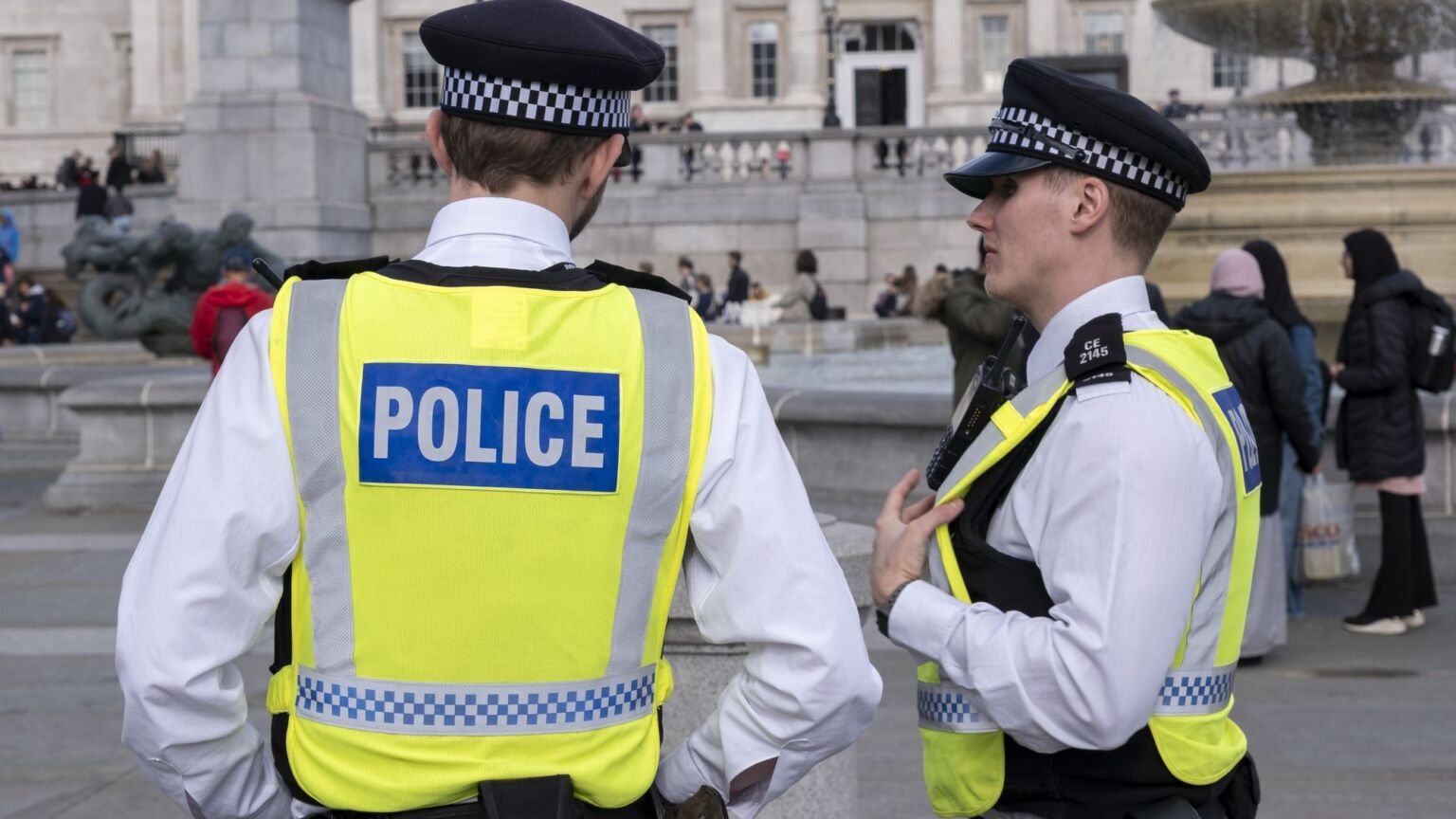
Despite years of criticism, court rulings, and public ridicule, police forces continued logging thousands of "non-crime hate incidents" in 2025—speech acts that are not illegal but nonetheless warrant recording, investigation, and permanent documentation. The burglary clearance rate remained in single digits. The hate incident database grew ever more comprehensive.
The system's defenders argue recording non-crimes prevents future crimes. The system's critics note this logic would justify recording literally anything, that resources spent on non-crimes are not spent on crimes, and that citizens have a reasonable expectation of not being investigated by police for lawful behaviour. The defenders remain unmoved. The database expands. The burglars remain uncaught.
14. Prison Crisis Being Solved by Releasing Prisoners Awarded for Innovative Use Of The Prison System
 Jamie Grierson
The prison capacity crisis was addressed through early release programmes that returned offenders to the streets years ahead of schedule. Victims were advised to "manage expectations" about justice. The sentences handed down by courts became advisory rather than actual, subject to revision based on available bedspace. The gap between what judges said and what happened widened to the point of absurdity.
Why not just release the criminals? Genius.
The logic was administrative: prisons were full, building prisons was expensive, therefore prisoners must be released. The logic of deterrence—that sentences must be served to mean anything—was not consulted. Offenders learned that sentences were negotiable. Victims learned that the justice system's promises were conditional. The public learned that "tough on crime" meant whatever capacity constraints permitted.
15. NHS: Record Spending For Record Failure Awarded for the Command Economy Meeting Reality
 Dan Barker
Another year, another record NHS budget, another record waiting list. The correlation between spending and outcomes has now been negative for long enough that it should prompt questions about whether the relationship is structural. It does not prompt such questions because such questions are forbidden. The NHS is the national religion. Heresy is not tolerated.
More money was spent. More managers were hired. More strategies were launched. More patients waited. The possibility that the system might be structurally incapable of converting inputs to outputs—that the organisation chart might be the problem—remained unexamined. Critics were accused of wanting privatisation, Americanisation, or insufficient reverence. The waiting lists grew. The reverence continued.
16. Net Migration Breaking More Records Awarded for Democracy as Decorative Feature
 Rajeev Syal
No party campaigned on record immigration. All parties delivered it. The Conservative manifesto promised tens of thousands. Labour promised control. The Liberal Democrats promised compassionate management. The outcome was the highest net migration in British history, delivered by the party that had promised to reduce it, inherited by the party that had promised to control it.
The gap between democratic mandate and policy outcome has become so wide that commenting on it feels redundant. The public votes for X. The public receives Y. The public is told that Y was necessary, that X was never realistic, and that anyway the real problem is public attitudes towards Y. The public votes for X again. The public receives Y again. The cycle continues until someone notices, and no one notices because noticing is impolite.
17. University Free Speech Laws Going Unenforced Awarded for Laws Passed for Headlines, Ignored in Practice
 Dominic Wilkinson
Universities continued cancelling speakers, restricting research, and punishing dissent, secure in the knowledge that enforcement was theoretical. The regulator existed. The powers existed. The will to use them did not. The headlines had been achieved. The actual freedom remained absent.
This is how Britain regulates sensitive areas: loudly, legislatively, and ineffectively. The law is passed. The press release is issued. The enforcement mechanism is created but never activated. Those who complained about the original problem are told it has been solved. Those experiencing the original problem notice it continues. Both observations are correct. The law exists. The problem persists.
18. Energy Security Whilst Banning Energy Awarded for Exporting Sovereignty
 The Week UK
Britain continued importing energy at premium prices whilst blocking domestic production through regulatory obstacles and outright bans. The logic, examined closely, holds that it is better for the environment to ship hydrocarbons across oceans than extract them locally, and better for security to depend on foreign suppliers than domestic ones. Both propositions are questionable. Neither is questioned.
Britain now has the highest energy bills in the world. Trebles all round.
The fracking ban remained. North Sea development remained discouraged. Import dependency remained total. Prices remained elevated. The energy security that domestic production might provide remained theoretical. The sovereignty that energy independence might preserve remained exported. The bills arrived anyway, paid by consumers who were not consulted about the policy that inflated them.
19. Civil Service Expanding During Cost Cutting Awarded for Bureaucratic Mitosis
 Ian Jones
The government announced efficiency savings. The civil service headcount grew. The announcements continued. The headcount continued growing. The gap between what was said and what happened became so routine that reporting on it felt pointless. Efficiency was being driven. Inefficiency was being hired. Both facts coexisted without apparent tension.
The mechanism is simple: efficiency savings are announced, departments protect headcount by cutting service delivery, service delivery failures prompt new initiatives, new initiatives require new staff, headcount grows. The cycle completes. The efficiency drive is declared successful because the announcements were made. The inefficiency is declared necessary because the work has expanded. The public receives worse services from more employees.
20. Crime Victims Waiting Years While Tweets Are Investigated Awarded for Moral Signalling Over Physical Safety
 Bianca Castro
Multiple 2025 cases confirmed what everyone suspected: victims of physical crimes waited years for justice or received none at all, whilst police resources flowed to social media monitoring and speech investigations. The priorities were explicit. The resource allocation was deliberate. The inversion of traditional policing—protecting bodies before feelings—was complete.
Assault victims were told cases were dropped for lack of resources. Tweet authors were visited at home. The message was clear: what you say online matters more than what happens to you physically. Those who experienced violence learned the state's protection was theoretical. Those who expressed opinions learned that the state's attention was very real indeed.
21. Social Care: Another Year, Another Corpse Awarded for Death by Committee
 Ian Burbidge
Another year passed. Another white paper was published. Another consultation was launched. Another set of recommendations was produced. Another government accepted them in principle. Another implementation was delayed. Another generation of elderly people died in inadequate care or no care at all. The committees continued meeting. The corpses continued accumulating.
Social care reform is the British establishment's Groundhog Day: the same problem identified, the same solutions proposed, the same promises made, the same implementation deferred, the same outcomes endured. Everyone agrees it is broken. Everyone agrees it must be fixed. No one fixes it. The agreement continues. The breaking continues. The gap between consensus and action widens annually.
22. Extremism Being Redefined to Include Normal Dissent Awarded for Pathologising Disagreement
 Cameron Roy
The government's new extremism definitions swept so broadly mainstream political positions became potentially suspect. Scepticism of official spin, opposition to specific policies, adherence to traditional religious views—all found themselves adjacent to the new boundaries of acceptable thought. The definition of extremism expanded. The definition of normal contracted.
This is how dissent is managed: not by engaging with it but by reclassifying it. The person who disagrees is not wrong; they are radicalised. The opinion that challenges is not mistaken; it is dangerous. The diagnostic framework replaces the argumentative one. Those who hold unapproved views are not to be debated but treated. The pathology spreads through the population, mysteriously, requiring ever more treatment.
23. Youth Mental Health Crisis Being Blamed on "Stigma" Awarded for Treating Symptoms Like Causes
 Michael Samuel
The youth mental health crisis deepened. The official response, straight out of a useless sociology A-level classroom, focused on reducing "stigma" and "increasing awareness." The actual causes—smartphone addiction, pornography saturation, social isolation, institutional nihilism, the collapse of meaning-making structures—remained unaddressed because addressing them would require saying uncomfortable things about technology, culture, and parenting.
What could possibly be causing it? Being locked in their homes for years under threat of arrest, and a mass campaign of government fearmongering over a Chinese virus, perhaps?
"Reducing stigma" costs nothing and offends no one. Restricting smartphones offends technology companies. Addressing pornography offends libertarians. Discussing family structure offends progressives. The crisis continues because solving it would require offending someone, and the entire apparatus of modern governance is optimised to avoid offence. The children remain unwell. The stigma reduction continues.
24. The BBC's £10 Billion Defamation Problem Awarded for Undermining Trust Whilst Complaining About Mistrust
 Callum Jones
The BBC admitted to editing footage of the American president in a manner that reversed its meaning, then expressed surprise when this resulted in a defamation lawsuit of such magnitude it threatened the corporation's existence. The organisation that had spent years lecturing the public about misinformation, demanding regulation of social media for spreading falsehoods, and positioning itself as the last bastion of trustworthy journalism had been caught doing precisely what it accused others of doing, except with better production values.
The defence will presumably argue context, editorial judgment, and the complexity of modern news production. The plaintiff will presumably argue that editing someone's words to mean the opposite of what they said is not journalism but fabrication. The British public, forced to fund the BBC through a mandatory licence fee whilst being told that unfunded alternatives cannot be trusted, observed the spectacle with the weary recognition of people who had suspected this all along. The corporation's response to collapsing trust has been to blame misinformation. The corporation is now accused of being the misinformation. The irony is presumably not covered in the editorial guidelines.
25. Blaming "Populism" for Everything Above Awarded for the Perfect Closed Loop
 David Maddox
The failures documented in these awards—the crimes unsolved, the borders uncontrolled, the services undelivered, the promises unkept—created the political movements now denounced as "populist." The denouncers are, in many cases, the same people who presided over the failures. They remain confident that the real problem is public attitudes, not their own performance.
This is the closed loop of establishment thinking: we failed, the public noticed, the public's noticing is the problem, therefore the public must be corrected. The possibility that populism is a symptom rather than a cause—that it represents rational response to observable dysfunction—cannot be admitted because admitting it would require acknowledging the dysfunction. The loop closes. The weather is blamed for the house fire.
Overall Winner: Scottish Government
In April, the geniuses of the Supreme Court decided on male and female. Something the human race has known for 12,000 years.
 BRIAN MELLEY
The Scots lost the country's dumbest legal case, which was about including "transgender women" (i.e. men dressed in women's clothes) in Soviet quotas to ensure "gender balance" on public sector boards. Campaign group For Women Scotland argued sex-based protections should only apply to people born female.
Well done, all round. A fantastic use of resources by both sides. Women singled out with disparity for protection men do not get, against men pretending to be women, with "human rights" lawyers pretending magic words mean biology does not exist. A circular firing squad of the truest British farcical character. The taxpayer will be happy to pick up the enormous tab, we're sure.
Dishonourable Mentions
Space constraints regrettably prevented full recognition of the other achievements in institutional dysfunction: the continued existence of Public Health England's successor bodies doing work that nobody requested; the British Museum's ongoing inability to either return the Elgin Marbles or convincingly argue for keeping them; Network Rail's innovative approach to scheduling engineering works exclusively on bank holidays; the Crown Prosecution Service's creative interpretation of which cases merit prosecution; and the entirety of the UK's pothole repair strategy, which appears to consist of waiting for vehicles to become submarines.
We could go into genius Diane Abbott's claim only black people experience racism, Reform's Welsh leader going to jail for taking Russian bribes, police arresting grandparents and disabled people for supporting the absurd Palestine Action, anything Ed Davey ever does, the endless cringe party conferences, the bailing out of our last steelworks, but where do you find the time?
And of course, naturally, it wouldn't be proper without mentioning our own former contributor, free-speech anti-doxxing activist Michael Reiners, – aka the Dirty Doxxer, the Piss-Drinking Lawyer, Ted Bundy Jr – who managed to lose his job, his political ambitions, his involvement with this publication, and end up on Hope Not Hate's bucket list, all in the same year. We wish him well with his "successor project," which is, of course, absolutely not a blatant copy of this one with worse content. It's entirely original; he wrote all those bills himself; what he never owned was "hijacked"; he wasn't DARVOing the victims; he didn't try to censor and doxx everyone mentioning his name; and it is everyone else's fault.
The judging "panel" also wishes to acknowledge the lifetime contributions of all those ministers who announced "lessons will be learned" following each successive failure, without apparently learning any; the consultants paid to produce reports recommending further consultancy; and the special advisers who briefed against their own government's policies before those policies had finished being announced.
2026: What Could Possibly Go Wrong?
Our politicians will remain confident until they are removed from office, at which point they will become confident on the lecture circuit instead. The pattern continues. The weather is blamed for the house fire. The insurance claim is filed. The matches remain in the same drawer.
For Mr Reiners and Ms Jones, it will be an expensive crash course in avoiding libel damages through bankruptcy, the 12-month statute of limitations for defamation, and the importance of the UK having a 1st Amendment-style shield.
These awards will return in 2026. On present evidence, the competition will be fierce. The machinery that produced this year's entries remains fully operational, staffed by the same people, funded by the same sources, and subject to the same incentives that guaranteed failure in 2025. Nothing structural has changed. Nothing structural is proposed to change. The reviews have been commissioned. The lessons are being learned. The safeguards are robust.