The Great Task Before Us
A century of surrender. A nation on its knees. An administrative state so vast, so entangled, so perfectly evolved for its own preservation, most have concluded it cannot be fought. They are wrong. Burn it to the ground. Ahead, not merely our finest hour, but our greatest hour of a thousand years.

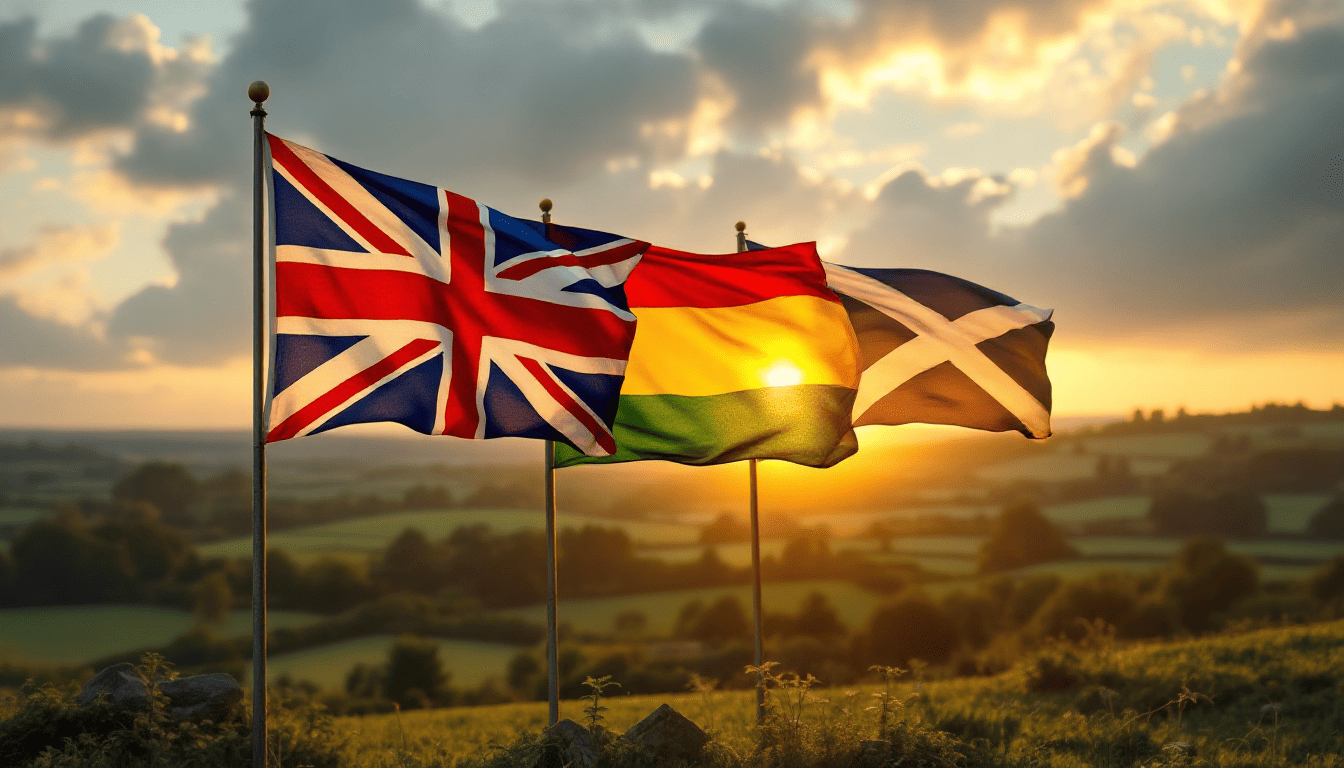
There are moments in the long chronicle of nations when the weight of history presses upon a single generation with such force it must either rise to meet the hour or be crushed beneath it. Britain stands at such a moment now. Not a choice between management teams. Not a squabble over tax rates. A choice between the slow suffocation of everything we once were and the violent, glorious rekindling of everything we might yet become.
We do not face foreign armies. Our adversary is quieter, more patient, infinitely more lethal. It wears no uniform. It carries no flag. It speaks the soft language of process and expertise and managed outcomes. It has been building its fortress for a hundred years—brick by brick, form by form, committee by committee—and it is devastating in its patience, terrifying in its competence, and absolutely certain of its victory.
Six hundred unelected bodies now govern a people who once governed a quarter of the earth. Every minister arrives in Whitehall with fire in his belly and leaves with a folder full of explanations for why nothing can be done. The permanent government is permanent. Ministers are guests. The machine does not serve the nation. The machine feeds upon it. And it has grown so vast, so entangled, so perfectly evolved for its own preservation, most have concluded it cannot be fought.
They are wrong.
Burn it to the ground.
Not with riot and ruin—but with something the machine fears infinitely more: the sovereign fury of a Parliament finally willing to remember what it is. Seven acts. One session. Every quango abolished. Every speech law repealed. Every border sealed. The constitution reforged in fire. Everything they spent a century building, reduced to ash before Christmas. Let the permanent secretaries threaten resignation. Let them resign. Let the whole grey aristocracy of clipboard-wielders and compliance officers and professional hand-wringers discover what their predecessors discovered when Cromwell told them the Lord had done with them: they have no power save what the people's representatives have lent, and the loan is called in.
The nation which gave the world parliamentary government now grovels before foreign courts. The people who abolished slavery across an empire now require permission to speak in their own streets. The island which invented the modern world now cannot keep the lights on at a reasonable price. The treasury which financed the liberation of Europe borrows three hundred million pounds every single day—not to build, not to arm, not to create—merely to service the interest on debts incurred by men who will never face the consequences of their cowardice.
Seven and three-quarter million souls wait for medical care in a system we have been forbidden to criticise. Eleven million collect assistance from a state which has become an employment agency for the broken. The army could not retake the Falklands. The submarines may not sail. The nuclear deterrent is a question mark wrapped in rust wrapped in optimistic accounting. And in every classroom, in every university, in every broadcast, children are taught to despise the civilisation which gave them everything—liberty, law, medicine, flight, the language of Shakespeare and the fury of Milton and the defiance of Churchill when all seemed lost.
This is what a century of capitulation has purchased. This is the inheritance of Fabian scheming and socialist dreaming and the quiet treasons of educated men who preferred the approval of Strasbourg to the flourishing of their own people.
No more. Not one day more.
Britain has stared into the abyss before. When Philip's Armada darkened the Channel. When Napoleon's armies massed at Boulogne. When the Luftwaffe came by night and the fires burned from the docks to the cathedrals. Every time—every single time—when the calculations all pointed to defeat, when the prudent counselled terms, when the reasonable urged accommodation, something stirred. Something old. Something savage. Something unconquerable.
It stirs again. This time, from within.
If the men who charged at Waterloo could face grapeshot and cavalry, shall we tremble before civil servants? If the boys who went over the top at the Somme could walk into machine guns for king and country, shall we lack the nerve to vote against a quango? If those who endured the Blitz could dig their neighbours from the rubble and go to work the next morning, shall we be defeated by paperwork?
The very suggestion is an insult to every generation which came before.
Reform is a word for cowards. Reform is what you propose when you lack the stomach to do what must be done. These institutions are not ill. They are not underperforming. They are not in need of review. They are rotten from cornerstone to capstone, corrupted beyond redemption by the philosophy that free men cannot be trusted to live without supervision.
You do not reform gangrene. You amputate.
Free speech returns to Britain—absolute, unconditional, and untouchable by any parliament which follows—or we confess ourselves unworthy of the ancestors who bled for it. Not speech subject to the approval of Ofcom. Not expression hedged by the sensitivities of those who came yesterday and despise everything they found. Speech. The birthright of every freeborn Englishman since before the Conquest. Let the Online Safety Act be torn up and burned in Parliament Square. Let any minister who brings forward a law to silence his countrymen be impeached, removed, and remembered with the infamy he deserves.
The borders will be sealed—completely, immediately, and for a generation—or there will be no nation left to argue about. This is not a policy debate. This is mathematics. This is survival. You cannot import millions who share neither blood nor memory nor faith nor language nor loyalty and expect anything to remain of the country your fathers built. Citizenship is not a document. It is not a process. It is fifty generations of shared sacrifice, from Alfred's marshes to Elizabeth's seas to the trenches of Flanders. It is the inheritance of those who built it, for those who will continue it, and it is not for sale to the highest bidder or the loudest grievance.
The welfare state dies. Hear it clearly: dies. The Beveridge model was built on a demographic lie and has been devouring the nation's seed corn for sixty years. The National Health Service is not a sacred institution. It is a failed experiment consuming two hundred billion pounds while seven million wait in pain and despair. The pension system is a fraud which would land any private operator in prison. The maths does not negotiate. The actuaries do not care about your sentiments. Either we end it ourselves, in a manner of our choosing, or it collapses and takes everything with it. Those are the options. There are no others.
But destruction is only the beginning. The bonfire only clears the ground.
What rises from the ashes?
Something the world has never seen.
A Britain where the working man keeps every penny he earns. Where there is no death tax to let the state feed one last time on a family's labour. Where there is no National Insurance—that lie of a name for a second income tax. Where a man may build on his own land without grovelling before a planning committee. Where a woman may start a business with nothing but wit and will and be employing twenty people by year's end without ever filling out a form.
A new empire of the Seas and the Heavens—grander than the last because it demands nothing but offers everything. One hundred charter cities scattered across the globe. Singapore on the African coast. Hong Kong in the Caribbean. Dubai in the South Pacific. Each one a beacon of common law and free enterprise and the ancient promise that an Englishman's home is his castle and his business is his own. Not colonies. Not possessions. Franchises of freedom. Let the ambitious and the brilliant and the persecuted of every nation flock to them. Let the grey managed states of the collapsing West watch their best and brightest flee to places where a man can build without asking permission and speak without checking the approved vocabulary.
A British century—not of territory but of example. Let it be said across the earth that if you want to live as a free human being, if you want to build and create and speak and worship and raise your children as you see fit, there is a flag which still means something. There is a law which still protects. There are islands in the stream of history where the tide of managerialism breaks and retreats.
Britain is where tyranny comes to die. We may suffer it for a while, but its fate is sealed. We created it. We can destroy it. It is ours to kill. It is our monster to kill, our duty to kill it, because we created it.
British ships on every ocean. British stations orbiting the earth. British boots on Martian soil within the lifetime of children already born. We were the first industrial nation. We split the atom. We broke Enigma when the mathematicians said it could not be done. We invented the computer, the jet engine, the world wide web. The nation which mastered the seas when sail was the summit of human technology will master the void between worlds—or we will die knowing we tried, which is more than the managed decline offers.
Healthcare as it existed before Beveridge buried it: mutual societies, friendly associations, fraternal organisations, hospitals which compete for patients rather than patients who queue for hospitals. The British people are not livestock to be managed. They are the heirs of Magna Carta. Let them make their own arrangements with their own money and watch what happens when sixty million free customers are finally permitted to demand service worthy of the name.
Education as it existed before the comprehensives destroyed it—and beyond, into territory the Victorians could not have imagined. Every child learning at their own pace, at their own level, through technologies which make the factory schoolroom as obsolete as the workhouse. Let parents choose. Let talent rise. Let the bright children of the working class find their way to the heights as they did when grammar schools still stood and meritocracy was not yet a term of abuse.
The objections bore us. They have always bored us. They are the objections of small men who cannot imagine greatness because they have never felt its pull.
It cannot be done. It will be done. The Armada could not be stopped; we burnt it. The slave trade could not be abolished; we abolished it. Napoleon could not be beaten; we broke him. The Nazi machine could not be stopped; we dismantled it. The impossible is simply the unexplored territory of the sufficiently determined.
It is too radical. Thank God. Mild measures for mild diseases. This is not a mild disease. This is a century of compounding failure metastasising into terminal decline. Radical is the minimum.
The people won't support it. The people have been screaming for it in every way they are permitted to scream. They voted to leave Europe and watched Parliament spend three years in sabotage. They begged for controlled borders and got record immigration. They pleaded for law and order and got two-tier policing. The people are not the obstacle. The people are the army waiting for generals worthy of the name.
The institutions will resist. Let them resist. Let every quangocrat and every commissioner and every clipboard-wielding commissar of the managerial state throw themselves against the tide. They will discover what the cavaliers discovered, what the Jacobites discovered, what every force which ever set itself against the expressed will of the British people in Parliament assembled has discovered: they break. They scatter. They are forgotten.
Foreign powers will object. Foreign powers may register their objections with the appropriate office, which will be closed. We have been rated and ranked and assessed and lectured by international bodies quite long enough. A free nation does not submit its domestic arrangements for approval by the World Economic Forum.
The permanent government has had a century to dig in. It controls the machinery, staffs the ministries, writes the briefings, drafts the bills. It has captured the universities and colonised the broadcasters and planted its people in every institution which shapes opinion. Its tentacles reach everywhere. Its grip seems unbreakable.
Seems.
The machine lacks legitimacy. It lacks love. It lacks the moral authority which comes only from serving a people rather than farming them. It has the efficiency of the parasite—the efficiency of extraction, of intermediation, of perpetual growth at the host's expense. What it cannot do is build. What it cannot do is inspire. What it cannot do is give a young man a reason to raise a family in the land of his fathers rather than flee to Dubai or Texas or anywhere the grey hand does not reach.
We possess what they can never possess.
A thousand years of constitutional development. A language become the tongue of the world. Legal traditions which underpin every free society on earth. The memory of Crécy and Agincourt and Trafalgar and the Somme and the skies over Britain in 1940. The knowledge, buried but not gone, that we are the people who built the modern world and there is nothing we cannot build again if we remember who we are.
And above all—above everything—the bloody-minded, unreasonable, utterly ineradicable refusal of free Englishmen to accept what they are told is inevitable.
The managers think they have won. They think we are tamed. They think a few more years of decline will complete the transformation from citizens to subjects, from a great people to a managed population, from a nation to an administrative district of the new world order.
They mistake our patience for surrender. They mistake our quietness for defeat. They mistake the long tolerance of a phlegmatic people for permanent acceptance of intolerable conditions.
The British spirit is not dead. It sleeps, as it has slept before—sometimes for generations. And when it wakes, as it woke when the Armada came, as it woke when the emperor crowned himself master of Europe, as it woke when the bombers came by night—the small men who thought themselves masters discover they were caretakers, tolerated only as long as they remembered their place.
They have forgotten. They have mistaken the keys for the deed. They have confused managing the decline with owning the nation.
The owner is awake now. And the owner is angry.
The seas call. The stars beckon. Frontiers beyond imagination await—of commerce and technology and human possibility unlimited by the cramped fantasies of those who think management is the highest human calling and compliance the supreme civic virtue.
Britain will lead again. Not by conquest but by example. Not by force but by freedom. Not by ruling others but by showing the world what a free people can accomplish when the chains come off and the fire comes back and the old fierce joy of building something greater than yourself returns to a nation which forgot it was capable of joy.
The great task falls to this generation.
Reclaim the birthright. Relight the flame. Prove every prophet of doom, every manager of decline, every comfortable coward who made peace with mediocrity catastrophically, gloriously, permanently wrong.
Let it begin. Let it begin now. Let it burn so bright the glow is visible from space, so hot the old rot turns to ash, so fierce that men a thousand years from now will say: that was the generation. That was the hour. Not their finest—their greatest. The ones who took a nation on its knees and lifted it to the stars.
Set the fire.
The dead wood has waited long enough.