The Grooming Gang Evidence Goes Missing
On 16 June 2025, Baroness Casey told the government to preserve all records into the rape of children by grooming gangs. The Home Office waited 212 days to pass the message on. By then, the routine deletion machinery had been running uninterrupted for seven months. Nobody had told it to stop.

Let us be precise about what happened, because precision is what makes this so difficult to explain away.
On 16 June 2025, Baroness Louise Casey published her National Audit on Group-based Child Sexual Exploitation and Abuse. The findings were not ambiguous. Children as young as ten had been plied with drugs and alcohol, beaten, gang-raped, trafficked between towns, injected with heroin, doused in petrol. Some of them by serving police officers. In Rotherham alone, an estimated 1,400 children were abused over more than a decade. Across England, the agencies charged with protecting them had looked the other way. Investigations had been downgraded. Victims had been called prostitutes. The ethnicity of perpetrators had been systematically left unrecorded.
What is also not in doubt is what The Restorationist has repetitively pointed out: this goes back to the 1950s and the flight of Pakistani men from the collapse of the Mangla Dam. The perpetrators are Muslim and targeted white British girls as sexual cattle. This might be inconvenient for the left, but facts always are.
Even the chief architect of this horror, Dark Lord Blair, is now feeling the heat and publicly begging the left to disavow Islamic fanatics.
Casey made twelve recommendations. The government accepted every one. Among them was an instruction so simple it required no legislation, no funding, no consultation and no structural reform.
Local authorities, police forces and other relevant agencies should, Casey wrote,
in the meantime be required not to destroy any relevant records.
In the meantime. The inquiry was coming. The evidence had to be there when it arrived.
The government did not act on this instruction. It did not write to the National Police Chiefs' Council until 14 January 2026. The NPCC did not disseminate the letter to chief constables until 26 January. Freedom of information requests by Robbie Moore, the MP for Keighley and Ilkley, established the gap: 212 days.
Two hundred and twelve days in which councils and police forces across England received no formal direction to preserve records for a national inquiry into the sexual exploitation of children.
Two hundred and twelve days in which the automated deletion schedules kept running, because nobody told them to stop.
And a serving MP who had to resort to Freedom of Information law to get information.
You might think this is an ugly twist of fate, some bizarre accident, or typical civil service incompetence. Read on. You're about to find out why it's not.
How Records Disappear Into The Void
To understand what the Home Office allowed to happen, you need to understand one thing about how public sector records work. They are not kept until someone decides to destroy them. They are destroyed unless someone decides to keep them.
Every council, every police force, every public body operates on retention schedules. When a record reaches the end of its designated period, it is deleted. Not reviewed. Not flagged. Deleted. The system does not pause for political urgency. It does not wait for inquiries. It runs until a human being formally intervenes and places a hold on the relevant material.
Between 16 June 2025 and 14 January 2026, no such hold was in place.
Not all records face equal risk. Core police child protection files can be retained until the subject reaches 100 years of age. Crown Prosecution Service casework on child sexual abuse carries an additional 20 years. The formal prosecution bundle, the conviction record, the sentence: these are relatively safe.
But a national inquiry into institutional failure does not run on conviction records. Convictions tell you who was punished. They do not tell you who looked the other way.
For that, you need the material around the formal case file. The referral log noting a complaint was received and then closed. The email chain in which a social worker raised concerns and a manager told her to leave it. The safeguarding meeting minutes recording a decision not to escalate. The intelligence report filed by a beat officer about known offenders near a school and never acted upon. The internal briefing paper acknowledging a pattern of exploitation and recommending no action. The inter-agency correspondence in which one department asked another for help and was told resources were unavailable.
This is the material that explains failure. And this is the material on the shortest clocks.
Council records not assigned to a specific service schedule can be destroyed after four years. Emails left in inboxes rather than captured into case management systems are more vulnerable still. Police control-room summary logs can be retained for as little as twelve months. Corporate correspondence, internal minutes and briefing papers often sit on seven-year retention periods. Children in Need files, in some local authorities, are held for only three years from closure.
- A safeguarding file closed in 2019 on a three-year schedule could have been deleted by 2022.
- An internal briefing paper from 2018 on a seven-year clock would have reached its threshold in 2025, right in the middle of the 212-day gap.
- A referral log from 2020 on a six-year schedule would be approaching deletion in 2026.
The delay did not merely fail to rescue records already gone. It left records approaching their deletion thresholds completely unprotected, during the precise period in which a national inquiry had been publicly announced and its evidence base explicitly identified.
In Britain, you don't need to delete records. All you have to do is wait for the system to do that for you automatically when the retention window ends.
A Cascade of Convenient Delay
The timeline is what is key to revealing what is almost certainly going on here, yet again, now the British state senses embarrassment around the corner. It does not get better with context. It gets worse.
16 June 2025. Casey publishes. Preservation instruction explicit. Government accepts all twelve recommendations. National inquiry announced the same day.
Nothing happens.
Four months later in October 2025, the inquiry has stalled. No chair appointed. Remit in dispute. Senior legal figures reportedly reluctant to lead the investigation. Survivors on the advisory panel disagree over scope.
Still nothing happens to the records.
9 December 2025. Home Secretary Shabana Mahmood announces Baroness Anne Longfield as chair of a THREE YEAR inquiry into what we already know. Final terms of reference to be agreed by March 2026 (this month). On the same day, Longfield writes to the Cabinet Secretary about the need for bodies to be ready to provide records.
Still nothing happens. Not for another 36 days.
14 January 2026. Permanent Secretary Antonio Romeo – ambitious architect of two-tier justice and migrant hotels, and satanic bureaucrat-in-chief – finally writes to the NPCC. The NPCC passes the instruction to chief constables on 26 January.
In December, Robbie Moore had already discovered that authorities in Bradford, a town synonymous with grooming gang activity, had received no instruction from the government to retain records. He raised the alarm.
Moore deserves credit. His forensics are damning:
Yet even after that warning, it still took another 36 days for the Home Office to act and pass the Chair's message on to authorities.
Freedom of information requests show that then-Permanent Secretary Antonia Romeo finally wrote to Home Office-funded Arm’s Length Bodies and Chief Constables across the country on 14 January 2026 - 7 months after the Casey Audit.
Typically astute Restorationist readers won't be surprised to see Romeo's dirty fingerprints all over this.
Two days later, Longfield wrote to the Cabinet Secretary reinforcing exactly the same point. Even after the chair of the inquiry herself intervened, it took the Home Office more than a month to act.
And here is what the Home Affairs Select Committee still could not confirm as of 25 March 2026: whether local councils across England were ever formally directed to preserve records at all. The committee's letter to the Home Secretary asks the question directly. It does not answer it. Because the Home Office had not answered it either.
From Parliament's strongly-worded letter:
Baroness Casey’s National Audit on Group-based Child Sexual Exploitation and Abuse was published on 16 June 2025, and clearly stated that local authorities, police forces and other relevant agencies should be required not to destroy any relevant records.
Based on your reply it appears that the Home Office did not write to the National Police Chiefs’ Council (NPCC) to ask forces to start preparing to meet their legal obligations to provide relevant records to the Independent Inquiry into Grooming Gangs until 14 January 2026, and only then after the Chair of the Inquiry wrote to the Cabinet Secretary on this point.
Do you accept that the Home Office was responsible for acting on Baroness Casey’s direction that local authorities, police forces and other relevant agencies should be required not to destroy any relevant records? If not, who should have ensured this happened?
Why did the Home Office not act on Baroness Casey’s clear direction that local
authorities, police forces and other relevant agencies should be required not to destroy any records that might be relevant to the national inquiry on grooming gangs?
Let's state this again, for anyone who hasn't got it yet. If institutional records are not manually retained as part of a deliberate hold, they are deleted.
The Pattern At Work, Again
Readers of this publication will recognise the shape of what happened here. It is the same shape as the MoD Afghan data breach, where the government obtained a super-injunction against itself to suppress not just information about a catastrophic error but the existence of the suppression. It is the same instinct. When the administrative state makes a mistake whose consequences are too severe to manage, its first reflex is not correction. It is delay.
The difference is what delay achieves in a system built on retention clocks. In a world where records are preserved by default, delay is merely incompetent. In a world where records are destroyed by default, delay is functionally indistinguishable from destruction.
No specialist knowledge is required to understand this. No conspiracy theory. No allegation of intent. The mechanism is open, documented and operates in plain sight. Records are deleted on schedule. The schedule does not pause. The instruction to pause it came 212 days late.
Civil servants understand retention schedules. They work within them daily. They know what happens when a hold is not placed on relevant material. They know, because it is their job to know, how the lifecycle of public records operates. The Home Affairs Committee knows this too, which is why its letter asks not merely whether records were lost but whether the Home Office had even bothered to find out.
Manchester City Council had already demonstrated what institutional record-keeping looks like in this domain. When Greater Manchester Police requested evidence for grooming gang investigations, the council provided documents so heavily redacted that, according to the policing inspectorate, "some pages contained only a few words." Investigators could not assess the evidential value of anything they received. A new evidence-sharing protocol had to be established and investigations restarted from scratch. This was the baseline condition of inter-agency record-keeping before the 212-day gap. The system was not pristine and then compromised by delay. It was already degraded. The delay simply ensured some of what remained could vanish on schedule.
The outgoing chief inspector of constabulary, Sir Andy Cooke, said this week police forces' failure to follow reasonable lines of inquiry was "inexcusable." He said officers "can't keep apologising for poor investigations." He described the "supervisory gap" left by experienced officers departing after the spending cuts of the 2010s and the resulting loss of what he called "street craft." His own inspectorate had warned a decade ago forces were failing to comply with national vetting policy. Recommendations made after the 2024 Southport child stabbing riots about intelligence handling were themselves follow-ups to identical recommendations from 2011 and 2021 which had never been implemented.
This is the institutional landscape in which the Home Office allowed 212 days to pass. A system already known to lose evidence. Already known to redact it into uselessness. Already known to leave recommendations gathering dust for a decade. A system told explicitly, in a published government report, to preserve what it held. And then left, for seven months, to do what it does by default.
Cover up.
What Is Gone May Be Gone
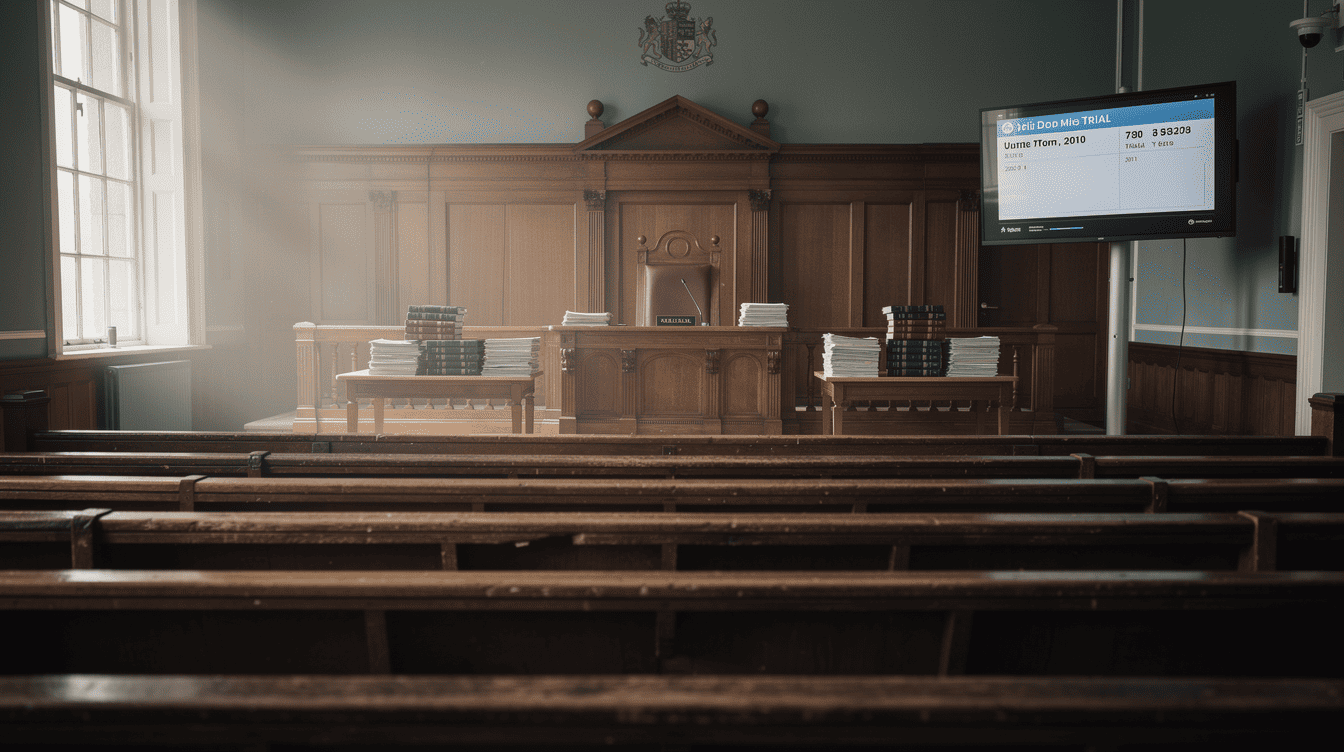
The whitewash inquiry with already compromised terms of reference formally launches this month. It has statutory powers. It can compel witnesses. It can demand the production of documents. Failure to comply is punishable by imprisonment.
But you cannot compel the production of a document that no longer exists. You cannot demand testimony about a meeting whose minutes were deleted on schedule, in accordance with policy, during a period when no one had been told to keep them. You cannot reconstruct a referral that was closed, filed and destroyed before anyone thought to look for it.
The criminal record will survive. The convictions will stand. The sentences are a matter of public record. What may not survive is the evidence of how the system failed the children it was charged with protecting. The referrals that went nowhere. The decisions not to investigate. The meetings which acknowledged a pattern of exploitation and chose to do nothing. The emails between agencies that reveal who knew, when they knew, and why they did not act.
Casey's audit found institutional failure stretching back decades: agencies in denial, data deliberately obscured, victims blamed, investigations dropped. The inquiry exists to establish precisely how such failure was allowed to persist. And the evidence it needs to answer that question sat in retention schedules whose clocks were ticking throughout a seven-month period in which the government had been told, in terms, to stop them.
The Home Affairs Committee has asked the Home Secretary whether any records have in fact been destroyed. It has asked what assessment has been made of the consequences. It has asked whether local authorities were ever formally directed to preserve anything. It has asked what happens to an agency found to have destroyed relevant material when no direction to retain it was ever issued.
The committee has given the Home Secretary until 7 April to reply. The Minister for Safeguarding will give evidence on 28 April.
The children whose records were held in those systems did not have 212 days. Many of them had years of abuse before a single agency acted. Some are still waiting for justice. Some will never receive it, because the evidence of what was done to them, and the evidence of who failed to stop it, sat in a filing system governed by a clock.
And for seven months, nobody stopped the clock.
They didn't destroy the records. They just didn't stop them from being deleted.
Why couldn't you send an email for seven months, Antonia? Lost your arms?
Editor's note: if you are a British MP or official and need the shield of the First Amendment, it's the official policy of the Restorationist that we do not give a **** what corrupt UK politicians, police, civil servants, or bureaucrats think. We'll help and publish what you can't say in Britain.