The Latest Whitehall Cover-Up: MI5's Pet Serial Killer
A state-sponsored killer dies with £500,000. A secret court seals his will until 2095—the same protection given to royals. Taxpayers funded dozen of his murders for decades. Now they're forbidden from knowing where the money went. The British state's corruption is a deep, endless pit.

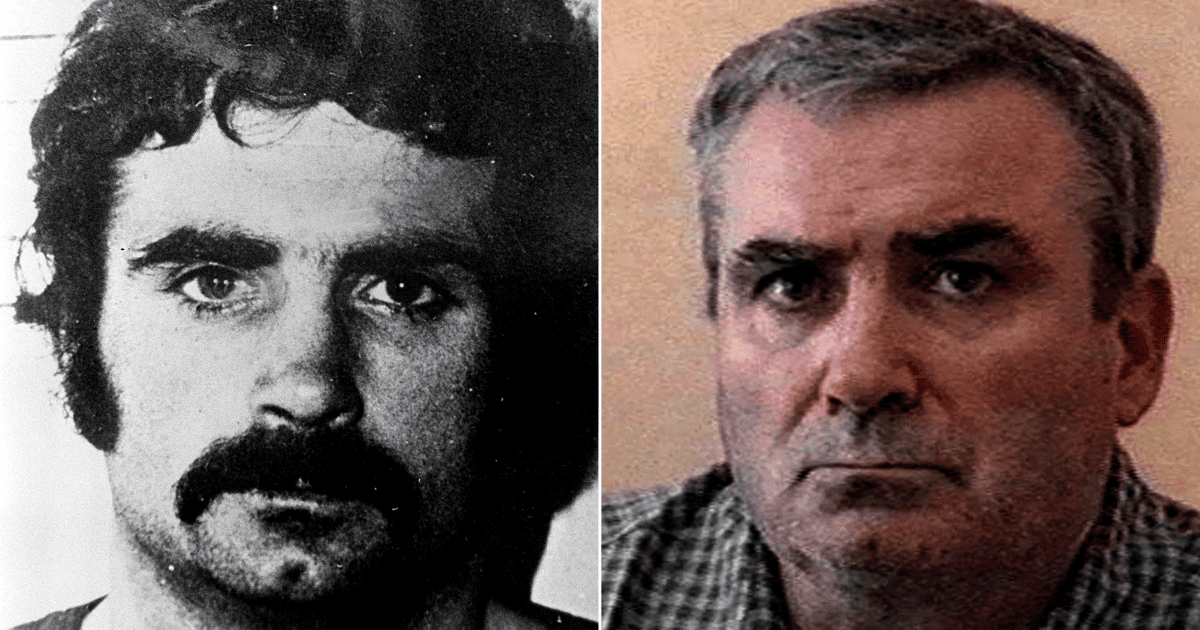
Britain has perfected the art of institutional secrecy. When the state wishes to hide something—murder, incompetence, corruption—it deploys a reliable arsenal: superinjunctions, sealed records, redacted archives. The latest example arrived this week when a High Court judge sealed the will of state-sponsored killer Freddie Scappaticci until 2095.
Seventy years. The same extraordinary protection once reserved for senior royals.
Stakeknife And His Property Fortune
Freddie Scappaticci died in 2023 with more than £500,000 to his name. Operation Kenova, the £40 million police investigation into his crimes, linked him directly to at least 14 murders and 15 abductions. He was the IRA's chief torturer and executioner whilst simultaneously drawing up to £80,000 annually from British Army intelligence. When suspicion finally forced him into hiding in 2003, MI5 protected him for two decades. He bought houses in Surrey. Drove a Mercedes. Received substantial damages from newspapers. Changed his identity repeatedly.
Now a High Court judge has ruled his will must remain secret until everyone connected to his crimes is dead.
Sir Julian Flaux heard the application behind closed doors. The public and press were excluded. A man called "Michael Johnson"—whose relationship to Scappaticci was never disclosed and whose "true identity" must remain hidden—requested the seal. Lawyers for the Attorney-General supported him. The judge ruled there was "nothing in the will which could conceivably be of interest to the public or the media."
This is either a lie or a confession of complete moral blindness.
More than 30 compensation claims against Scappaticci remain active. He received legal aid—taxpayers' money—for his defence. His wealth derived substantially from state payments and from property transactions enabled by 20 years of MI5 protection. The families of people he murdered whilst on the state payroll deserve to know where the money went. British taxpayers who funded his killing spree deserve basic accountability.
They will receive neither. The 70-year seal ensures all those demanding answers will be dead before any emerge.
Britain's Addiction to Secrecy
The Scappaticci will joins a distinguished lineage of British cover-ups. Dr David Kelly, the weapons inspector whose death in 2003 followed his exposure of the "sexed up" Iraq dossier, had his medical records sealed for 70 years by Lord Hutton. Kelly supposedly committed suicide by cutting his wrist—though the knife bore no fingerprints, the wound was to an artery almost never fatal, paramedics found minimal blood, and toxicology showed non-fatal drug levels.
Despite these curiosities, despite formal challenges by multiple medical professionals, the government refused a proper inquest. Attorney-General Dominic Grieve ruled in 2011 the evidence of suicide was "overwhelmingly strong."
Hutton claimed the 70-year seal protected Kelly's family from distress. A more obvious explanation: it protects the state from scrutiny until everyone with institutional memory is dead.
The pattern repeats endlessly. In 1999, the Ministry of Defence obtained a superinjunction preventing the Sunday Times from publishing whistleblower information about the Force Research Unit—the very unit running Scappaticci as an agent. The injunction was "so powerful it covered all material given to the newspaper by its source" and journalists were "initially forbidden from even raising [its] existence." When later asked whether it had applied for other superinjunctions between 1999 and 2023, the MoD claimed it was "not aware" of any.
Between August 2023 and July 2025, the government deployed a superinjunction to conceal a catastrophic data breach exposing 18,000 Afghans who had assisted British forces. Rather than admit the £850 million relocation scheme had been compromised by sheer incompetence, ministers obtained a gagging order preventing journalists from mentioning even the existence of the order. The employee responsible wasn't fired.
For two years. The injunction was "against the world"—anyone learning of its existence faced potential imprisonment for contempt of court. Mr Justice Chamberlain, who oversaw proceedings, warned the order gave "rise to understandable suspicion the court's processes are being used for purposes of censorship" and was "corrosive of the public's trust in government."
He was being diplomatic.
The Censorship Machine
Britain's National Archives operate as an extension of state secrecy. In 2019-20, Whitehall applied to censor 6,656 historical files from the Thatcher and Major governments. The supposedly independent oversight body—the Advisory Council on National Records and Archives—overturned just 28 requests. That's 0.42 per cent.
ACNRA's 17 members include former government officials and intelligence officers. Lady Moira Andrews, a former Foreign Office official, sits on the Security Sector Board of ADS Group Limited, the arms industry trade organisation representing BAE Systems.
ACNRA members include former GCHQ Director for Cyber Policy Nick Howard and Stephen Hawker, former deputy head of MI5 who later advised BAE. When journalists or the public request access to closed files, their applications are scrutinised by a panel made up of ACNRA members.
The same people who worked in these institutions now decide what the public may know about them.
Before files reach the Archives, "sensitivity reviewers" comb through documents. Many are former diplomats. Their senior member, Graham Hands, admitted in a witness statement they "frequently come across letters and minutes they themselves created." He claimed managers would notice "if any attempt were made to redact material for personal reasons." This assurance should comfort no one.
Among the censored files: all Cabinet minutes about Saudi Arabia from John Major's premiership in 1996. Files explaining why Thatcher's government refused to sign the UN ban on mercenaries in 1989. Thousands of documents about Britain's role in Northern Ireland during the period when the Force Research Unit was facilitating murder.
The pattern is consistent: files protecting the powerful remain closed. Files exposing institutional crimes disappear into classified collections or are destroyed entirely. When colonial rule ended across the British Empire, officials conducted systematic destruction of archives. Documents were removed, burned in "massive bonfires," or secretly shipped to Britain. Instructions emphasised removing papers that might "embarrass" authorities or provide evidence of atrocities.
The "migrated archives"—secretly held by the Foreign Office for decades—only came to light in 2011 when Kenyans who had suffered torture during the Mau Mau uprising sued the British government. Even then, officials initially denied holding any relevant records.
The FRU: A Murder Squad with Pensions
Scappaticci's handlers at the Force Research Unit operated a state-sponsored death squad. This is not polemic—it is the conclusion of three separate investigations spanning 14 years. The Stevens Inquiries confirmed systematic collusion between the FRU and loyalist paramilitaries. Former FRU operative Martin Ingram admitted the unit carried out the 1990 arson attack destroying Stevens' offices to eliminate evidence.
Lord Stevens wrote of:
wilful failure to keep records, absence of accountability, withholding of intelligence and evidence, and the extreme of agents being involved in murder.
He described facing "obstruction" throughout his investigations, noting it was "cultural in its nature and widespread within parts of the Army and the RUC."
The FRU consisted of 42 agent handlers and 26 support staff. They reported directly to senior military commanders. They worked alongside MI5, RUC Special Branch, the SAS and 14th Intelligence Company. Weekly "Tasking and Coordination Groups" brought together representatives from all these agencies.
The unit had power to order areas cleared of police patrols before loyalist attacks. They could designate properties "off limits" to searches, protecting agents and operational documents. FRU operators were armed with elite weapons normally reserved for counter-terrorist units.
Brian Nelson, the FRU's loyalist agent, served as chief of intelligence for the Ulster Defence Association whilst on the British payroll. His handler allegedly provided him with maps, photographs and personal details of assassination targets. She reportedly bought him a computer so intelligence could be passed on floppy disks, reducing the risk of interception. This was not rogue behaviour by individual officers. This was systematic policy reaching to the highest levels of British intelligence and military command.
And at the heart of this machinery sat Freddie Scappaticci, leading the IRA's "Nutting Squad"—the unit tasked with hunting, torturing, and murdering informants—whilst himself being Britain's highest-paid informant.
Leading Kenova Up The Garden Path
Operation Kenova examined 101 murders and abductions. It recovered 90 per cent of Stakeknife's intelligence reports. It built prosecution files against 35 individuals including IRA members, soldiers, police officers and public officials. Jon Boutcher and Sir Iain Livingstone navigated political interference, institutional obstruction and outright deception by MI5 for eight years.
The relationship with MI5 collapsed into "extremely fractious spells" where obtaining information "sometimes felt like a hard-fought uphill battle." In October 2019, Kenova attempted to submit prosecution files. On the day files were due, MI5 claimed the building's security accreditation had expired. The building was not cleared until February 2020. Boutcher wrote:
It will never be known whether an earlier decision by the PPS would have resulted in prosecution and if so conviction.
Then came the final betrayal.
In April 2024—eight years after Kenova began, after prosecutors decided not to charge anyone, weeks before the Legacy Act ended all prospect of prosecution—MI5 suddenly discovered hundreds of pages of documents it had previously claimed did not exist.
The files contained "significant new material" with "new investigative leads." They proved MI5 had been "actively tasking" Scappaticci throughout his career, providing intelligence targets and directing his operations through Army handlers. This directly contradicted years of testimony from senior MI5 figures including Baroness Manningham-Buller, who claimed as recently as March 2024 the service was "not aware" of Stakeknife until asked to provide witness protection.
When confronted, Manningham-Buller conceded:
It is now clear to me MI5 had some limited knowledge, earlier than I had previously understood.
MI5 blamed "poor management and indexing of historic material." These were not misfiled expense receipts. These were operational records of MI5's involvement with an agent linked to 14 murders. The service conducted multiple internal reviews. It checked files before Kenova published its interim report. Each time, it claimed all material had been disclosed. Each time, it lied.
The service waited until prosecution was legally impossible, then released documents proving eight years of deception.
No Consequences, Again
Some of the FRU officers involved in these crimes remain identifiable. Gordon Kerr, who commanded the unit from 1987 to 1991, later became military attaché in Beijing. Margaret Walshaw, who allegedly handled Brian Nelson and facilitated intelligence transfers for assassinations, left Ireland in 1990 to become an FRU instructor with the Intelligence Corps. Jonathan "Bob" Evans, later Director-General of MI5, worked with the FRU during this period. Peter Charles Jones handled double agents from 1976 throughout the Troubles.
None has faced prosecution. None has been disciplined. None has lost honours or pensions. They served the British state by conspiring in murder. The British state has protected them ever since.
The Northern Ireland Troubles (Legacy and Reconciliation) Act achieved what decades of cover-up could not: legal extinction of accountability. Ministers claimed it would bring "reconciliation." It brought impunity. The families of Scappaticci's victims will receive no justice. Those who enabled his crimes face no consequences. The full truth about state complicity in murder will remain hidden until 2095.
Kevin Winters, solicitor for 21 victims, calls it "an appalling and disgraceful situation." He told The Sunday Times:
What we have here is an overarching hand controlling everything and choosing of its own volition when it needs to enter and engage with processes and then holding information back. In this case there was a systemic failure to act on intelligence to prevent murders of citizens of the UK. They were treated as plankton in the overall scheme of things.
The Democratic Deficit
Britain has no written constitution. No first amendment protecting press freedom. No legal presumption that state records belong to the public. Parliamentary sovereignty—the doctrine that Parliament is supreme—coexists with a culture of executive secrecy enforced by courts willing to grant sweeping gagging orders at government request.
Superinjunctions began as tools for celebrities protecting their privacy. They evolved into instruments of state censorship. The Afghan data breach superinjunction lasted two years—unprecedented for a government order. Throughout this period, Members of Parliament could not ask questions about decisions being made in their name using taxpayers' money. Parliamentary accountability simply ceased to function.
Journalists who learned of the order faced imprisonment if they revealed even its existence. The court hearing was closed. Documents were sealed. Ministers made policy decisions affecting thousands of Afghan lives whilst keeping Parliament, press and public in complete ignorance.
When Mr Justice Chamberlain finally warned the order was "corrosive of the public's trust in government," he was stating the obvious. But the machinery of secrecy simply adapted. The Court of Appeal overturned his decision to lift the superinjunction, showing "a highly impoverished view of the principle of parliamentary accountability."
The Scappaticci will seal fits this pattern precisely. A secret hearing. An excluded public. A 70-year ban preventing scrutiny until everyone involved is dead. The judge claimed protecting beneficiaries from "reprisals" justified the order. This reasoning inverts justice: the families of Scappaticci's victims face no such protection, whilst those who profit from his state-funded killing spree receive judicial blessing for their anonymity.
What Seventy Years Conceals
Follow the money. Scappaticci received £80,000 annually from what handlers called a "bottomless" secret fund. Over a decade of active service followed by two decades in custody, this compounds to sums far exceeding his declared property transactions. Who authorised these payments? Under what legal framework? Were ministers briefed? Did Cabinet know? Who signed the cheques?
The compensation claims from victims' families create financial liability. If beneficiaries can be identified, claimants might pursue Scappaticci's estate. The seal prevents this. It potentially protects his estate from legitimate claims whilst obscuring how much derived from state payments.
Then there is complicity. Scappaticci did not act alone. The FRU's structure facilitated his crimes. Weekly meetings brought together Army, police and intelligence representatives. Restriction orders enabled assassinations. Properties were protected from searches. Intelligence was channelled to paramilitaries who used it to kill.
At every level—from handlers to commanders to ministers—people made decisions. They authorised payments. They chose intelligence-gathering over preventing murders. Some are still alive. Some hold positions of power. Some receive honours and pensions.
The 70-year seal ensures they will be dead before the full truth emerges. It ensures no minister faces questioning whilst institutional memory survives. It ensures no criminal investigation can be mounted before evidence degrades and witnesses die.
This is not secrecy for security. This is secrecy for impunity.
The Corruption of Justice
Operation Kenova cost £40 million to prosecute no-one. It won the trust of victims' families through years of patient, victim-centred investigation. Boutcher and Livingstone navigated political interference and institutional obstruction to build credible prosecution files.
All of it was worthless.
The Legacy Act ended prosecution for Troubles-related offences. MI5's April 2024 disclosure—exactly when prosecution became impossible—was no coincidence. The service waited until charging decisions could not be made, then released files proving eight years of lies.
This represents complete corruption of the investigative process. An inquiry was established. Public money was spent. Families cooperated in good faith. Evidence was gathered. Files were prepared. Then, at the precise moment when all this work might bear fruit, the government changed the law to prohibit prosecution, as it did in 2019 after the torture scandal. And the institution that had lied throughout the investigation suddenly "discovered" documents proving its lies—safe in the knowledge nothing could now follow.
The courts provided cover throughout. Secret hearings. Sealed documents. Superinjunctions preventing parliamentary scrutiny. Judges treating state secrecy claims with reverence whilst dismissing families' rights to truth.
Sir Julian Flaux ruled Scappaticci's will contained "nothing which could conceivably be of interest to the public." A man who spent decades on the state's payroll murdering people whilst protected by the state left £500,000. The source of this money, its recipients, the transactions enabling its accumulation—none of this is of public interest.
This is the logic of a captured judiciary.
The Endless Authoritarian Trajectory
Britain congratulates itself on being a democracy. It lectures other nations about rule of law, transparency, accountability. Meanwhile it operates a secrecy regime that would make authoritarian states envious.
Superinjunctions gag the press without public knowledge. Historical archives are censored by committees of former intelligence officers. Whistleblowers face prosecution under the Official Secrets Act. Investigations into state crimes are systematically obstructed then rendered futile by retroactive legislation. Courts seal evidence for 70 years on the thinnest pretexts.
And throughout all this, the people whose taxes funded these crimes are told they have no right to know. National security requires it. Protecting sources demands it. Privacy concerns justify it.
These are lies. The Scappaticci will seal protects no sources—he is dead. It safeguards no ongoing operations—the Troubles ended decades ago. It preserves no privacy rights—he was a state agent who committed murders using public money.
It protects only the institutions that ran him and the individuals who authorised his crimes.
This is what 70 years of secrecy purchases: impunity for the powerful, denial for the victims, contempt for democratic accountability. Britain's security services learned long ago they can commit crimes, lie about them, obstruct investigations, then hide behind judicial orders until everyone who might face consequences is safely dead.
The Scappaticci case is not exceptional. It is the system working exactly as designed. A state-sponsored killer accumulated substantial wealth. He died under state protection. His beneficiaries will be shielded from scrutiny. The families of his victims will be denied justice. And British taxpayers will never know the full extent of what was done in their name.
Seventy years.
By 2095, every person connected to these crimes will be dead. Every institution that enabled them will have been reformed or disbanded. Every ministerial decision will have been superseded by decades of subsequent policy. Every handler, every commander, every judge who sealed the files will be beyond any earthly accountability.
That is the point. That has always been the point. Britain's addiction to secrecy exists not to protect the nation but to protect the state from the nation. To ensure that when crimes are committed by those in power, the truth emerges only when truth can no longer threaten the guilty.
The latest cover-up is simply the latest iteration of a system perfected over centuries: make promises, break them, hide the evidence, seal the records, wait for everyone to die.