The Local Institutions That Once Held Britain Together — And Could Again
Britain once ran on hyperlocalised parish constables, lay magistrates, guilds, and mutual aid societies—cheap, swift, and trusted. Then came Blair's technocracy "modernisation," replacing evolved wisdom with central bureaucratic bloat. New isn't always better. Sometimes, it's just more expensive.
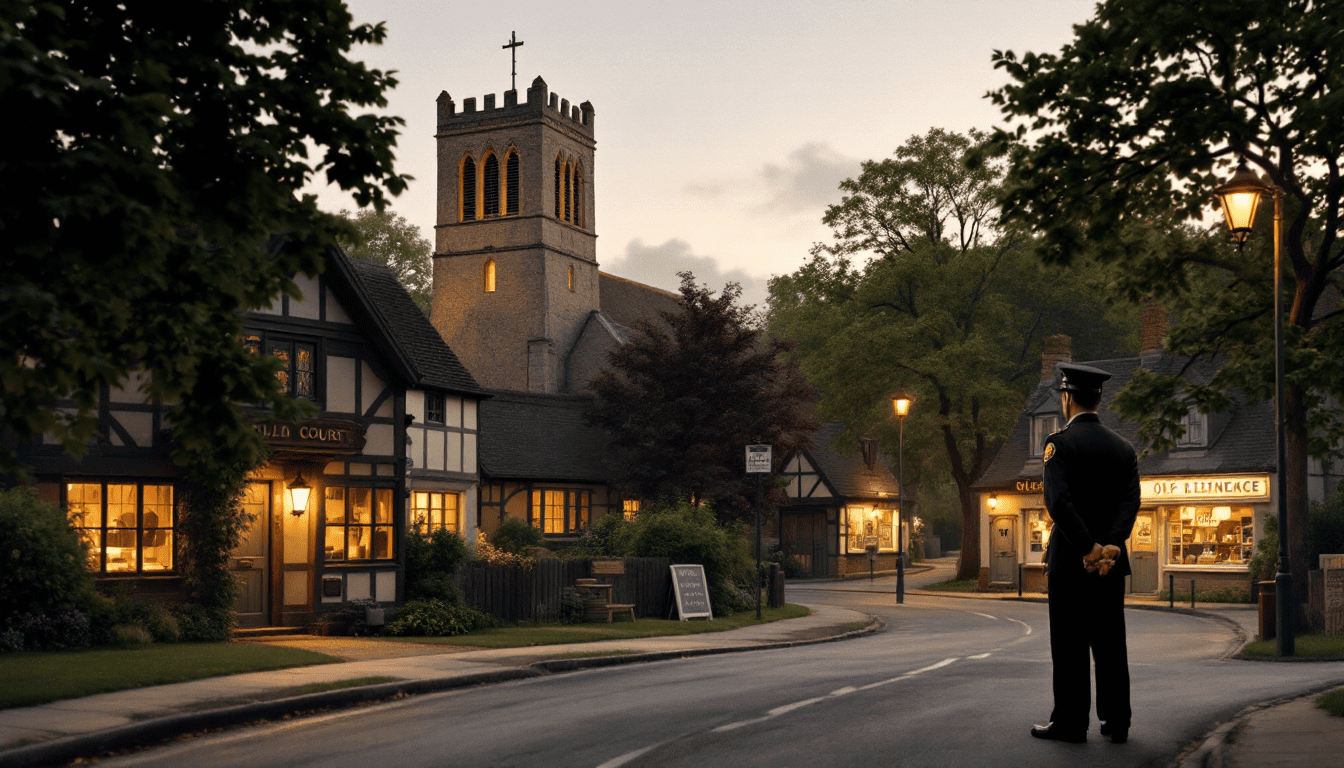
The parish constable walked his rounds unpaid, accountable to neighbours he'd known since childhood. The friendly society met in the pub on Friday, collecting pennies to ensure no widow went hungry. The lay magistrate heard petty disputes in the morning and returned to his shop by afternoon. Justice was swift, welfare was mutual, and policing was local. The system worked.
Then came the technocrats and their "modernisation."
Whitehall decided these ancient mechanisms were primitive, inefficient, backwards. Professional police would replace the constable. The welfare state would replace mutual aid. Salaried district judges would replace the unpaid magistrate. Centralisation would bring efficiency, we were told. Uniformity would ensure fairness. Expertise would guarantee quality.
The promise was transformation. What Britain got was bureaucracy on an industrial scale. Courts drowning in backlogs. Police services detached from communities. A welfare apparatus run through software and targets rather than human common sense. The modernisers tore down Chesterton's fence without understanding why it stood there in the first place.
The Constable on Every Corner
For centuries before Robert Peel's Metropolitan Police arrived in 1829, Britain's streets were patrolled by men chosen from the parish itself. The parish constable—also known as the petty constable—wasn't a professional. He was a local tradesman, a farmer, a shopkeeper serving his mandatory year keeping the peace. He knew the troublemakers. They knew him. His authority derived not from distant commissioners but from the community itself.
This wasn't vigilante justice. The constable operated within legal structures established since medieval times, reporting to justices of the peace and handling everything from mediating disputes to detaining suspects for trial. The system was flexible rather than rigid. Parish constables enjoyed independence and could use initiative, free from the immediate supervision and repetitive patrol routes which characterised the 'new police'. They weren't cogs in a bureaucratic machine. They were problem-solvers embedded in the community fabric.
Yes, the position was often resented. Service was obligatory and unpaid, involving extremely time-consuming tasks. Men would pay substitutes to serve in their place. But this very reluctance proved the role's seriousness. Communities wouldn't compel their members to serve unless the function mattered.
The Home Office actually tried reviving parish constables in 1993. Special constables volunteered to patrol their own parishes, and the scheme worked brilliantly. Being local to their community, parish constables were more trusted than regular officers passing through in cars. Yet despite this success, the scheme was quietly shelved. One suspects it threatened centralised control more than it threatened crime.
Imagine resurrecting this model seriously. Not volunteers serving alongside the regular force, but actual community peacekeepers with legal standing. Trained, certainly. Accountable, absolutely. But local, trusted, and visible in ways the overstretched modern police force simply cannot be. The cost would be negligible—perhaps modest stipends and basic equipment. The return would be enormous: eyes on the street, mediators who understand context, authority figures who actually know the people they serve.
The technocrat's objection writes itself: "But they won't have proper training! They can't handle complex crimes! They'll be inconsistent across regions!"
Quite right.
They won't investigate murders or cybercrime. That's what the professional force is for. But the overwhelming majority of disorder isn't murder—it's teenagers vandalising parks, domestic disturbances, petty theft, public drunkenness. These are precisely the situations where local knowledge matters more than forensic expertise. As for inconsistency, Britain survived centuries of regional variation. We managed.
When Magistrates Knew Their Neighbours
Justice of the peace has medieval roots. By the fourteenth century, JPs were settling disputes and judging minor offences at the local level. The system evolved into lay magistrates—unpaid volunteers drawn from the community, sitting in benches of three to adjudicate the vast majority of criminal cases.
Even today, magistrates' courts process approximately 1.37 million criminal cases annually, concluding over 90% of criminal matters without trial by jury. Most criminal justice in England and Wales still flows through these local courts. The lay magistracy persists, but barely. Magistrate numbers fell by 8,000 from 2010, with almost 2,000 more lost in 2013. Court closures accelerate. Salaried district judges increasingly replace the local bench.
What's being lost? Lord Bingham called the lay magistracy "a democratic jewel beyond price." These were ordinary citizens—dinner ladies and scientists, plumbers and teachers—judging their peers. No legal qualifications required, only character and commitment to serve at least 26 half-days yearly. They brought common sense, local knowledge, and genuine representation of community values to justice.
The centralising impulse insists this is amateurish. District judges are faster, more legally sophisticated, more consistent. Perhaps. But they're also professional bureaucrats sitting in fewer, larger, more distant courts.
The modernisers promised efficiency. What communities got was justice administered by strangers in buildings they can barely reach.
Blair's constitutional reforms accelerated this drift. The Constitutional Reform Act 2005 created the Supreme Court, severing the Law Lords from Parliament. Judicial activism expanded. Courts grew bolder in striking down government decisions. The strong god of democratic sovereignty gave way to the weak god of procedural veto. Meanwhile, at the summary justice level where ordinary people encountered the legal system, courts closed and delays mounted.
The backlog at the Crown Court reached 67,600 outstanding cases by December 2024—the highest ever recorded. Magistrates' courts had 370,700 outstanding cases. The median time from offence to completion stretched to 182 days. This isn't efficiency. It's system failure dressed in the language of modernisation.
Restoring and expanding the lay magistracy wouldn't solve everything, but it would help immensely. More magistrates means more sittings. More local courts means less travel. Swift justice delivered by community members means legitimacy, not just processing. And it costs almost nothing—these are volunteers.
The Friendly Society: Welfare Without Whitehall
Before the welfare state, millions of working men belonged to friendly societies. Around 80% of male workers were members at some point, with between 6.3 and 9.5 million members in 1910. These mutual aid organisations provided sickness pay, funeral grants, unemployment relief, and old-age support through pooled contributions. Members paid in monthly—often at meetings in pubs—and drew out when illness or death struck.
This wasn't charity. It was insurance run by and for the working class.
Friendly societies operated at overhead costs of just 5-10% of contributions due to volunteer governance, compared to modern government systems where administrative burdens can exceed 50%. The societies were efficient because they were local, democratic, and self-governing. Members elected their own officers. They set their own contribution rates and benefit levels. They enforced their own rules, sometimes including sobriety requirements to minimise moral hazard.
Friendly societies also provided something the welfare state never could: community.
Members attended lodge meetings, participated in ceremonies, wore regalia, held parades. Societies developed myths and rituals including funeral rites, and provided badges, certificates, charitable activities, parades, communal singing, and feasting. These activities weren't frivolous. They built trust, reinforced mutual obligations, and created social capital.
By the early twentieth century, friendly societies had grown into massive affiliated orders. The Independent Order of Oddfellows claimed over a million members by its centenary in 1910. They operated sophisticated actuarial systems, reinsurance arrangements between branches, and standardised benefit tables. The movement was a genuine working-class institution, dwarfing trade union membership and co-operative societies combined.
Then came Lloyd George and his National Insurance Act 1911.
The Act was called "the death warrant of the friendly societies." The state began providing what societies had provided, funded by compulsory contributions rather than voluntary association. Membership was encouraged initially, with societies serving as approved providers, but the writing was on the wall.
When Beveridge created the full welfare state in 1948, friendly societies' traditional functions were nationalised entirely. By 1945, 14 million people were members; numbers fell sharply after the NHS was introduced in 1948.
About 200 friendly societies still exist today, mainly as small mutual insurers. The tradition survives, but barely. What vanished wasn't just an organisational form—it was a whole approach to welfare based on reciprocity, local knowledge, and member control rather than bureaucratic administration.
The irony is exquisite.
The welfare state was supposed to free the working class from precarity. Instead it created dependency, destroyed mutual institutions, and replaced human-scale solidarity with form-filling and means testing.
The societies weren't perfect—coverage had gaps, actuarial inexperience caused some failures, and not everyone could afford membership. But they worked. And they cost a fraction of what we spend now whilst generating social capital the modern system actively destroys.
Reviving friendly societies wouldn't mean abolishing the NHS or dismantling state pensions. It would mean creating space for non-state provision again. Change the regulatory environment to make it easier to start mutual aid organisations. Offer tax advantages to members. Encourage communities—whether geographic, professional, or affinity-based—to pool resources and support each other. Co-housing movements and modern digital "guilds" already hint at this revival.
We could accelerate it deliberately.
The Guild System: Certification Through Mastery
Before universities credentialed everything, guilds certified skill. A boy would apprentice to a master craftsman, learning the trade through years of practical training. After his apprenticeship—often seven years—he became a journeyman, paid by the day for his work. Eventually, if skilled enough, he would submit his best work to the guild for assessment. If this "masterpiece" was accepted, he became a master craftsman himself, authorised to train apprentices and run his own workshop.
The first national apprenticeship system was introduced in 1563 by the Statute of Artificers, including conditions such as masters having no more than three apprentices and apprenticeships lasting seven years. The system was highly structured yet flexible. Indentures bound master and apprentice legally. The master taught the trade, provided board and lodging, and took responsibility for the apprentice's moral welfare. In return, the apprentice committed to serve faithfully and guard trade secrets.
Guilds regulated standards, set wages, controlled entry to trades, and maintained quality. Yes, they could be exclusionary—powerful guilds charged high fees to outsiders and preferred members' sons. The Statute of Artificers itself was partly intended to limit these exclusionary practices. But the basic principle was sound: skill certification through demonstrated mastery under expert supervision, not through academic credentials.
The Industrial Revolution destroyed this.
Factory work needed semi-skilled labour, not master craftsmen. Mass production replaced handicraft. Apprenticeships declined sharply. By the late twentieth century, apprenticeships reached their lowest point in the 1980s as training programmes declined. Engineering and high-technology sectors maintained rigorous programmes, but most industries abandoned the model.
Modern apprenticeships, reintroduced from 1993 onwards, are bureaucratic shadows of the original. They involve academic qualifications, NVQs, technical certificates, functional skills assessments—endless paperwork designed by people who've never wielded a chisel. By the 1960s, critics concluded:
apprenticeship is a farce and provides less training than a properly constituted course lasting only a few months.
The contrast with countries which maintained strong apprenticeship traditions is stark. Germany's dual system—combining workplace training with classroom instruction—still produces highly skilled workers respected throughout industry. Britain destroyed its vocational training infrastructure and replaced it with degree inflation. Now we simultaneously have skills shortages in trades and graduates working in coffee shops.
Reviving guild-like certification wouldn't mean recreating medieval monopolies. It would mean letting trades and professions self-regulate quality through peer assessment rather than university gatekeeping.
A plumber certified by other master plumbers after years of supervised work is more trustworthy than someone with a diploma from a sixth-form college. A carpenter who's produced actual masterwork under critical examination knows more than someone who passed exams about wood grain.
Let industries certify their own. Electricians judging electricians. Bricklayers assessing bricklayers. Chefs evaluating chefs. The knowledge exists in the trades themselves. The modern obsession with academic credentialing merely adds cost and paperwork whilst degrading practical standards. As with magistrates and constables, this isn't about destroying professional structures—it's about adding parallel paths based on demonstrated competence rather than institutional certification.
Evolved Wisdom Versus Designed Systems
The deeper pattern should be obvious by now. Britain once possessed institutions that evolved over centuries to solve real problems at human scale. Parish constables kept order. Lay magistrates delivered swift justice. Friendly societies provided welfare through mutual aid. Guilds certified skill through mastery.
These weren't designed by policy wonks. They grew organically, adapted to local conditions, and survived because they worked. They embodied what Burke called the wisdom of prejudice—accumulated knowledge encoded in practice, tested by time, refined through experience. When you don't understand why a tradition persists, Chesterton warned, don't tear it down until you discover its purpose.
Blair's modernisers had no such humility.
They saw systems that looked messy, inconsistent, amateurish, and decided they knew better. Everything would be professionalised, standardised, centralised. Expertise would trump local knowledge. Process would ensure fairness. Targets would guarantee results.
The reform programme was comprehensive. Constitutional tinkering created new vetoes and weakened sovereignty. Court reforms and closures concentrated justice in fewer hands. Continued centralisation—despite devolution rhetoric—concentrated power at the centre. Market-based reforms in health and education introduced privatisation without genuine choice. An Equality Act imposed quotas and bureaucracy. The whole project was presented as inevitable, modern, progressive.
What Britain got was administrative decentralisation paired with political centralisation—shifting costs and blame downward whilst keeping control at the top. Courts with enormous backlogs. Police disconnected from communities. Welfare run through software. Skills certified by universities that increasingly teach nothing useful. A Supreme Court activist in ways the Law Lords never were. Local government gutted. Civil society atrophied.
This isn't efficiency. It's the opposite.
The old systems were cheap, swift, embedded in community life, and accountable to the people they served. The new systems are expensive, slow, remote, and accountable to ministers, bureaucrats, and target-setters.
The technocrat's defence is always the same: "But the old ways were inconsistent! Quality varied! Some places did it better than others!"
Precisely. That variation was a feature, not a bug. It allowed experimentation. Successful innovations spread; failures died quietly. Regional differences reflected genuine local preferences rather than imposed uniformity. The system as a whole was anti-fragile—individual failures didn't bring down the whole structure.
Centralised, uniform systems are the opposite. When they fail, they fail everywhere at once. There's no variation to learn from, no alternatives to fall back on. The whole edifice depends on getting the design right the first time. This is why government IT projects crash spectacularly, why NHS reforms never work, why welfare changes create new problems faster than they solve old ones.
The Path Back To Sanity
Restoring these local institutions wouldn't require revolution. Most of the necessary legal frameworks still exist, dormant rather than abolished. Magistrates still sit, though declining in number. Mutual societies can still form under existing legislation. Apprenticeships continue, though bureaucratised. The groundwork remains. What's needed is will, not wholesale reconstruction.
Start with parish constables. Pilot schemes in rural areas first, where police coverage is thinnest. Give them legal authority to mediate disputes, issue warnings, detain offenders for professional police. Train them adequately. Pay modest stipends. Make them accountable to local authorities and communities, not distant commissioners.
Expand lay magistrates dramatically. Recruit younger members. Reopen closed courts. Increase sitting days. Give magistrates more training but keep them unpaid volunteers from the community. Speed up case processing by having more benches available more often. Restore the principle of local justice by local people.
Encourage friendly societies and mutual aid organisations. Offer tax incentives for members and providers. Simplify regulatory requirements for small mutual societies. Let communities experiment with different models—geographic, professional, interest-based. Some will fail. Most will work. All will build social capital the welfare state cannot provide.
Reform guild structures for trades. Let industries create certification bodies governed by practitioners, not academics. Recognise apprenticeship mastery as equivalent to degrees for licensing purposes. Make it possible to become a master electrician, plumber, carpenter, chef without ever attending university. The skills gap exists precisely because we've made vocational pathways inferior to academic ones.
None of this means abolishing professional structures. Keep the professional police for serious crimes. Keep salaried judges for complex cases. Keep the NHS and state pensions. Keep universities for those pursuing genuinely academic vocations. But stop insisting that the modern, centralised, professional approach is the only legitimate one. It isn't. It's often worse.
Old Isn't Bad, New Isn't Better
The modernisers promised us efficiency through expertise. They delivered bureaucracy and bottlenecks. They promised fairness through uniformity. They delivered distant justice and long delays. They promised security through state provision. They destroyed mutual solidarity and created dependency.
This isn't a call for nostalgia. It's a call for pragmatism. The old institutions worked. They were cheap, swift, accountable, and embedded in communities. They represented evolved wisdom—solutions that survived because they solved real problems. When you don't understand why something persists, Burke advised, assume it has reasons you haven't grasped yet.
Britain can restore these structures without dismantling what's been built since. Add parish constables without abolishing police forces. Expand lay magistrates without replacing district judges. Encourage friendly societies without ending state pensions. Revive guild certification without banning degrees. Create parallel systems, let them compete, see which serves people better.
The technocrats will object. They always do. Consistency! Expertise! Standards! But their modernisation project has failed on its own terms. The backlogs speak for themselves. The disconnection is obvious. The costs are staggering. And communities—the actual people these systems supposedly serve—are worse off than before.
New is not always better. Sometimes it's just more expensive and less effective. Evolved institutions embody centuries of learning. They solved real problems for real people without PowerPoint presentations or management consultants. Britain tore them down in a fit of arrogant modernisation. Rebuilding them isn't regression. It's recognising that some fences were there for excellent reasons—and the sheep are loose because we knocked them over.