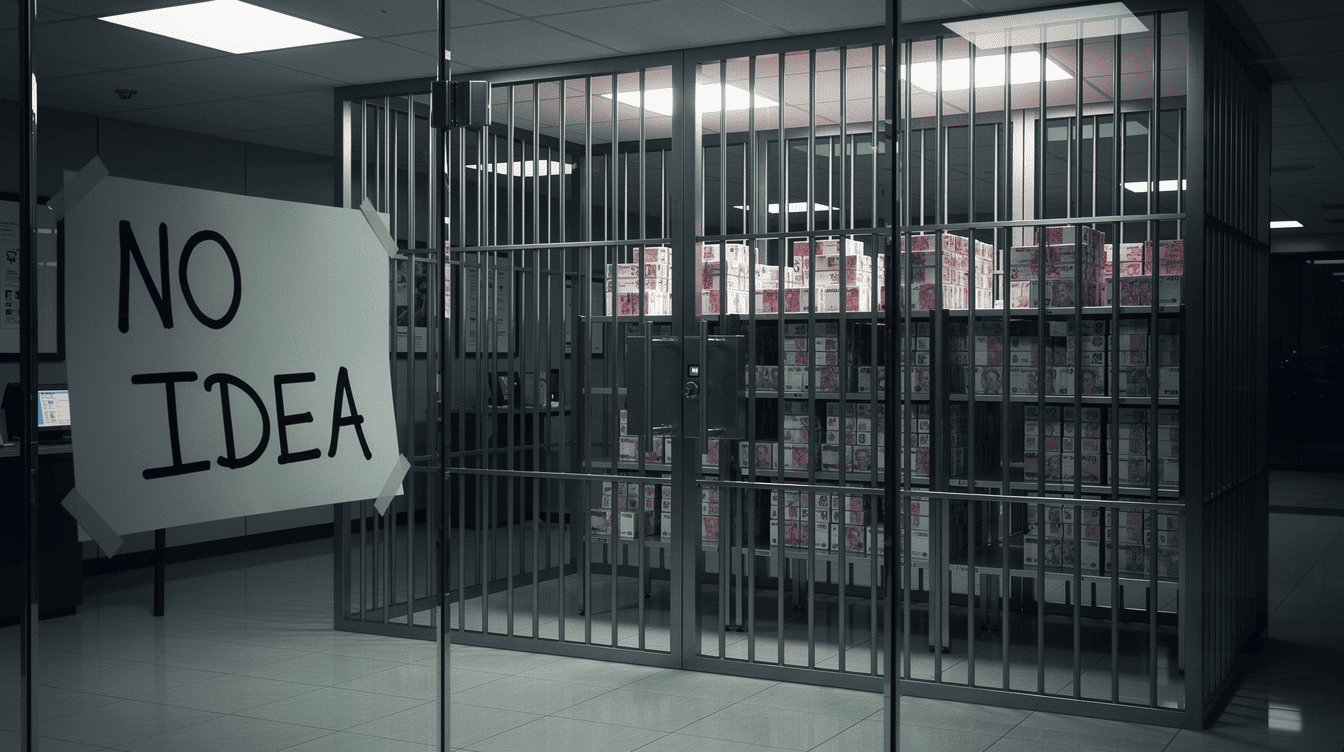
Two Days of Natural Gas And A Prayer For Wind
The Strait of Hormuz has been closed for four weeks. Oil has breached $126 a barrel. The Bank of England has frozen interest rates. And Britain, which designed its entire energy system around the assumption the world would always cooperate, is discovering what happens when the world does not.
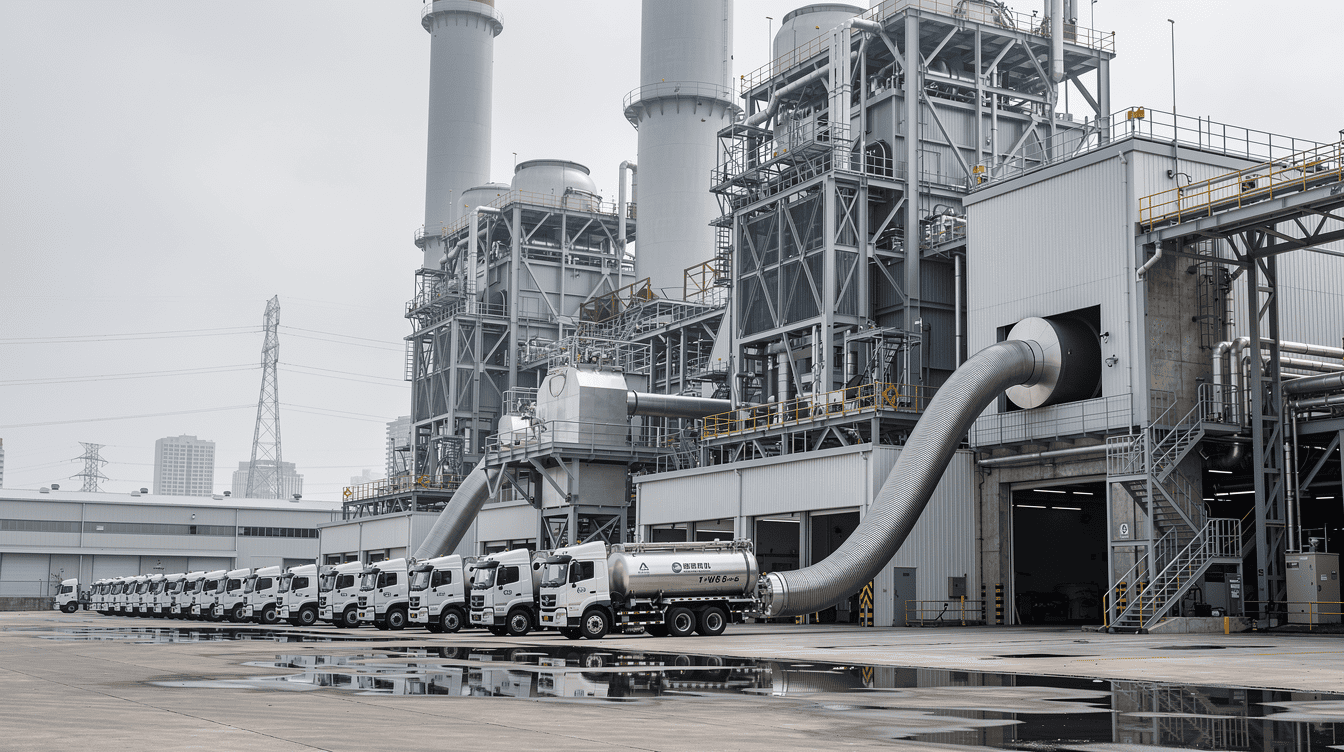
Britain does not store energy. It orders it. Our system runs on tomorrow's gas. This is not an exaggeration. It is the defining structural fact of the UK energy system, and it explains why a naval confrontation between Iran and the United States, seven thousand miles from London, is about to push British household energy bills back towards £2,000 a year. Socialism is to come to the rescue and redistribute other people's taxes to them to help.
The United Kingdom holds enough gas in storage to cover roughly twelve days of average demand, or seven and a half days at peak winter consumption. That figure, confirmed by both Centrica and Ofgem, makes Britain the worst performer in the G7. Germany holds the equivalent of two to three months. France holds more than four times as much. Italy more than five times. Britain's strategic gas buffer is not "small" by European standards. It is negligible.
This was not an accident. It was a design choice.
In the 1990s and early 2000s, when North Sea gas was abundant and cheap, Britain made a strategic decision: rather than stockpile fuel, the country would rely on continuous flows. Gas would arrive daily through Norwegian pipelines, from domestic production, and from global LNG markets. Storage was treated as an inefficiency rather than an insurance policy. The market would provide.
The system worked, as long as all three supply sources cooperated simultaneously. The moment any of them faltered, there was almost nothing to fall back on.
Just as the "rules based international order" worked, so long as these competing countries bought the illusion of neoliberal harmony and social democracy.
Until 2017, the Rough gas storage facility off the Yorkshire coast held around 70 per cent of the UK's total gas storage capacity, enough for roughly nine days of supply and capable of meeting 10 per cent of peak winter demand. Centrica closed it because the wells had reached the end of their design life and refurbishment was prohibitive without government support. The government declined to provide it. The energy minister, Lord Harrington, told Parliament the closure would not cause a problem with security.
As I explained in my answer to the hon. Gentleman’s first question, we have a very diverse range of sources. Analysis conducted by the National Grid and others confirms that the closure of Rough will not cause a problem with security.
Five years later, with gas prices detonating after the Russian invasion of Ukraine, the government reopened Rough in a panic. It now operates at a fraction of its original capacity. Centrica has offered to invest £2 billion to fully restore it, but needs a regulated return model to justify the expenditure. The government has not provided one. FTI Consulting calculated a fully operational Rough would have saved consumers £5.2 billion over two recent winters alone. The government saved £750 million over a decade by closing it.
How Britain Got Here
The story of how the UK arrived at this point is not a single catastrophic decision. It is a half-century of sequential removals, each one rational in isolation, collectively devastating.
We start with coal.
In 1990, coal produced roughly 65 per cent of British electricity. The country sat on centuries of reserves. But from the late 1990s onward, EU air-pollution directives forced expensive upgrades on aging coal plants. The Large Combustion Plant Directive of 2001 required sharp reductions in sulphur dioxide, nitrogen oxides, and particulate emissions. Retrofitting stations built in the 1960s and 1970s was ruinously expensive. Many operators chose to close rather than upgrade.
Carbon pricing then finished the job.
The ruinous and ideological Climate Change Act of 2008 committed Britain to deep emissions reductions. The disastrous UK carbon price floor, introduced in 2013, made coal generation progressively uneconomic against gas and renewables. Whatever one thinks of the policy, the generation capacity disappeared. Coal went from 65 per cent of electricity to 1 per cent. The plants were demolished. The mines were already gone. The infrastructure cannot be rebuilt.
Gas filled the void.
North Sea production peaked around 2000 at roughly 110 billion cubic metres a year. The UK was a net energy exporter. Gas was cheap, domestic, and apparently limitless. Combined-cycle gas turbines replaced coal plants in what became known as the "dash for gas." Between 1990 and 2000, gas went from producing 2 per cent of British electricity to 30 per cent. The shift was so rapid the government briefly imposed an informal moratorium to slow it down, worried about overdependence on a single fuel.
The moratorium was lifted. The dependence arrived anyway.
North Sea gas production has since fallen by roughly two-thirds. The UK shifted from gas exporter to gas importer by the mid-2000s. The resource upon which the entire system was built began to shrink, exactly as geologists had always said it would. The fields discovered in the 1970s and 1980s were the largest and easiest. Later finds were smaller, deeper, and more expensive. Britain did not run out of gas. The basin matured. But the system built around North Sea abundance outlived the abundance itself.
Then there is nuclear. As The Restorationist has pointed out several times, this is perhaps the most consequential failure of all, because it was entirely avoidable.
Britain built most of its nuclear reactors between 1976 and 1988. At their peak they provided roughly 12 GW of capacity and generated around a quarter of the country's electricity. They were reliable, firm, weather-independent, and domestic. They were exactly the kind of strategic infrastructure a prudent country maintains.
Instead, for nearly two decades, Britain built nothing to replace them. Nuclear capacity has fallen to around 6 GW and will drop to 3 GW by the early 2030s without new construction. Only one new reactor is being built: the French-run Hinkley Point C, now estimated at £31 to £34 billion and years behind schedule. The reasons for the failure span the political spectrum. Privatisation in the 1990s made nuclear investment commercially unattractive. Planning and licensing processes added years to any project. Public opposition, sharpened by Chernobyl and Fukushima, made governments cautious. No party for two decades was willing to absorb the cost, the timescale, or the political risk.
Britain is not alone in this. Germany made the same mistake more dramatically, shutting down its remaining nuclear plants in 2023 as a matter of ideology, then discovering within months it needed to burn more coal and gas to keep the grid stable. Germany is now planning 36 GW of new gas-fired power capacity. That is not a climate strategy. It is an admission that firm power matters, made too late and at enormous cost.
The result of all these sequential removals is the system Britain has today. Gas produces 35 to 40 per cent of electricity and heats nearly three-quarters of homes. Wind provides 25 to 30 per cent of electricity but is entirely weather-dependent. Despite being a "clean" energy source, nuclear provides roughly 15 per cent and is shrinking. Imports fill the remainder.
Britain did not plan this grid. It inherited it. Each generation of politicians removed one energy source and hoped the next generation would sort out the replacement. Nobody did.
When The Strait Pulled Back The Curtain
The Hormuz crisis did not create Britain's energy vulnerability. It merely proved it exists. When Iran closed the strait on 4 March 2026, twenty per cent of global oil and gas supply was disrupted overnight. The price of Brent crude surged past $126 a barrel. The IEA called it the largest supply disruption in the history of the global oil market. European gas benchmarks nearly doubled. The Bank of England froze interest rates, abandoning planned cuts. UK inflation is now expected to breach 5 per cent. Cornwall Insight forecasts the July energy price cap at nearly £2,000, a rise of more than £300 from April. Chemical and steel manufacturers have imposed surcharges of up to 30 per cent.
Britain is acutely exposed for a specific reason: the just-in-time system has no shock absorbers. Norwegian pipelines supply roughly half the country's gas and cannot ramp further. Equinor is already producing at capacity, 2.14 million barrels of oil equivalent per day, the level it intends to sustain through 2035. In 2022, Norway cushioned Europe's blow by increasing output nearly 10 per cent. That buffer has been spent. There is nothing left to ramp.
LNG on the global spot market goes to the highest bidder. When Asia and Europe compete simultaneously for flexible cargoes, as they are doing now, there is no guarantee Britain gets any. The country's gas "reserves" at LNG terminals are not strategic reserves. They are commercial holdings in transit, owned by traders who will redirect them if someone offers a better price. Britain's energy security depends on always being able to outbid the rest of the world for gas. In a crisis affecting 20 per cent of global supply, that is not a strategy. It is a bet.
Iranian strikes also hit Qatar's vast Ras Laffan LNG complex, knocking out roughly 17 per cent of capacity. That damage will persist long after any ceasefire. Even if the conflict ends next month, Europe enters its summer storage refill season with reserves at just 30 per cent, the lowest in years, and a permanently diminished supply base.
The Grid Cannot Connect Its Own Future
Even if the Hormuz crisis resolves, Britain faces a structural energy problem no amount of diplomacy can fix: the electricity grid cannot physically connect the generation capacity the country needs.
By mid-2024, more than 700 GW of generation and storage projects were sitting in the grid connection queue. UK peak electricity demand is roughly 60 GW. The queue was more than ten times the size of the grid. Many of the projects were speculative, but the queue's existence reflected a planning and infrastructure system so overwhelmed it could not distinguish between a shovel-ready wind farm and a paper application filed for optionality.
In December 2025, the National Energy System Operator completed a major overhaul. The old first-come-first-served queue was replaced with a prioritised pipeline. Of the 700 GW, roughly 283 GW of projects were retained, with 132 GW identified as needed for the government's 2030 clean power target. More than 300 GW were removed. The reform was necessary. But the fact it was necessary at all tells you something about the system: for years, the grid connection process was a bureaucratic filing cabinet, not an engineering programme.
The transmission infrastructure is the deeper constraint. Britain's best wind resources are in Scotland and offshore. Demand is concentrated in England. Moving power from where it is generated to where it is consumed requires high-capacity transmission lines, substations, and grid reinforcement on a scale the country has not attempted in decades. Wind farms are routinely paid to stop generating because the grid cannot absorb the electricity. These constraint payments cost consumers hundreds of millions of pounds a year. Britain pays to build wind capacity it then pays to switch off.
Meanwhile, the country largely ignores the one renewable resource it possesses in world-class abundance: tidal power. The UK sits in some of the strongest tidal streams on Earth. The Pentland Firth, the Severn Estuary, and Orkney waters offer theoretical potential estimated at 20 to 30 GW, comparable to the entire UK peak electricity demand. Unlike wind, tidal generation is predictable. The tides do not stop. They do not depend on weather. They can be forecast years in advance.
Yet total UK tidal deployment is tiny, a few tens of megawatts against 30,000 MW of installed wind capacity. The MeyGen project in Scotland, the most advanced tidal stream array in the world, operates at roughly 6 MW with expansion potential to 400 MW. The Severn Barrage proposal, which could have delivered 8 to 10 GW and been one of the largest power installations in Europe, was shelved repeatedly over environmental concerns and construction cost. It inexplicably forecast the costs at $45 billion.
Tidal is not a fantasy technology. It is a proven one, deployed at negligible scale in a country with some of the best tidal resources on the planet. The question is not whether it works. It is why, after decades of discussion, the country built almost none of it.
All of this illustrates British energy is no longer an engineering portfolio – if it ever were one – but an ideological project run by idiots. Between nuclear and tidal, the country has a century of energy security at its fingertips without ugly left-wing-sponsored environmental gargoyles like wind and solar.
Reform UK's Whining Backfires
There is a popular claim, particularly associated with Reform UK, Britain is "running out of gas" and could solve its energy problems by extracting more. The claim is wrong, and it matters to explain why, because the real problem is worse than the slogan suggests.
This is not how markets work. It also suggests a worryingly ignorant view from a party projected to form the next government.
Yes, the North Sea "Transition" Authority and its suicidal crusade to "Net Zero" is idiotic in the extreme.
No, Britain has not run out of gas. The North Sea still produces roughly 35 to 40 billion cubic metres a year. The UK continental shelf contains substantial remaining resources. What happened is the natural maturation of a heavily explored basin. The largest fields were discovered and drilled first. Later finds are smaller, deeper, and more expensive.
Fracking (hydraulic fracturing) was explored in the 2010s. The Bowland Shale in northern England was estimated to contain significant resources. Exploratory drilling in Lancashire triggered seismic events. The government imposed strict safety limits, effectively halting operations. The moratorium means Britain never developed shale gas the way the United States did.
Could maximising domestic production help? Yes, at the margin. More domestic gas improves security of supply. But even domestically produced gas trades at international prices. Drilling more does not guarantee cheap energy. And it does not address the fundamental architectural failure.
What Reform gets wrong is the diagnosis: Britain's energy vulnerability is not the result of negligence or oversight. As mentioned at the beginning, it is the result of a deliberate design choice. The just-in-time system was intentional. Policymakers in the 1990s and 2000s decided, explicitly, to rely on continuous imports rather than strategic reserves. They assumed North Sea production would remain strong, Norwegian pipelines would always flow, and global LNG markets would provide flexibility. Those assumptions were reasonable at the time. They are no longer reasonable today. But the system built around them persists, because nobody redesigned it when the assumptions changed. This isn't a catastrophe caused by failing to plan; it is having the wrong plan.
The "running out" whining is dangerous because it implies a simple fix: drill more, problem solved. The real problem is architectural. Britain does not lack hydrocarbons. It lacks:
- A system designed to absorb shocks.
- Storage.
- Firm power.
- Grid capacity.
- The institutional willingness to build expensive infrastructure whose value only becomes apparent on the worst day of the decade.
Drilling alone cannot fix any of that.
When Reality Meets Ideology
In 2022, when Russia's invasion of Ukraine sent gas prices vertical, Norway cushioned the blow after we decided to go to war with the world's largest gas superpower. Europe praised Norway as a reliable partner. The implicit lesson was: the system can flex.
That buffer is exhausted. When the second energy shock of the Iran war arrived four years later, from a different conflict in a different region, the insurance policy had already been cashed. Europe has few immediate levers to pull.
The options on the table are revealing: as Reuters reported this week, the EU may be forced to choose between its climate ambitions and its energy security. One possibility is delaying the planned phase-out of Russian LNG imports, currently scheduled for the end of this year, and abandoning the deadline for ending all remaining Russian pipeline gas by September 2027. Another is softening the lunatic climate policies designed to make fossil fuels progressively more expensive: carbon pricing, energy-efficiency mandates, methane-emissions limits, renewable-deployment targets. Germany is planning 36 GW of new gas-fired power as a direct result of shutting down its nuclear fleet two years ago on ideological grounds only to immediately find itself burning more coal to keep the lights on.
Ideological politicians do not understand basic science and make useless engineers.
This is the moment when luxury beliefs collide with physical reality. For years, climate policy in Europe and Britain has operated on the assumption ambition and timescale are separable; you can announce the destination without building the road. The transition to so-called "renewables" may be desirable; but the transition from fossil fuels requires something to transition to. If you dismantle your coal fleet, constrain your gas investment, let your nuclear capacity wither, fail to build storage, never upgrade your grid, and ignore your tidal resources, then you have not "transitioned." You have merely become dependent on the same fuels you publicly disdain, imported from regimes whose stability you cannot guarantee, while congratulating yourself on the purity of your targets.
Nowhere is this stupidity more than the Drax plant debacle. To power left-wing dreams of Marxist abundance from nature, Drax burns Louisiana trees at scale and has created a new fossil fuel market in the US.
The United States has taken the opposite approach, crudely. Withdrawal from the Paris Agreement for the second time in January 2025. Withdrawal from the UN Framework Convention on Climate Change, the IPCC, and 64 other international bodies in January 2026. America at least has domestic production, strategic reserves, and a system designed around self-sufficiency. Europe at least has serious gas storage.
Britain has neither. It has targets without infrastructure. Pledges without reserves. A climate strategy built on the assumption the geopolitical conditions enabling LNG imports would hold indefinitely.
The honest position is not "net zero or energy security." It is: you cannot have either without a system designed for both. Domestic generation at scale, including nuclear and tidal. Storage measured in weeks, not days. A grid physically capable of moving power from where it is generated to where it is needed. Strategic reserves held by the state, not by commercial traders who will sell to the highest bidder. Gas produced domestically wherever viable, rather than imported from regimes whose cooperation cannot be assumed.
Britain did none of these things. It built wind farms and imported LNG and called it a strategy.
The Institutional Pattern, Again
Our recent series documented how Britain replaced experienced people with institutional machinery across every area of public life, then watched the machinery fail. Energy policy is the same story told at a different scale.
Britain once had engineered redundancy: large coal reserves, a domestic gas boom, a nuclear fleet providing reliable baseload, and storage capacity to absorb shocks. Over four decades, each was allowed to decline, shut down, or expire without adequate replacement. What took their place was a market-balancing system of extraordinary sophistication and extraordinary fragility.
- The old energy philosophy was: build excess capacity so the lights never go out.
- The new philosophy is: balance supply and demand dynamically through markets.
The first is expensive and wasteful in peacetime. The second is efficient and lethal in crisis.
The same substitution identified across the main series, experienced judgment replaced by centralised process, local knowledge replaced by algorithmic management, strategic reserves replaced by just-in-time procurement, describes precisely what happened to British energy. The parish constable became a facial recognition camera. The local auditor became a centralised framework. And the strategic gas reserve became a spot market order placed at four in the morning from a trading desk in Singapore.
The Restorationist's position is not nostalgia for coal or hostility to renewables. It is the same position applied to every institution examined in this publication: a system without redundancy, without local accountability, and without the capacity to absorb failure is a system waiting for a crisis to expose it.
Energy policy, like audit policy, like health inspection, like defence procurement, was rebuilt around the assumption process could replace prudence. It cannot. Prudence is expensive. It requires building things you hope never to use, storing fuel you hope never to burn, maintaining infrastructure whose value only becomes apparent on the worst day of the year, and deploying proven technologies like tidal power whose payoff is measured in decades rather than electoral cycles.
Britain stopped doing all of that. And the worst day has arrived.