What Exactly Is The Purpose Of The United Nations?
Founded as a talking shop to prevent another world war, the UN now runs climate campaigns, gender slogan tweets, and sustainability dashboards — all while failing at the one thing it was built to do. Why do we pay £630M a year for a technocrat country club with 100 extra quangos?

In the wilds of San Francisco in the summer of 1945, with Europe still smouldering and the Pacific war grinding toward its nuclear conclusion, diplomats from fifty nations signed a document whose purpose was brutally simple. The United Nations Charter was not a manifesto for global betterment. It was not a philosophical treatise on human potential. It was a security pact. Its central logic was cold and unapologetic: give the great powers a permanent stake in the system by granting them vetoes, and they will have no reason to blow it up. Keep them inside the tent. Let them shout at each other in committee rooms instead of across battlefields. That was the deal.
Article 1 of the Charter sets out four purposes.
- The first is maintaining international peace and security.
- The second is developing friendly relations among nations.
- The third is achieving cooperation in solving economic, social, and humanitarian problems.
- The fourth is serving as a centre for harmonising the actions of nations.
Read closely, these are graduated ambitions. The first is existential. The second is diplomatic. The third is aspirational. The fourth is procedural. Everything below the first tier was always meant to be subordinate. The Security Council, with its five permanent members and their veto hammers, was the engine. Everything else was furniture.
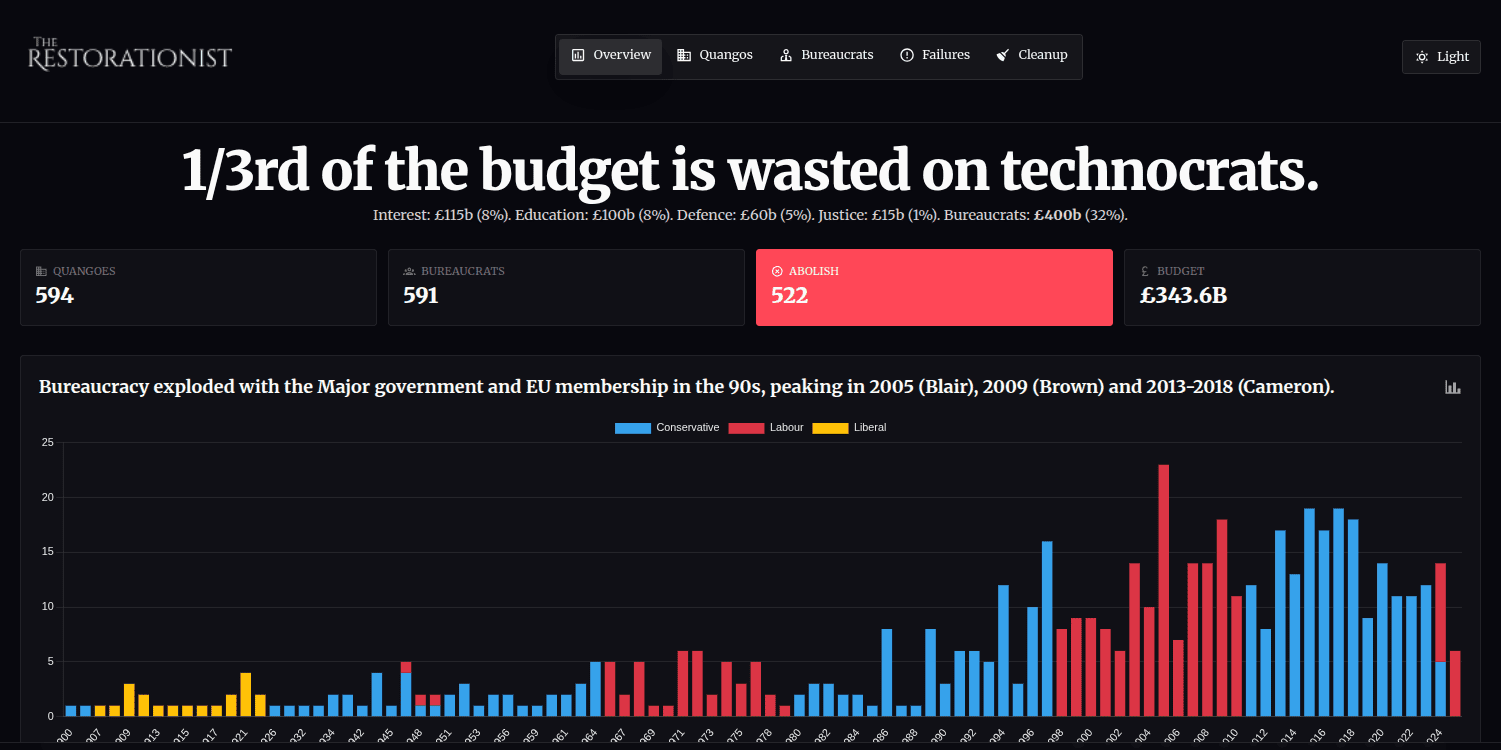
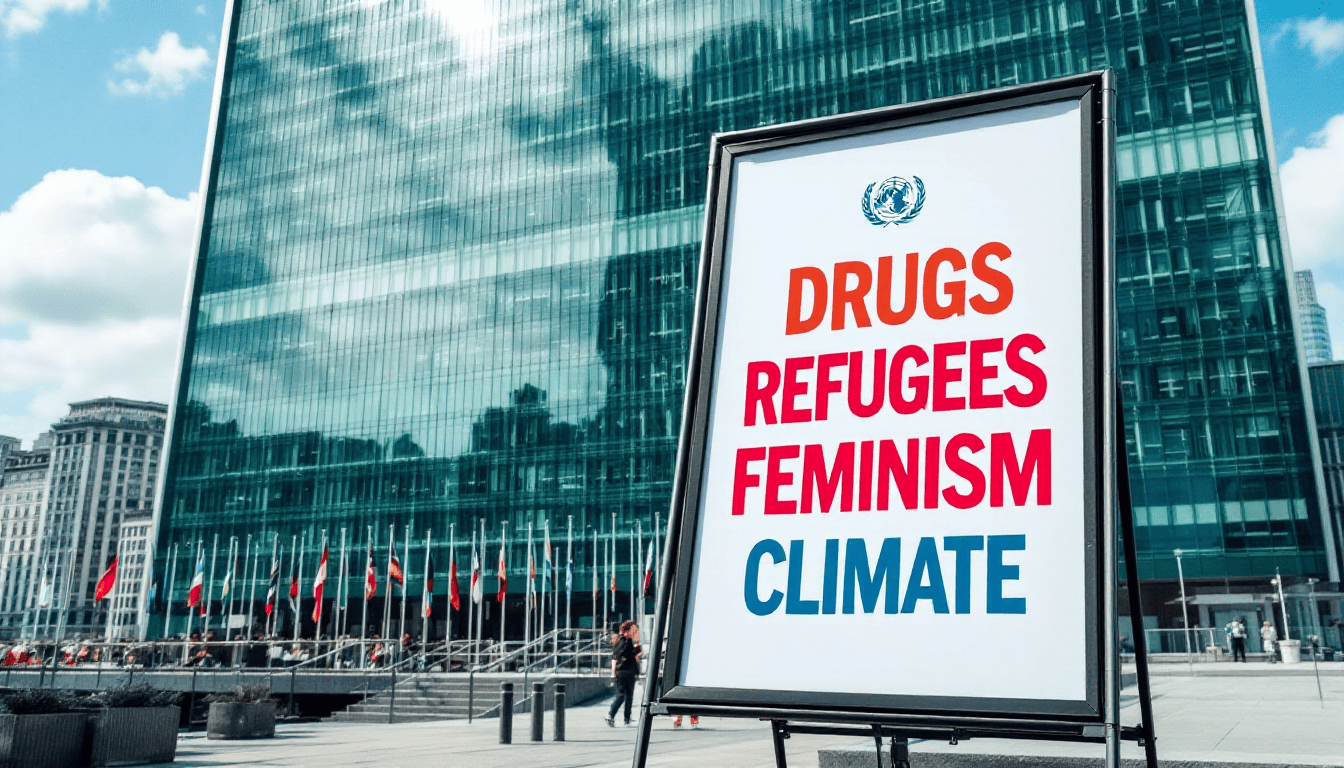
Eighty years later, the furniture has eaten the engine room. The United Nations system now employs over 116,000 staff across dozens of agencies, funds, and programmes in 193 countries. Its combined budgets run into tens of billions of dollars. It produces sustainable development goals, climate targets, gender mainstreaming frameworks, drug conventions, migration compacts, and an endless cascade of conferences, communiqués, and hashtags. It has a presence on every social media platform. It runs campaigns about body positivity and International Days devoted to everything from yoga to toilet hygiene. And on X, an account called "UN Women" posts the same slogans about empowerment with the regularity and emotional range of a screensaver.
Meanwhile, in the Security Council chamber where the real power was always supposed to live, Britain has not used its veto since December 1989. Russia has vetoed resolutions 159 times and counting. The United States has blocked criticism of Israel so reliably it has become procedural wallpaper. And the one body designed to prevent another world war has proven repeatedly, catastrophically incapable of stopping genocide — the very crime the entire organisation was erected to make unthinkable.
How did we get here?
The Quiet Machinery of Mandate Creep
The answer is not conspiracy. It is something far more durable and far harder to reverse: institutional accretion. Every crisis the world produced after 1945 offered an opportunity for the UN to expand its remit. Every expansion created new staff, new budgets, new reporting obligations, and new reasons to exist. And no international institution has ever voluntarily shrunk itself.
The process began almost immediately. UNICEF was created in 1946 as an emergency measure to feed children displaced by war. It became permanent. The UN High Commissioner for Refugees was established in 1950 to deal with the millions of stateless Europeans wandering the continent. It became permanent. The logic was always the same: this is temporary, this is urgent, this is directly connected to preventing another catastrophe. And each time, the emergency ended but the institution did not.
Through the 1950s and into the 1960s, the UN added specialised agencies at a steady clip. The World Health Organisation. UNESCO. The Food and Agriculture Organisation. These were mostly technocratic: bodies designed to coordinate specific kinds of international cooperation on health, education, and food supply. They were justifiable under the Charter's third purpose (solving economic and social problems) and they stayed broadly within their technical lanes. This was the UN at its most defensible: practical, boring, and useful.
Then came decolonisation, and with it a fundamental change in the arithmetic of global politics.
Membership Changed, Then Mission Changed
Between 1945 and the early 1970s, dozens of newly independent states joined the General Assembly. Many were former colonies, economically underdeveloped, suspicious of Western institutions, and corresponded politically with the Non-Aligned Movement or the Soviet bloc. The voting balance inside the General Assembly shifted dramatically. And because the General Assembly operates on a one-country-one-vote principle (regardless of economic weight, population, or strategic significance) these new members held numerical majorities.
The consequences were immediate and structural. Anti-colonial rhetoric became the default register of General Assembly debate. Anti-racism resolutions multiplied. Development aid was reframed not as charity but as reparation. The language shifted from cooperation to obligation. And Western nations, particularly former imperial powers like Britain, found themselves on the receiving end of a permanent rhetorical prosecution.
Sir Humphrey Appleby, may peace be upon him, described the UN as "the accepted forum for the expression of international hatred." It was satire, but it had teeth. The General Assembly became, in practice, a stage for bloc politics: the Arab League and the Organisation of Islamic Cooperation voting as a unit, the Non-Aligned Movement forming a rhetorical superpower through sheer numerical weight. Israel acquired a standing agenda item on the Human Rights Council: a distinction afforded to no other country. Britain's imperial history became a permanent exhibit, cited and recited in speeches designed less for diplomatic effect than for domestic audiences back home.
None of this was illegal. It was arithmetic. But it transformed the character of the institution from a realist security architecture into a majoritarian debating chamber where the loudest voices belonged to states with the least skin in the game.
The Treaty Factory Opens for Business
While the General Assembly was becoming an ideological theatre, something quieter and more consequential was happening inside the UN treaty system. Starting in the mid-1960s, the organisation began producing binding international conventions at a rate the founders could never have anticipated.
- The International Convention on the Elimination of All Forms of Racial Discrimination arrived in 1965.
- The twin International Covenants on Civil and Political Rights followed in 1966.
- The Convention on the Elimination of All Forms of Discrimination Against Women came in 1979.
- The Convention Against Torture in 1984.
- The Convention on the Rights of the Child in 1989.
Each convention created a treaty body: a committee of experts empowered to monitor compliance, receive state reports, issue recommendations, and, in some cases, hear individual complaints. Each treaty body required staff, offices, translation into six official languages, travel budgets, and administrative infrastructure. And each set of recommendations (though technically non-binding) became ammunition for domestic lobby groups, courts, and civil servants seeking to sync domestic policy with international norms.
This was the real drift mechanism. Not speeches. Not tweets. Treaties create permanent monitoring architecture. Monitoring architecture creates reporting obligations. Reporting obligations create professional bureaucracies. Professional bureaucracies produce policy recommendations. Policy recommendations become embedded in domestic governance through courts, regulators, procurement rules, and civil service guidance.
The Charter did not change. The machine built around it grew.
Drugs, Climate, and the Expansion of "Security"
The drug conventions illustrate the pattern with particular clarity. Britain's pre-war approach to narcotics, rooted in the Rolleston Committee's 1926 report, treated addiction as a medical condition amenable to clinical management, including the maintenance prescribing of heroin and morphine to dependent individuals. It was pragmatic, physician-led, and broadly functional. It is remembered as the world's most successful drug policy, providing "forty years of tranquility."
The UN's Single Convention on Narcotic Drugs, adopted in 1961, replaced this clinical flexibility with a prohibitionist framework designed primarily around American enforcement priorities. Britain ratified the convention. Its domestic drug policy bent accordingly. The 1964 Dangerous Drugs Act tightened controls on cannabis and prescribing, effectively importing the logic of international prohibition into a system previously built on clinical discretion.
The results speak for themselves. British drug policy has lurched from crisis to crisis for sixty years, caught between the unworkable demands of treaty compliance and the stubborn reality of human pharmacology. Whatever one thinks of drug liberalisation, the fact remains: a distinctive and arguably superior national approach was overwritten by a UN framework designed to serve the priorities of a different country and a different political culture. And the treaty machinery, once ratified, proved nearly impossible to reverse.
"Climate governance" followed an almost identical trajectory.
- The Intergovernmental Panel on Climate Change was established in 1988.
- The UN Framework Convention on Climate Change was adopted in 1992.
- The Kyoto Protocol arrived in 1997.
- The Paris Agreement in 2015.
Each step ratcheted the institutional architecture tighter: from scientific assessment, to diplomatic framework, to binding targets, to national reporting obligations, to investment criteria, to ESG scoring systems embedded in pension funds and procurement rules.
The link between carbon emissions and the prevention of great-power war is, to put it charitably, indirect.
The argument made by defenders of this expansion is one of cascading risk: environmental stress produces resource scarcity, which produces migration, which produces instability, which produces conflict. Whether this causal chain is real in any specific case matters less than the institutional function it serves: it justifies the expansion of UN competence into domains entirely unrelated to the original Security Council mandate. Climate is not a security issue in the way a Russian veto over a Syrian ceasefire is a security issue. But calling it one keeps the money flowing.
What £630 Million Of Tax Buys
The United Kingdom is one of the five permanent members of the Security Council and one of the largest financial contributors to the UN system. Between 2013 and 2024, Britain provided an average of roughly £630 million per year to the UN's core budgets and peace operations. In 2025, the UK's assessed share of the regular budget stood at approximately 4%, with a higher rate for peacekeeping contributions on account of its permanent member status.
To put those numbers in context: running the UK Parliament — both chambers, all staff, all committee work, all translation, security, IT, MPs' offices, and Lords' allowances — costs somewhere in the low hundreds of millions per year. Britain pays a comparable sum, annually, to a diplomatic infrastructure headquartered in Manhattan.
What does the money actually fund? The regular UN budget (roughly $3.7 billion in 2025) covers the Secretariat, political affairs teams, mediation units, translation services, conference infrastructure, and Security Council support staff. The peacekeeping budget adds another $5.4 billion, covering troop reimbursements, logistics, armoured vehicles, aviation fuel, and base construction across a dozen or more missions in Africa, the Middle East, and elsewhere. Then there are voluntary contributions — optional payments directed at specific agencies and programmes, from "climate funds" to development bodies to "gender initiatives." The UK consistently provides more to individual agencies than it does to the UN's main budgets.
The question is not whether the sticker price is large in absolute terms. It is. The question is whether the strategic return is proportionate.
A Veto Gathering Dust in a Glass Case
Britain's permanent Security Council seat is the hardest asset in the UK's UN portfolio. It confers drafting authority over binding resolutions, participation in sanctions committees, access to closed P5 consultations, and the formal power to block any substantive Security Council decision single-handedly.
Britain has used veto power 32 times since 1946. The last occasion was in December 1989, when it joined France in vetoing a resolution condemning the American invasion of Panama. Since then, for thirty-six years, Britain's veto has sat untouched. No British government has blocked a single Security Council resolution in over three decades.
The usual defence of this record is diplomatic: the veto is a nuclear option, and its value lies not in use but in the threat of use, which shapes negotiations upstream before any vote occurs. There is truth in this. Permanent members do influence draft language behind closed doors. The mere possibility of a veto alters what reaches the chamber floor.
But honestly examine the record and a harder question emerges: would Britain ever veto the United States? The intelligence integration between the two countries is too deep. The nuclear cooperation too embedded. The defence-industrial ties too extensive. The NATO architecture too load-bearing. Britain's veto is, in practical terms, an American reserve weapon — useful for blocking hostile resolutions, useless as an independent instrument of British policy divergence.
If you would never use a tool against your most important ally, and your most important ally already has the same tool, then what you possess is not leverage. It is a status symbol bolted to a chair in a room where the real decisions are made by someone else.
Peacekeepers as Predators
When the UN does deploy its own operational capacity, as distinct from producing reports and convening summits, the record is not merely disappointing. It is harrowing.
The genocide in Rwanda in 1994 killed approximately 800,000 people in a hundred days. The UN had a peacekeeping mission, UNAMIR, on the ground. Its force commander, Roméo Dallaire, had sent intelligence warnings to New York. The Security Council reduced the force as the killing accelerated. Peacekeepers operating under restrictive rules of engagement watched the slaughter unfold around them. Major powers, freshly scarred by Somalia, did not want intervention. The word "genocide" was studiously avoided in diplomatic cables because using it would have triggered legal obligations to act.
In Srebrenica, in July 1995, a UN-declared "safe area" was overrun by Bosnian Serb forces. Dutch peacekeepers handed over Bosnian Muslim men and boys. Approximately 8,000 were massacred.
These are not marginal footnotes. These are the defining events of post-Cold War peacekeeping — the moments when the organisation's claim to moral authority was tested against actual slaughter, and collapsed.
And alongside the strategic failures lies a record of personal criminality among the very troops dispatched to protect vulnerable populations.
- An Associated Press investigation found nearly 2,000 allegations of sexual abuse and exploitation by peacekeepers and UN personnel in the twelve years before 2017.
- In Haiti, at least 134 Sri Lankan peacekeepers were implicated in a child sex ring spanning a decade; 114 were sent home, but none were prosecuted.
- In the Central African Republic, over a hundred cases of sexual abuse of girls — some as young as eleven — were documented against peacekeepers from multiple contributing nations.
- In the Democratic Republic of Congo, internal UN reports described conditions around MONUSCO bases as involving "systematic and widespread violation" of rules against sexual exploitation.
- In 2024, allegations of sexual abuse and exploitation across UN missions topped 100 for the third year in the previous decade, with Congo and the Central African Republic accounting for the vast majority.
The structural problem is jurisdiction. Peacekeepers remain under the legal authority of their contributing nations. The UN cannot prosecute them. It can only send them home and ask their governments to take action. Most do not. Girls are raped, children are abandoned, perpetrators rotate home and vanish into their national military systems, and the UN issues a press release about its "zero tolerance" policy.
These are not peripheral failures. They are the operational record of the organisation's most visible field capability.
The Ghost of the League Stalks
The League of Nations failed because it could not compel action. It had no enforcement mechanism. It relied on moral suasion and public opinion. When Japan invaded Manchuria, when Italy invaded Abyssinia, the League condemned, debated, and ultimately did nothing. The great powers walked away, and the institution died in their wake.
The UN was designed to avoid exactly this fate. The Security Council, with its binding resolutions and its enforcement powers, was supposed to be the steel core the League lacked. But the veto, the price paid to keep the great powers inside the tent, also ensures the Security Council cannot act against the interests of any permanent member. When Russia annexes Crimea, invades Ukraine, and commits documented atrocities, the Security Council is paralysed by Russia's own veto. When China suppresses populations or threatens neighbours, China's veto blocks intervention. The enforcement mechanism exists on paper. It functions only when no permanent member objects.
In practice, what prevents great-power war today is not the United Nations. It is nuclear deterrence. It is economic interdependence. It is military balance. It is intelligence integration. The UN is, at best, peripheral to these forces. It provides a neutral venue for backchannel communication. It offers escalation off-ramps and face-saving formulas. These are useful services. They are not worth a global bureaucracy employing six figures of staff and consuming tens of billions of dollars annually.
The Americans Have Already Had Enough
In January 2026, the Trump administration announced the withdrawal of the United States from 66 international organisations identified as wasteful, ineffective, or harmful. The State Department's statement was blunt in language unusual for diplomatic communication:
As this list begins to demonstrate, what started as a pragmatic framework of international organizations for peace and cooperation has morphed into a sprawling architecture of global governance, often dominated by progressive ideology and detached from national interests. From DEI mandates to “gender equity” campaigns to climate orthodoxy, many international organizations now serve a globalist project rooted in the discredited fantasy of the “End of History.”
Whatever one thinks of the politics, the structural diagnosis is difficult to dismiss. The United States pays 22% of the UN regular budget and is assessed for over 26% of peacekeeping costs. American taxpayers underwrite the largest single share of a system whose public-facing institutions frequently adopt rhetorical positions hostile to American policy preferences. When the largest funder questions the return on investment, the funding model is existentially fragile.
The Secretary-General's response was revealing. Facing a projected deficit of over $450 million for 2025, António Guterres — a former Portuguese Socialist prime minister whose public statements on climate, migration, and inequality read like policy briefs from a Geneva think tank — proposed cutting the 2026 budget by 15% and reducing staff by nearly 19%. If the institution can shed a fifth of its workforce under financial pressure and still function, the question of what those staff were doing before becomes rather pointed.
Pay For Your Own Regulation
For the United Kingdom specifically, the cost-benefit analysis is unusually uncomfortable. Britain pays hundreds of millions annually to an institution whose General Assembly routinely produces resolutions critical of British foreign policy, whose decolonisation rhetoric frames the UK as a historical malefactor, and whose treaty bodies issue recommendations on domestic policy matters ranging from policing to immigration to welfare provision.
The UN's normative machinery does not stop at the water's edge. Soft-law instruments — non-binding compacts, General Assembly resolutions, treaty-body recommendations — filter into British governance through multiple channels: judicial citation, civil service guidance, regulatory "best practice," NGO litigation, and procurement standards. The Global Compact for Migration is explicitly non-binding. It is also explicitly framed as "grounded in" international law and human rights principles. When such a document exists, every pressure group, quango, and activist judge in the country has a template to cite.
Britain is, in effect, paying for the production of instruments used to constrain its own sovereignty and reframe its own history. The assessed contribution buys a seat at the table. The voluntary contributions fund the agencies producing the reports, targets, and frameworks British courts and regulators then treat as authoritative.
The Ratchet Has No Reverse Gear
The mechanism is always the same. A global problem emerges. States argue it has cross-border consequences. The UN creates a forum, then a convention, then a monitoring body. Staff are hired. Reports are produced. Conferences are convened. Budgets grow. The structure becomes permanent. New problems are identified. The cycle repeats.
Nobody votes to abolish a UN agency. Nobody tears up a convention. Nobody fires the monitoring committee. The ratchet only turns one way. The Sustainable Development Goals — seventeen sprawling targets adopted in 2015, covering everything from poverty to ocean life to "responsible consumption" — represent the logical terminus of this process: the UN as a global planning dashboard, issuing report cards on the performance of sovereign nations against benchmarks those nations never had meaningful power to reject.
The distance between "prevent another world war" and "monitor SDG Target 12.3 on food waste reduction" is not a gentle slope. It is a canyon. And it was crossed not by democratic mandate but by bureaucratic accretion, treaty accumulation, and the steady gravitational pull of institutions justifying their own existence.
A Forum, Not a Government
The honest diagnosis is this. The United Nations contains two organisms under one roof. The first is a realist security architecture: the Security Council, its veto system, its capacity to authorise force and impose sanctions. This is the organ designed to prevent world wars. It is structurally flawed — the veto ensures paralysis whenever a permanent member's interests are at stake — but its existence provides genuine, if limited, diplomatic utility.
The second organism is a normative governance bureaucracy: agencies, treaty bodies, development programmes, climate frameworks, gender units, and social media accounts. This organism has grown enormously, consumes the vast majority of the UN's resources, dominates public perception, and is almost entirely disconnected from the original security mandate. It produces reports, targets, slogans, and hashtags. It employs tens of thousands. It spends billions. It produces a great deal of noise and remarkably little measurable reduction in the frequency or severity of armed conflict.
The second organism has adopted the moral posture of a world government without possessing any of the coercive capacity a government requires. When it fails — as it did in Rwanda, in Srebrenica, in Darfur, in Syria — the proposed remedy is always the same: more mandate, more funding, more authority. The institution's response to its own impotence is to demand greater power, which, if granted, it would be equally unable to exercise against a determined aggressor backed by a permanent member's veto.
This is not a reformable problem. It is a design contradiction. An institution built on state sovereignty cannot override state sovereignty. An institution dependent on voluntary contributions from a handful of wealthy nations cannot sustain itself when those nations lose patience. An institution with no army, no police force, no judicial enforcement capacity, and no taxing power cannot function as a moral authority over states that possess all four.
Where Do We Go From Here? Reform?
The United Kingdom should audit every pound it sends to the United Nations system and ask a single question of each line item: does this serve British security, British trade, or British diplomatic leverage? Any expenditure that cannot answer yes to at least one of those criteria should be cut.
The Security Council seat should be retained. It is the only component of the UN architecture where Britain possesses genuine structural power, and once relinquished it could never be recovered. But the seat should be leveraged actively — not as a status ornament but as a diplomatic instrument wielded in explicit pursuit of national interest.
Voluntary contributions to normative programmes — gender units, climate frameworks, development dashboards, migration compacts — should be scaled back drastically. These programmes produce the very instruments used to pressure British domestic policy through courts, regulators, and activist litigation. Funding them is funding the erosion of parliamentary sovereignty by an unaccountable international bureaucracy.
Britain should loudly and publicly demand structural reform: a leaner Secretariat, the merger or abolition of redundant agencies, the separation of security functions from normative governance, and the introduction of genuine accountability for peacekeeping misconduct.
And British citizens should know the truth: the organisation their taxes support was built to prevent wars, has expanded into a sprawling governance apparatus disconnected from its founding purpose, has repeatedly failed to stop the very atrocities it was erected to make impossible, and has sheltered war criminals, sexual predators, and child abusers under the institutional immunity of a blue flag.
The United Nations is not sacred. It is not inevitable. It is a human institution, built by politicians, funded by taxpayers, and accountable — if anyone ever bothered to hold it so — to the people whose money keeps its lights on.
It is time someone switched them off in the rooms where nobody is working.