
Mass Immigration Is About Pensions
No, they are not trying to "replace" the population or import cheap labour. The mass importation of economic migrants is to pay for retirees and keep the Beveridge model working after it failed in the 1960s.
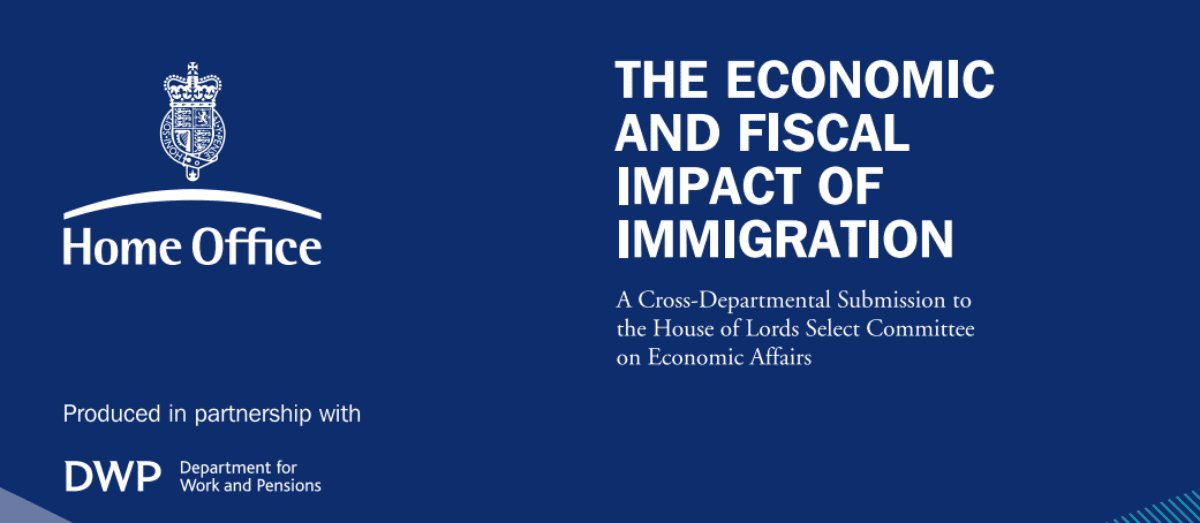
The rationale behind mass migration is not a "replacement" conspiracy; it is not "cheap labour" for corporations; it is not "GDP"; it is not brinkmanship; and it is not left-wing ideological electioneering of the vote. These are side effects which work as gifts to the left, keeping the battle on their terms and turf.
The reality is much worse. The government publish the reason in plain sight.
...because the age structure of inward migrants to the UK is skewed towards those of working-age, net migration reduces the dependency ratio over our 50-year horizon and thus reduces age-related pressures on the public finances.
This word salad can be translated simply: we don't have enough workers to pay pensions for retirees, and it will get worse over the next 50 years.
Mass immigration is to pay pensions guaranteed by law.
The state pension works like a chain letter: today’s workers pay today’s retirees. If there are too few workers for each pensioner, the sums break. Immigration adds working-age people to keep the worker-to-retiree ratio up.
Three workers pay for one pensioner. If Britain only has two, the Treasury wants another worker. Immigration supplies the missing worker.
The People Who Did This Wrote It Down
It all begins with the Treasury's 2007 paper on immigration, which admitted migration works on the economy chiefly by enlarging the working-age population, and credited incoming workers with adding around half a percent a year to that workforce between 2001 and 2006 – worth 15 to 20 percent of the country's output growth, roughly £6bn in 2006 alone. The government had already done the sum: more young arrivals, more output, more tax. It simply wrote it down quietly.
This is the same time as the 2007 economic crisis. This report was submitted a month after Northern Rock suffered the first major UK bank run in 150 years. It had relied heavily on wholesale funding, and when global credit markets froze after the US subprime shock, it could no longer fund itself normally.
The Bank of England notes productivity then collapsed in the UK. As each worker was not becoming much more productive, the Treasury needed more workers. Productivity stopped doing the work, so population growth had to do more of it. Before 2007, Britain could grow richer by making workers more productive. After 2007, the state relied on adding more workers.
The idea governments can print money at will is related to the 1990s folly of Modern Monetary Theory (MMT). This misguided belief one can pull levers to control the economy is known as Econometrics.
The people responsible for this at the Civil Service were:
- Gus O’Donnell (Cabinet Secretary / Head of Home Civil Service)
- Nicholas Macpherson (HM Treasury Permanent Secretary)
- David Normington (Home Office Permanent Secretary)
Gos O'Donnell explicitly said in 2011, and Macpherson echoed:
When I was at the Treasury I argued for the most open door possible to immigration ... I think it's my job to maximise global welfare not national welfare.
The Migration Advisory Committee made the substitution explicit in 2016. When public spending is squeezed, it observed, the result is often more immigration. And it named the jobs: nurses, paramedics, carers, science and maths teachers. In plain terms, rather than train and pay British staff, the state plugs the gaps it has starved of funding with people brought in from abroad.
The people responsible were:
- Jeremy Heywood (Cabinet Secretary / Head of Civil Service)
- John Manzoni (Cabinet Office Permanent Secretary / Civil Service Chief Executive)
- Tom Scholar (HM Treasury Permanent Secretary)
- Mark Sedwill (Home Office Permanent Secretary)
- David Metcalf (MAC Chair, d.)
When the Home Office designed the post-Brexit points system in 2018, it modelled exactly how a migrant's income, age and economic activity feed through into tax paid and services consumed, and therefore into current funding and future spending. Human beings became fiscal line items in a government spreadsheet.
The Office for National Statistics spelled out the reason in 2019. Britain is ageing; working-age migrants slow that ageing down. Under a zero-migration scenario, it warned, the population ages twice as fast as under high migration. The honest caveat sat at the bottom: keeping older Britons in work would matter more than any of it. An admission the state has comprehensively ignored.
The people responsible during this time were:
- Mark Sedwill (Cabinet Secretary / Head of Civil Service)
- John Manzoni (Cabinet Office Permanent Secretary / Civil Service Chief Executive)
- Tom Scholar (HM Treasury Permanent Secretary)
- Philip Rutnam (Home Office Permanent Secretary)
The Office for Budget Responsibility supplied the engine in March 2024. Tucked into Box 2.3 of its Economic and Fiscal Outlook was the scenario every later paper would lean on: net migration running around 200,000 a year above or below the central assumption, and what each does to the public finances. This is the number the rest of Whitehall borrowed. Higher inflows, the OBR found, improve the long-term fiscal position by holding down the dependency ratio: though it was careful to say it was modelling the effect, not recommending the policy.
The people responsible were:
- Simon Case (Cabinet Secretary / Head of Civil Service)
- Alex Chisholm (Cabinet Office Permanent Secretary / Civil Service COO)
- James Bowler (HM Treasury Permanent Secretary)
- Matthew Rycroft (Home Office Permanent Secretary)
- Richard Hughes, David Miles, Tom Josephs (OBR Committee)
The Migration Advisory Committee's 2025 net migration report is the smoking gun. It cited an OBR scenario in which an extra 200,000 arrivals a year raise receipts by £18bn and cut debt-to-GDP by 3.1 percent by 2028/29, if spending is left unadjusted. The same committee reckons one recent year's intake of Skilled Worker migrants will hand the Treasury a net £47bn over their lifetimes: with arrival age, employment and wages named as the levers that decide it.
The people responsible were:
- Chris Wormald / Antonia Romeo (Cabinet Secretary / Head of Civil Service)
- Cat Little (Cabinet Office Permanent Secretary / Civil Service COO)
- James Bowler (HM Treasury Permanent Secretary)
- Matthew Rycroft (Home Office Permanent Secretary)
- Brian Bell (MAC Chair)
By 2026 the Home Office was saying the quiet part in writing. Its Visa Brake impact assessment, authored by its Migration and Citizenship Policy group, states plainly a migrant's net fiscal worth is their tax weighed against the public-service pressure they create, swinging on employment rate, income, age and service use — and cites the OBR again: 200,000 more arrivals a year shifts GDP by between 1 and 2.5 percent by the end of the decade.
The people responsible were:
- Antonia Romeo (Cabinet Secretary / Head of Civil Service)
- Cat Little (Cabinet Office Permanent Secretary / Civil Service COO)
- James Bowler (HM Treasury Permanent Secretary)
- Simon Ridley (Home Office Permanent Secretary)
- Mike Tapp (Parliamentary Under-Secretary of State for Migration and Citizenship)
Read Mr Ridley's CV. It is a catalogue of British crises.
These are the politicians who were responsible for immigration, migration, or borders since the Treasury's key 2007 policy.
| Date | Name | Final title before leaving brief |
|---|---|---|
| 2007–2008 | Liam Byrne | Minister of State for Borders and Immigration |
| 2008–2010 | Phil Woolas | Minister of State for Immigration |
| 2010–2012 | Damian Green | Minister of State for Immigration |
| 2012–2014 | Mark Harper | Minister of State for Immigration |
| 2014–2016 | James Brokenshire | Minister of State for Security and Immigration |
| 2016–2017 | Robert Goodwill | Minister of State for Immigration |
| 2017–2018 | Brandon Lewis | Minister of State for Immigration |
| 2018–2019 | Caroline Nokes | Minister of State for Immigration |
| 2019 | Seema Kennedy | Parliamentary Under-Secretary of State for Immigration |
| 2019–2021 | Kevin Foster | Parliamentary Under-Secretary of State for Future Borders and Immigration |
| 2021–2022 | Tom Pursglove | Minister of State for Immigration |
| 2022–2023 | Robert Jenrick | Minister of State for Immigration |
| 2023–2024 | Tom Pursglove | Minister of State for Legal Migration and the Border |
| 2023–2024 | Michael Tomlinson | Minister of State for Countering Illegal Migration |
| 2024–2025 | Seema Malhotra | Parliamentary Under-Secretary of State for Migration and Citizenship |
| 2024–present | Alex Norris | Minister of State for Border Security and Asylum |
| 2025–present | Mike Tapp | Parliamentary Under-Secretary of State for Migration and Citizenship |
From 2007 to 2013, immigration was concentrated in the UKBA model under Lin Homer, Jonathan Sedgwick and Rob Whiteman. After Theresa May abolished UKBA in 2013, responsibility fragmented across UKVI, Immigration Enforcement, and Border Force, with Sarah Rapson becoming the key UKVI figure.
From 2015, the system acquired a clearer senior-official owner through the Second Permanent Secretary model: Olly Robbins, then Patsy Wilkinson, then Shona Dunn. By the 2020s, that had evolved into Simon Ridley’s Migration and Borders System, with specialist DGs beneath him, including Glyn Williams, Emma Churchill, and Dan Hobbs.
The senior civil servants working for their permanent secretary masters during this period were:
| Date | Name | Final title before leaving brief |
|---|---|---|
| 2007–2011 | Lin Homer | Chief Executive, UK Border Agency |
| 2011 | Jonathan Sedgwick | Acting Chief Executive, UK Border Agency |
| 2011–2013 | Rob Whiteman | Chief Executive, UK Border Agency |
| 2013–2016 | Sarah Rapson | Director General, UK Visas and Immigration |
| 2015–2016 | Olly Robbins | Second Permanent Secretary, Home Office |
| 2016–2018 | Patsy Wilkinson | Second Permanent Secretary, Home Office |
| 2018–2021 | Shona Dunn | Second Permanent Secretary, Home Office |
| 2018–2022 | Glyn Williams | Director General, Migration and Borders Group |
| 2022–2023 | Emma Churchill | Director General, Migration and Borders Group |
| 2022–present | Simon Ridley | Second Permanent Secretary, Home Office |
| 2023–present | Dan Hobbs | Director General, Migration, Borders and International Policy and Programmes |
Mass migration is not an accident, nor a plot, nor a favour to business. It is how Westminster intends to pay for your pension, your GP, and your care home. Because it will not ask you to work longer, will not raise the taxes to cover it honestly, and will not tell you to your face the Beveridge model mathematics stopped adding up decades ago.