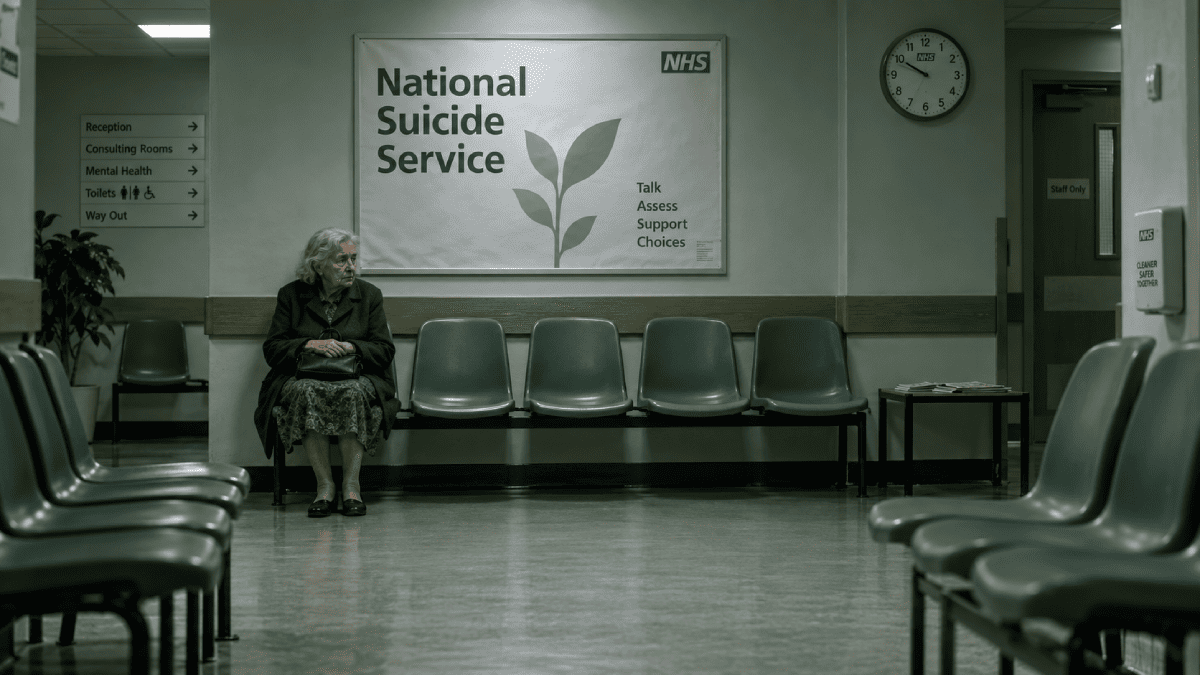
How Vulnerable Children Became An Asset Class
Councils carry the legal duty and pay £320,000 per placement. Private equity controls the beds and extracts 22% profit. Children are moved through a system shaped not by need but by scarcity, margin, and desperation. This is not a market. It is a distress auction.
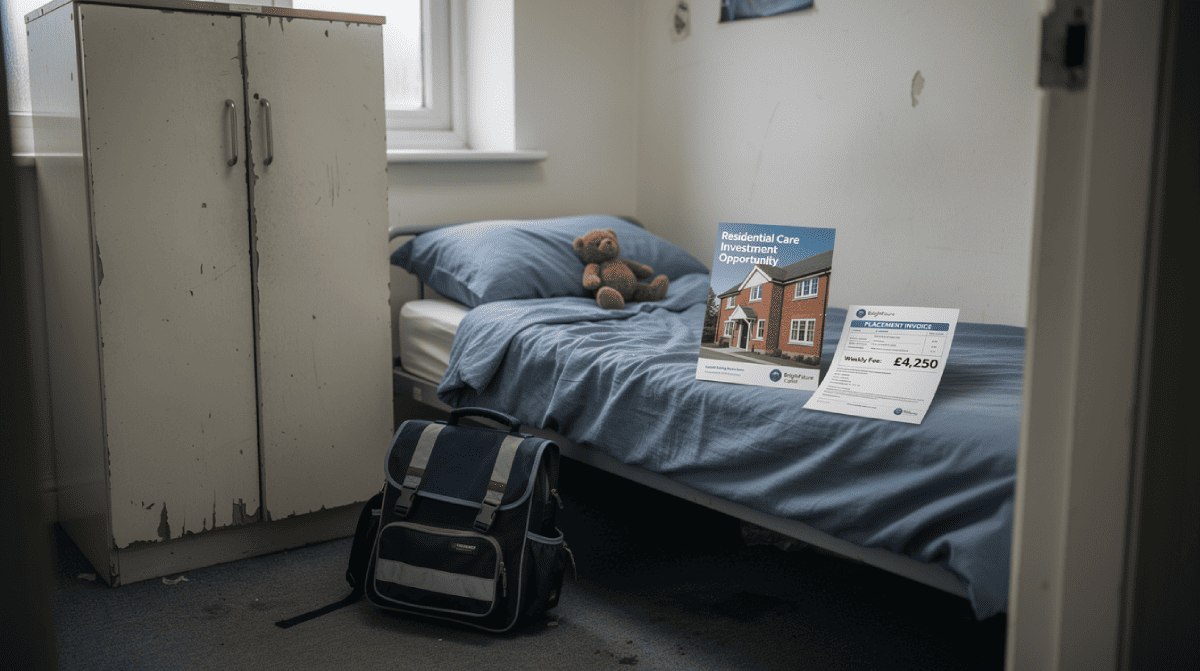
There are some things a civilised country should not learn to monetise. A child in the womb is one of them. A child with nowhere safe to sleep is also one of them. The Restorationist has covered this subject extensively in the past and it's as repulsive as you imagine it is.
And yet England has built precisely this: a market in the care of its most vulnerable children, in which local authorities carry the statutory duty, private providers increasingly control the supply, and the gap between the two has become one of the most reliable income streams in British public services.
In January 2026, the Children's Commissioner reported 669 children living in illegal placements. Eighty-nine had been there for more than a year. Some were housed in holiday camps. Some in caravans. The average weekly cost exceeded £10,000. Councils spent an estimated £353 million on these unlawful arrangements in a single year.
Not substandard care. Illegal care. At premium prices. Paid for by the public purse.
This is not a story about a few rogue operators, underfunding alone, or private greed alone, or government incompetence alone. It is about something more disturbing: the creation of a captive market in which children's vulnerability has become a guaranteed revenue source, and the state has lost the ability to do anything about it except pay.
A Child In Care Is Not A Consumer
A child entering residential care has typically experienced abuse, neglect, family breakdown, exploitation, or some combination of all four. Many have severe mental health needs. Some are disabled. Some are involved with the youth justice system. A significant number have been failed by every earlier layer of support: family services, mental health provision, education, foster care.
When a local authority needs a placement for such a child, this is not a purchasing decision in any recognisable commercial sense. The council cannot defer the decision. It cannot wait for a better price. It cannot leave the child unplaced. If a placement is needed tonight, it is needed tonight, whatever the cost, wherever the bed.
An ordinary market assumes optional demand, price comparison, consumer choice, substitutable products and the ability to walk away.
Children's residential care has none of these. It has compulsory public demand, emergency purchasing, acute scarcity, safeguarding risk, fragmented commissioning across more than 150 councils, and a legal obligation enforceable by the courts.
A desperate council buying an emergency placement is not a consumer exercising choice. It is a public body cornered by law.
How England Lost Control of the Beds
The present dominance of private providers in children's residential care did not arrive by accident. It arrived through decades of attrition.
Local authorities once provided far more homes directly. Over time, council-run provision shrank. Private operators expanded. Specialist placements became scarcer. Foster-carer numbers fell short. Children's needs grew more complex. And commissioning remained fragmented across scores of individual councils, each too small to exert serious purchasing power against national or multinational providers.
The Public Accounts Committee reported in January 2026 the result of this long erosion: private-sector providers now operate 84% of children's homes in England and supply 74% of all places. Seven of the ten largest providers are owned by private equity.
Ofsted's own 2025 ownership data sharpens the picture further. As of March 2025, England had 4,009 children's homes offering 15,742 places. The 20 largest owners accounted for a quarter of all homes. Nineteen of those 20 were in the private sector.
The state retains the legal duty. Private capital controls the infrastructure on which the duty depends.
| Figure | Source | |
|---|---|---|
| Children's homes in England | 4,009 | Ofsted 2025 |
| Registered places | 15,742 | Ofsted 2025 |
| Private-sector share of homes | 84% | PAC / Ofsted 2025 |
| Private-sector share of places | 74% | PAC 2026 |
| Largest 20 owners' share of homes | 25% | Ofsted 2025 |
| Of top 20 owners, number private-sector | 19 | Ofsted 2025 |
| Of top 10 providers, number PE-owned | 7 | PAC 2026 |
This is not a mixed economy. It is a dependency.
Distress Auction With Children At The Centre
In a functioning market, a buyer faced with an unacceptable price can walk away. A council seeking an emergency residential placement for a traumatised 14-year-old cannot. It is bound by statute. If no suitable bed exists within the local area, the council must widen its search. If the only available placement is expensive, distant and imperfect, the council takes it anyway, because the alternative is leaving a child without care, which is both unlawful and unconscionable.
This behaviour is not a market failure in the ordinary sense. It is something worse: a market designed around the impossibility of refusal.
Providers know councils cannot walk away. Councils know providers know. The result is a pricing environment in which the seller holds structural power, the buyer is under statutory compulsion, and the child at the centre of the transaction has no agency whatsoever.
The Competition and Markets Authority examined this in its 2022 market study. What it found was striking: children's home providers in its dataset recorded average operating profit margins of 22.6% between 2016 and 2020. Average weekly placement prices rose from £2,977 to £3,830 over the same period, an annual increase of 3.5% above inflation. The largest independent fostering agencies posted average margins of 19.4%.
These are not margins consistent with a competitive, well-functioning market for essential public services. These are margins consistent with structural pricing power exercised against captive buyers.
| Figure | Period | Source | |
|---|---|---|---|
| Avg. operating profit margin (children's homes) | 22.6% | 2016–2020 | CMA 2022 |
| Avg. weekly price (start) | £2,977 | 2016 | CMA 2022 |
| Avg. weekly price (end) | £3,830 | 2020 | CMA 2022 |
| Annual price increase above inflation | 3.5% | 2016–2020 | CMA 2022 |
| Avg. profit margin (largest IFAs) | 19.4% | 2016–2020 | CMA 2022 |
It is important to be precise. Not every provider is extracting these margins. Many small and medium operators run on far tighter finances, and the PAC acknowledged as much. But the largest providers, the ones backed by private equity, the ones with national reach and consolidated pricing power, have been able to generate returns difficult to justify in a market for the care of vulnerable children.
Where The Money Comes From And Goes
The National Audit Office reported in September 2025 residential care costs for looked-after children had almost doubled in five years, reaching £3.1 billion in 2023–24. The NAO attributed the surge to rising demand, limited placements and a profit-driven market, and noted councils were forced to compete for the same scarce beds, pushing prices higher still.
Zoom out further and the fiscal picture is even more alarming.
The Institute for Government found local authorities spent £13.3 billion on children's social care in 2023/24, up 23% in real terms from 2019/20 and 68% from 2009/10. As a share of total local authority spending, children's social care rose from 18% in 2011/12 to 27% by 2024/25.
Residential care is eating local government alive. Councils already under extreme financial pressure, many issuing Section 114 notices or teetering on the edge, are being hollowed out by a care market over which they have diminishing control and no serious negotiating leverage.
And because of gaps in other public services, most acutely mental health provision, a growing number of children with exceptionally complex needs are entering the system. The Institute for Government reports some councils now spend more than £1 million every year on individual care packages. Foster-carer shortages and a lack of secure children's homes leave these children in settings poorly suited to their needs, at costs better suited to luxury property management.
Residential care is where every earlier failure sends its invoice.
Geography Reveals The Incentives
If homes were planned around children, supply would follow need. It does not. Ofsted's 2025 data shows 26% of children's homes are in the North West of England, while only 18% of looked-after children come from the region. Ofsted's annual report was unusually blunt about why: concentration in cheaper housing areas suggests a strong profit motive is influencing where providers choose to open homes.
Sir Martyn Oliver, the Chief Inspector, warned profit was increasingly dictating the location and ownership of children's homes, "bending the entire system out of shape."
A provider seeking to maximise returns has every reason to locate homes where property costs are lowest, regardless of whether children in need actually live nearby. The result: children are uprooted from their communities, schools, siblings, social workers and support networks, not because a distant placement is better for them, but because it is cheaper for the operator.
Children are made to follow the economics of property and profit. In a system supposedly designed around their welfare.
Illegality As A Service Category
Which brings us to the darkest evidence of all. When legitimate supply cannot meet statutory demand, something fills the gap. In children's care, what has predictably filled the gap is a shadow market of unregistered, unregulated and illegal placements.
The Children's Commissioner's January 2026 report documented 669 children placed in homes operating outside the law. Eighty-nine had been in the same illegal placement for more than a year. The average stay was just over six months. Examples included a child housed in a holiday camp for nearly nine months and another in a caravan for more than four months.
The average weekly cost of these placements exceeded £10,000. Councils spent a combined £353 million on illegal homes in 2025 alone.
Let the absurdity and inhumanity of this register properly, rather than allowing it to become an intellectual abstraction.
The state was paying premium prices, sometimes exceeding half a million pounds per child per year, for care so inadequate it did not meet the minimum legal standard for registration. The market had become so starved of legitimate capacity, and councils so desperate, illegality itself became a service category with its own pricing structure.
Ofsted reported it had opened nearly 900 investigations into potential unregistered homes in a single year. This is not a marginal problem. It is a systemic one.
The language of "market failure" becomes obscene at this point. Children were not merely being placed badly. They were being placed unlawfully, for months, sometimes for more than a year, while the public paid extraordinary sums for the privilege. The child is not the cost. The failure around the child is the cost.
Private Equity And The Logic Of Exit
Private equity ownership in children's care is not inherently criminal. But its structural incentives are profoundly mismatched with the needs of the sector.
Private equity operates on a model of acquisition, consolidation, margin improvement, and eventual sale. The investment horizon is typically five to ten years. Returns are expected. Leverage is common. Exit is the point.
Children's care requires the opposite: stability, continuity, transparency, long-term commitment and deep roots in communities.
- A child placed in a home needs to know it will still be there in two years.
- A local authority commissioning placements needs to know the provider is financially stable.
- A regulator needs to understand the corporate and financial structure standing behind the front door.
The PAC was direct about the tension: private equity ownership creates less transparency, a focus on generating profits, and potentially high debt levels. The Local Government Association, responding to the CMA's earlier market study, warned explicitly of a possible "Southern Cross situation," a reference to the 2011 collapse of Britain's then-largest care home operator, which left thousands of elderly residents facing displacement.
A private-equity-backed provider carrying high debt, under pressure to deliver returns to investors, operating homes in locations chosen for property economics rather than children's needs, and structured through layers of holding companies making financial oversight difficult. If it fails, children lose their placements. Councils scramble. The state picks up the pieces.
Private equity is built for exit. Children's care requires permanence. The two do not sit together comfortably, and no amount of regulatory sticking plaster resolves the underlying contradiction.
Government Knows the Market Is Broken
Perhaps the most telling evidence is the government's own language. The Children's Wellbeing and Schools Bill, currently progressing through Parliament, includes proposals for a financial oversight scheme to improve transparency, regional care co-operatives to strengthen collective commissioning, and a backstop power to cap provider profits.
The Department for Education's own impact assessment for the proposed profit cap is remarkably candid. It states the cap would seek to rein in profiteering in the children's social care placements market. It explicitly acknowledges the profiteering it targets has adverse impacts on the wellbeing and outcomes of children affected.
Even government impact assessments now use language critics were once accused of exaggerating. When Whitehall itself concedes profiteering is real and harmful, the debate should be over.
But the proposed remedies may prove insufficient. A soviet profit cap treats the symptom. If supply remains scarce, councils remain distressed buyers. If mental health services, SEND provision, family support and foster care remain underfunded, demand for expensive residential placements remains acute. If public and not-for-profit capacity is not rebuilt, the state stays trapped inside a market it claims to be reforming.
You cannot regulate your way out of a market you are forced to use.
Captive Revenue, Guaranteed By Law
Strip away the policy jargon and what remains is a mechanism as clear as it is repellent. The state has a legal duty to care for children who cannot safely remain with their families. Over decades, it has lost the capacity to fulfil the duty directly. Private providers have filled the vacuum. Because demand is compulsory, supply is scarce, and councils cannot refuse to purchase, the providers who control the beds also control the pricing.
This is the same structural logic exposed in earlier parts of this series, applied to its most indefensible subject.
PFI turned public infrastructure into long-term private annuities. The Regulated Asset Base model converts household bills into guaranteed returns for energy and water investors. Both rely on the same trick: the public cannot opt out. But children's care dispenses with buildings and utility networks altogether. The guaranteed income stream is not a hospital or a sewage tunnel. It is a statutory obligation to a child.
The state does not need to own the asset. It only needs to guarantee the demand. In children's care, demand is guaranteed by law and by human vulnerability. No treasury guarantee is required. No complex financial instrument. The captive market is the instrument.
| Mechanism | PFI / PPP | RAB (Bills) | Children's Care |
|---|---|---|---|
| Who pays | Taxpayer | Bill-payer | Council (taxpayer) |
| What guarantees the return | Long-term contract | Regulated charges | Statutory duty |
| Can the payer walk away? | No | No | No |
| Who carries the risk | Public | Public | Public |
| Who collects the yield | Private investors | Private investors | Private providers / PE |
| What is monetised | Buildings | Infrastructure | Children's vulnerability |
A Country Pricing Its Conscience
The scandal is not simply private firms making money from care. Care has costs. Provision requires resources. Staff deserve decent wages. Buildings need maintenance. Nobody serious argues otherwise.
The scandal is the system. A system in which:
- The state has allowed vulnerable children to become one of the safest revenue streams in Britain.
- 22% profit margins are extracted from placements for traumatised children while councils edge towards bankruptcy.
- Homes cluster where property is cheap rather than where children live. A
- 669 children were placed illegally, some for more than a year, while the public paid ten thousand pounds a week for the privilege of unlawful failure.
Many staff working in private children's homes are dedicated, underpaid and doing their best within a structure they did not design. Many small providers operate on thin margins and genuine vocation.
The argument is not against individuals. It is against the architecture: the decades of hollowing out, the failure to build public capacity, the fragmentation of commissioning, the opacity of private-equity ownership, and the political unwillingness to confront a market built on captive demand.
A child in care needs safety, stability, connection, support and someone who is not going anywhere. What the system increasingly provides is a bed in a location chosen by provider economics, at a price set by scarcity, inside a corporate structure designed for financial return and eventual sale.
PFI monetised the hospital building. This monetises the child inside it.
In the new rentier state, the most reliable income stream is not luxury. It is desperation.
Next, PFI for the Database State: How Palantir, NHS data contracts, and vendor lock-in became the modern version of being trapped inside someone else's building.