New Labour's Worst Would Like You To Know They Meant Well
They do not say "we were wrong." They say it went too far, mutated, was misinterpreted, escaped the design. Fourteen ministers and advisers, one after another, confessing the consequences while defending the intention. In politics, "not what we meant" is not a defence. It is the indictment.
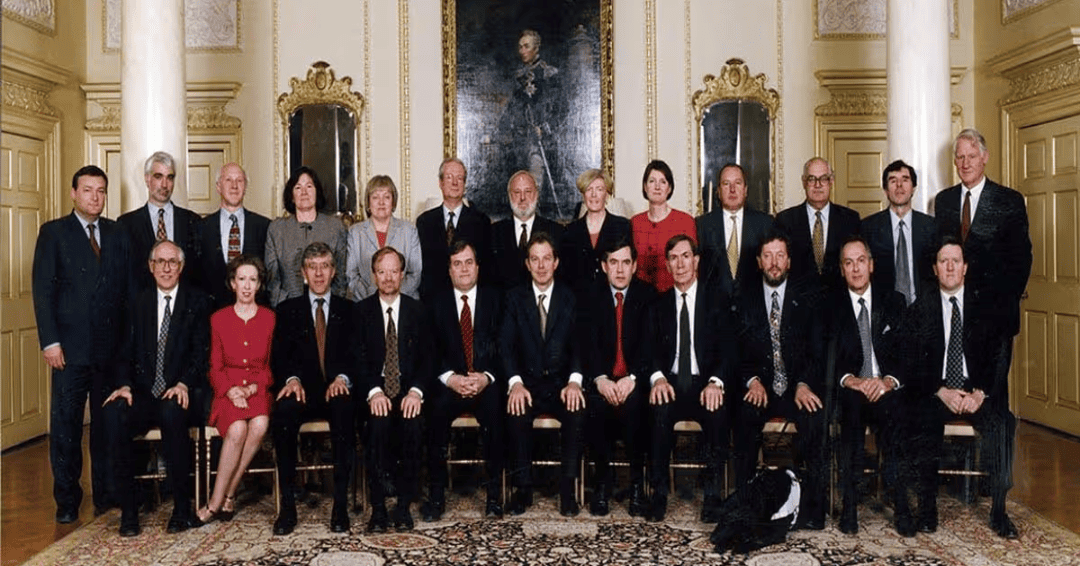
One by one, they return. Not with apologies (nothing so vulgar) but with something more interesting: a careful, retrospective puzzlement about why the institutions they designed, the laws they drafted, the money they spent and the borders they opened did not produce the modern, rational, confident country they were so certain they were building.
They are the architects of New Labour. And over the past decade, with gathering frequency and diminishing shame, they have been publishing variations of the same confession. The policy was right. The outcome was regrettable. The fault lies somewhere else.
In every case, the structure is identical. The speaker concedes the consequence while defending the intention. The aim was noble. The error was one of implementation, of underestimation, of insufficient communication; never of principle. The blame attaches to courts, markets, bureaucracies, the passage of time, the stupidity of events: to anything, in fact, except the people who held power and used it.
Jack Straw: The Man Who Opened The Doors And Now Blames the Draught
No single figure spans more of New Labour's institutional wreckage than Jack Straw. Home Secretary, Foreign Secretary, Justice Secretary: he held the machinery at every critical juncture, and at every juncture the machinery subsequently misbehaved.
On immigration, Straw has called the 2004 decision not to impose transitional controls on eastern European workers a "spectacular mistake." The framing is revealing. It was not the principle of free movement he regrets but the specific technical failure to fit brakes. The architecture was sound. Someone forgot a component.
On the Human Rights Act, his position is more telling still. Straw does not say the Act was misconceived. He says the courts "interpreted it more expansively" than intended. The law was fine. The lawyers were the problem. This is the political equivalent of an engineer blaming gravity.
And on race and policing, Straw commissioned the Macpherson Inquiry into the murder of Stephen Lawrence. Rightly, because the Met's investigation was incompetent and, in Macpherson's judgement, institutionally racist. But "institutional racism," a diagnostic term applied to a specific failure, was subsequently adopted as a general operating theology across policing, education, healthcare and local government. It ceased to describe a problem and became a perspective through which all problems were to be viewed. Sociology training programmes proliferated. Guidance documents multiplied. Risk aversion became the default. Officers learned it was safer to do nothing than to do something later characterised as discriminatory.
The Henry Nowak case sits at the far end of this chain. a corrective introduced to address a real failure had, over twenty-five years, hardened into institutional furniture, defended not because it was working but because questioning it had become professionally dangerous.
Straw is the connecting thread. He commissioned the inquiry. He received its recommendations. He oversaw the early implementation. And now, a quarter-century later, he is among those suggesting the machinery drifted from its original purpose. The man who switched it on would like someone to turn down the volume.
David Blunkett: I Stand By This Catastrophe
Blunkett's 2015 Guardian piece is the template for every Blairite mea culpa since. He does not say immigration was wrong. He says his "one regret" was failing to protect "host communities" affected by rapid demographic change.
It's incredible reading.
However, the most controversial decision for which I carry substantial responsibility was the decision to allow citizens from countries fully joining the EU in May 2004 to work here. They had the right to be here, so the question was: do they work here legally or disappear into the sub-economy?
I still stand by that decision. A staggering 40% of those who came out of the woodwork and registered to work were already in the country. Those figures obviously have an impact on the number who are counted as “new migrants”: you cannot by definition count those who arrive and remain illegally.
I have one admission. Were I to have my time again, I would have pressed even harder to ensure that host communities were protected as far as humanely possible from a large influx without preparation or resources. The government did of course introduce the migrant impact fund and the teaching of English and citizenship, as well citizenship ceremonies for those attaining naturalisation, but as I have seen from the pressures in my own constituency, this was not enough. Where very large numbers of people arrive without the necessary investment and support, and without programmes to help them adjust, there are bound to be problems.
Yes, staggering. Who could have possibly foreseen this?
The framing is instructive. The communities are "hosts": the language of hospitality, implying a duty to receive. Blunkett's regret is not about what was done to them but about what was not done for them afterwards. The policy remains sacred. Only the aftercare was lacking.
This is the New Labour confessional at its most refined: moral confidence about the decision, belated concern about the blast radius.
Hazel Blears: Please Be Quiet, Dear
The disaster known as Hazel Blears deserves a particular kind of credit, because she said it while the party was still in government. In 2009, as Communities Secretary, she warned white working-class communities felt their concerns over immigration were being ignored and their voices excluded from political conversation.
Anecdotal evidence suggested many believed refugees and single mothers were more easily able to find a council house than working-class white people whose families had lived in the area for generations.
People taking part in the focus groups said that when white people complained they were told that the system was fair and their concerns were racist.
This was over a decade ago.
She was right. She was also ignored. The reward for noticing reality inside New Labour was to be treated as slightly embarrassing: a provincial voice raising provincial concerns while the serious people were busy redesigning civilisation.
John Denham: It Was Quite Big
The used car salesman no-one recognses as John Denham went further than most. As a former Communities Secretary, he later argued the core failure was not immigration itself but the absence of public consent and democratic debate about the rate of change. He cited people who distinguished carefully between "migrants" and "migration": they did not dislike the people, they objected to the policy.
So, a lot was going on, so it would be wrong to suggest this was a kind of marginal change that nobody should have noticed, it was quite big. Over that period of time, I had lots of discussions with constituents about migration and what was going on. What I think is interesting is that there was no national public debate about what was going on, and the famous encounter between Gordon Brown and Mrs Duffy in the 2010 election revealed a Prime Minister who didn't even have the language to begin to have the discussion about what was going on.
This distinction mattered enormously, and New Labour spent a decade refusing to hear it. Denham's later work amounts to an admission his own party could not tell the difference between prejudice and democratic objection.
John Reid: Someone Else Needs To Fix This
Big Baron bruiser John Reid stands apart because his admission was not retrospective. In 2006, while serving as Home Secretary, he publicly declared the immigration directorate was "not fit for purpose." He said this not in a memoir ten years later but in office, about a department he was supposed to be running.
Dr Reid explained he had had ordered a "fundamental overhaul" of the Home Office Immigration and Nationality Directorate (IND).
Dr Reid said he had had to deal with a "tidal wave of events" since his appointment just over two weeks ago. He promised to find out "what was responsible - then who" for the mishaps over foreign prisoners and attempts to deport illegal immigrants - the other flashpoint of the grilling.
There is something almost admirable about this. There is also something devastating. A serving Cabinet minister looked at the machinery of his own department and said, in effect, this does not work. He was right. It still does not.
Blair: It Was The Plumbing, Not The House
Blair himself is perhaps the most remarkable case, because his regrets are always mechanical. Because, of course. Recently, he infamously described the planning system his government "modernised" as an.... "abomination."
2. We need a transformative programme for planning reform and deregulation. The planning system in Britain is an abomination. The government has taken significant steps, but well short of a truly radical reform.
Quite.
The Freedom of Information Act was a mistake because it damaged the "confidentiality" of government deliberation: a complaint about the plumbing, not the house. He opened the curtains and then complained about the sunlight. One might gently suggest he should have considered the purpose of windows before installing them.
Thus Tony Blair records in his memoirs what he believes to have been one of his greatest mistakes while in office: introducing legislation intended to shed light on government in a manner that empowered people.
Blair on FOI is the smoking gun. He brought in transparency, then regretted what it did to government.
On public services, in 2007 it was quietly conceded the state had been "gorged" with money it struggled to absorb efficiently. The gorging had happened on his watch, under his direction, according to his strategy. And yet the sentence is constructed as though the services were the glutton and the government merely the unlucky waiter.
On devolution, Blair promoted Scottish and Welsh devolution as a modernising settlement intended to take the heat out of nationalist politics. In written evidence to a parliamentary committee, he later said he never believed tearing apart the most successful union in world political history would end separatism, only limit its appeal.
Our reforms were aimed at showing a middle path. How Scotland could remain part of the United Kingdom through a package of reform that would return more powers to the regions. Bluntly, to show Scotland there was a path to reform without needing to separate.
To be clear, I never expected that devolution would end the campaign for separatism but I did believe ultimately it would limit its appeal. The test for the reforms, in my view, should not therefore be whether the voices of separatism have disappeared but whether they have prevailed.
It did not. They did not.
The 2014 independence referendum, the subsequent rise of the SNP to near-total dominance of Scottish politics, and the permanent constitutional instability this created were not what the architects had in mind. The container leaked.
The solution Blair now proposes, on every front, is more reform, better reform, smarter reform: the same instinct, applied harder, as though the cure for over-engineering is further engineering.
Gordon Brown: We Failed Successfully
Brown conceded after the 2008 crash the regulatory system he helped create in 1997 had failed to keep pace with global financial flows. He said he should have done more. Let's not go into how he sold sovereign reserves after telling the market in advance, as a financial genius.
This 2009 interview is just glorious in its ideological hubris.
He argues that "only progressive, centre-left governments can address the problems of the global change".
Brown also claims that "the 40-year-old prevalent orthodoxy known as the Washington consensus in favour of free markets has come to an end", but signals a refusal to return to Labour's comfort zone by saying there will be no return to "big government", or any let up in public service reform.
"Laissez-faire has had its day. People on the centre-left and the progressive agenda should be confident enough to say that the old idea that the markets were efficient and could work things out by themselves are gone", he says.
He went on to lose that election. Because although the British are long-suffering, they are not stupid.
This is a man who as Chancellor spent a decade boasting about the superiority of British financial regulation, who told the City it was the envy of the world, and who stripped the Bank of England of its supervisory powers in order to create a new system he said would be more effective.
The system collapsed. The admission came afterwards. The confidence came first.
Peter Mandelson: No Longer Relaxed
What can one say about this dark parasite now? Mandelson is less mea culpa, more Draculian diagnostician of the rot. He once declared himself "intensely relaxed" about people getting filthy rich. He later said he was no longer relaxed, given inequality and stagnant middle-class incomes.
More recently, released files have shown him describing Starmer's operation as "beleaguered and bereft."
Bell, now a Treasury minister, said: "Everyone seems to think it's someone else's job to get the policy right… which is very odd."
Lord Mandelson replied: "As the saying goes, rubbish in rubbish out…"
The man who helped design New Labour's electoral machine is now watching a successor government and seeing not continuation but decay. Whether this is honest appraisal or wounded vanity is a question Mandelson's biographers can sort out. Either way, the architect does not like what has been built on his foundations.
Andrew Adonis: Frankenstein Had the Decency to Be Horrified
The most honest confession in the entire catalogue belongs to Adonis, and it is honest precisely because the metaphor is so violent. Calling tuition fees a "Frankenstein's monster" is not the language of minor adjustment. It is the language of a man who recognises his creation has escaped him.
Adonis designed a system of university funding based on student loans and market signals. Two decades later, graduates carry debts exceeding fifty thousand pounds, universities have bloated into credential factories run by administrators earning six figures, and the entire apparatus is underwritten by a state loan book so large it functions as a concealed public subsidy for institutional mediocrity.
How did we get from the idea of a reasonable contribution to the cost of university tuition – the principle of the Blair reform of 2004, for which I was largely responsible – to today’s Frankenstein’s monster of £50,000-plus debts for graduates on modest salaries who can’t remotely afford to pay back these sums while starting families?
The beauty of the Adonis case is its purity. There is no Iraq, no immigration, no culture war muddying the water. It is simply this: a clever man in a policy unit drew up a clever scheme, and the scheme, once released into the wild, did what schemes do. It grew. It mutated. It acquired beneficiaries. It became an industry. Like the NHS, it stopped serving those it was meant to and started serving itself.
He and his colleagues believed they could design a market in higher education the way one designs a board game: with rules, incentives and predictable behaviour. They forgot they were dealing with institutions, which are not game pieces but organisms.
Feed an organism money and it will grow. Give it a captive market and it will exploit it. Tell it to compete and it will compete on marketing budgets, not on teaching. None of this required prophecy. It required only a modest familiarity with how the world works, which is precisely what a policy unit in Downing Street is least likely to possess.
Patricia Hewitt, Alan Milburn, Andy Burnham: The NHS Money Pit
Between 1997 and 2010, New Labour presided over the largest sustained increase in health spending in modern British history. Spending roughly tripled in cash terms. Waiting lists fell. Results improved. Then the money stopped, and what remained was the machinery it had built: targets, inspectorates, performance frameworks, commissioning bodies, delivery units, foundation trusts: an entire ecology of oversight consuming resources originally intended for the front line.
Hewitt, who served as Health Secretary, later concluded the system had too many national targets, and the targets themselves distorted clinical behaviour. Because of her immense success at it, the Tories brought her in repeat it.
Chancellor Jeremy Hunt and health secretary Steve Barclay commissioned Patricia Hewitt, a former Labour health secretary, last month to review how the NHS’s new integrated care systems should work, as well as how the health service should work to “empower local leaders”, giving them more autonomy.
Milburn now warns the NHS must radically reform or face collapse: less an apology than a belated recognition his generation's model of throwing money at unreformed institutions was never sustainable. Milburn went on to be consultant too, where he wrote 217 pages on why nobody is blame for an entire generation disenfranchised out of work.
Alan Milburn, the Blair-era cabinet minister turned social mobility adviser, has delivered the first part of his government-commissioned report on why increasing numbers of people aged 16 to 24 are not in education, employment or training (Neet).
Its 217 pages cover the extent and causes of the issue – with possible solutions coming in his next report – and set out a hugely detailed and damning picture of what Milburn calls a “record of failure”, one that is letting down young people.
Burnham has said the failure to reform social care still troubles him. As we pointed out last week: homelessness doubled under his tenure, his attempt to copy the Muslim dwarf of London's emission zones was a disaster, the police were put into special measures for failing to report 80,000 crimes, the NHS were also put into special measures, and his green land plan was so catastrophic councils voted out of it.
The collective admission is not small. It amounts to this: New Labour spent a generation's worth of revenue on public services and built a bureaucratic superstructure so elaborate it now consumes much of the money meant to reach patients, pupils and claimants.
The spending was real. The infrastructure was real. But the assumption — more money, properly targeted, will fix public services — turned out to be a faith, not a finding.
Liam Byrne: Honesty Not The Best Policy
Byrne is a special case. His confession is not about policy but about a single piece of paper. When Labour left office in 2010, Byrne left a note for his successor at the Treasury:
I'm afraid there is no money.
He meant it as a traditional joke between incoming and outgoing ministers. The Conservatives used it as a weapon for a decade.
Byrne later wrote he would regret the note forever. This is not an institutional mea culpa. It is something smaller and, in its way, more painful: an admission the Blairite generation was so sealed inside its own cleverness it could not see how its words would land outside the bubble.
Alastair Campbell: The Blind Bubble
Campbell contributes a different kind of confession. Not about policy but about perception. After Labour's 2015 defeat, he wrote the party had been wrong, had spent too long inside its own assumptions, so deep inside its own political world the propaganda started to feel like reporting.
But it really did seem, looking not just at the polls but also Labour's own data and my own instinct going around the UK, that the Tories would not get a majority, and that Ed Miliband could end up as PM as a result. There is no point pretending that this is anything other than a disastrous result, yes especially in Scotland, but in England too.
The ever-religious Miliband is, however, back for one last mad run at his windmills.
This is not a policy mea culpa. It is an admission of epistemic failure, and it matters because it explains how every other failure was possible. If you believe your own briefings, you cannot hear the country telling you something has gone wrong.
Confessions Of The Confidently Wrong
Over a dozen ministers, advisers and architects. Immigration. Rights law. Race and policing. Tuition fees. Financial regulation. Public services. Transparency. Devolution. Inequality. In each case, the same formula: the intention was right, the consequence was unforeseen, the fault belongs to the system rather than the people who designed it.
This is not contrition per se, but legacy management in the face of an avalanche. Each confession is calibrated to preserve the speaker's moral standing while acknowledging just enough failure to remain credible. "I still believe in the aim" does all the work. Everything else, i.e. the spectacular mistakes, the Frankenstein's monsters, the communities left behind, the money swallowed by bureaucracy, is treated as weather. Unfortunate. Unpredictable. Nobody's fault, really.
But it is somebody's fault.
These were not natural disasters.
They were policy choices, made by identifiable people, defended at the time with great confidence and implemented with considerable force. The immigration regime was not an accident. The Human Rights Act was not an earthquake. Tuition fees did not fall from the sky. PFI contracts were not imposed by a foreign power. These things were chosen, by people who believed they knew better than the public, better than the institutions, better than history. And when the choices produced consequences the choosers did not expect, the response was not humility but bewilderment.
The bewilderment is the point. It is what happens when a political class conflates its intentions with outcomes, its slide decks with reality, its moral confidence with competence. New Labour was not a conspiracy. It was something more dangerous and stupid: a generation of very bright people who believed the design of institutions was a technocratic "engineering" problem, and who are now genuinely surprised the engineering did not hold.
One by one, they keep returning. Not to rebuild. Not to apologise. Just to explain, once more, in careful and self-forgiving prose, how none of this was quite what they had in mind.
The machine is still running. The architects have moved on. And the rest of the country is still living inside what they built.