Psychedelics: The Search For Miracle Medicines
For half a century an entire pharmacological class sat in regulatory exile. Reopening the cabinet has revealed plasticity triggers, addiction interrupters, network destabilisers, and several embarrassing failures. Pharmacy is rediscovering what was confiscated, and the answers are uneven.

For most of postwar psychiatry, the operating model was simple: a depressed brain needed daily chemical management, and a traumatised brain needed talk therapy with the chemistry running underneath. SSRIs, benzodiazepines, antipsychotics, mood stabilisers. A pharmacology of maintenance. Often useful. Sometimes lifesaving. Almost always slow, modest in effect, and chronic by design.
The United States is beginning to explore, and making breakthroughs. Britain is trapped in medieval 70s-era thinking, despite us developing the world's most effective medical regime for psychoactives during the last century.
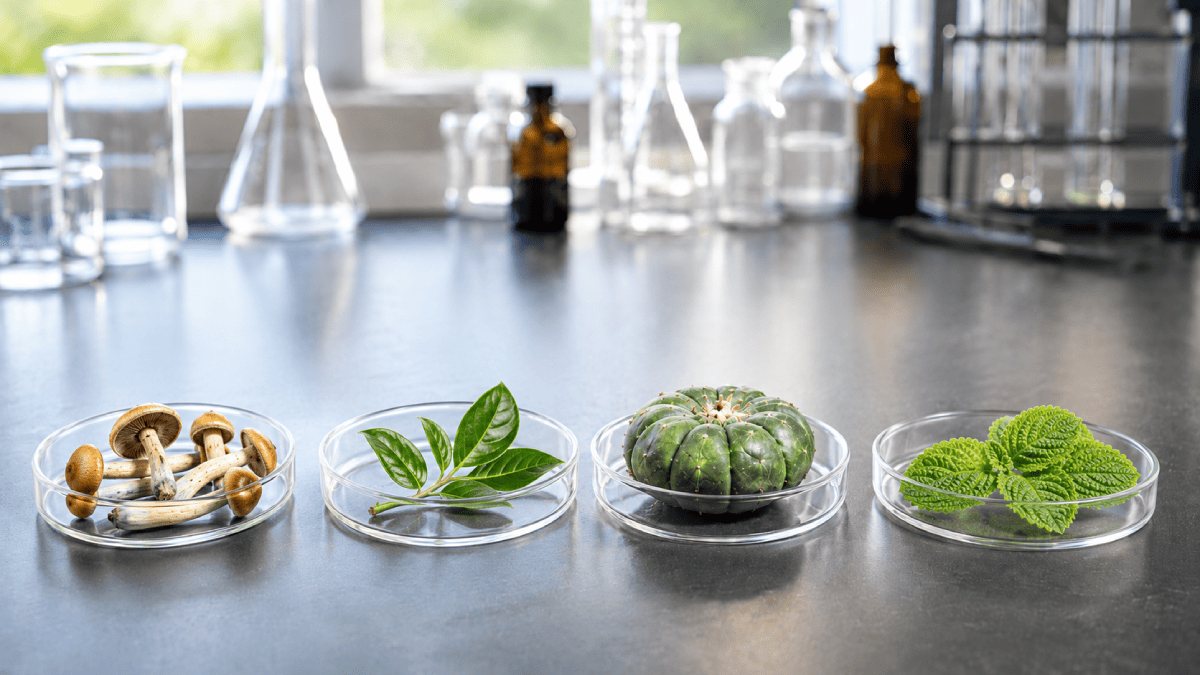
Sitting outside this paradigm since roughly 1971 was an entire class of receptor-active compounds barred from serious investigation. Some were natural alkaloids known to medicine for centuries. Others were synthesised in the postwar boom of psychiatric chemistry. The Controlled Substances Act and its international equivalents placed them in Schedule I, a category reserved by definition for substances with no accepted medical use. Once there, funding dried up, careers withered, and the question of whether the classification was empirically true became academic. You cannot test a compound's medical utility if you cannot legally administer it.
The current resurgence is not really a counterculture revival. It is the slow rediscovery of pharmacological instruments by the same institutions which previously froze them. Hopkins, NYU, Imperial College, Stanford, the FDA, AstraZeneca at one point, several mid-cap biotechs, and now NIH all have programmes in the area. The compounds are being re-evaluated as receptor-selective tools rather than as countercultural indulgences.
The honest summary: the evidence is real, uneven, and dramatically thinner in places than the cheerleaders pretend. Some compounds appear to do things conventional pharmacology cannot. Others reach Phase III and collapse. Several remain dangerous enough to require chemical redesign before they can plausibly enter clinics. None of them constitute miracle cures, and anyone selling them as such belongs in a different conversation.
Ketamine: Repairing Underpowered Circuits
Ketamine is the obvious starting point because it has already crossed the regulatory threshold. The FDA-approved nasal spray esketamine carries an indication for treatment-resistant depression, including monotherapy under the 2025 label revision. This is not an underground compound or a future hope. It is supervised psychiatry, billed to insurance, paid for by the standard machinery.
What makes it scientifically important is not its symptomatic effect. Plenty of compounds produce mood elevation through familiar pathways. Ketamine appears to do something stranger: act as a rapid synaptic plasticity trigger.
The pharmacological sequence runs roughly as follows:
- Ketamine antagonises NMDA glutamate receptors, with apparent selectivity for those expressed on inhibitory GABA interneurons.
- Removing inhibition produces a brief glutamate surge.
- The surge activates AMPA receptors.
- AMPA activation triggers BDNF release, which engages TrkB and mTOR signalling.
Downstream consequences include new synaptic proteins, dendritic spine growth, and the strengthening of prefrontal-limbic circuits associated with mood regulation. The current literature treats this as a circuit-level effect rather than a serotonergic one, with rapid antidepressant action sometimes apparent within hours.
Depression is increasingly modelled as a state of impaired neural flexibility: reduced synaptic density in stress-vulnerable regions, hyperactive default mode circuitry, blunted prefrontal control. If this picture is broadly correct, ketamine's job is to briefly accelerate the molecular machinery of synaptic rebuilding. The mood improvement is downstream.
Two qualifications.
- First, other NMDA antagonists have not reliably reproduced the antidepressant signal, so the mechanism is almost certainly more complex than NMDA blockade alone. Ketamine metabolites, AMPA tone and interneuron-specific effects all appear involved.
- Second, the effects close. Synaptic gains decay without reinforcement, which is why clinics tend toward repeated dosing schedules and combined behavioural work.
The interesting clinical descendants will probably not be ketamine itself. They will be cleaner agents preserving the plasticity trigger without the dissociation, the blood pressure spike, the abuse liability, or the bladder problems associated with chronic use.
Psilocybin: Loosening Of Rigid Thinking
Psilocybin reaches the brain through an entirely different door. It is a prodrug, converted by the body into psilocin, which acts as an agonist at serotonin receptors and particularly at 5-HT2A. These receptors sit on cortical pyramidal neurons, dense in association cortex: regions involved in abstraction, prediction, self-modelling, and the construction of meaning. Activate them and the cortex becomes more excitable, less constrained by top-down expectation, and globally more interconnected.
The dominant biological reading, supported by functional imaging, is a temporary loosening of large-scale brain networks. The default mode network, ordinarily the substrate of autobiographical thought and self-referential rumination, decouples. Functional connectivity reorganises across regions which do not usually communicate strongly. A 2024 Nature study described brain-wide desynchronisation under psilocybin, with the most marked effects in default mode circuitry.
Set against the clinical picture of depression, the implication is significant.
Chronic depression involves rigid self-referential loops: nothing will change, I am broken, the future is closed. Functionally, the brain over-weights certain predictions and under-samples competing evidence. Psilocybin appears to temporarily relax these priors.
The patient gets, for several hours, a brain less convinced of its own conclusions.
This destabilisation phase is not the whole mechanism. Preclinical work indicates psilocybin acutely induces expression of plasticity-related genes in the prefrontal cortex and hippocampus, with BDNF involvement in animal models. The acute experience appears followed by a window of altered learning capacity, during which new emotional and behavioural patterns may be easier to establish.
The clinical evidence is suggestive without being settled.
- A 2022 phase 2 trial reported a single 25 mg dose produced greater reductions in depression scores than a 1 mg control over three weeks.
- A 2023 JAMA trial in major depressive disorder reported well-tolerated effects with potential antidepressant signal.
- Cancer-related anxiety and depression have produced some of the strongest randomised data, with large reductions in distress and improved quality of life.
- Alcoholism trials have produced encouraging results when psilocybin is paired with structured psychotherapy.
A 2026 randomised trial in treatment-resistant major depression, by contrast, missed its primary endpoint, while secondary outcomes still suggested meaningful effects.
Promising. Not settled. The honest position requires holding both halves of the sentence.
Ketamine repairs underpowered circuits. Psilocybin loosens overconfident models. Both end up at plasticity. They get there through different pharmacological geography.
Why A Critical Period Matters More Than A Cure
The most important development in psychedelic neuroscience is probably not any individual trial result. It is the work suggesting psychedelics may reopen developmental learning windows in the adult brain.
Critical periods are intervals during which the brain is unusually receptive to certain kinds of learning. Language acquisition, binocular vision, social bonding, song learning in birds: all show classical critical-period structure. After closure, the relevant circuitry hardens, and equivalent learning becomes far more effortful or impossible. The closure is biological, not motivational.
A 2023 Nature paper in mice reported psychedelics can reopen a critical period for social reward learning, with different compounds keeping the window open for different durations. The reported range stretched from roughly two days to four weeks after a single dose, depending on the drug.
For a piece of basic neuroscience, this is enormous.
If psychedelics partially reopen plasticity windows in adults, then the compound itself is not the treatment. The compound is the unlocking mechanism. The therapy, the trauma processing, the behavioural restructuring, the social re-engagement, the addiction interruption: these have to occur inside the window the drug temporarily creates.
The framing matters because it disposes of the worst version of psychedelic medicine, the one treating the drug as a magic potion administered without context. If the drug only unlocks a window, then context determines whether what gets written into the brain is therapeutic or damaging. Set and setting, derided for decades as countercultural garnish, become mechanistic considerations.
It also clarifies why the field cannot be casual. A reopened critical period is, by definition, a state of heightened suggestibility, salience and learning. In a clinical setting with trained therapists, careful preparation, and integration support, this is potentially curative. In a chaotic context with unstable patients and untrained guides, it is potentially catastrophic.
A Map Of The Cabinet
| Compound | Primary Mechanism | Strongest Evidence Base | Current Position |
|---|---|---|---|
| Ketamine / esketamine | NMDA antagonism → glutamate surge → BDNF/mTOR plasticity | Treatment-resistant depression, suicidality | FDA-approved (esketamine), TRD monotherapy 2025 |
| Psilocybin | 5-HT2A agonism, cortical network destabilisation, plasticity gene induction | TRD, cancer distress, alcohol use disorder | Late-phase trials, mixed 2026 results |
| Ibogaine | Multi-receptor; opioid, glutamate and dopamine interactions; cardiotoxic | Opioid use disorder; veteran TBI/PTSD signal | Schedule I in US; analogue development active |
| MDMA | Serotonin, dopamine and noradrenaline releaser | PTSD trial signal; FDA rejection 2024 | Schedule I; awaiting redesigned trials |
| DMT / 5-MeO-DMT | Short-acting tryptamines; 5-HT2A primary | Limited TRD/MDD signal | Schedule I; early-phase work |
| Mescaline | 5-HT2A agonism; phenethylamine | Insufficient modern data | Schedule I; near-zero current trials |
| Mitragynine (kratom) | Atypical opioid agonist | Pre-clinical and observational data on OUD | NIH IND active (2026); Phase I cleared |
| Salvinorin A | Selective κ-opioid receptor agonist | Pain, addiction, mood preclinical | Largely unscheduled; metabolism limits clinical use |
| Scopolamine | Muscarinic anticholinergic | Rapid antidepressant signal in trials | Approved for other indications; psychiatric use research-stage |
| Nicotinic modulators | α4β2 / α7 nicotinic modulation | Phase III failure (TC-5214) | Receptor target valid; class commercially stalled |
| LSD / lysergamides | 5-HT2A agonism; ergoline-derived | Cluster headache, depression | Schedule I; renewed academic interest |
Ibogaine And The Cardiac Problem
If psilocybin is the cleanest test case for the plasticity hypothesis, ibogaine is the most dramatic and the most dangerous. It is an indole alkaloid from Tabernanthe iboga, used ceremonially in West African traditions and notorious for two properties: a long, intense psychoactive experience, and a striking signal for opioid addiction interruption.
A 2018 observational study in New Zealand reported a single ibogaine treatment reduced opioid withdrawal symptoms and was associated with cessation or sustained reduced use over twelve months. Underground addiction-treatment networks have run on this premise for years, usually in Mexico or other jurisdictions outside US regulation. The signal is consistent enough to be taken seriously.
So is the cardiotoxicity. Ibogaine breaks heroin addiction, but the price is it can kill.
Ibogaine has been linked to fatal cardiac arrhythmias. People have died of it. This is a compound which cannot be administered casually, and arguably cannot be administered at all without continuous cardiac monitoring, electrolyte management and emergency capability.
The 2024 Stanford and Nature Medicine work in US Special Operations veterans is the most interesting recent development. Thirty veterans with traumatic brain injury histories received magnesium-ibogaine therapy, with magnesium co-administration intended to mitigate the cardiac risk. The reported improvements covered disability scores, PTSD, depression, anxiety and cognitive functioning. Small sample. Specialised population. Striking signal.
More technologically interesting still is the work on ibogaine analogues. Tabernanthalog, described in a 2020 paper, is a non-hallucinogenic ibogaine derivative reported to retain therapeutic potential in animal models while reducing the hallucination and cardiotoxicity. The whole class of so-called psychoplastogens, compounds engineered to trigger plasticity without the full subjective experience, descends partly from this lineage.
Ibogaine should be understood as what it is: a dangerous prototype, signalling something real about addiction circuits, awaiting redesign by medicinal chemistry.
MDMA Meets The Regulatory Reality Machine
MDMA (Shulgin's "Pink Martini") is not a classical psychedelic. It is an empathogen, a synthetic phenethylamine derivative increasing serotonin, dopamine, and noradrenaline release. The therapeutic interest sits in its apparent capacity to reduce defensive arousal during emotional recall, making it potentially useful in trauma processing.
The clinical story, however, has been bruising.
In 2024 the FDA declined to approve Lykos Therapeutics' MDMA-assisted PTSD treatment, citing insufficient data and concerns about trial conduct, design and blinding. The blinding problem is genuine. Patients given an active empathogenic compound usually know they have received the drug, as do their therapists, which compromises the placebo arm. There were also adverse-event reporting issues and concerns about misconduct in parts of the supporting research network.
For the field, this is sobering and probably necessary.
MDMA was the first psychedelic-adjacent therapy to seriously approach FDA approval, and the rejection signals what the regulator expects: better controls, independent therapists, hard adverse-event discipline, and trial designs which acknowledge an obvious reality. The subjective effects of psychoactive compounds cannot be hidden the way an SSRI's effects can.
None of these compounds will win on vibes. They will win, if they win at all, on industrial-grade evidence under conditions designed for substances whose effects the subject can readily detect.
Mescaline, DMT, And The Wider Library
Beyond ketamine and psilocybin, a wider class of naturally occurring tryptamines and phenethylamines remains underexplored, frozen by the same legal regime which iced the main candidates.
DMT and 5-MeO-DMT are short-acting tryptamines with potential clinical utility precisely because the acute experience can last minutes rather than hours. Reviews in 2026 describe limited but optimistic evidence for both in treatment-resistant depression and major depressive disorder, with thinner evidence in other indications. The short duration matters. A clinic appointment is easier to design around a half-hour intense experience than an eight-hour psilocybin session.
Mescaline, the original psychedelic of Western psychopharmacology, has been almost entirely neglected. A 2026 review found potential therapeutic relevance across depression, wellbeing, nicotine dependence, alcohol use and obsessions, but with evidence too thin to support clinical decisions. Mescaline was Aldous Huxley's compound, Shulgin's darling, the subject of pre-war German psychiatric research, and one of the first phenethylamines isolated. Modern psychiatry has barely touched it because its cultural associations were radioactive.
The accepted counter-cases prove the point.
- Coca alkaloids became the foundation of modern local anaesthesia.
- Opium alkaloids gave medicine morphine, codeine, papaverine and the broader opioid analgesic toolkit.
- Ergot alkaloids gave migraine its workable drug class and gave chemistry LSD.
The civilisation which extracted these tools from despised plants and fungi then refused to perform equivalent work on others. The deciding factor in each case was reputation, not pharmacology.
Mitragynine, Salvinorin, And Painkillers
Plants and fungi have produced a substantial library of receptor-selective alkaloids. Some target serotonin, some glutamate, some opioid systems, some cholinergic systems, some kappa-opioid pathways in isolation.
Mitragynine, the principal alkaloid in kratom, is currently the most clinically live example. It has unusual properties: opioid agonist activity with atypical receptor selectivity, possibly separating analgesia from some of the dependence and respiratory depression risks of classical opioids. In June 2026, NIH announced its Investigational New Drug application for mitragynine had taken effect with the FDA, clearing the way for a phase I trial in opioid use disorder.
This is a serious institutional commitment to a compound widely sold in petrol stations under chaotic quality control. The drug industry is acknowledging a possible analgesic platform inside a substance most regulators were happy to ignore until the kratom market reached scale.
Salvinorin A, from Salvia divinorum, is technically a diterpenoid rather than an alkaloid, but it belongs in the same conversation. It is a potent, selective agonist at the kappa-opioid receptor, a receptor system implicated in dysphoria, stress, and aversive emotional states. Reviews describe potential medicinal-chemistry scaffolds for pain, addiction, mood and plasticity modulation, with practical limitations including rapid metabolism. Salvia divinorum spent years as a YouTube curiosity. The receptor it activates is a serious clinical target.
The pattern repeats: a despised compound concealing a precise pharmacological tool, the contempt mostly cultural, the tool mostly real.
Scopolamine, Nicotine, And Cholinergic Detour
Outside the serotonergic and glutamatergic stories sits a quieter pathway, often overlooked in the psychedelic conversation: cholinergic modulation of mood and cognition.
Scopolamine, a tropane alkaloid from datura and related plants, is medically familiar as an anti-nausea and anticholinergic agent. Less familiar is the antidepressant signal. NIMH reported rapid antidepressant effects in repeat trials, with patients improving within days and sometimes by the morning after treatment. Clinical replication has produced rapid and robust antidepressant responses in some studies. This is a known plant alkaloid, integrated into Western medicine for over a century, with a psychiatric application still mostly unused.
Nicotine is the more illuminating case, both because the reputation is dreadful and because the pharmacology is unexpectedly serious. The compound itself is addictive, cardiotoxic and embedded in the worst public health disaster of the twentieth century. None of which changes the fact: nicotinic acetylcholine receptors, especially α4β2 and α7 subtypes, are a major control surface for attention, reward, dopamine release and stress regulation.
A 1996 study reported transdermal nicotine patches produced short-term improvement in depression with limited side effects. Later open-label work in older adults with major depression suggested nicotine might benefit mood and cognitive performance, with a randomised controlled trial subsequently launched and listed on ClinicalTrials.gov.
The more interesting commercial story is what followed.
Targacept and AstraZeneca developed TC-5214, a nicotinic receptor modulator derived from the older antihypertensive mecamylamine. The drug entered Phase III in 2010 as adjunctive therapy for major depression in SSRI-refractory patients. Preclinical data was strong. Industry money was committed.
The trials failed. By March 2012, AstraZeneca announced the remaining Phase III studies had missed their primary endpoints and regulatory filing would not proceed.
A generation of nicotinic antidepressants collapsed at the last gate.
This is not a comfortable story for the field. It is one of its most honest. Some pharmacological pathways look real, attract serious investment, reach the highest standard of clinical evidence, and fail anyway. The failure itself is unremarkable. What is remarkable is the absence of equivalent funnels for compounds barred from the process at all.
Varenicline, the nicotinic partial agonist used in smoking cessation, has shown ambiguous but interesting mood signals in depressed smokers without destabilising them, helping defuse older fears around nicotinic intervention worsening mood. The receptor system remains a serious target, even if nicotine itself is not the medicine.
Microdosing As High-Expectancy Ritual
The cultural inverse of the buried-pharmacopoeia argument is microdosing. Here the reputation is glowing, the trial evidence is thin, and the gap between the two is doing most of the work.
The honest position is something like: there may be subtle acute pharmacological effects at sub-perceptual doses. LSD and psilocybin are receptor-active at low doses, so absence of perceptible experience does not imply absence of biological action.
What the controlled evidence does not support, with any seriousness, are the strong claims around creativity, focus, productivity, mood optimisation and entrepreneurial cognition routinely made in podcast-economy promotional material.
The most informative study is the 2021 self-blinding citizen-science trial. Participants set up their own placebo-controlled microdosing routine. Microdosing improved psychological outcomes from baseline. So did placebo. The improvements between the two arms were not significantly different. The conclusion was unflattering to the lifestyle pitch: expectancy was doing most of the visible work.
A double-blind placebo-controlled study of psilocybin microdosing in 0.5 g dried mushroom doses produced no significant positive effects on creativity, cognition, physical activity or self-reported wellbeing, with trends toward impaired performance on certain cognitive tasks.
There is a deeper mechanistic concern, beyond the trial evidence. The plausible therapeutic mechanism of full-dose psychedelic intervention may depend on the disruptive event: profound experience, network destabilisation, plasticity window, prediction-error cascade, memory reconsolidation under altered state.
Microdosing attempts to obtain the benefits while avoiding the event. If the event is the engine, removing it leaves a ritual, not a treatment.
None of this means microdosing has no biological effect. It means cultural confidence has run far ahead of empirical evidence, which is a useful corrective. The field's failures of seriousness run both ways.
Instruments, Not Sacraments
For roughly half a century, an entire class of receptor-active compounds was treated as a moral pollutant rather than a medical question. Some of the original caution was warranted. Some compounds genuinely are dangerous. Some research conducted in the 1950s and 1960s was, in current terms, ethically appalling. The freeze was not pure paranoia. It was overcorrection.
What overcorrection cost is now becoming visible.
- Ketamine works as a rapid plasticity trigger and is in the clinic.
- Psilocybin appears to loosen rigid cortical models and is in late-stage trials.
- Ibogaine signals strongly against opioid addiction and is being chemically redesigned to remove its cardiac liabilities.
- DMT, 5-MeO-DMT, mescaline and related tryptamines remain underexplored.\
- Mitragynine has reached its first FDA-cleared trial.
- Salvinorin A is a precision tool for kappa-opioid pharmacology.
- Scopolamine is a rapid antidepressant hiding inside a nausea drug.
- Nicotinic modulators reached Phase III and largely failed.
The interesting summary looks less like a list of cures and more like a map of a partially explored continent, half of it locked behind regulatory geography drawn for cultural rather than empirical reasons.
Some of the territory will turn out to be productive.
Some will turn out to be barren or hazardous.
The serious work is the difference between the two, and it has barely begun.
Several of these compounds will probably become medicines. Several will not. A handful will become medicines only after the molecule itself is redesigned beyond easy recognition.
The job of the next twenty years is to find out which is which, under the same standards demanded of any other pharmaceutical class. The mistake of the last fifty years was to refuse the question.