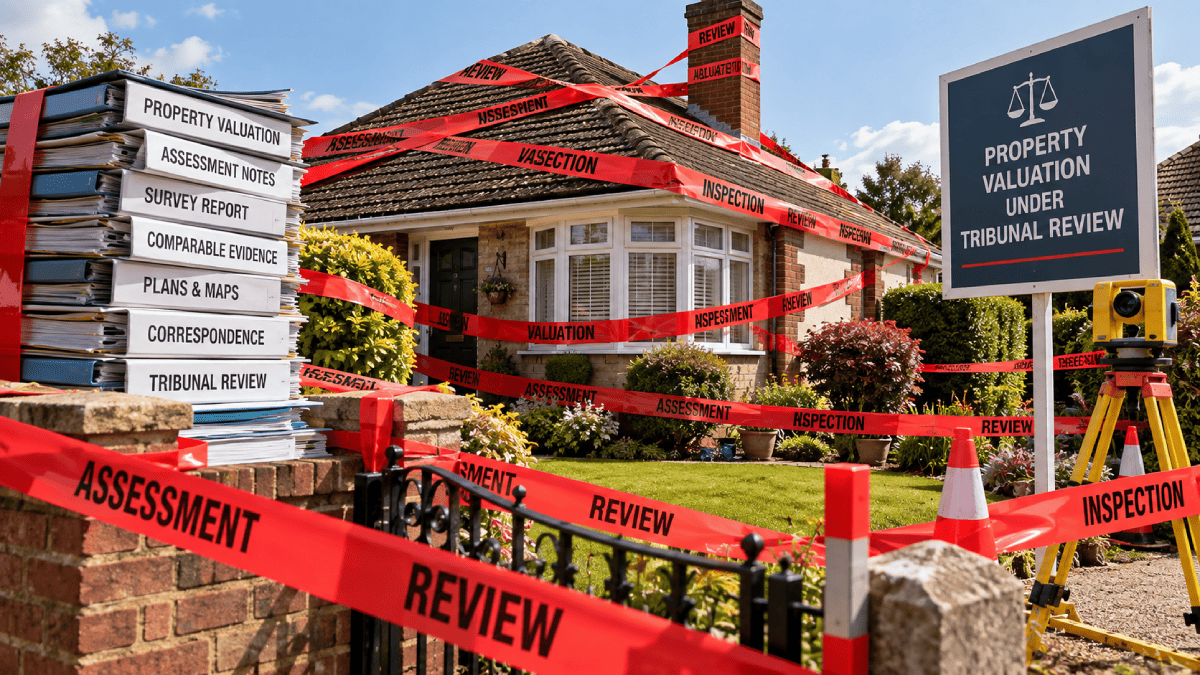
Britain Has The Prison Cells. Whitehall Let Them Rot.
Ministers insist there is no room. There was room. It was allowed to rot wing by wing, by a department which had never once worked out whether repairing a cell was cheaper than building one. It found out in 2024. By then it was renting police cells at £688 a night to hold men it could not house.

In January, Jessie Cole and Albert Bowers become eligible for release. They were sentenced to thirteen years in 2020 for the manslaughter of PC Andrew Harper, who was dragged to death behind their getaway car after a quad bike theft in Berkshire. Fifty chief constables have written to the Prime Minister asking him to find some lawful means of keeping them where they are.
He says he is confident something can be done. His Justice Secretary will bring forward a plan in September, which is one month before the two men become eligible and roughly sixteen years after the decisions which made their release inevitable.
Nobody involved has been willing to state plainly why they are coming out. Not a judge. Not the Parole Board.
A shortage of cells, produced by a department which spent fourteen years mislaying its own buildings and never once checked whether repairing them might be cheaper than starting again.
This is not a story about population or Britain filling up, as state mouthpiece broadcasters love to pontificate. Nor is it the deceit peddled by "fact checkers." It is one of grotesque incompetence by the civil service which is being conveniently obscured behind the outrage of it all. These people need to be held accountable. Dismissed, then prosecuted.
The United Kingdom did not run out of prison places magically. It ran out because bureaucrats did not renovate or repair those we already had. As a result, criminals are being let loose in your community where your children play, by people who need to be behind bars themselves.
4,151 Cells Rotted Off The Books
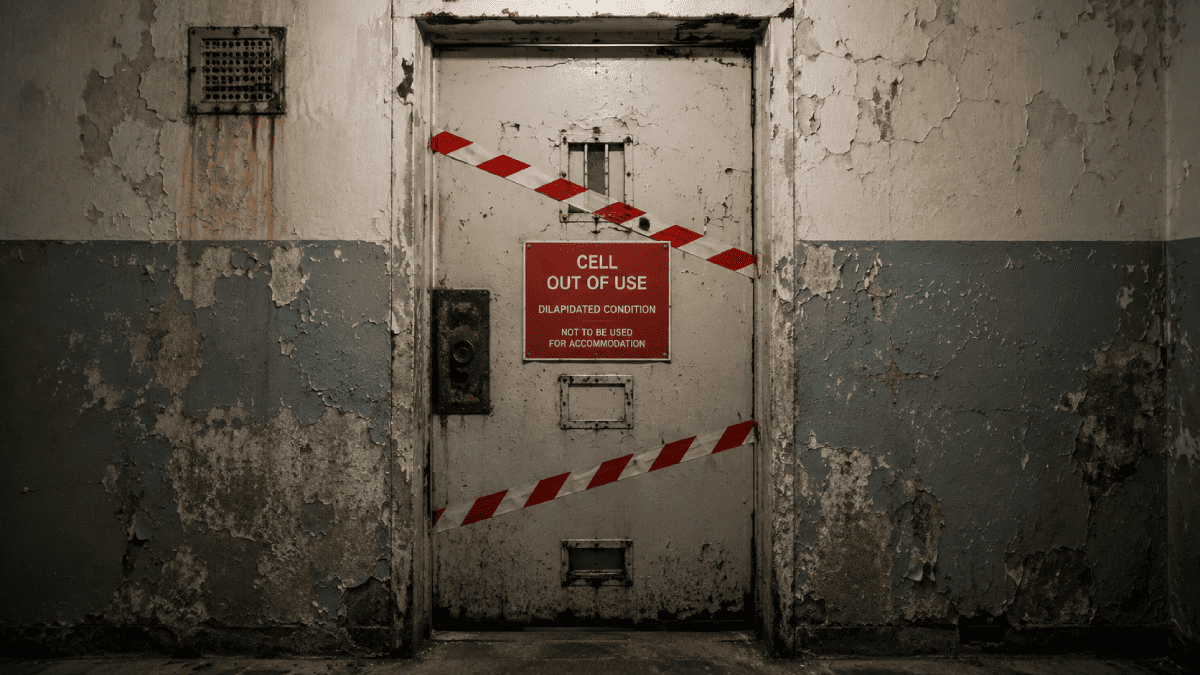
The National Audit Office reported in December 2024 since the 2010 prisons strategy, His Majesty's Prison and Probation Service has indefinitely closed 4,151 cells because they had become dilapidated.
Not condemned. Not structurally unsound.
Dilapidated, which is what happens to any building nobody maintains.
The auditors supplied their own yardstick. The cells lost to neglect exceed the combined capacity of Five Wells and Fosse Way prisons, the two newest prisons in England and Wales.
Britain lost more prison capacity to damp, failed wiring, and rotten window frames than it gained from the two flagship jails built to solve the shortage.
Those are the permanent casualties only.
Between 2020 and 2023, a further 1,700 cells a month sat empty across the adult male estate at any given moment while somebody attempted repairs.
Only 1000 Places In 14 Years
When it is not going to court to shut down CourtsDesk and remove access to data, the Ministry of Justice has published the arithmetic itself, which is the only reason anyone can see it.
| Prison places, May 2010 to September 2024 | Change |
|---|---|
| Operational capacity, May 2010 | 89,757 |
| Whole prison closures | −7,519 |
| Cells lost indefinitely to dilapidation | −4,151 |
| Other reductions | −1,737 |
| New prisons | +9,058 |
| Modular cells, houseblocks, and temporary units | +5,354 |
| Operational capacity, September 2024 | 90,762 |
Six new prisons opened. Twenty-two closed or partly closed. Billions announced, deferred, re-announced, and announced again.
Net gain across fourteen years: 1,005 places.
That is less rooms than a single cruise liner in going on for 20 years. Las Vegas alone has 150,000 rooms.
Measured to the Department's own preferred endpoint of April 2024, 482, which the Lord Chancellor generously rounded up to 500 when telling the Commons how bad things had become.
Over the same period the prison population rose by about three thousand. Three times the number of places added.
Every year of that divergence was visible in the Department's own projections, and every year officials filed those projections and did nothing which altered the outcome.
Nobody In Whitehall Costed Repair Against Replacement Until 2024
The sentence which ought to end several careers sits in paragraph 1.26 of the audit report, phrased with the flatness auditors reserve for their most damaging findings. The Prison Service:
.... needs to understand the relative costs and benefits of maintaining current cells against building new prisons, and it is only in 2024 it has obtained data to help it understand this.
It's important to slow down if skimming or speed-reading here.
Stop and take notice of it. Stare at it for a while.
If you don't want to search through the NAO report, here is the context. The national auditor is explaining it has taken decades for civil servants to compare the cost of renovation vs building new. Decades.
1.25 Since the government’s 2010 prisons strategy, HMPPS has indefinitely closed 4,151 cells due to dilapidation. This is more than the combined capacity of the two newest prisons in the estate (Five Wells and Fosse Way). An average of 1,700 cells per month were also temporarily out of use for maintenance in the adult male estate between 2020 and 2023.
1.26 In an environment of constrained public spending, HMPPS needs to understand the relative costs and benefits of maintaining the current cells versus building new prisons. However, it is only in 2024 that HMPPS has obtained data to help it understand this (see paragraph 3.8). In 2024-25 business cases for capital maintenance, HMPPS estimated the cost per place to protect an existing cell from being lost to dilapidation varied between £8,600 and £12,700 compared to a cost of around £220,000 to build a place at a recently opened prison.
The 2010 strategy was explicitly built on the proposition it was cheaper to close old uneconomic prisons and replace them.
We are yet again reminded of the infamous scene in Yes, Minister.
The three articles of civil service faith: it takes longer to do things quickly; it's more expensive to do them cheaply; it's more democratic to do them in secret.
For fourteen years the department executing this idiotic policy did not possess the figures required to test the premise. Prisons were shut, sold, and demolished on the strength of an assumption nobody had bothered to price.
When the figures finally arrived, in 2024-25 capital maintenance business cases, they said this. Protecting an existing cell from being lost to dilapidation costs between £8,600 and £12,700 per place. Building a place at a recently opened prison costs around £220,000.
Preserving a cell costs four to five per cent of replacing it.
The Ministry has since admitted to the Public Accounts Committee it is generally cheaper to maintain an existing cell than to build a new one, a conclusion available to any landlord with two properties and a pocket calculator, and unavailable to the Ministry of Justice throughout the entire period in which it disposed of twenty-two prisons.
This is the same scandalous civil service incompetence responsible for the collapse of the NHS estate.
Officials Asked For £649 Million And Were Handed £173 Million
The Prison Service was not ignorant of the deterioration. At the 2020 Spending Review it calculated it needed £649 million a year merely to stop the rate of cell loss increasing while beginning to clear urgent repairs. It did not get it.
| Prison maintenance spending | Per year |
|---|---|
| 2016-17 to 2018-19 average | £78m |
| 2020-21 to 2023-24 average | £173m |
| HMPPS's own stated requirement | £649m |
Roughly a quarter of what its own engineers said was necessary. The backlog of outstanding work duly doubled from £0.9 billion in 2020 to £1.8 billion by September 2024. Restoring the estate to a condition the Prison Service describes, without evident embarrassment, as "fair" is now costed at £2.8 billion.
There is a version of this story in which the Treasury is the villain and the Ministry the frustrated supplicant. It does not survive contact with the record.
The same department which could not extract £649 million a year for roofs went on to accept a building programme whose costs rose from an approved £5.2 billion to between £9.4 billion and £10.1 billion, and which will deliver its 20,000 places in 2031 rather than the mid-2020s.
Cost per place across the programmes runs from £200,000 to between £610,000 and £840,000, with individual projects estimated at up to £1 million a place. Rapid deployment cells, prefabricated boxes with a fifteen-year design life, now cost almost as much per place as the permanent prisons.
Whitehall could not find the money to mend a wall. It found ten billion pounds to build new ones. This tiresome story of civil service stupidity an incompetence should be nauseating to any reasonable person by now.
Ministers Agreed To Stop Repairing Prisons In Order To Fill Them
By November 2021 the Ministry had begun listing contingency measures for the squeeze it could see coming. One of them was cancelling planned maintenance.
In November 2022 the Prison Service agreed with ministers to reduce the number of cells held out of use for maintenance, returning them to the population. The auditors note the consequence in one line: pausing remedial works increases the backlog.
The Prison Service had already quantified what it was surrendering.
Among the operational red lines it set itself was continuing essential statutory maintenance such as fire safety, for which it assessed it might need up to 1,500 cells out of use simultaneously.
A department which knew it required fifteen hundred empty cells to keep its buildings legal handed those cells back to the population to postpone a crisis by a few months.
The crisis arrived regardless, with the repairs undone and the bill compounded.
A Prison Too Full To Repair Cannot Be Repaired
At which point the failure stops being merely expensive and starts feeding itself. A wing cannot be refurbished with prisoners living in it. The men have to go somewhere. Somewhere has to have room.
Asked by the Public Accounts Committee why more of the backlog could not be cleared with more money, the Prison Service explained it could not realistically deliver much beyond about £300 million of maintenance a year whatever it was given, because it lacked contractors willing to work inside prisons and, more fundamentally, headroom in the estate.
- An overcrowded prison cannot be repaired.
- An unrepaired prison sheds cells.
- Each cell shed makes the next repair harder to schedule.
The loop requires no malice and not much stupidity to run. It requires only nobody interrupt it, and for fourteen years nobody did.
The Prison Service aims to hold at least 1,425 spare places in the adult male estate as a cushion against sudden demand or unexpected losses.
It has not managed it.
Between October 2022 and August 2024 the adult male estate ran at between 98.0 and 99.7 per cent occupancy. The internal threshold for escalating to ministers was 300 unoccupied places nationally, raised to 800 in September 2024 once officials worked out how long emergency measures take to implement.
On Tuesday 27 August 2024, there were 140 places left in England and Wales.
That was two years ago.
On The Isle Of Wight, Men Tip Buckets Of Their Own Waste Out Of The Windows
Everything wrong with the British prison estate can be found on a single island, within a mile of itself. HMP Isle of Wight was formed in 2009 by merging three prisons: Parkhurst, opened 1838, Albany, converted 1967, and Camp Hill, opened 1912.
Camp Hill closed in 2013 with capacity for 595 men. It was briefly retained as contingency capacity in case prisoner numbers rose, then released for disposal.
In 2018 a prisons minister offered the site to the Isle of Wight Council for one pound. The council did not take it. A statement of common ground signed in February 2025 still records the Ministry of Justice as the landowner of roughly sixty-two hectares.
Thirteen years boarded up. Nobody would take it for a pound. The Ministry is still, in its own phrasing, evaluating options.
Half a mile away sits what remains. Inspectors visited in March 2026 and published in June. The numbers first.
| HMP Isle of Wight, March 2026 | |
|---|---|
| Prisoners held | 961 |
| Baseline certified normal capacity | 931 |
| In-use certified normal capacity | 879 |
| Operational capacity | 968 |
| Reduction for fire safety improvement work | 131 |
| Proportion living in overcrowded conditions | 17% |
Fifty-two places of certified accommodation unavailable. A further 131 knocked off operational capacity for fire safety works. On the Parkhurst site, houseblock 18 is recorded as currently not in use and houseblock 19 as under refurbishment.
Two entire residential units out of action on an island where a whole prison stands empty and the national estate is releasing men early for want of beds.
Then the conditions.
The Chief Inspector's own summary describes a sprawling, ageing site, and says of the Albany half it is simply not fit for purpose. Among the six priority concerns is this: infrastructure was failing across both sites and insufficient investment had been made by HMPPS to remedy this.
In Albany, most cells are very small and have neither a lavatory nor running water. Men join an electronic queue for up to seven minutes to reach a communal toilet. Many avoid the system altogether and use a portable camping toilet or a lidded bucket in the cell. Prisoners and staff both told inspectors human waste is regularly thrown out of the windows at night. The landings smell strongly of urine. The ground immediately outside Albany is not routinely cleaned and parts of it remain contaminated with human waste. The Inspectorate published the photographs.
This is a category B training prison in England in 2026, holding 961 men, most of them convicted of sexual offences and over eighty-five per cent assessed as posing a high risk of harm.
The state's answer to what should be done with such men is to house them in a building where they defecate into buckets and throw the contents into the yard.
Nor is any of it a surprise.
At the previous inspection in 2022, inspectors recorded many of the residential units were shabby, bleak, and in need of significant repair. Four years later the Inspectorate marks concern partially addressed, which in this context means the buckets are still there.
One further detail, offered without comment because none is required. Inspectors found men waiting up to a fortnight to wash their clothes because the laundry machines had broken. The report states absurd Ministry of Justice procurement rules meant it had taken far too long for the governor to be able to purchase replacements.
A prison governor could not buy a washing machine.
Dartmoor Was Leased Again After The Radon Readings Came Back
Dartmoor deserves its own paragraph in whatever internal history the Ministry eventually commissions and declines to publish.
High radon readings were recorded at Princetown in 2020, ten times the recommended workplace limit. The prison had been earmarked for closure for a decade, so no capital maintenance had been invested in it.
In March 2022 the Prison Service signed a new lease.
Comprehensive radon testing was completed in July 2022, four months after the signature. Officials did not negotiate any reduction in the £1.5 million annual rent to reflect a known radioactive gas problem, nor any protection against readings rising.
Further high readings followed in 2023.
In July 2024 the prison was emptied and closed, removing around six hundred places from the estate at the precise moment there were none to spare.
The Public Accounts Committee returned to it in late 2025 and found no plan for the site whatsoever. The taxpayer is now paying roughly £4 million a year in rent, rates, and security for an empty prison, and will continue until either reoccupation or the lease break in 2033. The freehold belongs to the Duchy of Cornwall, aka Prince William.
Approximately £1.2 million has been spent on radon mitigation, and that work is currently paused pending a Health and Safety Executive review of the regulations.
The Prison Officers' Association has been told to expect three years. The Independent Monitoring Board warned with only a skeleton staff left the buildings will simply deteriorate further.
The Prison Service's explanation to Parliament for renewing the lease was.... the urgent need for prison places.
Birmingham Is Still Waiting, Liverpool Proves It Was All Reversible
The March 2026 parliamentary answer sets out where the losses fell at prisons still operating.
| Prison | Places removed for physical condition |
|---|---|
| Birmingham | 473 |
| Liverpool | 406 |
| Aylesbury | 235 |
| Feltham | 148 |
| Rochester | 120 |
| Guys Marsh | 106 |
| Swinfen Hall | 60 |
| Isle of Wight | 52 |
| Haverigg | 40 |
| Deerbolt | 39 |
| Bedford | 32 |
Birmingham lost 306 places in 2018 and 167 more in 2019. When inspectors returned in June 2026, three of its larger Victorian wings were still shut, awaiting what they called a long-delayed refurbishment. The work had actually begun, with brickwork stripped back, before the contractor ISG collapsed and the site had to be made safe and the contracts retendered.
Eight years, hundreds of cells behind hoarding in England's second city, and men released early elsewhere because there was nowhere to put them.
Liverpool tells the same story from the other end, and settles the central question.
It lost 172 places in 2017 and 234 in 2018. Then the Government spent some money on it. A departmental evaluation published in July 2026 reports the refurbishment is expected to return 381 out-of-use cells to service and upgrade around eight hundred more, with three wings comprising 429 cells already finished.
Cells indefinitely closed through dilapidation are not lost. They are buildings nobody looked after, which can be looked after now, at roughly one twentieth of the cost of the alternative.
The Ministry concedes as much in the small print of its own answer, where it notes some places recorded as closed for physical condition have been or will be returned following refurbishment, naming Liverpool, Birmingham, Haverigg, Feltham, and Swinfen Hall.
Every one of those cells was recoverable at any point in the preceding decade. Nobody recovered them.
£688 A Night For Police Cells Standing Empty 96 Nights Out Of 100
Having mislaid four thousand cells, the Prison Service began renting others. Operation Safeguard is the arrangement under which police forces hold prisoners overnight when no prison place can be found.
Between February 2023 and September 2024 it cost £70 million.
A police cell under Safeguard cost £688 a day against £142 for a prison place. The Prison Service pays whether or not anybody sleeps in them, and could not forecast demand well enough to book sensibly.
Seventy million pounds for accommodation empty ninety-six nights in a hundred, spent by a department which could not find £649 million a year to stop its own buildings falling down.
The formal Accounting Officer assessments describe Safeguard as expensive but necessary, and as insurance.
Insurance is what you buy when the roof might fail. This roof had been failing, on the record, since at least 2020.
Risk Registers Were Edited To Get Projects Through The Gate
The building programme meant to replace all this was run in a manner which should interest anyone who imagines the permanent civil service functions as a check on ministerial enthusiasm.
An internal review in March 2022 found some initial budgets had excluded significant areas of scope in order to let projects proceed, and found evidence of programme risks being revised downwards to pass internal gateway stages. Officials were marking down their own risks to get past their own assurance process.
In May 2022 the Ministry was still reporting it was on track to deliver 20,000 places by the mid-2020s, at a point when three of the new prisons had no planning permission. It has since acknowledged its timelines were challenging.
A November 2022 efficiency review trimmed £550 million from the programme by deferring construction. The Ministry estimates the delays caused by such a deferral cost around £500 million. Nine hundred and ten pence lost for every pound saved.
And throughout, the numbers which would have allowed Parliament to see any of this coming were withheld.
The Ministry publishes prison population projections every year. It also produces capacity projections, which it keeps internal. The auditors were blunt: public knowledge of the gap between demand and capacity, and wider debate on how to close it, have been restricted because the Ministry does not publish its capacity projections.
Those withheld figures showed a shortfall of roughly 12,400 places by the end of 2027 in the central scenario and 21,200 in the high one, with no contingency plan to add capacity because the Ministry considered it had run out of options.
Emergency release was not forced on ministers by events.
It was the plan, held internally, while Parliament debated sentencing without the arithmetic in front of it.
23,000 Cells Are Behind The Same Deadline
None of this is safely historical. As at March 2024, approximately 23,000 occupied prison places, a quarter of the entire estate, did not meet fire safety standards. Standalone smoke detectors serve as interim mitigation where cells have no automatic detection, which the auditors note is not the same standard of protection.
There were 2,287 cell fires in 2023.
Since 2020 the Prison Service has already permanently closed 1,875 places in modular units which failed fire testing.
The Prison Service has committed to making every place compliant by the end of 2027, and states it does not intend any cell to be occupied where work remains outstanding after that date. The works are costed at £1.5 billion. Current progress runs at about four thousand places a year.
Four thousand a year. Twenty-three thousand to do. A deadline in 2027.
In concrete cells with metal beds where nobody is supposed to have much to set to fire to.
Elsewhere, a condition survey reporting in April 2024 found thirteen per cent of buildings and eighteen per cent of machinery and electrical assets in poor or very poor condition, meaning major repair, replacement, or imminent failure.
In 2024, 112 places at Northumberland were lost to reinforced autoclaved aerated concrete, the same material which closed the hospitals and schools.
The mechanism which produced the first crisis is intact, funded at a quarter of requirement, and has a second tranche of losses already scheduled.
Cell Counts Now Determine Which Crimes Are Serious Enough For Prison
Under the arrangements introduced in 2024, prisoners on standard determinate sentences came out at forty per cent of sentence rather than half. 13,325 had already been let out under the preceding emergency scheme between October 2023 and September 2024. By October 2025, it was 40,000.
The disgraceful Sentencing Act 2026 goes further, moving prisoners serving four years or more for certain violent and sexual offences from release at two thirds to release at the halfway point. Manslaughter falls within it, which is why the men who killed PC Harper are eligible in January.
In July the scheme was paused for an urgent review.
In August the Government announced rape and certain child sexual and grooming offences would be excluded, and ordered a further review to work out which grooming gang members remained eligible under its own drafting.
The number expected to be released fell from around six thousand to around five thousand.
The Prime Minister explained why the exclusions could go no further. Removing more offences from the scheme, he said, would have caused the prison system to collapse.
Which is the whole affair in a sentence.
The list of crimes too grave for early release is not set by any principle of justice, nor by Parliament weighing gravity against mercy. It is perversely set by how many cells are available.
That was set by fourteen years of deferred surveys, cancelled maintenance, unspent capital, edited risk registers, and a department which never established whether mending a building was cheaper than knocking it down.
Britain is not short of prison cells.
Britain is short of prison cells in a condition the law permits it to use, which is an entirely different failure and an entirely self-inflicted one.
- 4,151 decayed past the point of legal occupation.
- 23,000 sit behind a fire safety deadline nobody is on course to meet.
- A 595-place prison stands empty on the Isle of Wight because nobody would take it for a pound, while half a mile away men queue seven minutes for a lavatory and throw buckets of excrement into the yard.
- 600 places sit idle on Dartmoor under a lease signed after the gas readings came back, at four million pounds a year.
And in January, Jessie Cole and Albert Bowers walk out, because the state which built the cells could not be troubled to look after them.
On an island where a 595-place prison has stood boarded up since 2013, inspectors found men queuing seven minutes for a lavatory and tipping buckets of their own waste out of the windows. Nobody in Whitehall had worked out whether mending a cell was cheaper than building one until 2024.
The days of these administrators running the British state must end. Their rule is not merely catastrophic and injurious, it is delineating our country as a ship of drastic fools.