The Civil Service Promotes Its Worst: Antonia Romeo
Brexit chaos, two-tier justice, migrant hotels, speech convictions; accidentally deleted grooming gang evidence, the Restorationist's least favourite mandarin has her dirty fingerprints all over it. Now she's the country's chief satanic quangocrat. Expect things to get a lot worse.

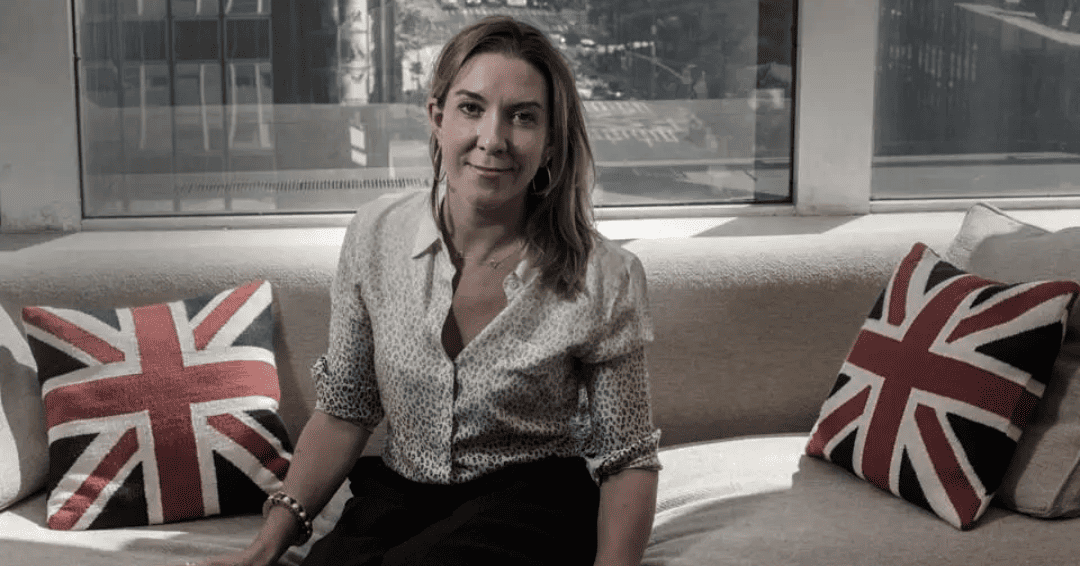
On 19 February 2026, Herr Starmer reached down into the rotten Whitehall pick-and-mix and pulled out Dame Antonia Rebecca Caroline Angharad Catherine Romeo. Four middle names, one DCB, zero demonstrable victories for the country paying her salary. First woman in the job. Longest-serving permanent secretary in government. A "25-year record of delivering for the British people", according to the Prime Minister, who presumably had a straight face when he said it. A "huge privilege", according to the Dame herself. An "important moment for the country", according to LSE, where she once earned a master's and where the standards for importance are evidently flexible.
You are meant to be delighted. You are meant to be impressed. It's a first. Wow. You are meant, above all, not to look too closely at what she's actually done.
The Press Release And The Prada Paint
The official line is remarkable for what it leaves out. As Dame Humphrey of the Department for International Trade (a department we don't need), the Cabinet Office tells us, Antonia "set up the new department from scratch as the UK left the EU" (which underwrote a "reset" for re-entry). As Dame Humphrey of the Ministry of Justice (a department in collapse), she "led the official response to the civil unrest of summer 2024" (i.e. rioting over children being stabbed to death) and "launched the Sentencing Review" (which flooded communities with re-offenders). As Dame Humphrey of the Home Office, she held responsibility for national security, border security, and public safety. You know, the three things it has miserably failed at.
Three departments. Three glowing summaries. Not a single number.
Search the GOV.UK profile in vain for the words "backlog", "small boats", "prison capacity", "non-crime hate incident", or indeed any figure at all. It is a CV written as a haiku, composed entirely of the verb "lead" and its synonyms. You will learn she led, she oversaw, she established, she launched. You will not learn whether any of the things she led, oversaw, established or launched actually worked. That, apparently, is not the sort of question a grown-up asks.
Before any of it came the episode which has, despite the press office's tireless efforts to bury it under nine years of briefings, refused to die.
New York, 2017: Bullying, Expenses, Fashion
While serving as Britain's Consul-General in New York, Antonia was investigated over allegations of bullying and misuse of expenses described as her "reign of terror." She was cleared. The Observer's coverage is horrific and worth printing at length:
“I think I cried every day in the office,” one former colleague told The Observer, who accused Romeo of “screaming, yelling, threatening” staff, telling them: “You’re rubbish at your job, you’re a liar, you’re a bitch” – language she denies using.
“It was pretty systematic,” another former colleague said. “I have no doubt in my mind that her behaviour constituted serious bullying.”
Staff were allegedly threatened with the sack over minor infractions or disagreements. When Romeo objected to the tone of an email from one junior staffer, they were warned that this was a “career-limiting move” that “could only happen once”.
“She would go zero to 60 and be like, ‘okay, then I’m going to call your boss and your boss’s boss’,” one former staffer said.
In an annual staff survey covering a 12-month period including Romeo’s first three months in the post, complaints of bullying at the consulate rocketed from 10% to 47%.
“It wasn’t one complaint. It was a dossier of complaints compiled from many, many members of staff and over time,” one former colleague said. “The behaviour was very serious.”
“She expects us to work for her (and her personal brand) 24/7,” another complainant said. “I’m not paid 20%+ under market value to work around the clock for a woman’s Twitter empire.”
Colleagues were shocked when Romeo moved into her official residence, complaining that it was smaller than her previous New York apartment. Her attempt to expense $6,000 in storage costs prompted further friction.
“You’re talking about someone who’s living in a $9m apartment paid for by the British taxpayer… and she’s niggling over $6,000,” one former colleague said. “In an office where her private secretary was getting $32,000 a year and living in Brooklyn with six roommates. It’s just so incredibly tone deaf.”
Yes, another winner. It actually makes you sympathise with the bureaucrats.
She was also, after the investigation, required to repay around £31,000 in travel expenses, which is a curious detail if nothing was amiss. Reporting around the time described a grace-and-favour flat done out in Farrow and Ball, private school fees charged to the taxpayer, last-minute flights for Bafta attendance, and bouquets dispatched to Victoria Beckham and Anna Wintour, presumably in the service of British interests abroad. Harvey Weinstein attended the parties. One assumes he was there on trade business.
The Cabinet Office line has not wavered in nine years: one complaint, thoroughly investigated, no case to answer, please stop asking because she's a badass girlboss. The line worked beautifully until the moment she was shortlisted for the top job, at which point it stopped working altogether.
Unsurprisingly, accusations of cover-up immediately appeared. As is the British state's knee-jerk response to any sense of complexity or failure:
An investigation was triggered after a senior official sent a 2,400-word dossier to officials in February 2017 setting out alleged concerns about Romeo’s behaviour and use of official funds.
Sir Tim Hitchens, a former ambassador to Japan, was flown to New York to carry out a week-long review during which he spoke to many of Romeo’s colleagues.
A Whitehall source said: “This was not a single grievance from one employee. It involved multiple concerns made by multiple staff.
“The Foreign Office did a full investigation and found a serious case to answer which the Cabinet Office then ignored. So how did they reach that conclusion when they did not do their own investigation?
“It had a huge negative impact on morale in the US. It was also deeply damaging to the whole organisation’s efforts to deal with inappropriate behaviour. Because it suggested that well-connected senior individuals are beyond reproach and not subject to normal accountability.”
Her former boss, Lord McDonald, one-time Sir Humphrey at the Foreign Office, went on Channel 4 News to warn Downing Street due diligence had "some way still to go", which is mandarin for "you have no idea what you're about to do". A second official then came forward, contradicting the government's insistence only one person had ever raised concerns.
Ten days after the complainant in 2017 was told she had been cleared, Antonia was promoted upwards to terrorise the department in charging of sabotaging Brexit.
None of this, we are assured, is relevant. The whole thing stinks.
Where She Came From And That Smell Of Sulphur
Antonia did not arrive in the senior civil service by the usual route of decades in a single department. She arrived through the coordination layer, the place where the various arms of the British state meet and agree their stories.
After a spell as principal private secretary to two Lord Chancellors, she transferred in 2008 to the Foreign and Commonwealth Office as Director of the Whitehall Liaison Department. The unit's function is not subtle. It manages the Foreign Office's relationship with Britain's intelligence agencies (MI6 reports to the FCO) and with other government departments on sensitive matters. She ran it for two years. She then moved, under the Coalition, to the Cabinet Office under Francis Maude, running the Efficiency and Reform Group (i.e. the cabal for inefficiency, bloat, and keeping everything the same). Then back to Justice as Director General, Transformation (making things worse). Then back to the Cabinet Office again, running the Economic and Domestic Affairs Secretariat, which she herself described as her "dream job": coordinating policy advice to the Prime Minister, running the Implementation Unit, and chairing the "Implementation Task Forces."
All non-jobs, for a department which has no basis in law and should not exist.
This is not the career of a specialist. It is the career of a fixer. Intelligence liaison, efficiency reform, transformation, implementation, delivery. Every job title is a verb dressed up as a noun, and none of them leaves a paper trail you can scrutinise in a newspaper. She sat at the junctions of the state, where the traffic of information is heaviest and the accountability is lightest. By the time she became a Permanent Secretary, she had been moving through the central nervous system of British government for fifteen years. She knew every door in Whitehall and the Christian name of every person who answers the phone behind it. This is the sort of CV which produces either a Cabinet Secretary or a very well-connected memoir in about thirty years' time. Frequently both.
There was a reason for the trajectory, and his name was Jeremy Heywood, later Lord Heywood of Whitehall, who was Cabinet Secretary from 2012 until his death in 2018, and before that the enforcer-in-chief for every Prime Minister of the modern period. Blair, Brown, Cameron, May. He was the man you called when a problem needed to disappear. Eurosceptic Conservatives, in his final year, openly accused him of authoring the impossibly complex customs backstop which would later break Theresa May's government; his illness through the summer of 2018 prevented him from defending his slimy protégé Olly Romeo... apologies, his protégé Olly Robbins, the Brexit negotiator caught in the Brussels hotel bar.
Heywood was Romeo's mentor. He personally asked her to stay in the civil service when she was considering leaving, and sent her to New York. He smoothed her path to DIT, reportedly striking a "trade-off" with Theresa May, according to the Mail on Sunday's 2020 reporting, to secure her appointment despite the New York investigation. She was his creature, and her career is the record of his patronage surviving him. The man who built the backstop chose her. The woman who inherited Northern Ireland's constitutional mess built the machinery which delivered it. The pipeline is not hypothetical.
The job she holds now is the sum of those junctions. The Cabinet Secretary is, by design, the operator who sees everything and is answerable to nearly no one. Antonia has been training for her satanic priesthood since the Coalition, under the tutelage of the man who made the role what it is.
The Brexit Department Which Couldn't
Antonia arrived at the pointless Department for International Trade in March 2017, two days before Article 50 was triggered. Her job was to build, from nothing, the machinery by which Britain would conduct independent trade policy for the first time in half a century. It was the moment for which the permanent government had, by its own later admission, not remotely prepared.
The context is essential, because it is the context she administered. Seventeen-point-four million people had voted in the largest democratic exercise in British history. What followed was three years of institutional resistance unlike anything in the modern constitutional record.
- Parliament voted the agreement down three times.
- A Speaker rewrote centuries of convention to hand the order paper to backbenchers who had lost the referendum and wanted a do-over.
- Select committees summoned the negotiators as if interrogating suspects.
- Olly Robbins, the Prime Minister's Brexit adviser, was caught by a journalist in a Brussels hotel bar explaining the whole point of the backstop was to trap Britain inside it.
- The civil service produced forecast after forecast, each gloomier than the last, each leaked to the Financial Times within the week.
This was not neutral administration. This was a permanent government which had decided, quite openly, it knew better than the electorate and intended to prove it.
Antonia's department was meant to be the answer to the "can't be done" chorus. Proof Britain could negotiate, promote, and trade on its own terms. What it delivered was rollovers: continuity agreements preserving as much of the EU framework as possible, wheeled out at press conferences as conquests worthy of Agincourt. The serious work, a functioning customs architecture, genuine new market access, a coherent trade strategy, never materialised. The machinery was not built to leave. It was built to survive the leaving, which is a different project entirely, and on its own terms a brilliant success.
Then there is Northern Ireland, delivered on her watch and through the apparatus she had built. Instead of launching a free trade zone, the Protocol, retreaded as the Windsor Framework, inexplicably placed a customs border in the Irish Sea. One part of the United Kingdom was cunningly left inside EU goods rules, governed by laws made in Brussels over which no voter in Belfast or London has any say.
Stormont collapsed in protest. Loyalist communities felt written out of the union. Businesses faced paperwork no one had voted for. Article 16, the emergency brake the government kept insisting it could pull, was never pulled. Divergence, promised for years, has been modest to imaginary. This is not a technical inconvenience; it is a constitutional arrangement under which a portion of British territory is governed by a foreign legislature, and it was built by the people now running the country. Chagos, anyone?
DIT itself did not survive the verdict. It was absorbed into a larger department after she left, the machinery she had spent four years constructing quietly filed under "lessons learned", which in Whitehall means "never to be spoken of again". Her reward was promotion. To Justice, of all places, which was about to discover what "delivery" looked like in practice.
The Ministry Of Justice, 2021 To 2025
This is where the word "delivery" really deserves a closer look. When Antonia arrived at the MoJ, the Crown Court backlog stood at around 60,000 cases. By the end of 2025, shortly after she left, it had reached 80,203 cases. More than double the pre-pandemic level. The magistrates' court backlog reached 379,437.
She got things done. The numbers went up. The dashboard presented differently.
2600 Crown Court trials are now not listed to be heard until 2028. 29 have been scheduled for 2030. Over 1,600 rape cases have been open for longer than a year. Sexual offences now make up one in five cases which have been waiting two years or more, up from one in ten before her arrival.
The responsible minister, Sarah Sackman KC, described the Crown Court system as "on the brink of collapse". The government has now announced plans to scale back jury trials in response. Trial by jury, one of the oldest civic inheritances in the English legal tradition, is being rationed because the administrative state cannot clear its in-tray.
During this period, Antonia also served as the civil service's "Gender Champion", set up the preposterous Gender Equality Leadership Group, and authored a blog on "breaking the menopause taboo in the civil service". You may wonder how a Permanent Secretary whose courts were melting found the time. The answer is she made it.
The Civil Service should be at the forefront of inclusivity, breaking down barriers and treating every one of our colleagues with respect and understanding.
We would particularly like to congratulate the Cross-Government Menopause Network for the terrific groundwork they did in providing the initial guidelines for colleagues and for developing such a practical and helpful toolkit for managers.
No, Antonia. Taxpayers are not funding a "Civil Service Gender Inclusion Champion" to organise a "Civil Service Menopause in the Workplace Policy" for the "Cross-Government Menopause Network."
A Freedom of Information disclosure to the Telegraph showed MoJ officials discussing why it was a "strange thing" for a journalist to suggest any of this might be a distraction from clearing the courts. They genuinely did not understand the question. The most senior lawyer in the department's press office wrote, in an internal email subsequently disclosed, that the role "doesn't fit the narrative they're looking for". The narration or storyline being, in this case, the one in which a justice system collapses while its senior officials host awards ceremonies for one another.
Prisons during the same period ran past operational capacity, requiring emergency early-release schemes in which convicted criminals were let out of the front door because there was no room to put new ones in at the back. The system did not drift into crisis. It was driven there.
She was exited upwards to the Home Office, in charge of running the prisons.
The Home Office, 2025 To 2026
At the Home Office, the record is a study in the administrative state's instinct for self-preservation dressed as reform. Asylum hotel use fell from a peak of around 400 to roughly 200, and this is offered as progress by the people who let it reach 400 in the first place. The direct cost of asylum support in 2024-25 was around £4 billion, of which £2.7 billion went on accommodation. The small boats did not stop, not because the physics of the English Channel has changed, but because the state cannot bring itself to do anything which might be called unkind. The department's own Public Accounts Committee evidence has been scathing about its forecasting and grip, which is the parliamentary equivalent of a coroner's report.
Meanwhile, under her administrative leadership, the infrastructure of state surveillance and speech enforcement continued to expand with the confidence of a department which has, at long last, found something it is good at. Live facial recognition was rolled out further by police forces operating under Home Office frameworks and funding. The recording of non-crime hate incidents continued despite legal challenge, because non-crime is apparently now a matter for the police. Prosecutions for communications offences rose. The cupboard was bare when the grooming-gang inquiries came knocking, but the state's appetite for policing tweets has been little short of Stakhanovite.
The pattern across three departments is clear enough: systems under strain on arrival, systems under strain on departure, and in several cases, worse. But promotion, always, upwards. The British civil service has evolved a mechanism by which failure is not merely tolerated but compensated. It is called a career.
A "Curious And Engaged" Civil Service
Less than two months into the top job, Antonia did something none of her predecessors in a decade had thought to do. She published her personal performance objectives. Five of them, without the grammar of a period. Backed by the Prime Minister. Written in a tone somewhere between a corporate values deck and the motivational poster behind the receptionist at a dental practice.
As the main character, she will "visibly lead the civil service with clarity, energy and passion". She will "champion a culture of curiosity, innovation and pride". She will "drive government priorities with rigour and pace", an ambition which sounds rather dashing until you remember the last time Whitehall moved with rigour and pace it lost Northern Ireland to Brussels. She will preside over a civil service which is, and here the adjectives multiply like spores on damp plaster, "impartial, curious and engaged".
One of the five headline objectives is she shall act as the "Prime Minister's principal policy adviser". The Institute for Government noticed, with some care, the phrase omits the words "civil service". The Cabinet Secretary, traditionally the senior satanic adviser to the Prime Minister, has quietly redrafted herself as his policy brain full stop. The elected Chief Secretary to the Prime Minister, Darren Jones, has correspondingly drifted out of Downing Street and into a vaguer brief on civil service reform, which is Whitehall for a lateral move into the broom cupboard. An unelected official has replaced an elected one at the Prime Minister's right hand, as Hermer, an unelected official, believes he should replace Parliament. Nobody voted for this. Nobody was asked. The Times, hardly a revolutionary publication, called it "a good old-fashioned power struggle", which is a rather generous description for what is in fact a coup conducted via organogram.
She will also, we are told, rewrite the Civil Service Code, which is a bit like asking the fox to redraft the henhouse security policy.
The Briefing War In The Whitehall Bowels
Whitehall's defining trait is omertà. Senior officials do not brief against each other in public. They coordinate. They smooth. They present a united front to ministers and to the press, and they resolve their disputes over lunch at Brooks's, or over a weekend at a former colleague's place in Gloucestershire. One is discrete. One must not be indiscreet.
Antonia's appointment produced the opposite. Her former boss went on television to question her fitness for the role, which in Whitehall terms is roughly the equivalent of setting fire to the Garrick. A second official broke ranks. Multiple outlets, including the BBC, reported fresh complaints the Cabinet Office had spent nine years denying existed. Her defenders responded by calling the critics misogynists, because one must have a script. The union called it "tittle tattle". The Cabinet Office called the whole thing inappropriate, which is the word officials use when they cannot think of a better one. Even her admirers, in the Times' own account, called her "divisive".
The institution is supposed to produce stewards. It has produced a figure who splits it down the middle at the moment of her elevation. The adjective "impartial" is doing a great deal of work in her objectives document. It is, you will notice, doing none of it anywhere else.
What This Actually Tells Us
Forget the personality. Forget New York. Forget the flowers to Victoria Beckham and the paint for the flat. The question which matters is the one every voter is entitled to ask of the most powerful unelected person in the country: what is the fruit of her labours?
Three departments.
- Brexit delivery botched enough the department was dissolved behind her, a constitutional Frankenstein bolted onto Northern Ireland, and a customs architecture which cannot tell a sausage from a sovereign.
- A justice system now openly described by its own ministers as on the brink of collapse, with jury trial, one of the oldest inheritances in English law, being rationed to compensate.
- A Home Office where borders remained porous, costs stayed enormous, and the state's appetite for recording what you said on Twitter grew in perfect inverse proportion to its appetite for actual law enforcement.
In the one area where measurable outcomes are visible, the direction of travel has been relentlessly downward, and the response, each time, has been promotion.
This is the person who will now rewrite the Civil Service Code, serve as the Prime Minister's principal policy adviser, reform the Cabinet Office, and lead a civil service of 550,000 people with "clarity, energy and passion". The same person whose clarity, energy and passion did not, over the preceding nine years, prevent a single one of the catastrophes listed above. And also produced a 47% bullying survey response.
"The civil service is a great and remarkable institution, which I love," she told the country on her first day. One can well believe it. The institution has been extraordinarily kind to her. Whether it has been even remotely kind to the British public who pay for it is a different question, and it is the only one which matters.
Past performance is the best predictor of future performance. On past performance, Antonia Romeo is precisely what a failing administrative state produces, elevates, and protects. Not despite the record. Because of it. The civil service has sent its main character. Expect the stench of sulphur to get as strong as it was for the poor chaps in the New York embassy.
If you're a quangocrat and have a story about our darling Antonia you'd like the shielding of the US First Amendment to tell, please do get in touch. We will be pleasant, in spite of what you do for a living.