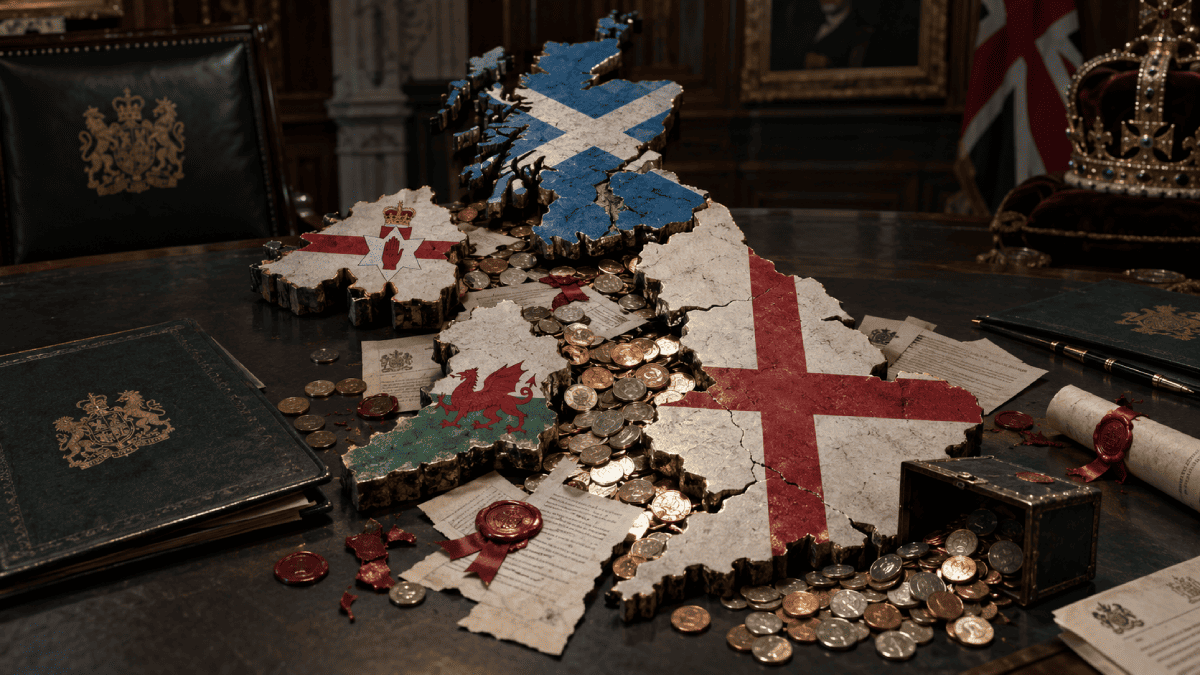
The Tollbooth State And Its Growing Prison Of Stealth Taxes
Sugar, plastic, second homes, hotel beds, boilers, and electric miles: Westminster and its devolved imitators now price almost any lawful choice they dislike. A decade of small levies has turned taxation into a tool for steering behaviour, and the bill keeps growing. The idiotic tourism tax is next.


This week our government of morons confirmed English mayors will be able to tax a night in a hotel. Andy Burnham, who replaced Keir Starmer as Prime Minister in July, regards the Overnight Visitor Levy as a way of moving money and power out of London. He is clearly stupider than his predecessor. The charge will be a percentage of the room price, and the government's response to its own consultation says it does not currently intend to set any national maximum rate.
Once again, socialism cannot produce. It can only redistribute. It is time for this revolting, archaic ideology to be put out to pasture.
Within a day, ten Labour metro mayors wrote to the Chancellor and the Communities Secretary calling 5 per cent a "reasonable ceiling". A letter is not a statute. It binds no future mayor, no mayor from another party, and none of the signatories themselves once the next hole appears in a regional budget.
UKHospitality estimates a 5 per cent charge could add £99 to a week in a London hotel, and warns of 33,000 lost jobs if the levy spreads nationwide. Ministers reply with promises of later buses and cleaner streets.
Both sides are forecasting. The pattern needs no forecast at all.
- Manchester has charged a City Visitor Charge of £1 plus VAT per room per night since April 2023, routed through a business improvement district.
- Edinburgh began charging 5 per cent on the first five nights of stays from 24th July 2026, under the Visitor Levy (Scotland) Act 2024.
- Welsh councils can charge 75p per person per night in hostels and campsites and £1.30 elsewhere from 2027, and the Welsh Government cheerfully describes its creation as an indirect tax which providers may pass on to guests.
- Holyrood has also consulted on a cruise ship levy.
Within a few years, the British state has moved from taxing the hotel, to taxing the guest, to contemplating a charge on the tourist stepping off a gangway.
£2,000 More A Head And No Vote
In 2015/16, HMRC collected £536.8bn. In 2025/26 it collected £937.8bn, a rise of 9.2 per cent in a single year. Across the decade, consumer prices rose by about 40 per cent and the population grew from roughly 65.6 million to 69.5 million (allegedly, likely a 20 million undercounting).
A crude adjustment for both gives a sense of scale.
| Crude inflation and population adjustment | 2015/16 | 2025/26 |
|---|---|---|
| HMRC cash receipts | £536.8bn | £937.8bn |
| UK population | 65.6m | 69.5m |
| Receipts per resident, cash | £8,180 | £13,490 |
| 2015/16 receipts per resident, in 2026 prices | £11,460 | |
| Increase per resident, after inflation | about £2,000 | |
| 2015/16 total, scaled for today's prices and population | about £796bn | |
| Increase in total, after inflation and population growth | about £140bn a year |
This is a rough yardstick rather than an official measure. Children earn nothing, and businesses and higher earners carry a disproportionate share, so no individual resident personally hands over an extra £2,000.
The official measure points in the same direction regardless. The Office for Budget Responsibility puts National Accounts taxes at about 36 per cent of GDP in 2025/26, the highest share since 1951.
A large part of the increase arrived without a single headline rate moving. The personal allowance and higher rate threshold have sat frozen at their 2021 levels, and the 2025 Budget extended the freeze to April 2031.
The OBR expects the freezes to raise an extra £55.5bn in 2030/31 alone.
By then, 5.2 million more people will pay income tax, 4.8 million more will pay the higher rate, and the share of taxpayers on higher or additional rates will have climbed from 15 per cent to 24 per cent.
Nobody voted for any of it, because nobody was asked. The basic rate stayed at 20 per cent in every Budget speech, and the bite grew by itself.
Using Taxes For Social Engineering
Britain has taxed tobacco and gin for centuries. Something different has happened over the past decade. Tax policy has drifted from funding the state towards pricing private choices: what people drink, how they heat their homes, how they travel to work, which car they buy, where they sleep, what their groceries come wrapped in, and what sort of shop they run.
No secret committee was required. Conservative chancellors, Labour chancellors, SNP ministers, Welsh Labour ministers, and council leaders reached for the same instrument independently.
A habit shared by every governing party is far harder to dislodge than any plot. Ministers make no effort to hide the purpose.
- The policy paper on the Soft Drinks Industry Levy states its objective as incentivising less added sugar in drinks. Having reformed the nation's fizzy pop, Whitehall has turned to the milkshake: from 1st January 2028, the sugar threshold falls from 5g to 4.5g per 100ml, and the exemption for sweetened milk-based drinks disappears.
- Plastic Packaging Tax exists to push manufacturers towards recycled content.
- Under the Clean Heat Market Mechanism, a boiler manufacturer can owe £500 for every heat pump credit by which it misses a government sales target calculated from its own boiler business. A company is penalised for selling too much of the product customers want relative to the product ministers prefer.
The Burnham government has now extended the principle from products to entire categories of lawful shop. Its announcement of a pub rates cut promised a review of reliefs for "anti-social businesses, such as vape shops", described elsewhere as firms which "do not make a positive contribution to local communities".
Ministers defended the move on the grounds such shops cause "social harm".
A licensed retailer selling a legal product faces a heavier rates bill because the government dislikes the look of its shopfront.
Tax relief has become a certificate of moral approval, issued from Downing Street.
Whitehall has housed a unit dedicated to steering citizens' choices since 2010, and the habit of treating the public as a behavioural problem long ago escaped its original office.
A levy is a nudge with a bailiff standing behind it.
The Magic Payslip Trick Your Employer Suffers
Employee National Insurance has fallen in recent years, which lets ministers claim the worker has been spared. The employer's side of the ledger tells another story. In 2016/17, employers paid 13.8 per cent above a threshold of £8,112. Today they pay 15 per cent above £5,000.
Corporation tax has travelled the same road. In 2016, companies paid a flat 20 per cent. Today a 19 per cent small profits rate and a 25 per cent main rate come with a band of marginal relief between £50,000 and £250,000 of profit, where every extra pound earned is taxed harder than the pounds above it.
The comparison below applies the 2016 rules and today's rules to the same profits and to today's median full-time salary of £39,039, up from about £28,200 in 2016, so the difference reflects the tax system alone.
| Illustrative business scenario | 2016 rules | Current rules | Change |
|---|---|---|---|
| Corporation tax on £40,000 profit | £8,000 | £7,600 | £400 less |
| Corporation tax on £100,000 profit | £20,000 | £22,750 | £2,750 more |
| Corporation tax on £250,000 profit | £50,000 | £62,500 | £12,500 more |
| Employer NIC, one employee on £39,039 | £4,268 | £5,106 | £838 more |
| Employer NIC, 50 such employees, after Employment Allowance | £210,400 | £244,800 | £34,400 more |
Uprate the old £8,112 threshold for inflation before comparing, and the extra cost per employee rises to roughly £1,290.
The Employment Allowance rose from £3,000 to £10,500, and a firm with fewer than about nine staff on median pay comes out roughly level or slightly ahead. The Treasury has spared the corner shop and loaded the cost onto the business with ambitions to outgrow it.
A fifty-person firm carries around £34,000 a year more in employer contributions than it would under the old structure, before a single sector-specific levy arrives.
The legal payer and the person who bears the cost are rarely the same.
Employer contributions leave the business as smaller pay rises, higher prices, thinner margins, or jobs never advertised.
The payslip stays tidy while the economy around it grows poorer.
Sugar, Plastic, Second Homes, and Heat Pumps
Taxes, duties, levies, and compulsory charges carry different legal labels. The money leaves the same pockets.
Theft in force
| Measure | Type | Year | What it charges |
|---|---|---|---|
| Insurance Premium Tax | Tax | 2016 to 2017 | Buying insurance; rate rose from 9.5% to 12% |
| Apprenticeship Levy | Levy | 2017 | 0.5% of payrolls above £3m |
| Immigration Skills Charge | Charge | 2017 | Up to £1,000 a year per sponsored worker |
| Soft Drinks Industry Levy | Levy | 2018 | Sugar content in soft drinks |
| Remote Gaming Duty | Duty | 2019 and 2026 | Online gambling profits; 15%, then 21%, now 40% |
| Digital Services Tax | Tax | 2020 | 2% of UK revenues of large platforms |
| Carrier bag charge | Charge | 2021 | Doubled to 10p and extended to every retailer |
| Green Gas Levy | Levy | 2021 | Fossil gas suppliers |
| Red diesel restriction | Loss of relief | 2022 | Full fuel duty for construction and many other sectors |
| Plastic Packaging Tax | Tax | 2022 | Packaging with under 30% recycled plastic |
| Economic Crime Levy | Levy | 2022 | Firms supervised for money laundering |
| Residential Property Developer Tax | Tax | 2022 | 4% of large housebuilders' profits |
| Electricity Generator Levy | Levy | 2023 | 45% of receipts above a benchmark price |
| Reformed HGV levy | Levy | 2023 | Lorries, graded by emissions |
| VAT on private school fees | Tax | 2025 | 20% on fees and boarding |
| Statutory Gambling Levy | Levy | 2025 | 0.1% to 1.1% of gambling yield |
| Packaging EPR fees | Compulsory fee | 2025 | £423 per tonne of plastic, among other materials |
| Clean Heat Market Mechanism | Compliance payment | 2025 | £500 per missing heat pump credit |
| VED on electric cars | Loss of exemption | 2025 | Owning an electric car |
| Blackwall Tunnel charge | Toll | 2025 | Driving through a crossing which used to be free |
Legislated or scheduled theft
| Measure | Type | Start | What it will charge |
|---|---|---|---|
| Vaping Products Duty | Duty | 1st October 2026 | £2.20 per 10ml, including nicotine-free liquid |
| Building Safety Levy | Levy | 1st October 2026 | Each square metre of new residential floorspace in England |
| Carbon Border Adjustment Mechanism | Tax | 1st January 2027 | Embedded carbon in imported steel, cement, fertiliser, and more |
| Welsh visitor levy | Levy | 2027 | Overnight stays, per person |
| Soft Drinks Industry Levy extension | Levy | 1st January 2028 | Sweetened milkshakes and milk alternatives |
| Electric Vehicle Excise Duty | Duty | April 2028 | 3p per mile in an electric car |
| Scottish Building Safety Levy | Tax | April 2028 | New residential development in Scotland |
| English Overnight Visitor Levy | Levy | Bill promised | Overnight stays, as a percentage of the bill |
The English stamp duty surcharge on additional homes began at 3 points in 2016 and reached 5 points in October 2024. Foreign buyers were handed an extra 2 points of their own in 2021. Scotland's Additional Dwelling Supplement climbed from 3 per cent to 8 per cent. English councils may add up to 300 per cent to the council tax on a home left empty for ten years, and 211 of 296 English authorities doubled the bill on second homes in 2025. Wales permits a premium of 300 per cent, a quadrupled bill for owning a cottage in the wrong valley. English councils also gained a separate social care precept in 2016, a named channel for raising council tax beyond the ordinary limit.
Motoring has fared no better.
London's disgusting ULEZ now covers every borough, at £12.50 a day for a non-compliant car. So-called Clean Air Zones spread to Bath, Birmingham, Bradford, Bristol, Portsmouth, Sheffield, and Tyneside. The Transport (Scotland) Act 2019 lets councils charge employers for every workplace parking space they provide.
The motorist has been taxed for owning a car, then for burning fuel, then for its exhaust, then for particular tunnels, then for parking at work, and soon for every mile covered.
Charges Which Invade Everyday Life
No single household meets all of these at once. Some depend on location, some on the vehicle, and some have yet to begin. Every one of them can now attach to the ordinary activity beside it.
| Ordinary activity | Charges which can now attach to it |
|---|---|
| A night in a hotel | VAT at 20%, a business improvement district charge in some cities, and a visitor levy in Edinburgh now, Wales from 2027, and English mayoral areas later |
| Driving in a city | Vehicle Excise Duty, fuel duty and VAT or, for electric cars, a mileage duty from 2028, plus ULEZ or Clean Air Zone fees, river crossing tolls, and workplace parking licences where Scottish councils adopt them |
| Insuring the car | Insurance Premium Tax at 12% |
| A packaged grocery shop | Plastic Packaging Tax and EPR fees built into the price, and the sugar levy on qualifying drinks |
| Building a new home | Developer profits tax on large builders and the Building Safety Levy, before the buyer meets stamp duty |
| Hiring a worker | Employer NIC at 15%, the Apprenticeship Levy on larger payrolls, and the Immigration Skills Charge for a sponsored recruit |
| Owning a second or empty home | A 5-point stamp duty surcharge on purchase and a council tax premium of up to 100% in England or 300% in Wales for second homes |
| Keeping the lights on | Supplier levies, including the Sizewell C financing charge collected through bills during construction |
Each item was sold separately, with its own consultation and its own worthy cause.
No government has ever published the combined total, and none has shown the slightest appetite to try.
Encourage It, Mandate It, Then Tax It
In 2023, the government launched a Swap to Stop scheme handing free vape kits to smokers. On 1st October 2026, Vaping Products Duty arrives at £2.20 per 10ml, and it applies even to liquid containing no nicotine whatsoever.
The former smoker who took the state's advice now pays the state for having taken it.
VAT comes off domestic electricity from 1st October, worth about £45 a year off the price cap, funded by cancelling the disgusting Digital ID programme nobody wanted or voted for.
On a single morning, the kettle gets cheaper and the vape beside it gets dearer.
Credit where due: the one scheme scrapped to pay for relief was a national identity database, which is about as good a trade as any British government has offered in years.
The Vehicle Emissions Trading Schemes Order 2023 compels manufacturers to sell a rising share of zero-emission vehicles. Motorists who obliged lost their Vehicle Excise Duty exemption in April 2025, and from April 2028 they will pay 3p for every mile, with a lower rate for plug-in hybrids.
The state herded drivers into electric cars and then fitted a meter to the gate.
Education was exempt from VAT for generations, until January 2025 brought 20 per cent VAT on fees. Parents already paying through general taxation for a state school place their child does not occupy now pay an extra fifth on the place their child does.
Remote Gaming Duty takes 40 per cent of online operators' UK profits from 1st April 2026. A separate Statutory Gambling Levy then charges the same industry to fund research, prevention, and treatment of gambling harm.
The Treasury deplores the vice, taxes its profits heavily, bills the industry for the clean-up, and writes revenue forecasts on the assumption the vice will carry on.
A tax designed to stamp out a habit can succeed as a deterrent or as a source of money. Ministers expect both, and the Treasury budgets for the failure.
None of these things are any area the state has right to interfere in.
Tax/Theft Ideas Return In Another Form
Tax ideas have an unusual habit of coming back under another name or another name. The proposals which failed are as revealing as the ones which passed, because they show what politicians regard as fair game.
| Proposal | What it would have charged | Fate |
|---|---|---|
| Online Sales Tax | Internet retail | Consulted on in 2022, dropped at the Autumn Statement |
| Frequent Flyer Levy | Repeated flights | Considered in the 2021 aviation tax review, not adopted |
| "Latte levy" | Disposable coffee cups | Pushed by MPs in 2018, rejected by the Treasury |
| Sugar and salt tax | £3 per kg of sugar and £6 per kg of salt in food manufacturing | Recommended in 2021, not adopted |
| Probate fee scale | Estates of the dead, up to £20,000 | Proposed in 2017 and labelled a "fee", later abandoned |
| Cambridge Sustainable Travel Zone | Driving in Cambridge | Abandoned in 2023 |
| Greater Manchester charging Clean Air Zone | Older vehicles in Greater Manchester | Replaced by a non-charging plan in January 2025 |
| Welsh vacant land tax | Undeveloped land | Chosen in 2018, revived for consultation in February 2026 |
| Scottish disposable cup charge | At least 25p per cup | Consulted on, not yet in force |
| Scottish Carbon Land Tax | Emissions from land, particularly peatland | Examined in 2026, not recommended for now |
| Sustainable aviation fuel levy | Aviation fuel suppliers | Confirmed in principle, design under consultation |
In 2017, the Welsh Government published a shortlist of four new taxes to explore: vacant land, disposable plastics, tourism, and a levy to pay for social care.
- Tourism tax is now law.
- Vacant land has risen from the grave.
- Plastics were taxed anyway, by Westminster, through a different mechanism.
- The latte levy rejected in London resurfaced in Edinburgh.
- The Online Sales Tax, dropped by the Treasury in 2022, is back on the lobbying circuit, with retail trade bodies urging Burnham to fund a business rates cut through a levy on online sales.
Greater Manchester merits a footnote of its own. Its charging Clean Air Zone was drawn up while the current Prime Minister ran the city region, and it collapsed amid the fury of his own residents.
The lesson absorbed in Downing Street appears to be to hand the pen to other mayors.
Prosperity Cannot Be Levied Into Existence
John Healey delivers his first Budget as Chancellor on 28th October 2026 and by accounts to date, he is a reasonably sensible man. With borrowing costs high and the Prime Minister promising tough decisions, the pressure falls on tax measures as well as spending restraint. The rates of income tax, VAT, and National Insurance remain fenced off by their 2024 manifesto.
A government boxed in on headline rates has every incentive to reach for the quieter tools: frozen thresholds, trimmed reliefs, new surcharges, and levies named after good causes. Each one is small enough to escape a front page and large enough to matter to the firm or family paying it.
Taxation to fund the common business of the state is legitimate, sadly. And it is still theft at gunpoint.
Taxation as a correctional instrument, however, is something else. It casts the citizen as a patient, the minister as a physician, and the price mechanism as a syringe. It treats a second home as a misdemeanour, a bottled milkshake as a public health emergency, a hotel guest as a revenue opportunity, and a boiler manufacturer's order book as a compliance failure.
Some of the money does buy potentially useful things. The Apprenticeship Levy funds training, and the Sizewell C charge helps build a power station. The objection lies elsewhere. Every dedicated levy creates a new tax base; a new compliance department in every affected firm; a new monitoring body in Whitehall; and a new lobby with every reason to see the charge rise and no reason ever to see it fall.
Multiply this by dozens, add a decade of frozen thresholds, and the result is the even more burden on the heaviest tax burden since the Attlee years sitting on a sterile inert economy with remarkably little to show for it.
A government serious about restoring prosperity would begin with four measures.
It would:
- Publish a single annual ledger of every compulsory charge imposed on households and businesses by every tier of government, showing the combined yield and the combined cost of compliance on one page.
- Attach a sunset clause to every dedicated levy, so each one lapses unless Parliament votes to renew it.
- Forbid any tax whose declared purpose is to change lawful personal behaviour, unless the harm is measured, costed, and falls on third parties.
- Require a local referendum before any mayor or council could set a charge with no statutory cap.
A free people pays for its government.
It should never have to pay its government for permission to live as it chooses.