Socialism's Missing Half: How To Make The Wealth It Redistributes
Marxism can tell you who should hold the keys to the factory. It has almost nothing to say about what goes on inside. A century of empty shelves, dead harvests, and rusting refineries followed, and Britain's left would now like another go, starting with the water.
On November 24th 1978, the heads of eighteen households in the Chinese village of Xiaogang met in secret to commit a crime. They agreed to divide the collective's land into family plots, hand the state its quota, and keep whatever remained. Xiaogang was the poorest village in its county, and its families went to neighbouring villages to beg. The men who signed knew they could go to prison.
The next year, Xiaogang's grain harvest matched everything it had grown from 1955 to 1970 combined. The soil had not changed. Nor had the tools, the rain, or the people.
Sixteen years of collective farming had been equalled in a single season by peasants allowed to keep what they grew.
Everything wrong with Marxism can be found in Xiaogang.
It is half a political doctrine, at most.
It can redistribute. Taxation, confiscation, nationalisation, and collectivisation all move wealth from one set of hands to another, and a state with an army can manage the lot before lunch.
The other half, the making of wealth in the first place, has defeated it every time it has been tried, because the doctrine never contained a theory of how wealth gets made.
Its adherents assumed production would carry on by itself once the right people held the deeds. Our leaders in Britain are ignorant and religious about it.
They have never grasped the plain fact underneath every failure: the state itself produces no wealth, and everything it hands out it first took from someone who made it. This isn't a new idea, but it is the central fallacy of a command economy which never stops being repeated no matter how many times the lesson has to be learned through impoverishing entire populations.
Ownership Without A Theory Of Making
Karl Marx understood the productive power of capitalism better than most of its admirers. The Communist Manifesto concedes the bourgeoisie had created "more massive and more colossal productive forces than have all preceding generations together".
He then spent his life explaining who had been robbed along the way.
Capital runs to three volumes on how owners extract surplus from workers. On how a society without owners would decide what to make, in what quantity, and at what cost, it offers next to nothing, and Marx was proud of the omission.
When French critics reproached him for it, he mocked the idea of writing "receipts", the old English for recipes, "for the cook-shops of the future".
Marx himself scorned "vulgar socialism" for treating his cause as a matter of sharing out the proceeds, they say, and insisted distribution follows from ownership of the means of production. He did, and what he put in its place was a change of title deed.
Production itself he left to "the springs of co-operative wealth", which would, he promised, "flow more abundantly".
From where, and through whom, he declined to say.
Marx's contempt for the distributors was the contempt of a man redistributing one level further up. Seizing a factory is redistribution on the largest scale available. The deed moves.
The knowledge of what the place should be making, for whom, and at what price stays exactly as unsolved as it was.
A government can inherit a factory. It cannot inherit the decades of guesses, failures, and corrections which made the factory worth having.
Lenin's Staggering Foolishness
Lenin concluded no recipes were needed. In The State and Revolution, written in 1917, he explained how capitalism had already reduced the accounting and control of an economy to tasks any literate person could perform: supervising, recording, "knowledge of the four rules of arithmetic, and issuing appropriate receipts".
Society would become:
a single office and a single factory.
Engineers, he added:
will work even better tomorrow in obedience to the wishes of the armed workers.
Marx would not write receipts for the future. Lenin thought the future required only the other kind.
The entire error sits in one line of the same chapter. With "the fullest confidence", Lenin announced the expropriation of the capitalists:
will inevitably result in an enormous development of the productive forces.
Take the factory and output must rise. No mechanism, no explanation, only the word "inevitably" doing the work of an entire economics department.
He was spectacularly wrong.
By 1920, large-scale industry had cratered to 13 per cent of its 1913 level, and iron and steel at 4 per cent.
War explains part of this. It does not explain the peasants, who cut the sown area by 34 per cent sooner than grow food for the requisition squads.
In March 1921 Lenin gave up, replacing seizure with a fixed tax and letting peasants sell their surplus.
By 1928, output had recovered to its pre-war level.
The first Marxist state had needed less than four years to discover it could not eat receipts, and went back to the market to stay alive.
Stalin closed the market again, and the bill for his decision was paid in blood and corpses.
Output Is Not Wealth
The regime's admirers point to the steelworks, the rockets, and the defeat of Hitler. Nobody sensible denies a state can make things. A state with enough guns can make almost anything, in any quantity, for as long as the population lasts. The Pharaohs made pyramids.
Wealth is a harder test. Did the thing made leave society with more than it used up?
Only a free price can answer, and this is where the missing half of the doctrine does its damage.
- Ludwig von Mises saw it in 1920: abolish private ownership of capital goods and you abolish the prices which reveal what a ton of steel is worth compared with everything else the steel could have become.
- Friedrich Hayek added the next piece in 1945: the knowledge an economy runs on is scattered through millions of heads, much of it never written down, and prices are how it travels.
- János Kornai, a Hungarian who studied the system from the inside, supplied the last piece: a state firm which expects to be rescued has no reason to stop failing. A government can abolish the consequences of failure. It cannot abolish the failure.
Yegor Gaidar, who as Russia's acting prime minister inherited the wreckage, set out the result in figures which ought to be carved above the door of every university politics department.
| Soviet vs USA | Multiple |
|---|---|
| Iron ore mined | 8 times |
| Pig iron | 3 times |
| Steel | 2 times |
| Machinery | About the same |
| Grain harvesters | 16 times |
| Grain harvested | Less |
The USSR became the largest steel producer on earth, while American intelligence recorded steel shortages across its economy.
Each stage of the chain burned wealth while the statistics recorded a triumph. Sunglasses too dark to see through and raincoats which could not be unfolded went into warehouses and counted towards the quota and the national accounts all the same.
William Easterly and Stanley Fischer later found Soviet growth from 1960 to 1989 was the worst in the world once investment and education were taken into account.
In September 1963 the Soviet Union entered the Western grain market as a large-scale buyer for the first time, purchasing wheat from Canada and Australia. Meanwhile the tiny private plots the regime grudgingly tolerated, slightly over 3 per cent of sown land, were growing 64 per cent of the country's potatoes and producing 66 per cent of its eggs in 1966.
The peasant working for himself in the evening was outperforming the plan working all day.
Mao Zedong took the same theory and removed the brakes.
The Great Leap Forward of 1958 was a campaign to overtake Britain in steel production. Millions stopped farming to tend backyard furnaces whose output was useless, and at least twice the price of the proper article.
Frank Dikötter puts the death toll at a minimum of 45 million.
Our own "great leap forward" of "Net Zero" also destroyed British steelmaking.
No clearer demonstration exists of the gap between hitting a production target and creating wealth.
Germany And Korea Ran the Experiment Twice
Socialists endlessly complain the religion of Marxism has never had a fair trial at establishing the kingdom of heaven on Earth. It has had nearly fifty now, but two, under conditions a laboratory would envy: one people, one language, one history, and then a line on a map.
| Before the divergence | After | |
|---|---|---|
| East Germany compared with West Germany | Over 90 per cent of West German industrial productivity before the war | About one third in 1989 |
| North Korea compared with South Korea | Similar income per head until the mid-1970s | 3.4 per cent of South Korean income per head in 2024 |
The West/East German figures come from a paper published by the Friedrich Ebert Foundation, the political foundation of German social democracy (hardly a nest of Hayekians).
The South/North Korea one comes from the Bank of Korea, which has to estimate it because Pyongyang keeps its books to itself.
The Soviets stripped East German factories after the war, and apologists offer this as the explanation. The looter was the workers' state.
East Germans had a car, the Trabant, built by a state monopoly. The waiting list ran to between 12 and 15 years, and used cars sold for more than new ones. Those second-hand prices were a market screaming through a locked door.
The planners had fixed the price of a car and had no idea what a car was worth.
Backwardness, Sanctions, And Other Alibis
Each failure comes with its alibi, and each alibi has been tested. The excuses are always there and it is never the religion of socialism to blame, as it perfectly explains every problem in the world.
“Russia was too backward”
Marx expected revolution in advanced industrial countries, the argument runs, and it arrived among peasants. East Germany disposes of this in a sentence.
Communism was handed a highly industrialised region with a skilled workforce and reduced it to the Trabant.
“Sanctions did it”
Venezuela sits on about 303 billion barrels, the largest reachable reserves in the world. After the strike of 2002 and 2003, Hugo Chávez dismissed nearly 18,000 employees of the state oil company (40 per cent of its workforce) and filled the gaps with people chosen for loyalty to the revolution.
American financial sanctions arrived in 2017.
By December 2017, output had already fallen by more than 1.1 million barrels a day in five years, and the industry was on its knees before Washington laid a finger on its oil exports. Production hit 337,000 barrels a day in June 2020, down from nearly three million.
An oil reserve is sludge under a jungle until somebody knows how to get it out, and Chávez had sacked them.
Within a month of American forces seizing Nicolás Maduro, the National Assembly voted unanimously on January 29th 2026 to let private companies operate oil fields again, dropping a founding principle of the movement which had run the country since 1999.
Cuba's sugar harvest reached 8.5 million tons in 1970. It was still 1.3 million tons in 2019. The harvest of 2024 to 2025 came in below 150,000 tons, less than the island managed in 1899 after three years of war, and Cuba now imports sugar.
The American embargo has stood since the early 1960s. It did not suddenly learn to destroy cane.
The sanctions alibi also concedes the whole case.
A system which collapses when capitalists refuse to trade with it has admitted where the production was coming from.
“It was never real socialism”
Every one of these regimes put the means of production, or as much of them as it could reach, into state hands, which is what the word meant until the results came in.
The only socialism with a clean record is the one nobody has built.
“Workers should own it, not the state”
With nobody in the firm guarding Yugoslavian capital, workers' councils paid the profits out to themselves in wages. The country finished in hyperinflation of 50 per cent a month, with self-management abolished by its own government.
Co-operatives which survive, such as those of Mondragon in the Basque Country, do so by selling to customers at market prices and going bust like anyone else. Fagor (its flagship) filed for bankruptcy in 2013 after Mondragon's own council ruled it no longer met market needs.
Such a firm is a capitalist enterprise with an unusual list of shareholders.
“Capitalism wastes resources too”
Constantly. Its mistakes bankrupt the people who made them and release the steel, the land, and the labour to someone with a better idea.
A plan's mistakes are protected by the people who made them, who also run the police.
Nordic Countries Rejected Socialism
The Nordic countries are rich, they tax heavily, and they are forever being recruited to a cause they reject. In 2015 Lars Løkke Rasmussen went to Harvard to say so himself:
Denmark is far from a socialist planned economy. Denmark is a market economy.
Social democracy is the half of the doctrine which knows it is a half. It lets private firms make the wealth and then taxes it, which is why it has not ended in queues.
Whether the tax is wise is a separate fight.
In the 1970s Sweden's unions proposed the Meidner plan (Rehn–Meidner model), which would have compelled firms to issue shares to union-run funds until workers held a majority of the economy within decades, one of the few serious attempts in an advanced country to socialise the means of production.
Between 80,000 and 100,000 people marched against it in Stockholm on October 4th 1983.
A diluted version limped along until it was abolished in 1991, and the whole episode helped push Sweden towards the market.
Norwegian Success Vs Venezuelan Disaster
Venezuela owned its oil company and ruined it. Norway owns 67 per cent of Equinor and grew rich. Surely ownership works?
Norway's oil was found by the American firm Phillips Petroleum, which in 1969 was ready to give up after a run of failures and drilled one last well because its rig contract obliged it to.
The state behaves as an investor and a tax collector, and the company runs on commercial lines.
The proceeds go into a fund which holds about 1.5 per cent of the world's listed companies, with Nvidia, Apple, and Alphabet at the top of the list.
The socialist's favourite state asset is a share portfolio in world capitalism.
Norway is a nation of rentiers with excellent manners, and a Marxist citing it as a triumph of public ownership is pointing at something they have no understanding of.
AI, Megacorps, & Advanced Luxury Communism
Planning, we are now told, has been vindicated by capitalism itself. In The People's Republic of Walmart, socialists Leigh Phillips and Michal Rozworski observe how giant corporations plan internally on the scale of whole nations, and conclude a planned economy is now feasible.
They cite department store chain Sears as the cautionary tale of a firm which brought in internal markets and collapsed.
Walmart plans inside a market: it knows the prices outside vendors offer, as even the left-wing American Prospect pointed out in its review, and it sells to customers who can walk across the car park.
Its data is a record of what people did with their own money.
Sears proves the point from the other direction: it made a stupid decision and the market killed it.
The Soviet equivalent of Sears would have received a medal and a larger allocation of steel.
Paul Cockshott and Allin Cottrell have argued since 1993 the planners were merely short of processing power, and artificial intelligence has won the claim a new audience.
The Soviets tried it.
In 1970 the cyberneticist Viktor Glushkov took a plan for a nationwide computer network to run the command economy to the Politburo.
It died in a stalemate between ministries, as anything would in an economy where politics settled every dispute.
A price is a fact created when people bid with their own money for things they want more than other things.
Abolish the bidding and the fact does not exist to be collected.
The fastest machine ever built cannot read a number nobody has set. Feed it the preferences of the Politburo and it will commit the Politburo's errors at the speed of light.
DARPA, Telepathic Spies, Mechanical Elephants
Mariana Mazzucato argues the state is the true entrepreneur behind the internet, GPS, and the touchscreen. Governments certainly fund research. Rich patrons have always paid for things.
The American agency she celebrates (DARPA) also spent millions on telepathic spies and mechanical elephants, and it had no more means than anyone else of knowing in advance which was which.
The sorting was done afterwards, by firms and customers, when a government network became a thing people would pay for.
The state wrote the cheque.
The same goes for the appalling National Health Service, a religion British socialists cite like a holy relic.
Paying a nurse spends money someone else made, and the Office for National Statistics reports healthcare productivity 5.8 per cent below its 2019 level in 2025.
A state can buy useful things with the proceeds of a productive economy. Spending those proceeds well or badly is a matter of competence.
Neither adds to the pot.
Politicians Who Don't Read And Can't Learn
Labour carried the error in its rulebook for 77 years. Clause IV, adopted in 1918, promised workers "the full fruits of their industry" through "common ownership of the means of production, distribution and exchange".
Tony Blair wisely removed it in 1995. The idea has outlived the clause.
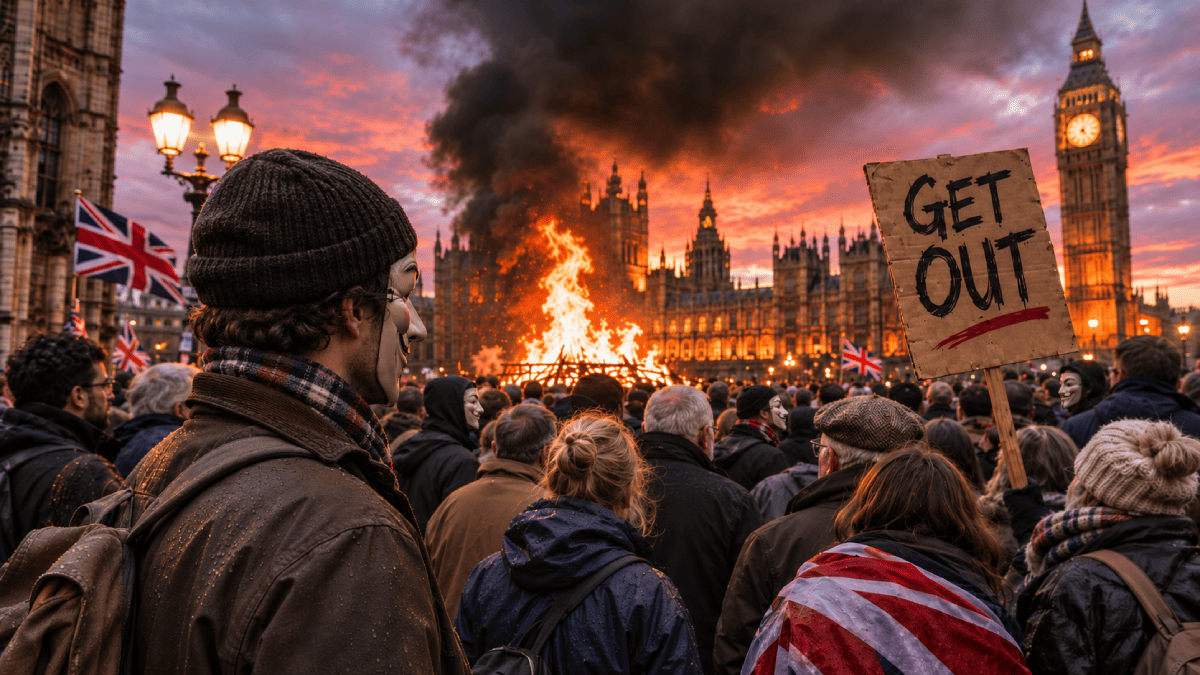
Insane Zarah Sultana said at the hilarious Your Party's founding conference in November 2025 the aim should be to "nationalise the entire economy".
Andy Burnham used his first conference speech as Prime Minister on September 29th to promise repeal of the ban on public ownership of water companies.
The Greens want the water firms taken at once, with no compensation for shareholders.
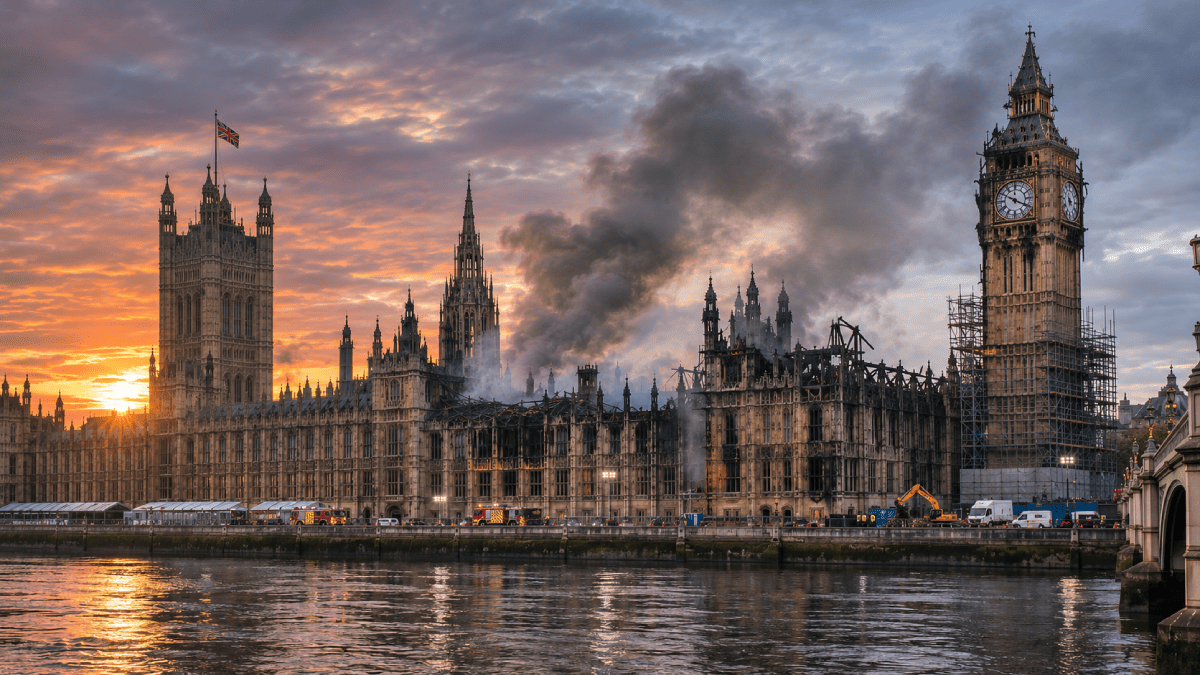
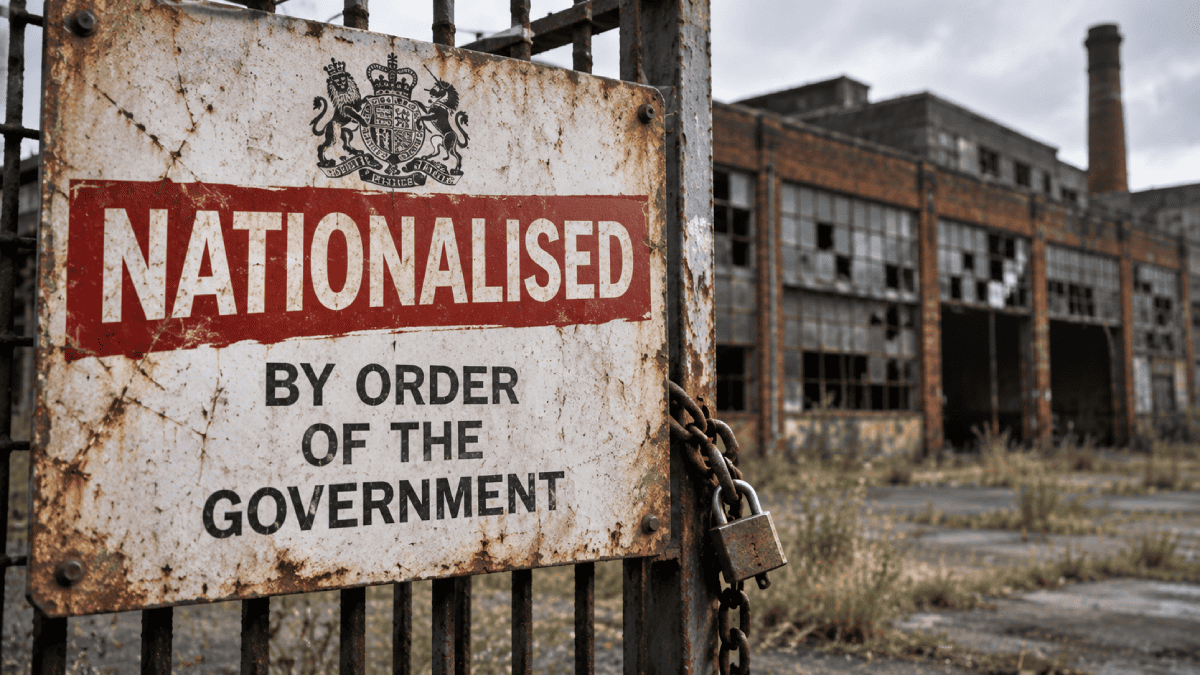
A confiscation of this kind would move the losses from one set of people to another. It would not lay a metre of pipe.
Britain has a live demonstration running at Scunthorpe.
Jingye (the Chinese owner of British Steel) said it was losing about £700,000 a day. The state took operational control in April 2025 and nationalised the company in July 2026, and the National Audit Office puts the cost at about £1.3 million a day.
In September the Public Accounts Committee was still demanding a credible plan for making the company pay its way.
The defence case for keeping Britain's last two blast furnaces alight turns the bill into an insurance premium against a war.
It does not turn it into wealth, and a premium is no industrial strategy.
The furnaces are the same furnaces. The ore costs what it costs.
Only the name on the deed has changed, and Scunthorpe has learned what Xiaogang learned, in reverse.
Power Over A Thing Is Not Knowledge Of It
Aristotle's word for the misjudgment at the heart of a tragedy was the same as the Bible's for sin. Hamartia: an error which sets the ruin in motion, made by someone who need not be wicked.
Marxism's hamartia is to believe a state which can take a thing can also make one. Plenty of its early believers were sincere. Sincerity has never grown a potato.
A doctrine which possesses only the power to take has one response to failure, which is to take more. When the plan misses, the shortfall must be somebody's fault: the kulak, the wrecker, the saboteur, the foreign bank.
Leon Trotsky, who helped build the machine before it hunted him down, described where this ended.
In a country where the state is the sole employer, he wrote, losing your job meant "death by slow starvation", and the old socialist maxim had been replaced by a new one: "who does not obey shall not eat".
The firing squad and the labour camp were no accident of Stalin's temperament. They are what a state reaches for when it has promised abundance and owns nothing but force.
The eighteen farmers of Xiaogang had read neither Mises nor Hayek. They knew something Lenin did not: a man who keeps the harvest will plant it properly.
Their illegal contract was national policy by 1982.
Today, on Beijing's own count, private firms produce more than 60 per cent of China's output and 80 per cent of its urban jobs.
The Communist Party has kept the red flag, the secret police, and the monopoly on power.
The theory it quietly left in a field in Anhui, where eighteen hungry men had buried it.