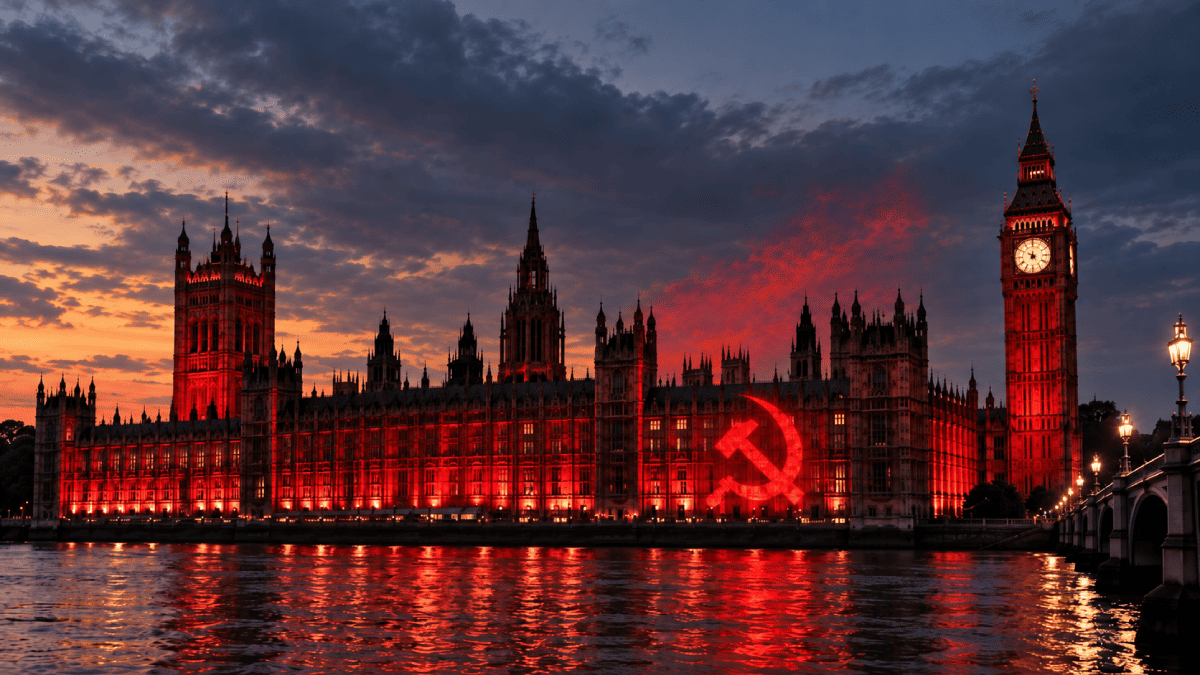
Project Meridian: 7 Sovereign British Companies Owning What Everyone Needs
America rents intelligence. China gives it away. Britain needs a third strategy: ownership of the rare machines without which larger powers cannot build, ship, energise, or modernise. Seven permanent companies could turn neglected regions into seats of massive industrial power.

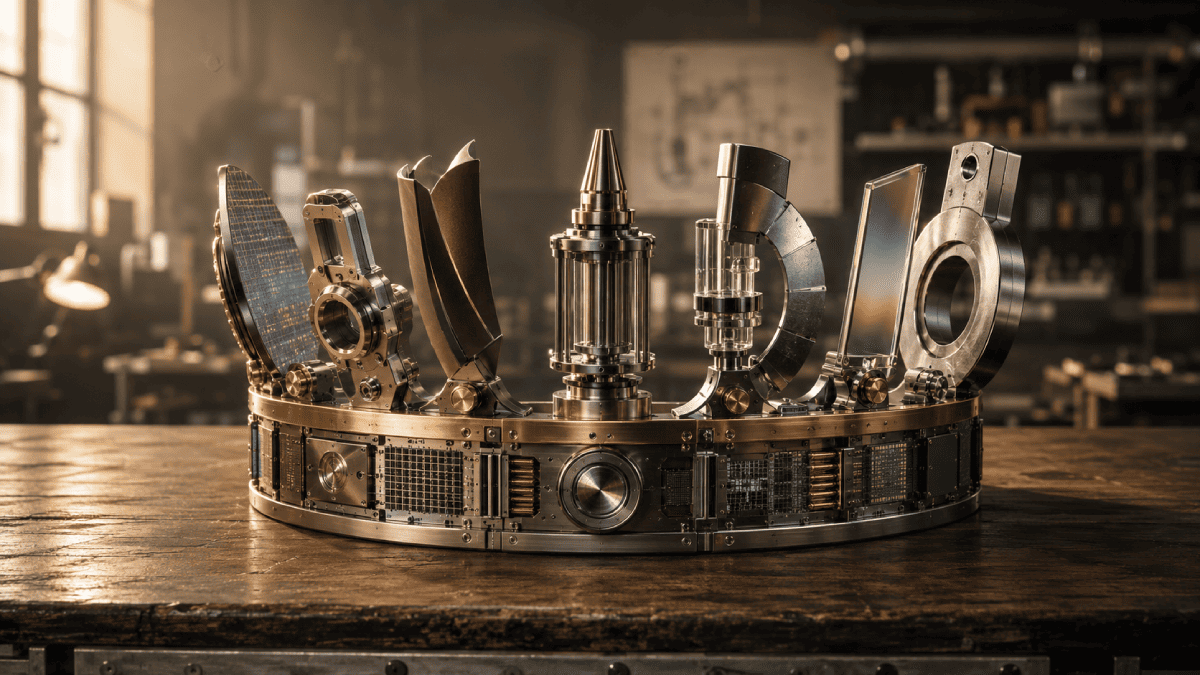
On 27 July 2026, Moonshot AI released the weights of its ChatGPT competitor known as Kimi K3. The Chinese model contains 2.8 trillion parameters with a mixture of 896 experts, uses 104 billion during each operation; accepts text, images, and video; and can process a million tokens at once. Unlike a closed commercial service, its machinery of inference can be downloaded, installed, altered, and operated beyond the owner’s servers. Anyone can run it for themselves.
It is more powerful than Grok, and in some tests it out-performs both OpenAI and Anthropic.
The American strategy is enclosure. The strongest models remain concentrated inside a few corporations. Customers rent access through cloud services and programming interfaces. The supplier keeps the weights, controls the price, sets the conditions, and can withdraw the service.
The Chinese strategy is distribution. Release a capable AI model, encourage thousands of foreign developers to build upon it, make Chinese research part of their permanent infrastructure, and erode the subscription income and technical authority of the American laboratories. A free model can be a more aggressive export than a subsidised steel bar.
Britain needs a third position.
We invented AI and we can produce these models all day long, forever. We can also build data centres everywhere if we like, and ruin the countryside. Competing in this battle of empires with America and China at scale is a foolish endeavour.
We should own the narrow industrial processes on which all strategies eventually depend.
Kimi K3 does not make the semiconductor factory which produced its processors. Open weights do not manufacture memory, construct data centres, separate rare-earth elements, propel merchant ships, carry liquefied gas, or forge nuclear pressure vessels. China has succeeded in producing formidable models despite restrictions on its access to the most advanced Western semiconductor machinery. It is also spending heavily to escape those restrictions: the very constraints which have required and produced the acceleration.
The lesson from Kimi K3 is not industrial chokepoints have met an end. Their useful life is finite. A determined state searches for workarounds, redesigns products, improves older processes, recruits foreign specialists, and creates substitutes. Control need not last for ever. Fifteen years of indispensability can redirect factories, secure alliances, extract concessions, and transform the country which owns it.
No single gate is sufficient. Britain should possess them all.
There is a case for strategic state investment. But not through quangos or as part of a civil service program. We have done this well many times over, then screwed it up. We know how to get it right. The issue is keeping hold of what we finance and build; and keeping it out of the hands of meddling politicians with their bureaucrat underlings.
The EUV Gate And The Hand On It
The most famous example sits in Veldhoven, in the Netherlands. ASML manufactures extreme ultraviolet lithography machines, known as EUV systems. These machines print the microscopic patterns required for the world’s most advanced computer chips. No rival sells a commercial equivalent.
ASML is now so powerful America will move military assets to ensure none of its EUV parts or technology escape to China.
The machine creates EUV light by firing powerful lasers at droplets of molten tin. The resulting plasma emits light with a wavelength of 13.5 nanometres. Since this light is absorbed by air and ordinary glass, the entire optical path must operate inside a vacuum and use mirrors rather than lenses. Those mirrors carry alternating layers only atoms thick. Minute imperfections can destroy the projected pattern.
The system must then move a silicon wafer at high speed while preserving accuracy measured in nanometres. Sensors detect errors. Software corrects for distortions in the mask, optics, wafer, and chemical coating. The machine must repeat the process reliably enough for a fabrication plant costing tens of billions of pounds to produce millions of working chips.
ASML does not possess every part of its own chain. Its essential optical systems come from Zeiss in Germany. American technology, Japanese materials, specialist suppliers, export law, and allied policy all affect what it can build and whom it can serve.
The Netherlands owns the gate. Washington has considerable influence over the hand placed upon its latch.
Dutch export restrictions on advanced semiconductor equipment have repeatedly been run with American attempts to limit Chinese access. The affair exposes a distinction which Britain must design around from the first day. Industrial concentration creates bargaining power only where the state also controls ownership, intellectual property, servicing, finance, export permission, critical suppliers, and the legal authority to continue operating.
A British equivalent which depended upon annual Treasury grants, American software keys, German replacement parts, a foreign-owned parent, and ministerial permission to sign each contract would provide employment without sovereignty.
The awkward case cannot be avoided.
Suppose Britain has built Northlight Lithography. India wishes to buy two machines. Washington objects because the proposed fabrication plant may supply a country outside an American control regime. Britain must decide whether its own licensing rules permit the sale.
Close relations with the United States make consultation sensible. They cannot amount to automatic obedience. If Parliament has authorised the destination, the equipment contains no American-controlled component, and the sale does not endanger Britain, Northlight should proceed.
Otherwise Britain will have spent £25 billion building a Dutch predicament on Teesside.
Five Eyes cooperation should provide components, research, intelligence, markets, and mutual protection. It should not confer an unpublished American veto over British-owned machinery. Britain must sometimes refuse China, sometimes refuse America, and sometimes refuse both.
Without this freedom, the seven companies become expensive branch offices of somebody else’s policy.
7 Permanent Specialist British Companies
The Meridian programme would establish seven commercial companies with permanent parliamentary ownership: names here are examples, obviously. They are employed to reify the proposal and bring it to life.
| Company | Capability | Principal Location | Indicative Capital |
|---|---|---|---|
| Northlight Lithography | EUV lithography and ultra-precision optics | County Durham, Teesside, and western Scotland | £18bn to £30bn |
| Humber Magnetics | Heavy rare-earth separation and sintered permanent magnets | Saltend and the Humber | £2.5bn to £4.5bn |
| Belfast Containment | Membrane systems for LNG carriers | Belfast Harbour area | £600m to £1.2bn |
| Lagan Cryogenics | Submerged LNG cargo pumps | Belfast Harbour area | £400m to £800m |
| Clyde Marine Power | Low-speed engines for large merchant ships | Inverclyde | £1.5bn to £3bn |
| Cambrian Deposition | OLED and microdisplay production machinery | Newport and South Wales | £2bn to £4bn |
| Sheffield Nuclear Forgings | Ultra-large civil and naval nuclear components | Sheffield and South Yorkshire | £4bn to £7bn |
The ranges are wide because false precision would be absurd. Our estimates below are calculated in conservative terms from broad metrics to discuss viability rather than function as an OBR white paper.
Northlight could reach a useful EUV process after £18 billion. It could also discover, after eight years, its light source destroys mirrors too quickly, its stages cannot achieve commercial throughput, or its pilot fab produces ruinous yields. Technical failure could push the cost beyond £30 billion – and fund the next generation of it.
Parliament should authorise a maximum capital envelope of £50 billion over fifteen years. Funds would be released against technical milestones assessed independently of ministers and the companies themselves.
At the upper limit, annual capital spending would average £3.3 billion. Britain spends more than £1.3 trillion through the public sector each year. A quarter of one per cent would create seven permanent industrial positions and perhaps 22,000 to 36,000 direct jobs.
Employment is a welcome consequence. The principal purchase is allocation power.
During normal years, the companies would compete, export, licence, service, and conduct research. During disruption, they would decide who receives scarce equipment, production slots, replacement parts, engineering support, certification, and permission to manufacture.
Queue position is political power.
Northlight: EUV & The AI Chip Boom
ASML began in 1984 as a joint venture between Philips and ASM International. The company had around 100 employees and entered a market already occupied by larger and better-established rivals.
Among its first engineers was Martin van den Brink, who joined at the company’s creation and eventually became president and chief technology officer. ASML credits him with a central role in its technological development. Another early figure, chief scientist Steef Wittekoek, helped convert a clumsy hydraulic machine into a commercially credible wafer stepper and developed the alignment system needed to place each projected pattern accurately.
The human history matters because EUV did not emerge from a government deciding to purchase an impressive machine and receiving one on schedule.
Engineers spent careers advancing one part of the system. Suppliers built techniques useful to one demanding customer. Semiconductor manufacturers tested machines, reported failures, altered their processes, and financed further development. ASML improved successive generations while surviving the commercial weakness of its early years.
Northlight would need the same continuity.
County Durham and Teesside should host the light source, vacuum systems, wafer stages, mask stages, controls, software, clean-room assembly, system integration, supplier qualification, and a pilot semiconductor plant. Western Scotland should host mirror substrates, atomic-scale coatings, interferometry, lasers, and optical metrology.
No single building could contain the required expertise. Northlight would resemble a federation of specialist works joined by one design authority.
The first workstream would pursue a dependable sovereign exposure machine capable of useful advanced production. It need not equal the newest ASML system on its first day. Lower throughput may be acceptable where the customer values guaranteed access more than the lowest unit cost.
The second workstream would pursue the successor to whichever machine currently leads the market.
A twelve-year programme aimed solely at copying today’s EUV equipment could deliver obsolescence in excellent condition. Northlight must fund alternative light sources, new resist chemistry, different mask methods, computational techniques, improved optics, and any credible technology capable of bypassing the existing route.
Its target would move by design.
ARIA should finance rival approaches outside Northlight’s management chain. Northlight’s engineers would test and industrialise whichever survived. Parliament would fund the destination, not freeze the route.
The company’s leverage would emerge when foreign supply failed or became politically restricted.
Taiwan, South Korea, Japan, India, Europe, and the United States would seek machines, optical components, upgrades, and service teams. Northlight should rarely sell them for cash alone.
A fabrication plant receiving two British systems could be required to reserve ten per cent of its wafer output for British-designed chips throughout the machines’ service lives. A Japanese customer might provide advanced materials knowledge. A Korean agreement might guarantee memory production. An Indian installation might include British equity, local training for British engineers, and controls on onward transfer.
The transaction would bind foreign manufacturing capacity to Britain for decades.
This is more valuable than selling an expensive box and admiring the export statistics.
Sheffield’s Steel For Nuclear Reactors
Northlight begins with laboratories and ambition. Sheffield begins with a company. Sheffield Forgemasters has produced large, high-integrity steel components for generations. The Ministry of Defence acquired the business in 2021 and is now financing a £1.3 billion recapitalisation, including a new machine shop and a 13,000-tonne forging line. The company’s existing facilities can produce forgings weighing up to 300 tonnes.
This provides the nucleus for Sheffield Nuclear Forgings.
A nuclear pressure-vessel component appears less exotic than an EUV machine. It is a great piece of steel, not a chamber filled with lasers and atomic mirrors. It is the pressure vessel containing the nuclear reactor coolant, core shroud, and the reactor core.
Its apparent simplicity conceals a process in which one internal defect can ruin hundreds of tonnes of work. It's not sexy. But it's needed.
Large ingots cool unevenly. Impurities migrate. Gas becomes trapped. Voids form. Grain structures vary between the surface and centre. The forging process must deform the material deeply enough to close defects and create uniform properties without introducing damaging stresses.
Heating and cooling an immense component becomes an engineering discipline of its own. The exterior changes temperature long before the centre. Poorly controlled treatment can leave residual stress or brittle regions which remain hidden until inspection.
Japan Steel Works became a reference supplier because it combined very large ingots, huge presses, specialist heat treatment, machining, inspection, and decades of nuclear qualification. A reactor vendor cannot replace such a supplier with an ordinary steelworks after receiving disappointing news from its purchasing department.
The paperwork is also part of the product.
Every heat, sample, treatment, machining operation, test, and inspection must remain traceable. Regulators may ask for records decades later. A forge with excellent machinery but no approved history may wait years before its component can enter a reactor.
Sheffield should expand beyond the present defence recapitalisation into ultra-clean melting, remelting, additional heat treatment, quenching, deep-bore machining, large vertical lathes, ultrasonic examination, destructive testing, and civil nuclear qualification.
The first capital tranche should be £4 billion over ten years, including the recapitalisation already under way. Additional money should follow demonstrated qualification and demand.
Unlike Northlight, Sheffield could gain international leverage well before 2040.
A foreign reactor programme awaiting one pressure-vessel ring may face years of delay and billions of pounds in financing costs. During a shortage of Japanese, Korean, or continental capacity, Britain could exchange a forging slot for participation in the reactor project, uranium supply, fuel agreements, British engineering contracts, naval cooperation, or adoption of a British reactor design.
The component may account for a small portion of the reactor’s total price. Control over its delivery date can decide the timetable of a national energy policy.
5 Smaller Technology Gates
The other five companies would be cheaper, narrower, and capable of reaching useful output sooner.
Humber Magnetics: Rare Earth Magnets
Rare-earth minerals are not useful merely because they have been dug from the ground. They are used in every piece of advanced engineering on planet Earth. The strategic purification process separates chemically similar elements, converts them into metals and alloys, reduces the material to carefully controlled powders, matches the particles in a magnetic field, presses them, sinters them, machines them, coats them, and certifies the finished magnets.
China dominates this chain, and the supply.
We don't have any on the Britannic Isles, but the overseas territories could be useful in building a new industry.
The magnets with these rare earth elements sit inside aircraft actuators, missile systems, industrial robots, medical machinery, offshore turbines, electric motors, sensors, and pumps. A component costing a few pounds can prevent completion of equipment worth millions.
Saltend Chemicals Park near Hull offers port access, chemical infrastructure, water treatment, energy, industrial land, and a natural route for Australian feedstock. Humber Magnetics would combine separation, metal and alloy production, magnet manufacture, recycling, and customer qualification on one site.
A Chinese interruption would send German manufacturers, Japanese industrial groups, European defence companies, and wind-turbine producers into the same queue. Britain could exchange allocations for motor plants, defence contracts, technical knowledge, long-term mineral supply, or political cooperation.
The customers would finance substitutes immediately. They would redesign motors, qualify alternative magnets, and build competing plants. Britain should expect them to do so.
Humber’s advantage would rest upon moving faster, embedding itself inside customer designs, improving recycling, developing alloys which use fewer scarce elements, and preserving years of operating knowledge. Monopoly would remain a temporary strategic position rather than a divine right.
Temporary power still spends.
Belfast Containment And Lagan Cryogenics: LNG Transit
Liquefied natural gas travels at approximately -163 degrees. A carrier must hold the liquid while its steel hull flexes, waves move the cargo, insulation contracts, and internal loads strike the tank walls.
France’s GTT controls the leading membrane designs used in modern LNG carriers. The commercial moat lies in testing, approved materials, installation methods, structural calculations, classification, repair knowledge, and an operating record accepted by shipowners and insurers.
Japan’s Shinko supplies specialist submerged pumps which transfer LNG from ship to terminal. The motor and pump operate inside the cargo under extreme cold. Materials contract at different rates. Ordinary lubrication becomes unusable. Electrical insulation, bearings, cavitation, heat, and ignition risk must all be controlled.
Belfast Containment and Lagan Cryogenics should share a publicly owned testing estate while remaining separate companies.
The location requires unusual care.
Titanic shipbuilders Harland & Wolff entered administration in 2024, and Navantia UK (owned by the Spanish state), completed its acquisition of the Belfast and associated yards in January 2025. Britain cannot base sovereign companies upon an assumption of permanent control over another state’s property.
A new British cryogenic estate should therefore occupy secured harbour land with its own laboratories, intellectual property, test tanks, production tools, and access rights. Navantia could bid for fabrication contracts. It would not own the technology or control entry to the site.
During a disruption, Asian shipyards, Gulf exporters, American and Australian gas producers, European importers, and vessel owners would require British containment licences, replacement pumps, repair teams, and certification.
Access could secure emergency gas cargoes, reserved carrier capacity, British ownership in fleets, long leases at foreign ports, and naval support agreements.
One British pump may keep a foreign carrier earning. One British licence may permit an entire shipbuilding programme to proceed.
Clyde Marine Power: Engine Design
Large container ships, tankers, and bulk carriers usually rely upon enormous low-speed two-stroke engines connected directly to the propeller.
Everllence, the company formerly known as MAN Energy Solutions, develops the B&W engine range. Other important designs come from WinGD and Japanese suppliers.
The moat lies far beyond the ability to cast a cylinder.
A successful engine must burn difficult fuels for weeks at sea, manage lubrication across immense surfaces, meet emissions limits, tolerate varying loads, integrate with the propeller and hull, and remain serviceable in distant ports.
New fuels introduce further problems involving ignition, corrosion, methane leakage, injection, safety, and fuel switching.
Clyde Marine Power would establish its design authority, test engines, combustion work, fuel systems, software, and prototype production in Inverclyde.
It could licence manufacture to foreign engine builders while retaining control over critical components, software, servicing, upgrades, and fuel conversions. During disruption, British licences could secure emergency charter rights, strategic sealift, UK-made components, sanctions compliance, and training for British crews.
Britain already dominates portions of maritime insurance, finance, law, and classification. Owning a propulsion design would place machinery beneath the paperwork.
Cambrian Deposition: OLED Microdisplays
Canon Tokki’s machines manufacture organic light-emitting diode (OLED) displays by depositing extremely thin organic layers inside vacuum chambers.
The principle can be reproduced in a university laboratory. Profitable mass production, however, presents a different problem.
Fine metal masks sag under their own weight and expand under heat. Red, green, and blue materials must pass through them with minute errors. Dust, moisture, oxygen, vibration, or uneven temperature can destroy pixels across an expensive panel.
A system can produce a fine demonstration and remain commercially worthless because its yield is too low.
Cambrian Deposition would build vacuum systems, material sources, mask handling, precision stages, inspection, encapsulation, and a pilot production line in Newport and South Wales. The region already possesses semiconductor manufacturing, clean-room skills, and related research.
Its first customers should come from aviation, medicine, defence, scientific instruments, and high-resolution microdisplays. These fields value secure access and performance more highly than the consumer market values the cheapest phone screen.
During an interruption in Japanese or Korean machinery, Britain could exchange equipment for guaranteed panel supply, equity in overseas factories, materials knowledge, or research access.
Investors Cannot Build Them
All seven companies have plausible global customers as almost entire operating monopolies. None presents a rational private investment at inception in the private market for obvious reasons. But the monopoly at sovereign level is the point.
Northlight may consume capital for fifteen years before selling a useful machine. Sheffield may build equipment years before securing civil nuclear qualification. Belfast may complete a full-scale containment system before any shipowner risks a vessel upon it.
Technical failure is not an exceptional scandal in such work. It is the development process.
Mirrors fail. Pumps cavitate. Magnetic alloys corrode. Engines crack. Organic layers contaminate. Giant ingots reveal defects after months of processing. A serious programme must expect failure, learn from it, and continue funding the engineers responsible for discovering it.
Private markets struggle with a project which consumes billions before revenue, possesses no secure timetable, and can be attacked by entrenched foreign suppliers.
An foreign incumbent supplier may reduce prices, offer favourable long-term contracts, acquire a critical subcontractor, or flood the market while the British entrant is weakest. The new company may record losses precisely because its existence forced foreign suppliers to become cheaper and more cooperative.
Britain receives the strategic benefit. Private shareholders receive the loss.
The companies must also preserve spare capacity. An ordinary business closes an underused line and dismisses idle specialists. A sovereign chokepoint keeps the equipment maintained and the workers trained because unused capacity becomes valuable during disruption.
Many returns will never appear in company profit.
Reserved semiconductor output, emergency LNG cargoes, strategic shipping, secure nuclear schedules, sanctions cooperation, foreign investment, and regional skills may be worth more than cash earned from equipment sales.
Only the state can capture the full return.
The state should therefore provide the capital and never operate the companies.
A State Record Which Provokes Restraint
Britain has attempted state-backed advanced engineering before with mixed success. Concorde produced an extraordinary aircraft and poor commercial returns. ICL never secured enduring British command of computing. British Leyland became a study in political interference, fragmented management, and industrial decay. The advanced gas-cooled reactor programme divided designs and construction across projects until delay became an operating principle.
INMOS demonstrates a different failure.
The state created the semiconductor company in 1978 and financed its difficult early development. By the end of 1983, the Government’s shareholding was valued at £65.9 million. Thorn EMI agreed in 1984 to purchase the public shareholding for £95 million. The Government later described the sale as producing a £29.6 million profit.
It had produced the world's first parallel processing chips fifty years before anyone knew they were needed.
The arithmetic may have satisfied the Treasury. The strategic consequence was the transfer of a publicly created semiconductor asset once the riskiest period had passed. Before semiconductors became the fulcrum of the world during the information age.
INMOS was later sold into the continental European semiconductor industry.
The seven new companies require protection against both forms of failure: political management and political disposal.
Parliament Owns, Industry Operates
A Sovereign Chokepoints Act should create a Sovereign Industries Trust accountable directly to Parliament.
- The Trust would hold every voting share in the seven companies.
- Its duties would be limited to preserving British control, appointing and removing boards, maintaining the statutory capability, protecting reserve capacity, enforcing security rules, and reporting to Parliament.
- It would possess no operational power.
Each company would function under ordinary company law. Commercial boards would recruit staff, set pay, choose suppliers, design products, negotiate contracts, allocate research, and operate factories.
Ministers, serving MPs, civil servants, and political advisers would be barred from executive office.
Parliament would determine:
- the capability which each company must preserve;
- the maximum capital envelope;
- domestic emergency rights;
- prohibited export destinations;
- minimum reserve capacity;
- rules governing ownership and disposal.
Parliament would not choose an impeller, approve a customer discount, relocate a laboratory, appoint a plant manager, or prescribe which alloy an engineer should test.
Operational interference would require a published statutory direction and a vote in both Houses. A minister unable to issue a quiet telephone instruction is less likely to issue a foolish one.
Protection From Political Starvation
Protection against sale is useless if a future Chancellor can kill the companies by starvation. Northlight may reach year nine behind schedule, over budget, and without a sellable machine. A fiscal statement could simply omit its next tranche. No privatisation would occur. No foreign buyer would appear. The laboratories would lose staff, suppliers would disperse, and fifteen years of accumulated knowledge would decay without Parliament ever confronting the decision openly.
Capital must therefore be protected with the same force as ownership.
The founding Act should vote the full fifteen-year envelope into a legally separate capital fund. Companies would draw from it only after meeting published technical gates certified by an independent parliamentary engineering office.
The Treasury would have no annual discretion to reopen the allocation.
Reducing, cancelling, or delaying the authorised envelope would require:
- a dedicated Bill naming the affected company;
- an independent technical and security assessment;
- a two-thirds majority in the Commons;
- a six-month interval between introduction and final passage;
- publication of the capability which Britain would lose.
Technical gates would prevent automatic waste. The funding lock would prevent quiet political brinkmanship.
A company missing a milestone would not receive money merely because Parliament once admired its mission. Its board would need to revise the programme, replace management, pursue another technical route, or satisfy a recovery review. Cancellation would remain possible.
It would become deliberate, visible, and difficult.
Protection From Sale
No minister should be able to sell the companies through a Budget measure, departmental order, or general privatisation Act. Disposal would require the same dedicated legislation, two-thirds Commons majority, six-month delay, and independent strategic assessment.
Foreign-controlled ownership would remain prohibited. Strategic intellectual property, tooling, production data, and voting control could never leave Britain.
Private investors could purchase bonds, non-voting preference shares, revenue interests, or minority economic stakes. They could finance expansion and share commercial returns without acquiring command.
The state would permanently own the control block because ownership is part of the capability being sold to customers.
A British machine carries diplomatic value only while foreign governments know Britain can decide its use.
ARIA Pays For Failure
ARIA should finance the dangerous science without becoming another industrial landlord. It has a statutory mission already which fits.
It can support competing light sources, new mirror coatings, alternative lithography routes, rare-earth chemistry, magnet recycling, ammonia combustion, cryogenic insulation, display masks, and advanced metallurgy.
Small teams should be allowed to fail quickly and openly. Several approaches can compete without forcing the principal company to reorganise itself around every promising paper.
Northlight would select whichever optical or source technology can become a dependable machine. Humber Magnetics would decide which separation method can operate economically at industrial scale. Clyde Marine Power would decide whether an experimental fuel system belongs in an engine offered to shipowners.
ARIA creates options. Commercial boards decide which options become products.
It must not appoint company executives, control factories, select sites, or distribute capital between the seven companies.
A research agency and a manufacturing business reward different behaviour. Combining them would leave scientists defending production schedules and factory managers judging speculative physics.
Universities Build The Human Chain
The hardest scarcity may be people rather than money. Britain cannot purchase thousands of lithography engineers, cryogenic specialists, metallurgists, optical physicists, combustion scientists, vacuum engineers, and nuclear inspectors from a catalogue.
Universities surrounding each company should receive twenty-year agreements rather than short research grants. It would certainly be better than the useless nonsense they've been sponsoring for the last twenty years.
Durham, Newcastle, Strathclyde, Glasgow, Heriot-Watt, Sheffield, Leeds, Hull, Queen’s University Belfast, Ulster, Cardiff, Swansea, and other institutions would build specialised laboratories, doctoral programmes, conversion courses, apprenticeships, and joint industrial appointments.
Researchers should be able to move between university and company work without abandoning either career. Senior engineers should teach. Doctoral students should encounter production equipment rather than complete their work entirely within simulations.
All of them cleverly networked within the Overseas Territories.
Intellectual-property rules should remain direct.
Research paid for by a company belongs to the company. Foundational work financed by ARIA should grant the relevant company a permanent British strategic licence. Universities and inventors should receive royalties. Publication may be delayed for security and patent protection, but not suppressed for administrative convenience.
The universities would explore. The companies would decide.
Global Monopoly Is The Point
Despite the famous board game, British policy habitually treats monopoly as an embarrassment. It's a hang-up of the Labour party's influence on Westminister politics. Monopolies are the product of oligarchy, original sin, the criminal profit "motive," and right-wing cruelty – unless they are the NHS.
Competition is valuable where several suppliers can enter, customers can switch, and failure remains tolerable. Building three competing British EUV companies would divide scarce engineers, duplicate facilities, and probably ensure all three failed.
The state should create one national company in each field.
Each would hold the British design authority, own the strategic patents, control the critical tooling, and licence private manufacturers where useful. It would compete internationally while remaining a domestic monopoly over the sovereign capability.
Safeguards would prevent the arrangement becoming a comfortable pension scheme for technically literate courtiers.
All these companies would face commercial audits, independent safety regulation, published allocation principles, statutory performance gates, and board removal for persistent failure. They could not purchase unrelated businesses or diversify into fashionable distractions. Their purpose would remain narrow enough to fit in one sentence.
Monopoly is not an unfortunate side effect. Concentration is the source of the geopolitical return.
Retaliation, Escape, And Lifecycle
Foreign suppliers would react as they won't take kindly to their monopoly being lost. Incumbents could cut prices, tie customers into long contracts, deny components, recruit British staff, purchase subcontractors, or pressure allied governments to restrict cooperation. Countries dependent upon Britain would invest in substitutes as soon as British leverage became uncomfortable.
These responses would shorten the monopoly’s life.
They would also prove its value.
Northlight, Humber, Belfast, Lagan, Clyde, Cambrian, and Sheffield would need to remain ahead through service networks, installed equipment, customer integration, standards, research, and operating knowledge.
ASML’s position does not rest upon one patent. It rests upon thousands of engineers, qualified suppliers, decades of customer data, and machines which require continuing service.
A British company with equipment embedded inside foreign fabs, ships, reactors, and factories would accumulate the same advantage. Every repair would teach it something. Every customer qualification would raise the barrier faced by a new entrant. Every licence would extend British standards – and for all practical purposes, ignore the EU's entirely.
No monopoly remains permanent. Political strategy rarely receives permanent instruments.
A decade in which foreign governments seek British permission is worth purchasing.
The Regions Become The Institutions
The seven companies belong where their technical needs meet Britain’s neglected industrial geography:
- Teesside offers chemical engineering, power, fabrication, land, and port access.
- County Durham offers photonics and semiconductor research.
- Western Scotland offers optics, lasers, and precision engineering.
- The Humber offers chemical infrastructure and access to imported mineral feedstock. Belfast offers deep water and maritime skills.
- Inverclyde offers marine engineering and sea access.
- Newport offers semiconductor and vacuum expertise.
- Sheffield offers metallurgy which took generations to accumulate.
The headquarters must accompany the factories.
Senior management, research leadership, intellectual property, export teams, training, and board meetings should remain on the principal sites. London can provide railway connections and opinions.
A branch plant supplies wages. A company whose production licences determine foreign investment supplies power.
- Teesside should host delegations seeking lithography systems.
- Hull should receive industrial ministers seeking magnets.
- Belfast should negotiate with LNG exporters.
- Sheffield should decide which reactor receives the next forging slot.
Regional policy usually moves public employees around Britain while leaving strategic decisions concentrated in London. These companies would move decisions, knowledge, and foreign attention.
Industrial geography would become political geography again. Frightening for some.
The First £5 Billion
The Sovereign Chokepoints Act should be introduced in the first parliamentary session after the next general election.
Its first appropriation should release £5 billion for:
- expansion and civil nuclear qualification at Sheffield;
- land, laboratories, recruitment, and prototype systems for Northlight;
- separation and magnet pilot facilities on the Humber;
- a publicly owned cryogenic estate in Belfast;
- marine-engine research and test facilities in Inverclyde;
- vacuum and deposition laboratories in South Wales;
- twenty-year university agreements;
- ARIA research programmes;
- recruitment of foreign engineers and technical leaders.
Later tranches would follow published milestones rather than electoral timetables.
The seven companies would cost up to £50 billion over fifteen years. Some machines would fail. Some deadlines would slip. Foreign competitors would attempt to destroy the programme. One company might never reach its ultimate target.
Compared to what we are throwing money at recently (cough, HS2), it's not merely a bargain. It's one of the cheapest and most practical programmes in British history.
Britain would still retain laboratories, engineers, suppliers, patents, industrial sites, and useful lesser capabilities. The downside would leave physical assets and knowledge.
The present course spends less because other states have already paid for the failed experiments, trained the specialists, built the plants, and secured the monopolies.
They also retain the authority which follows.
- America rents her intelligence.
- China distributes her own.
- Britain owns the machinery beneath it all.
When the next industrial interruption arrives, larger countries should find seven British companies standing between shortage and production. Britain as the indispensable geopolitical chokepoint no country can negotiate without.
The price of access should be paid in factories, energy, shipping, technology, and political freedom.
Let's see how bullish Argentina are on the Falklands when Britain's monopoly suppliers are the only alternative to their economy collapsing. Or how tough Mauritius talk about Chagos when America has left China's help to them stranded in port and we are the only other phone number in the book before their supply chains implode.