What We Know Now About Legalising Cannabis
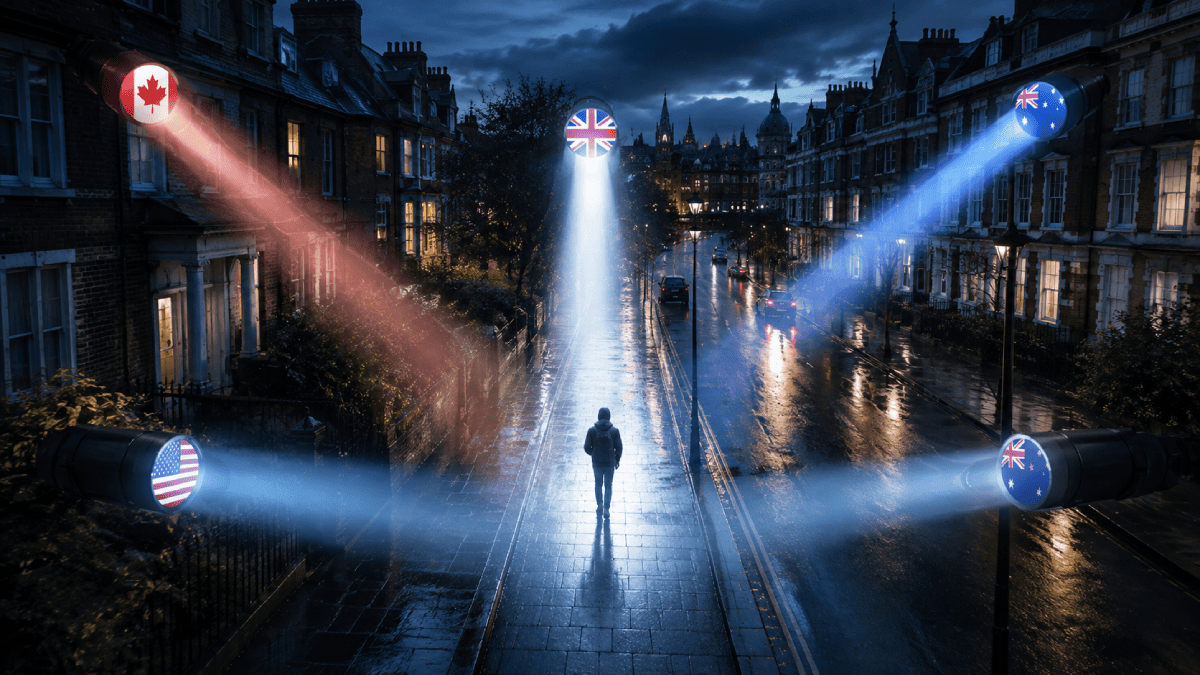
Canada, Uruguay, Germany, Thailand, and California have spent a decade running every version of cannabis reform anyone ever proposed. The results are in. They are uncomfortable for both camps. Westminster has responded by refusing to look at all.

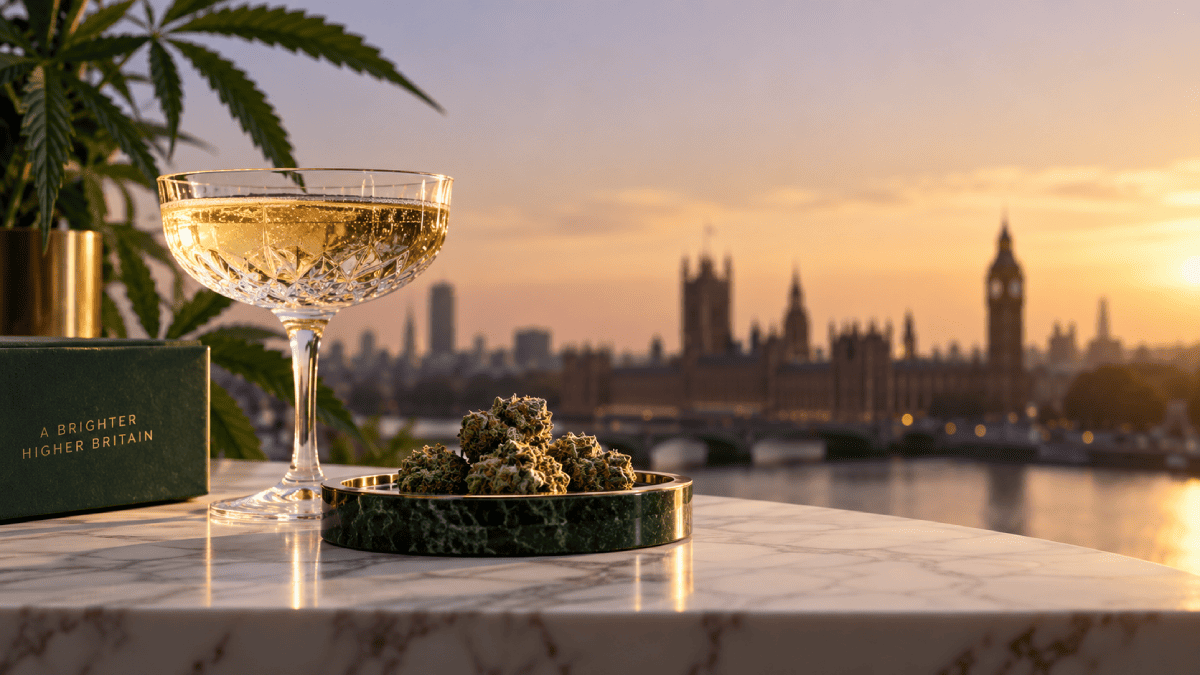
In May 2025 the London Drugs Commission reported after four years of work, more than 200 witnesses, and 42 recommendations. Chaired by Lord Falconer, a former Lord Chancellor, it concluded criminalising possession of natural cannabis under the Misuse of Drugs Act 1971 could no longer be justified. The government rejected it more or less immediately, on the grounds it did not reflect ministerial thinking. Predictably, nothing has moved since.
British cannabis policy has been conducted for half a century as a prediction contest between two camps who could not test their claims. Reformers promised the end of pointless arrests, the collapse of criminal supply, and a windfall for the Exchequer.
Opponents, such as Peter Hitchens, promised a generation of stoned teenagers, psychiatric wards filling up, and carnage on the roads.
The data is in. No further guessing is required.
Uruguay legalised in 2013. Colorado and Washington opened retail markets in 2014. Canada followed nationally in 2018. Germany legalised possession and home growing on 1st April 2024 while refusing to permit shops. Thailand liberalised in 2022 with almost no rules at all, then reversed. Portugal has decriminalised possession since 2001 without ever legalising supply. The Netherlands has spent decades tolerating retail while criminalising the wholesalers who stock it.
These are competing systems producing measurably different results, and the differences between them matter far more than the difference between legal and illegal.
Predictions From the 1990s Vs Results
| Claim made before the experiments | What the data show |
|---|---|
| Possession arrests will collapse | Correct, and dramatically so |
| Teenagers will use far more cannabis | Not observed anywhere on the predicted scale |
| Adults will use more | Correct, but only under commercial markets |
| Legal shops will destroy the illicit trade | Correct only where legal supply can actually compete |
| Tax receipts will be enormous | Real, and heavily oversold |
| Schizophrenia will rise across the population | Not demonstrated |
| High-potency products carry psychiatric risk | Strong and hardening evidence |
| Road deaths will soar | Unproven, with some genuinely worrying signals |
| Organised crime will lose its cannabis income | Partly, never automatically |
| Legal cannabis will be safer cannabis | True on contamination, false on strength |
| The product itself will stay much the same | Spectacularly wrong |
Canada's statutory review of the Cannabis Act recorded a 95 per cent fall in possession charges between 2017 and 2022. Washington State's long-run evaluation found adult possession convictions effectively disappearing. Germany's first official evaluation recorded cannabis offences falling by roughly 60 to 80 per cent within a year, almost entirely because consumption offences ceased to exist.
Criminal records stop being created. Court lists shorten. Police stop searching young men on the strength of a smell.
Whatever else is contested, this one is settled, and it is the single clearest gain available to any British government willing to take it in the middle of an existential-level prison space crisis.
Teenagers Declined to Behave as Advertised
The apocalyptic prediction was straightforward: make cannabis legal and children will smoke it in far greater numbers. It made sense. Canada's expert panel found the anticipated surge in adolescent use simply had not materialised.
- The 2024 Canadian Cannabis Survey recorded past-year use among 16 to 19 year olds at 41 per cent, statistically indistinguishable from 2019, 2020, and 2023.
- Colorado's 2025 state report found school survey measures broadly flat and then falling sharply.
- Germany's evaluators went further and used wastewater analysis. They sampled THC metabolites across fifteen German cities either side of the reform, accumulating more than three thousand measurements and detecting no significant short-term change in consumption at all.
There is one important qualification, and it points at products rather than legality.
A Canadian natural experiment published in JAMA Network Open compared provinces permitting commercially attractive edibles and extracts against Quebec, which banned them, and found a 3.8 percentage point increase in adolescent past-year use attributable to the product rules alone.
Legal status barely moved teenagers. Gummy bears did.
Adults Are A Different Matter Entirely
The most comprehensive synthesis available, a review of global policy changes from 2000 to 2025 published in The Lancet Psychiatry on 17th June 2026, led from the University of Bath with collaborators across five continents, found commercialised legal markets in Canada and the United States associated with higher adult prevalence, higher rates of cannabis use disorder, and rising potency.
The same review found where liberalisation stopped short of building an industry, the associations largely vanished.
Decriminalisation across Europe, Africa, Oceania, and Asia showed little evidence of increased use or psychiatric harm. Strictly regulated legal supply performed similarly well.
Removing the criminal penalty appears to do very little to consumption. Building a competitive consumer goods sector around an intoxicant does rather a lot.
California Forgot To Legalise The Market
Anyone who believes legalisation automatically destroys criminal supply should read California's own numbers. As with everything in California, a simple home run win in a home game somehow turns into defeat torn from the jaws of victory.
The state's Department of Cannabis Control commissioned an assessment of its market. Californians consumed roughly 3.8 million pounds of cannabis in 2024. Licensed producers supplied about 1.4 million pounds of it.
The remaining 2.4 million pounds, some 62 per cent of everything consumed, came from unlicensed sources. Estimated unlicensed production runs to 11.4 million pounds a year, most of it destined for other states.
The regulator is candid about why: Taxes, licence fees, testing, compliance overheads, and property costs fall on legal operators and on nobody else. Around 16.4 million Californians live in jurisdictions banning licensed retail outright, so cannabis is legal in principle while the nearest lawful shop is an hour away or does not exist.
In 2019, 37 per cent of Canadian users reported buying legally. By 2024 it was 72 per cent, with 3 per cent reporting an illegal source, down from 16 per cent.
Industry analysts dispute the survey's precision, and self-reported illegality is hardly a reliable measure, but the direction is not seriously in doubt. Uruguay achieved something comparable, collapsing its old trafficked pressed-cannabis trade.
Legalisation does not abolish the dealer. Competitive legal supply abolishes the dealer. California proves the distinction by failing to make it.
Treasury Instincts Are the Fastest Route To A Surviving Black Market
The obvious British temptation is to treat cannabis as a revenue line, because, of course. Consumers already spend the money, the reasoning goes, and the state may as well collect VAT and duty on it.
California's Legislative Analyst has stated the position plainly: higher cannabis taxation enlarges the illicit market. The state's excise rate rose automatically from 15 to 19 per cent in July 2025 and provoked enough political fury to be restored to 15 per cent by October.
In the UK, cigarettes are legal, regulated, taxed, and available everywhere. HMRC still estimates the tobacco duty gap at £1.3 billion a year, roughly 14.2 per cent of theoretical liability, rising to around 21 per cent for hand-rolling tobacco.
The ceiling on cannabis taxation has nothing to do with what the Treasury considers socially desirable, but what can be added before the customer decides the illegal alternative is worth the inconvenience.
And legal farmers turned out to be extremely good at their job.
The Oregon Liquor and Cannabis Commission's supply and demand report records estimated demand at 71 per cent of supply in 2023 and just 57 per cent in 2024.
Prices collapse. Margins vanish. Growers fail.
And because federal law forbids interstate commerce, an enormous surplus sits inside a state which cannot lawfully export it, which earlier Oregon analysis connected directly to illicit diversion across state lines.
A legal market can produce enough cannabis to supply somebody else's black market. Nobody predicted that in 1996.
The Product Is More Sophisticated
The British debate still imagines a straight substitution: a dealer selling a bag of weed replaced by a shop selling the same bag of weed.
Statistics Canada records inhaled extracts rising from 18.1 per cent of legal sales in 2021/22 to 31.1 per cent in 2024/25, while ordinary dried flower fell from 71.1 per cent to 59.7 per cent.
American research published in the American Journal of Psychiatry finds high-potency flower and concentrates constituting a large share of legal-market products.
Capital, branding, extraction technology, and retail competition entered the system and did what they always do.
Concentrates, distillates, dabs, infused pre-rolls, and vape cartridges are not stronger versions of hash. They are a different pharmacological exposure sold under the same word.
A gram of eight per cent flower and a gram of eighty per cent concentrate are both called cannabis, and equating them is roughly as sensible as regulating brandy and shandy by the bottle.
Milligrams of THC would make a considerably more useful regulatory unit than grams of plant. And for a specific reason: cannabis can be eaten in sweets, cookies, and cakes.
Traditional cannabis was fortunately unappealing to toddlers. A three-year-old does not roll a joint. A three-year-old absolutely will eat a brownie.
Canada's expert panel identified accidental paediatric poisoning as a major concern, with cannabis-related poisoning hospitalisations rising from 0.5 per 100,000 in 2015 to 6.4 in 2021.
The American CDC reports the same pattern.
None of this follows from allowing adults to possess cannabis. All of it follows from permitting THC to be sold as sweets.
Four Separate Psychiatric Questions
The conversation around cannabis and mental health is important, because the link is real. It not overblown, theatrical, theoretical, or political. Cannabis unquestionably causes psychiatric conditions.
A 2025 systematic review covering 99 studies and 221,097 participants examined high-concentration THC specifically. Among non-therapeutic studies, 70 per cent found unfavourable associations with psychosis or schizophrenia and 75 per cent with cannabis use disorder. Anyone still claiming cannabis is psychiatrically inert is arguing against the literature.
Population-level effects are another matter. A US study of more than 63 million insured people found no statistically significant overall increase in psychosis diagnoses associated with state legalisation.
An Ontario study covering the first 17 months of Canadian legalisation, while retail and products remained tightly restricted, found no increase in incident psychotic disorders.
Then commercialisation arrived.
Across 105,203 cannabis-attributable hospitalisations in Canada between 2015 and 2021, overall rates rose from 3.99 to 6.46 per 100,000, with cannabis-induced psychosis showing the largest relative increase.
The restricted period was associated with a gradual decline. The jump came later.
The Lancet review reaches the same conclusion: no consistent evidence of increased population incidence of psychotic disorders, alongside a clear increase in psychosis hospital admissions under commercialised markets.
Cannabis use disorder receives far less political attention than schizophrenia and will probably matter more.
It is the cannabis equivalent of the alcohol problem, and it arrives with the same commercial logic. A customer buying £10 of cannabis twice a year is worthless to a listed company. A daily user is the entire business model.
Driving High: No Breathalyser Exists For THC
Acute intoxication impairs driving, and a 2025 meta-analysis of 31 studies found cannabis use associated with higher collision fatality and injury risk, albeit at low certainty.
Washington's evaluation found shorter travel time to licensed retailers associated with modest increases in drivers involved in fatal collisions and in THC-positive drivers.
Luxembourg's first post-reform assessment recorded THC-positive drink-driving cases rising from 245 to 299, a 22 per cent increase in a single year.
Blood THC does not behave like blood alcohol.
It persists after impairment fades, varies enormously between habitual and occasional users, and establishes exposure rather than causation.
Germany and Uruguay Are Testing Whether Legal Access Requires an Industry
Germany legalised possession, home cultivation, and non-profit cultivation associations, and refused to permit ordinary commercial retail. Its second evaluation report, published on 1st April 2026 and running to 222 pages, found offences collapsing, youth use continuing its pre-existing decline, and no detectable consumption surge.
The Federal Health Ministry responded by announcing the partial legalisation had been a mistake. Two years of commissioned research, and the political conclusion arrived regardless.
Britain is not the only country capable of ignoring its own evidence.
Uruguay took the same anti-commercial route through registered home growing, membership clubs, and pharmacy sales under state control, with advertising heavily constrained.
Its national drug board reports adult indicators broadly stable since 2018 and adolescent indicators stable since 2016, alongside major displacement of the old trafficked market. The regulated system reaches only around 40 per cent of users, so displacement is real without being complete.
The Netherlands demonstrates the opposite failure.
Tolerated retail with criminal wholesale supply produced decades of the famous back-door problem, which the Dutch government now describes in terms of public order, crime, and product safety. Its controlled supply experiment began in April 2025, and immediately ran short of legal hash, forcing authorities to permit illicit hash temporarily rather than push consumers back onto the street.
Thailand provides the warning against sequencing it the other way round.
Retail proliferated wildly after the 2022 reform, well ahead of any regulatory architecture. A nationwide interrupted time-series study estimated 25.5 additional cannabis-related adolescent hospitalisations every week against the counterfactual trend, amounting to 1,762 excess admissions over 68 weeks.
Thailand moved back toward prescription-only access in 2025.
High Street Barbers And Vape Shops
The traditional cannabis dealer involves a customer who needs a contact, a number, and an arrangement. Illegal shops have signs, opening hours, stock, wholesalers, staff, repeat trade, and legitimate turnover through which criminal proceeds can be obscured.
The House of Commons Library published a briefing on illicit high street activity covering counterfeit goods, illegal tobacco, and illegal vapes, citing National Crime Agency estimates of at least £1 billion laundered annually through vape shops, barbers, nail bars, sweet shops, and car washes.
The government responded in 2026 with a High Street Organised Crime Unit and £30 million of enforcement money, while HMRC committed to more than 30,000 high street interventions in 2026/27.
Single-use vapes have been illegal to sell since 1st June 2025, and enforcement remains a live problem.
A badly designed British legalisation would combine the two failures on offer:
- Expensive, heavily taxed, tightly restricted legal cannabis on one side;
- Cheap, extremely potent THC cartridges moving through premises already handling illegal nicotine on the other.
California's illicit market problem and North America's potency problem, imported together, into a country which has already built the distribution network.
Hemp Licensing Is Absurd
Hemp is a non-psychoactive crop used for insulation, hempcrete, textiles, composites, paper, animal bedding, seed, and oil. Britain inexplicably regulates it through controlled drug licensing. Growers inexplicably need a Home Office licence; permitted varieties sit at no more than 0.2 per cent THC. Commercial exploitation is confined to seed and fibre while flowers and leaves remain controlled material and must be destroyed.
British summers have grown warm enough for compliant crops to drift above the threshold, exposing farmers to criminal liability.... for the weather.
The Advisory Council on the Misuse of Drugs recommended raising the limit to 0.3 per cent, matching the EU, United States, Canada, and China, and the Home Office accepted the advice in February 2025.
Whatever anyone concludes about recreational cannabis, using narcotics legislation to govern a fibre crop capable of intoxicating absolutely nobody is a category error rather than a policy.
Medical Access Is Already A Separate Failure
Cannabis-based medicinal products have been prescribable since November 2018. NHS guidance restricts them largely to severe epilepsies, chemotherapy-related nausea, and MS spasticity where other treatments have failed. Fewer than 5,000 NHS prescriptions have been issued, while a private sector serving well over a hundred thousand patients has grown up alongside it at several hundred pounds a month.
Canada kept its medical regime after recreational legalisation and recorded 161,267 patients registered with federally licensed sellers in March 2025. Its expert panel also found legalisation had generated surprisingly little clinical research, killing the promise of legal markets automatically producing good medicine.
Germany is discovering the opposite hazard.
Its April 2026 evaluation flagged blurring between medical and recreational supply, particularly through online prescribing and high-THC products.
Where recreational retail is restricted and a prescription can be obtained through a cursory video call, the medical route becomes a recreational market with administrative overheads.
We Can Do This Better Than Everyone
The international results do not vindicate prohibition and do not vindicate reformers like the state of Colorado. They point somewhere neither camp campaigned for.
Possession should stop generating criminal records, on the strength of the Portuguese, German, and Canadian evidence combined. Portuguese experience since 2001 shows the state can decline to criminalise the consumer without building an industry, though it also shows decriminalisation does nothing whatever about supply, tax, testing, or potency.
Legal supply should exist and should be cheap enough, accessible enough, and convenient enough to make illegal dealing economically pointless, which means moderate taxation rather than revenue maximisation, and no local veto creating retail deserts.
- Potency should be capped in statute.
- Edibles should be low-dose, child-resistant, and deliberately unlike confectionery, or excluded at launch.
- Recreational THC vapes deserve particular suspicion given what already moves through British high streets.
- Advertising should be prohibited outright.
- Enforcement against illegal supply should increase after any reform rather than relax, because the entire mechanism depends on illegal cannabis becoming harder to sell than legal cannabis is to buy.
- Hemp should leave drug law altogether.
- Medical access should be rationalised with genuine clinical standards. Outcome reporting should be mandatory from the first day, since the striking feature of the international record is how much of it had to be reconstructed retrospectively.
The resulting market would be legal, dull, weak, cheap, unbranded, and commercially unattractive.
Every serious investor would hate it.
Judged against 62 per cent illicit consumption in California, a cannabis mountain in Oregon, toddlers in Canadian emergency departments, and Thai adolescents in hospital beds, dullness looks like the most underrated policy objective available.
Britain has the rare luxury of learning at other people's expense.
Rehearsing the arguments of 1996 while the evidence piles up in other people's hospitals, courts, and tax receipts amounts to a refusal to read. It's time to get rid of this albatross from around the necks of the police, the councils, the NGOs, and Westminster. We can study pro and con from around the world from every angle and build the perfectly optimised conditions for getting it right.