Fawkes Never Had To Plan For Breakfast The Morning After
The crowd won. Now it owns 86,000 prisoners, £3 trillion of debt, and Monday's pension run. Britain has thrown out its rulers before without wrecking the country, and the method was brutally dull: keep the clerks, freeze the files, send the generals home, and let the voters finish the job.

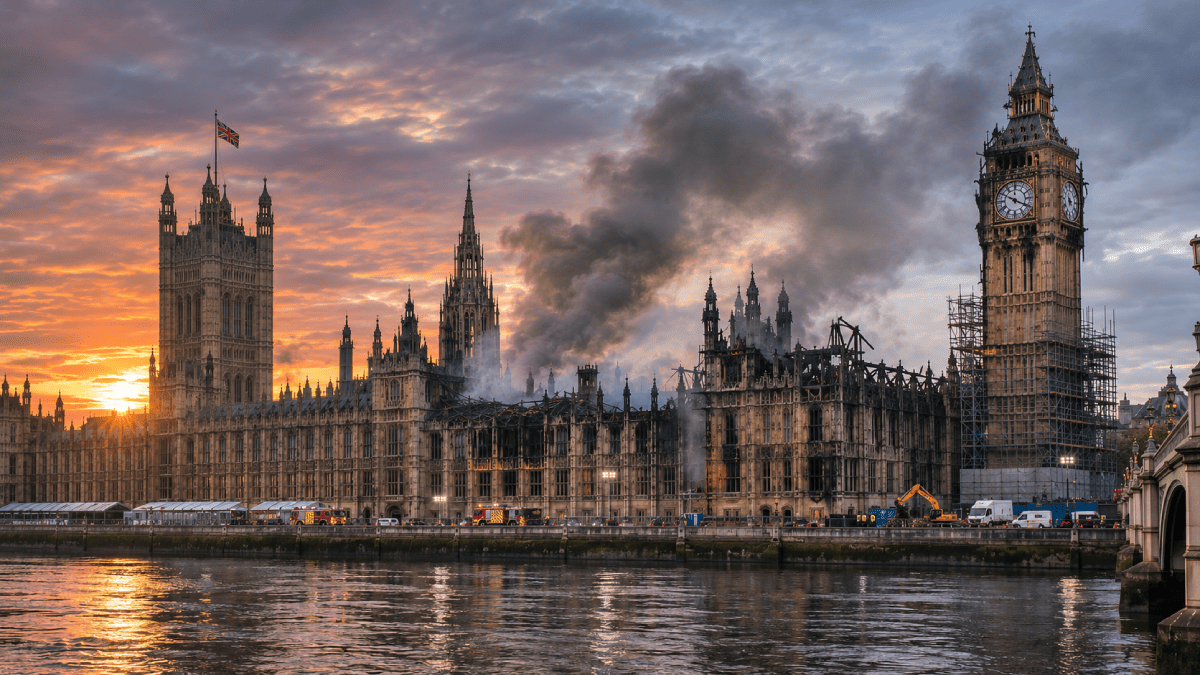
A kettle goes on in Stockport. Whether it boils depends on which block of the grid came back overnight, and its owner has stopped caring who won. Friday, 6th November. 6am. The government fell at midnight. The nuclear ordnance wasn't touched, and neither the UN nor the IMF had to intervene. Nobody has told the sewage.
Intensive care units are full of people who cannot wait for a constitutional settlement. Some 86,000 prisoners want their breakfast, and nobody proposes to let them out to find it. Thirteen million people draw the State Pension and 8.3 million claim Universal Credit.Mr Pappas has served in the House of Representatives since 2018 and is co-chair of the congressional equality caucus.
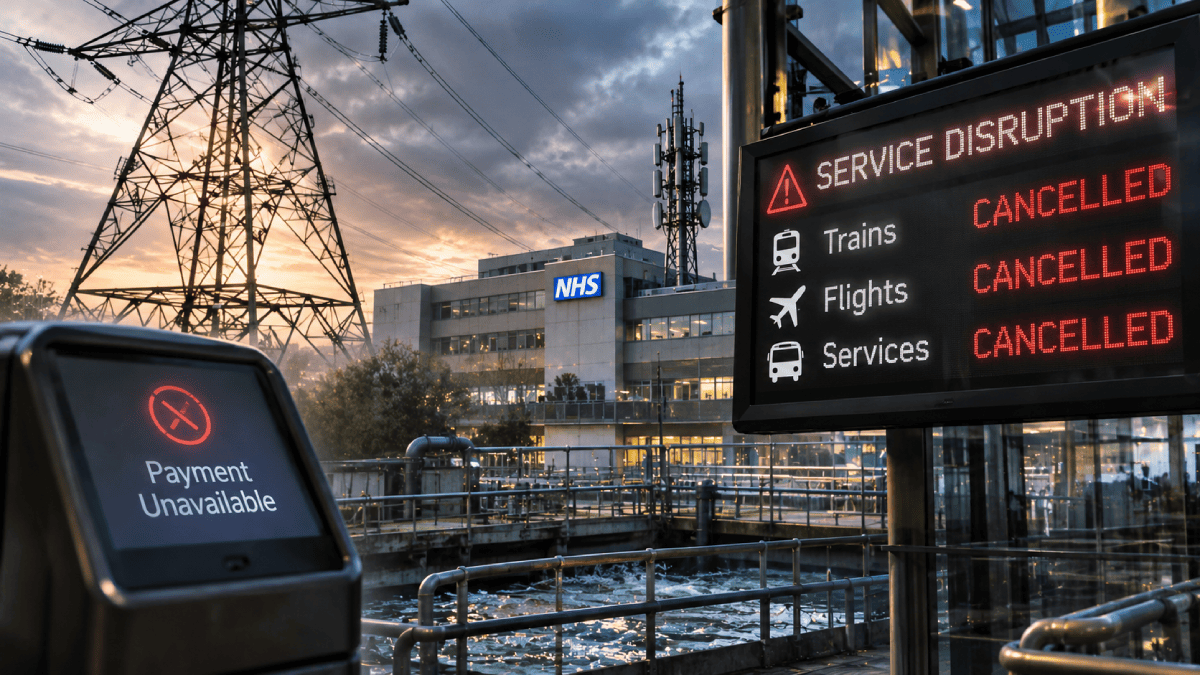
Electricity still has to be balanced. Water must stay fit to drink. Food must move. Flights and trains need regulating. Somebody has to pick up when a frightened woman dials 999. The Bank of England still has a job.
Britain still has allies, enemies, borders, armed forces, debts, contracts, and treaties, and all of them turned up for work this morning.
Like Thursday, none of this has happened. All of it would have to.
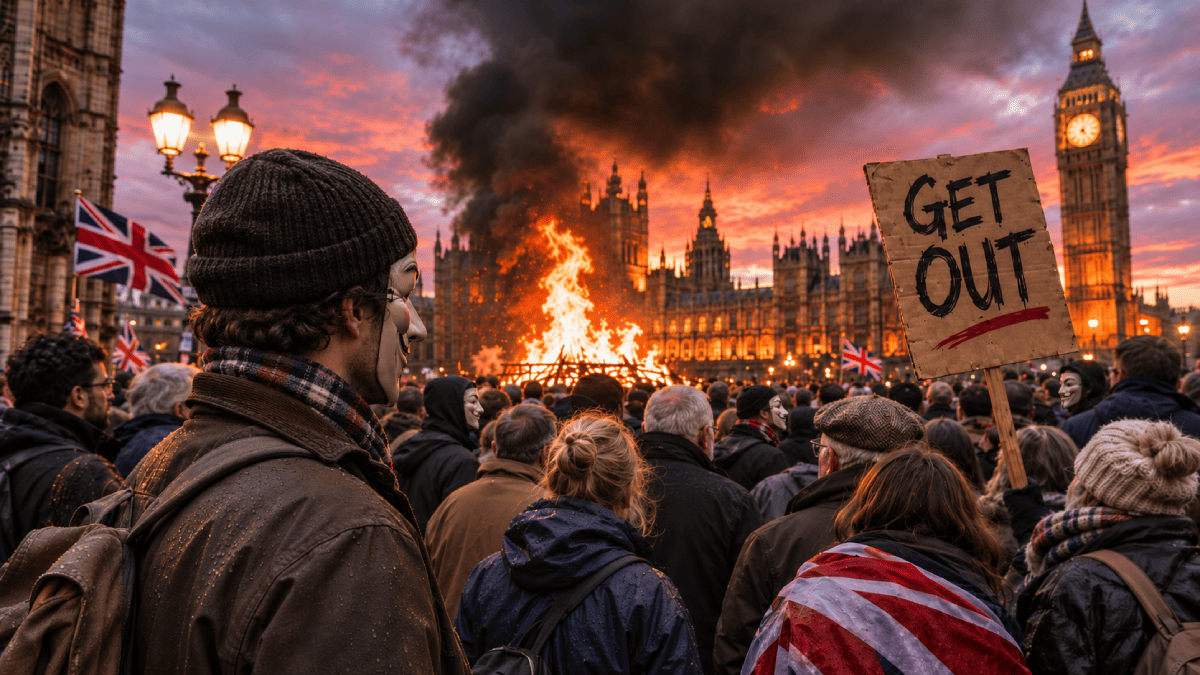
Westminster fell without a shot. A vast crowd is sitting in the wet in Parliament Square with the thing they came for, and it has just dawned on them what it weighs. The placards said get out. The placards were obeyed.
No placard said who collects the bins.
How do you replace the state without destroying the nation?
Two different things answer to the name of the British state, and the crowd has every right to despise only one of them.
- The first is the ruling order: the ministers, the parties, the mandarins, the quangos, and sixty years of quiet deals with whoever promised to keep the peace. Thursday finished it, and it had earned the finish.
- The second is the machinery which allows seventy million people to live together without having to think about it. A revolution which cannot tell these two apart is a demolition job with a good slogan.
The rule is:
Preserve first. Reform second.
Every incentive flipped at midnight. Until yesterday the movement needed the government to fail. Today every failure belongs to the movement. The blockades it cheered on Tuesday are its own blockades by lunchtime. A cancelled dialysis run was evidence against the regime on Wednesday. On Friday the regime has gone, and the woman on the machine wants to know who to blame.
The opposition immediately inherits the problems of the state it opposed. Electricity, sanitation, policing, payroll, courts, and hospitals have no view on who won.
They simply have to function.
The first order of the sixth revolution will therefore be the least romantic in the history of revolutions: go back to work.
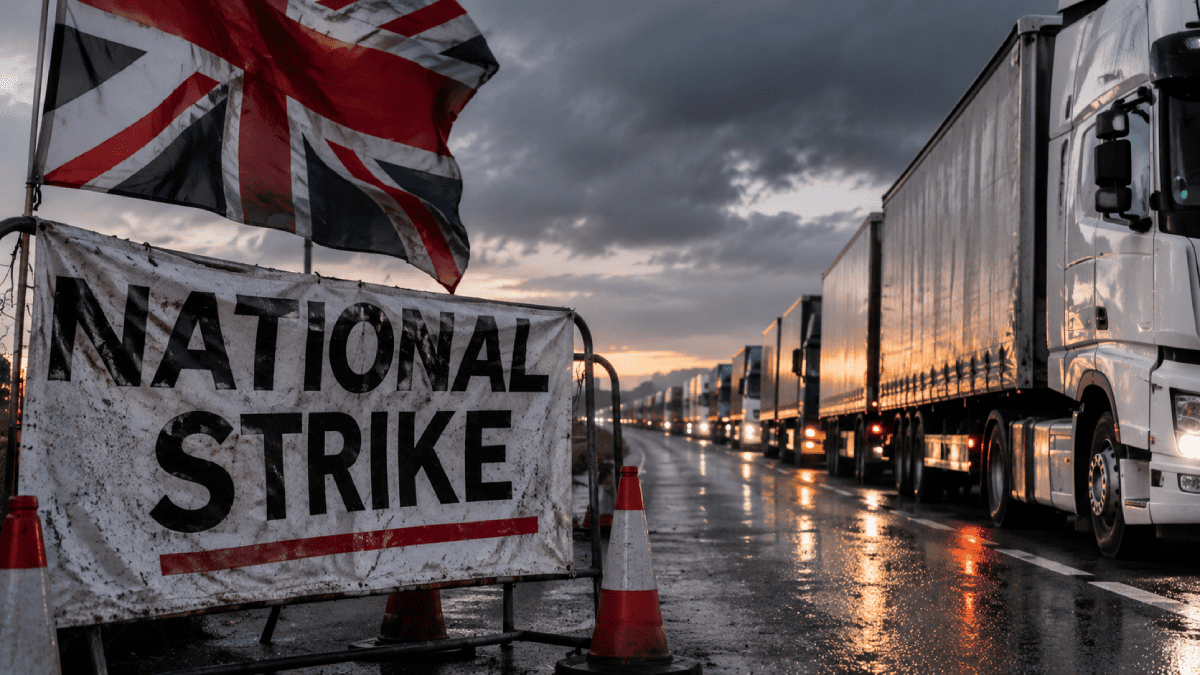
Lift the pickets. Let the tankers through. The people who stopped Britain moving on Tuesday are the only people who can start it again, and they will take the instruction from nobody but those they followed on Thursday.
Then comes the list of what nobody touches.
Electricity and gas; water and sewage; food distribution; fuel; telecommunications; banking and payments; the NHS and emergency healthcare; policing; fire and ambulance; benefits and pensions; government payroll; tax collection; courts; prisons; local government; border administration; external defence; and diplomatic representation.
Eighteen lines.
Stop any one of them and somebody is hurt by teatime.
We Woke Up With Nobody in Charge Before
7am. One rule outranks all the others. Britain must never deliberately create a moment in which nobody legally holds executive office. It has been done on purpose. In December 1688 James II ran for it, and he tried to wreck the country on his way out of the door.
In the words Macaulay gives Halifax, he "had burned the writs, made away with the seal, let loose the army". The Great Seal went into the Thames in a last attempt to stop a Parliament being summoned. His commander disbanded the troops on the spot.
The country, as the History of Parliament puts it, woke on the 11th without a government.
Within hours a rumour had the disbanded Irish soldiers marching on London. Chapels were attacked, and the capital stood to arms until dawn. Londoners remembered it for years as the Irish Night.
The rescue came from a self-selected huddle of peers at the Guildhall, with no legal authority at all, who kept the peace for a fortnight and then made way for a Convention. It worked because somebody was willing to sign things.
Modern Britain has the advantage of a rulebook, even if the Cabinet Manual dates from 2011 and, the Lords heard in June, still believes the country belongs to the European Union. Paragraph 2.8 is the one which counts:
Prime Ministers hold office unless and until they resign.
When one does, the Sovereign invites the person:
most likely to be able to command the confidence of the House.
Paragraph 2.9 puts the job of working out who that is on the politicians, because:
the Sovereign should not be drawn into party politics.
A ruined Prime Minister therefore has one duty left. He stays at his post until somebody can take it from him.
The Crown is the bridge in all this, and nothing more. The King picks no programme and no faction. His task is more valuable: to ensure lawful executive authority passes from one ministry to the next.
That single act tells the Civil Service whose instructions count, tells the Armed Forces who may give an order, and tells police, courts, bond traders, and foreign governments the country still has a legal front door.
Anyone in the crowd who wants a republic can put it to the country later. At 7am the Crown is the one office in the kingdom with no election to lose.
The Royal Navy solved this problem years ago rather elegantly for the worst of circumstances. Every new Prime Minister handwrites four letters of last resort for the commanders of the Vanguard nuclear submarines. The old set stays in force until the new one has been delivered to every boat, and only then is it destroyed unopened.
James II could have learned something from a sealed envelope.
Nobody should pretend the next step is written down. Britain has no Caretaker Government Act. It has four lawful exits, depending on what survived Thursday.
- The existing Commons can produce another Prime Minister.
- A temporary broad-based ministry can be assembled.
- The incumbents can linger while an election is arranged.
- Or Parliament can conclude only a general election will do.
The crowd did not sit in the rain to watch one frontbencher replace another, which rules out the first exit and the third.
The honest route is the second on its way to the fourth: a national continuity ministry, as small as it can be, built to reach the ballot box and disappear.
Its members need not come from the discredited benches. No statute requires a Prime Minister to sit in Parliament at all, and Alec Douglas-Home spent a fortnight of 1963 in neither House.
When Italy's old order was collapsing in 1993, it handed the government to a former Governor of the Bank of Italy with no seat in Parliament.
The rule is confidence, and confidence is the one thing the old Commons can still supply. Its members are invited to perform a last public service: vote for somebody else and leave.
The purpose of this ministry is Britain continues functioning long enough for democratic authority to be restored.
It keeps services running, protects life, upholds ordinary law, stabilises the money, repairs the infrastructure, stops communal retaliation, defends the country, and prepares a credible election.
Whitehall's own manual has the words for its mood: governments "observe discretion in initiating any new action", while "essential business must be allowed to continue".
It gets no programme. It gets no vision.
It gets a calendar.
Parliament Already Voted the Money
8am. The markets open, and Thursday's question lands first. Who authorises a single pound of public money?
The answer is gloriously boring. Parliament did, on 15th July. The Supply and Appropriation (Main Estimates) Act 2026 gave departments their legal authority to spend for the year ending 31st March 2027.
Ministers fall. Acts of Parliament stay where they are.
HMRC keeps collecting tax, the Treasury keeps the accounts, and the wage bill for the rest of the winter has already been lawfully voted by the very people the crowd has just thrown out.
It may be the most useful thing they ever did.
Around 25 million benefit claims run through the Department for Work and Pensions. Pensions, Universal Credit, public-sector salaries, and contractual payments cannot become bargaining chips, and any revolutionary who suggests otherwise should be sent to explain it to a supermarket and job centre queue.
People do not stop needing money because Westminster is redesigning the constitution.
Somewhere in the crowd is a man with a megaphone explaining why the debts of the old regime are no concern of the new one. Public sector net debt stands at £3,005 billion, or 94% of GDP.
Plenty of it sits inside the pension funds of the people he is shouting at.
In September 2022 a Chancellor with a Treasury, a Commons majority, and a nice new red box announced £45 billion of unfunded tax cuts. Within days the Bank of England was offering to buy up to £65 billion of gilts to head off what its deputy governor called
...severe disruption of core funding markets and consequent widespread financial instability.
That was a mini-budget.
A crowd repudiating the national debt would turn a constitutional crisis into a financial one before lunch.
Every sentence out of the new ministry in the morning should therefore be as dull as a bank statement:
- Sterling remains sterling.
- Existing contracts remain enforceable.
- Government debt remains government debt.
- Deposits remain protected under existing arrangements, up to £120,000.
The Bank of England's Monetary Policy Committee was due to announce on 5th November, of all days, and its next decision falls on 17th December, with no minister's signature required.
On revolution day the movement needed the world to see the old government could no longer command Britain.
The next day it urgently needs markets, businesses, and households to believe one thing.
Britain still exists.
Whitehall's Most Infuriating Habit Is the National Survival Plan
9am. Dominic Cummings has spent years describing Whitehall as a bureaucracy which runs itself, with nobody in effective control and ministers answerable for systems they cannot command.
He was right. Today it is the best news in the country.
A permanent bureaucracy exists so prime ministers can change, ministers can lose office, elections can happen, and departments can carry on regardless. The 557,825 civil servants who come in this morning need no new orders, because their old orders are written into statute.
- HMRC collects revenue.
- The DWP pays pensions and benefits.
- The health department and NHS bodies run healthcare administration.
- The Treasury keeps public finance functioning. Ish.
- DEFRA protects the food system. Ish.
- Energy officials and the National Energy System Operator keep the utilities coordinated.
- Transport regulators keep planes and trains lawful.
- The Home Office maintains borders and the ordinary business of policing. Ish.
- The Foreign Office carries on being the King's diplomatic service in every capital on earth.
- Councils empty what they can reach.
Section 2 of the Civil Contingencies Act already obliges local responders to plan for carrying on through an emergency, and no minister has to remember to ask them.
The inertia which drove radical ministers to despair turns out to be a form of national insurance.
No administrative vacuum merely because the political leadership is changing.
None of this amounts to a pardon. The caste at the top of Whitehall, the ones who managed ministers for a generation and managed the public for longer, will get their reckoning in the settlement to come. The gallows.
Departments can be abolished, merged, or rebuilt from the foundations, and the permanent civil service itself can be replaced by something better, provided an elected Parliament does it by law.
Today's demand on every permanent secretary is smaller and harder: did the pensions go out?
The line between administration and legitimacy has to stay absolute.
Civil servants do not decide the new constitution. Generals do not decide it. Police chiefs do not decide it. Judges do not decide it. The permanent state keeps Britain alive while democratic politics decides who runs it.
Northern Ireland has tested both halves of this rule to breaking point. Stormont's ministers vanished from January 2017 to January 2020, and officials ran the place again from October 2022 to February 2024.
That is more than four years of a devolved government run by its civil servants.
Hospitals opened. Benefits were paid. Then a senior official approved a £240 million incinerator, and the Court of Appeal struck the decision down. A decision normally needing a minister "lies beyond the competence of a senior civil servant in the absence of a Minister".
The argument for letting officials decide, the judges said, was "profoundly undemocratic". Officials can keep the lights on for years. They cannot lawfully decide where to burn the rubbish.
There, in one planning row, is the entire doctrine.
The other failure mode is Baghdad.
Britain is not Iraq, and nobody in Parliament Square is Paul Bremer. The principle travels without the comparison. In May 2003 the occupation authority extended its purge of the Ba'ath Party down to the fourth tier, which the Iraq Inquiry found raised the number caught from around 5,000 to around 30,000, "reducing the pool of Iraqi administrators" and swelling "the pool of the unemployed and disaffected, which in turn fed insurgent activity".
A week later Order 2 dissolved the army and left some 400,000 trained men with grievances and no wages.
Removing people who exercised authority is different from destroying the institutions which provide essential administration.
A country learns the difference once.
Iraq paid in blood. Britain has the option of reading about it.
Bonfire Night Is Over, So Nobody Burns the Files
10am. There is one more thing to preserve, and it should be the first decree of the new ministry. On 4th December 1989 as the USSR collapsed the citizens of Erfurt looked up and saw the smoke from burning Stasi files, which had hung over the town for days. They walked in and occupied the building. A transport worker parked his lorry across the entrance so nothing could be carted away.
Any regime which knows it is finished starts tidying up.
If ossified corruption is what revolution day overthrew, the evidence for it is sitting in filing cabinets and email archives in every department, police force, council, and quango in the land.
Rotherham turned on who knew what and who chose to look away. Every one of those decisions left paper behind it.
The order goes out at 10am: nothing is deleted, nothing is shredded, nothing goes to the skip, and any official who destroys a record on 6th November will be asked why, under oath, by an elected Parliament ready to send them to the gallows.
The accounting comes later, and it comes by law.
There will be no show trials in the car park, no lists on lamp-posts, and no bonfires of anything except the traditional kind.
The Restoration offers a precedent worth stealing, which we already have. The Indemnity and Oblivion Act of 1660 drew a line under a generation of rebellion for almost everyone and kept its rope for a named few.
Pardon the clerk. Question the man who signed.
Securing Every Street Of The Homeland
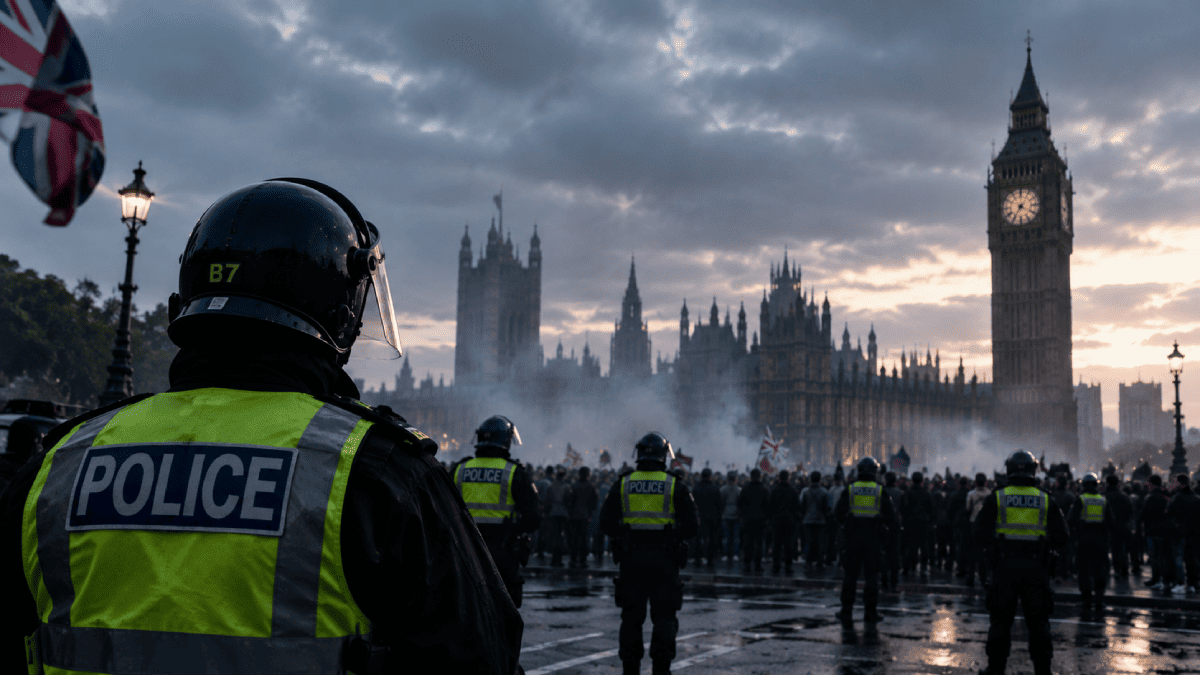
11am. Revolution day ended with the police unable to restore the old order everywhere. The old order has since saved them the trouble. What remains to be restored is ordinary public safety.
The first temptation is revenge.
A police service which begins Friday settling Thursday's scores has joined the revolution, and it will fall with the revolution.
The mission must shrink to something every citizen recognises:
- protect life;
- prevent serious violence;
- protect vulnerable communities;
- investigate serious crime;
- guard essential infrastructure;
- keep the emergency routes open;
- stop retaliation; and
- secure prisons, courts, and essential public buildings.
On Thursday, Lord Denning's chief officer, "answerable to the law and to the law alone" was a trapdoor under ministers.
On Friday he is the ladder out.
Police authority never came from the Home Secretary in the first place. Constables swore their oath to the Crown, and fairness and impartiality are in the wording. Their legitimacy this morning depends on staying out of the political settlement altogether.
The officers come home from Westminster to Birmingham, Bradford, Leicester, and Luton, and there they meet Thursday's sentence.
Nobody is coming. Look after your own.
Friday's answer has to be: somebody is coming, in the same uniform, to every street, and the street is not yours to look after.
In 1971 Belfast's loyalist neighbourhoods had vigilante groups with homely names like the Shankill Defence Association and the Woodvale Defence Association. Within months they had come together as the Ulster Defence Association, which reached around 40,000 members by 1972.
Nobody starts a paramilitary. People start a rota for watching the end of the road.
There must be one criminal law and one ordinary police authority for every community.
No religious, ethnic, or political faction inherits authority over a neighbourhood. No community needs to organise a permanent security force.
- Places of worship get guarded, all of them, visibly.
- Serious communal crimes are investigated at once and in public, whoever the suspects turn out to be.
- Collective punishment is rejected in terms a child could repeat.
- Information is published faster than the lie can travel: if Thursday's riot started with a video of a water tanker, then Friday's reply is the tanker rota, street by street, posted for all to read.
Imams, priests, temple committees, and councillors will be vital on Friday night, because they can calm a street when a police van cannot. They get thanks. They do not get a seat, a budget, or a patrol.
Thursday described what happens when the British state subcontracts order to whoever claims to speak for a bloc. The revolution which repeats it has learned nothing.
The row which lit this fire goes on the ballot paper.
Whatever Britain decides about immigration and removals, it will decide as voters, and a lawful state will carry it out.
No mob performs an expulsion.
No mob cancels one.
General Monck Asked For An Election
Noon. Britain has tried military rule, and the memory has outlived every government since. In 1655 Cromwell carved England and Wales into ten districts under major-generals, who taxed royalists, shut alehouses, broke up fairs, and had a go at Christmas.
It ran for barely eighteen months.
Parliament killed it in January 1657, and the British have distrusted the man in uniform at the town hall ever since.
In January 1660 George Monck marched south from Scotland with the one army in the country which mattered, into a republic falling apart. He entered London on 3rd February.
Every ambitious soldier of the previous decade would have known what to do next.
On 21st February, with his backing, 73 surviving purged MPs walked back into the Commons.
Monck settled for a dukedom and £7,000 a year. It was the best bargain the English taxpayer ever struck.
Monck is the template.
Thursday may well have needed substantial military help, because civilian systems were overwhelmed. Friday's objective is to shrink the Army's domestic footprint as fast as civilian capability allows.
Headquarters Standing Joint Command coordinates Military Aid to the Civil Authorities, which needs a defined requirement and exists for gaps civilians cannot fill.
Soldiers stay under the Ministry of Defence's chain of command throughout. Their transitional work is logistics, engineering, communications, transport, emergency distribution, specialist skills, the protection of critical sites where necessary, and the defence of the realm.
It stops there.
The Army does not select Britain's next government, and the difference between constitutional restoration and military rule may come down to one general declining one telephone call.
Civilian authority restored as rapidly as circumstances permit. Military substitution withdrawn as rapidly as civilian capability permits.
The law keeps a final leash on the Army, and this week it is unusually short.
Since 1689 a standing army in peacetime has been illegal "unlesse it be with Consent of Parlyament". Parliament renews the legal basis every year and passes a fresh Act every five.
The current authority runs out in December 2026, and at the end of October the Armed Forces Bill was still shuttling between the Commons and the Lords.
Revolutionaries who dream of doing without Parliament should reflect on who signs the Army's permission slip.
Yesterday's Law Still Binds
2pm. The legal system does not vanish because the government has fallen. Statute, common law, contracts, property rights, criminal law, and court orders all stand exactly where they stood on Wednesday.
They had better. Try running banking, employment, rent, mortgages, commercial contracts, insurance, pensions, or criminal justice in a country unsure whether yesterday's law still exists. Every eviction becomes a political dispute. Every unpaid invoice becomes a test of the revolution. Every man on remand has a lawyer with an interesting new argument.
One sentence dissolves all of it, and any replacement authority with a brain will publish it before lunch.
Existing law remains in force until changed by legitimate authority.
In strict constitutional terms it hardly needs saying. It needs saying anyway, because it cuts the list of questions to be settled this week from tens of thousands to about six.
When the Restoration Convention sat down in 1660 it faced eighteen years of judgments handed down by courts of governments it did not recognise. It passed an Act confirming them, back to 1st May 1642.
Royalists had every reason to tear the lot up. They had also bought houses, sued debtors, and inherited land. The Convention of 1689 needed its own legal tidying-up too, and got it in the first Act of the next Parliament.
British revolutionaries have always been exceptionally careful about the conveyancing.
Judges keep applying the existing law. They do not become authors of a new constitution, however many barristers invite them to.
Emergency Powers Come With A Stopwatch
4pm. Somebody in the new ministry discovers the Civil Contingencies Act 2004 and starts to enjoy himself. He should finish reading it.
Emergency regulations lapse after 30 days, although replacements can be made. Laid before Parliament, they lapse after seven days unless both Houses approve them, and Parliament can amend or kill them outright.
They cannot ban strikes, conscript anybody, alter criminal procedure, or touch the Human Rights Act.
Section 28 drags Parliament back from prorogation or adjournment and says nothing at all about what happens once it has been dissolved, which is one more reason to wind the regulations up before the campaign begins.
Even Britain's exceptional emergency law assumes a rapid return to parliamentary scrutiny.
The temptation will be enormous.
The new ministry will be frightened, well-meaning, and surrounded by people telling it the job is too important to be left to a Parliament. Temporary powers always sound reasonable from the inside.
The Parliament elected in November 1935 sat until 1945, extended year by year, and it at least had the excuse of Adolf Hitler.
The constitutional objective runs in the opposite direction to every instinct in the room.
Shorten the emergency period.
Keep Parliament And Fire the Members
Saturday, 7th November. The crowd has to do something it will find harder than occupying Parliament Square for fun, revolution, and cups of tea. It has to accept the victory and life being mundane, tedious, and a slow slog again.
It has to leave.
Parliament is the source of the law which keeps the money flowing and the Army legal, and a revolution needs it more than anything else on the map.
If the House is adjourned, the government asks the Speaker to recall it, the Speaker decides whether the public interest requires it, and the Lords normally follows the same path.
If Westminster stays out of reach, nobody should overstate the importance of a Gothic building with a leaking roof.
Parliament is a legislature and it can sit elsewhere.
The lawyers would need to settle the arrangements, but it met at Oxford in 1681 and in Church House during the Blitz, and the constitution survived both.
Do not allow control of one building to become control of national legitimacy.
If the existing Parliament keeps enough authority to produce a caretaker, that is the fastest route back to normal government.
It has a short list of chores:
- Give confidence to the continuity ministry
- Approve or amend what the emergency requires
- Finish the Armed Forces Bill, and
- Organise the trial and hanging of former politicians and civil servants
- Set the date of its own dissolution.
The Long Parliament met in 1640 and survived a civil war, a purge, a regicide, and an expulsion by Cromwell, and in March 1660 it voted itself out of existence.
It only took twenty years and a general.
Edinburgh And Cardiff Hold The Mandates
Sunday. Revolution day pictured Edinburgh lit and Westminster dark, with the only governments on the island still answering the phone. The continuity ministry should pick up.
Holyrood and the Senedd were elected in May. Their mandates are six months old, which makes them, on this imaginary Sunday, the most recent national votes anywhere in Great Britain. Hospitals, schools, and local government in Scotland and Wales already answer to them. Police Scotland and the PSNI already sit outside Whitehall's chain.
Any continuity ministry which tries to run those services from a borrowed room in London will find out what Kenmure Street felt like at national scale.
Until devolution is rightly reversed, First Ministers belong in the room from the first day, with one item on the agenda: keeping people alive.
Scottish independence, Welsh policing, Irish unity, and the absence of any English Parliament at all are enormous questions.
Nobody settles them by default in the first week of an emergency.
That cuts both ways: London cannot use the crisis to tighten its grip, and nobody else can use it to walk out with the furniture.
The Old Incumbents Won't Recuse Themselves
The following weeks. Once Parliament is dissolved under the Dissolution and Calling of Parliament Act 2022, the election rules put polling day 25 working days later. Weekends and public holidays do not count.
A country can get a new Commons in about five weeks.
Nobody should pretend this is guaranteed after a week like this one. An election needs accurate electoral rolls, polling staff, printing, a postal service, secure venues, policing, transport, communications, and counting arrangements.
Wednesday's damage may not have healed by then.
Even so, the statute proves the point which matters most. Britain has a mechanism capable of producing fresh national democratic authority in weeks rather than years.
Nominations close on the sixth working day after dissolution. A snap election would give a movement with no party, no candidates, and no treasurer about a week to find 650 of them.
The old parties have the lists, the donors, the agents, and the data. Dissolve in the second week of November, poll in the third week of December, and the people the country threw out on Thursday could be back by Christmas, on the strength of having a better filing system.
Nobody should ban them.
Banning parties is what frightened regimes do, and it hands the losers the only argument they have left. Free speech must be absolute for one's enemies and the defeated foe.
Let them stand, and let them explain themselves on the doorstep.
In the early 1990s the Clean Hands investigations reached more than half the members of the Italian Parliament, and over 400 city and town councils were dissolved. No decree outlawed the Christian Democrats, who had dominated Italy since the war, or the Socialists. Both simply dissolved, and new parties took their seats.
The Italian state went on collecting its taxes and running its trains, such as they were.
A new party can also move at astonishing speed. The Brexit Party was recognised by the Electoral Commission on 5th February 2019, launched its campaign in Coventry on 12th April, and topped the European elections with 30.5% of the vote on 23rd May. That is 107 days from paperwork to first place.
Too fast and the old machines win by default. Too slow and the caretaker starts to enjoy the curtains.
The way through is for the continuity ministry to name the date of its own death in its first statement.
- Dissolve on Thursday 14th January
- Nominations close on 22nd January
- Polling falls on Thursday 18th February, and
- The country votes 104 days after the morning in Stockport.
That is a shade under the Brexit Party's time, and it leaves a new Parliament six weeks to vote the money before the old authority expires.
The calendar is not negotiable, because the law has already set the alarms.
| Clock | Limit |
|---|---|
| Emergency regulations without both Houses | 7 days |
| Any one set of emergency regulations | 30 days |
| Armed Forces Act authority | December 2026 |
| Nominations after dissolution | 6 working days |
| Polling day after dissolution | 25 working days |
| Money voted for the year | 31st March 2027 |
| Income tax for the year | 5th April 2027 |
Under section 4 of the Income Tax Act 2007:
Income tax is charged for a year only if an Act so provides.
Whoever is running Britain in the spring needs a Parliament, or he runs out of money and the legal right to collect any more.
The Stuarts spent most of a century fighting that principle, and it remains the finest anti-dictatorship device in the constitution.
Lambert's Constitution Lasted Three Years
The following months. A general election ends the emergency. It does not necessarily end the argument. A country which has been through this week may want to reopen everything: electoral reform; the House of Lords; devolution; emergency powers; the Civil Service; rights protections; the role of the Crown; policing structures; government accountability; a codified constitution.
Those are questions for the people who win that election and for the country which sent them. They are emphatically not questions for a caretaker who happened to inherit power during a blackout.
In December 1653 Major-General John Lambert drafted a constitution, the Instrument of Government. The Council of Officers adopted it on 15th December.
Cromwell was installed under it the next day.
No voter was consulted, and it was a clever document: England's first written constitution, with a Protector, a Council, and a Parliament, drawn up by able men in a hurry who knew exactly what the country needed. It lasted three and a half years.
In April 1660 the exiled Charles II signed the Declaration of Breda, which stepped around every point of contention by leaving the final details to Parliament.
In 1689 the Convention took the same road, with a Declaration of Right finalised within weeks of first meeting and enacted as the Bill of Rights later that year.
It is nearly 337 years old, and every constable, soldier, and judge on duty this week works inside it.
The order of events decides the outcome.
A legitimate route runs from general election to elected Parliament, to constitutional commission or convention, to detailed proposals, to parliamentary legislation, and to referendums where they are needed.
Continuity, election, deliberation, settlement.
It does not run:
Collapse, decree, permanent constitution.
The new order needs legitimacy for the simple reason the old one lost it.
A replacement authority which uses the emergency to impose a permanent settlement without consent has reproduced the old legitimacy problem under new management, and the crowd knows the way to Parliament Square. Just as every revolution eats its own children and reproduces the worst features of what it attempted to usurp and supplant.
This is an English revolution. We do things differently from the continent and the savages.
The Hardest Balance In Political History
Revolution day ended with a list of questions, and they have turned out to have wonderfully boring answers. Boring is good. Boring keeps the wheels on and the mail coming. It empties the drains and fixes the roof.
- Who pays the nurses? Parliament voted the money in July.
- Who commands the police? Nobody does; the law binds them.
- Who tells the electricity companies who gets power? Engineers, working to rules written long before anybody in this story took office.
- Who speaks for Britain abroad? The King's ambassadors, as they did on Wednesday.
- Who appoints ministers? The King, on the word of the Commons.
- Which laws still bind? All of them.
- Who decides whether Parliament carries on? Parliament, and then the voters.
There is the genius of the thing, and the reason the old order could be sacked at all.
British institutions were built by people who assumed their rulers would be useless, and who took precautions.
The caretaker state must be powerful enough to preserve continuity and weak enough not to decide the country's permanent future for it.
It is an extraordinarily difficult balance.
- Too weak, and services collapse, violence spreads, and parallel authorities grow in the gap.
- Too strong, and temporary emergency rule becomes the new regime.
Between those two lies a very narrow bridge.
In the first hours it establishes who lawfully holds power and tells the police, the Army, Whitehall, the markets, and foreign governments.
On the first day it restores electricity, water, telecoms, healthcare, food, fuel, payments, and ordinary policing.
Within days it gets Parliament sitting, forms a ministry, and sends the soldiers back to barracks.
Within weeks it fixes the election.
Within months it hands the whole thing to the people who were always supposed to own it, and it goes home.
Nothing in the entire business will look like a revolution. Nobody will paint it. Its greatest achievement will be the bins going out on Tuesday.
History Judges Revolutions On The Day After
Four hundred and twenty-one years ago, the men behind the Gunpowder Plot had a second act, of sorts. While London burned, a party of Midlands gentry assembled under the pretence of a hunt at Dunchurch would seize the King's nine-year-old daughter from Coombe Abbey and proclaim her Queen.
Fawkes confessed they had a proclamation ready, which, for a Catholic insurrection, made an interesting omission: no mention of altering religion.
Her guardian moved her to Coventry.
Who would have run the Exchequer, tried the thieves, fed the capital, or paid the garrison is a question which does not appear to have deterred anybody.
The logic of the plot ended at the explosion. Blow up Parliament. Remove the ruling class.
Then what?
Britain is not the Prime Minister, Parliament Square, the Palace of Westminster, or Whitehall.
It is also 80 million people, homes, businesses, families, hospitals, courts, power stations, water systems, councils, police forces, armed forces, contracts, pensions, banks, roads, schools, and communities.
The difference between revolution and national destruction lies in preserving those functions while changing who legitimately commands them.
A government can be replaced in a night.
The British have managed it before, by being careful about the paperwork.
This week has shown how little it would take to bring the ruling order down.
Friday shows how much has to survive the morning after.
The true test of a successful political revolution is not whether it can make the old government disappear. It is whether everyone still has electricity, water, law, money, and a country the following morning.
Fawkes had a plan for 5th November. The question he never answered was what Britain was supposed to do on the 6th.