The British Prisoners Whitehall Has Left Behind In Foreign Cells
At least 12 British citizens sit in foreign jails, half of them with a United Nations finding in their favour, and the Foreign Office has discovered how to agree with the ruling while doing precisely nothing about it. There is no legal right to consular assistance from those who levy your taxes.
In January 1850 the Royal Navy blockaded the coast of Greece because a mob in Athens had ransacked the house of David Pacifico, a Gibraltar-born Jewish merchant from Portugal whose sole qualification for British protection was his status as a British subject. The Lords censured Henry Palmerston for it.
He went to the Commons on 25th June 1850, spoke for four and a half hours, and won. With a notion schoolchildren once learned by heart: as a Roman could say Civis Romanus sum, so a British subject anywhere on earth should feel confident the strong arm of England would protect him from injustice and wrong.
Eighteen years later, Emperor Tewodros II of Abyssinia imprisoned a British consul and a handful of missionaries in a mountain fortress. General Robert Napier landed 13,000 troops and 26,000 followers at Annesley Bay; built a railway; marched four hundred miles; took Magdala; and freed the captives. It cost the Treasury nearly nine million pounds.
Contemporaries called it the most expensive affair of honour in history. Nobody suggested the missionaries.... apply for clemency.
Ryan Cornelius is a British property developer who has been imprisoned in the United Arab Emirates since May 2008. In April 2022 the UN Working Group on Arbitrary Detention found his detention unlawful and called for immediate release and reparations.
In January 2025 an MP asked ministers a question absurd in its simplicity: would the Government publicly call for his release?
The answer came back. Britain was supporting his clemency application on compassionate grounds.
A clemency plea concedes the jailer's right to hold the prisoner and asks him to be nice about it.
The strong arm of England has become a note begging its old colony Dubai for mercy on behalf of a man in his eighteenth year inside, whose original sentence was lengthened by a further twenty years by legislation applied retrospectively shortly before his release date.
Twelve Names Counted by a Backbencher
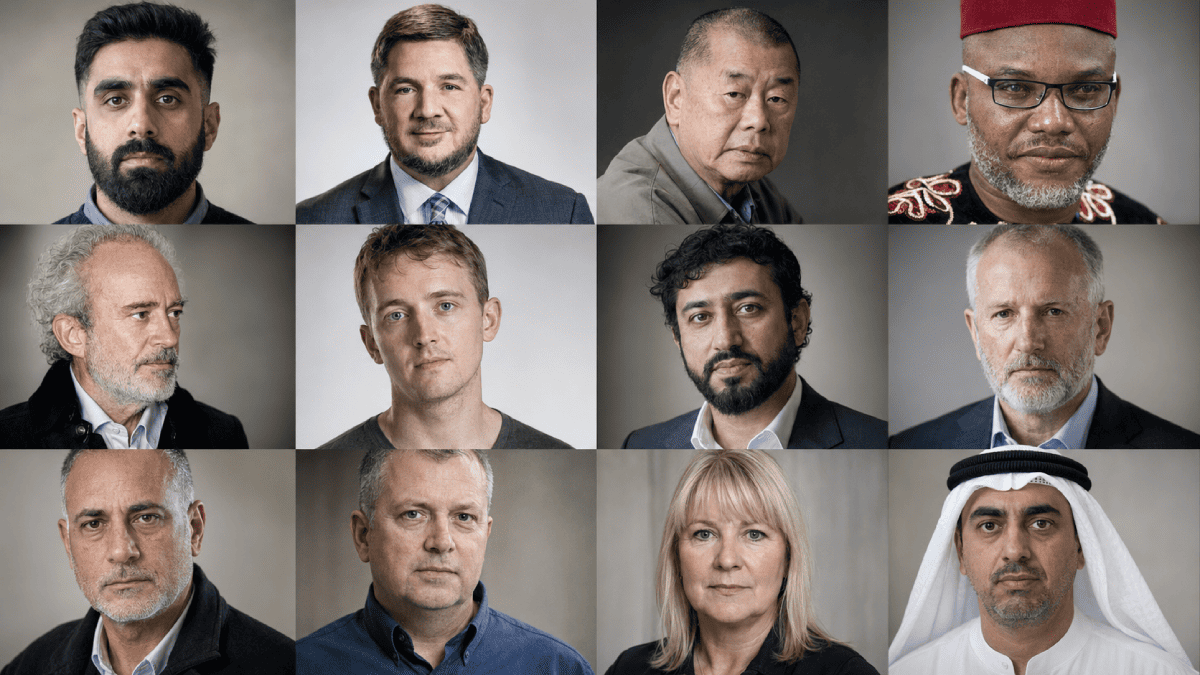
On January 8th 2026, Iain Duncan Smith from the conservatives stood in the Commons and read twelve names into the record: British nationals subject to arbitrary detention abroad.
A backbencher compiled the list from campaign groups, court papers, and UN rulings, because the department responsible for those citizens publishes nothing of the kind. Say what you like about Duncan-Smith, but his record on China, and fighting for the things others can't be bothered with, is unimpeachable.
Every embassy logs the Britons in local cells, visits them, and files reports. The consular caseload exists. MPs have asked repeatedly for the subset Britain regards as arbitrarily detained or held as leverage, and the Foreign Office declines to supply a figure.
A department capable of counting develops a sudden innumeracy the moment Parliament wants the total. Twelve is an amateur guess. The real total is almost certainly much higher.
Ryan Cornelius, United Arab Emirates, 18 Years
Detained in Dubai in May 2008. Sentence extended by a further twenty years under retrospective legislation shortly before he was due for release. The UN ruled the imprisonment unlawful in April 2022 and called for reparations.
Charles Ridley, United Arab Emirates, 18 Years
Co-defendant of Cornelius. Completed the sentence for the underlying conviction and stayed inside regardless, courtesy of the Emirati mechanism for imprisoning debtors. The UN Working Group ruled against Abu Dhabi in August 2025 and called for his immediate release.
Ramze Shihab Ahmed al-Rifa'i, Iraq, 17 Years
British-Iraqi pensioner, seized in 2009 and allegedly tortured in secret detention. Acquitted more than once, then handed fifteen years after a court hearing lasting a quarter of an hour which turned on a confession he says was beaten out of him.
Jagtar Singh Johal, India, 9 Years
Sikh human rights campaigner, seized off a street in Punjab weeks after his wedding in 2017. Alleges torture and incommunicado detention. The UN found his detention arbitrary in May 2022, and the Foreign Secretary was still raising him with Delhi in June 2026.
Christian Michel, India, 8 Years
Alleged intermediary in the AgustaWestland helicopter corruption case, extradited from the Emirates in 2018. Years of custody without trial, and an argument he had already served longer than the maximum term available on conviction. The Delhi High Court dismissed a release plea in 2026.
Matthew Pascoe, Qatar, 8 Years
Marketing consultant held since 2018. The UN examined allegations of torture, forced confession, incommunicado detention, denial of lawyers, and withheld medical care, before finding the detention arbitrary and calling for immediate release with compensation.
Jimmy Lai, Hong Kong, 6 Years
Newspaper proprietor and democracy campaigner, sentenced in February 2026 to twenty years, which at 78 is a life sentence with extra paperwork. Britain calls the prosecution politically motivated.
Mehran Raoof, Iran, 6 Years
British-Iranian labour rights activist convicted on national security charges after proceedings condemned as grossly unfair. MPs were still campaigning for his release from Evin prison in April 2026, which finally took place in July
Nnamdi Kanu, Nigeria, 5 Years
British-Nigerian Biafran separatist leader, removed from Kenya to Nigeria in 2021 in circumstances nobody has satisfactorily explained. UN Opinion 25/2022 found the detention arbitrary. Convicted in November 2025 and given concurrent life sentences.
Ahmed al-Doush, Saudi Arabia, Two Years
British father arrested in August 2024 while visiting the kingdom, and sentenced to five years on charges resting substantially on social media activity. The UN Working Group found the detention arbitrary in March 2026.
Craig and Lindsay Foreman, Iran, One Year Each
A married couple riding overland by motorcycle, arrested in January 2025 and convicted of espionage, ten years apiece, with the appeal rejected in June 2026. His family says a further two years were added after he spoke to journalists. Britain calls the original sentences totally unjustifiable.
A Century Of Prison Time Between 12 People
Cornelius and Ridley have each been locked up longer than the iPhone has existed. Napier crossed Abyssinia with elephants for rather less. Six of the twelve carry a formal international finding in their favour, which makes the charge against Whitehall measurable rather than merely felt.
| Citizen | UN finding | UK demand for release |
|---|---|---|
| Jagtar Singh Johal | May 2022 | None |
| Ryan Cornelius | April 2022 | No |
| Nnamdi Kanu | 2022 | None |
| Matthew Pascoe | November 2024 | None |
| Charles Ridley | August 2025 | None |
| Ahmed al-Doush | March 2026 | None |
In each case the Working Group said the appropriate remedy was immediate release. In each case the prisoner is still inside. Not once has Britain adopted the finding and demanded compliance in terms a foreign ministry could mistake for seriousness.
Nine Years of Pleading for Faster Progress
Jagtar Singh Johal, a Sikh campaigner from Dumbarton, has been in Indian custody since 2017 amid allegations of torture and incommunicado detention. The UN found the detention arbitrary in 2022. Boris Johnson, to his credit, acknowledged as much in writing.
Whitehall's vocabulary since has retreated so far it now needs a search party. June 2026: faster progress towards a resolution. Later in June: faster progress towards a full resolution. July: pressing for a swift resolution. Nine years of imprisonment have extracted from the British state a plea for briskness.
MPs, embarrassed on the Government's behalf, now table early day motions demanding his release, since ministers cannot bring themselves to form the sentence.
The Foreign Affairs Committee reported how the Foreign Office under James Cleverly told Johal's family it would not publicly call for his release, in case doing so.... annoyed India into withdrawing consular access.
Having carefully considered the potential benefits and risks to Mr Johal of calling for his release, as well as the likely effectiveness of doing so, we do not believe this course of action would be in his best interests.
Officials treated access to a British citizen as the gift of the detaining country and adjusted their language to keep the gift coming.
Any government wishing to imprison a Briton without complaint need only hint at cancelling prison visits, and the Foreign Office will moderate itself. Britain has published its own price list.
Delhi read it. Abu Dhabi read it.
Everyone read it.
Riyadh Cited British Silence in Its Own Defence
Amnesty had reached its conclusion about Ahmed al-Doush by March 2025, a full year before the UN Working Group reached the same one. Britain, with a citizen in a Riyadh prison and an embassy a short drive away, took longer than a campaign group in London.
Asked what Britain was doing to free him, the Government explained it was bound by the Vienna Convention (which forbids interference in another state's judicial affairs) and recommended detained Britons obtain local legal advice.
Local legal advice. In a kingdom where the prosecution itself was the abuse, and where the courts answer to the man doing the prosecuting.
In a Westminster Hall debate in June 2025, Tim Roca MP told the Commons Saudi Arabia was citing Britain's failure to allege violations of al-Doush's rights as part of its own defence before the UN Working Group. British restraint had been entered into evidence by the jailer.
The Foreign Office had become a character witness for the Saudi state against a British citizen.
The Working Group found against Riyadh in March 2026 and concluded the prosecution should never have happened, since it arose from protected expression. The following month ministers were still monitoring individual cases of concern and regularly raising human rights.
He remains in al-Hair prison.
Whitehall's Best Customers Get To Torture
One thing is missing in the Pascoe case: any trace of a British minister demanding Qatar release him. No statement, no summons of the ambassador, no sentence anyone can quote. He surfaced on a backbencher's list in January 2026 and otherwise scarcely exists in British public life, eight years into an imprisonment the UN has condemned in the strongest terms available to it.
In between funding Hamas, Qatar supplies British gas, hosts British aircrew, buys British jets, and owns a good deal of London.
Pascoe offers the Treasury nothing whatever.
Ministers would say the two facts are unconnected, and no document in the public record proves otherwise.
What the public record does establish is the absence: eight years, one damning international finding, and not one sentence from a British minister naming him.
Any minister who resents the inference could dispose of it in four seconds by saying the name aloud.
FCO Officials Watched A Man Shake
Strategic timidity is one failure. The Matthew Hedges case exposed something worse. Hedges was detained in the Emirates in 2018, held in solitary confinement, interrogated at length, and medicated against his will.
British officials came to see him. They recorded a man shaking, avoiding eye contact, and suffering anxiety attacks, while representatives of the state he accused of abusing him sat in the room watching.
The Parliamentary and Health Service Ombudsman found officials had ignored the Foreign Office's own guidance on identifying torture, and concluded they had failed to notice signs of torture, failed to intervene, and failed to help.
The Foreign Affairs Committee called it a stinging indictment and diagnosed a defensive institutional culture incapable of admitting error.
A department unable to spot torture happening in front of its own staff is unlikely to spot it at a distance of four thousand miles, and has arranged its procedures accordingly.
Years Avoiding Parliament's Demands
The Foreign Affairs Committee investigated all of this and published Stolen Years in April 2023. Its central finding is devastating in its plainness: even where the UN has formally determined a British national is illegally detained, the ruling makes little or no tangible difference to how the Foreign Office handles the case.
Ministers were too slow or unwilling to name states guilty of hostage taking, and the approach was failing British citizens.
The Committee proposed a Director for Arbitrary and Complex Detentions with authority across Whitehall, a line to the Prime Minister, institutional memory, and a single job: getting people out.
The Government refused, preferring ministers, ambassadors, and geographical desks, and produced a reply the Committee publicly branded defensive.
Labour promised an envoy instead.
- October 2024: considering one.
- June 2025: details in due course.
- July 2025: forthcoming.
- January 2026: still forthcoming.
- Alistair Burt was finally appointed on July 14th 2026, more than three years after Parliament asked.
Cornelius, Johal, and Pascoe each served another three years while Whitehall considered whether one man could have one job.
Government guidance states plainly there is no legal right to consular assistance. Help is discretionary.
Ministers promised legislation creating a right in human rights cases and repeated the promise in May 2025; the guidance in August 2026 still says discretionary. Without a duty, no family can point to an obligation breached, and the department marks its own homework in perpetuity.
The strongest instrument, formal diplomatic protection by which Britain adopts a citizen's injury as an injury to the nation, is barely used.
Before it will even be considered, remedies and representations must be exhausted, after which the Foreign Secretary weighs legal risk, economic consequences, foreign policy consequences, defence, security, reputation, and political risk.
A citizen imprisoned unlawfully is placed on the scales opposite trade delegations and asked to outweigh them.
Jimmy Lai Proves Ministers Can Speak Up
The standard defence holds Britain cannot dictate to sovereign states or interfere with foreign courts, and consular language is therefore fixed by convention.
Jimmy Lai demolishes it.
Ministers call his prosecution politically motivated and demand his release, publicly, repeatedly, and by name.
No convention prevented it. No cable from Beijing softened the wording.
The words exist, ministers know them, and the printer works. MPs nevertheless attack the Government for denouncing Beijing while declining sanctions allies impose freely, so even the cheap case has its limits.
Iran held Nazanin Zaghari-Ratcliffe for nearly six years while Britain declined to settle an unpaid balance on Chieftain tanks the Shah bought and never received, a debt British courts had accepted was owed.
On 16 March 2022 the Ministry of Defence paid the £393.8 million and she was on a plane within days. Ministers called the outcome tenacious and creative diplomacy, having spent years insisting the two matters were unrelated.
Our country, in other words, can escalate when it feels like it. It can name a prosecution political, demand a citizen back, and settle the obstacle standing in the way.
The Government insists wider interests never determine individual cases, and no leaked instruction proves otherwise.
Its own machinery nevertheless guarantees each prisoner stays inside the same bilateral relationship containing trade, investment, defence, and security, and its own test for diplomatic protection openly admits economic and foreign policy consequences into the balance.
A pattern in which the loudest demands are reserved for the state Britain has least to lose by offending is not proof of motive. It is an invitation to explain the coincidence, which nobody has yet accepted.
What A British Passport Now Buys
A Briton is arrested. The case is filed as routine consular business. Officials visit and record his welfare. Evidence of torture or political motive accumulates. Ministers raise the case at appropriate opportunities. An international body rules the imprisonment unlawful. Britain takes the ruling seriously.
The case stays inside the ordinary bilateral relationship, competing for attention with arms sales and investment summits.
Years pass.
Somebody's children grow up without them.
Whitehall has built an apparatus able to recognise a foreign government is unlawfully imprisoning a British citizen without obliging itself to do a single thing differently.
The departmental sentence lengthens from monitoring the case to taking the UN judgment seriously and monitoring the case.
The cell door does not move.
Palmerston's claim was never really about gunboats. His argument concerned citizenship itself, and whether a state stands behind the individual holding it; even a moneylender in Athens; even a missionary in a mountain fortress; even when protecting him is embarrassing, expensive, and diplomatically tiresome.
Strip the principle away and a passport becomes a travel document with a photograph in it.
Ryan Cornelius will spend his nineteenth year in a Gulf prison. Jagtar Johal will spend his tenth in India. Matthew Pascoe will spend his ninth in Qatar, unmentioned by any minister.
The Foreign Office knows precisely where all of them are, visits them on schedule, and will not tell the British public how many others are sitting in cells alongside them. Terribly sorry old chap, nothing we can do. Too busy unloading the small boats of jihadis.
Civis Britannicus sum, and the strong arm of England, will monitor developments closely. As your family rot.