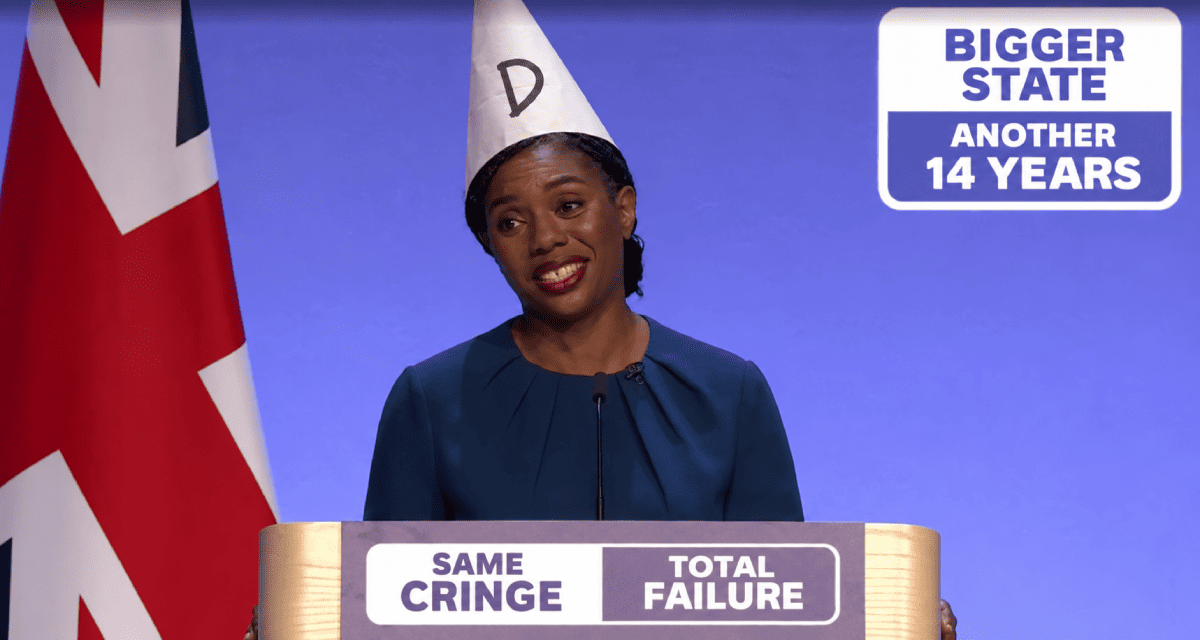
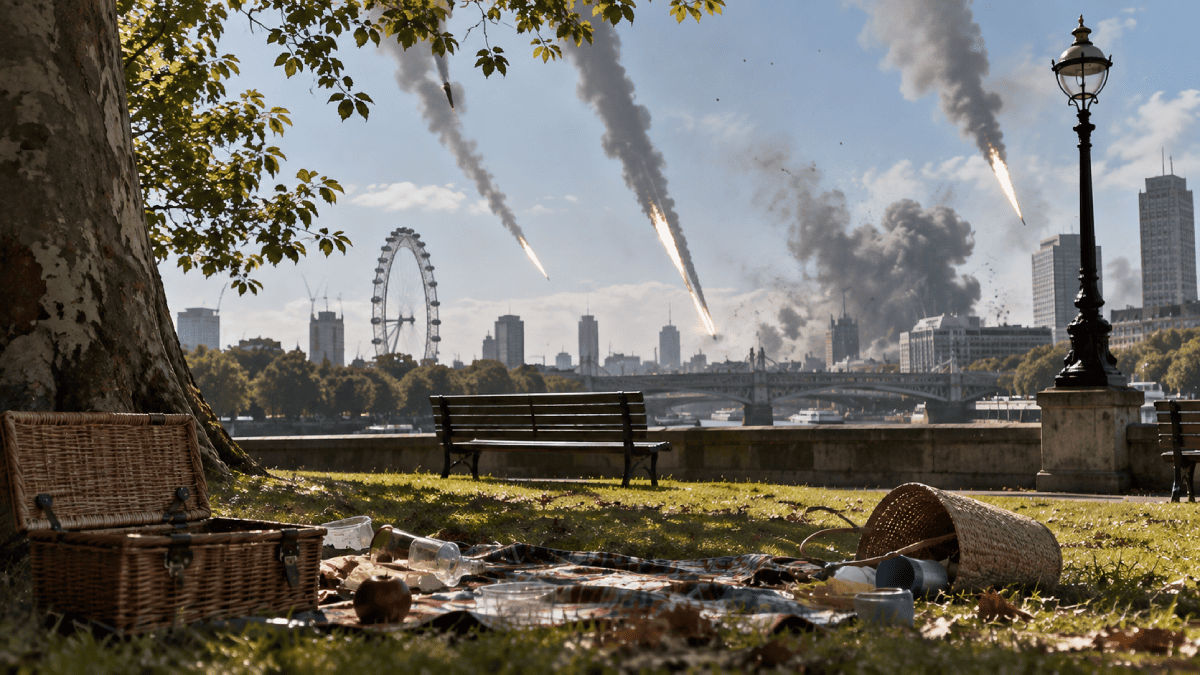
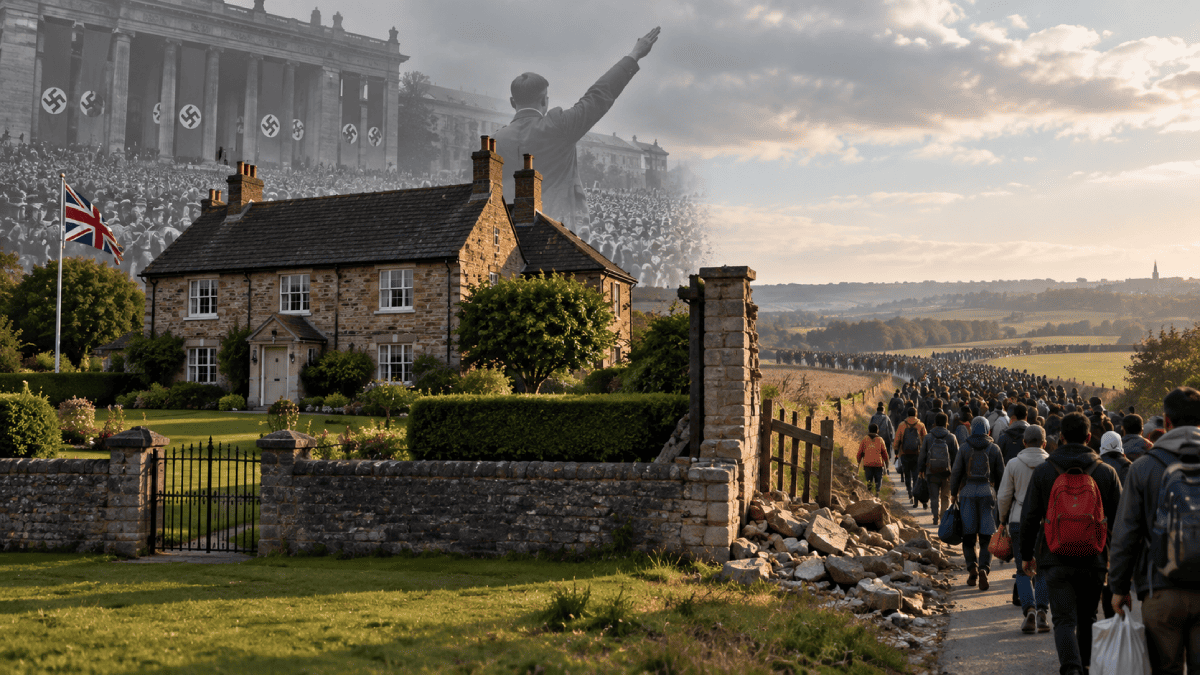
The Case For Dictatorship
Parliament holds more legal power than almost any legislature on earth and spends it on newt surveys. Cromwell cured a sitting like this with musketeers. Britain needs a five-year ruler, a shortlist running from Clarkson to Princess Anne, and the finest bank holiday in English history at the end.

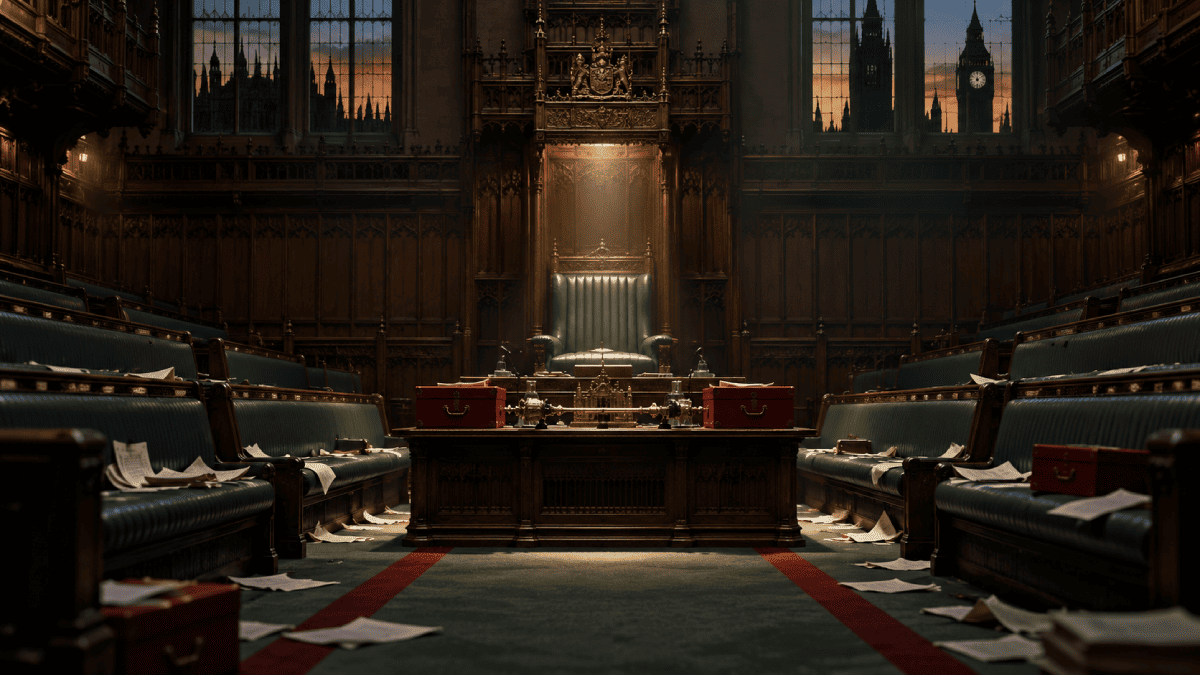
At eleven o'clock on the morning of 20th April 1653, the infamous Oliver Cromwell walked into the House of Commons in plain black clothes and grey worsted stockings, sat down, and listened. He managed a few speeches. Then he stood, put on his hat, and told the feckless Members of the Rump Parliament:
You have sat too long for any good you have been doing.
A company of musketeers cleared the chamber. Major-General Thomas Harrison is said to have pulled the Speaker, William Lenthall, out of his chair. Cromwell walked out last and locked the door.
One sympathises. Glorious work, frankly.
Nobody marched on London to put them back.
Britain has waited 373 years for a good enough reason to do it again. It now has several hundred thousand of them, and a great many concern newts.
The full text of this amazing moment in English history truly is something to behold:
"I say you are no Parliament!" roared the lord general, hot with anger. "Some of you are drunkards." His eye fell on a bottle-loving member. "Some of you are lewd livers; living in open contempt of God's commandments" His hot gaze flashed on Henry Marten and Sir Peter Wentworth. "Following your own greedy appetites and the devil's commandments; corrupt, unjust persons, scandalous to the profession of the gospel: how can you be a Parliament for God's people? Depart, I say, and let us have done with you. In the name of God—go!"
"It is you that have forced me to this," said Cromwell, with a shade of regret in his voice. "I have sought the Lord night and day, that He would rather slay me than put upon me the doing of this work."
Cromwell may have been many things, but he was a true and massive badass.
Good Riddance To A Bad Parliament
The Rump Parliament was never meant to last and was the remnant left standing after Pride's Purge in 1648: a stopgap, expected to arrange its own replacement and go. Instead its members entertained a scheme under which sitting MPs would keep their seats without facing the voters, and only the vacancies would go to election.
The army asked for a new Parliament. The Rump offered more of itself.
Cromwell had beaten the future Charles II at the Battle of Worcester eighteen months earlier. He ran out of patience long before the Rump ran out of agenda.
Any modern voter will recognise the type: a legislature which confuses its own survival with the national interest, talks while the country waits, and treats every demand for speed as an assault on procedure.
What followed gave England its only written constitution. The Instrument of Government, drafted by General John Lambert and adopted in December 1653, ran to forty-two articles and made Cromwell Lord Protector on 16th December.
A soldier wrote it in weeks.
Westminster has spent the three and a half centuries since explaining why such a document is far too difficult to attempt.
Then came the Rule of the Major-Generals. From October 1655, England and Wales were carved into districts, each run by a senior officer with a written brief, a mounted militia, and his own revenue: a 10% "decimation tax" on Royalist estates.
They closed disorderly alehouses, broke up plotting at race meetings, and collected the money.
The commissions went out on 11th October and the system was proclaimed on 31st October. Three weeks from paper to provinces.
They got shit done.
What stopped them?
Parliament.
On 29th January 1657, the Commons threw out the Militia Bill by 124 votes to 88, cut off the funding, and the whole arrangement folded within weeks.
The one force in seventeenth-century England capable of halting a working administration was a room full of men who resented paying for it.
But they got a lot of shit done.
Rome Kept An Official Dictator For 300 Years
The Romans never saw dictatorship as a breakdown, but as equipment. The Roman dictator was a lawful office, filled when the Republic faced an emergency, with a term capped at six months.
The crisis passed, the powers went back, and the dictator went home. Job done; trebles all round.
The model citizen was Lucius Quinctius Cincinnatus, a humble farmer summoned from his plough in 458 BC to rescue a trapped consular army. Tradition holds he won the campaign and resigned after sixteen days.
The officers of the American Revolution named a society after him. The Americans named a city after the society.
The trouble began only when Sulla and Caesar treated a six-month office as a career.
Rome's one error was letting the term limit lapse. A competent people writes the expiry date into the appointment and enforces it.
Britain sadly has no such office.
When the country faces an emergency of competence rather than invasion, it has nobody to send for.
It holds a stupid, self-serving, toothless inquiry instead.
Hailsham's Warning Of An Elective Dictatorship
On 14th October 1976, Lord Hailsham gave the Richard Dimbleby Lecture on BBC One under the title "Elective Dictatorship." His complaint was simple. A government with a Commons majority could pass almost any law it pleased, and nothing written stood in its path.
He called for a written constitution to restrain it.
Fifty years on, the British state keeps every power Hailsham feared.
Parliament remains sovereign. A majority can repeal a statute between lunch and dinner. No court can strike down an Act.
On paper, a British Prime Minister commands more legal authority than almost any elected leader in the democratic world.
In practice, the same state needs fifteen years and a third of a million pages to approve a road.
Parliament built this itself.
Every planning duty, statutory consultee, habitat obligation, and route to judicial review was passed by the same sovereign body which could repeal any of them by Thursday. Hailsham warned of a government able to do anything.
His successors created one which applies to itself for permission, objects to its own application, and then pays a barrister to argue both sides.
359,866 Pages Of Crap And £100m For Bats
| Project or institution | What the sovereign Parliament managed |
|---|---|
| Lower Thames Crossing | First raised in Parliament 36 years ago. Planning application of 359,866 pages, including 1,800 on newts and 774 on bats. More than £800m spent before a spade went in. |
| HS2 at Sheephouse Wood | A £100m "shed" to shield a colony of Bechstein's bats. HS2's own chairman said there was no evidence high-speed trains interfere with bats. |
| Drinking water reservoirs | None delivered since 1992, when the Queen opened Carsington. |
| Crown Court | 80,061 cases outstanding on 31st March 2026. The courts minister warned at the present pace it could take nearly 300 years to return the backlog to pre-pandemic levels. |
| Housing ministry | Seven changes of Secretary of State in five years. |
| Public trust | 12% trust governments to put the country before their party, a record low. |
Lambert needed forty-two articles to govern three nations. National Highways needed 1,800 pages to discuss one amphibian.
700 years to fix the water pipes.
Put them back to back, and in 1000 years we could have a functional court system with a water supply.
Cromwell took three weeks to station a major-general in every region of England and Wales. Any dictator with a stopwatch could close the gap before the next spending review.
Six Candidates With Automatic Permission
A dictatorship needs a dictator. The brief is short: five years, total executive authority, one instruction to make the country work, and a fixed date for departure. Career politicians are excluded, for reasons the table above makes obvious.
Every name on the list shares one qualification: the public would trust them to be a common sense Briton who would get shit done, take no shit, and let us all go back to ordinary life while they took care of shit properly.
| Candidate | What is wrong with Britain | First decree |
|---|---|---|
| Jeremy Clarkson | Nobody may build anything | Planning refusals explained in person, on camera |
| Martin Lewis | The state is on the wrong tariff | The Treasury switches supplier |
| Sir James Dyson | The machine is badly designed | Any project 50% over budget is scrapped |
| Princess Anne | Nobody turns up | Ministers arrive on time, briefs read |
| Sir David Attenborough | The country needs calming | The bats are fine; build the railway |
| William and Catherine | Nothing outlasts an election | See below |
Jeremy Clarkson: A Farmer Fighting The Enemy
Clarkson has spent several series of Clarkson's Farm proving a man cannot sell a sausage roll in his own barn without the consent of West Oxfordshire District Council. The idiot council refused his restaurant.
He opened it anyway in July 2022, citing a "delightful little loophole". And we all know whose side we were on during that affair.
Not the council's.
The council served an enforcement notice on 12th August 2022. The Planning Inspectorate upheld the refusal, then granted him a car park for three years, after which he must restore the field to the condition he found it in.
No minister alive understands the planning system half as well. Clarkson has lived inside it with a film crew. He would also be the first head of government in decades to have personally run a farm, a shop, and a pub, which is three more businesses than the current Cabinet combined.
Martin Lewis: The Nation's Bills, Finally Read
Martin Lewis built MoneySavingExpert on one principle: never accept the first price, and always read the small print. Britain has signed every contract put in front of it for forty years without reading a word.
A Lewis protectorate would open the Treasury's drawers, find the PFI deals, the outsourcing renewals, and the consultancy frameworks, and ring every supplier to say the country is thinking of leaving.
Most would knock off a third on the spot. He's a wildcard, but he would get it done.
James Dyson: The Man Who Kills His Own Darlings
Dyson backed Brexit, then moved his company's headquarters to Singapore in January 2019. Critics called it hypocrisy. Admirers called it market research, since he went to inspect a working government at close quarters.
Better still, later in 2019 he cancelled his own electric car after concluding it was not commercially viable. Britain has never once cancelled a project for being a bad idea. HS2's first phase alone is now estimated at up to £66.6bn, against £37.5bn once quoted for the entire network.
Dyson would have killed it in a board meeting and gone home for tea. He's ruthless, and he's proved his track record.
Princess Anne: Attendance Is Compulsory
The underrated Princess Royal carried out 478 engagements in 2025, having topped the royal tally in 2023 and 2024. Only her brother, the King, did more. She has never been known to request a consultation, an away day, or a wellbeing strategy. And she never drinks when she's working.
Under an Anne protectorate, ministers would arrive on time, having read their briefs, wearing something sensible. Permanent secretaries would discover what a deadline is. Nobody would dare to work from home.
Anne doesn't f**k around. She lets people find out.
“When she had to give up smoking and drinking more or less at the same time, I admired her and asked her, ‘Is it very hard?’ She said, ‘No, Anne, once I make up my mind to do something I do it,’ ” Lady Glenconner said. “She was practical like that.”
She's not as cool as Margaret. Fine.
David Attenborough: A Voice To Calm A Nation
Sir David turned 100 on 8th May 2026, which makes him the only candidate older than most of the planning legislation he would be asked to repeal. His qualifications are unique.
He is the one Briton able to read 774 pages on bats aloud and make them sound interesting, and the one Briton whom the bats' advocates would believe if he told them the colony would cope with a railway.
Prime Minister's Questions would be narrated. The House would fall silent, watching a minister approach the despatch box, unaware he is being observed.
It's an unlikely one as we need someone skilled in violent political combat, but it's worth a playful thought.
Angela Rayner: Endorsed, Adored, And Unsuitable
Regular readers will notice one absence. The Restorationist endorsed Angela Rayner for Prime Minister in July and stands by every word. It is with real sorrow we cannot recommend Ange for this particular vacancy.
 Chris Woodhouse, Esq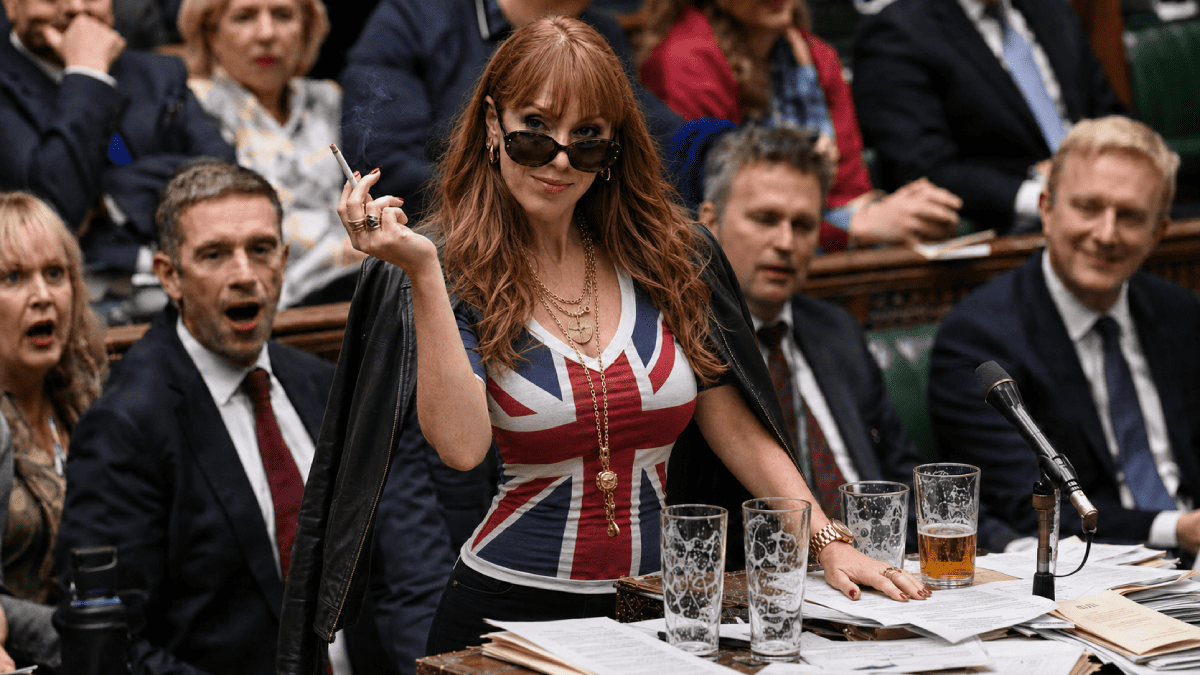
The qualities which make her ideal for Downing Street make her hopeless for the Protectorate. Her appeal as Prime Minister rests on her inability to do anything to the country: five years in which nothing is abolished, nothing is nationalised, and nobody in Whitehall feels the urge to launch a consultation.
A dictatorship asks for the reverse. The post demands a ruler who builds reservoirs, clears the Crown Court, and repeals half the statute book before lunch. Ange can't do that.
Ange returned as Housing Secretary on 20th July 2026, taking charge of a department on its seventh Secretary of State in five years.
Her excellent working class views on terrorists, who should be shot first and asked questions second, would serve any regime well.
Her views on everything else would leave it idle by Wednesday. A dictator who cannot be bothered is merely a Prime Minister with fewer meetings.
She remains our candidate for every job where the aim is for nothing to happen. Absolute power is not one of them.
Not The First William To Veto Parliament
The Crown owns the most interesting drawer in Westminster and is simply forbidden to open it. Every Bill still requires royal assent to become law. The power to refuse it was last used on 11th March 1708, when Queen Anne rejected the Scottish Militia Bill, and even then on her ministers' advice.
Since then convention has done the work no statute ever did: the monarch acts on ministerial advice, and statute overrides the prerogative wherever the two collide. The Bill of Rights 1689 forbids the monarch to suspend laws or raise taxes without Parliament.
No King can govern by withholding his signature.
He can, however, make Parliament extremely uncomfortable.
A veto stops new laws and repeals nothing. Yet a monarch who declined to sign anything at all until Parliament cleared its own planning statutes would discover within a fortnight how much of the constitution rests on good manners.
William would gain no new power. He would merely begin asking, in public, why he holds the old ones.
In the 1690s, William III treated the veto as a working tool. He refused a Place Bill to general consternation and killed the first Triennial Bill, which would have forced regular elections upon him. He signed the Triennial Act only in December 1694, and then with teeth gritted.
The next King William would merely be reviving the family business.
The Convention Parliament of 1689 offered the throne jointly to William and Mary.
Three centuries later, the country has another William with a wife more popular than any minister. YouGov's tracker in July 2026 put the Prince of Wales at 76% favourable and the Princess at 74%.
No Prime Minister of the past decade has come within sight of either figure, and the current one reached Downing Street without his party finding anyone to run against him.
A King who governed would also solve the problem every other candidate faces: Clarkson, Lewis, and Dyson all leave after five years. The Crown never leaves.
Five-year plans become fifty-year plans. Reservoirs get built because the man who orders them will still be on the throne when they fill.
Strongmen On A Lease: Churchill And Thatcher
Britain sent for glorious Churchill in 1940 and gave him a free hand to win a war. It removed him at the ballot box in July 1945, before the war in the Pacific was over. It elected the old battleaxe Thatcher three times to break the unions and the Treasury consensus, and her own party threw her out in November 1990 without consulting a single voter.
Nigel Farage now offers the same promise of decisive government, and the public responds in its traditional way. Nige is the man from the pub, the old bruiser, who will get in there and sort it out. He's stuck around and shown he's made of the same stuff.
Opinium's September 2026 polling put Reform four points behind Labour, with Farage on a net rating of minus 26. Britain yearns for a strong leader right up until one presents himself, and then asks to see his references.
Britain already hands near-absolute power to individuals, through Commons majorities and party machines, and already removes them when it tires of them.
It simply never writes down the arrangement, never fixes the term, and never gets the reservoir. Seven Prime Ministers in a decade have delivered all the instability of a revolving dictatorship and none of the output.
We install dictators all the time. We've done it for centuries. This is the family business. As Sir Humphrey says, this is a British democracy, Bernard.
Five Years, One Ruler, And A Holiday
One ruler, chosen from a referendum shortlist like the one above. A term of five years, written into the appointment and impossible to extend. Full authority to repeal, build, and dismiss. Parliament retained in an advisory capacity, with tea.
On the final day, the ruler hands back the keys and Parliament resumes, freed of fifty years of its own paperwork. If not, we simply kill him.
Cromwell showed how the story ends - beautifully. Parliament offered him the Crown in 1657; he declined, and took a new constitution instead. He died on 3rd September 1658.
His son Richard lasted eight months. The Declaration of Breda promised pardons, and on 29th May 1660, his thirtieth birthday, Charles II rode into London through cheering crowds.
Parliament made the day a public holiday. Oak Apple Day was kept for nearly two centuries, with oak sprigs in hats and pinches for anyone found without one.
A dictatorship gives a nation two things no Parliament has managed in living memory: five years of decisions, and then the Great Restoration. Nobody ever held a street party for the end of a consultation period.
England threw one for the end of the Protectorate and kept throwing it until 1859.
Fifty years of Parliament's elective dictatorship have produced 359,866 pages, £100m of bat shelter, and a court backlog measured in centuries.
Five years of Cromwell's Protectorate produced a written constitution, a working provincial administration, and, as soon as it ended, a national holiday. Churchill didn't like the whole thing, but it got shit done.
Send for the musketeers.
Lock the door behind them.
And keep the oak sprigs handy.