The Final Catastrophe Of A “National Care Service”
Britain’s care bureaucracy has devoured councils, concealed billions in SEND debt, and turned civic government into managed insolvency. Burnham has examined the wreckage and decided Britain needs much more of it. The Civil Service gets responsibility for the daily life of every adult in England.
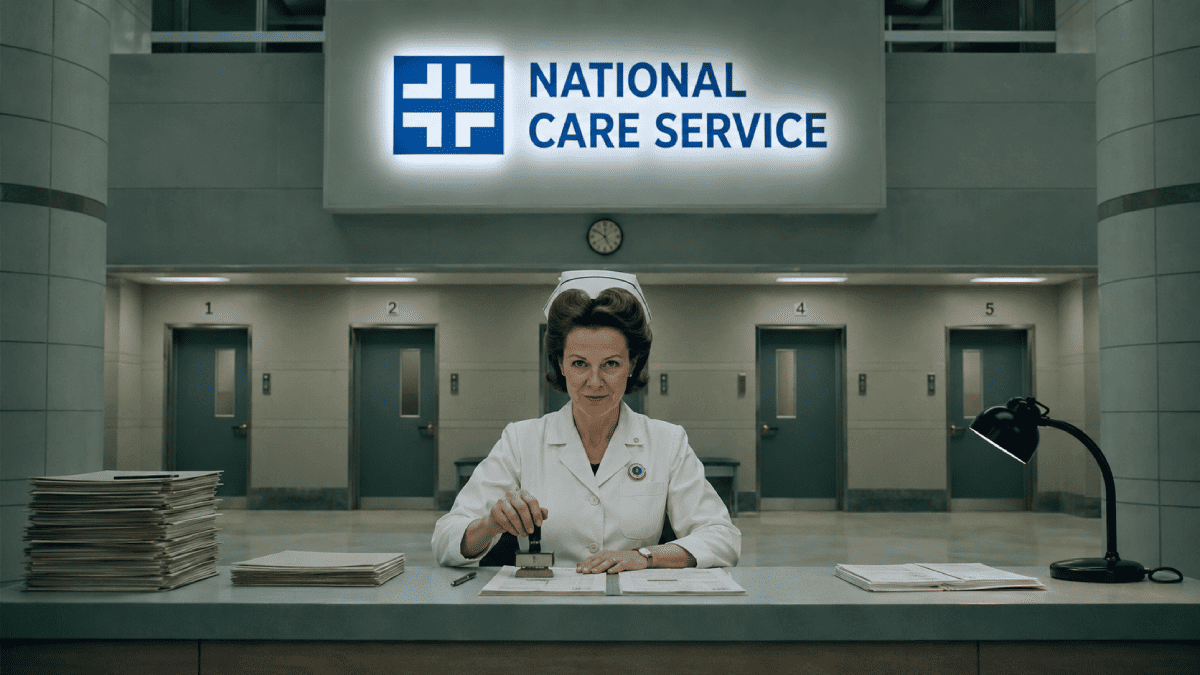
They can't stop themselves. They can't fight the urge. They have no new ideas and can't think. In one of this country's darker eras, Starmer pushed zealously for the National Suicide Service. Mahmood is promoting a National Police Service. Andy Burnham, as the engineered fashionable face of socialist ruin for liberal women-of-a-certain-age everywhere, wants his place in the post-war pantheon as the new Attlee.
Burnham would realise his decades-long dream of founding a National Care Service: another capitalised national institution, another promise "free" at the point of need, and another permanent claim on earnings which do not yet exist.
The sales pitch almost writes itself of course, as it tends to with left-wing projects before they become disasters. Nobody wishes to abandon an elderly woman with dementia, a profoundly disabled man, or a child being beaten at home. “Care” arrives morally armoured. Add “National” and every local difference becomes a postcode lottery. Add “Service” and political discretion becomes an entitlement. Ministers can then argue about which tax must rise, never whether Whitehall should assume responsibility for the ordinary needs of adult life.
England has already run the experiment through local government and its origins were genuinely honourable. Councils housed destitute families, rescued abused children, and provided shelter where age or severe disability made independent survival impossible. Parliament widened each exceptional duty, one humane amendment at a time.
Rescue became maintenance. Maintenance became prevention. Prevention became wellbeing. Wellbeing now includes relationships, recreation, employment, emotional health, housing, and participation in society.
The municipal state has consequently become a care authority with a few civic ornaments attached. Roads, parks, planning, libraries, public conveniences, and town centres survive on whatever money remains after individually enforceable duties have been met. The remnants are not impressive.
Nationalisation represents the final terminal stage. It would not cure the financial pathology visible in councils. It would remove the local balance-sheet constraint which exposes it.
The truly worrying aspect of all of this is our politicians are no longer able to differentiate a good idea from a bad one. In the past, the political class could claim they didn't have the whole picture or historical context.
In 2026, with ubiquitous internet connectivity, digitised knowledge, and AI, there is absolutely no excuse - even for the mediocre - to not recognise or understand the catastrophic effects of pursuing the fools gold of socialism.
Social democracy, its precursor, even fails when it is supported with massive natural resource wealth. After being promoted to the middle class with the same "hope and change" snake oil, it fails, murderously, immiseratingly, and ruinously, every time, for the same reasons which have been endlessly documented. It cannot produce, is not compatible with human nature, and one cannot remake man.
“Care” Has Destroyed Local Government
Adult social care alone will absorb 37.9 per cent of councils’ overall net budgets in 2026–27. The Association of Directors of Adult Social Services records a rise from £15.1 billion in 2019–20 to £25.7 billion in 2026–27. Cash expenditure has grown by 70 per cent in seven years.
| Financial year | Adult social care net budget | Share of whole council net budget |
|---|---|---|
| 2019–20 | £15.1bn | 37.4% |
| 2020–21 | £15.6bn | 37.4% |
| 2021–22 | £16.5bn | 36.9% |
| 2022–23 | £17.7bn | 37.2% |
| 2023–24 | £19.2bn | 36.7% |
| 2024–25 | £20.5bn | 35.1% |
| 2025–26 | £22.6bn | 35.5% |
| 2026–27 | £25.7bn | 37.9% |
Source: ADASS Spring Survey 2026.
The percentage briefly declined because the denominator grew. No problem had been solved. Councils overspent their adult care allocations by £586 million in 2023–24, £764 million in 2024–25, and £715 million in 2025–26. Four-fifths overspent in each of the last two years. Two-thirds met part of the latest shortfall by underspending elsewhere, and 62 per cent used reserves.
Council tax has become a care subscription disguised as a local property charge. Of the 153 English authorities responsible for adult care, 142 used the full two per cent social care precept for 2026–27. The precept adds £35 to an average Band D bill and raises £688 million. It does not provide a settled funding system. It permits authorities with unequal property bases to extract more money for duties imposed uniformly from Westminster.
The National Audit Office found authorities with both adult and children’s social care responsibilities spent 61 per cent of their revenue expenditure on those two fields in 2023–24, compared with 57 per cent in 2015–16. The figure excludes much of the adjacent care state: SEND deficits, home-to-school transport, homelessness, temporary accommodation, public health, disability adaptations, youth offending, and several asylum-related responsibilities.
Local democracy cannot make a serious choice over most of this expenditure. A councillor may prefer road repairs to another commissioned package, but roads rarely arrive with a claimant, solicitor, tribunal, statutory assessment, safeguarding procedure, and judicial review. Parliament has ordered the care. The council receives the invoice.
Between 2010 and 2024, per-person expenditure on children’s social care rose by 11 per cent in real terms. Spending on culture and leisure, housing, planning and development, and transport fell by more than 40 per cent. Statutory services survived by eating the civic realm. Residents encounter it as potholes, shuttered libraries, cancelled buses, dirty high streets, and planning departments which take geological periods to answer an email.
Put simply, the main reason your village doesn't have a library, bus service, or road repairs is because your local council has been forced by statute law to spend the money for those things on "adult care" instead.
The Road To Hell And Good Intentions
The Poor Law dealt with destitution. Its history contains cruelty, humiliation, family separation, and the workhouse, but its jurisdiction was intelligible. Public relief followed an inability to secure subsistence.
The post-war settlement replaced this punitive inheritance with more humane institutions.
The Children Act 1948 followed wartime exposure of appalling conditions among evacuated and institutionalised children, as well as the death of 13-year-old Dennis O’Neill whose foster father beat and starved him to death. The Act required local authorities to establish children’s committees and receive children deprived of normal family life into care.
Few functions of government possess a stronger claim to the family realm or pre-empt re-evaluation of the libertarian dogma. A child cannot leave a violent home, earn his own living, execute a tenancy, or prosecute an abuser. Only public authority can remove him lawfully, investigate the parents, and establish substitute guardianship.
The National Assistance Act 1948 performed a similarly defensible task for adults. Section 21 required councils to provide residential accommodation for people who, owing to age, infirmity, or other circumstances, needed “care and attention” unavailable elsewhere. Section 29 permitted welfare arrangements for people with serious and permanent disabilities.
The limiting principles were destitution, grave incapacity, absent support, and danger. State intervention substituted for a person or family demonstrably unable to perform an essential function.
These were noble, well-intentioned, and honourable efforts with a laudable goal. They were justified.
They did not promise emotional wellbeing, social participation, consumer choice, or a personally satisfying life.
Parliament Converted Exceptions Into A System
The Chronically Sick and Disabled Persons Act 1970 widened the field decisively. Section 2 required a local authority, once satisfied of necessity, to arrange specified services for a disabled resident. These included practical help in the home, meals, telephones, home adaptations, recreational and educational activities, travel to them, and holidays.
A public duty born in the workhouse had reached the sitting room, telephone, excursion, and holiday. Each addition sounded compassionate. Their cumulative effect changed the governing principle from survival to participation.
The Local Authority Social Services Act 1970 created unified social services departments following the Seebohm Report. Section 7 gave central government power to direct councils in exercising social services functions. Separate relief provisions acquired a permanent profession, hierarchy, budget, doctrine, and administrative interest.
The Housing (Homeless Persons) Act 1977 established duties towards homeless households in priority need. Part VII of the Housing Act 1996 continued them. Ultimately the Homelessness Reduction Act 2017 expanded public involvement before accommodation was lost. Labour once again went one step further by repealing laws designed to deincentivise rough sleeping.
Councils must assess eligible applicants threatened with homelessness, prepare personalised housing plans, and perform prevention and relief duties. The authority moved from emergency shelter to managing an individual’s path through a housing market distorted by restricted supply, planning delay, regulation, migration, and high prices.
The National Health Service and Community Care Act 1990 added the machinery upon which the modern system depends. Section 47 required an assessment wherever a person appeared to need community care services. Councils increasingly commissioned provision from independent organisations rather than operating it directly. Ministers called this a market reform. Public liability remained intact while private organisations supplied labour and buildings. Outsourcing changed the payee, not the obligation.
The Carers (Recognition and Services) Act 1995 created assessment rights for carers. The Community Care (Direct Payments) Act 1996 allowed councils to provide cash for recipients to purchase services. The Carers and Disabled Children Act 2000 authorised services and payments for carers themselves. The Carers (Equal Opportunities) Act 2004 required authorities to consider a carer’s wish to work, study, or pursue leisure. These categories, of course, came to furnish mass immigration with its most popular route.
One dependent person could now generate two assessed clients, two sets of desired outcomes, replacement care, respite provision, direct payments, and related welfare claims. A severe caring burden can ruin an "able-bodied" relative’s health and employment. Public help may be justified. No minister supplied a limiting principle capable of distinguishing relief from an indefinite obligation to compensate every connected disadvantage.
Government preserves scarcity, then diagnoses people unable to navigate it as cases requiring public management. Temporary accommodation bills rise. Hotels and nightly paid rooms consume funds. Prevention teams write plans. None of this grants the council permission to build rapidly through planning constraints or remove the national policies inflating demand.
The same constitutional arrangement appears throughout care. Westminster controls the law and much of the underlying policy. Councils inherit the claimant and invoice.
Personal budgets became mainstream policy after 2007. Socialism supplied collective finance and legal entitlement. Consumerism supplied choice, control, and individual purchasing power.
Perfect Nordic social democracy without the sovereign oil fund to try to pay for any of it or the rampant suicide rate.
The resulting hybrid socialised dependency, commercialised delivery, and called the arrangement empowerment.
The Tory Care Act Annexed Adult Life
Jeremy Hunt and his Care Act 2014 consolidated decades of legislation to complete the ideological expansion of state reach; one can almost imagine the feverish civil servants and their house-trained master seizing the day. Section 1 places a general duty on local authorities to promote an individual’s “well-being” whenever they exercise a care and support function.
Parliament somehow defined wellbeing to include:
- personal dignity;
- physical and mental health, and emotional wellbeing;
- protection from abuse and neglect;
- control over day-to-day life;
- participation in work, education, training, or recreation;
- social and economic wellbeing;
- domestic, family, and personal relationships;
- suitability of living accommodation; and
- the individual’s contribution to society.
Official statutory guidance says no hierarchy exists between these matters. Councils must “actively seek improvements” across an intentionally broad range of life. The same guidance actually declares:
The core purpose of adult care and support is to help people to achieve the outcomes which matter to them in their life.
A government responsible for helping adults achieve personally important outcomes possesses no natural boundary. Employment, money, family, friendship, recreation, housing, health, dignity, autonomy, and social contribution constitute adult life.
Other provisions turn the ambition into administrative duties.
| Care Act provision | Local authority obligation |
| Section 1 | Promote individual wellbeing |
| Section 2 | Prevent, reduce, or delay needs for care and support |
| Section 3 | Promote integration with health services |
| Section 4 | Maintain information and advice services |
| Section 5 | Promote a diverse and sustainable provider market |
| Section 9 | Assess an adult who appears to need care and support |
| Section 10 | Assess a carer who appears to need support |
| Section 13 | Apply national eligibility criteria |
| Section 18 | Meet eligible needs where statutory conditions apply |
| Section 20 | Meet eligible needs of carers |
| Sections 24–27 | Produce plans, personal budgets, reviews, and revisions |
| Sections 31–33 | Make direct payments |
| Section 42 | Conduct safeguarding enquiries |
| Section 67 | Arrange independent advocacy in specified cases |
Assessment duties can arise regardless of the person’s finances. A wealthy resident may pay the final charge, yet the council remains assessor, planner, information service, market maker, safeguarding authority, and ultimate system steward.
The Care and Support (Eligibility Criteria) Regulations 2015 reveal the breadth of possible claims yet again smuggled in under secondary legislation written by the civil service: nutrition, hygiene, toilet needs, clothing, safe use of the home, a habitable domestic environment, personal relationships, work, training, education, volunteering, community facilities, public transport, recreation, and caring for a child.
Feeding and toileting sit beside volunteering and recreation within one legal architecture.
The desperate case protects the discretionary one: any attempt to narrow softer categories can be portrayed as an assault upon people unable to wash or eat.
Working-age adults account for nearly half of council adult care expenditure. In 2022–23, 48.3 per cent went to people aged 18–64, including 49.6 per cent of spending on long-term packages. New requests from working-age adults grew by 18 per cent between 2014–15 and 2022–23, more than three times their population growth. The analysis demolishes the comforting fiction of a bill produced mainly by elderly longevity.
An older person may need intensive support during the final years of life. A recipient entering supported accommodation at 20 can remain a public liability for six decades. Diagnostic expansion, declining family capacity, litigation, and professional identification can increase the working-age caseload without any equivalent demographic ceiling.
SEND Delivered The Coup De Grâce
Special educational needs and disabilities policy applies the same doctrine to childhood development. Its legal mechanism is even stronger. The financial effect has been so severe it essentially collapsed over half the councils in England.
Edward Timpson's Children and Families Act 2014 introduced Education, Health and Care plans for people up to 25. Section 36 requires an assessment where special educational provision may be necessary through an EHC plan. Section 42 provides the fiscal command: the local authority “must secure” the special educational provision specified in the plan.
The plan creates an individually enforceable entitlement which parents rationally pursue because ordinary school provision is unreliable, the document carries legal force, and tribunals can compel performance. Councils must buy the specified support even where they do not control supply or price.
| SEND measure | Recorded increase |
| EHC plans and predecessor statements, 2015 | 240,000 |
| EHC plans, 2024 | 576,000 |
| Increase, 2015–24 | 140% |
| EHC plans, January 2025 | 638,700 |
| Annual increase in 2025 | 10.8% |
| New plans issued during 2025 | 110,700 |
| Annual increase in new plans | 13.3% |
Sources: National Audit Office and Department for Education.
Funding rose by 58 per cent over a decade to £10.7 billion in 2024–25 without producing better outcomes. Independent special-school placements cost an average of about £61,500 a year, compared with £23,900 in the state-funded sector. Only 30,000 pupils occupied the independent placements, yet increased fees for this group added £900 million between 2015–16 and 2022–23. SEND administration rose by £176 million in real terms, while transport rose by £719 million.
Parliament created the right without creating enough public provision. Scarce private suppliers acquired pricing power. The council acquired the duty.
By 2024–25, local high-needs deficits were expected to reach £2.9 billion. The Department for Education estimated 43 per cent of councils would have deficits exceeding or approaching their reserves by March 2026. Rather than recognise mass council bankruptcy, Whitehall introduced a “statutory override” which placed the deficits in an unusable reserve outside councils’ ordinary financial position.
The name deserves appreciation. An insolvent private business might ask its auditor to put unpaid bills in an imaginary drawer. A council receives a statutory override.
The accumulated liability was forecast to reach £4.3 billion to £4.9 billion when the original protection expired. Government has since promised about £5.6 billion to bail out 90 per cent of historic deficits and intends to centralise SEND funding from 2028. The entitlement survived. The debt moved to Whitehall.
What they didn't mention was they had no choice, as the system of local government in England was about to collapse overnight.
SEND is not an unfortunate side issue. It is the model for national care: assess broadly, write an individual right, compel provision, conceal the deficit, and nationalise the liability once local government breaks.
Two things can be true at once. It is a wonderfully nice idea. It is also an unqualified catastrophe.
Municipal Bankruptcy Is No Longer Exceptional
Councils cannot enter corporate bankruptcy. Section 114 of the Local Government Finance Act 1988 requires a chief finance officer to report where anticipated expenditure cannot be met from available resources. New non-essential commitments stop, and the authority must confront the shortfall.
An organisation unable to meet obligations from income, selling assets to finance operations, borrowing with special permission, and relying upon emergency government support is insolvent in every useful sense.
The wording is itself dry and tedious.
The chief finance officer of a relevant authority shall make a report under this section if it appears to him that the expenditure of the authority incurred (including expenditure it proposes to incur) in a financial year is likely to exceed the resources (including sums borrowed) available to it to meet that expenditure.
In the private sector, this is known as going broke.
Birmingham City Council issued a section 114 notice in September 2023. Its position included an £87 million in-year shortfall, a disastrous Oracle implementation, poor accounts, weak controls, and a potential equal-pay liability initially estimated at £650 million to £760 million.
Claims arose from principles first legislated in the Equal Pay Act 1970 and later consolidated in Labour's 2010 Marxism Act. Predominantly female groups argued the Marxian case their labour was of equal value to predominantly male jobs which attracted bonuses or better remuneration.
Government’s intervention memorandum recorded materially misstated earlier accounts and reserves insufficient to meet the estimated liability. Commissioners later got £1.25 billion of exceptional financial support, most of it intended to cover Marxian equal pay claims.
Birmingham’s workers did not bankrupt the city by requesting the same wage for the same job. A complex pay and bonus structure, decades of accumulated exposure, retrospective legal liability, incompetent administration, and defective financial reporting produced a bill approaching three-quarters of a billion pounds.
The asymmetry is crucial to note and understand as part of the faulty process:
- Parliament creates the governing right.
- Courts determine its reach.
- Unions and claimants enforce it.
- Local residents surrender services and assets when the bill arrives.
- MPs who created the exposure never have to balance Birmingham’s books.
By February 2025, 42 councils had received exceptional bailouts.
For 2026–27, government agreed in principle to bail out 36 authorities with taxpayer money to stop them going broke. The list includes:
- £121 million for Shropshire
- £119 million for Croydon
- £92 million for Warrington
- £84 million for Haringey
- £79.6 million for Barnet
- £78 million for Bradford, and
- £70 million each for East Sussex and Redbridge.
The Government’s 2026–27 bailout schedule runs A-Z from Bedford to Worthing.
Much of this “support” consists of permission to borrow or use capital receipts for revenue expenditure. Councils sell buildings, land, and investments, or mortgage future income, to pay current statutory bills. The local inheritance finances one more year of managed decline.
Normally, people who collapse subsidiaries en masse tend to lose their jobs. In the world of British governance, they get promoted.
Nationalisation Metastasises Like Cancer
A National Care Service offers a politician something no repair to local finance can provide: a foundation myth. A funding formula earns no glorious statue; a named national institution promises anniversaries, documentaries, commemorative stamps, and the claim to have completed Attlee’s disastrous supposed settlement.
The civil service receives an even richer prize. Because, of course. And they make it abundantly clear their contempt for local government.
National care requires national eligibility, standards, commissioning rules, pay structures, workforce plans, training, data, inspection, capital programmes, provider rescue, professional registration, integration bodies, equality frameworks, and outcome measures. Every function requires officials. Every failure supplies evidence of underfunding. Every local variation becomes an argument for another central rule.
National standards convert a service level into a minimum entitlement. Minimum entitlements create claims. Claims require assessment, appeal, enforcement, and money. The Treasury becomes the final payer while ministers retain the political profit from generosity.
Local government still exposes the cost. Council tax rises while bins, roads, and libraries deteriorate. A section 151 officer must certify a balanced budget. Section 114 makes failure public. Residents can compare the promise with the wreckage outside.
National government can borrow, spread the liability across 30 million taxpayers, invent a levy, and call every shortfall historic underfunding.
The Health and Social Care Levy attempted precisely this manoeuvre in 2021. Boris Johnson proposed a 1.25 percentage point National Insurance increase, expected to raise about £12 billion annually. It was repealed in 2022 before becoming the permanent separate levy promised. It's the same money Burnham is trying to find again now.
No funding device answered the prior questions.
- Which social needs belong to the public?
- Where does family responsibility end?
- Which degree of incapacity creates a compulsory claim upon strangers?
- Which assistance prevents abandonment, and which improves a desired outcome?
- How can an entitlement remain bounded when assessors, providers, campaigners, and recipients all benefit from expansion?
Money cannot settle a jurisdiction.
Our politicians are intellectually incapable of debating these questions to any serious depth. Perhaps an introductory one should be asked they can understand:
If voters are not having children because they can't afford a house, and the housing problem and its downstream effects are a result of state intervention (planning permission, interest rates, immigration, council house stock, rent caps, etc), then why and how is the state the answer to the problem it created?
Government Cannot Become Nurse Ratched
The progression across adult care, children’s services, SEND, and homelessness is consistent.
| Original intervention | Expanded public responsibility |
| Rescue an abused child | Promote the development and welfare of every “child in need” |
| Shelter a destitute family | Prevent threatened homelessness through personalised plans |
| House an infirm adult | Promote wellbeing across relationships, work, recreation, and society |
| Educate a severely disabled child | Secure an individually specified package through age 25 |
| Relieve an overwhelmed carer | Assess and support the carer’s work, education, and leisure outcomes |
None of the original responsibilities needs to be treated with contempt. Civilisation does not leave a helpless person to die, return a child to a sadist, or tell a profoundly disabled family to manage alone. Exceptional public protection is compatible with a limited state because incapacity, abandonment, and immediate danger can be defined.
1 - 2% of the population are always going to end up in prison, addiction rehab, or the streets. This isn't a problem ideology can fix. It's a demographic and statistical population distribution problem mentioned in the Bible.
The modern care doctrine abandons those boundaries. Difficulty becomes need. Need becomes assessment. Assessment becomes a plan. The plan becomes an enforceable entitlement. Every entitlement creates a provider market, administrative workforce, legal constituency, and permanent demand for funding.
The final destination is not a better care home. It is the subsumption of adult life into government administration.
A National Care Service would make Whitehall responsible, in principle, for helping adults eat, wash, travel, work, socialise, maintain relationships, enjoy recreation, inhabit suitable accommodation, exercise control, and contribute to society. Those are not services adjacent to life. They are life.
As one aggrieved reader put it in the broadsheets:
The National Health Service has for decades been synonymous with inefficiency, waste, interminable waiting times, insatiable demand, poor health outcomes and scandalous errors. Why any British politician would wish to emulate this model by creating another free-at-the-point-of-use service for social care is beyond comprehension.
Local government has already supplied the accounts. Sixty-one per cent of relevant revenue expenditure goes to adult and children’s social care. Adult care consumes nearly two-fifths of whole council net budgets. SEND generated debts so large Parliament suspended ordinary accounting and transferred billions to the Exchequer. Thirty-six authorities require exceptional support in a single year.
Burnham proposes to place the same doctrine behind a national name, a national workforce, and the borrowing power of the sovereign state.
The councils went first. Their civic functions withered, their assets were sold, their taxes rose, and their books still failed to balance.
A National Care Service would not rescue them. It would nationalise their catastrophe.