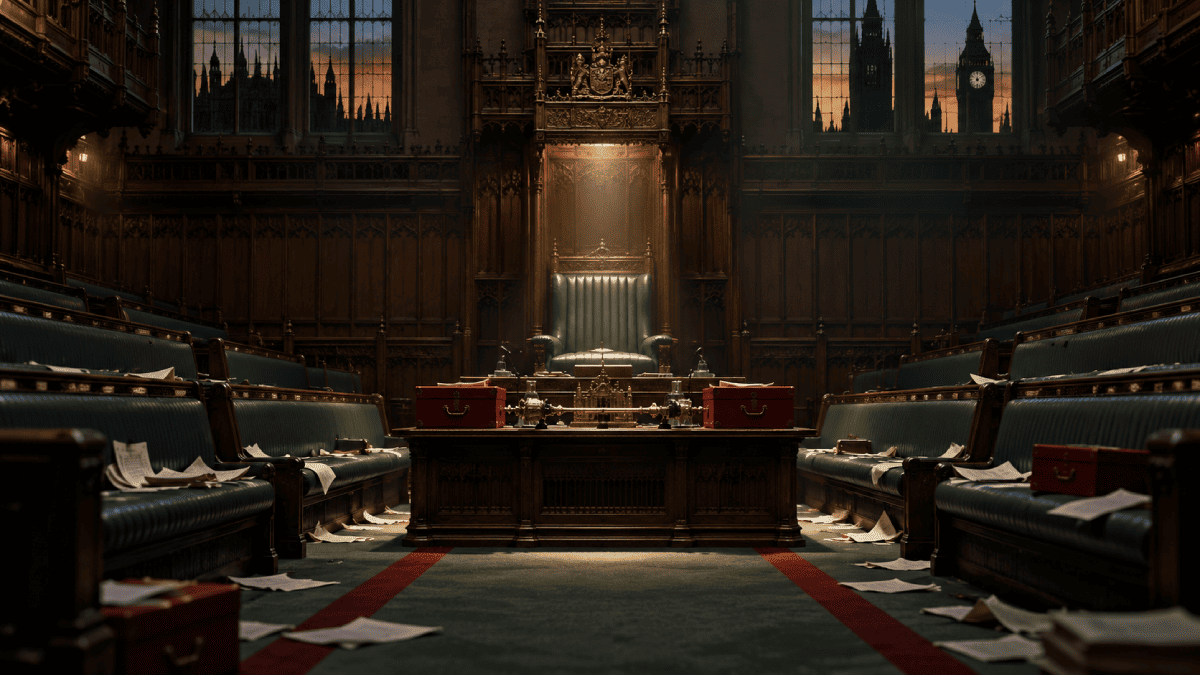
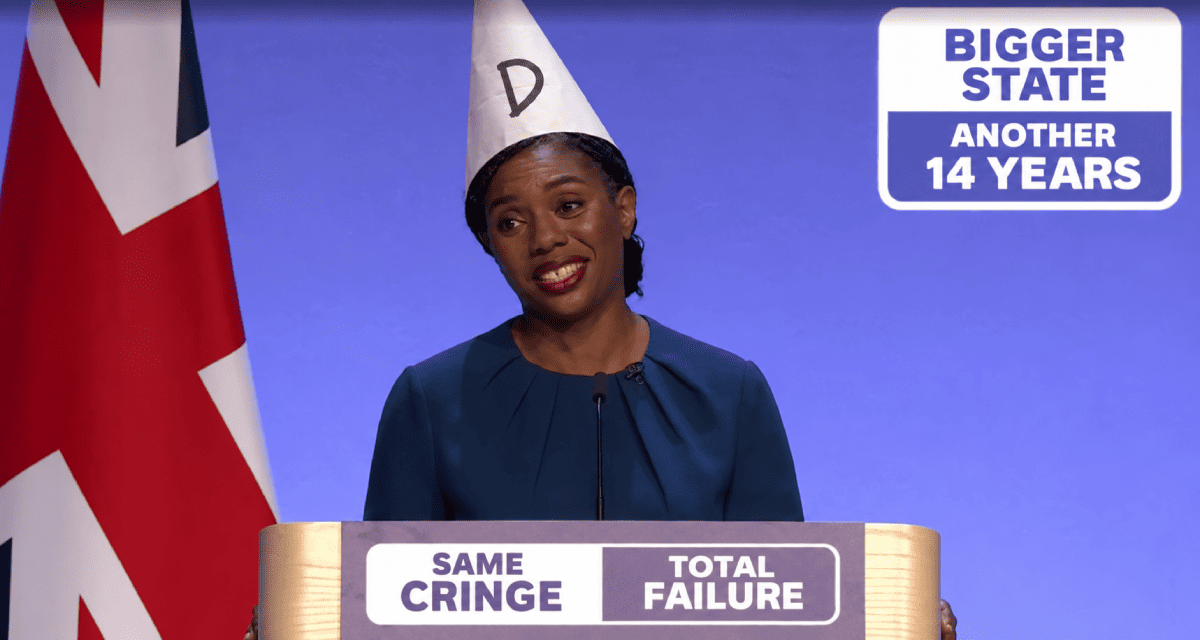
The Last Invention Man Need Make
Steam taught machines to move. AI taught them to read, reason, and reply. Britain built its wealth on clerks, analysts, and advisers, then fined every firm for hiring one. Now the clerks are going, the Treasury is skint, and Westminster's only plan is another quango. Mass unemployment is coming.

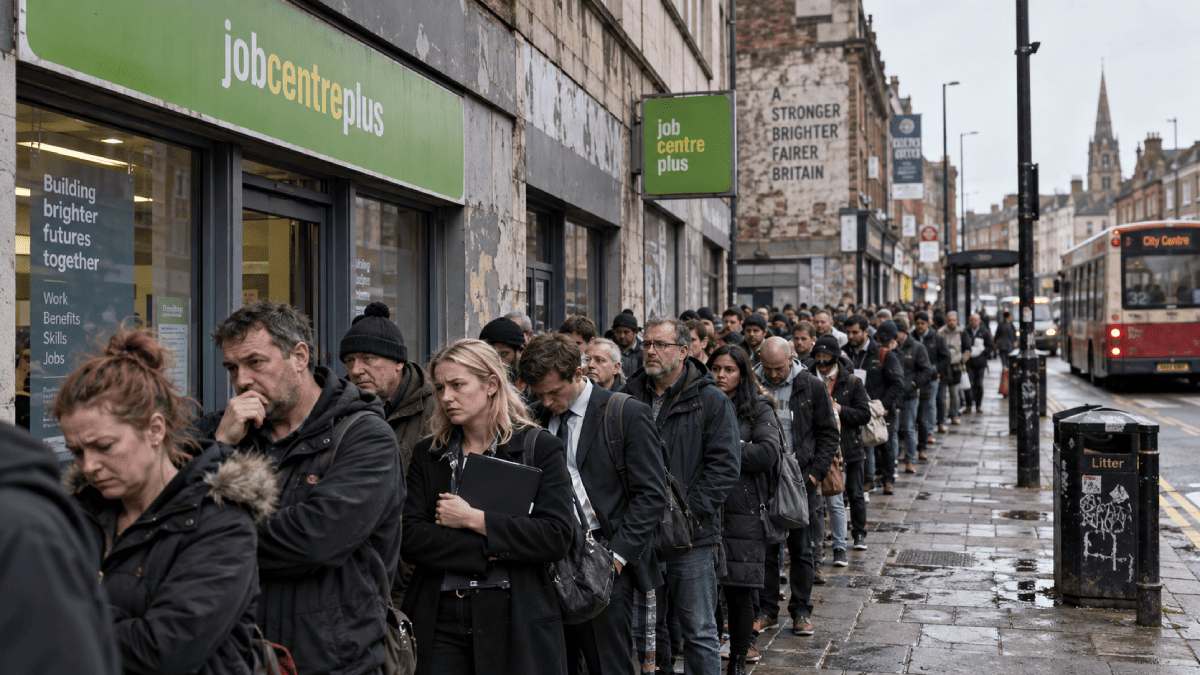
Understanding AI and its terminology can be difficult, but it isn't. Knowledge work is the field we managed with shovels; AI is the plough. During the Industrial Revolution, England invented a way for machines to do physical work. A century later, Turing predicted they would one day have brains, of sorts. Ten years ago, researchers designed a way for us to talk with machines in human language. It is the equivalent of being able to talk to a rock or any other inanimate object. Around the same time, researchers also taught the same machines to reconstruct imagery and sound.
Being able to talk to machines, and them understanding human symbology, is as profound as splitting the atom. While machines were previously employed for physical labour (in a factory, say), now machines may be employed for knowledge work.
The first revolution took decades. AI is evolving in months. The inevitable consequences will be similar to the atom: weaponisation versus domestic use. The second order effects are entirely predictable: where it is cheaper, faster, and smarter to use a machine over a human being, anyone in a competitive market will use a machine.
A computer programmer costs $150,000 per year plus benefits, taxes, regulations, sick days, attitude problems, employer NI, and maybe even lawsuits. Ten of those means millions of pounds.
AI bots can write code like an automatic typewriter for the cost of a $20/month subscription. One senior technician is needed for supervision. A team of ten loses nine. A one-person startup can punch over their weight to ten.
That's where it starts. The others who follow are anyone who writes or calculates anything. Office workers, technicians, administrators, clerks, mathematicians, chemists, biologists, physicists, researchers, translators. They are "at risk of AI employment shock."
But it is first useful to know how it all began in England.
In 1712 a Dartmouth ironmonger named Thomas Newcomen erected an engine near Dudley Castle to pump water from a coal mine. The Newcomen atmospheric engine was wasteful, filthy, and slow. It changed the world anyway: for the first time, a machine could do heavy work without a horse, a waterwheel, or a man on the end of a rope.
James Watt's separate condenser, patented in 1769, made steam cheap, and within a century it had rebuilt British industry, British cities, and the British working day.
For the next three centuries, every machine needed instructions in its own terms. Levers, punch cards, and programming languages all made the human learn the machine's tongue.
The Discovery Ten Years Ago
In 2017 eight Google researchers published a paper with the cheeky title Attention Is All You Need (named by the Welsh researcher on the team in honour of the Beatles' song). It described the transformer, built around a mechanism called self-attention: each word in a passage weighs every other word to work out what it means. "Bank" beside "river" is one thing; beside "overdraft", quite another.
Stack enough of these layers, feed them enough human writing, and the result understands what you say and answers back.
A second breakthrough gave machines the ability to create pictures, sound, and moving images. It is called diffusion, and the principle is wonderfully simple.
- Take a photograph and gradually add random noise until nothing remains but television static.
- Train a machine to reverse the process, removing the noise a little at a time until the picture reappears.
- Once it has learnt how, give it fresh noise and a description of something it has never seen. Out of the static emerges a new image.
The same principle can generate speech, music, sound effects, and entire sequences of moving pictures. Combined with transformers, which can interpret the instructions, machines can now create much of what previously required writers, artists, musicians, photographers, animators, and film crews.
Humanity found a way to talk to machines, and a way for machines to talk back.
The closer parallel is April 1932, when John Cockcroft and Ernest Walton split the atom at the Cavendish Laboratory in Cambridge. Their experiment powered nothing. It proved matter held an enormous store of energy and people could get at it; reactors and bombs followed.
Self-attention unlocked the energy stored in language, and "language" turns out to mean almost everything.
A transformer in AI cares nothing for whether its symbols are English or Japanese. They are written symbols.
Musical notation is a string of symbols.
A chemical structure written as atoms and bonds is another, as are a protein spelt in a twenty-letter alphabet of amino acids, a mathematical proof, a contract, a balance sheet, and a block of code.
In 2020 researchers showed a photograph could be cut into patches and read like a sentence, in a paper titled An Image Is Worth 16x16 Words.
In 2024 Demis Hassabis and John Jumper took the Nobel Prize in Chemistry for AlphaFold, an attention-based system which cracked protein folding after biologists had spent half a century failing to.
Any job consisting of reading symbols, reasoning about them, and writing new ones is now within a machine's reach.
30-70% Of UK Workers At Risk
Britain spent forty years converting itself into a nation of clerks, analysts, advisers, and administrators. Services make up around 80% of the economy. In a written answer on 20th July 2026, the Government cited IMF estimates putting around 70% of UK workers in occupations containing tasks AI could perform or enhance, against roughly 60% in the United States and other rich economies.
No large economy has more of its workforce in the firing line.
The Office for Budget Responsibility reckons around 10% of the UK labour force could be exposed to substitution by AI over the next decade, with a further 30% seeing their work complemented.
Ten per cent of a 36.3 million labour force is 3.6 million people.
It's safe to say the OBR is wrong this time. Very wrong.
In March 2026 Bloomberg reported HSBC was weighing cuts affecting around 20,000 roles, a tenth of its staff, over three to five years, with middle- and back-office work first in line and attrition doing much of the work. Its chief executive, Georges Elhedery, later told investors generative AI will "destroy certain jobs".
Bloomberg Intelligence expects banks worldwide to shed up to 200,000 roles over the same period.
Bank of England staff found vacancies for customer service and administrative roles down by more than 20%, the sharpest fall of any group, while productivity rose in firms adopting AI.
Entry-Level Hiring Has Fallen Hardest
The first casualties do not appear in redundancy figures, because nobody is made redundant. The job simply never gets advertised.
A study by LinkedIn and the Government's AI and the Future of Work Unit, published on 8th June 2026, tracked 38 entry-level occupations. Thirty were shrinking. The steepest falls came in information-processing work, while sales and customer-facing roles grew.
| Occupation | Change in UK hiring, year to April 2026 |
|---|---|
| Accountant | −29% |
| Graphic designer | −28% |
| Software engineer | −27% |
| All UK hiring | −14% |
Nobody has proved AI caused the fall, and the Government is careful to say so. Interest rates, weak demand, and a pile of new employment costs all played a part.
The cause hardly matters. Every one of those pressures pushes a firm towards the same answer, and the answer now exists: hire the machine instead of the graduate.
Today's junior accountant is the finance director of 2040. Saw off the bottom rung of the ladder and the damage arrives a decade later, when there is nobody left to promote and a cohort of graduates is stacking shelves with a 2:1 in economics.
The Department for Business and Trade's business population estimates point the same way.
| Change, start of 2024 to start of 2025 | Number |
|---|---|
| Businesses with no employees | +201,000 |
| Businesses with employees | −9,000 |
| All private-sector businesses | +191,000 |
Most businesses without employees are sole traders and one-man companies, and the figures prove nothing about software.
They do show Britain producing more businesses and fewer employers, at the very moment a lone founder can buy, for the price of a subscription, the output a payroll once supplied.
AI allows a one-man company to function as a thirty-man organisation. That's good. But it means those thirty people aren't hired.
Cooking The Official Unemployment Books
The headline jobless rate, apparently, stands at 4.9%, or 1.78 million people. Ministers will quote it for as long as it stays low. It is among the least reliable numbers in British public life, and it will be the last place AI displacement shows up. As Sir Humphrey says, like the NHS, these figures are gamed extensively to hide bad news.
Under the international rules the ONS follows:
- A person who did a single hour of paid work in the survey week counts as employed.
- A person who has given up looking counts as "economically inactive", and vanishes from the unemployment total altogether.
More than nine million working-age adults now sit in the inactive column.
Researchers at Sheffield Hallam University have spent two decades measuring the gap. Their 2022 estimate of the real level of unemployment put it at 2.34 million, against an official figure of 1.31 million at the time. Around 790,000 of the difference were people parked on incapacity benefits who would be in work in a healthy labour market.
In the 1980s ministers switched the official count from everyone on the jobcentre books to only those claiming benefit, then moved hundreds of thousands onto training schemes which removed them from the total; by one analysis of Department of Employment figures, the schemes took 668,000 off the count by January 1989.
The Bank of England observed at the time much of the fall reflected the Government's special employment measures.
The Labour Force Survey's response rate fell below 15% by 2023; internal ONS emails later revealed the sample behind one industry's employment figures had shrunk to five people, and the ONS withdrew key labour statistics at a day's notice. The ONS then stripped its own LFS-based estimates of accredited official statistics status.
Economists at the LSE, working from PAYE payroll records, found employee numbers fell by 133,000 between the third quarter of 2024 and the first quarter of 2026, while the survey showed total employment rising by 377,000.
The two sources measure different things; PAYE excludes the self-employed. Even so, the state's two counts of its own workforce point in opposite directions, half a million apart.
AI displacement will surface in exactly the places this machinery is built not to look: in jobs never advertised, in graduates working twelve hours a week, in 55-year-old compliance officers who take early retirement or drift onto sickness benefits.
Each of them leaves the tax base. None of them raises the headline rate.
The Stupidity And Arrogance Of UK Officials
The same scepticism applies to every official prediction of how gently this will go.
| Official forecast | What happened |
|---|---|
| Home Office-published report, 2003: net migration from the 2004 EU entrants of 5,000 to 13,000 a year | About 50,000 a year to 2010 on the ONS's estimate, itself likely an undercount |
| OBR, March 2022: net migration to settle at 129,000 a year | Net migration peaked at 944,000 in the year to March 2023 |
| OBR productivity forecasts, from 2010 onwards | The OBR has been repeatedly disappointed by productivity outturns, forcing successive downgrades |
The 2003 report on migration statistics assumed other EU states would open their borders at the same time; they did not. Every forecast fails for a reason. The pattern is the problem: the official guess lands on the comfortable side, and the bill arrives later.
Bank of England Governor Andrew Bailey has said AI is unlikely to cause mass unemployment, while his chief economist, Huw Pill, has admitted the Bank lacks the tools to model an AI shock properly.
The Government's AI unit found "little conclusive evidence" of AI cutting jobs. An institution which cannot model a risk is in no position to rule it out.
The OBR's 10% substitution estimate is its central case, from an institution whose central cases have been too optimistic for fifteen years.
The State Has Made Humans Too Expensive
In October 2025 Marks & Spencer's chief executive, Stuart Machin, tallied his share of the bill: £60 million a year in extra employer National Insurance, £40 million a year in packaging fees, £30 million to set up a bottle deposit scheme, and a total tax bill of around £650 million.
He called it an "alphabet soup of taxes and regulations". A year on, he is still asking the Chancellor to stop adding letters.
Britain's tax burden is heading for 38.3% of GDP by 2030-31, a post-war record.
Very little of it arrives as one large bill. It comes as dozens of charges, levies, duties, schemes, and compliance duties, each defensible on its own, each passed by ministers who never had to meet a payroll.
Some of them attach to every person a firm employs:
| Cost attached to each human employee | What it costs | Paid by software? |
|---|---|---|
| Employer National Insurance | 15% of pay above £5,000 a year | No |
| National Living Wage | £12.71 an hour from April 2026 | No |
| Auto-enrolment pension | At least 3% of qualifying earnings | No |
| Apprenticeship levy | 0.5% of any pay bill above £3 million | No |
| Employment Rights Act obligations | Up to £5 billion a year across business on the Government's own estimate, which its regulatory watchdog called a rough approximation | No |
| Sick pay, parental leave, right-to-work checks, tribunal exposure, HR, and payroll administration | Varies by firm, always rising | No |
| Frozen income tax thresholds until 2031 | Staff need ever larger pay rises simply to stand still | No |
Others fall on the business of doing business at all:
| Cost of operating in Britain | Detail |
|---|---|
| Business rates | A tax on occupying premises, payable whether the firm makes a profit or not |
| Energy | Britain had the highest industrial electricity prices of any IEA member reporting data in 2024, with the Climate Change Levy on top |
| Packaging extended producer responsibility | About £1.4 billion collected from firms in its first months |
| Deposit return scheme | A 20p deposit on bottles and cans from October 2027, with the machinery paid for by retailers and producers |
| Stamp duty land tax | Up to 5% on the purchase of commercial property |
| Corporation tax | 25% on profits above £250,000 |
Every item on the second list squeezes the margin. Every item on the first list tells the firm where to find the saving. When rates, energy, packaging fees, and compliance push costs up, a business can rarely negotiate with the council, the grid, or Defra.
It can always cut headcount.
For thirty years, cutting headcount meant cutting output. AI has broken the link.
The National Insurance Contributions (Secondary Class 1 Contributions) Act 2025 raised the rate from 13.8% to 15% and cut the threshold from £9,100 to £5,000. Its explanatory notes put the policy with admirable candour: "the government is asking employers to contribute more."
Employer National Insurance then raised £123.1 billion in 2025-26, up 27.6% in a single year, against £103.1 billion from corporation tax.
Britain now collects £20 billion more in tax on the act of employing people than in tax on company profits. In the AI era, that is suicide.
The OBR warned ministers what would follow. Its March 2025 forecast assumed 76% of the cost would eventually come out of workers' real wages, and pencilled in 50,000 fewer jobs, in average-hours terms, by 2029-30. Given its record, the real number is unlikely to be smaller.
The absurd Regulatory Policy Committee, reviewing the idiotic Employment Rights Bill, warned employers might look to technology to cut labour costs.
The Government ignored it and went ahead with both. Because, ideology.
Take a firm employing 100 people on the median salary of £40,000 each, and count only basic government charges attached to each head.
| Annual cost | 100 staff | 50 staff plus software |
|---|---|---|
| Salaries | £4,000,000 | £2,000,000 |
| Employer National Insurance | £525,000 | £262,500 |
| Minimum employer pension contribution | £101,280 | £50,640 |
| Apprenticeship levy | £5,000 | £0 |
| Total | £4,631,280 | £2,313,140 |
Halve the headcount and the firm saves £318,140 a year in state-mandated on-costs alone, before sick pay, holiday cover, HR, and the legal exposure of the Employment Rights Act. The £10,500 Employment Allowance is trivial to any firm of size.
A software licence needs no National Insurance, no pension, no levy, no statutory sick pay, no parental leave, no right-to-work check, no flexible-working request, and no defence at an employment tribunal.
Every cost the state bolts on to a human employee works as a subsidy to the machine replacing him.
Westminster has spent a decade raising the price of people, and finished the job in the very years software became a credible substitute for them.
The Treasury plainly believes the price of a hire matters, because it already cuts the price for some. Employers pay 0% National Insurance on earnings up to £967 a week, about £50,270 a year, for staff under 21, apprentices under 25, and qualifying veterans. The relief exists to encourage those hires.
Ministers simply decline to extend the logic to anyone else.
Mass Immigration Won't Save Them
British public finance rests on a trap, and the OBR has now put numbers on it. Buried in its July 2026 report is a box titled "The potential impact of AI on the labour share and tax receipts". It models what happens if AI shifts national income away from wages and towards profits, with GDP kept exactly the same.
| OBR illustrative AI scenario | 2030-31 | 2075-76 |
|---|---|---|
| Wages and salaries, share of GDP | 40% | 20% |
| Total tax receipts, share of GDP | about 38% | under 35% |
| Average effective tax rate on wages and salaries, as modelled | 46% | |
| Average effective tax rate on profits, as modelled | 27% |
On the OBR's modelled averages, every pound moving from a payslip to a profit line drops from a 46% tax take to a 27% one. Worse, some of the pound never becomes British profit at all: it leaves the country as a licence fee to a software company in California.
The economy can stay the same size, or grow, while the state's income shrinks. Nearly four points of GDP is equivalent to roughly £120 billion a year in an economy of today's size.
The OBR notes some commentators already want new taxes on consumption, wealth, or AI itself to plug the hole. It also notes AI could create new jobs and cheaper public services.
Neither possibility alters the basic arithmetic: a state which raises its money by taxing labour at nearly half its value will go broke politely as labour's share of the economy falls.
Successive governments built a revenue model on the one thing AI removes, then raised the rate.
Tax: Westminster's Feckless Knee Jerk Reflex
No tax on automation has yet been enacted. The proposals now circulating show which way the political class instinctively turns. This idiotic turn is as predictable as it is tedious. Politicians think of the economy not like the weather, but as a recording desk contraption they can operate with levers and knobs. The dumbest of them think it is enough to create a dashboard, and name it a "hub" or "portal" with some numbers.
Neil Duncan-Jordan, the Independent MP for Poole, wants a levy on large companies replacing workers with AI, both to recover lost tax and to discourage automation. A parliamentary petition asks for an "AI Agent Tax" set at least 50% above the employer National Insurance due on each employee replaced.
The Treasury, to its credit, spotted the flaw. Answering a written question in November 2025, Treasury minister Dan Tomlinson pointed out AI agents earn no wages, leaving nothing on which to levy National Insurance.
The MP's reply was to rename it a levy.
Any such levy would first need Parliament to define an "AI agent" and prove which human it replaced. Draw the definition wide and accounting packages, chatbots, and customer-service software fall inside it; draw it narrow and firms rename their agents by the following Tuesday.
Taxes are punitive. Regulations normalise speed and volatility. These are tools which can be used cleverly to engineer market incentives. Punishing the weather, i.e. AI, because you don't know what else to do is very, very stupid.
Either way, HMRC would need to establish which employees a five-person start-up never hired. The one job category guaranteed to grow under an AI tax is the one administering the AI tax.
This of course will lead us again down the route of the Marxism Act, which attempts to introduce formulae for labour value. It bankrupted the largest council in England.
The Government's own response has been to build institutions. It created an AI and the Future of Work Unit, now to be folded into a new AI Economics Institute.
Having failed to find the problem, the unit is to be replaced by a larger body to look harder.
30 Years of Importing Migrants For Fake GDP
The economic logic of British governments since the late 1990s fits on a beer mat. Output equals the number of workers multiplied by what each produces. Raising productivity is hard, slow, and thankless. Raising the number of workers requires only a visa system.
| Year | Foreign-born residents of the UK |
|---|---|
| 2004 | 5.3 million |
| 2014 | 8.3 million |
| 2024 | 13.1 million |
Sources: Migration Observatory; Full Fact. (These are resident populations, not arrivals; the 2024 figure uses a different method from earlier years.)
Net migration has since fallen to 171,000 in 2025. The fiscal watchdog laid out the trade plainly while it lasted.
In the March 2023 Budget, the OBR expected benefit reforms to return 10,000 people to work and migration to supply 160,000.
A year later, it found higher migration and higher inactivity together left the GDP forecast virtually unchanged and GDP per person slightly lower. OBR board member David Miles has since said there are "serious problems" with the idea of high migration easing pressure on the public finances.
The economy got bigger because the population got larger; its people did not get richer.
AI Turns Beveridge Immigration Upside Down
The whole stupid strategy rested on one assumption: demand for human labour would keep rising indefinitely. Every shortage occupation list and every Treasury defence of high migration took it as given.
AI removes it.
| What the policy assumed | What AI does |
|---|---|
| More workers means more output | Firms produce more output with fewer workers |
| More workers means more income tax and NI | Income shifts to profits, taxed far more lightly |
| Migration fills vacancies | Software deletes vacancies outright |
| A larger workforce carries an ageing population | Fewer earners carry the same number of dependants |
| Population growth delivers GDP growth | GDP can grow while household earnings stall |
- Migration added supply.
- AI subtracts demand.
- The two now pull in opposite directions.
- The collision lands on everyone in the labour market, the native-born and the newly arrived alike.
A redundant claims handler or a graduate who never got the analyst job moves down into care, logistics, retail, and hospitality, the very sectors where Britain recruited from abroad to fill shortages.
The shortages shrink, and competition for the remaining work intensifies, dragging down wages for those already in it.
The OBR's March 2024 analysis found the benefit fades as migrants age and gain access to benefits; it depended throughout on migrants staying in work and paying tax.
A migrant in steady employment pays his way, ish. The same worker displaced by software, or undercut by a displaced graduate, does not, and nor does the graduate.
A government can stop issuing visas in a week. It cannot cancel the housing, GP lists, school places, and future pensions owed to a resident population at least eight million larger than in 2004, assembled on the promise of jobs which may no longer exist.
Britain imported a workforce for an economy which is ceasing to need one.
We kept the bill. And don't have the means to pay it.
What Mass Unemployment Will Cost
Britain enters this transition with no cushion at all. There is no good news here. Don't look for any. The accumulated irresponsibility and over-legislation of statutory spending over decades have painted us into a corner we cannot escape.
| Public finances, 2025-26 | Amount |
|---|---|
| Total receipts | £1,235 billion |
| Total spending | £1,368 billion |
| Deficit | £133 billion |
| Welfare spending | £333 billion |
| Debt interest | £110 billion |
| Net debt | 94.3% of GDP |
Source: OBR, Brief guide to the public finances.
Britain spends a third as much on debt interest as on the entire welfare state. On 8th October 2026 the ten-year gilt yield reached 5.53%, its highest since 2007, and the thirty-year passed 6% for the first time since 1998, three weeks before Chancellor John Healey's Budget on 28th October.
The OBR's July 2026 report found debt, in nearly all its scenarios, eventually heading onto an "unsustainable and ever-rising path", before any collapse in white-collar employment. Given the OBR's record, read the word "eventually" with caution.
Burnham is about to learn what being in hock to the bond markets really means.
Then add a white-collar employment shock.
A worker on £40,000 generates roughly £12,930 a year in employment taxes: £5,486 in income tax, £2,194 in employee National Insurance, and £5,250 in employer National Insurance. Assume each extra unemployed person costs £10,000 a year in additional benefits and support, and hold the labour force at 36.3 million.
| Unemployment rate | Extra unemployed | Extra benefits | Lost employment taxes | Annual hit to the Treasury |
|---|---|---|---|---|
| 4.9% (today) | none | none | none | none |
| 7% | 0.76m | £7.6bn | £9.9bn | £17.5bn |
| 10% | 1.85m | £18.5bn | £23.9bn | £42.4bn |
| 12% | 2.58m | £25.8bn | £33.3bn | £59.1bn |
| 15% | 3.67m | £36.6bn | £47.4bn | £84.0bn |
| 20% | 5.48m | £54.8bn | £70.8bn | £125.6bn |
These are mechanical stress tests: first-round effects only, before any knock-on to spending, VAT, or business failures. They also track only the official rate, which will of course miss or omit most of the damage.
A worker whose tasks a machine takes over becomes unemployed only if he fails to find other work, and the OBR forecasts no job losses from its 10% figure.
The scale still matters.
The 15% row requires 3.67 million more people out of work; the OBR's substitution estimate covers 3.6 million. If one displaced worker in two failed to find a new job, unemployment would approach 10% and the Treasury would lose over £40 billion a year.
Lost tax exceeds added benefits at every level: the Treasury loses more from the vanished payslip than it spends on the new claimant.
At 15%, the annual hit of £84 billion exceeds the entire £59 billion deficit the OBR forecasts for 2030-31.
Sustain it for five years and the Treasury must find another £420 billion, at gilt yields above 5%.
They could cut the size of the state. But they won't. Because Leviathan must feed, and the state must stay the same or get larger as the first rule of British government.
That is the easy conservative scenario if nothing else goes wrong and we have a responsible cabinet trying to turn things around. It will, and we don't.
A Death Spiral Built In Whitehall
Each stage feeds the next.
- Taxes, levies, energy costs, and regulation raise the cost of running a business, and the cost of every human hire most of all.
- AI offers firms a way to produce the same output without the hire.
- Firms automate, and stop recruiting juniors.
- Income shifts from heavily taxed wages to lightly taxed profits, some of them booked abroad; benefit claims rise.
- The headline unemployment rate barely moves, because the displaced drift into inactivity, part-time work, and sickness benefits.
- Ministers, reassured by their own statistics and short of money, add new taxes, levies, and rules, or invent charges on automation.
- Human labour becomes dearer still, firms automate faster, and borrowing climbs into a gilt market already demanding 5.5%.
Each turn of the wheel leaves the state poorer, firms less willing to hire, and politicians more certain the answer is another unit, another levy, or another consultation.
Politicians own one tool, and to them every problem looks like a shortage of government.
The power loom was a triumph for British output and a catastrophe for the handloom weavers it displaced.
Their wages collapsed over decades, the Luddites smashed machines, and the gains reached ordinary households a generation later. Victorian Britain could afford a slow adjustment.
This is happening in weeks in some cases. The technology industry has imploded in two years.
A state carrying £110 billion a year in debt interest cannot afford it.
Make People Cheaper To Hire Than Machines
The remedy runs against every instinct in SW1. No single tax cut will do it, because no single tax caused it. The burden is the accumulation, which has to be reversed.
Much of the list costs the Treasury nothing to remove. Scrapping a deposit return scheme, pausing packaging fees, or repealing the costliest provisions of the Employment Rights Act takes money from no public budget; it simply stops taking money from firms.
The tax measures do cost money, and have to be paid for honestly. Abolishing employer National Insurance outright and recovering it from corporation tax would mean more than doubling corporation tax receipts, from £103 billion to around £226 billion; profits cannot carry the load wages carry, as the OBR's own modelling shows.
A credible programme looks more like this:
| Measure | Cost to the Treasury | Effect |
|---|---|---|
| Halt every new business levy and scheme not yet in force, including the deposit return scheme | None | Stops the pile growing |
| Repeal the costliest Employment Rights Act provisions | None; saves business up to £5 billion a year on the Government's own estimate | Removes the legal risk which makes a marginal hire a gamble |
| A standing rule: every new regulation on business must remove two of equal cost | None | Forces Whitehall to count what it imposes |
| Reverse the 2025 employer NI rise (back to 13.8% and £9,100) | About £25.7 billion a year | Removes the jobs tax the OBR said would cost 50,000 jobs |
| Extend the existing zero rate of employer NI to net additions to a firm's headcount, for two years | Uncosted; restricting it to net new jobs limits payment for hires a firm would have made anyway | Makes the marginal hire, especially the graduate, cheaper than the subscription replacing him |
| Pay for the tax cuts with real spending restraint, not new levies | Around £26 billion a year plus the cost of the hiring relief | The OBR expects welfare spending to rise by around £18 billion in a single year; restraining part of the growth is a policy choice which would supply much of the sum |
None of this is painless, and every pound of it is a choice Parliament would have to make and defend. All of it is cheaper than £84 billion a year of unemployment, and it works with the grain of the economy instead of against it.
The alternative on offer, taxing the machines to preserve the payroll taxes, guarantees firms invest in Ireland or Delaware instead of Leeds.
A petition to abolish employer National Insurance sits on the Parliament website. It has 23 signatures. The appetite for less state remains a niche interest in the country which invented the steam engine.
Dominic Cummings has made it clear what civil servants think of AI. They believe it is all a scam and "chatbots" are silly. Vladimir Putin, Donald Trump, and Xi Jingping all think whomever controls this technology will rule the world.
In 1965 the Bletchley Park codebreaker I. J. Good predicted the first ultraintelligent machine would be "the last invention that man need ever make".
Today's systems are nowhere near Good's machine. They need not be. Emptying an office takes far less.
Late in life, Good revised his views and suggested a sufficiently intelligent machine would draw up policies to manage the technological unemployment it caused. On present evidence, Westminster is waiting for it to do so.
Given the alternatives on offer, the machine might well make a better job of it.