The Vanishing Scientists: Six Countries With One Pattern
From Novosibirsk laboratories to Los Alamos trails, from Beijing car crashes to Mumbai flats with no fingerprints, the scientists who build the world's most dangerous weapons are dying and disappearing in clusters. The mechanisms change with the regime. The underlying fact does not.

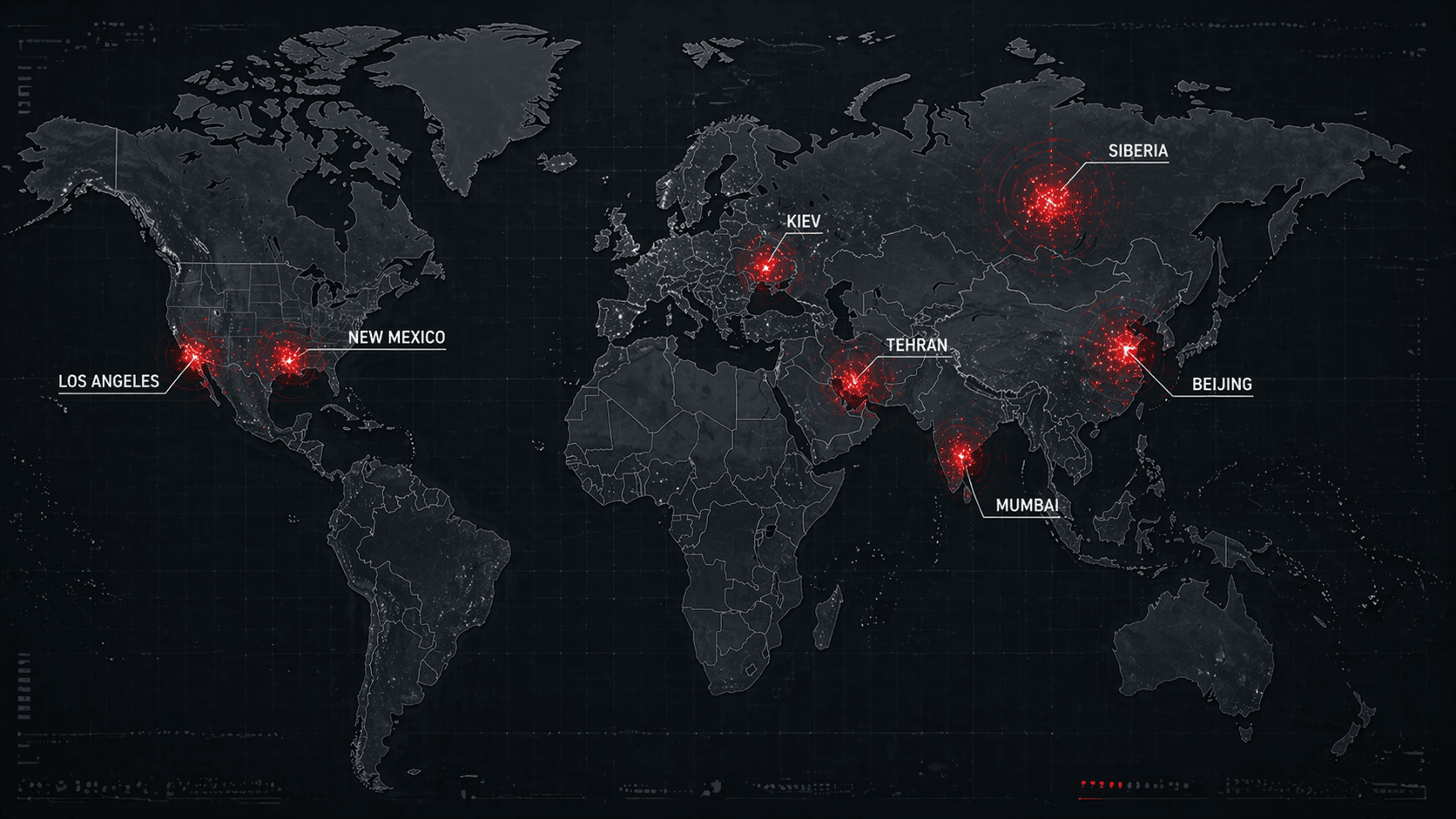
Since the early 2020s, at least six countries have quietly lost specialists in the narrowest and most sensitive set of scientific disciplines in the world. Not one. Not two. Six. Hypersonics. Nuclear weapons design. Missile guidance. Radar and electronic warfare. Military artificial intelligence. Advanced propulsion. Fusion. Space-sensing. The people dying and disappearing are not cancer researchers or agricultural geneticists. They are, almost without exception, the people who build, calibrate or theoretically underwrite the capabilities on which the present balance of strategic power rests.
The White House is now looking at the American cases. The Chinese Academy of Engineering has quietly deleted three of its most senior defence scientists from its roster and said nothing. The Russian FSB has jailed four of the country's leading hypersonics researchers on treason charges and killed a fifth in custody. India has been burying its nuclear scientists in uninvestigated "suicides" for fifteen years. Iran has lost at least seventeen scientists to Israeli operations, one of them by an AI-controlled remote-operated machine gun smuggled across a border in pieces. Ukraine has had at least 147 scientists killed since 2022 by Russian munitions.
The pattern, on its own, is not proof of anything. What it is, increasingly, is too large to continue ignoring.
The American List
We begin with the country which has just opened a federal investigation into its own cases, because it is the one with the most public detail and the least political obstruction to reporting.
The first name the FBI is now looking at is Michael David Hicks, a twenty-five-year veteran of NASA's Jet Propulsion Laboratory who specialised in comets and asteroids and worked on Deep Space 1 and on DART, the programme that rehearsed deflecting a hazardous asteroid. He died on 30 July 2023, aged 59. No cause of death has been publicly disclosed. His family has pointed to known medical issues.
In 2024 a second JPL principal engineer, Frank Maiwald, died in Los Angeles on 4 July, aged 61. No public cause of death. Maiwald had designed instruments for icy-moon life-detection missions. Around the same time the 2022 death of Amy Eskridge, a 34-year-old Huntsville anti-gravity propulsion researcher, resurfaced in the reporting. Eskridge had said publicly in 2020 that her work had made her a target. She died of an apparent self-inflicted gunshot wound. Her family has cited chronic pain.
The run into 2025 is where the ground shifts.
On 22 June 2025, Monica Jacinto Reza walked onto the Mount Waterman Trail in the Angeles National Forest with two companions. She was thirty feet behind one of them, smiling and waving, when he turned his back. When he looked again she was gone. Ten months later, helicopters, dogs, infrared sweeps and volunteer ground teams have found nothing.
Reza was not a weekend hiker. She was the co-inventor of Mondaloy, a nickel-based superalloy which allows rocket engines to survive oxygen-rich combustion without igniting themselves. It sits inside the AR1 engine and the Hydrocarbon Boost Technology Demonstrator, two pieces of the American effort to replace the Russian RD-180 for national security space launches. Her work was funded for decades by the Air Force Research Laboratory. At the time she vanished, she directed the Materials Processing Group at NASA's Jet Propulsion Laboratory.
Four days after Reza disappeared, Melissa Casias, a 53-year-old administrative assistant at Los Alamos National Laboratory, left her home in Ranchos de Taos telling her husband she was working remotely. She took no phone, no car, no keys, no purse. Her personal and work phones, left at home, had been factory-reset. She was seen walking along a highway three miles away and has not been seen since. Weeks earlier, on a morning in May 2025, Anthony Chavez, a 78-year-old retired Los Alamos construction foreman, had walked out of his own home under almost identical circumstances and also vanished. On 28 August that year, Steven Garcia, a 48-year-old security guard at the Kansas City National Security Campus, walked out of his house in Albuquerque carrying a handgun and disappeared. The Campus produces roughly eighty per cent of the non-nuclear components of the American nuclear arsenal.
Three people, three months, all connected to the New Mexico nuclear-security complex. None found.
October produced a different kind of death. First Lieutenant Jaime Gustitus, a 25-year-old operations analysis officer at the Air Force Research Laboratory's 711th Human Performance Wing at Wright-Patterson Air Force Base in Ohio, was killed on 25 October 2025 in what police described as a double murder-suicide. Her killer, Jacob Prichard, also worked at Wright-Patterson. So did his wife Jaymee, whom he killed before shooting himself. Three dead Air Force researchers in a single morning at the base which commands American aerospace science.
In December, a fourth type of death. Nuno Loureiro, a 47-year-old Portuguese plasma physicist who ran MIT's Plasma Science and Fusion Center, was shot dead outside his house near Boston. Fusion is the one discipline that could upend the hydrocarbon economy. The gunman, a disturbed former Brown University classmate, also opened fire on Brown's campus, killing two students before killing himself.
On 16 February 2026, Carl Grillmair, a 67-year-old Caltech astrophysicist, was shot dead on the front porch of his isolated house in Llano, a rural pocket of Los Angeles County. Grillmair worked on NEOWISE and on the NEO Surveyor telescope, both run out of the JPL campus where Reza had been based. Infrared asteroid detection uses the same spectral bands that track adversarial satellites and hypersonic weapons, which is to say that the instruments Grillmair helped characterise are inherently dual-use. A local man has been charged. No motive has been made public.
Eleven days later, on 27 February, the retired Air Force major general who had once commanded the laboratory which funded Reza's entire career walked out of his home in Albuquerque and disappeared. William Neil McCasland left behind his phone, his prescription glasses and his smartwatch. He took his wallet, his hiking boots and a .38 calibre revolver. A grey Air Force sweatshirt turned up a mile from his house a week later. His wife could not confirm it was his.
McCasland commanded the Air Force Research Laboratory from May 2011 to July 2013, with a budget of roughly $4.4 billion. His programmes paid for Reza's alloy. Her late mentor, Dallis Hardwick, ran the government qualification side of the same programme from Wright-Patterson under his command. Three people, one material, one programme. Two are now missing. The third died of cancer in 2014.
Jason Thomas, a Novartis pharmaceutical researcher, disappeared in December 2025 and was found dead in a Massachusetts lake in March 2026. His wife said he had been struggling after the death of his parents. Matthew James Sullivan, a 39-year-old former Air Force intelligence officer, died in 2024 before he could testify in a federal whistleblower case.
House Oversight Chairman James Comer has stated he considers it very unlikely to be coincidence and that his committee is treating the question as a national security priority. FBI Director Kash Patel has promised arrests if the Bureau finds links to classified access or foreign actors.
The Chinese List
The American press has treated this as a domestic story. It is not. China has been losing people in the same disciplines for the same period, and in some respects it has been losing them faster.
The Chinese sequence opens the same month as Hicks. On 1 July 2023, Feng Yanghe, a 38-year-old professor at the National University of Defense Technology, was killed in a car crash in Beijing at around 2.35 in the morning. Feng had pioneered a military artificial-intelligence platform called "War Skull" and, according to a researcher at a Western think tank, had been building AI simulations of possible Taiwan invasion scenarios. The state science site Sciencenet.cn described him as having been "sacrificed while performing official duties". He was buried in Babaoshan cemetery in Beijing, the resting place reserved for Party elite, state heroes and revolutionary martyrs. That is not how the Chinese state memorialises a man who hit a lamppost on his way home from a work dinner.
In December 2023, Zhou Guangyuan, a 51-year-old chemist and member of the Chinese Academy of Sciences at the Dalian Institute of Chemical Physics, died with no cause given. In 2024 the data scientist Liu Donghao, 51, who founded Guizhou's big-data security research programme and helped shape Chinese data-governance systems, died in an unspecified accident. In December that year Zhang Xiaoxin, 62, a space expert at the National Satellite Meteorological Centre who specialised in weather monitoring and early warning, died in another car crash. He had won a top Chinese military award for science and technology progress. The details of his work remain classified.
In 2025 the attrition accelerates. Zhang Daibing, 47, former deputy director of the National University of Defense Technology's Unmanned Systems Research Institute and one of China's leading drone engineers, died in Changsha. No cause. Li Minyong, 49, a biomedical chemist and recipient of the Ministry of Education's talent programme, died in Guangzhou in November after a sudden illness.
On 27 February 2026, the same week the American general vanished in New Mexico, the Chinese hypersonics expert Fang Daining, 68, died during a trip to South Africa. Fang worked on ultra-strong materials for spacecraft and advanced engines at Beijing Institute of Technology. Commentators on Chinese social media noted accounts circulating online suggested he had died while swimming.
Then, in the second week of March, came the scrubbing. The Chinese Academy of Engineering, the country's highest honorary body for engineering and technical sciences, quietly deleted three of its members from its roster of 989.
All three sit at the core of Chinese strategic weapons. Zhao Xiangeng, 72, is one of the principal technical leaders of Chinese nuclear weapons research and a former president of the China Academy of Engineering Physics. He served as a vice-president of the CAE itself and sat on the Communist Party's Central Committee. Wu Manqing, 60, is the engineer behind China's digital phased-array radar systems and the airborne radar used in the KJ-500 early-warning aircraft. Wei Yiyin, 63, spent decades at the China Aerospace Science and Industry Corporation working on missile guidance and rose to deputy general manager.
No obituary. No retirement notice. Three blank spaces where their profiles had sat the week before. A Chinese-language commentator on Weibo put it plainly: three pillars of the national defence system had vanished from the official record.
Two weeks later, on or around 26 March, Yan Hong died at 56. Yan was a hypersonics and plasma-flow specialist at Northwestern Polytechnical University, a university the United States has formally sanctioned. Cause of death: a reported illness, with no further detail. The Chinese Embassy in Washington told Newsweek it was "not aware of the relevant situation" and declined to elaborate.
The Russian List
The Russian pattern is the cleanest of the six, because the state has not bothered to hide it.
Between June 2022 and April 2023, the FSB arrested four of Russia's leading hypersonics researchers on treason charges. Three came from a single institution, the Khristianovich Institute of Theoretical and Applied Mechanics in Novosibirsk, part of the Siberian branch of the Russian Academy of Sciences. The institute owns Russia's best hypersonic wind tunnels. It is, or was, the theoretical heart of the programme which produces the Kinzhal and Zircon missiles Putin has repeatedly called invincible.
Anatoly Maslov, the institute's chief researcher and an internationally recognised expert in aerogasdynamics, was arrested on 27 June 2022 and accused of passing state secrets to China, or Germany depending on the source. He was sentenced to fourteen years in May 2024. He had suffered a heart attack in custody. His lawyer said a long prison sentence amounted to a death sentence. Alexander Shiplyuk, the institute's director and head of its hypersonic technology laboratory, was arrested on 5 August 2022 and taken to Moscow's Lefortovo detention centre. Valery Zvegintsev, the founder of the same laboratory, was placed under house arrest in April 2023. A fourth scientist, Alexander Kuranov, a 76-year-old head of a St Petersburg state research institute who had overseen the Soviet-era Ayaks hypersonic aircraft programme, was jailed for seven years, reportedly after testifying against Maslov.
Two days after Maslov's arrest, on 30 June 2022, the FSB arrested Dmitry Kolker, a 54-year-old physicist at the Novosibirsk Institute of Laser Physics. Kolker had advanced pancreatic cancer and was on intravenous feeding when he was taken. He was flown to Lefortovo. He died on 2 July. His son denounced the arrest publicly and went into exile. The state's stated grounds for the treason charge were a lecture Kolker had given to Chinese students in 2018, in the presence of an FSB officer who had sat in the room and said nothing at the time.
An open letter from Russian Academy of Sciences colleagues warned Russian hypersonics research faced "impending collapse". The Kremlin's response was the men faced "very serious accusations" and the cases were a matter for the security services.
Two other Russian deaths belong on the list even though they are not tied to the Novosibirsk institute. Grigory Klinishov, 92, one of the creators of RDS-37, the Soviet Union's first two-stage thermonuclear bomb, was found dead at his Moscow apartment on 17 June 2023 in an apparent suicide, on the day Vladimir Putin publicly announced the acceleration of Russia's nuclear force and the combat deployment of the Sarmat intercontinental ballistic missile. A suicide note was reportedly left beside him. Vitaly Melnikov, 77, a senior scientist at RSC Energia who led Roscosmos's rocket and space systems development, died on 30 August 2023 of inedible mushroom poisoning. He had been admitted to hospital on 11 August, the same day Russia launched its Luna-25 probe. The probe crashed into the moon nine days later, an embarrassment the Kremlin has not quite recovered from.
The Indian List
The pattern which should embarrass anybody claiming this is a new phenomenon is the Indian one. India has been losing its strategic-programme scientists for fifteen years, and successive Indian governments have closed the cases with almost no investigation.
In June 2009, L. Mahalingam, a 47-year-old senior scientific officer at the Kaiga Atomic Power Station in Karnataka, went for a morning walk and never returned. His highly decomposed body was recovered from the Kali river five days later. His family refused to believe the identification until a DNA test confirmed it. No cause of death was established. The same month, an employee at the same plant, Ravi Mule, went missing and was later declared murdered. No investigation concluded.
In December 2009, two young researchers at the Bhabha Atomic Research Centre, Umang Singh and Partha Pratim Bag, were burned to death in a fire in the Radiation and Photochemistry Division laboratory. The lab reportedly contained no flammable materials. The fire tender took forty-five minutes to arrive. In February 2010, Mahadevan Padmanabhan Iyer, a BARC mechanical engineer, was found dead in his Mumbai flat with no external injuries but internal skull haemorrhaging consistent with blunt-force trauma. There were no fingerprints at the scene. In April 2011, Uma Rao, a 63-year-old BARC scientist and former head of the Indian Women Scientists' Association, was found dead at her home. The police called it suicide. Her family disputed the finding.
In October 2013, two engineers working on INS Arihant, India's first nuclear-powered submarine, were found dead on railway tracks at Penduruthy, near the Visakhapatnam naval yard. K.K. Joshi and Abhish Shivam were 34 and 33 respectively. Forensic experts determined neither body bore the injuries consistent with being struck by a train, and both men had been dead before they were placed on the tracks. The Ministry of Defence described it as a routine accident. No further investigation took place.
Between 2009 and 2013, at least ten employees of the Indian Department of Atomic Energy died in murders, unexplained fires or deaths officially classified as suicide. Right-to-information filings by the activist Chetan Kothari subsequently revealed BARC alone recorded 680 staff fatalities over a fifteen-year period. A former ISRO scientist, Tapan Mishra, publicly stated he had survived two poisoning attempts. The Indian pattern begins in earnest after a 1966 plane crash in Switzerland which killed Homi Bhabha, the founder of the Indian nuclear programme, in circumstances which have been the subject of allegations of sabotage ever since.
Nobody in Indian government has ever opened a coordinated investigation.
The Iranian List
The Iranian cases are the ones with a named actor who literally brag about decapitating an entire state's science division: Israel.
Between 2007 and 2020, six Iranian nuclear scientists were killed or injured in targeted operations widely attributed to Israeli intelligence. Ardeshir Hosseinpour, a nuclear physicist, died of what Iranian state media called gas poisoning at the Isfahan nuclear technology centre in January 2007. Private-intelligence reporting subsequently attributed his death to Mossad. Masoud Ali-Mohammadi, a physics professor at Tehran University, was killed by a bomb attached to a parked motorcycle outside his home in January 2010. Majid Shahriari was killed by a magnetic bomb attached to his car in November 2010. Mostafa Ahmadi Roshan, a supervisor at the Natanz enrichment facility, was killed by an identical method in January 2012. Darioush Rezaeinejad, an electrical engineering postgraduate, was shot dead in Tehran in July 2011.
In November 2020, the reputed head of the Iranian nuclear weapons programme, Mohsen Fakhrizadeh, was killed on the highway outside Tehran by a remote-operated, AI-assisted Belgian-made FN MAG machine gun. The weapon had been smuggled into Iran in pieces, reassembled inside the country, and fired from thousands of miles away by a sniper operating through a satellite link. It weighed a ton. It had been hidden inside a blue Nissan pickup truck made to look abandoned. It killed the target in under a minute and did not injure the wife sitting next to him. The Jewish Chronicle subsequently reported Iran's own internal assessment concluded Fakhrizadeh's death had extended the Iranian timeline to a nuclear weapon from three and a half months to two years.
In June 2025, during twelve days of Israeli air strikes on Iran, a further twelve Iranian nuclear scientists and engineers were killed in their homes and offices. The list included Mohammad Mehdi Tehranchi, Abdolhamid Minouchehr, Ahmad Reza Zolfaghari, Amir Hassan Fakhahi, Akbar Motallebzadeh, Ali Bahuei Katirimi, Mansour Asgari, Seyyed Amir Hossein Feghhi, Saeed Borji and Fereydoon Abbasi, the former head of the Atomic Energy Organization of Iran. Israel has confirmed targeting them but has not publicly discussed the sources which identified them.
The Iranian case is, in other words, the one every country looking at its own losses is quietly using as the reference point. It establishes a single state actor can, over fifteen years, kill at least eighteen nuclear scientists belonging to another state, using methods ranging from explosives on motorbikes to AI-assisted robotic machine guns, with only one of those killings resulting in public confirmation.
The Ukrainian List
The Ukrainian case belongs on the table for a different reason. It is not covert. It is a war. State actors do not care about the circumstances; they care about the count.
Since Russia's full-scale invasion in February 2022, Ukraine has lost at least 147 scientists, either killed on the front line, killed by Russian missile and rocket attacks on cities, or murdered in occupied territory. Some were military-relevant. Lyudmila Shevtsova, a hydrobiologist, was killed in a Russian strike on a Kyiv apartment building on 2 January 2024. Volodymyr Kozlovskyy, a soil chemist, was killed near Kreminna in June 2023. Igor Galkin, a young mathematician, died of shrapnel wounds to the neck and eye at a defensive position in the Serebryansky forest in May 2023. Most were not working on weapons at all.
The Ukrainian case matters because it establishes, in the clearest possible terms, scientists of an adversary country can be killed in bulk in the twenty-first century, on European soil, with the destruction of their universities as collateral, and neither the international order nor the scientific community has a functional answer to the problem. Roughly two and a half thousand more Ukrainian scientists have fled abroad. Fifty thousand Russian scientists have reportedly emigrated in the same period, making the combined Slavic brain drain the largest movement of working scientists since the collapse of the Soviet Union.
Yes, There Is A British List
The British record is where anybody who thinks the present American cluster is historically unprecedented should look first.
Between 1982 and 1990, at least twenty-five British scientists and engineers working on the Sting Ray torpedo programme and on projects connected to the American Strategic Defense Initiative died in circumstances which ranged from the unexplained to the baroque. Most were employed by GEC-Marconi or its subsidiaries. Six of them died within a single year across 1986 and 1987. Vamil Dajibhai, a 24-year-old torpedo-guidance engineer, fell from a bridge in Bristol with unexplained puncture marks on his body. Ashad Sharif, a Marconi computer expert, was found with a rope tied from his neck to a tree while his car drove away from the tree. Peter Peapell, a defence metallurgist, died of carbon monoxide poisoning in his garage. One of the others drove a petrol-laden car into a building. Most were classified as suicide or accident. Opposition MPs called for a coordinated investigation. The Ministry of Defence refused, citing no evidence of a link. No British government has ever opened one.
Despite the press coverage at the time, concern of MPs at the time, documented historical death records, and decades-long speculation, the Dunning-Kruger collective of Leftipedia label this is a conspiracy theory.
Two decades later, Dr David Kelly, probably the most accomplished biological-warfare inspector alive, was found dead in Oxfordshire woodland on 18 July 2003. This publication has covered the subject in depth and approached a cynical conclusion. The Attorney General refused a formal inquest in 2011. The file is formally closed.
Britain is also the one jurisdiction where a foreign state's targeted killing on NATO soil has been established in court.
Alexander Litvinenko, a defected FSB officer, was poisoned with polonium-210 in a Mayfair hotel bar on 1 November 2006 and died three weeks later. The attempted murder of Sergei and Yulia Skripal in Salisbury in 2018 with the military nerve agent Novichok followed the same pattern, and killed a British bystander. Neither target was a scientist, but the cases answer the question of whether a hostile state will send agents into a Western capital to kill a named individual with a weapon capable of contaminating the city around him.
The court-established answer is yes.
How Each Country Approaches Strategic Risk
Step back and the six national pictures organise themselves by mechanism rather than by geography.
Russia kills or jails its own
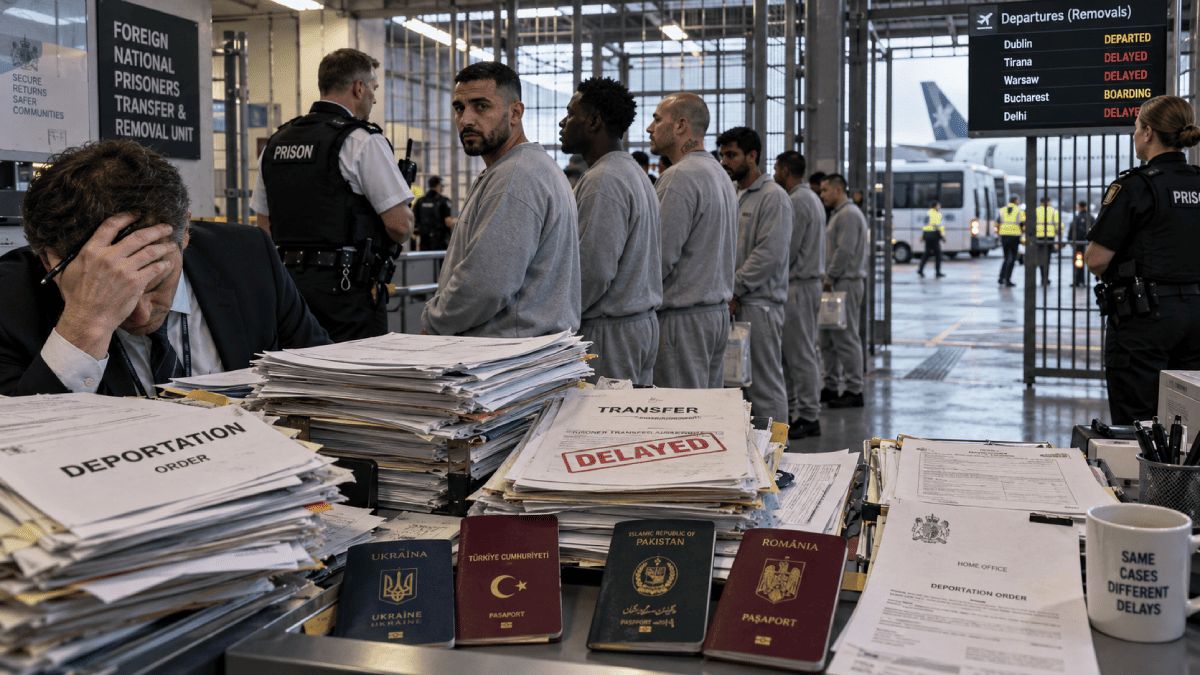
The FSB arrests Novosibirsk hypersonics researchers on treason, drags a cancer patient to Lefortovo and lets him die there two days later, and then publicly sentences the survivors to fourteen-year terms for having spoken at a conference in Germany. The state treats its own specialists as a loyalty-verification problem rather than an asset to be protected.
China also kills or removes its own, more quietly
The deletion of Zhao Xiangeng, Wu Manqing and Wei Yiyin from the Chinese Academy of Engineering roster in March 2026 is the bureaucratic equivalent of disappearance, and it sits inside a documented wider purge of senior defence-industry figures that has already swept up two members of the Central Military Commission and the former chairman of the China Electronics Technology Group. The deaths, by contrast, arrive labelled as car crashes, sudden illnesses and foreign-travel misfortunes, and no Chinese authority is asking public questions about them.
India ignores its own
The Indian state's standard response to a dead BARC engineer is to close the file at the local police level, classify the death as suicide or unexplained, and return to the baseline. An administrative apathy so consistent that it has itself become a structural feature of the Indian strategic programme.
Israel kills somebody else's
The Iranian case is the one external template where the actor is identified, the methods are sophisticated and occasionally novel, the targets are chosen on the basis of specific knowledge of a foreign weapons programme, and the purpose is the incremental extension of the adversary's engineering timeline rather than decapitation. It is not the only historical case. Mossad killed Heinz Krug and attempted to kill Hans Kleinwächter in the 1960s under Operation Damocles, as part of a campaign against German scientists working on Egyptian missiles. Yahia El-Meshad, the head of the Iraqi nuclear programme, was beaten to death in a Paris hotel in 1980. Gerald Bull, the Canadian long-range artillery engineer, was shot outside his Brussels apartment in 1990 with twenty thousand dollars untouched in his pocket.
Russia kills somebody else's openly
Ukrainian scientists die in a war they did not start, and their universities are destroyed in the process.
The American question
The American case is the one which does not yet fit any of the five templates.
Nobody in Washington is purging anybody. The United States is not at war on its own territory. Its losses are not being publicly categorised as anything. The White House, the FBI, the Department of Energy and the Department of War have, for the first time, publicly admitted they do not know what they are looking at. That admission is itself the newsworthy fact.
What Sits Behind All Of It: Strategic Weapons
The simplest way to describe what all six pictures share is they concern the people who hold institutional knowledge of strategic weapons programmes. That is a smaller category of human being than most people imagine.
- The number of functioning hypersonics theorists in the world is measured in hundreds.
- The number of nuclear weapons designers with current operational knowledge of a specific warhead family is smaller still.
- Fusion plasma physicists capable of running a machine at breakeven are a few dozen people.
- The people who wrote the textbooks the next generation will use to learn these fields are, in many cases, the same people whose names appear on the lists in this article.
There is a long-standing argument, attributed variously to Amos Yadlin at Tel Aviv University's Institute for National Security Studies and to proliferation scholars in the United States, weapons-programme decapitation is a low-cost, low-risk instrument of statecraft precisely because the pool of targets is so small.
You do not have to kill many people to impose years of delay on an adversary's timeline. You do not have to kill them all at once. You do not, in fact, have to publicly claim the killings, because the deterrent effect on the next generation of graduate students considering whether to enter the field does not depend on the identity of the killer being known. It depends only on the knowledge people in that field die in ways other people do not.
Every surviving weapons-programme country therefore has a choice between three postures.
- Protect the people, which is expensive and intrusive and risks looking paranoid.
- Quietly reduce dependence on individual specialists by building institutional redundancy, which is slow.
- Or accept the attrition and hope the next generation of recruits is too young to have read the obituaries.
The Iranian programme chose the third and was, on the evidence of its own internal timelines, set back by years. The Russian programme has chosen a combination of the first and a paranoid variant of the second, which is why four of its senior hypersonics specialists are in Lefortovo. The Indian programme appears to have made no choice at all. The Chinese programme is currently testing whether the third posture is survivable.
The American programme has, as of April 2026, begun asking the question for the first time.
What The Report Is Not
It is worth stating plainly what this publication is not arguing. It is not arguing:
- The six national clusters are connected to one another.
- A single actor is responsible for any of them.
- Every death or disappearance in the six lists is part of a pattern; several clearly are not, and specific cases have identified killers, documented medical histories or credible personal explanations.
It is not about extraterrestrials, despite the United States having managed to attach a UFO subplot to the McCasland disappearance through the retired general's brief post-retirement involvement with Tom DeLonge's UAP-enthusiast outfit.
Treating any of this as an alien-abduction story is the laziest and least interesting way of getting it wrong, and McCasland's wife has already dispatched the idea in a public Facebook post noting, correctly, that no mothership has been sighted above the Sandia Mountains.
What we are positing is:
- The strategic-weapons scientific workforce of every major power is visibly thinner than it was three years ago.
- The mechanism of thinning varies by regime type in predictable and informative ways, and
- For the first time in living memory the question of whether somebody is counting has ceased to be a marginal preoccupation of obituary writers and has become a matter of active federal investigation in Washington.
Question: Is There A Geopolitical Struggle?
The American investigation, correctly, is focused on whether the American cases are connected to each other and whether any of them are the product of foreign action. The harder and more interesting question, which neither Washington nor Beijing nor Moscow is currently asking in public, is whether the global phenomenon is the sum of five or six independent national pathologies or the symptom of something larger.
The independent-pathologies reading is coherent.
- Russia is destroying its own hypersonics programme out of paranoia about Chinese and Western penetration.
- China is conducting a defence-sector anti-corruption purge which happens to have taken out three pillars of its weapons research.
- India is continuing its long-running failure to protect and investigate.
- Iran has lost a fifteen-year slow-motion war with Israeli intelligence.
- Ukraine is at war.
- America has had a run of bad luck in a statistically small specialist community.
The six pictures do not need to be connected.
The connected-phenomenon reading is darker and, at present, unsupported.
- There is no public evidence any single actor is responsible for losses in more than one of the six countries.
- There is no evidence the American losses are the work of the same hand as the Chinese losses.
- There is not even clear evidence the American cases are the work of a single hand.
A Western analyst tracking the Chinese cases, speaking anonymously to Newsweek because, as they put it, "I don't think it's good for your health to be associated with this kind of thing," raised the possibility an adversary might be trying to slow China down by removing small numbers of its best specialists for the deterrent effect. The same analyst acknowledged some of the cases would probably turn out to be accidents. The same reasoning applies, with equal force, in the opposite direction.
What does not fit either reading is the temporal synchrony. Hicks dies and Feng dies in the same ten weeks in the summer of 2023. Reza vanishes and Maslov is sentenced in the same month. Fang dies in South Africa on the same day McCasland leaves his house in Albuquerque. Zhao, Wu and Wei are deleted from the Chinese roster in the same week Grillmair is shot in California.
That is either a genuinely extraordinary coincidence of independent national pathologies or it is, at some level nobody has yet traced, a single event happening in several places at once. Or as twatty snobs on Leftipedia call it, apophenia.
A Most Remarkable Statistical Distribution Of Random Events
Monica Jacinto Reza has been missing for ten months. William Neil McCasland has been missing for two. Anatoly Maslov is serving fourteen years in a Russian prison for what his lawyer calls dedicating his life to science. Dmitry Kolker has been dead in Lefortovo for almost four years. Zhao Xiangeng, Wu Manqing and Wei Yiyin remain, as far as the outside world can establish, alive, but their erasure from the official record of Chinese engineering achievement is its own kind of disappearance. Feng Yanghe is buried with the martyrs. Mohsen Fakhrizadeh is buried under a flag. One hundred and forty-seven Ukrainian scientists are buried under rubble.
The question Donald Trump asked, out loud, is the right one. He said he hoped it was random. If it is random across six countries, multiple disciplines, and a window of roughly three and a half years, it is the most remarkable statistical distribution of random events the strategic-scientific community has ever produced. If it is not random, somebody has been counting for longer than anybody has been asking.