Enough Is Enough Of Women In Frontline Policing
We do not want "support." We do not feel comforted by "working together" and consensus. We do not need "concern" about "anxiety." Catch the bastards using force. Charge them, try them, and hang them. Feminine traits are completely inappropriate for the violence of law enforcement.

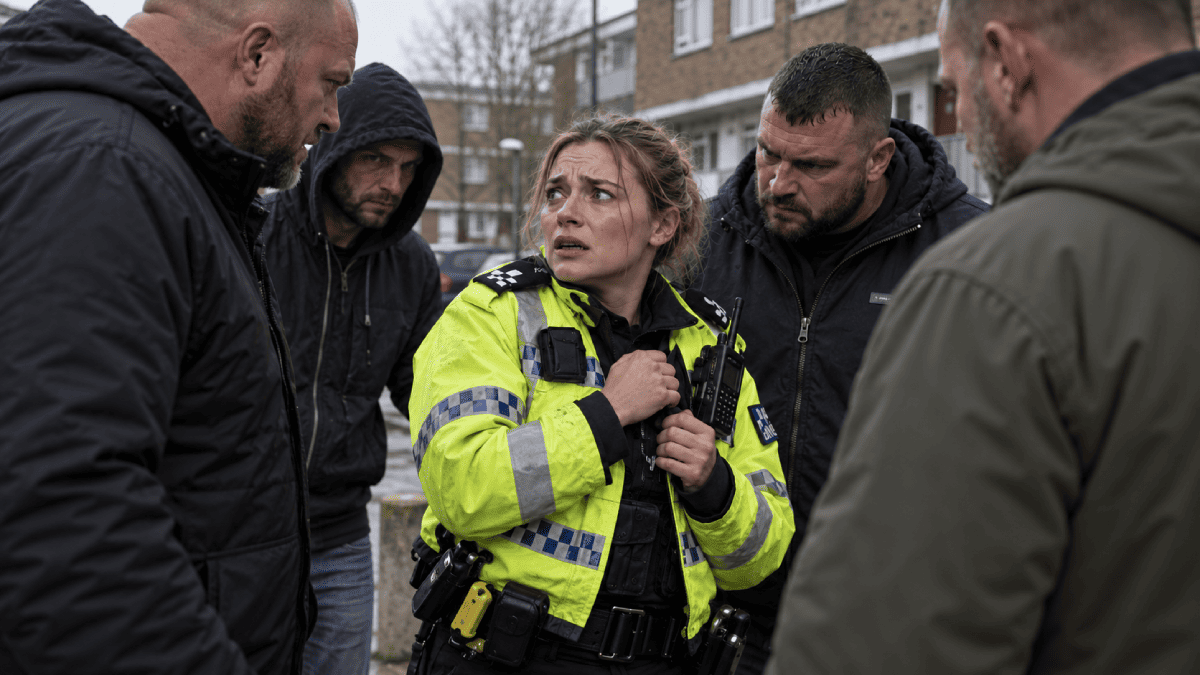
Donna is outraged. She's just furious. As "police and crime commissioner" for Hampshire and the Isle of Wight, she's had it. Last night police officers had been "pulled off crime-fighting duties to manage protests in Gosport." at great cost. "It’s just not acceptable. They weren’t then responding to 999 calls and doing what we need them to do. " she said. But the crown turd on the pudding is what Donna added next.
Instead, because they have a skill of being public order officers, they have been taken off their normal jobs and put on public order. It is creating vulnerability for victims in other areas of the county.
Donna is a senior elected commissioner and she is unaware one o the functions of the police is keeping the peace and maintaining public order. The kind which is rapidly breaking down because of bad faith governance and police misbehaviour.
Do you remember the first school lesson you had with a female schoolteacher and the accompanying chaos it brought? How the same kids in the same class wouldn't dare pull the stunts they did with a strict male teacher? And how even the strictest female teacher had to threaten calling in a male teacher to keep order?
This equality stupidity has been in our police forces for decades since the Stephen Lawrence inquiry and the notorious College of Policing indoctrinated the local bobby with lunatic fringe sociology.
There is not a single "female police officer" in Britain who could challenge a teenage boy. We all know it. The "female office officer" knows it; the teenage boy knows it; and anyone with common sense knows it.
Maggie Blyth, Temporary Chief Constable for Gloucestershire Police, said the incident was now believed to have been 'contained'.
These arrests will no doubt have caused some shock and anxiety and we want those living locally to RAF Fairford and across Gloucestershire to be sure and to know that, as agencies, we are working closely together to support them.
This is shameful. It is the tone one would expect in a toddler daycare. It is wholly inappropriate for the profession who deal with terrorists, robbers, rapists, and killers.
It is the shameful nonsense we have all become accustomed to from endless videos on X and TikTok of "female police officers" being shamed, overwhelmed, beaten, encircled, or overcome by any male(s) over thirteen.
We do not require therapy or want to talk about anxiety. We do not require emotional support. Police officers are not social workers. We want vicious, tough fairness.
The College and NPCC's National Policing Culture and Inclusion Strategy 2025–2030 says its mission is:
to transform police culture
This has a name: Marxist critical theory. The report explicitly places diversity, equality and inclusion “at the heart of good policing and integral to all policies, practices and procedures.”
What? No. We require law enforcement.
There are roles for women in the police. In some areas they are indispensable. Rape victims may ask to speak to a woman. Female detainees need female officers for intimate searches. Children, domestic-abuse victims, and frightened witnesses often respond better to a woman at the door. Fraud, intelligence, surveillance, cybercrime, forensics, interviewing, negotiation, and command have nothing to do with grip strength, and a sharp woman will outperform a dull man in every one of them.
Physical confrontation with violent men is a separate matter. They are not useful or appropriate on the front line.
An enraged, drunk, drugged, or psychotic man does not adjust his punch to suit equality guidance. His body obeys biology, which has no relevance to the latest strategy from the College of Policing. In one particularly distressing case, bodycam footage shows a "female officer" pleading for her life as a man throws her off a balcony. If you defend exposing women to this, you are a particularly cowardly and vile individual.
What we have seen single the pursuit of "equality" is a litany of dysfunction including forming prohibited relationships, protecting or assisting partners, disclosing confidential information, becoming entangled with offenders, crossing sexual/professional boundaries, lying to preserve relationships, or mishandling investigations through personal involvement.
This pattern re-occurs in prisons. And probation. And everywhere else across what is left of the criminal justice system.
Beaten Half To Death At The Airport
PC Lydia Ward weighed no more than eight stone when she tried to arrest Mohammed Fahir Amaaz at Manchester Airport on July 23rd 2024.
One punch broke her nose and put her on the floor. Her colleague, PC Ellie Cook, was punched to the ground as well. A Taser finally stopped Amaaz (good enough for wards of the state, not allowed to the British public), and in June 2026 he was jailed for three and a half years for attacking both officers and a member of the public. In her victim statement, Ward asked him whether he had noticed how frightened she was.
The public remembers the airport incident for a few seconds of phone footage showing an officer kicking a man on the ground.
Almost nobody remembers the fight before it.
Fewer still asked why a police force regarded a 112-pound woman as fit for a job in which, at any moment and without warning, she might have to force a violent adult man into handcuffs.
Ward did exactly what her employer asked of her. The fault belongs to the people who decided her job required no test of whether she could perform this part of it.
Beaten, Stabbed, and Dragged to Safety
The airport attack belongs to a long and consistent record. It goes back thirty three years and the same lies and feminist garbage accompany it.
January 1993, Derbyshire. PC Ailsa Schofield and a female probationer stopped a 22-year-old man riding a bicycle dangerously with a child on board. He grabbed Schofield by the hair, held her head in place, and drove his knee into her face again and again. He punched her, kicked her, and bit her. Her face was so badly damaged her own colleagues failed to recognise her when they arrived. The probationer took a knee to the chest and a black eye. Male officers dragged the man off. The Independent ran the story under a headline warning of growing danger to women on the front line. Nobody in authority took the hint.
November 2007, Heathrow. Detective Constable Catherine Corbett of West Midlands Police was part of a team arresting a fraud suspect outside a hotel. He climbed into a Peugeot, accelerated away, and ran her over. She was left in a critical condition with severe head injuries. Two male colleagues were hurt less seriously.
July 6th 2014, Basingstoke. Sergeant Kerry Lawrence of Hampshire Constabulary arrested Craig Radbourne after a reported break-in, handcuffed him, and put him in the back of her car. Before other units arrived, he lashed out with his cuffed hands, knocked her down, and smashed her head against the pavement while her body-worn camera recorded the attack. A handcuffed man overpowered an armed and trained police sergeant. He received three years.
April 2016, Sheffield. PC Lisa Bates attended a domestic incident with a male colleague. Nathan Sumner, whom a neighbour later described as a bodybuilder, came after her with an axe. She ended up on the ground fending him off with her baton. She suffered a fractured skull, a broken leg, and hand injuries which almost cost her a finger. Five officers were hurt before batons and a Taser brought Sumner down. Her rescue came from a resident, Simon Ellis, who dragged her into his flat by her body armour because she could no longer move herself. She told him she feared Sumner would come back to finish her.
July 5th 2016, St Leonards. PC Jo Seabridge of Sussex Police went alone to a report of a man behaving oddly near a parked car. Adrian Taylor was drunk and abusive. When she arrested him, he elbowed her, knocked her down, and punched her head until she lost consciousness. Two passing men pulled him off her. She completed the arrest after coming round, then spent four months off work with post-concussion syndrome and returned only to light duties. Taylor got three years. Seabridge said she dreaded to think what would have happened without the two strangers.
May 2018, Moston. PC Joanne Aitken of Greater Manchester Police, a frontline officer of more than twenty years, confronted Anthony Woodhead-Robertson after reports of him grabbing at women in the street. She asked him to lower a wine bottle. He hit her over the head with it three times, leaving a deep wound. Members of the public came to her aid. Two decades of experience made no difference to the physics.
November 17th 2018, Wimbledon. PC Lorraine McGinty of the Metropolitan Police was helping a male colleague with a resisting suspect after a car stop when Kersan Euell took a running jump and drove a flying kick into her chest. She was thrown into the road, hit her head, and narrowly missed being crushed by a double-decker bus. Over the radio she reported, "We are fighting for our lives out here." A motorcyclist and a taxi driver joined the fight on the side of the police. Her daughter begged her to retire.
August 2019, Fort William. PC Siobhan Sharkey of Police Scotland approached Adam Wright, 24, sitting in a car police had seized days earlier. She called for assistance and was told it was ten minutes away. When she tried to arrest him he punched her in the face, put her in a chokehold until she could not breathe, tore out clumps of her hair, and tried to gouge out her eye. A second officer arrived and still could not stop him; onlookers overpowered him. Wright told police she deserved it. He received 32 months.
2020, London. PC Alexandra Dobbs of the Met tried to detain Adrian Popa after a domestic incident. He was too close for her Taser to work. When she tried to handcuff him, he stabbed her repeatedly in the face with a pen while threatening to kill her. She was left scarred.
September 2022, Leicester Square. A female Met officer challenged Mohammed Rahman on suspicion of carrying a knife. He stabbed her through a vein in her arm, causing heavy blood loss. A male colleague chased him down and was stabbed three times in the neck and once in the chest. Taser, PAVA spray, and a baton were needed before Rahman was subdued.
January 2025, Cleveland. Mohammed Marboosh punched a female officer off her feet and bit her leg as she tried to arrest him for a public-order offence. A court gave him a suspended sentence. Weeks later he bit a male officer's hand during a second arrest and was finally imprisoned.
January 2025, Cheadle. A female Greater Manchester officer approached a car while investigating suspected drug use. Harvey Bell reversed, then drove straight at her and over her legs with both sets of wheels. He received 31 months in a young offenders institution.
June 2025, Sidcup. Two female Met response officers were helping a woman at a house when Mark Weatherley came home. He punched the first officer in the side of the head and knocked her unconscious. He punched the second several times in the head until she too fell unconscious, then kicked her in the face. He went back to the first officer and attacked her again. Colleagues arrived and stopped him. Both women were still off work when he was jailed for eight years. One man, two officers, two unconscious women.
February 10th 2026, Newton Abbot. PC Alice Beer of Devon and Cornwall Police took hold of Guy Pottle to stop him falling or jumping from the outside of a first-floor balcony. He smashed a vodka bottle over her head and tried to throw her off the balcony head first. She stayed alive by clinging to the railing while he kept punching her. She said afterwards she thought she was going to die. Pottle received ten and a half years.
April 19th 2026, Kempsey. A female West Mercia officer searching for a suspicious man in Worcestershire was stabbed in the neck. A 25-year-old man was arrested on suspicion of attempted murder. The force said the outcome could easily have been far worse.
In five of them, Aitken, Bates, Seabridge, McGinty, and Sharkey, members of the public had to physically rescue the officer.
Britons once called the police when a violent man needed restraining. Increasingly the police need Britons to restrain the violent man attacking the police.
Several cases involved knives, bottles, an axe, or a car.
Weapons make any attacker lethal, and the Leicester Square stabbings show male officers bleed too. Body armour fails against some blades and officers still wear it. Seatbelts fail in some crashes and police drivers still buckle up.
Physical strength guarantees nothing; it improves the odds in a job where the odds can turn in seconds, and no sensible employer throws away an advantage because it falls short of invulnerability.
Strength Testing Was Abolished in 2016
British police recruits once had to prove they were strong. After research at Lilleshall, the 2004 national fitness standard required a shuttle run to level 5.4, a 34-kilogram push, and a 35-kilogram pull. Tom Winsor's review of police pay and conditions records these figures, along with a revealing admission from the earlier scientific work.
To set a single strength threshold enough women could pass (i.e. so we could all live in a 1965-esque fantasy world wth "Imagine" by John Lennon as the national religion), the bar for men had to sit:
significantly below the average in the male population.
The trade-off was visible from the start. A sex-neutral strength minimum had to be pitched low enough to keep female recruitment viable.
When the contemptuous College of Policing implemented the Winsor reforms in 2014, its annual fitness test for serving officers was an endurance test with no upper-body strength component. In 2016 the push and pull test was withdrawn from recruitment too.
The College's current guidance is absurd as it is blunt:
There is no obstacle course or upper strength testing as part of this test.
Yes, because why would a police officer need that?
The surviving test checks whether a recruit has the aerobic fitness to get through officer safety training. P
assing a training course is a modest ambition for a constable. The street begins once the course ends.
The College may have had sound reasons to retire one particular machine. It's unlikely, but it's possible. Equipment ages, and a push-pull dynamometer is a poor imitation of wrestling a man on a wet pavement. Scrapping a flawed measuring device does nothing to abolish the thing it measured.
Strength still decides who controls a resisting suspect, who keeps hold of a baton or Taser, who can drag an injured colleague out of danger, and who is still upright when the second punch lands.
Firearms officers, public-order teams, and other specialists face tougher physical standards derived from exercises replicating real operations. The logic holds for every role except the one most likely to meet a violent man without notice: the ordinary response constable.
The same year the police dropped strength testing, the Ministry of Defence was deciding whether to open ground close-combat roles to women. Before changing anything, it commissioned research into the physical demands and health risks. No equivalent study of the strength demands of response policing has ever been published. If one exists, the College of Policing has kept remarkably quiet about it.
Because we all know what it would say if it was allowed to publish honest conclusions about reality our political equality class don't like.
Jobs For Girls, Without The Strength Tests
The growth in female officers and the collapse of strength testing ran side by side. One might surmise the communist quota system might have been employed here.
| Year | Women as share of officers | Development |
|---|---|---|
| 1975 | Not recorded on the same basis | Separate policewomen's departments end |
| 2000 | 16.5% | |
| 2004 | National entry test includes 34kg push and 35kg pull | |
| 2006 | 22.3% | |
| 2010 | 25.7% | |
| 2012 | College of Policing created | |
| 2014 | Annual fitness test becomes endurance only | |
| 2015 | 28.2% | |
| 2016 | Push and pull test withdrawn from recruitment | |
| 2019 | 30.4% | |
| 2021 | College hails a quarter in which 45% of recruits were women | |
| 2024 | 35.4% | |
| 2026 | 36.8% | 44.1% of new joiners are women |
Sources: Home Office centenary figures, Police Workforce, England and Wales, March 2026, and College of Policing.
By March 2026, 53,712 officers in England and Wales were women. Between 2010 and 2020, women made up 30 to 37 per cent of each year's joiners. Today the figure is 44.1 per cent and rising.
In the year to March 2025, forces in England and Wales arrested 630,385 males and 120,578 females where sex was recorded.
Roughly 84 per cent of arrestees were men.
The arrest population is not, and never will be heading for parity. Violent men are the routine business of response policing, and Britain now sends a steadily rising proportion of officers to deal with them without ever checking whether they can.
Men And Women Are Not Interchangeable
Women entered British policing on very different terms. When Edith Smith became Britain's first female constable with full powers of arrest in 1915, women's police work was designed as a distinct function concerned with women, children, prostitution, and welfare.
The Sex Disqualification (Removal) Act 1919 removed the legal bar on women holding public office, yet for decades policewomen served in separate departments with their own duties, promotion ladders, and lower pay.
As late as 1939, only 45 of 183 forces in England and Wales employed a single female constable. There was a reason for that, and it wasn't "oppression."
The Equal Pay Act 1970 and the Sex Discrimination Act 1975 swept the separate structures away. During the Lords debate on the 1975 Bill, ministers told peers forces would now have to appoint the best candidate regardless of sex.
Equal access to a job is a different proposition from declaring every body equally suited to every task within it, and British policing slid from the first to the second without anyone voting for it.
A Revolutionary Sociology Quango
The perverse College of Policing came into being in 2012 as a company wholly owned by the Home Secretary, charged with setting national standards for training, qualifications, and fitness. It arrived during the Tory years under David Cameron just as female recruitment began to climb fast, and it threw itself into the effort.
The College is a disgrace. It has always been a disgrace. It thinks very highly of itself.
- Its own material describes forces using positive action to recruit more women, with targeted campaigns and extra support for female and ethnic-minority applicants.
- When 45 per cent of recruits in one quarter of 2021 were women and eight forces hired more women than men, the College's chief executive called the figures extremely positive.
- It framed the national Police Uplift Programme in terms of making forces "representative of their communities."
- Its "equality objectives" for 2021 to 2024 committed it to raising the "representation" of "under-represented groups" and a "positive action approach" to promotion.
- It runs an entire diversity and inclusion programme.
It's rather proud of all of this. What its idiots miss is none of this has anything to do with the functions of arresting criminals, preventing crime, or the police being a social experiment available for discovering means of social change.
The body which sets the physical standards is in charge of increasing the representation of the group most likely to fail them.
Any honest regulator in such a position would publish the evidence showing one objective never bent the other. The College has not. Nor has it contributed anything to policing.
The College is a sociology vector for extreme Marxist politics and has no business in the everyday business of policing. It has politicised every facet of the work and immiserated ordinary men who work in stations across the country with stifling regulations and worksheets.
Four questions deserve straight answers, preferably on the record.
- Who formally decided to abolish the push and pull test in 2016: the College, the National Police Chiefs' Council, the Home Office, or someone else?
- What did the equality impact assessment say, and what were the male and female pass rates in the final years of the test?
- What evidence established an ordinary constable needs no measured minimum of muscular strength?
- Did anyone model the effect on officer injuries, failed arrests, Taser use, or demands for backup?
Relational Corruption, Blackmail, and Lies
Equality cuts both ways. A woman who carries a warrant card answers to the same standard of honesty as the man beside her, and the record of female officers who failed it is long.
It will come as no surprise to anyone the inclusion of women (and rise in female officers) was accompanied by false allegations, scheming, inappropriate relationships, institutional gaming, and other ugly female behaviour.
As can also be seen in maternity, the levels of intra-sexual cruelty from one woman to another also emerge in a horrific way. Female rape victims aren't exactly treated well by female police officers. And some of those officers go on to sexually assault others, or have sex with victims.
One might also notice many of these problems emerge in Greater Manchester, whose mayor recently took a different job.
2012, North Yorkshire. PC Rachel Hewitt told colleagues her daughter had cancer and was undergoing chemotherapy, and used the lie to obtain compassionate leave and other concessions. The child was not ill. Hewitt admitted fraud and misconduct in public office and was jailed for 18 months.
2013, Essex. PC Hannah Notley, trained in sexual offences, never sent a rape file to prosecutors. She then told her supervisors and the complainant the Crown Prosecution Service had decided not to charge. She admitted misconduct in public office and was jailed for four months. A rape victim was told her case had been weighed and rejected when nobody had ever looked at it.
2016, London. PC Charlotte Peters of the Met's sexual offences command was assigned to support a vulnerable rape victim. She began a lesbian sexual relationship with the woman, (including sex in a McDonald's toilet) then tried to have the incriminating messages deleted. She was jailed for 22 months, dismissed, and barred.
2023, London. PC Samantha Lee investigated the report of Wayne Couzens exposing himself at a fast-food restaurant days before he abducted, raped, and murdered Sarah Everard. A misconduct panel found she failed to pursue CCTV inquiries properly, left important material off the crime record, and later gave investigators a misleading account. Gross misconduct was proved; she would have been sacked had she not already left. Lee argued she had been made a scapegoat for wider institutional failure. The panel was unpersuaded.
2024, West Midlands. PC Lorna Pennycook spent years illegally searching police systems and passing sensitive information to her boyfriend, the convicted criminal Anthony Kennedy, including material capable of wrecking live investigations. She admitted misconduct in public office and received four years.
2024, Greater Manchester. Stephanie Heaps began a relationship with the convicted murderer Leon Ramsden while working as a prison officer. She hid it, joined Greater Manchester Police anyway, and became caught up in money laundering, burglary, and illicit communications. She was jailed for four years and three months and barred from policing.
2024, London. PC Ruby Begum was dismissed without notice after a panel examined a large archive of social media posts about Jews, Israelis, Pakistanis, non-Muslims, Arabs, and 9/11, alongside failures in what she disclosed during vetting. The posts were public. She passed vetting regardless.
2024, London. PC Hannah Rebbeck looked through files from the Sarah Everard murder investigation with no policing reason to do so. A panel found gross misconduct and said she would have been dismissed had she still been serving.
2025, Greater Manchester. PC Choni Kenny formed relationships with two criminals, fed them confidential police information, and was caught visiting one of them in prison while wearing her uniform. She admitted four counts of misconduct in public office and conspiracy and received three years and nine months.
2025, London. PCs Kristina Linge and Victoria Wray strip-searched Child Q, a 15-year-old schoolgirl, at her school without proper authorisation and without an appropriate adult present. A disciplinary panel found the search unnecessary, inappropriate, and disproportionate. Linge was dismissed for gross misconduct. Wray received a final written warning.
2025, London. PC Rebecca King's offensive WhatsApp messages about a newly arrived lesbian colleague surfaced during an unrelated investigation. A tribunal concluded she would have been dismissed had she not already resigned.
2025, South Yorkshire. PC Marie Thompson was investigating a man suspected of holding indecent images. She posed as a "paedophile hunter", tried to blackmail him for £3,500, and doctored parts of the investigation to cover her tracks. She admitted blackmail and perverting the course of justice and was jailed for 40 months.
2026, Lancashire. PC Samarah Kamal was told to meet anti-corruption investigators. In the nine minutes before she arrived, she got rid of her mobile phone. She admitted perverting the course of justice, was jailed for about nine and a half months, dismissed, and barred.
2026, London. PC Jasmine Kaur searched police records about an acquaintance and his co-defendants after an affray arrest, kept what she found, passed it to the people involved, and never declared the association. She was dismissed without notice and barred.
September 2026, Greater Manchester. PC Tubah Hamid formed a relationship with a member of an organised crime group and supplied him with confidential police information. She was convicted of misconduct in public office and computer offences and jailed for three years.
Almost none of the cases involves excessive force. Lies, leaked intelligence, and romantic entanglement with criminals dominate instead.
Pennycook, Heaps, Kenny, and Hamid all handed the state's secrets to men on the wrong side of the law, and three of the four served in a single force within two years.
The victims of these failures were very often women and girls: a rape complainant told her case had been reviewed when it had not; a rape victim exploited by the officer meant to protect her,]; a schoolgirl stripped by two officers; and a murdered woman whose killer had already been reported for indecent exposure.
Female officers were sold to the public as the answer to policing's failures towards women. Here they were the failure.
Some of the cases do raise the same question as the strength test.
During the drive to recruit 20,000 extra officers, His Majesty's Inspectorate of Constabulary concluded in November 2022 the vetting system made it too easy for unsuitable people to join the police and stay in it.
Its full report catalogued forces waving through applicants with worrying histories.
Heaps joined a police force while concealing a relationship with a convicted murderer. Begum passed vetting with a public archive of bigotry.
Whether positive action and volume targets softened scrutiny of favoured groups is a question forces can answer from their own vetting records. Silence would be its own answer.
An institution which declines to measure strength and flinches from scrutinising honesty treats women as Marxist symbols to be protected from inconvenient facts.
Too Busy Policing Opinions to Measure Muscle
The years in which the strength test disappeared were busy ones for British policing in other respects. The College's guidance on recording so-called "non-crime hate incidents" put entries on police systems against people who had committed no crime.
In Miller v College of Policing, the Court of Appeal ruled in December 2021 parts of the guidance unlawfully interfered with freedom of expression. Harry Miller's offence had been tweeting doubts about transgender ideology.
In July 2025, the High Court found in Smith v Chief Constable of Northumbria Police the force had breached its duty of impartiality when uniformed officers marched at Newcastle Pride behind the Progress flag in a rainbow-painted van.
Mr Justice Linden described the chief constable's decision as irrational.
British policing spent a decade treating disputed opinions about sex as matters for police records, while refusing to measure the one sex difference with a direct bearing on whether its own officers survive a fight.
Officers learned the safe course was to say nothing about male and female bodies.
The women on the receiving end of the inevitable violence were their own colleagues.
Every Sergeant Already Knows the Difference
Picture a control room taking a call about a six-foot-six, eighteen-stone man assaulting people in the street. Two officers are nearby. One is a six-foot-two man of fifteen stone. The other is a five-foot-three woman of eight and a half stone.
No sergeant on earth believes those two officers bring equal physical capacity to the job of going hands-on with the suspect. He may send both. He may wait for more units, or insist on Taser support. He will not pretend the difference is imaginary, because if he does, somebody ends up in hospital.
Sex differences are therefore already managed every night on British streets, informally, under pressure, and in seconds, by supervisors juggling too few officers. Headquarters proclaims equivalence. The street quietly rations around its absence. When backup is ten minutes away, as it was for Siobhan Sharkey, the rationing fails and an individual woman absorbs the gap with her own body.
If physical capability matters at ten past ten at night when a sergeant is trying to keep officers alive, it mattered at ten past ten in the morning when a recruitment policy was signed off.
Each of these attacks ended with the same vocabulary from senior officers: bravery, dedication, professionalism, courage. The words were usually deserved.
They also do a useful job for the institution, because they move attention from the decision to the person who paid for it.
Alice Beer should never have needed to prove her courage by clinging to a railing. Lydia Ward should never have needed courage to make up for a gap of several stone. Jo Seabridge should never have had to rely on two passing men to stop a drunk punching her into a brain injury.
A commendation after the event is cheap. It costs nothing, changes nothing, and leaves the next eight-stone recruit facing the same odds.
Courage describes the officer. It cannot justify the policy which put her there.
The principles of policing by consent attributed to Sir Robert Peel ask for impartiality, restraint, and the prevention of crime. They say nothing about demographic symmetry.
A victim waiting for officers to overpower her attacker gains nothing from an excellent workforce ratio. A constable unconscious on a Sidcup pavement gains nothing from her force's inclusion strategy.
Female officers have been owed honesty for thirty years. but their employers chose flattery and a commendation ceremony instead. The broken noses, fractured skulls, stab wounds, concussions, and scarred faces on this record were paid for by the women who joined to protect the public, and by nobody who allowed them to be exposed.
The days of smuggling Marxist critical theory, communist "equity" quotas, and absurd "representation" programs into life-or-death social functions are over.
Women have vital places in law enforcement.
Not in the front line.