State Terror, Impunity, And Death Squads In Northern Ireland
It began with three hundred men dragged from their beds without charge and fourteen hooded and beaten in a secret barracks. It ended with the state running the very squad that tortured and shot suspected informers. Two decades in Belfast turned a colonial method into a permanent institution.
In December 2025, thirty-six years after a Belfast solicitor named Patrick Finucane was shot fourteen times in front of his wife and children over Sunday dinner, a report finally set out how the British Army ran an agent inside the IRA who was connected to fourteen murders and fifteen abductions, and how his handlers kept him working while suspected informers he had helped to identify were tortured and shot.
The agent was codenamed Stakeknife. His handlers flew him abroad on military aircraft for holidays while he was wanted by the police for conspiracy to murder. When his usefulness came into question, the Army massaged his ego and kept paying him. The report also recorded the Ministry of Defence had destroyed original files. MI5 had sat on material for almost the entire span of his career, disclosing three weeks before a new law was due to shut such investigations down.
None of this happened by accident. It was the mature product of a machine assembled in Belfast and Armagh over the previous two decades, refined step by step until the state could arrange a killing without appearing to have ordered one.
This history maps the progression of the British state murder machine and how it was built over time. For a much more comprehensive read which focuses in on Ted Heath's time where the military was deploying, look at "COUNTER-GANGS: A history of undercover military units in Northern Ireland 1971-1976" by Margaret Urwin.
Kitson's Bomb Squad: The Counter-Gang
The man who brought the new doctrine home to Northern Ireland was Brigadier Frank Kitson, whose career in Kenya and Malaya had made him the British Army's leading theorist of counter-insurgency. He arrived in Belfast in 1970 commanding 39 Airportable Brigade with a fully formed idea about how to fight an urban guerrilla: infiltrate, imitate, and turn the enemy against itself.
He had written the theory down in two books, "Gangs and Counter-gangs" and "Low Intensity Operations", the second published the very year he was deploying its ideas on British streets.
In July 1971 Kitson created a unit called the Bomb Squad under his brigade headquarters. Its stated purpose was narrow, to collect, develop, and act on intelligence about paramilitary bombings.
Its method was not narrow at all.
Soldiers operated in plain clothes and civilian cars, moving through the population rather than patrolling against it. RUC Special Branch and CID officers were embedded with the unit at first, though the pressures of internment soon pulled them away, leaving the soldiers to run largely on their own.
This was Kitson's Kenyan pseudo-gang transplanted to west Belfast, a small body of men designed to operate inside the behavioural world of the people they were hunting. The state was no longer merely watching the underground. It had begun to imitate it.
Internment: The Machine Announces Itself
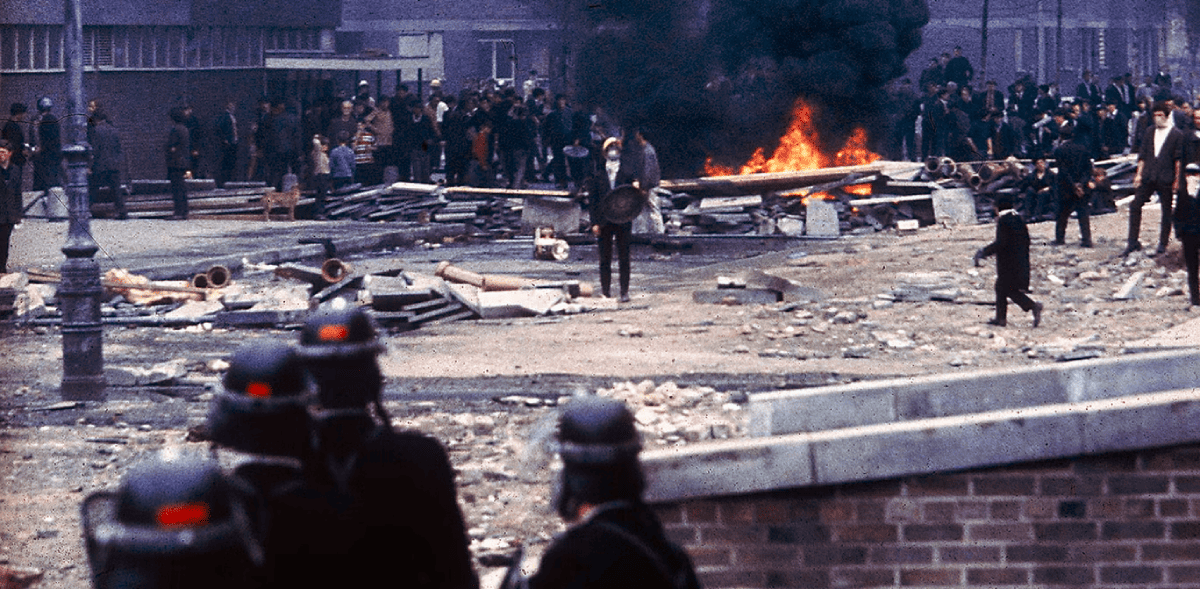
The apparatus arrived in force before dawn on 9 August 1971. Conservative prime minister Ted Heath's Operation Demetrius sent soldiers into nationalist areas to arrest and imprison – without trial or charge – men suspected of republican involvement at Long Kesh prison.
In the early hours of Monday 9 August 1971, I was kidnapped from my bed by armed men, taken away and held as a hostage for five and a half weeks. I was not in Uruguay, Brazil, Greece or Russia. I was in the United Kingdom, an hour’s flight from London. I was in Belfast.
–John McGuffin, Internment! (1973)
Three hundred and forty-two were seized in the first sweep. The intelligence was badly out of date, so a large share of those taken had no connection to the IRA at all; more than a hundred were released within forty-eight hours.
No loyalist was arrested, though loyalist paramilitaries were also killing people. By the time internment ended in 1975, nearly two thousand people had passed through it.
Internment did two things that define everything which follows.
- It established the state would suspend ordinary law when it judged the emergency severe enough, detaining people on suspicion rather than evidence.
- And it produced, in its "special treatment" interrogation rooms, the first documented British torture of the conflict. Not torture in Kenya this time. Torture on British soil.
Fourteen men were selected for what was blandly termed interrogation in depth, and subjected to the "five techniques": hooding, prolonged wall-standing in stress positions, continuous white noise, and deprivation of sleep, food, and water.
Some were beaten and thrown from low-flying helicopters after being told they were hundreds of feet up when they were a few feet off the ground.
The Irish government took the case to Strasbourg, where it was conceded the operation had been planned and implemented from the highest levels of the British government, and specially trained personnel had been sent over to teach the local forces these methods.
In 2021, the Supreme Court found the use of the five techniques amounts to torture.
The five techniques did not evolve in Belfast. They were brought there and taught by people who had used them elsewhere in the empire. Into exactly this environment, in the summer of 1971, Britain inserted its first home-grown counter-gang.
The Military Reaction Force (MRF)
By the summer of 1971 the Bomb Squad had reorganised and acquired the name it is now remembered by: the Military Reaction Force, or MRF. Around forty men, hand-picked from battalions across the British Army, operated in and around west Belfast for roughly eighteen months, based at MI5's Palace Barracks in Holywood.
On paper they conducted surveillance on suspects, protected buses from hijackers, guarded individuals covertly, and made arrests in areas where a uniformed presence would have caused riots.
In practice the MRF was something the British state has never fully accounted for.
The unit ran on turned paramilitaries it called "Freds": Kitson turncoat/counter-gang republicans and loyalists recruited by the Intelligence Corps and driven through Belfast in armoured cars, pointing out faces through the gunslits so the MRF could build its photographic dossiers.
It operated commercial fronts to gather intelligence under cover of ordinary trade. The most famous was Four Square Laundry, a genuine laundry business running vans through republican streets and testing the collected clothes for firearms residue and explosives while the drivers noted who lived where. There was a massage parlour doing the same work.
An entire clandestine infrastructure was hidden inside civilian life, in which soldiers, businesses, agents and armed operations became interchangeable. When the IRA penetrated the laundry operation and attacked it in October 1972, killing one operator, the exposure began the process that would see the MRF wound up.
What the MRF actually did on the streets is best seen on a single night.
On 12 May 1972, hours after the government announced there would be no disciplinary action over Bloody Sunday, an MRF team in an unmarked car approached a checkpoint. It was manned by the Catholic Ex-Servicemen's Association (an unarmed vigilante group of former British soldiers) at Riverdale Park South in Andersonstown. Right next to Stakeknife.
The car stopped, reversed, and a soldier opened fire with a submachine gun. Patrick McVeigh, a 44-year-old father of six, was shot in the back and killed. Four other men were wounded. Later the same night the unit shot and wounded an eighteen-year-old elsewhere in west Belfast.
The soldiers told the Royal Military Police they had been fired on first, a claim forensics did not support, and no one was cross-examined at the inquest.
In 2024, more than fifty years later, a former soldier known as Soldier F was finally charged with McVeigh's murder. Two of the other soldiers involved had died first, one of them given what a bereaved daughter called a hero's funeral.
The McVeigh killing contains the entire later pattern in primitive form: plain-clothes soldiers; an unmarked car; a victim selected on suspicion rather than evidence; lethal force; a false claim of coming under fire; military statements accepted in place of a real investigation; and no prosecution for half a century.
It also carried a darker feature.
Several MRF drive-by shootings were publicly attributed to loyalists.
When Gerard Duddy was shot dead at the same spot a fortnight later, the killing was blamed on loyalists.
When Jean Smyth, a 24-year-old mother, was shot dead on the Glen Road in June 1972, the security forces blamed the IRA; only in 2014 did research link her death to the MRF. It was folded into the Kenova investigation as Operation Mizzenmast.
A false loyalist attribution does more than protect a soldier. It feeds the sectarian war the unit was ostensibly there to suppress.
The MRF's own records were later destroyed, which is why its full body count will never be known. The PSNI eventually listed nine shooting incidents for investigation. The unit had proved the concept and discredited the execution.
The state's response was not to abandon the method but to professionalise it.
The Many Names Of The Det
What replaced the MRF was built by the one part of the Army which already possessed the required skills but few knew about: the Special Air Service. This created a political problem. The government's position throughout the early 1970s was admitting to an SAS deployment would hand the IRA a propaganda victory; an official concession Northern Ireland was a war rather than a matter of criminals and policing.
The solution was to make the SAS disappear on paper.
Half of the SAS's B Squadron from the war in Oman was sent to close the surveillance gap (the Regiment is divided into A, B, D, E, & G). The men were "debadged", formally returned to their parent regiments so they were, technically, no longer special forces at all. If one were killed, his name would not appear on the SAS roll of honour in Hereford and his service would be denied.
The other half of B Squadron was given a different task: to design the selection and training for a new, permanent, disciplined covert unit. That unit became known, eventually, as 14 Intelligence Company in 1972, then the Special Reconnaissance Regiment. in 2005.
Otherwise known to people in Northern Ireland as The Detachment, or The Det. The people who put you in The Kesh.
Its history can be read through its names, because it changed them whenever cover wore thin. Formed in early 1973, it was first the Special Reconnaissance Squadron, then the Special Reconnaissance Unit once officials worried the initials sat too close to "SAS".
In the field it hid behind the identity of a genuine training organisation, the Northern Ireland Training and Advisory Teams, borrowing the cover of a real unit whose job was to prepare ordinary soldiers for the province.
As that cover frayed in the late 1970s it became the Intelligence and Security Group, then 14 Intelligence and Security Company, then simply 14 Intelligence Company.
Individual detachments took further disguises named after their bases; the detachment attached to 3 Brigade, for instance, posed as 4 Field Survey Troop of the Royal Engineers.
By 2001 the unit had become the Joint Communications Unit Northern Ireland. To the soldiers it was always, simply, "the Det."
The list matters, and it is worth setting out plainly, because the renaming was itself a technique.
| Year | Name | Purpose of the change |
|---|---|---|
| 1971 (Jul) | Bomb Squad | Kitson's original counter-gang, narrow bombing remit |
| 1971 (summer) | Military Reaction Force | Broader covert surveillance and offensive action |
| 1973 | Special Reconnaissance Squadron | Professionalised replacement after MRF exposure |
| 1973 | Special Reconnaissance Unit | "SRS" too close to "SAS" |
| mid-1970s | NITAT (NI) cover | Hidden inside a real training unit |
| late 1970s | Intelligence and Security Group | NITAT cover worn thin |
| 1980s | 14 Intelligence Company | Settled institutional identity |
| 2005 | Special Reconnaissance Regiment | Rolled into UK Special Forces, exported globally |
Each new label put another layer of paper between an operation and the public record. A unit that has been four things in four years is a unit whose past is difficult to reconstruct, whose documents are scattered across cover identities, and whose members can be truthfully said never to have served in an organisation of the name you are asking about.
The Det itself became a genuinely formidable surveillance body: around a hundred to a hundred and fifty operators, drawn from all three armed services, split into detachments covering Belfast, Derry and Mid-Ulster.
It recruited men and women who worked together posing as couples, decades before the SAS admitted women at all. Its people learned covert photography, lock-picking, close-quarters shooting and advanced driving.
They drove armoured "Q cars" fitted with hidden radios, kevlar plating and flashbang dispensers.
They ran observation posts and bugged houses under RUC warrant.
The insignia they gave themselves was a peacock over the motto "Argus", the hundred-eyed giant of Greek myth who never fully slept. This was the crucial difference from the MRF. The earlier unit had been a gang of soldiers pretending to be gunmen. The Det was a machine for watching, and the men who did the shooting were now, deliberately, somewhere else.
The MI6 Men At Lisburn
The soldiers were only ever one part of the structure. Above and around them sat the intelligence services, present in Northern Ireland but almost never named. At Army headquarters in Lisburn MI6 maintained a presence disguised under the anonymous title of the "Political Secretariat", headed by Craig Smellie, a career SIS officer who left in 1975 to run the service's station in Athens.
The naming convention is instructive. A secretariat sounds like a Soviet body which files memoranda. It does not sound like the local outpost of Britain's foreign intelligence service operating on domestic soil, which is what it was.
Two coordinating systems grew up to knit the agencies, the Army and the police together. From 1979, following a review of covert procedures led by a senior SIS officer, Tasking and Coordination Groups were established, one for Belfast, one for the north and one for the south; bringing Army, RUC, MI5 and SIS liaison officers under a single command for undercover work.
Beneath them, a set of committees knitted RUC and Army operations together at divisional and battalion level under the guidance of Maurice Oldfield, a former head of SIS. These were formally the Joint Planning Committees and informally "the Oldfield System", They allegedly drew together Special Branch, a bronze-level RUC tactical section, the SAS, 14 Intelligence Company, MI5 and SIS - all around the same table.
The apparatus now had a nervous system. Intelligence could flow from a watcher in a hedgerow to an armed unit at a road junction, and the number of institutions with a hand on such a flow made it correspondingly harder, afterwards, to say whose decision any particular death had been.
The Turf War, And The Man It Destroyed
The intelligence services were not a united front. Through the mid-1970s MI6 and MI5 fought a bureaucratic war over who would run the secret side of the conflict, and the career of Captain Fred Holroyd shows what war cost the people caught inside it.
Holroyd was a military intelligence officer from a military family, no radical, stationed at Portadown running agents for two and a half years. He worked, initially, under MI6, whose officers he later described as reasonable men seeking a political settlement. In 1975 MI5 took the operation over, and by his account the restraint went with the departing service. What replaced it was Kitson's doctrine in its purest form: counter-terror, agents provocateurs, dirty tricks, and the subversion of the subverters.
Holroyd's disillusion crystallised, he said, when Captain Robert Nairac came into his office fresh from an illegal cross-border operation and showed him photographs of John Francis Green, a republican shot dead south of the border. Holroyd objected, not on principle but because he could see where such methods led.
The state's answer was swift and instructive.
He was removed from his post, flown out, and committed to a military psychiatric hospital, declared unfit for duty. He passed the psychiatric tests administered to him. The machine had a way of dealing with an officer who saw too much and would not look away, and it did not involve a tribunal.
Holroyd is what an inquiry would call a compromise source, and honesty requires saying so. Justice Henry Barron, examining his evidence for the inquiry into the Dublin and Monaghan bombings, found some of his allegations were "not completely true, but they relate to events that did happen", His detail was unreliable while his substance held, and RUC and Garda officers eager to destroy his credibility had damaged their own with inaccurate denials.
The wider claims which swirl around Holroyd's account (the same weapon linked Green's killing to the Miami Showband massacre; Nairac ran with loyalist gunmen etc), remain contested and belong in the category of substantial allegation rather than established fact.
What is established is the form of the thing: two arms of British intelligence at war over control of a covert campaign, one officer who recorded the killings which resulted, and a state reaching for a locked ward rather than an honest answer.
MI5: The Centre Who Arranged Not To Know
MI5's place in Northern Ireland cannot be understood from its own later description of itself as an assessor, adviser, and coordinator. Those words make the Service sound like a clearing house positioned outside the violence. Its value lay precisely in occupying the space where the separate parts of the covert war could be joined without any one of them becoming fully accountable for the result.
The Army possessed watchers, handlers and armed units. RUC Special Branch possessed police powers, local files, and the largest informer network.
MI5 had its own agents and technical operations; officers embedded alongside the other services; access to reporting from across the system; and the route by which raw intelligence was converted into the authoritative version received in Whitehall.
It did not have to command every operation. Its function was to make the apparatus intelligible to the state while ensuring the most compromising facts stayed confined to operational compartments below.
This produced a system of managed knowledge, and the management ran in one direction. Intelligence from Army sources, Special Branch agents, technical surveillance and MI5's own reporting could be fused into strategic assessments for ministers, and the process of fusion stripped the detail away.
- A minister might be told penetration of a terrorist organisation was producing valuable intelligence, without being told the source was taking part in abduction and murder to keep his place.
- A minister might read an assessment describing a solicitor as closely associated with the republican movement, without seeing the unattributable propaganda and hostile briefing through which the description had been built.
The centre was informed, but informed in a way which protected it from the consequences of knowing.
The Service did not confine itself to assessment. It ran covert propaganda intended to identify, isolate and unsettle republican figures, and Patrick Finucane was drawn into that activity before his murder. The narrow official account treats this as a limited initiative which strayed onto dangerous ground.
The wider history of British information operations points to something more deliberate: the intelligence services helped construct the political and psychological categories through which civilians, lawyers, and activists could be represented as part of the enemy. Once such a description entered official briefings, private security assessments, and loyalist intelligence networks, no written instruction to kill was necessary. The target had already been made intelligible as a target.
The clearest demonstration of MI5's operational power came in the 1982 shoot-to-kill cases.
A concealed listening device had recorded events at the hayshed where seventeen-year-old Michael Tighe was shot dead by the RUC. The recording could have tested the police account of the operation against what actually happened in that shed.
The Service which had supplied the technical surveillance behind the operation also controlled whether the resulting evidence survived to be examined by the men investigating the death. It chose cover-up.
MI5 could contribute the intelligence which fixed a target; help define the target as an enemy; feed the resulting assessment upward to government; and then control the secret material needed to reconstruct what had happened once the operation ended in a body.
It stood far enough from the gun to deny it had fired, and close enough to the whole system to sculpt what occurred before the shot and what could ever be known afterward.
RUC Special Branch: The Hinge Of It All
If any single body sat at the true power centre of the machinery, it was RUC Special Branch. It was not simply another police department. It collected intelligence, ran informers, liaised with the Army and MI5, assessed threats, and, crucially, decided what intelligence could be passed to ordinary detectives and prosecutors and what could not.
Detectives inside the same police force sometimes described it as a force within a force, operating on its own authority and answerable, in practice, to almost no one.
That position created a permanent conflict with the rule of law. The conflict was structural rather than a matter of a few bad officers.
Ordinary detectives wanted evidence which would stand up in court and convict a killer. Special Branch wanted its agents to remain in place, as an agent is only useful while embedded in a functioning criminal organisation.
The moment a case went to open court, the source and the extent of the state's knowledge risked exposure. The intelligence system therefore had a built-in incentive to keep cases away from prosecution, to withhold what it knew, and to protect people who were committing serious crimes because they were also supplying information.
Special Branch was reorganised in 1980 and spun off two new units modelled on the Det:
- E4A, a native surveillance team, and
- The Headquarters Mobile Support Unit, a tactical squad trained by the SAS which carried out the resolution phase of operations.
It was this last unit that fired the shots in the cases which gave the conflict its most notorious phrase.
Shoot-To-Kill: No Written Order Required
In October an IRA landmine killed three RUC officers near Lurgan. Within weeks the Headquarters Mobile Support Unit shot dead six unarmed men in three separate incidents:
- Eugene Toman, Sean Burns, and Gervaise McKerr at a checkpoint;
- Seventeen-year-old Michael Tighe at a hayshed, with his companion wounded; and
- Two Marxist INLA men, Seamus Grew and Roddy Carroll, in a car near Armagh.
In each case the men turned out to be unarmed. In each case the police first offered an account that did not survive contact with the evidence.
The accounts unravelled in court.
At trial one of the officers, Constable John Robinson, admitted he had been instructed to lie in his statements and other witnesses had adjusted their stories to justify opening fire. His acquittal caused enough public outcry the RUC Chief Constable, Sir John Hermon, asked an outside policeman, John Stalker of Greater Manchester, to investigate.
Hermon himself later admitted false versions of operations had been released to the press to protect sources, and in the Armagh shootings this policy of concealment had, in his own words, gone disastrously wrong.
Stalker never established a written document headed "shoot-to-kill policy", and members of his own team later stated for the record they had found no evidence of a formal policy of such a kind.
That is the state's defence, and it is technically accurate.
It is also beside the point, because a shoot-to-kill system does not need a written order. It can be assembled instead from a recurring pattern of operational choices, and the pattern in Armagh and in later Det and SAS ambushes was consistent.
- Suspects were placed under surveillance well before any confrontation.
- Opportunities to arrest them earlier and more safely were not taken.
- Armed units were positioned at the expected point of action rather than sent to detain.
- Soldiers were briefed the suspects were armed and immediately dangerous.
- The encounter was structured so the men on the ground had seconds to decide.
- The account offered afterwards centred on a sudden movement, a weapon, a detonator.
- The scene and the forensics stayed inside the same security apparatus which had planned the operation.
- Investigators were then denied the intelligence background on grounds of national security.
An order to execute is unnecessary when the machinery is arranged so killing is the most probable outcome and the least investigable one.
Documents the Ministry of Defence disclosed to lawyers for two IRA men killed near Derry's Gransha Hospital in 1984 revealed one officer (identified only as Soldier H) had held a command position in seven other fatal shootings; a chain of operations which left sixteen people dead between 1983 and 1991.
The same small pool of operators; i.e. the same planner; recurs across ambush after ambush. That is not a series of accidents at the point of a trigger. It is a system with authors.
Stalker, Sampson, And Formal Obstruction
The investigation is where the apparatus revealed its second and cleverer function: the same secrecy which made an operation possible made it impossible to reconstruct afterwards. John Stalker did not merely want the statements of the men who had fired. He wanted the surveillance and intelligence material behind the shootings, above all the hayshed tape MI5 had destroyed.
That was where his inquiry ran into a wall.
Special Branch treated the protection of sources and methods as outranking an ordinary murder investigation, and national security was invoked to keep the underlying material out of his hands.
In June 1986, days before he was due to report and had confided he believed RUC officers were involved in six murders, Stalker was removed from the inquiry and shortly afterwards suspended over unrelated allegations about his acquaintance with a Manchester businessman.
He was cleared but never reinstated to the investigation.
It was passed to Colin Sampson of West Yorkshire. Stalker's interim report ran to fifteen bound volumes and reportedly recommended criminal or disciplinary charges against dozens of RUC officers.
No officer was ever prosecuted over the shootings.
The attorney general Patrick Mayhew announced in 1988 that there would be no prosecutions, on grounds of national security.
The reports themselves have never been published in full.
In February 2013, weeks before an inquest into the deaths was finally due to open, the government confirmed the Stalker/Sampson files had been among a set of records destroyed during a supposedly routine archival review.
The removal of the investigator, the invocation of national security, the withholding of the reports and, decades later, the destruction of the files: this is not a sequence of unfortunate events. It is the defensive half of the machine doing exactly what it was built to do.
The Force Research Unit (FRU)
The final evolution took the state one step further from its own hands. In 1980 the Army established the Force Research Unit to run its own human agents inside the paramilitaries, rather than depending on the RUC Special Branch it increasingly distrusted. It was headed by Major Gordon Kerr.
Where the Det watched and the SAS struck, the FRU recruited, ran, and protected people already embedded in the enemy's own machinery. Two of its agents show what it meant in practice.
Brian Nelson was a loyalist the FRU inserted into the Ulster Defence Association in 1987, where he became the UDA's chief intelligence officer. With Army assistance, resources and a car, Nelson brought a new professionalism to the loyalists' targeting, collating information on potential victims onto index cards.
The later Stevens inquiries concluded Nelson was, in effect, selecting who would be killed.
He passed the names of only a handful of intended targets to his handlers; those he named were spared, while others were shot dead. The Stevens team came to believe Nelson was linked to at least thirty murders, many of whom were of uninvolved civilians.
Kerr gave evidence at Nelson's trial under the alias "Colonel J" and would later insist the unit had saved over two hundred lives through such penetration; Stevens Inquiry investigators found evidence only two lives had been saved, and many attacks the FRU could have prevented were allowed to proceed.
It was renamed the Joint Support Group after the Good Friday Agreement and deployed to Iraq. It exists today, still, as the Defence Human Intelligence (HUMINT) Unit (DHU) and "manages network of civilian agents in war."
The model was a decisive advance on the MRF. The earlier unit sent soldiers to shoot suspects. The FRU placed the state inside the enemy's targeting apparatus, helped make it more efficient, and then maintained any resulting murders belonged solely to the paramilitaries.
Patrick Finucane: The Machine In Full
The murder which shows the completed machinery is that of Patrick Finucane, a Belfast solicitor who had represented clients on both sides of the conflict and was, for that reason, resented by parts of the security establishment. Weeks before his death a government minister told Parliament some solicitors were "unduly sympathetic" to the IRA.
On 12 February 1989, Ulster Defence Association gunmen broke into his home and shot him fourteen times in front of his wife and three children.
The reported killer, Ken Barrett, was an RUC Special Branch informer. He was recruited after confessing to the killing.
Around a single killing several arms of the state converged.
- Brian Nelson (the FRU's agent) had compiled targeting intelligence on Finucane.
- William Stobie, the UDA quartermaster who supplied a weapon used in the murder, was at the same time an informant for RUC Special Branch. He was murdered in revenge in 2001.
- Intelligence existed indicating Finucane was under threat. No effective warning was given, and no one intervened.
- After the killing, the agents' status distorted the investigation, and evidence was withheld.
When David Cameron finally addressed it in 2012, drawing on the de Silva review, he acknowledged "shocking levels of state collusion" while stopping short of finding the government had ordered the murder.
Earlier inquiries by John Stevens and Judge Peter Cory had already reached clear findings of collusion. In 2024 the government at last conceded a public inquiry, thirty-five years after the shooting.
The absence of a signed order is exactly what makes Finucane definitive.
- One state body ran the loyalist intelligence officer who selected him.
- Another ran the loyalist quartermaster who armed the killers.
- A third held the threat intelligence.
- A fourth would investigate, and would be starved of what the others knew.
No institution had to order the death, because several institutions between them made it possible and then made it uninvestigable.
This sophisticated administrative compartmentalisation is how the Germans orchestrated mass killing.
Finucane was not a malfunction. Stevens found the murder of Adam Lambert (an uninvolved Protestant student killed by loyalists) had likewise involved collusion and been preventable.
The system produced dead bodies as a matter of routine, and the routine was the design.
Stakeknife: Preserving The Killer
If Finucane shows the machine arranging a death from the outside, Stakeknife shows it operating from within the killing itself. The agent was run inside the IRA's internal security unit (the "nutting squad"), the squad whose job was to hunt down, interrogate, torture, and shoot suspected informers.
Recruited in the late 1970s and run for well over a decade, he was known to RUC Special Branch and MI5 from the start.
Reports reached his handlers describing his part in abductions and interrogations of suspected agents who were then murdered, and the machine kept running because the intelligence was judged too valuable to lose.
The moral horror here is not incidental to the intelligence value; it is the source of it.
The agent was useful precisely because he sat inside the unit which found and killed informers, and keeping him there meant keeping such a unit working. MI5 even put out a non-apology statement.
Stakeknife was not merely an intelligence asset who happened to inhabit a violent organisation. He was accused of being one of its torturers. In one case examined by Operation Kenova, a victim was held for roughly two weeks, repeatedly beaten and had his fingers broken; testimony placed Freddie Scappaticci in the room, holding a gun to the prisoner’s head.
This was the man British military intelligence decided was more valuable than the people delivered into his hands. The files record handlers being told where another captive was being held, who was interrogating him and that he was being assaulted. Their response was not to rescue the prisoner, but to advise Stakeknife how to distance himself if the IRA decided to kill him.
The 2025 Kenova report reduced the whole apparatus to a single sentence: time and again, protecting the agent appeared to outweigh protecting the life of a victim.
Kenova concluded more lives were probably lost through his continued activity than saved by his intelligence. Which in turn demolished the "hundreds of lives saved" claim officials had used for years as a retrospective immunity certificate.
Scappaticci was removed to England, furnished with false identities and maintained at public expense. For years he lived as “Frank Conway” in a detached house behind a high hedge in Guildford, driving a Mercedes and mixing with neighbours who knew nothing of the abducted, tortured, and murdered people attached to his former life.
He later became “Frank Cowley” and remained a protected person until his death in 2023 with £500,000 in the bank. Kenova found no evidence he ever held paid employment after his resettlement.
For more on Stakeknife:
 Oliver Kerr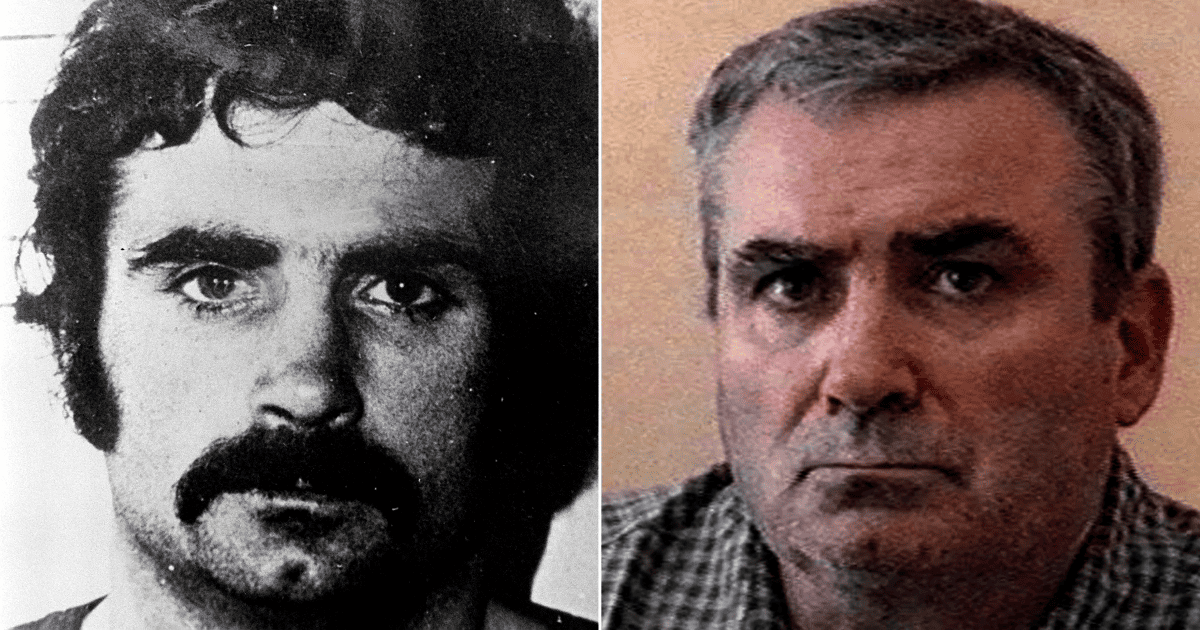
The supposed successes were secret and so could never be tested. Real, named victims were weighed against imaginary saved ones whose files no outsider could ever see, and the ledger, it turned out, ran the other way.
The Cover-Up Built Into The Structure
The state has always defeated the accusation of collusion by demanding proof of a single explicit order no rational apparatus would ever commit to paper. It is more accurate to describe collusion as a set of routine institutional behaviours which converge information, none of which requires a room where soldiers, police, and loyalists jointly choose a victim.
It looks like:
- Intelligence flowing from state files into a paramilitary ecosystem; investigators found a large share of loyalist targeting material originated with the security forces.
- Warnings not passed on;
- Agents shielded from arrest;
- Searches steered away from a location;
- Patrols pulled back at a convenient time;
- Prosecutions dropped to protect a source, and;
- Threats allowed to mature because intervening would expose a penetration.
The cover-up worked the same way, by distributing knowledge rather than only destroying it, though plenty was destroyed too.
When John Stevens began investigating collusion, his confidential plans leaked and a loyalist was warned. Nelson's handlers advised him to leave home before an intended arrest.
On the eve of the rescheduled operation, Stevens's incident room inside RUC headquarters burned down. Stevens judged the fire deliberate arson; it was never adequately investigated.
Beyond such direct sabotage, the deeper concealment was architectural.
Army intelligence held one fragment, Special Branch another, MI5 the strategic overview. Detectives saw only the crime scene. Prosecutors received sanitised summaries. Courts were denied the underlying material on security grounds.
Every institution could truthfully say it did not possess the whole picture, because no institution had been allowed to. This is deniability engineered into the structure itself. Responsibility dissolved upward away from the operator; operational detail dissolved downward, away from the minister; and the two were arranged never to meet.
The modern version of the technique needs no order to hide a file.
The Kenova investigation ran for years without receiving the full MI5 holdings on Stakeknife, which surfaced only in 2024 and revealed greater Security Service knowledge and involvement than had ever been admitted. The subsequent review did not find deliberate contemporary withholding, attributing the failure partly to poor information management.
That is the point. When each agency searches only its own compartment; records use codenames and inconsistent identifiers; disclosure is reactive rather than comprehensive and no one is responsible for joining the holdings together; concealment becomes endemic a system level rather than conspiratorial.
And over the identity of the agent himself the state still deploys its final shield, "neither confirm nor deny", Even now, with Kenova complete, a parliamentary committee in February 2026 is urging the government to name Stakeknife.
Counting The Endless Dead
The standard reference is the Sutton index of deaths compiled by Malcolm Sutton and hosted by Ulster University. It is the nearest thing to a complete, named, publicly searchable register of everyone who died in the conflict. It records each death with a name, a date, an age, a location and the organisation held responsible.
Sutton attributes 366 conflict-related deaths directly to British state forces, out of a recorded total of 3,532. The breakdown is stark.
| Force | Deaths directly attributed |
|---|---|
| British Army | 300 |
| Royal Ulster Constabulary | 55 |
| Ulster Defence Regiment | 8 |
| Royal Air Force | 1 |
| Ulster Special Constabulary | 1 |
| British Police | 1 |
| Total | 366 |
The older edition of the index (cut off in 1993) classified 357 of these killings by the status of the person killed: 194 civilians, 141 republican paramilitaries, 13 loyalist paramilitaries, and 9 members of the security forces themselves.
The largest single group killed by British forces, in other words, was unarmed civilians.
Most of those civilians were Catholic.
It is the honest statistical floor of direct state killing, and it is already a large number.
| Episode | Deaths | Evidential standing |
|---|---|---|
| MRF drive-by shootings (1972) | at least 3 killed, more wounded, across 9 incidents | One prosecution begun 2024; unit records destroyed |
| Shoot-to-kill, Armagh (1982) | 6 unarmed men | RUC accounts fabricated; hayshed tape destroyed by MI5; no prosecutions |
| Soldier H command chain (1983–91) | 16, across 7 operations | MoD disclosure to inquest; immunity certificates sought |
What the Sutton figure cannot capture is the later form of the machine, i.e. the deaths it enabled without firing.
Once the state was running agents inside the paramilitaries, killings began to migrate out of the "British forces" column and into the columns marked IRA, UDA. and UVF. Where a state agent selected the target, supplied the weapon, or sat inside the unit which carried out the murder.
Sutton records Patrick Finucane as killed by loyalists, which is accurate as to the hand on the trigger and silent as to Brian Nelson, William Stobie, and the intelligence flowing through both.
Stakeknife's victims are recorded as IRA killings (which is what they were), and also what the state's penetration of the IRA's internal security unit helped to permit.
The Stevens team linked Nelson alone to at least thirty murders; Kenova connected Stakeknife to fourteen, plus fifteen abductions. None of those deaths appears in the 366.
In the MRF years the state stood close to the gun and its killings are counted. As the apparatus matured through Special Branch and the FRU, the state moved inside the organisation holding the gun, and its killings became, on paper, someone else's.
The true measure of the machine is not a single number but the distance it learned to put between itself and the body.
The Orwellian Laboratory Of Belfast
Northern Ireland is often described as a security emergency. It was also a constitutional laboratory, in which the executive developed methods faster than Parliament developed the law to govern them. Internment ran on emergency powers. Agents committed crimes under secret guidelines. Covert military units of uncertain legal standing operated on British streets.
MI5 was not placed on a statutory footing until 1989, MI6 not until 1994. When Parliament later legislated for all of this, it did not invent the machinery. It formalised what had already been built and tested here.
The progression from 1971 to the late 1980s is a single movement toward maximum influence with minimum visible authorship.
- Internment suspended ordinary law and demonstrated the state would detain and torture on suspicion.
- The MRF entered the underground in disguise and shot from unmarked cars.
- The Det professionalised the watching and separated it from the shooting.
- Special Branch elevated the protection of sources above the ordinary business of detection and prosecution.
- The FRU placed state-run and state-protected people inside the killing organisations themselves.
- And above all of them MI5 fused the reporting into the version Whitehall received, deciding what the centre would know and, when a listening device had caught a killing on tape, whether the evidence would survive at all.
Every time a component was exposed, it was renamed, reorganised, and sent back out, while the investigation which might have reconstructed it was starved of the very intelligence which would have made reconstruction possible.
By the end of the 1980s the state had what it had been building since Kenya: a way to identify a human obstacle; surround the person with secrecy and exceptional authority; and arrange their removal through soldiers, agents or proxies in such a way no single public body could be shown to own the result.
The apparatus had come home, survived contact with inquests and a free press, and won.
By the time Parliament finally placed MI5 and MI6 within law, the institutions themselves had already spent two decades constructing the practices the legislation would eventually acknowledge. Law did not create the apparatus. It arrived after the apparatus already existed.
The British Murder Machine series is a stark reminder the cover-up of atrocities like Pakistani rape gangs is a long-established pattern. The obsession with secrecy has bred endemic corruption for a century. If we truly want to begin again, our country needs an era of public repentance and reconciliation, with external superinvestigators, to wash out the ugly truth of Establishment criminality.
Alex Coppen