The "Prevent" Program Is A Constitutional Disgrace
A programme that cannot define its terms, validate its instruments, or name the authors of its definitions has spent two decades reading the inner lives of British citizens through the vocabulary of the hospital ward. Fifty prisoners supplied the science. Children supply the caseload.
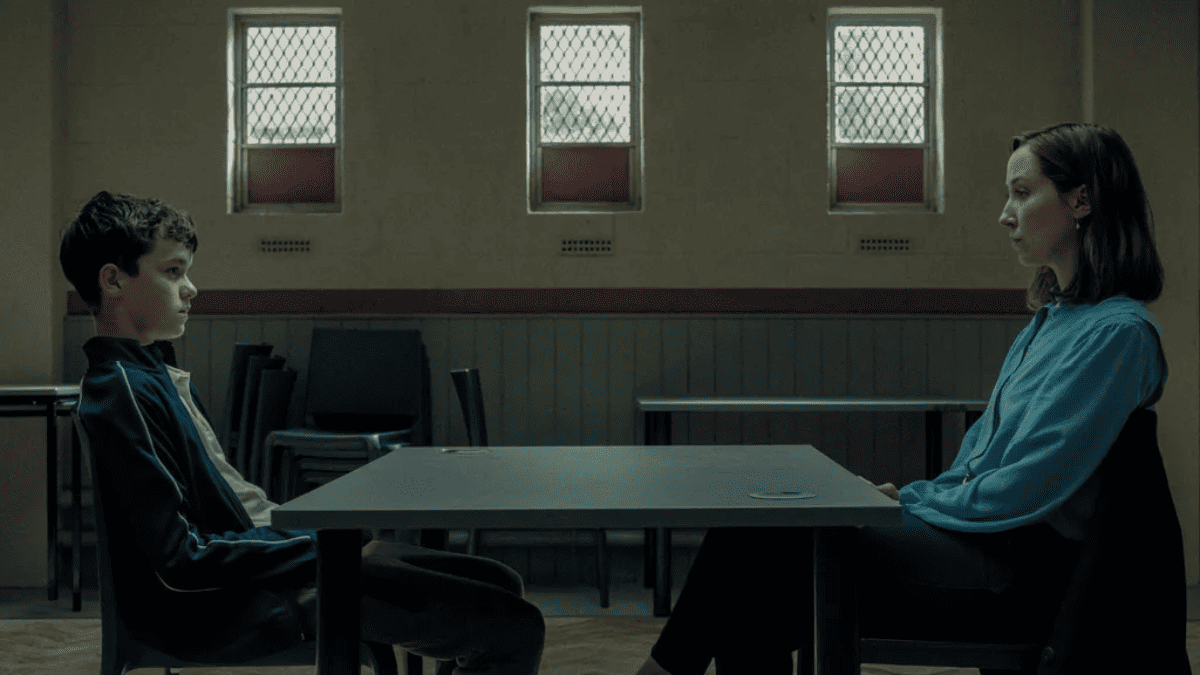
There is a particular brand of cowardice which intends to police what you think but cannot bring itself to say so. It does not send men in uniform to announce your beliefs are now a matter of national security. It sends a designated safeguarding lead. It does not accuse; it expresses concern. It does not interrogate; it assesses vulnerability.
It does not tell you your opinions have been checked against a list of warning signs drawn up by people you will never meet, on the basis of evidence you will never see, according to a theory nobody has ever validated. It refers you, gently, into a process, and hopes you are grateful for the care. It is the toxic maternal instinct of HR at pathological depth.
This is Prevent.
It is the most quietly-malignant thing the modern British state has built, and it is malevolent precisely because it is soft. It has learned to speak in the tone of medicine; the one language against which the ordinary citizen has almost no defence.
A person can argue with a policeman. A person cannot argue with a diagnosis. This is actually the machinery written about by Orwell in the novel itself.
Two threads are converging in this ugly mutant: the state's escalation of jurisdiction into individual personal belief which started with the Race Relations Act 1965, and the wider practice of manufacturing fictional pathologies within the social sciences.
This repugnant affront to ordinary dignity should never have been allowed. It should never have been conceived of, let alone written into any guidance or any law. The state has no jurisdiction over the mind of man, anywhere. The fact our government and its silly little mandarins believe it does, and moreover believe it is free to trespass as an aspiring collective telepath, is not merely chilling, it is disgusting.
The state may assert authority over human action, and in limited circumstances, human speech. It may never assert authority over human mind, thought, or conscience.
From where, exactly, does the British state surmise the legal, moral, or constitutional authority to assert jurisdiction over personal thought?
A Duty Nobody Was Allowed To Refuse
Prevent began as strategy in the aftermath of the July 2005 London islamic bombings, as one limb of the CONTEST (counter-terrorism) framework; a thing of policy papers and Home Office initiatives with no particular teeth. It grew teeth in Theresa May's Counter-Terrorism and Security Act 2015.
This should now be familiar. The state (that is, the civil service) does something it is not allowed to, then retrospectively legitimates it in law post-facto.
Section 26 placed an absurd statutory legal duty on a long roster of public bodies.
(1) A specified authority must, in the exercise of its functions, have due regard to the need to prevent people from being drawn into terrorism.
(2) A specified authority is a person or body that is listed in Schedule 6.
Legislators place things into schedules when the list is too long for the page, or they want to be able to add to it later. The list of authorities is absurd.
Prisons, schools, universities, everyone:
- A county council or district council in England.
- The Greater London Authority.
- A London borough council.
- The Common Council of the City of London in its capacity as a local authority.
- The Council of the Isles of Scilly.
- A county council or county borough council in Wales.
- A person carrying out a function of an authority mentioned in section 1(2) of the Local Government Act 1999 by virtue of a direction made under section 15 of that Act.
- etc etc
The statutory guidance is at pains to reassure everyone the duty "does not confer new functions on any specified authority." No fresh powers. No new constabulary. The state did not, on paper, grant itself the right to inspect the population's minds.
What it did was cleverer and much worse.
The elegance of section 26 is it looks like nothing at all: a duty of attention, a statutory instruction to keep half an eye out, spread across hundreds of thousands of public employees who now carry, alongside their real jobs, a low-grade permanent suspicion of the people in front of them.
The four-year-old referred over a drawing of a "cooker bomb" which turned out to be a cucumber was not a glitch. It was the design working as intended: a nursery worker, dutifully having due regard.
- The Secretary of State issues the guidance.
- The Secretary of State appoints the monitor of compliance.
- The Secretary of State may direct any authority judged to have fallen short, enforceable in the courts by mandatory order.
A modest safeguarding obligation on the surface becomes, underneath, a centrally directed apparatus of observation wearing the high-visibility jacket of child protection, so objecting to it feels like objecting to child protection.
Theresa May's Home Office understood the trick exactly. The surest way to make surveillance uncontroversial is to file it under welfare.
Who was responsible? We can name them.
- James Brokenshire was the principal junior minister carrying its detailed counter-terrorism provisions through the Commons.
- The government sponsor in the Lords was Michael Bates, then Parliamentary Under-Secretary of State at the Home Office.
- Jeremy Heywood had been Cabinet Secretary since 2012 and additionally became Head of the Civil Service in September 2014; just before the bill was introduced.
- Mark Sedwill was Home Office Permanent Secretary from 2013 to 2016; the department’s senior accounting and administrative official throughout the development, introduction and passage of the bill.
- Charles Farr was Director-General of the Home Office’s Office for Security and Counter-Terrorism, the directorate responsible for CONTEST, Prevent, and counter-terrorism legislation.
The last name will be familiar to Restorationist readers from their knowledge of RICU, the government's propaganda unit.
A Sinister Language Of Medical Pathology
Prevent material does not read like counter-terrorism. It walks and talks like a clinic, and this is not decoration. It is the whole engine. The person referred is not a suspect but a vulnerable individual. They are not investigated but safeguarded. The belief they hold is not an argument to be met but a risk factor to be managed.
Every part of this program is absurd. Every part of every department it touches is idiotic in the extreme. It is embarrassing how stupid this is.
Radicalisation is officially defined to sound like the natural history of a disease, a progression through stages, something that happens to a passive host rather than a set of conclusions a thinking adult has reached. Prevent's glossary is a textbook example of inverse pathology:
Radicalisation
Is the process of a person legitimising support for, or use of, terrorist violence.
Vulnerability
Describes the condition of being in need of special care, support, or protection because of age, disability, risk of abuse or neglect.
Academics studying the strategy have named the underlying model with some precision: an epidemiological imagination of pre-criminal space, in which all bodies are treated as potentially open to infection by radicalisers and therefore warranting surveillance. That is not a hostile caricature invented for print. It is a sober description of the actual conceptual apparatus in use.
The citizen is a body. The idea is a pathogen. The state is the physician. And a physician does not require your consent to consider you unwell. He requires only symptoms.
The clinical frame performs one specific operation on political belief: it strips the belief's content out of the conversation entirely. A doctor does not debate your fever. He observes it, records it, treats it.
When the state recasts a conviction (a war was unjust, a border should never have been opened, the government lies), as a symptom of susceptibility, it excuses itself from ever addressing whether the conviction is true.
Truth is not a category which applies to symptoms. A democracy which formally protects free expression can thereby build a machine for flagging the expression it dislikes, simply by declining to call the flagged material speech and calling it medical presentation instead.
The offensive opinion becomes a clinical sign, and clinical signs enjoy no protection, because clinical signs are not meant to have rights.
There is a nastier turn still in this revolting Pandora's box.
Illness invites intervention as Nurse Ratched's kindness.
The patient who resists is not exercising liberty; he "lacks insight" into his own condition. This is a straight lift from psychiatry, where refusal of treatment is itself logged as a feature of the disorder. When did you stop beating your wife?
The frame cannot be falsified from inside it. Agreement confirms the concern. Denial confirms the concern. This is not the logic of law, which can at least acquit. It is the logic of the committal.
What Happens In The Room
Mike Lynton, a friend of the The Restorationist, was referred by the Royal Navy in 2019 after a pair of journalists ran an inflated story about him. One of them, an easily-frightened moral priestess named Lizzie Dearden (and of course, woman of a certain age), spent days as an activist personally phoning and demanding their removal after the article was published.
Mike is a particular worry for the Establishment, not merely because he is a weapons engineer. He's the charismatic, humorous, and sensible wing of the wildest elements of the British right who has changed over ten years from being a mischievious naughty boy. He is very different even to us at this publication: a pagan rather than a Christian; and an authoritarian, rather than a libertarian.
That year the country referred 5,738 people; 561 went down the Channel route for re-education.
Mike was one of them. His testimony is as harrowing as it is ridiculous.
When I walked into the room, my representative was turned away. Refusal wasn’t an option either; my employer said I had no choice but to sit down. Opposite me sat three people, but one man stood out. His name was Murray. He did most of the talking, and from the start, he made it clear he wasn’t interested in fairness. “I’ll make your life hell”, he barked.
The pretence of pastoral support lasted about as long as it took to open the folder. Names, numbers, addresses were demanded and refused. When Mike declined to hand over his phone, the room supplied its own bizarre tough-talk explanation for the refusal:
The room was a PED Amber Zone: no mobiles allowed. I didn’t have mine. They did, of course, because Prevent officers operate above the law they claim to uphold. My refusal turned into a wild accusation: clearly, the only reason I wouldn’t hand over my phone was because it contained CSAM [indecent images of children].
Learning he offered to lay down his life by serving his country, trained at the gym, did martial arts, and worked as a weapons engineer, Murray offered the view he must want to shoot and bomb his fellow citizens. And this is where it descends into farce, and concludes with... a Wikipedia printout.
To try to soften me into an informant, Murray told me a story he must have concocted during the drive. He claimed he’d once been in Northern Ireland, chatting in a pub, and later discovered he’d been talking to the IRA, who tried to bundle him into a car. Somehow, this drunk soldier fought them all off and escaped. Quite the Rambo tale, and quite unbelievable too. But that’s the framing they use: “You’re just a victim, misled by nasty nationalists. We’re the big, brave failed police officers here to save you.”
When that didn’t work, they flipped to frame two: “You are the problem.” This was where they became abusive and childish. They stomped their feet, sulked when I didn’t cooperate, called me names and eventually downgraded to schoolyard insults like “loudmouth pisshead.” Very professional behaviour from the supposed guardians of national security.
Then came “far-right bingo.” Do you love your country? Do you have weapons training? (Bear in mind, I was sitting there in uniform.) The pièce de résistance was when they pulled out what I thought was a dossier on me. No. It was the Wikipedia page for Generation Identity, printed off. That was their research. That was their evidence. These are the people who think they’re qualified to decide who’s a “threat.”
When Mike later tried to complain, he was told, repeatedly, that he was not permitted to.
A man was compelled to attend a "voluntary" process he could not opt out of. He was denied representation at a "safeguarding" meeting. He was accused, on no evidence, of the gravest imaginable offence (child exploitation), as a lever to extract information about other people. The gap between the official language, support, safeguarding, early help, and the actual conduct in the room, threat, insult, fishing, is not a gap. It is the design and it bears one specific intelligence agency's watermarks.
Channel is described in every document as consensual, confidential, and caring. Mike is a grown man and tough as nails. But as we will see, when one understands who makes up Prevent's supposed caseload, this becomes much more sinister.
The Home Office's own figures for the most recent year record (among adopted cases where consent was noted), 45 per cent did not consent to the support they were nonetheless adopted into. "Voluntary" is a strong word for a programme where nearly half the participants declined and were processed regardless.
Mike's conclusion – one should never speak to Prevent – , is admittedly intemperate, and the intemperance is the tell of a man who was actually in the room.
The colder version is do not attend alone. Establish whether the meeting is voluntary, and if told it is, act accordingly and leave. Ask whether you are suspected of an offence. Ask who is present and in what capacity. Record everything.
The programme relies on the citizen mistaking a counter-terrorism encounter for a welfare chat, and behaving with the openness the second invites while exposed to the machinery of the first.
ERG22+ Or 50 Prisoners + Magic Woo-Woo
When a Channel panel judges whether a person sits on the pathway to terrorism, it does not consult a validated science of the radical mind, because none exists. It applies a framework. Because, of course it is does. It is the only thing the technocrat knows.
In the pre-crime/thoughtcrime area this has meant the Vulnerability Assessment Framework, a direct transplant of twenty-two indicators drawn from a psychometric analysis called the Extremism Risk Guidance 22+ (ERG22+).
This instrument is the nearest thing Prevent possesses to an intellectual foundation.
Every referral, assessment, and intervention downstream rests on the professional confidence it purports to supply. Where did it come from?
The Extremism Risk Guidance 22+ framework was created inside the National Offender Management Service (now HMPPS), principally by forensic psychologists Monica Lloyd and Christopher Dean. It began as Structured Risk Guidance piloted in 2009, and was developed from casework involving only 40 convicted Islamic extremist offenders, a limited literature review, overseas practice, and consultation.
It was not built from a large prospective dataset, a control group or demonstrated predictors of future terrorism.
The official development history concedes there were no meaningful outcome studies, little reconviction data and no basis for an actuarial model when the framework was introduced.
ERG22+ is not a test which calculates a person’s probability of committing terrorism. It is best understood as an administrative framework for organising professional opinion, introduced before meaningful validation and still unsupported by public evidence it can reliably predict terrorist violence. Assessors consider 22 factors under “engagement,” “intent” and “capability,” then form an overall opinion.
Many of those factors are broad human characteristics—identity-seeking, perceived injustice, “us and them” thinking, over-identification with a cause, political or moral motivation, excitement, belonging and susceptibility to charismatic figures.
These may help organise a convicted offender’s case history, but their presence does not establish terrorist propensity. The framework commits a familiar social-science error: traits observed retrospectively among some terrorists are treated as prospective risk indicators, without showing people who possess those traits are meaningfully more likely to become terrorists.
To their credit, the authors acknowledge their ideas and methodology are social science garbage.
The study had a number of limitations. Only Islamist extremists were included in the analysis so it may not be possible to generalise the findings to those who support another group, cause or ideology. The women in the study also represented a small group and may have differing motivations to men. Further research is needed to examine the properties of the ERG22+ with those supporting differing groups, causes or ideologies and with a sample of female offenders. The inter-rater reliability between assessors should also be examined to determine the levels of agreement.
Later Ministry of Justice studies did not solve the problem.
A 2023 psychometric analysis of 310 historical assessments found the original three-part structure did not adequately fit the data; even a revised model failed to achieve a good overall fit. Only the “intent” domain met the authors’ chosen reliability threshold, while five individual items were rated substandard. The study did not test whether ERG22+ predicted attacks, reoffending, false positives or false negatives; it mainly tested whether assessors’ item scores were internally consistent with their own overall judgements.
In a word, it is woo-woo. Pseudoscientific psychology garbage entirely misused from its original purpose through a mixture of speculation and necessity.
- A pattern was observed in a few dozen imprisoned, convicted, overwhelmingly Islamist men.
- The pattern was frozen into a checklist.
- The checklist was carried out of the prison, stripped of the single feature which lent it any meaning (an actual conviction).
- It was turned on the general population: schoolchildren, the merely furious, the merely devout, the merely strange.
A backward-looking aid to managing the guilty became a forward-looking instrument for guessing at the innocent. This is not a science of prediction. It is a superstition with a reference number.
The official laundering of this opaque magical rot is as follows:
- Structured Risk Guidance (2009, Prison service)
- Vulnerability Assessment Framework (2012)
- Extremism Risk Guidance 22+ framework
The right comparison is Cesare Lombroso, the nineteenth-century criminologist who measured the skulls of convicts and pronounced he could read the born criminal in the angle of a jaw. Identical move: study the caught, extract a profile, project it onto the free.
We laugh at Lombroso now. We have swapped the calipers for a twenty-two-item questionnaire and the jawline for the grievance, and called the result "safeguarding."
| The claim | What actually underpins it |
|---|---|
| A validated method for spotting future terrorists | A checklist derived from casework on roughly 20 to 50 already-convicted offenders |
| Built on a "psychology evidence base" | Indicators its own authors concede were "not empirically derived" |
| Applicable to the whole population | Validation sample was Islamist-only, with a near-total absence of women |
| A tool for pre-crime prediction | Originally a post-conviction formulation aid for people already imprisoned |
| Meets professional standards | Systematic review: meets the standards of no recognised field |
Who Drew Up The List Of Forbidden Thoughts?
The problem with totalitarianism and the tyranny of HR is they are not just nasty, they are two strands of the same kind of stupid. Prevent statistics list the ideologies kids were referred for, and it reads as the most pathetic student-level social science idiocy you'd imagine.
The current list (and note the order) is:
- Extreme Right-Wing
- Islamist Extremism
- Left Wing Extremism
- Anarchist Extremism
- Northern Ireland-related — Dissident Republican Extremism
- Northern Ireland-related — Unionist/Loyalist Extremism
- Environmental Extremism
- InCel
- Fascination with extreme violence or mass-casualty attacks, where no other ideology is identified
- Pro-Khalistan Extremism
- Hindutva Extremism
- Other religious extremism
- Multiple ideologies, with no dominant ideology
- No ideology — other susceptibility to radicalisation identified
- No ideology identified
- Other ideology not already listed.
In medicine, not otherwise specified (NOS) is a subcategory in systems of disease / disorder classification such as ICD-9, ICD-10, or DSM-IV.
The extraordinary part is it is not really a list of ideologies at all. It mixes political doctrines, religious nationalisms, terrorism theatres, subcultures, behavioural fascinations, absence of ideology, and catch-all administrative categories in a single field called “type of concern.”
It's not clear with revolutionary Marxist-Leninism, Pabloism, Maoism, or Palestine are covered.
This taxonomy appears to have been written institutionally by the Home Office Prevent Directorate, working with Counter Terrorism Policing Headquarters, as part of the new Prevent Case Management Tracker (PCMT) introduced in May 2024. The annual statistics say PCMT combines police referral data and Home Office Channel data; the user guide presents the categories simply as the fields available within that system.
The categories were also repeatedly changed: earlier systems used labels such as “mixed, unstable or unclear,” “school massacre,” “conflicted,” and “vulnerability present but no ideology or CT risk”; analysts later disaggregated and renamed them, and the May 2024 PCMT introduced another new set.
The abject stupidity of this as an endeavour is exemplified in the controversy surrounding the attempt to introduce "cultural nationalism" as an "ideology." In June 2025, government "refresher awareness" training documents cited Prevent information claiming:
We define extreme right-wing terrorism as the active or vocal support of ideologies that advocate discrimination or violence against minority groups. The 3 most common sub categories of extreme right-wing terrorist ideologies and their narratives are:
Cultural nationalism: ‘Western culture’ is under threat from mass migration and a lack of integration by certain ethnic and cultural groups.
White/ethno-nationalism: Mass migration from the ‘non-white world’ and demographic change poses an existential threat to the ‘white race’ and ‘Western culture’.
White supremacism: The ‘white race’ is biologically, culturally and spiritually superior to all other races. An alternative form of government, ranging from fascist regimes to ethno-tribalism, should replace Western parliamentary democracy.
The problem here isn't this is GCSE sociology written by ethnic minorities in the Home Office. It is that is wrong. Right-wing was defined by seating the French parliament, and "extreme" refers to the use of authority/force over negotiation. It is not defined under any reasonable measure by "minority groups" other than within the perception of minorities.
Disregarding the obvious issue no government should be drawing up lists of what one might believe, the second problem is these definitions are intellectually weak and open to challenge instantly from even children at junior school. They are drawn up by low-IQ participants and cannot be cited authoritatively.
- Data already suggests demographics in the US will be inverted by 2025.
- The "white race" is not a homogeneous monolith.
- White people are factually a global minority (about 10%).
- Outright hostility and oikaphobia has been going on for decades.
- England is disproportionately responsible for the world's inventions and only one nation has stepped on the moon.
- We could go on here for a long time.
Somewhere, a committee, a contractor, a working group settled which commitments belong on the watch-list and which do not. And they have discovered a 30-60% of the normal working population of Britain are, in fact, cultural nationalists, or right-wing extremist terrorists.
Whether these diagnoses of invented pathologies such as "cultural nationalism" are applied to people in India, South Africa, North Korea, Brazil, or Saudi Arabia, is yet to be seen.
No statute enumerates them. No vote in the Commons ratified the taxonomy. No court has tested it. The categories arrive by administrative fiat, are refined in rooms whose membership is unpublished, and land on the desk of a nurse or a teacher as settled fact.
This is intolerable in a free country, and intolerable in a way wholly separate from which beliefs happen to be listed this season.
A state which keeps a secret, mutable schedule of suspect opinions has handed unaccountable officials the single most dangerous power a government can hold, the power to define orthodoxy by defining its enemy.
This year the list may catch people you are glad to see caught. The list is not yours. It belongs to whoever holds the Home Office next, and the machinery tolerated because it pointed at your opponents will point wherever the next hand aims it.
The correct number of secret ideological watch-lists in a democracy is not a better-drafted list, nor a list with more oversight. It is zero.
35% Autistic Teenage Boys With No Ideology
The Home Office publishes annual figures, and reads them as evidence of a working programme. They are either worrying or ridiculous, depending on how you look at them. We can start with the year to March 2025, the most recent.
There were 8,778 referrals, the highest in the history of the series, a 27 per cent jump in twelve months. Of those, 80 per cent were thrown out before a Soviet panel from Channel even discussed them, deemed unsuitable and shown the door.
The largest single source of referrals was schools: teachers being terrorised by pupils who don't want to learn and are precocious.
The largest known age group was children aged 11 to 15, more than a third of the total. Across the whole apparatus, 89 per cent of the referred were male, a programme pointed with striking consistency at boys.
Do we really have a terrorism epidemic of teenage boys under 15?
More absurdly, of the referrals where a concern type was recorded, 56 per cent, a clear majority, were logged under no identified ideology.
Not right-wing, not Islamist, not anarchist, not anything. No ideology at all. Broken out, "no ideology identified" alone accounted for 34 per cent of referrals, of which a derisory 4 per cent were adopted as a case.
A counter-terrorism programme whose single largest category of concern is the explicit absence of any terrorist concern has stopped being a counter-terrorism programme. It has become a national sorting office for troubled boys, with armed-response infrastructure bolted to the side.
| Year to March 2025 | Figure |
|---|---|
| Total referrals | 8,778 (record high, up 27%) |
| Thrown out before any Channel panel | 80% (6,999) |
| Largest referring sector | Education |
| Largest known age band | 11 to 15 (36%) |
| Male | 89% |
| "No ideology" categories (of concern specified) | 56% (4,917) |
| "No ideology identified" adopted as a case | 4% (132 of 3,009) |
| Referrals with a mental-health or neurodiversity flag | 34% (2,955) |
| Autistic Spectrum Disorder recorded | 14% of all referrals (1,226) |
A third of everyone referred carries a mental-health or neurodiversity flag. Autism alone accounts for 14 per cent of all referrals, one in seven.
This is the machinery's true harvest: not a conveyor of nascent bombers, but a net dragging in autistic teenagers; the self-harming; the suicidal; the fixated and the odd; then filing their conditions in a counter-terrorism database because no other box was to hand.
The state built a terror-prevention apparatus and has spent a decade feeding it children who need a psychologist and running track, not a police case officer. Because this is HR, the overwhelmed authoritarian female schoolteacher; supported by ITV-produced state propaganda lauded by female civil servants of a certain age who read The Times.
The share of referrals "adopted" as a Channel case leapt from 7 per cent to 17 per cent, and the proportion of panel discussions ending in "adoption" from 57 to 85. A triumph, until the footnote, where the Home Office concedes the jump is "primarily due to a change in methodology": "adoption" is now counted at the moment the panel decides, rather than when the individual consents.
They moved the finish line and declared a personal best.
Averaged across the programme's life, the real "adoption" rate has sat around 9 per cent. Better than nine in ten people pulled into this thing were never the thing it exists to catch.
The Machine Waved The Killers Through
One might forgive the intrusion, the false positives, the pathologising of children, if the apparatus delivered on the single promise justifying its existence: catching the dangerous before the atrocity. It does not.
Ali Harbi Ali, who murdered Sir David Amess, had passed through Prevent.
Axel Rudakubana, the Southport killer, was referred to Prevent three times.
Lord Anderson's 2025 review of the failures lists others: the Reading attacker as one example, offenders known to the programme who went on to kill and whose cases were closed.
The instrument which hoovers up thousands of harmless boys; logs the political opinions of the merely disagreeable, treats a cucumber as ordnance and autism as a security matter, waved the actual murderers straight through.
It is the worst of all conceivable instruments, maximally intrusive on the innocent and demonstrably blind to the guilty.
It cannot even evidence the good it claims.
The 2023 independent review conducted for the government found the empirical evidence on effectiveness "remains limited," there was "no published evaluation of Channel or Prevent more widely," and no sign a robust one had ever been carried out. This is a polite way of saying the program is garbage. And malevolent garbage at that.
A decade in, hundreds of millions of pounds spent, a reach into every school and surgery in the land, and the state cannot demonstrate the programme has prevented a single attack.
As technocracy, it can demonstrate dashboards and throughput. It counts referrals the way a mill counts units, and mistakes motion for result.
Get Rid Of This Abomination
A programme that cannot define its terms, cannot validate its instruments, cannot name the authors of its definitions, cannot prove a single result; then catches the innocent by the thousand and the guilty almost never, as it dresses the whole enterprise in the borrowed authority of medicine, does not need reform.
It needs repeal.
The statutory duty under section 26 should go. Burn it with fire if necessary.
The secret schedules of forbidden belief should be published and then abolished.
The pseudo-clinical assessment of lawful opinion should end, and the genuine work of counter-terrorism should return to where it belongs, to conduct, to evidence, to the courts, and to a threshold high enough the state must show what a person has done before it presumes to manage what he thinks.
The British state has always grasped the most effective control is the one its subject cannot quite bring himself to resist.
Prevent is the insight perfected: a system for reading minds which never admits to reading minds; a watch-list nobody signed; a science distilled from fifty prisoners and a hunch; the whole of it wrapped in the one vocabulary. The vocabulary of care, against which a free people finds itself strangely and dangerously disarmed.
The first step to disarming it in turn is to refuse the language. You are not a patient. Your beliefs are not symptoms. No more expanding more fictional pathologies from psychology textbooks to justify fake jobs for social science graduates unemployable elsewhere. A country which needs reminding of this has already mislaid something it will find very hard to recover.