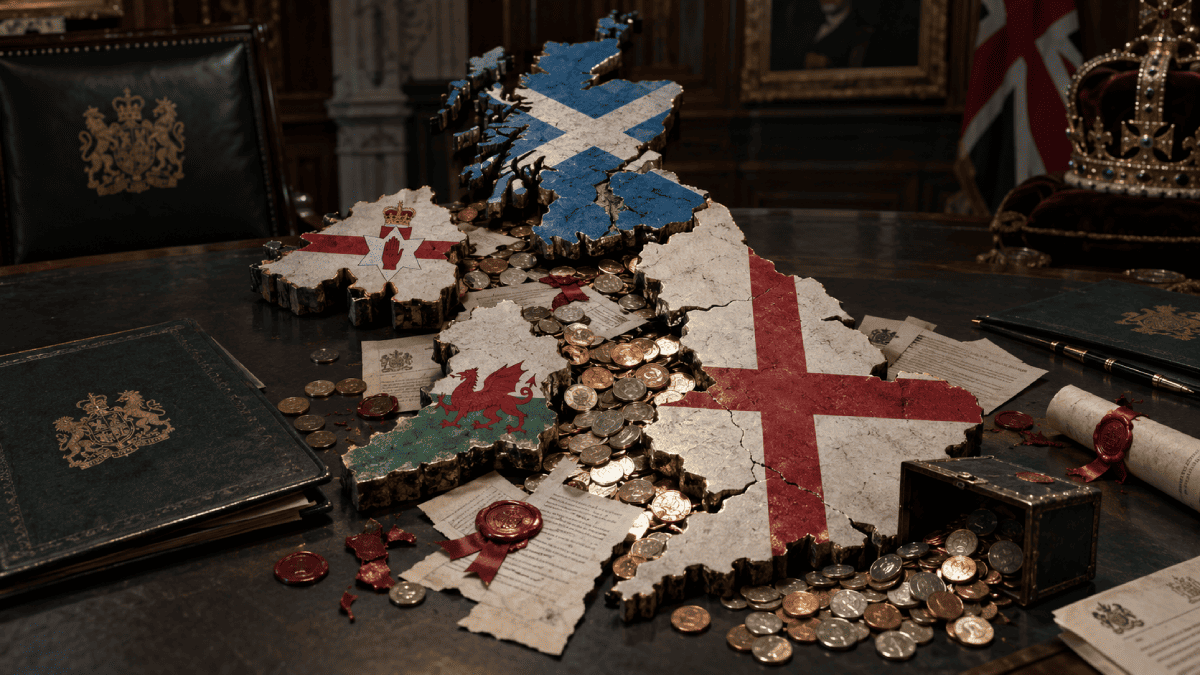
The Sixth Dominion: How Britain Built Argentina
Most Britons know two things about Argentina: the Falklands and steak. For 60 years before 1914 we ran the place without ruling it: railways, banks, beef, even football. It collapsed so completely we had to send a task force to hold a sheep pasture. The forgotten Sixth Dominion: our noble friends.
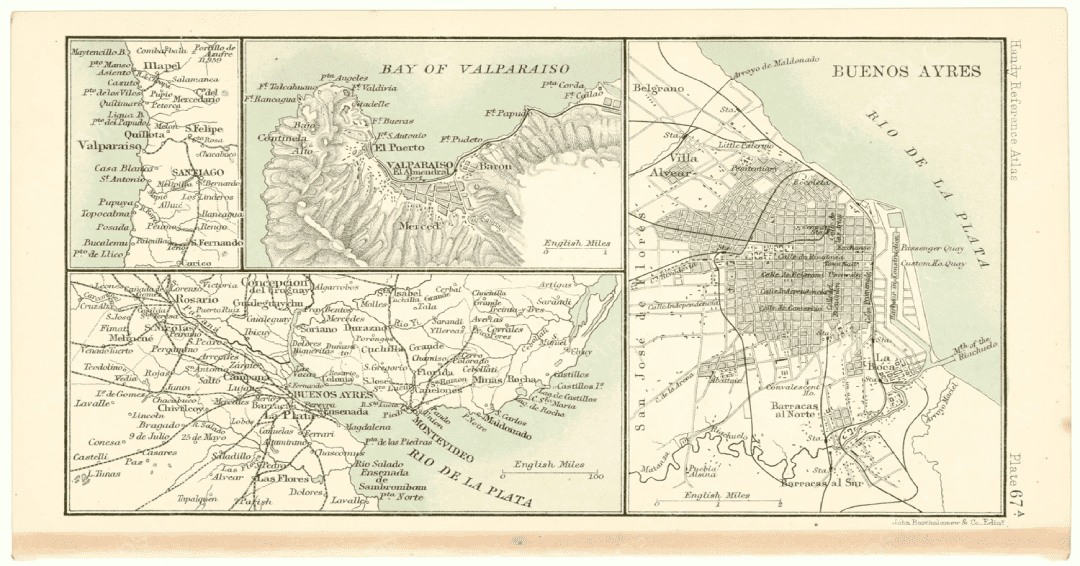
For roughly sixty years, from the 1860s to the Great Depression, Argentina was not a colony of the British Empire. It was something stranger, and in some ways more impressive. It was wired into London without a governor, without a garrison, without a single Union Jack flying over a government building in Buenos Aires. The British called it informal empire. The Argentines, with a grim smile, sometimes called themselves the Sixth Dominion.
Then it ended. Badly. And the ending tells you more about twentieth-century Britain than any book on decline.
A Door Opened By Napoleon
The whole story starts, as so many strange things do, with our little enemy Napoleon. In 1806 Spain was an ally of France, and Britain was (rightly) looking for ways to hurt both. Commodore Sir Home Popham, without bothering to ask London (nice), peeled off 1,600 troops from the Cape of Good Hope and sailed them across the South Atlantic. On 27 June his soldiers, under Brigadier-General William Beresford, marched into Buenos Aires. The Spanish viceroy fled inland with the treasury. Buenos Aires, the richest port on the River Plate, fell in an afternoon to the glorious English.
It did not last, sadly.
A French officer in Spanish service, Santiago de Liniers, crossed over from Montevideo with a scratch force, rallied the city, and after forty-six days the British surrendered. A year later a second, much larger expedition under General John Whitelocke stormed Montevideo, held it for months, then tried to retake Buenos Aires. The porteños fought from the rooftops with cooking pots of boiling oil and captured British muskets. Whitelocke lost over a thousand men in a week and signed an armistice so humiliating it forced him off the entire River Plate. He was court-martialled on his return to London.
In the standard British history this is a footnote about two defeats. Look more closely and it is the hinge on which everything else turns.
The invasions did three things, none of them intended.
- They broke the prestige of Spanish rule in the River Plate, which led straight to the independence movements of 1810 and 1816.
- They proved to the criollos that they could fight, govern, and trade without Madrid.
- And they briefly introduced Buenos Aires to cheap British manufactured goods, which the locals liked very much.
When Argentina became independent, it turned, naturally, toward the country it had just beaten in the street. British merchants moved in through the commercial door British soldiers had forced open and then failed to walk through. By 1825 Britain had signed a Treaty of Friendship, Commerce and Navigation. The gunboats never came back. The ledgers did.
Uruguay As South America's Belgium
It is worth pausing here, because the other country in this story is nearly always forgotten.
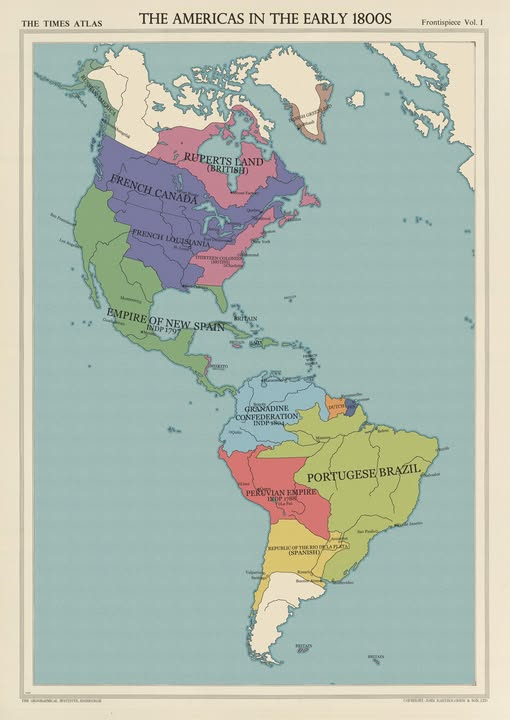
When the British invaded in 1806-07, Uruguay did not yet exist. The eastern bank of the River Plate, the Banda Oriental, was a contested piece of Spanish territory squeezed between Argentina, Brazil, and the Atlantic. It fought its own wars for independence against Argentina in the 1820s and finally emerged as a separate republic in 1828 under British diplomatic mediation.
Lord Ponsonby, the British envoy, helped broker the deal precisely because London wanted a neutral buffer state at the mouth of the Plate, so that neither Buenos Aires nor Rio would control the great estuary alone. Uruguay was, in a real sense, a British convenience from birth.
The same pattern of informal empire then unfolded in both countries in parallel. The same banks, the same shipping lines, the same meat companies, often the same families. If Argentina was the engine, Uruguay was the smaller chamber in the same machine.
Rosas, Then The Opening
Between independence and the railway age sits Juan Manuel de Rosas, the great Argentine caudillo who ruled Buenos Aires province with a private militia and a cult of personality from 1829 to 1852. Rosas distrusted foreign capital, fought a long river war with an Anglo-French fleet, and slowed the economic opening for a generation.
When he was overthrown in 1852, the dam broke. A new constitution was written in 1853 on liberal lines. Foreign investment was openly invited. The first Argentine railway opened in 1857, all of ten kilometres long, British rails on French sleepers, pulled by a locomotive called La Porteña that had been built in Leeds. The engineers were British. The driver was British. The conductor was Argentine. It was a perfect miniature of what was about to come.
The British Builders Of Argentina
The companies that came in over the next thirty years are almost forgotten now. At the time they were giants.
The Buenos Ayres Great Southern, founded in 1862 by Edward Lumb, a British merchant resident in Buenos Aires, pushed south into the Pampas and eventually became one of the largest railway companies on earth. Around 1914 its nominal capital stood near fifty million pounds, roughly two thirds the size of the North Eastern Railway back in England. Listed in Buenos Aires, it would have dwarfed every domestic firm in the country.
The Central Argentine Railway was the brainchild of William Wheelwright, a remarkable New Englander from Newburyport, Massachusetts, who had already built Chile's first railway and founded the Pacific Steam Navigation Company to put steamers on the west coast of South America. In 1862 Wheelwright, partnered with the British contractor Thomas Brassey, won the concession to link Rosario on the Paraná to Córdoba in the interior. The line was laid at the broad gauge of 5 foot 6 inches, chosen in London. It opened in 1870 and immediately pulled the wheat and hides of the interior provinces toward the Atlantic ports, away from the old mule trails to Chile and Bolivia. Wheelwright died in London in 1873 and a town in Santa Fe province still bears his name.
Two more joined them to make the Big Four: the Buenos Aires and Pacific Railway, which pushed west toward the Andes, and the Buenos Aires Western Railway, which had started life as a state-owned line and was sold off to British investors in 1890 for about eight million pounds, a price later denounced as a give-away.
The finance came from the City. Barings Bank underwrote the great Argentine bond issues and took such an enormous position in November 1890, when Argentina nearly defaulted, the Bank of England had to organise an emergency rescue to stop Barings taking the whole of London down with it. The Baring Crisis is forgotten now except by economic historians.
At the time it was the 1929 of its generation, and it happened because a British bank had lent so heavily to a South American republic one country's harvest failure threatened to break the other country's financial system. That is not a colonial relationship. That is something stranger and more intimate.
Rothschilld took the great sovereign issues. J. S. Morgan took the railway paper. A thousand clerks, widows, and half-pay officers across the Home Counties held Argentine bonds by the fire and clipped the coupons. The name of Argentine provinces and railway companies, Entre Ríos, Bahía Blanca, the Great Southern, became as familiar to the Edwardian investor class as Consols or Home Rails.
By 1914 Argentina had roughly 22,000 miles of track, the eighth largest network on earth. Around two thirds of it was British-owned, almost all of the most profitable lines. The rails ran from the Pampas to the ports and almost nowhere else, which was the whole point.
The Meat, The Ships, The Gas, The Trams
The railways were the skeleton. The flesh grew around them. Refrigerated shipping was the breakthrough. In 1877 the French ship Frigorifique carried a cargo of frozen mutton from Buenos Aires to Rouen. In 1883 the first commercially successful refrigerated cargo of frozen Argentine beef reached London. Within twenty years frozen and chilled Argentine beef was the staple of the British working-class dinner. The great packing houses, the frigoríficos, rose along the Plate, most of them foreign-owned.
Across the estuary in Uruguay, in 1863, a German chemist called Justus von Liebig had licensed a young engineer, Georg Giebert, to build a meat-extract plant at a tiny settlement called Villa Independencia, soon renamed Fray Bentos. The Liebig Extract of Meat Company was floated in London in 1865 with £150,000 of share capital. By 1875 it was producing 500 tons of meat extract a year. In 1873 it began tinning corned beef under the name Fray Bentos. In 1899 a cheap variant was launched under a new trademark: Oxo.
At its height the Fray Bentos plant employed around 5,000 people, one animal every five minutes on the kill floor, workers drawn from sixty nations. A British community grew up around it, a miniature Black Country on the Uruguay River, with an English school, a company hospital, workers' cottages, a football club later known as Anglo. In 1924 the entire operation was bought by the Vestey brothers of Liverpool, refrigeration pioneers, who already controlled much of the South American meat trade and renamed it the Frigorífico Anglo del Uruguay. Fray Bentos corned beef fed the British army in the Boer War, the First World War, and the Second. Scott and Shackleton carried it to the Antarctic. A First World War Mark IV tank was named after the brand.
Uruguay's railways followed the Argentine pattern. The Central Uruguay Railway, British-owned, built its main lines out of Montevideo and constructed an entire planned workers' suburb in the Peñarol district called Nuevo Manchester, or New Manchester, with Victorian terraces for English and Irish railwaymen. The Peñarol football club, one of Uruguay's greatest, began as the Central Uruguay Railway Cricket Club.
Back in Buenos Aires, British-owned companies ran the trams, the gas, the docks, the telegraph, much of the water, the main insurance houses, and the Anglo-South American Bank. By 1910 the British community in Argentina was estimated at around 45,000 souls, the largest concentration of Britons anywhere outside the formal Empire, which is precisely why the country was called the Sixth Dominion.
Buenos Aires in 1910 was one of the richest cities on earth. Its opera house, the Teatro Colón, opened in 1908, could seat nearly 2,500 and out-gilded anything in Vienna. Argentina's per-capita GDP sat inside the world top ten, shoulder to shoulder with France, ahead of Italy and Spain. Immigrants poured in from Naples, Galicia, Glasgow, Lombardy, Damascus. The architecture went up in French stone. The manners went up in English tweed.
The Glaswegian Who Brought Football
In 1882 a young Scottish schoolteacher from the Gorbals slums of Glasgow, orphaned at five, stepped off a boat in Buenos Aires. His name was Alexander Watson Hutton. Two years later he founded the Buenos Aires English High School. In 1886 he ordered a shipment of footballs from Liverpool. In 1893 he helped found what became the Argentine Football Association.
He is buried in the British Cemetery in Buenos Aires, a few streets from his old school, which still stands. The game he planted in those schoolyards grew, in time, into Boca Juniors, River Plate, Maradona, Messi. The first documented football match on Argentine soil, in 1867, was played between two teams of eight Englishmen on a cricket pitch in Palermo, organised by railway workers named Hogg. The oldest surviving club in the country is still called Buenos Aires Football Club.
Argentina's national obsession, the thing foreigners now think of as most Argentine, arrived in the luggage of British railwaymen and a Glaswegian schoolmaster with a philosophy degree.
This is why, no matter what our historical differences, the Argentine friendship with England runs deeper than any Englishman knows or appreciates.
Taylor's Englishman And The Hidden State
A. J. P. Taylor wrote the line every Restorationist remembers by heart as creed, doctrine, and philosophy on her or his sleeve:
Until August 1914 a sensible, law-abiding Englishman could pass through life and hardly notice the existence of the state, beyond the post office and the policeman.
This is usually read as a tribute to Victorian liberty. Read it again with Argentina in mind and something else appears.
The British state was not small because the British had mastered the art of self-government and grown out of needing one. It was small at home because it had been outsourced abroad. The functions a modern state performs (feeding its people, funding its industry, smoothing the rough edges of the market) were being performed for Britain by a global network of ships, banks, cables, wires, railways, and ledgers. A cheap loaf in Manchester was a field in the Pampas. A tram in Birmingham was a bond in the City. A tin of corned beef in a soldier's mess kit came from a factory in Fray Bentos. A man in Surrey clipping his coupons was, without knowing it, an investor in the extension of a branch line to Bahía Blanca.
The Englishman did not meet the state, because the state had taken the form of something else. It had become an evolved system.
Argentina is the purest example of it. Not India, with its army and its Viceroy and its clerks. Not Canada or Australia, with their parliaments and their Crowns. Argentina was a sovereign republic. It had its own president, its own army, its own flag. And for sixty years it ran on British capital, British rails, British ships, and British prices, because that was where the money was.
When Taylor's Englishman strolled past the village policeman on a summer evening in 1913, he was standing at the top of a pyramid whose base was a cattle truck rattling across the Pampas at midnight.
Friendship, Liberty, Prosperity: The English Way
The polite version of this story goes: everyone won. Argentina got prosperous. The working man got football. Buenos Aires got boulevards. London got beef. No one was colonised. No one was shot. Free trade, as advertised, produced the goods.
There is something to that, and it is the part nobody on the British left is willing to concede.
Argentina under the British dispensation was not a plantation. It was not the Belgian Congo. Wages rose. Cities grew. A middle class emerged. Italian peasants who landed at the port with nothing watched their grandchildren become lawyers and professors. Real human flourishing happened, at scale, and it happened because London capital met Argentine land and neither side was being held at gunpoint.
But.
The system had a defect, and the defect was structural.
Argentina had been built as an appendage of the British economy, not as a balanced nation. The rails ran from the Pampas to the ports, not from city to city. The ports faced Europe. The factories were in Manchester and Birmingham, not Rosario. The whole apparatus was designed to move food one way and manufactured goods the other, and the prices were set in London.
When that system broke, and it broke in 1914, Argentina had no fallback. You cannot eat a railway.
England's WWI Demise Strangles Its Child
The First World War disrupted shipping. The Depression of the 1930s wrecked commodity prices. In 1932 Britain, at the Ottawa Conference, decided to favour its formal dominions, Australia, Canada, New Zealand, over Argentine beef. Panic in Buenos Aires. The vice-president, Julio Roca junior, son of the general who had conquered the Pampas for the Argentine state half a century earlier, was despatched to London to beg.
What he signed in May 1933 is one of the most revealing documents of the century. The Roca-Runciman Treaty guaranteed Argentina a share of the British beef market at Depression-era levels. In return, Argentina dropped tariffs on 350 British goods, promised not to tax British coal, and agreed to "benevolent treatment" of British companies in Argentina. Eighty-five per cent of the beef exports had to go through foreign-owned packers.
Roca, trying to sell it at home, said the quiet part aloud:
It can be said that Argentina is an integral economic part of the British Empire.
In Buenos Aires the phrase landed like a slap. Senator Lisandro de la Torre tore into the treaty on the floor of the Senate. A gunman attempting to shoot him killed the minister sitting beside him instead. The scandal poisoned Argentine politics for a generation. British companies were later caught trying to smuggle their accounts out of the country in crates marked "Corned Beef" to stop Argentine investigators reading them.
The golden age was over. What remained was the husk: the treaties, the bonds, the humiliation.
Perón Swings The Axe
Then came the war. Britain, fighting for her life, bought Argentine beef and wheat on credit. By 1945 the United Kingdom owed Argentina around two billion paper pesos, a staggering sum, held as sterling balances in London Britain could not pay out in hard currency. Uruguay was owed another £17.5 million on the same account.
Juan Perón, who had no love for the British and a sharp eye for political theatre, saw his moment. In 1947 he struck a deal. Britain cancelled the debt. Argentina took the railways. In a single stroke, the great British companies, the Great Southern, the Central Argentine, the Pacific, the Western, were Argentine state property. Uruguay settled her own sterling balances the same year by taking over the British-owned water, tram, and rail concessions in Montevideo.
Perón later claimed British envoys had offered him a hundred-million-dollar bribe to pay more. Whether or not that is true, the perception as perfect. After ninety years of British iron laid across the Pampas, the rails now flew the Argentine flag. One Argentine politician, watching his national team beat England at football in 1953, said it with a grin: "We nationalised the railways, and now we have nationalised football."
The Sixth Dominion had left the Empire.
You Know How It Ended
Fast forward to April 1982. Argentina is ruled by a military junta. Galtieri, a drunk general with a falling currency and a tortured population to distract, invades a cluster of windswept islands in the South Atlantic Britain had held, in one form or another, since 1833. Margaret Thatcher sends a fleet. Three months later the Argentine conscripts surrender at Port Stanley. Nine hundred men are dead. Galtieri falls within weeks. Thatcher wins the next election.
Most people in Britain, if they think about it at all, file the Falklands under one heading: the last gasp of empire. A strange imperial hangover, a flag planted on a rock after the betrayal of Rhodesia, fought over by a country which should have known better.
But set it next to 1913 and it becomes something else, and something much stranger.
In 1913 Britain shaped the whole Argentine economy without firing a shot. No troops. No governor. Just capital, rails, and the quiet authority of the London price. In 1982 Britain could no longer influence Argentine politics at all, could not deter an invasion, could not persuade, could not leverage, could not buy. The only tool left was the Royal Navy. The only argument left was a Sea Harrier.
That is the real measure of the decline. Not the loss of India. Not Suez. Not the Union Jack coming down in Singapore.
The real measure is Argentina, where Britain once ran the railways, the banks, the meatpackers, the trams, the schools, the football clubs, and the bond market, and where, seventy years later, Britain had to send a task force eight thousand miles to hold a sheep pasture.
The height of empire had been invisible. The end of it came with flags and funerals.
What The Golden Age Actually Cost
The temptation, reading all this, is to mourn. A great system, a great age, a great country brought low. And there is real loss in the story. But the sharper truth is uncomfortable for conservatives and radicals alike.
The British golden age was real. And it was paid for, in part, by building somebody else's country into an organ of your own. Argentina's tragedy was not Britain conquered it. Argentina's tragedy was Britain did not need to. The incentives were enough. The rails went where the beef was. The beef went where the money was. The money went back to London. When the music stopped, in 1914 and again in 1929, Argentina discovered she had no industry, no internal market worth the name, and a political class trained to beg in English.
A. J. P. Taylor's Englishman, walking his dog past the pillar box in 1913, lived in the lightest state in Europe because a heavier one had been assembled for him overseas. Buenos Aires paid part of the bill. So did Bombay. So did Cairo. So did Kingston and Lagos and Auckland.
When the bill came due, in two world wars and a long cold retreat, the lightness went with it. The modern British state, heavy, expensive, intrusive, began to swell into the vacuum left by the collapse of the global machine. A man in modern Britain notices the state every hour of the day, because the state is no longer standing on a thousand foreign shoulders.
Restoring Our Glorious Ancient Friendship
A hundred and twenty years ago, a Glaswegian orphan taught Argentine boys to kick a ball in Buenos Aires. A hundred years ago, British engineers laid track across a continent they did not rule. Seventy-five years ago, an Argentine strongman nationalised the lot. Forty-odd years ago, British paratroopers retook a freezing island from Argentine conscripts while both countries sang anthems neither could really afford.
The standard British history skips the middle. It goes from the glamour of empire straight to the grit of the Falklands, as if nothing happened in between. It did. An entire civilisation's worth of engineering, capital, and culture flowed out of these islands and into another hemisphere, built a rival Paris on the River Plate, made a poor country briefly rich, made a rich country quietly richer, and then collapsed so completely the only thing left to argue about was a patch of tussock grass.
Argentina was not a colony. Argentina was a mirror. And what it showed, at the height and at the end, was Britain.
We should look at it more often.