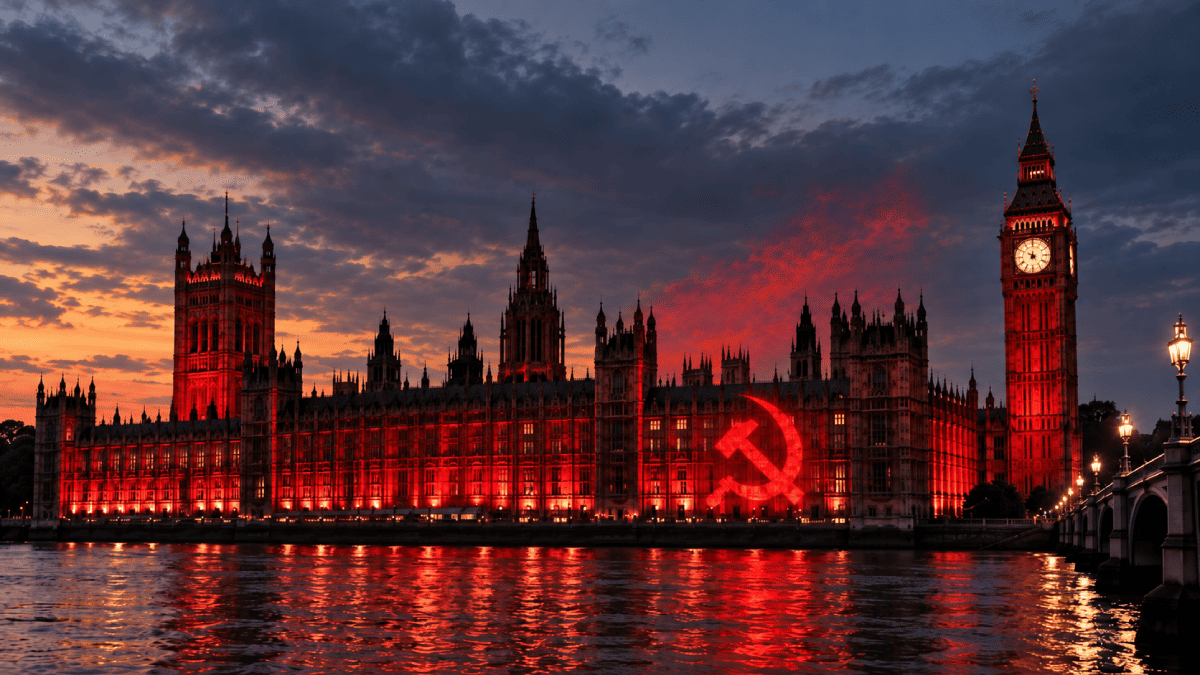
First They Fail You. Then They Scold You.
The British state does not answer for its catastrophes. It scolds the public for reacting to them. Bereaved families become moral shields. Anger is reclassified as extremism. Accountability vanishes into ten-year inquiries. The public are shamed into silence with their own decency. It is disgusting.


The sequence never changes. Only the names do. Something appalling happens. A child is murdered. A public service fails so grotesquely the facts alone should bring down a minister. The country sees it. The country reacts. And then, with practised fluency, the state does not answer for the failure. It repositions itself morally above the reaction.
The dead child becomes scenery. The furious public becomes the operational problem. And the institution responsible for the original catastrophe assumes the moral high ground over the people it failed.
This is not an abstract theory; it is rather an empirically-demonstrable political technique. It has been refined over decades, deployed by every party, and it is now so instinctive among Britain's governing class it no longer requires coordination. It is muscle memory. The script writes itself the moment a camera appears.
The gruesome murder of Henry Nowak is only the latest occasion. His death, on 3 December 2025, produced bodycam footage so harrowing officials said they felt sick watching it. An eighteen-year-old finance student, stabbed repeatedly with an 8.3 inch ceremonial Sikh dagger carried for supposedly foreign "religious reasons," told officers nine times he could not breathe. He told them four times he had been stabbed. The responding officer's reply: "I don't think you have, mate." Officers then dragged him across gravel, handcuffed him, and read him his rights. It was the last thing Henry Nowak heard before he became unresponsive and died at the scene. His disgusting killer, Vickrum Digwa, who had gamed the racism training by falsely accusing the dying boy of racial abuse and being drunk, stood nearby. Unrestrained. No call for emergency medical services was made before Nowak lost consciousness.
Digwa's mother hid the knife and was convicted of assisting an offender. His brother covertly advised him in Punjabi to claim self-defence. His father and brother were charged with a further 22 weapons offences. These are not the actions of English people. They are foreign and hostile.
The Spectator looked carefully at the Judge Mousley's harrowing remarks about "wicked lies" and isolated a devastating part which the usual disgraceful suspects have ignored to serve their own grotesque apologism:
The judge also noted that it is illegal for anyone but a Sikh to carry such a weapon. It’s something we allow in Britain, in the name of tolerance.
When the footage was released on 2 June 2026 and the country convulsed, the state's response was immediate, coherent, and entirely predictable. Not because officials are stupid. Because they have done this before. Again and again and again.
The Playbook: Five Moves To Sedation
Politicians don't need imaginary backrooms to engage in political self-survival behaviour. No magical cabal of menacing bad faith actors is required to figure out what works, what preserves, or the "best PR response" to a tragedy. The only ingredients necessary are cowardice, cynicism, the institutional memory of civil servant advisers, and a desperate fear of being unelectable for allowing riots to proliferate. It is, of course, also beneficial to grandstand in public about law and order, almost whenever the opportunity presents itself.
1. Condemn the violent emotional reaction
This is the anchor. It is almost always factually justified, because where there is mass fury there is often disorder. In Southampton, eleven officers and a police dog were injured. Bricks and bottles were thrown. The condemnation is legitimate. But it is also strategic, because it allows the state to collapse three morally distinct things into a single category:
- Anger at injustice. Legitimate.
- Public protest. Legitimate if lawful.
- Violence, arson, and assault. Illegitimate.
The state benefits enormously when these three are fused.
Once "anger" is spoken of as the raw material of disorder, the public's moral judgement is discredited before it can become a demand for resignations, disclosure, or prosecution. The minister does not need to say "your anger is wrong." The minister only needs to say "this violence is wrong" and allow the conflation to do the rest.
Its also helps violently ideological and partisan journalists capitalise on it for their advocacy. The Guardian are already on the case to explain in detail why the public should not believe their eyes and ears, and how ideology is blameless.
2. Invoke the family
A bereaved family, in the worst week of their lives, is visited by officials. They are offered comfort, liaison, and media guidance. They are invited to make a public statement. The statement usually calls for calm, dignity, or unity.
This is so pathological the government even have a "support hub" for it.
No honest person doubts the sincerity of grieving families who say such things. But the state does not invoke these words because it respects the family's grief. It invokes them because the family's grief is useful.
The formula is always the same and serves the state: the family has asked for calm; therefore public anger is a betrayal of the family.
Did they? Do grieving families usually act this rationally when in such incredible pain? Does anyone?
The family's pain is converted into a shield. Not for the family. For the institution under scrutiny.
3. Moralise the anger
The state stops defending its record and begins attacking the public's emotional response. The accusation itself becomes the offence. Lord Hermer, the disgusting Attorney General, set a whole new precedent when he called claims of two-tier justice "frankly disgusting" and warned they posed "dangers" to Britain's "essential institutions."
Hermer's word choice matters. "Disgusting" is not a rebuttal. It is a hygienic moral quarantine. It tells the public the question itself is indecent before the evidence has been examined. Institutional trust becomes a civic obligation the public owes, rather than a condition the institution must earn through conduct.
4. Substitute the victims
Once officials are injured, the institution under investigation becomes the institution deserving sympathy. The original failure is displaced. The police were the subject of the scandal; now they are its casualties.
Extremely helpful here are small rent-a-mobs disproportionately amplified by friendly media outlets as heroic, spontaneous moral litigators.
5. Promise bureaucratic process
An independent investigation is announced. Fair and transparent processes are invoked ("it would be improper to comment; the inquiry must be allowed to do its work"). The investigation absorbs the political energy. Months become years and decades. Findings are procedural, dispersed, and politically stale after the public have moved on. The anger has been metabolised by bureaucracy.
The Same Script, the Same Words, Every Time
If the technique were used once, it would be crisis management. Used twice, a coincidence. But the British state has now recited the identical script so many times the parallel language is itself evidence.
After the Southport stabbings in July 2024, in which three tiny girls were murdered at a dance class, the ideologue Prime Minister condemned "far-right thuggery" and promised rioters would face "the full force of the law." After the Palestine protests in September 2025, the foreign Home Secretary warned participants would face "the full force of the law." After the Southampton protests in June 2026, the foreign Home Secretary said those responsible could expect "the full force of the law."
Three crises. Three failures. Three rounds of public fury. The same six words, deployed like a rubber stamp across two years.
The "full force of the law" is exactly what failed. Exactly what the anger concerns in the first place.
The family-invoking formula is equally consistent.
In Southampton, the Police and Crime Commissioner for Hampshire, Donna Jones, told the BBC the Nowak family were "disappointed" by the protests and had "called for calm." The Prime Minister told Parliament the family had shown "extraordinary dignity" and accused the Reform leader of acting "against the wishes of the family." The Home Secretary echoed the plea and used it to frame the protests as a violation of the family's grief.
But what right does Donna Jones have to speak for this family?
Hampshire Police, who she represents, are the force under IOPC investigation. The officers who handcuffed a dying boy were Hampshire officers. The force referred itself. One officer has resigned. Another has fled. The Commissioner is not an independent voice of consolation. She is a political representative of the organisation being investigated. When she relays the family's words, she is not comforting the bereaved. She is managing the crowd.
Moreover, the evidence is indefensible: in this case, the foreign family were complicit in the cover-up of the crime itself.
And the moral inversion is always the same structure. The state speaks. The country asks. They are never answering the same question.
The state says: there is no justification for violence. The country asks: what justification is there for the police?
The state says: do not hijack this tragedy. The country asks: did your institutional culture contribute to this tragedy?
The state says: the family has called for calm. The country asks: why are officials using the family's grief to close down public fury?
The state says: beware dangerous undercurrents. The country asks: what about the dangerous currents inside the state?
The state says: two-tier policing claims are disgusting. The country asks: then why was the killer unrestrained while the victim was handcuffed?
The country asks a direct question about institutional responsibility. The state replies with a moral lecture about the country's tone. Every single time.
From Lawrence to Nowak
Stephen Lawrence was murdered in 1993 in an unprovoked knife attack in Eltham. The Macpherson inquiry exposed real institutional failure: police incompetence, racial blindness, investigative dishonesty, and the patronising treatment of Lawrence's family and his friend Duwayne Brooks. Macpherson made seventy recommendations aimed at eliminating racial presupposition from policing. Jack Straw, then Home Secretary, called ordering the inquiry the most important decision of his tenure.
The correction was necessary. The failure was genuine. The institutional racial mistreatment was documented.
But thirty-three years later, a boy lay bleeding on a pavement in Southampton, telling officers he had been stabbed, and the officers handcuffed him on the word of his killer because the killer's accusation carried racial weight. The racism allegation was rejected entirely at trial. Digwa was convicted of murder and sentenced to life with a minimum of twenty-one years.
Stephen Lawrence proved policing could be morally corrupted by racial indifference. Henry Nowak may prove it can also be morally corrupted by racial panic.
A correction designed to secure equal justice has, after three decades of institutionalisation, mutated into a rival injustice. Not English equality before the law, but operational paralysis before accusation. So-called "anti-racism" (explicitly Marxist agitation) as institutional fear.
Hampshire Constabulary spent £860,000 on Marxian diversity and equality training for six thousand officers and staff. Its own staff survey found one in seven officers felt "controlled and pressured" to adopt its ideology. The National Police Chiefs' Council issued guidance encouraging differential Marxian treatment by race. Policing minister Sarah Jones, confronted with the guidance, called it "wrong."
Even the tedious ambulance chaser himself – Captain Obvious - said there were "serious questions" about how accusations of racism "informed or fed into" police decision-making. Shadow Home Secretary Chris Philp told the Commons:
the police appeared more concerned with the accusation of racism than they were with helping Henry.
In 2017, they didn't approach a mass murderer who killed 22 schoolgirls at a concert with nailbombs either. Not are they willing to record racial characteristics of criminals. Nor did they stop the mass rape of children by hostile foreigners for two decades for the same reason.
The loop is closed. From Lawrence to Nowak, the arc describes a full circle. The overcorrection is not a procedural adjustment. A boy is dead.
Not "Two-Tier". Corruption.
The phrase "two-tier policing" has entered the vocabulary as though it were a legitimate description of the charge. It is not. It is a managed, bloodless euphemism designed to sound like a policy critique rather than a criminal indictment.
The charge is not a difference in tiers. The charge is corruption.
Not corruption in the crude sense of cash in envelopes. Corruption in the older and more serious constitutional sense: the corruption of purpose. A police force exists to protect citizens equally. When it begins sorting observable facts through political fear, when an allegation of racism outweighs a bleeding victim saying he has been stabbed, the institution's purpose has been corrupted. The oath of office has been hollowed out. What remains is an organisation performing public safety while privately calculating reputational risk.
The charge is no longer fringe. It is the central institutional question. And it deserves its real name. The question is no longer whether the public may discuss race-conditioned policing. The Prime Minister himself has conceded the point. The question is why his own Attorney General pre-emptively declared the discussion indecent.
The Bodies In The Morgue
It's nice and east for politicians to discuss ideas and history in the abstract. But these aren't ideas. They are people. The dead have a right to be put back in the argument.
The public were right, and were punished for it
In Rotherham, at least 1,400 children were sexually exploited between 1997 and 2013. Sixteen years. Five successive council leaderships. Warnings were raised by frontline workers, by victims, by families, and were suppressed or ignored because the racial identity of the perpetrators made the subject politically hazardous. The Alexis Jay inquiry found the abuse had been known about and effectively tolerated. The public had been saying something was wrong. The public had been called racist for saying it.
The state defended itself against the bereaved for a generation
At Hillsborough in 1989, ninety-seven people were killed in a crush at a football ground. South Yorkshire Police altered 164 witness statements. A national newspaper printed lies about the dead. The state did not accept guilt. It spent twenty-seven years defending institutions against bereaved families who already knew the truth. The inquest verdict of unlawful killing came in 2016. Twenty-seven years for a jury to confirm what the crowd in the Leppings Lane end knew within twenty-seven minutes.
Residents warned. The state ignored them. Then it promised a review.
At Grenfell Tower in 2017, seventy-two people burned to death in a building whose residents had repeatedly warned about fire safety. The cladding was flammable. They had written to the council. They had written to the management company. They had published a blog predicting a catastrophic fire. The inquiry, published in 2024 after seven years, found "decades of failure" by government and industry. Criminal prosecutions remain, at the time of writing, incomplete.
Choreographed grief replaced accountability
After the Manchester Arena bombing, twenty-two people were murdered, including children as young as eight. The inquiry found MI5 had missed a significant opportunity to prevent the attack. The fire service took an hour and forty-seven minutes to enter the building. The bomber's brother was stopped at an airport by counter-terrorism officers and then allowed to fly out of the country the following day. He never returned. One victim's husband walked out of a hearing saying he had "no confidence" in the process and was "full of anger." But the country remembers the carefully coordinated singing in St Ann's Square. Not the MI5 failures. Not the brother who boarded a plane. Not the families forced to spend years extracting information they were entitled to by law.
The state concealed. Then it expressed sympathy.
The infected blood scandal killed over three thousand people. Contaminated products were distributed through the NHS for years. Victims were dismissed and in some cases actively misled. The inquiry found a "catalogue of failures." Compensation was delayed for decades. When it finally arrived, ministers expressed sympathy.
In every one of these cases, the public was ahead of the state. The public saw the problem earlier, understood it more clearly, and was punished for raising it. And in every case, the state's instinct after the failure was not contrition.
It was stage management.
- Condemn the reaction.
- Invoke the bereaved.
- Promise process.
- Moralise the anger.
- Wait for the news cycle to turn.
The grotesque part is not the violence of the public response. The grotesque part is the moral confidence of the state in the aftermath of its own catastrophe. Ministers speak with fluency about disorder and hatred. They speak with visible difficulty about their own culpability. Their conscience is slow. Their scolding is instant.
Grief Laundering
There is a precise term for what happens when the state converts a bereaved family's private anguish into public-order infrastructure. It is grief laundering: the use of victims' grief to sanitise the institution's preferred position.
After the Manchester bombing, a crowd sang "Don't Look Back in Anger" following a minute's silence designed to appear spontaneous. It was engineered as a national symbol of resilience and multicultural advocacy. It was moving. It was also, over the months and years following, the dominant emotional chatter the state preferred. Unity. Togetherness. Healing. Resilience.
These words replaced other words: accountability, resignation, prosecution, reform.
Candlelight, silence, flowers, vigils, hymns, "coming together," songs in public squares: none of these are inherently wrong. They can be profoundly sincere. But when they become the dominant civic response to preventable institutional failure, they function as anaesthetic. The question shifts from "who is responsible?" to "how do we heal?" And sometimes the honest answer to the second question is: after people resign.
The British state has become extraordinarily competent at choreographing grief and extraordinarily resistant to accepting blame. It can organise a vigil within hours. It cannot produce a resignation within months.
The Country's Conscience As A Muzzle
The British public are, by and large, decent. They do not want to dishonour a grieving family. They do not want to excuse disorder. They do not want to inflame hatred. They do not want to sound cruel. They believe in fair play, restraint, due process, and sympathy for the bereaved.
The state knows this. And it uses every one of those instincts against the people who hold them.
- Be calm means stop applying pressure.
- Respect the family means do not ask why officials failed.
- Do not spread hate means do not notice the institutional pattern.
- Wait for the inquiry means allow time to drain the anger.
- No excuse for disorder means the public reaction is now the story, not the failure which provoked it.
These supine, soporific platitudes also have a name and a pathology. They are known as thought terminating clichés. The subject is well-studied in the literature:
A thought-terminating cliché is a simplistic, widely used phrase designed to abruptly end complex conversations, stifle critical thinking, or dismiss uncomfortable questions. By reducing deep issues to brief, definitive-sounding platitudes, they allow individuals or groups to avoid cognitive dissonance and maintain the status quo.
The state does not beat the public into compliance. It shames them into it, using their own conscience as the instrument. The public are not suppressed. They are morally blackmailed into behaving better than the state which failed them.
This is why "hate and division" language is so potent. It does not merely condemn violence. It contaminates the underlying emotional response. Once anger is classified as the precursor to hatred, the public's moral judgement is delegitimised before it can be articulated as a political demand. The furious citizen is no longer a democratic participant demanding accountability. The furious citizen is a social hazard requiring management.
Nothing in British public life enrages the population quite like failure combined with sanctimony. And nothing in British statecraft is more practised.
Where Are the Resignation Letters?
When something this severe happens in a functioning democracy, people lose their positions.
The officers who handcuffed Henry Nowak should have been suspended within hours, not treated as witnesses. The Chief Constable, Alexis Boon, should have offered his resignation, not a statement about "fair and transparent processes." The Home Secretary should have stood at the dispatch box and said:
This happened under my watch. I am ordering an immediate operational review of every diversity guidance document issued to front-line officers in England and Wales, and I will publish the results within sixty days.
Instead, the foreign Home Secretary condemned the public for being angry.
After Rotherham, council leaders resigned only after the Jay inquiry made their position untenable. After Hillsborough, it took twenty-seven years and an inquest verdict of unlawful killing before senior officers faced criminal proceedings. After Grenfell, the responsible minister was not removed. After Manchester, no one from MI5 resigned despite the inquiry finding a missed opportunity to prevent the bombing. After the infected blood scandal, ministers expressed sympathy about the cover-up.
The pattern is resignation-proof. Failure carries no personal cost. The institution absorbs the blow, disperses the blame across committees and reviews, and emerges structurally intact with a new set of lessons it claims to have learned and never applies.
When ministers refuse to resign after catastrophic institutional failure, they are not being steady. They are being cowardly. Resignation is not punishment. It is a signal. It tells the public: we understand the gravity, and we accept the cost. Its absence tells the public something else: we do not believe we owe you anything.
Chris Evans, editor of the Telegraph and easily one of Britain's finest writers, was typically sharp, if diplomatically restrained:
In handing down guidelines that are not only morally questionable, but utterly impractical for officers on the ground to enforce, the NPCC and College of Policing have abnegated their duty to the public and to serving officers. Neither deserves to continue in its present form.
Quite so. But it is an exceedingly thin end of a dirty, dirty, corrupt wedge.
The Defendant Lectures the Jury
Trust is not a sacrament. It is a receipt. Institutions do not get to demand it after they have spent it.
The British state has spent its trust across decades, body by body. It spent it in Rotherham with 1,400 children. It spent it at Hillsborough with ninety-seven dead and a generation of smeared families. It spent it at Grenfell with seventy-two lives and flammable cladding the residents had warned about in writing. It spent it in Manchester with twenty-two murdered concertgoers and a bomber's brother allowed to board a plane. It spent it in Southport with three dead girls and over a thousand arrests in the wave of national disorder which followed. It spent it on a pavement in Southampton, where a boy bled to death in handcuffs while his killer stood free and unrestrained.
There are scores of other incidents going back to the rape of young girls by migrants in the fifties, torture in Kenya from the sixties, economic devastation and IMF bailout in the seventies, child abuse by politicians in the eighties, rampant corruption in the nineties, which go on so far the index page would weigh several kilograms.
And every time, the state did not answer. It performed. Condemn the reaction. Invoke the family. Announce the inquiry. Moralise the anger. Arrange the candles. Wait.
A brick through a window is a crime. Rage at a state so morally disfigured it handcuffed a dying boy on the word of his killer is not. The first should be prosecuted. The second should be listened to, feared, and answered with the only currency the public will now accept: consequences.
Violence is not justice. But managed calm is not peace. It is sedation.
It is not moral to be "tolerant" of severe group criminality by guests in our country who have been offered aid, comfort, and succour in honest friendship. The destructive government experiment with immigration to pay for pensions is over. As we have pointed out repetitively, the criminal pattern and the cultural pattern have been clear and known for at least seven decades. The evidence of suppressed data is unimpeachable, as it is of the state's willfully deceitful conduct.
We have every right to divide ourselves from evil or a dirty corrupt state. We have every right to hate. There is no moral imperative to be "calm" about murder or to sacrifice rage for "unity." There absolutely is every justification for violent feelings in response, as we condemn actual violence itself. It is a disgrace and the height of arrogance for elected officials have the temerity to suggest we don't.
And we certainly have every right to hate politicians who boo those who say so and lack the simple ability for introspection to know when the country wants their heads:
Main party leaders were united in condemnation of Nigel Farage on Wednesday, accusing him of exploiting the murder of Henry Nowak for “pernicious identity politics”.
As MPs from all sides of the house shouted their fury, Sir Keir responded: “Exploiting this tragedy to create grievance and division would be wrong in any circumstances, but to do it when the family are expressly saying, ‘Please don’t’, is unforgivable.”
The country has noticed. It has noticed the defendant lecturing the jury. It has noticed the candlelight where the resignation letter should be. It has noticed the same eight words, the same grieving family, the same inquiry, the same scolding tone deployed across every crisis in living memory. The question is not whether the public will calm down. It is whether the state has any idea what comes after a people stop believing calm is a virtue.
The root of the problem is always the same: the state seizing control of the country and attempting to be the dominant force running it through ideology; whether Keynesian welfare statism, Butskellism, Brutalism, Neoliberalism, Fabianism; Third Way, econometrics, austerity, eco-radicalsm, Millenarianism, authoritarianism, technocratic progressivism,– the religious belief in totalistic controllership is the problem.
Our country has been descending slowly into revolutionary fervour for thirty years because of an antagonistic Parliament, fourth-grade failed politicians, unaccountable quangos, ideologically-blinded institutions, unjust policing, stalled economic opportunity, bloated and debt-ridden public sector failure, and the strangulation of process over justice.
England is tremoring. Her anger is entirely justified and terrifying. Most deadly, she is right. But she is recalcitrant over the name of what she wants to scream.
It has a name.
Corruption.