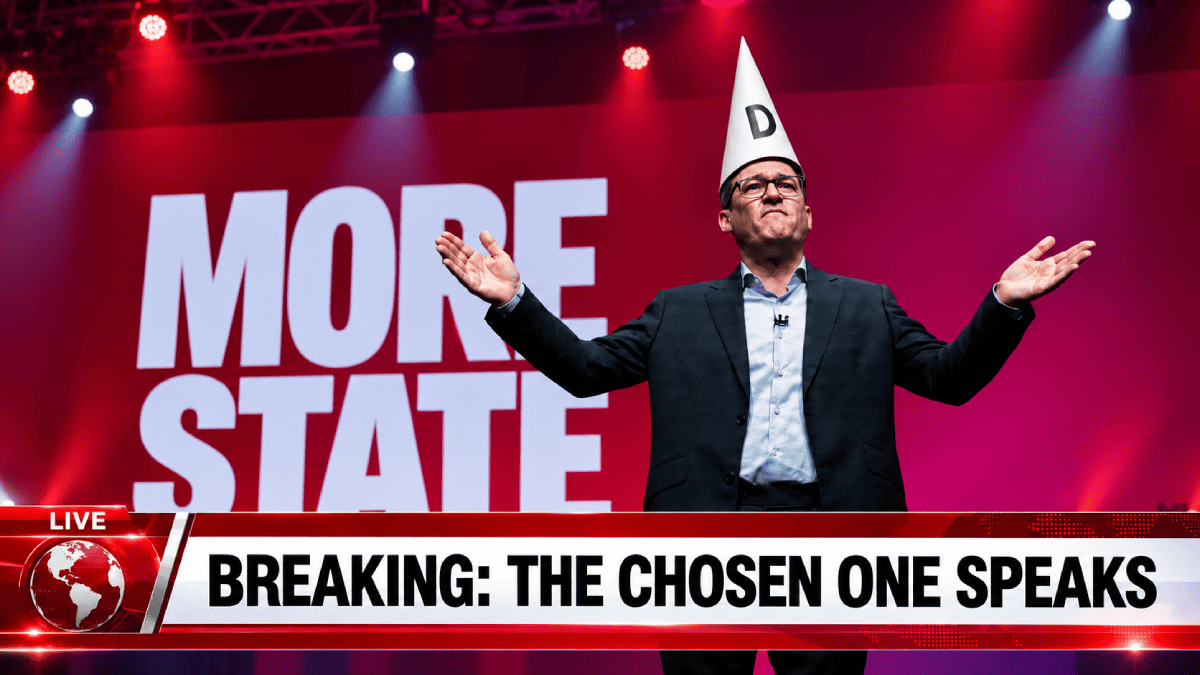
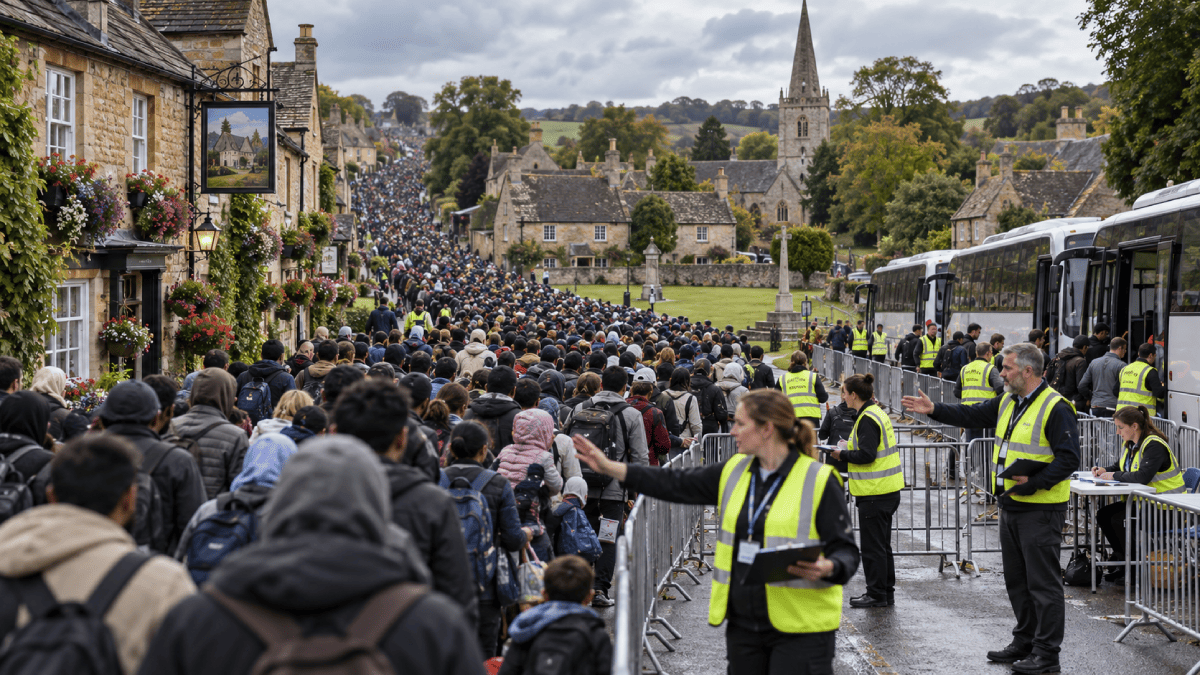
We Don't Owe You Unity And Have Every Right To Divide
An Englishman's first duty is to God and his conscience, not to government policy. He owes no unity to officials who lie to him, no calm to institutions which betrayed him, and no silence to spare a failed settlement its reckoning. Cohesion is not the highest good. Truth is.


You know the Home Office damage control formula now, don't you? The family calls for calm. We don't want yet another senseless murder of innocent children by another violent criminal foreigner, who the state welcomed in, to fuel hatred and division. Hashtag, love must win. Hashtag, unite against hate. Their non-religious thoughts are with the family. Muslims stay woke, just like us. Innocent minorities are being disproportionately affected and are afraid to leave their homes. The facts are a far-right conspiracy. Misinformation is being spread and X must be banned. The far-right are exploiting this tragedy, partisan experts say. Thousands of socialist counter-protesters outnumber reactionary thugs, protesting for social democracy against hate.
The "strategic messaging" is clear, corrupt, and vile: you, the British public, did this. You contributed to this by agreeing and noticing. You should feel guilty and ashamed for feeling enraged at this latest savage murder, again.
To whom do we owe this magical unity? Where might we find this unwritten duty of solidarity with the state?
The "strategic communications" apparatchiks are deployed to a scene where dead children's body parts are still being scraped off the floor, so they can stage-manage where the two hundred imams who will pray over the remains on TV will stand. The Treasury needs these people to keep the Beveridge pensions dependency ratio above water.
| State Failure | Response Template |
|---|---|
| Terror attack | “Do not let extremists divide us.” |
| Child murder | “Do not exploit grief.” |
| Rape gangs | “Avoid inflaming community tensions.” |
| Asylum-hotel protest | “Far-right actors are exploiting local concerns.” |
| Riot/disorder | “Hatred and division have no place here.” |
| Police failure | “Wait for official facts; avoid speculation.” |
| Immigration controversy | “Toxic division undermines cohesion.” |
| Local council scandal | “Misinformation is fuelling hostility.” |
| Flag/patriotism dispute | “National symbols must not be used to divide us.” |
All of this to shame the public into not noticing, communicating, or simply rioting. If you are angry, you should feel guilty for being an extremist and single Oasis songs like nice forgiving, progressive social democrats do.
It begs the question Rob Henderson asks:
How do large numbers of people suddenly come to adopt the same view on an issue that, until recently, no one cared about?
It sounds humane. It is delivered in the cadence of a vicar. And it is a command dressed as a condolence. Grieve, but grieve correctly. Mourn, but do not infer. Light a candle, sing the song, sign the book of remembrance, then go home quietly and conclude nothing.
As they said in Lenin's USSR: you may be technically correct, comrade. But you are not politically correct.
The Human Soul Is Not Yours To Administer
When did the British state acquire custody of our emotions? Nobody voted for it. No Act of Parliament transferred the moral interpretation of tragedy from the people who suffer it to the officials who preside over it. Yet here we are, being told which feelings are permitted, in which order, at what volume, and for how long.
At what point did the private interior world of the individual become state jurisdiction and a matter of public policy?
Sorrow is approved. Candles are approved. Hashtags, vigils, and choral renditions of Don't Look Back in Anger are warmly encouraged. Anger is suspect. Questions are dangerous. Protest, however lawful, however peaceful, is treated as the first symptom of a disease requiring a taskforce.
Notice what is being claimed. Not merely a monopoly on force, which the state has always held, but a monopoly on meaning. The event belongs to the government now. Its causes are off limits. Its lessons will be issued in due course by the appropriate body. Your role is to feel what you are told to feel and to stop when instructed.
No.
An Englishman's grief is his own. His anger is his own. His conclusions are his own. He may be wrong. He may be right. Either way, his inner life is not a community relations exercise, and his conscience is not a branch office of Whitehall.
Division Is A Moral Instrument
They use the word division as if it were self-evidently wicked. It is not. Division is one of the oldest tools of decency in existence.
Every honest person divides. You divide from the man who beats his wife. You divide from the boss who steals wages. You divide from the friend who lies to your face, the firm which poisons the river, the priest who preys on children, the institution which protects him. Nobody sane demands unity with a burglar mid-burglary. Nobody stands in a ransacked house pleading for cohesion with the man carrying the television.
The whole of moral life consists of drawing lines. Here is cruelty, and I will not stand with it. Here is a lie, and I will not repeat it. Here is a betrayal, and I will not pretend it away. Strip a man of his right to divide and you have not made him peaceful. You have made him complicit.
Division is how Parliament physically operates.
When you tell a grieving town it must not divide, ask yourself from what, exactly, it is being forbidden to divide. Usually the answer is: from the decisions which produced the grief. From the policy, the concealment, the ignored warnings, the officials who knew. Unity, in your mouth, means unity with the settlement which failed. And people are entitled to refuse it.
Hatred Of Evil Is Moral Sanity
There is a truth every government attempts to train its people to flinch from: some things ought to be hated.
There is wicked hatred, and every decent person knows it. Hatred of the innocent. Hatred by blood. Hatred which wants cruelty for its own sake. English law rightly punishes its expression in violence, and no serious person defends it.
But there is another kind, and they know it exists because they feel it themselves when it suits them. Hatred of child rape. Hatred of cover-ups. Hatred of cowardice in office, of lies told to bereaved families, of the sacrifice of the weak to protect the reputations of the strong.
This hatred is biblical. God hates sin; he hates evil people who love violence; and he hates false religious behaviour.
There are six things the Lord hates, seven that are detestable to him: haughty eyes, a lying tongue, hands that shed innocent blood, a heart that devises wicked schemes, feet that are quick to rush into evil, a false witness who pours out lies and a person who stirs up conflict in the community. (Proverbs 6:16-19)
The Lord examines the righteous, but the wicked, those who love violence, he hates with a passion. (Psalm 11:5)
I hate, I despise your religious festivals; your assemblies are a stench to me. (Amos 5:21-24)
England, Scotland, Wales, and Ireland, are Christian nations. They belong to God. They hate what He hates, because He is the God of England, Scotland, Wales, and Ireland, whether secular technocrat socialists like it or not. Christ Is Lord over Parliament and even those who hate Him. Our peoples' sentiments are thousands of years old; the cultural stupidity of "progressive" vanity burps in decades.
A mother who says she hates what was done to her daughter is not radicalised. She is awake. Her hatred is the sound of a conscience still working.
Their rhetoric deliberately collapses these two things into one, so the man who hates the crime can be filed alongside the man who hates the stranger. This is not moral seriousness. It is moral fraud. And it produces a country in which the only people forbidden to feel strongly are the people who were wronged.
We will not hate the innocent. We will not blame a man for his birth. But we reserve, absolutely and without apology, the right to hate evil. A nation which loses this capacity has not become tolerant. It has become anaesthetised.
One Rule For Them, Another For Us
When they act, they are assessed on what they meant. The policy was compassionate. The scheme was well intentioned. Mistakes were made, lessons will be learned, and the minister acted in good faith throughout.
When we react, we are assessed on how it looked. Was the tone appropriate? Did the language risk inflaming tensions? Might the protest make some communities feel unsafe?
They get the morality of motives. We get the morality of consequences. They import risk without consent and call it kindness. We object and are called hateful. They conceal what happened to children in our towns and call it safeguarding community relations. We name it and are accused of exploiting tragedy.
Let us be precise about exploitation. Telling the truth about a tragedy is not exploiting it. The people who caused it, concealed it, and now hide behind the grief of its victims exploited it first, and more thoroughly than any protester ever could.
A state which uses a family's plea for calm as a shield against accountability has stepped over the coffin to save its own skin. A government which wears the skin of dead children is worse. Do not lecture us about decency from there.
The Corrupt Always Talk Like This
They are not the first government to discover the supreme virtue of harmony. Beijing got there decades ago. The doctrine is called stability maintenance, and its logic will sound familiar. Society is fragile. Rumour becomes hatred, hatred becomes faction, faction becomes disorder. Therefore speech must be managed, memory must be managed, anger must be managed, and the citizen must be treated not as a moral agent but as a risk to be monitored.
China says social stability and ethnic unity. They say social cohesion and community resilience. China has grid management and neighbourhood committees. They have a Social Cohesion Taskforce at the heart of government, measurement frameworks, tension monitoring, and councils trained to understand activists and ideology.
The vocabulary is softer. The geometry is identical. Division is danger, unity is virtue, unsupervised feeling is extremism, and public sentiment is a substance to be shepherded by authorised institutions.
There is one true thing buried in their case, and we concede it freely.
Mobs are dangerous. Scapegoating is wicked. Collective guilt is unjust, and rumour can kill. But they draw the authoritarian conclusion: since conscience can err, conscience must be supervised.
The English conclusion runs the other way.
Since mobs are dangerous, guilt must remain individual, evidence must remain necessary, law must remain impartial, and truth must remain above order. The cure for mob falsehood is justice, not sentiment management. A people disciplined by truth needs no ministry of togetherness. A people managed by one has already stopped being trusted, and knows it.
Healthy nations do not need cohesion programmes. Cohesion is what a country has before anyone thinks to measure it. It lives in trust, custom, shared memory, common language, and the ordinary neighbourliness of people who were never asked to perform it. The moment a government builds permanent machinery to manufacture togetherness, it has confessed the togetherness is gone, and confessed, too, who lost it.
Trust Is Earned, Not Requisitioned
Stop lying. Stop concealing. Stop importing risks the public never consented to and calling objection bigotry. Stop protecting institutions from the consequences of their failures. Stop smearing witnesses, managing victims, and treating whistleblowers as threats. Prosecute the guilty, whoever they are. Tell the truth about what happened, when you knew, and what you did about it.
Do these things and you will find the British people startlingly easy to unite. They always have been. They have united through blitzes, blackouts, and burdens no modern minister could imagine, and they did it without a single resilience framework, because the state asking for their trust had not spent decades incinerating it.
But you cannot break trust and then requisition it. You cannot dissolve the bonds of a nation and then invoice the nation for the repair.
Unity is the fruit of justice. It is never, anywhere, at any time in history, the product of messaging.
A Moral People Being Manipulated By Duty
We are not required to call their failure compassion or our objection hatred; nor to sacrifice truth to "cohesion" or treat policy as moral merely because you they claim it is kind. An Englishman may owe obedience to lawful authority, but he does not owe moral agreement to authority. He may owe peaceable conduct, but he does not owe emotional submission. He may owe restraint, but he does not owe silence.
- They say it is immoral to "divide." We say it is immoral to demand unity with lies.
- They say it is immoral to "hate." We say it is immoral not to hate evil.
- They say it is immoral to "inflame tensions." We say it is immoral to bury truth in order to manage them.
- They say it is immoral to "exploit tragedy." We say it is immoral to use tragedy as a shield against accountability.
They say "come together." For unity. For socialist "solidarity."
We say a house can be quiet because everyone in it fears the father. A town can be calm because everyone knows not to speak. A school can be orderly because victims are told not to make trouble. Peace bought with silence is not peace. Unity held in place by fear is not unity. Cohesion resting on lies is not good, and no ministerial sermon will make it so.
They say "we must not blame whole communities."
We agree, and we never asked to. We blame the guilty, and the officials who knew, ignored, minimised, concealed, and enabled. Individual guilt was our tradition long before it was your talking point.
And when they ask, wounded, what we propose in place of togetherness, the answer fits in a sentence short enough for one of your press releases.
We will not lie to keep your peace.
Conscience Comes Before Cohesion
Thomas More went to the block rather than sign what his conscience refused, and told the crowd he died the King's good servant, but God's first. He was not an extremist. He is the pattern. Obedience has a ceiling. Loyalty is not servility. And no government, however anxious, acquires the right to a man's inner assent.
- We have the right to draw a line.
- We are allowed to hate evil.
- Anger at injustice is not extremism.
- Telling the truth about a tragedy is not exploiting it.
- Conscience is not a "public-order" problem.
- We allowed to divide from corruption, cowardice, cruelty, and lies.
- We will not be forced into unity with what is wrong.
We will not blame the innocent. We will not lie about the guilty. We will not hate people for what they are, and we will not stop hating what evil does.
We will grieve as we see fit, be angry when anger is deserved, protest lawfully whether or not it soothes you, and draw conclusions from what happens in our own country without seeking a licence.
You may call this division. We call it conscience, and it comes first. It came before their "taskforce," it will outlast their "framework," and it answers to something considerably older than a departmental "action plan."
English morality and its feeling towards "multiculturalism" is infamously summed up in the response of Charles James Napier to Hindu priests on the the Indian practice of widow-burning.
Be it so. This burning of widows is your custom; prepare the funeral pile. But my nation has also a custom. When men burn women alive we hang them, and confiscate all their property. My carpenters shall therefore erect gibbets on which to hang all concerned when the widow is consumed. Let us all act according to national customs.
This did not start with fraudulent sociology, or the Blair government's arrogance. It didn't start with EU expansion, post-WWII Caribbean workers, Asian refugees, or the 1948 nationality law.
The roots of it go back to 1914, when the government gave itself legal power to seize the population and the demographics of the country through military conscription. The reason they believe they can "manage" you now is a century of accepted precedent. It is time to withdraw that presumed consent.
Don’t tell us unity is moral when they are asking us to unite with lies. Don’t tell us hatred is immoral when we hate evil. Don’t tell us division is wrong when we are dividing from people who betrayed us. We will not blame the innocent, but we will not pretend the guilty are innocent. Our conscience comes before their "cohesion."
A nation built on conscience may yet cohere. A nation ordered to cohere is being held together with string, and everyone can see the knots.
The state's true concern is the Britannic people realising, viscerally, in their gut, it is them we need to divide from. The same people sensed the same thing a century ago when a generation of men survived the old lie and returned home enraged at betrayal, which is why they introduced firearms licensing in 1920.