What Does Belonging Mean?
Ray Honeyford gave up his career as a Bradford headmaster after being sacked in 1984 for telling the truth in Roger Scruton's Salisbury Review. He was my friend. Forty years later, his words echo louder than ever, no matter how controversial they seemed.

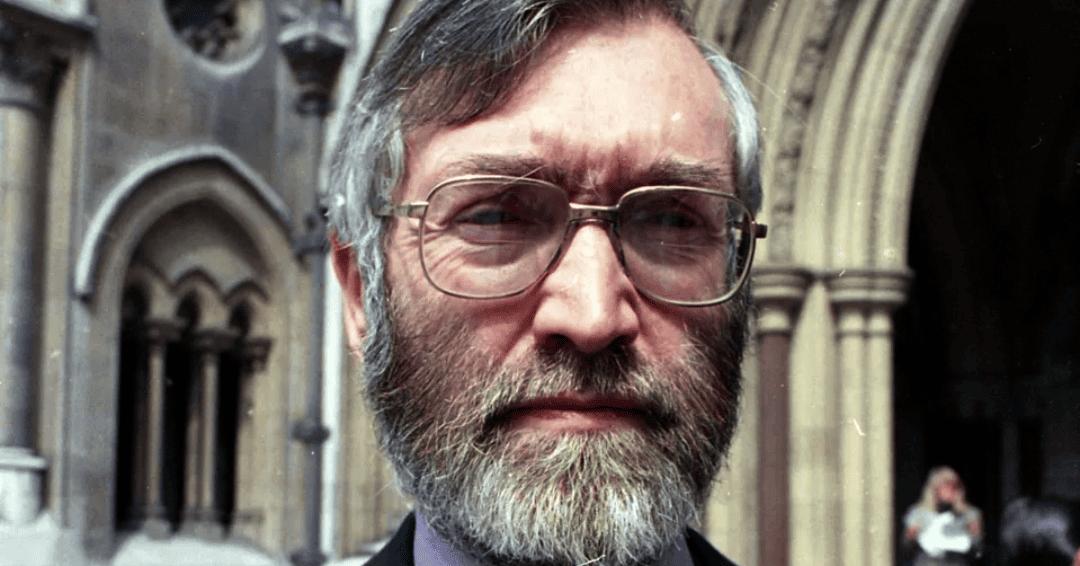
It was forty years ago when the Salisbury Review published Ray Honeyford's polemical article, "Education and Race: an Alternative View". He was a headmaster at Drummond Middle School in Bradford which ultimately closed in 2000. A year afterwards in 2001, the Ouseley Report was published as Bradford went up in flames from rioting. The considered analysis and the brutally violent reality delivered their unambiguous verdict: my friend Ray had observed the problem almost two decades before. For stating the obvious, he lost his job, his safety, and his reputation. He died in 2012.
Ray wasn't writing a manifesto. He was explaining what he saw and what he experienced. His critics deliberately conflated description with prescription; the naturalistic fallacy of confusing what is, with what ought-to-be. His point was simple: sectarianism was deliberately being nurtured and inculcated from an early age, and was in direct conflict with Britannic norms. We now see the fruits of it. The Telegraph published him. As did The Times. Even the infamously-fascist Guardian ran articles reflecting on whether he was correct.
What are we to make of this, from 1984?
But such extremism is becoming the norm. I was recently told by an educational mandarin that, unless I attended a 'racism awareness workshop' arranged by the local authority, I would be deprived of the right to be involved the appointment of staff to my school.
Or this, as the government begins an inquiry into Pakistani rape gangs?
Pakistan is a country which cannot cope with democracy; under martial law since 1977, it is ruled by a military tyrant who, in the opinion of at least half his countrymen, had his predecessor judicially murdered. A country, moreover, which, despite disproportionate western aid because of its important strategic position, remains for most of its people obstinately backward.
There used to be an unspoken understanding about Britain. You could arrive from anywhere on Earth, and many did; but once you were here, you understood something very quickly: this place had its own ways. Its own rules. Its own rhythm. You didn’t demand the country rearrange itself for you.
You learned how it worked and you joined in. You belonged. Not because of paperwork. Not because of slogans. But because you took part.
You worked. You spoke the language. You accepted the law as it stood. You understood public life in Britain ran on shared norms older than any of us and sturdier than most governments.
That understanding has frayed.
For years, the country was told a comforting story: integration would happen naturally if we never asked for it, importing labour would fix demographic problems, and any awkward questions about cohesion were best left unasked for fear of sounding unkind.
But welfare states are not powered by kindness. They are powered by contribution and incentives. Societies are not held together by good intentions. They are held together by shared expectations.
Across Europe, governments are now openly wrestling with a problem which was once whispered about. In Denmark, integration is tied firmly to work, language, and civic participation.
In the Netherlands, welfare access and residency expectations are increasingly linked to contribution.
In Sweden, years of strain on housing, schools, and policing have forced a national rethink about how quickly newcomers must enter the labour market.
The debate there is not about hostility. It is about sustainability. Because the arithmetic is simple. If large numbers of working-age people, mainly men, do not work, the system buckles.
If parallel lives develop, trust erodes. If public authorities are afraid to enforce the same standards everywhere, the rule of law becomes selective. And once rules become selective, they stop being rules at all.
Britain and the liberal elites mistake (if it was a mistake) was to treat integration as optional and contribution as desirable rather than essential.
That is how you end up with communities living side by side but not together.
That is how you end up with schools, councils, and police forces treading carefully where once they stood firmly.
That is how you create resentment among those who feel they are carrying a system which others simply inhabit.
Britain has absorbed small numbers of different races, faiths, and cultures for centuries with remarkable ease. The shear numbers now however, and the culture and rivalries they bring with them is changing the United Kingdom beyond recognition.
This group do not accept how Britain works in public life. Speak English. Work. Respect free speech. Accept the law outranks every belief. Understand teachers teach, police police, and elected officials govern without fear of street pressure.
That is not oppression. That is the minimum requirement for a functioning country. A welfare state cannot survive if contribution is optional. A society cannot survive if belonging is optional.
Which is why the phrase so unsettling to polite conversation is also the simplest one to understand: join, or leave.
A country where everyone belongs, works. A country where many simply reside, does not.
Editor's note: Honeyford's article is a fascinating historical document for another interesting reason: it captures the hideous emergence of critical pedagogy in the British education system and links it to malign influence of Herbert Marcuse alongside the rise of radical critical race theory in American academic culture.
He notes Chris Mullard, Caribbean immigration, and militant radicalism festering in Haringey:
Now the writer of that is not some insignificant devotee of Marcuse spitting out his hatred of the white establishment. He is, in fact, a lecturer in education in the University of London. As such he is accorded expert status. He is influential in the training of teachers, and his views are respected by local education authorities.
The Stalinist dogma underpinning contemporary DEI, and the disastrous substitution of classical education for Paolo Friere's catastrophic "modern" Marxist doctrine, is outlined in demands from radical pressure groups:
'All teachers, especially those like Mr Honeyford, should be compelled to attend massive [sic] in service training courses to bring them up to date with modern education theory, and practice, and to purge them of their racist outlook and ideology. Teachers who refuse to adapt their teaching and go on in service training courses should be redeployed or retired off [sic] early. School books with a racist content ... should be scrapped.