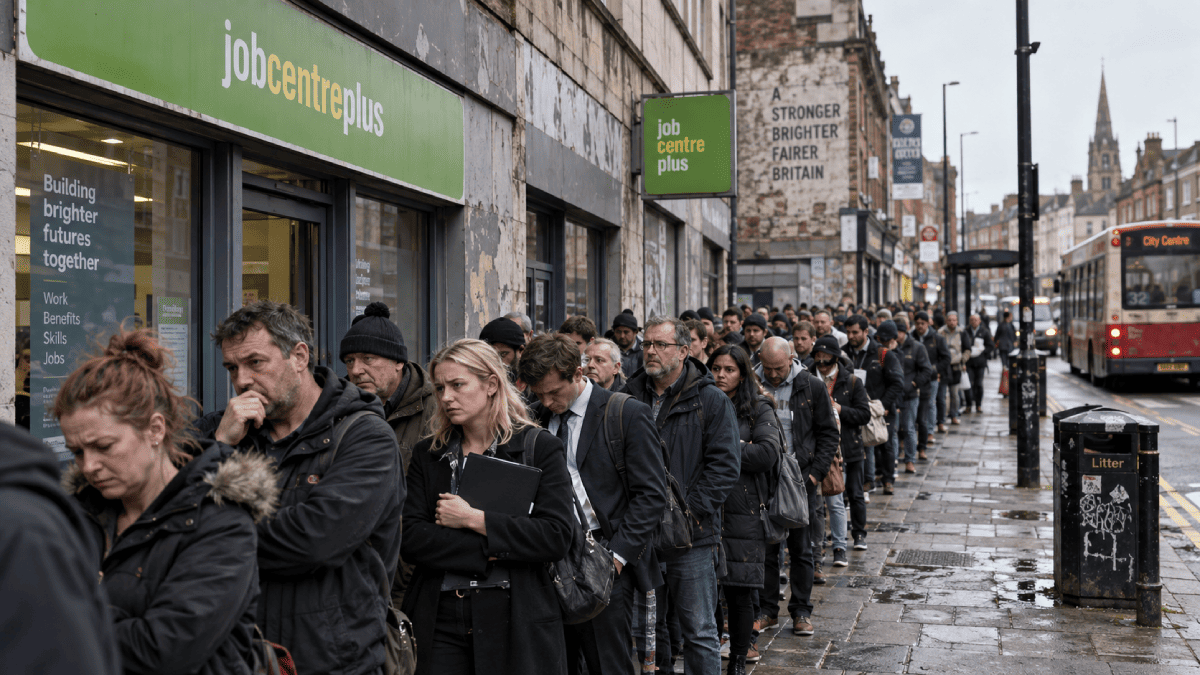
Why Britain's Pit Villages And Seaside Towns Never Recover
Easington's pit closed in 1993. Thirty-three years on, the village sits at the bottom of England's rural rankings while Westminster sells population growth as prosperity. Theft, heroin, failing schools, punishing power bills, and a tax trap on low pay keep Britain's poorest places poor.

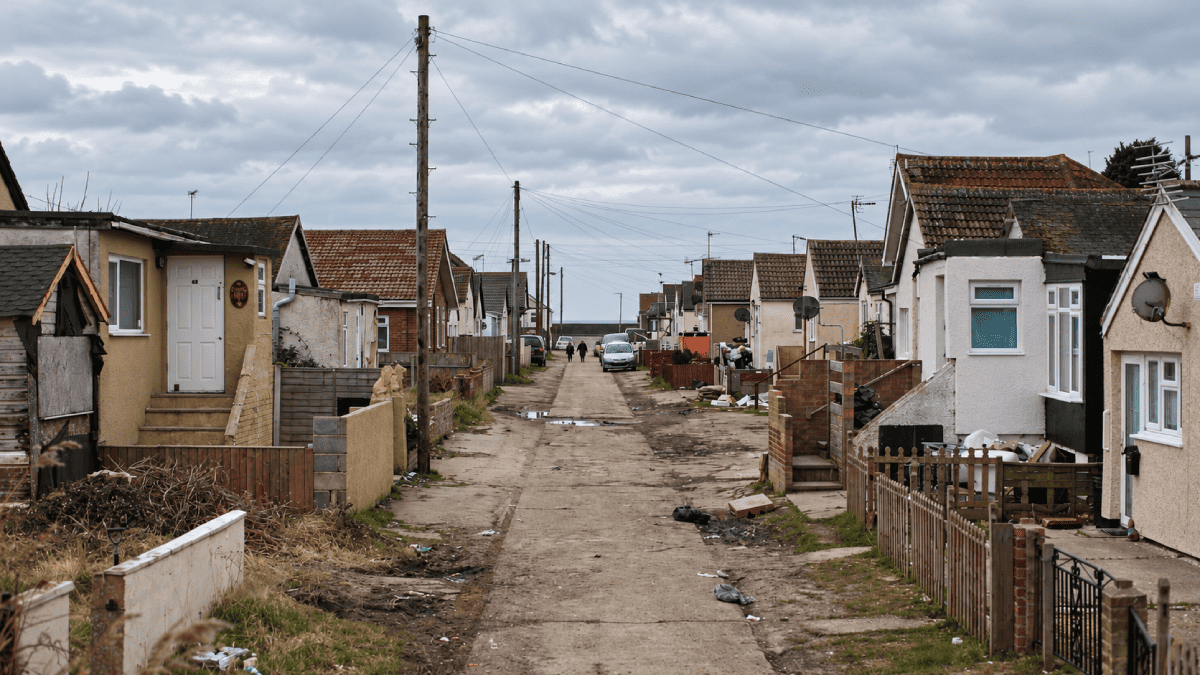
In May 1951, an explosion deep beneath the Durham coast killed 83 people at Easington Colliery. The village buried its men, and the next shift went down. Coal was the reason the place existed: the terraces, the miners' welfare, the apprenticeships passed from father to son, and the wages which kept three cinemas and a row of bank branches in business.
In May 1993, the pit closed and around 1,400 jobs went with it. The cinemas are gone, and so are the banks.
By 2018, more than half the shops on the main street had shut, reporters counted 61 boarded-up properties, and terraced houses built for miners were selling for £30,000, many of them bought by landlords who never set foot in the village.
A man who spent 30 years underground put it in a sentence, which the figures back up:
This colliery village is on its knees.
In Easington, 27% of working-age residents claim out-of-work benefits, more than double the average for England and Wales. Some 15% claim disability benefits, against 7% nationally. On the census measure, 61% of households are deprived, against 48% nationally. In 2025, the government ranked the neighbourhood of Easington and Hawthorn 41st most deprived of 33,755 in England, the worst of any rural area in the country.
A miner who walked out of the gates in 1993 is now an old man. His children grew up in the wreckage. His grandchildren have never known the village as anything else. Thirty-three years is long enough to raise two generations, and long enough for any government serious about recovery to have achieved it.
None did.
Britain's poorest places did not run out of money.
Westminster, under every party, made a series of choices: to tolerate crime, neglect schools, price electricity beyond reach, ration housing, and take more from a low earner's extra pound than from a banker's. Each of those choices has victims, and the victims live in the same few hundred streets.
13 Million Are Severely Poor In Britain
By the International Monetary Fund's reckoning, Britain runs the sixth largest economy on earth. The Department for Work and Pensions nonetheless counted 13.4 million people in relative poverty after housing costs in 2024/25, including 4.03 million children.
Both facts survive side by side because Britain measures its success with the wrong number. Total GDP flatters any government which grows the population: add a million people and the economy gets bigger, even if each of them ends up poorer. GDP per head tells a family whether life is improving.
| Period | Headline real GDP | Real GDP per head |
|---|---|---|
| Calendar year 2023 | +0.1% | −0.7% |
| End 2019 - mid-2024 | +2.9% | −0.6% |
Sources: Resolution Foundation and the Office for National Statistics.
The ONS tied the gap to the fastest population growth in more than 75 years, driven by immigration from outside the EU. That is not a partisan statement. It is the ONS position.
Net migration added roughly 2.7 million people in the four years to June 2025, more than twice the population of Birmingham. A chancellor can import a second Birmingham, watch the economy swell, and call it growth.
A TUC analysis of ONS earnings data found real pay in 2024 still below its 2008 level in 212 of Britain's 340 local authorities. Before the crash, real weekly pay grew by an average of 1.7% a year. Since then, it has averaged minus 0.2%.
The Centre for Economics and Business Research now expects Britain to fall to 21st in the world for GDP per head in 2026.
A country can be enormous and still skint.
Where Do The Poorest People Live?
Poverty in Britain is not spread thinly. It pools in former pit villages, mill towns, fading resorts, and border hamlets, and it stays there.
| Place | Measure | Figure |
|---|---|---|
| Easington and Hawthorn, County Durham | Deprivation rank of 33,755 English neighbourhoods (IMD 2025) | 41st, worst of any rural area |
| Blackpool | Working-age residents involuntarily excluded from work (IMD 2025) | 26.0%, highest in England |
| Middlesbrough | Residents in income deprivation (IMD 2025) | 37.5% |
| Burnley | Average weekly workplace pay, 2025 (Centre for Cities) | £616.60, against £757.50 for the UK |
| Cymer 2, Neath Port Talbot | Position in Wales since 2005 (WIMD 2025) | Among the 50 most deprived in all six indices |
| Creggan, south Armagh | Income deprivation of 890 Northern Irish areas (NIMDM 2017) | 1st |
Of the English neighbourhoods in the most deprived tenth in 2019, 82% were still there in 2025. A child born in the Welsh village of Cymer in 2005 has reached adulthood without once seeing their neighbourhood leave Wales's 50 most deprived.
Of England's 20 most deprived rural areas, 14 are former mining communities, and eight are in County Durham alone.
Behind Blackpool's illuminations stand tall Victorian guesthouses which Lancashire mill families once packed every summer.
Many are now bedsits.
In 2021, England's Chief Medical Officer reported on cheap, poor-quality rooms in former guesthouses drawing vulnerable people, many with complex health needs, into coastal towns from elsewhere in Britain.
Seven of England's ten most deprived neighbourhoods are now in Blackpool.
Warehouses Where The Pits Stood
Something did replace coal, and it pays less. Across Britain's former coalfields, warehousing and wholesale employed 176,000 people in 2022, up 62,000 in a decade and accounting for nearly 30% of all new jobs. Full-time median hourly pay for coalfield residents sits at 94% of the British average for men and 93% for women.
There are 57 employee jobs for every 100 working-age residents, against 73 nationally and 88 in the big regional cities. More than half of employed residents do manual labour.
A hewer at Easington had a trade, a union, a pension, and a standing in his community. A picker in a distribution shed has a scanner, a shift pattern, and a target. Both count as employed in the government's figures. Only one could buy a house on a single wage.
The promise made to these villages in the 1980s was simple: cut taxes at the top and the wealth will find its way down.
It never arrived.
David Hope and Julian Limberg of the leftist London School of Economics studied the reality of major tax cuts for the rich across 18 OECD countries between 1965 and 2015. The top 1% captured a bigger share of national income. Growth and unemployment did not move.
Sheffield Hallam University estimates 790,000 incapacity claimants across Britain are in truth hidden unemployed: people who would be working if the jobs existed.
Benefits pay the gas bill in Easington. They have never bought anyone a house, built a business, or sent a child to university.
A village living on transfers from London stays precisely as poor as the transfers allow.
Every Bright Child Has To Leave
The cruellest fact about these places is what success looks like. Only 34% of working-age coalfield residents hold a degree, against 44% across Britain and 59% in London. Young adults already make up a shrinking share of the population, and the over-65s a growing one. Sheffield Hallam puts it down mainly to the young and qualified moving away.
Around 350,000 more people commute out of the coalfields each day than commute in. And understandably so.
For a family in Easington or Cymer, a clever child is a blessing and a farewell. The schoolboy who gets his grades will probably raise his own children a hundred miles away, visiting at Christmas, while his parents grow old in a village with fewer young people every year.
Education rescues the individual and drains the place.
When Halewood Academy's sixth form closed in 2016, Knowsley, one of the most deprived boroughs in England, was left with no school offering A-levels.
Nearly a decade later, ministers told Knowsley's MP its students "can, and do" study A-levels in St Helens and Halton, with subsidised transport for those living more than a mile and a half from campus.
In 2024/25, just 79 students finished 16 to 18 study in Knowsley's own schools and colleges. Three had entered A-levels. Any teenager in Huyton hoping to become a doctor starts with a bus out of the borough.
In Blackpool, the average GCSE Attainment 8 score in 2025 was 37, against 43.8 for England.
A child in a poor town is told education is the way out, then handed a school which cannot provide it.
Aylesham Got Out, Maerdy Did Not
Not every pit village is doomed, and the exceptions are instructive. Sheffield Hallam compared four former mining villages using census and benefits data.
| Village | Employment rate, ages 16 to 64 | Claiming out-of-work benefits |
|---|---|---|
| Aylesham, Kent | Above the national average | Not published; economic inactivity below the national average |
| Easington, County Durham | 68% | 27% |
| Maerdy, Rhondda | 53% | 38% |
| England and Wales | 71% | 13% |
Source: The State of the Coalfields 2024.
The coalfields which have fared best since the pits closed are Kent, South Derbyshire and North West Leicestershire, Lothian, South Staffordshire, and North Warwickshire.
Kent and South Derbyshire each grew their jobs by roughly a third between 2012 and 2022. Durham managed 3%.
Every one of the better performers sits within reach of a big city or a motorway hub: London, Birmingham, Edinburgh, or the East Midlands.
Easington and Maerdy sit at the end of the line.
Geography decides a great deal, and the remedy for bad geography is transport, cheap land, cheap power, and permission to build. Westminster has rationed all four.
Crime Tolerated Is Prosperity Forfeited
No poor town has ever grown rich while its high street was being stripped. Police in England and Wales recorded 529,994 shoplifting offences in the year to June 2025, the highest since current recording began in 2003. Fewer than one in five were solved, and police figures are thought to capture only around 5% of what is actually taken. A 4% dip to 507,086 offences in the year to March 2026 was greeted with something short of relief.
In Knightsbridge, theft is an insurance claim.
In a pit village, it can mean the end of the last chemist and the last newsagent.
Shopkeepers raise prices to cover losses, and the people least able to pay those prices are the ones left buying from them. Middlesbrough's own community safety plan records Cleveland as having the highest crime rate in England and Wales.
Few investors build a factory, and few graduates come home, where the police appear to have given up.
Tolerance of crime reached its most grotesque form in the grooming gang scandal. Baroness Casey's national audit, published on 16th June 2025, found clear over-representation of Asian and Pakistani heritage men among suspects in local data from Greater Manchester, West Yorkshire, and South Yorkshire. The Home Secretary told the Commons Casey had found organisations avoiding the subject altogether "for fear of appearing racist or raising community tensions".
Those three police forces cover Rochdale, Oldham, and Rotherham, towns with deep deprivation of their own. Girls in poor towns were abused while officials worried about appearing "racist".
A state which cannot protect a child in Rochdale has no standing to lecture anyone about deprivation.
Heroin On The Promenade
A record 5,565 deaths related to drug poisoning were registered in England and Wales in 2024, the highest since records began in 1993. Many occurred in earlier years and waited on inquests, but the rate has more than doubled since 2012.
The North East, home to Middlesbrough, Hartlepool, and the Durham pit villages, registered 167.6 deaths per million, against 66.3 in the East of England. Scotland recorded a further 1,017 drug misuse deaths in the same year.
By 2020, Blackpool had recorded the highest drug misuse death rate of any local authority in England and Wales in every year since 2009. When the ONS mapped heroin and morphine deaths, six of the ten worst areas were coastal holiday resorts.
Every overdose leaves a family behind it: a mother identifying a son, grandparents raising children whose parents cannot, a funeral paid for out of savings nobody can spare.
Open dealing in a seaside town is treated as a fact of life. In a Surrey village, it would be a national emergency.
Drugs drain the money, the labour, and the hope out of every street they reach, and the towns which tolerate dealers stay poor.
Gas-Priced Power And A Tax On Every Kettle
Britain's industrial villages were built on cheap energy, much of it dug by the men of Easington. Today, Britain has the highest industrial electricity prices of any International Energy Agency member reporting figures for 2024, and the highest domestic electricity prices before taxes.
Gas still sets the wholesale price of power through a marginal pricing system, so the cost of gas, much of it imported, decides what every household and factory pays.
Nissan said energy prices made its Sunderland plant its most expensive in the world.
A parliamentary committee warned high electricity costs were forcing the closure of production sites and the loss of skilled jobs.
County Durham, Teesside, and South Wales cannot win back heavy industry while power costs roughly four times what American or Canadian rivals pay.
A country which sat on coal for three centuries has made its former coalfields pay some of the dearest electricity bills in the developed world.
A Planning Law From 1947 Still Rationing Homes
The disastrous socialism of the Town and Country Planning Act 1947 gave councils discretion over almost every new building in Britain. This catastrophic system has left the country 4.3 million homes short of the European average.
Scarcity drives rents, and rents drive poverty: government analysis shows more than 70% of children in relative low income live in rented homes.
In prosperous areas, rationing prices the young out of the places where jobs are growing.
In poor ones, cheap property becomes a dumping ground.
The Chief Medical Officer's report linked the oversupply of guest housing to houses in multiple occupation concentrating deprivation and ill health, and found coastal areas had 15% fewer consultants and 7.4% fewer nurses per patient than the national average, despite higher need.
Easington's colliery houses went the same way, sold off to distant landlords after the pit closed.
Welfare Fines The Poor For Working
Since 2021, Universal Credit has been withdrawn at 55p for every extra pound of take-home pay above a claimant's work allowance. Add the repulsive theft of income tax and National Insurance, and a claimant earning above both the work allowance and the tax threshold keeps about a third of each additional pound.
| Extra £1 earned | Amount |
|---|---|
| Income tax at 20% | 20p |
| Employee National Insurance at 8% | 8p |
| Withdrawn (55% of the remaining 72p) | 39.6p |
| Kept by the worker | 32.4p |
Combining tax with benefit withdrawal, a warehouse worker in Durham taking an extra shift can face an effective marginal rate of 67.6%.
A banker's bonus is taxed at 45% plus 2% National Insurance.
The two deductions work differently, but the worker loses the money just the same. Rishi Sunak, cutting the taper from 63%, called it a tax on work, and he was right.
It remains one.
A country which wants its poorest people to get rich cannot take two-thirds of every pound they earn on the way up.
Flooding Poor Estates With Third Worlders
Immigration, in and of itself, did not close the pit at Easington or empty the guesthouses of Blackpool. The rot in the coalfields is homegrown, and its demographic damage comes from departures: the young leaving, the old staying, and the sick stranded. Where immigration does bite, the poorest places carry the weight.
Dispersal accommodation, introduced under the Immigration and Asylum Act 1999, is bought where housing is cheapest, and research shows it reduces the supply of rental homes and pushes up rents in disadvantaged areas.
Whitehall chooses the poorest streets, then wonders why they are angry.
The government's own Migration Advisory Committee found evidence in 2018 of migration reducing earnings growth for the lower paid while raising it for the higher paid, and recommended restricting lower-skilled migration.
In the old mill towns, earlier waves of immigration arrived to work in textile mills which then closed.
Official figures show 72% of Pakistani and 75% of Bangladeshi households sit in the poorest two-fifths of the income distribution after housing costs.
Settling newcomers in towns whose industry was already dying produced poverty which has outlasted the mills by decades.
Above all, mass immigration supplied the statistical cover. Headline GDP rose because the population did, and the per-head stagnation stayed buried beneath it.
Every chancellor who boasted of "growth" in these years was quoting a number swollen by new arrivals, while Easington saw nothing.
Bad Money After Bad
Between 2011 and 2020, the government committed around £18 billion to policies meant to stimulate local economic growth in England. The National Audit Office found those policies were not consistently based on evidence of what works, and the department responsible had previously planned no evaluation at all of the £12 billion Local Growth Fund.
Towns received new civic squares, refurbished bus stations, and glossy brochures. Whitehall rarely troubled itself to find out whether anyone in them got richer.
Easington got a nature reserve on the old colliery site and a cleaned-up coastline. Both are pleasant.
Neither employs 1,400 people.
Make the Poor Rich, As Fast As Possible
Nobody in Britain should be in penury even if we will always have the poor, and nobody should have to wait another 33 years for any kind of prosperity. The cure is to strip away the costs and dangers loaded on to the poorest households, then let their own work make them prosperous.
Government cannot generate wealth. It can only get out of prosperity's way and suppress crime.
Poverty does not create crime. It is precisely the inverse; crime creates impoverished areas which more crime then flourishes in.
- Grooming gangs shielded by official cowardice need prosecution without regard to the ethnicity of offenders, and dismissal for any official who looks away.
- Unpunished theft and open drug dealing needs visible policing in the most deprived towns, every evidenced shoplifting case pursued, and dealers treated in Blackpool as they would be in Kensington.
- Schools which cannot offer a route outneed a legal duty to provide A-levels in every borough, and the best teachers paid to work where the need is greatest.
- Villages cut off from growing cities need fast, cheap transport links from former coalfields to the nearest big job markets.
- Electricity priced off imported gas needs policy costs stripped from bills, the gas link to power prices broken, and nuclear and offshore generation built at speed.
- Rationed housing and rotten bedsits need a real zoning system to replace case-by-case planning, and rogue landlords and houses in multiple occupation closed down.
- A 67.6% effective rate on low-paid work needs a sharp cut to the Universal Credit taper and higher thresholds for tax and National Insurance.
- Asylum housing dumped on the poorest streets needs to be replaced with a strict population-based sharing across every council, wealthy ones included – if not a complete shutdown of all non-spousal immigration.
- Growth figures inflated by population need replacing with GDP per head and median real income (published for every local authority) as the only test of any policy.
None of these reforms is a new benefit. Some cost money, and all of it would be better spent than another ribbon on another civic square. Each takes something off the backs of the poor: a cost, a fear, a trap, or a flattering statistic.
The miners who walked out of Easington Colliery in May 1993 were told the market would provide. Then they were told the state would.
The market doesn't care about winners, losers, or poverty. Miners understand that too. They just want to be able to take part and win at it.
The state can't produce.
Their grandchildren are entering adulthood now, in a village where terraced houses have sold for £30,000, and in a coalfield where warehouses have supplied nearly a third of new jobs. Some will stay and struggle. The brightest will pack a bag and go.
Easington does not need its pit back. It needs a reason for the next generation to stay: safe streets, a school worth attending, power it can afford, homes it can buy, and the right to keep what it earns.
We can build it.
Britain had the wealth to give it all of those things in 1993. It has the wealth now. What it has never had is a government willing to treat a pit village as though its people were worth making rich.