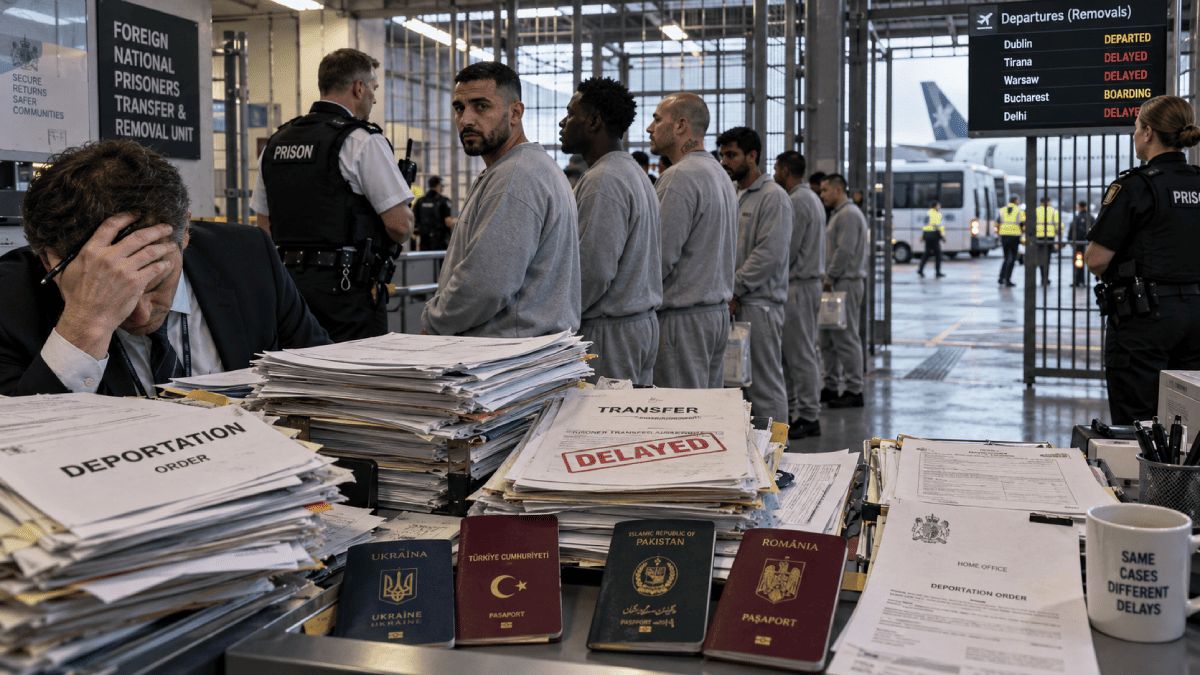
The Restorationist Turns 1
Our first year produced 315 multi-thousand word essays for 3860 subscribers, no matter what storms came. A sincere thank you from the bottom of our hearts to all of our readers and contributors. For sticking with us and standing up for us. Now it's time to go somewhere very different.


A doctrine is emerging. Those are the words I spoke on the phone to a well-known British national figure some few weeks ago. You would not believe me if I showed you who it was. Not an ideology. A diagnosis, with an accompanying prognosis. The former precipitates the latter. Ideology is uncertain conjecture and speculation; doctrine means the certainty of organised teaching and instruction. Unexpected people read this little magazine, and study it.
It starts with diagnosis in the years after Victoria died where the state (under liberal party ministers Campbell-Bannerman and Asquith) took over school meals, pensions, child custody, employment matching, mutual insurance, and mental asylums. Within a decade an emergency state had militarised the nation; conscripted teenagers to early death, banned the movement of people; licensed recreation, farming, firearms, and drugs; then restricted private rent payments. By 1925, the state (under Lloyd-George, Law, Baldwin, and MacDonald) had also put itself in control of maternity, the health system, housing, all transport, electricity, road use, railways, local constables, and broadcasting. It had also crashed the economy.
It's horribly clichéd and Californian to describe something as a "journey." Perhaps the road from the original idea of the Restorationist around April 2025, to where we are now in July 2026, is more appropriately described as the interrogation and discovery phase surrounding a crime scene. A year in English terms is a blink, even if it is a lifetime in Silicon Valley or Grand Cayman.
As our founding page cites:
Until August 1914 a sensible, law-abiding Englishman could pass through life and hardly notice the existence of the state, beyond the post office and the policeman. He could live where he liked and as he liked. He had no official number or identity card. He could travel abroad or leave his country for ever without a passport or any sort of official permission. He could exchange his money for any other currency without restriction or limit. He could buy goods from any country in the world on the same terms as he bought goods at home. All this was changed by the impact of the Great War. The mass of the people became, for the first time, active citizens. Their lives were shaped by orders from above; they were required to serve the state instead of pursuing exclusively their own affairs.
— A.J.P. Taylor
Taylor's insight was brilliant. It absolutely is a crime scene. Something went terribly, terribly wrong at the turn of the last century – beyond the Great War – and it was never resolved. Something awful and sinister which was haunting our country took much deeper root on the backs of 880,000 dead as the empire reached its geographical peak. It was characterised by the rise of the disastrous House of Windsor, which itself started with the first socialist government before the successor ran away with a mistress.
The decline continued so slowly none of us could see it until now, with the tools we now have to scan the timeline at height.
My own grandmother was born in 1918 and could not have understood the world she had entered even in her forties. Our parents' generations could not see it either, even during their mid-life days in the 1990s. Only now, after the bad fruit of mass house arrest in an Orwellian state, the poorest per-capita GDP, the highest tax burden, the weakest defences, 10.8 million dead children, and uncontrolled foreign invasion, is the root of the rotten tree clear. The gruesome head of a century-old 1.2 trillion pound administrative leviathan has burst out of the nation's chest.
We have been incubating, nurturing, and paying the price of this for 125 years.
It is a year since we published our first article. It may seem nothing to yourself. We are nothing. A mere toilet paper on the dump of history. But it is a far cry from where any of this began. Watching the Grandfather of Restorationism explain the current position of our people in history, and realising he is now far behind the AI-driven data spreadsheets queued up in our inboxes, is a sharp, dual sword. A credit to him, or a sadness to us – neither matters. Our love for him persists and endures.
We now stand on the edge of something different. We have:
- Published 1200+ pages of open source repeal legislation;
- Designed a replacement for the NHS;
- Redesigned the drug regulation framework;
- Designed a replacement for the pension system;
- Published strategic military doctrine;
- And much, much more.
The idea for the magazine, for better or worse, came out of a perfectly reasonable discussion on Twitter about the use of artificial intelligence in lawmaking; between a platform engineer mapping quangos from California, and what appeared to be a well-spoken Cambridge barrister joining the Great British PAC who listed Starkey as his professor. We came to learn he was a brazen con artist. And an exceptionally malicious one, at that.
The premise was enticing and obvious: dissident intellectual minds lacked a central place and a voice; the electorate was missing any kind of place to read long-form deep dives; and a platform was needed to academically attack the bad ideas of the left. I came up with the name, registered it with Nominet, and placed the brand logo on a Ghost demo site to reflect the regal approach I wanted to pursue. It just as well have been named "The Systems Thinker," "The Structuralist," "The AJP Taylor Victorian Liberal," or similar.
There was disagreement even then. We were keen to avoid a Telegraph-style news site as it was too hard to keep up. I did not want the pretentious alternative of curated monthly posts (e.g. idiotic nonsense like "England is under attack") like we were running an art gallery.
Dan and Mark, my two usual teammates, weren't keen and resolved to stay at arm's length for the summer to see how it went. My argument wasn't sophisticated. Let's start with a post a day which is a good deep-dive, and take Sundays off. We aimed to prep twenty-five articles during June 2025, with a suggested soft-launch date of July 4 for the symbolism. Dan offered to contribute pseudonymously as "Oliver Kerr". Mark said he would consider it, but if he did, he would use "Esquire" or "Sir" (he chose "Chris Woodhouse").
The rest isn't quite history, but it started well. Traffic from Twitter/X helped, as a long analysis piece on Hope Not Hate circulated. One article per day, scheduled in advance, with AI to help with the conceptual imagery. The idea was it would always be upstream of whatever was explaining it. The definitive reference.
Some of the articles being submitted struck me as bizarre and needed deeper verification. Skull-measuring, particularly, stood out as rather odd. One on "23andMe'ing a whole nation" was so stupid I regret not blocking it. What became clear was the "contributors" this co-editor was pooling clearly had their own direction in mind. They hated the AI images; they wanted more personal attacks on left-wing groups; they were paying for data about immigrant crime; and they really, really wanted money flowing into the magazine as a think tank NGO which had offshore structuring.
I was never prepared to allow this publication to become a right-wing hate machine. Not out of any sense of moral righteousness, but because it's cheap, childish, and tedious. Go somewhere else and build your own. Anyone on the right could become their own Searchlight if they had an IQ over 90 and a Claude Code subscription.
Their frustration at me refusing to allow them control became palpable. We'd switched on the train and it was already hurtling down the tracks. If the first quarter was about establishing, the second was about destroying.
What we discovered was that co-editor (perhaps better described as a marketing affiliate) was a half-Afghan art student (maternal side) with an adopted accent who had never practised law. Moreover, he was a late-stage alcoholic obsessed with sharing the worst kinds of pornography via a network of several hundred racist sockpuppet accounts on social media, and had an arrest record for stalking and attacking women. Worse still, his own family were involved in legally defending grooming gang perpetrators, and ta a long list of his closest real-life friends contacted our legal mailbox with evidence of his disturbing fetishes, which included strangling.
The true issue wasn't a personal vendetta, despite how repulsive and cringeworthy this person was. He was, and is, radioactive. He could sink the whole ship. Everything we'd built, down the drain. Unless we publicly, unambiguously, and definitely disavowed him in print.
By the time I'd disentangled us as publicly and visibly as possible, the damage from his quite-unbelievable vengefulness was appalling. Our second quarter was dominated by a false storyline "his" website had been "hijacked," vexatious disputes with Nominet to hijack the uk domains, false company registrations, false mass reporting on Twitter/X, and even a spectacularly libelous "dossier" maliciously mass-emailed to thousands of people implying criminality.
Surely enough, Hope Not Hate published their findings, which are entirely true and the conservative, thin end of the depraved wedge. We thank them for it.
The fallout remains live as the Bar Standards Board complete enforcement investigations, where we choose how to then proceed legally. He has used dozens of fake accounts to deplatform any accounts mentioning his track record, plagiarised our material to pass off as his own, and spent a staggering amount of money using services such as Incogni to censor speech about his behaviour – while wearing the skin suit of a "free speech" activist on the desperate climb to influencer fame.
It took weeks to reach out and recruit new writers from our subscriber database, which had been stolen and violated. We completed and published the entire Great Repeal legislation package, and the accompanying book – which keeps needing to be rewritten every month as we add more.
The .uk domain names had to be secured properly as we trademarked the term "Restorationist" and the site URL switched to a .com while we dealt with a fraudulent Nominet reverse hijacking attempt by the aforementioned malicious con artist. Which repeated itself with the UK Intellectual Property Office. All of these attempts were thrown out, with prejudice.
Since January, we have focused on stability, consistency, and integrity. An article a day, for someone to read on the train in to work. A long-form deep-dive. Six days a week (now five, for sanity). It is become immensely clear and invariably found our country's problems are structural.
No more wasting time with social media or entertaining the idea we should cater to a wider audience. Taking the time to do the deeper work, using a series-by-series approach to link the systems together. It has produced some incredible journalism and brought a small team together as fierce intellectual analysts.
But it taught two difficult lessons.
The most difficult was Hope Not Hate aren't necessarily wrong. The right wing of our politics really does give safe harbour to a lot of malicious narcissists with fetishes and prejudices which should bar them from the fame or influence politics might provide.
Even four thousand miles away, I have personally heard well-known faces on our side of the gleefully debate whisper they are "fascist" and happily chatter about mass-expulsions of immigrants or pogroms on Jews. Others I know to share the taste for depraved pornography. Many of these online groups are simply malicious gossip clans attracting fantasists. Politics is merely a way to become a social media influencer.
Second, the right have absolutely no political skill or talent. None. No political ability of any kind, whatsoever. Their flagship policies are so repulsive to the ordinary English voter they have no hope of becoming an electoral force. Even if they weren't, they'd struggle to get the simplest ideas past an opposition party.
I have deliberately kept The Restorationist away from supporting any political party. As I have kept writers away from giving talks or attending events. As I have stubbornly (mostly politely) refused offers of private finance or entanglement with any partisan organisations. I've held back any further movement onto social media or video-based platforms.
But for an even simpler reason: this fledgling publication needed to get to a year old. An infant needs to learn to walk. We had to earn it; deposit before withdrawal. You cannot build a reputation on what you intend to do.
Time was needed to see where this was going, and where we should go next.
The answer is a doctrine is emerging.
Nothing I can see is capable of taking our country where it needs to go. Reform UK are a hopelessly inadequate country club of disaffected Tories; Advance UK is a headless chicken desperate for any kind of membership at all; Restore Britain is a social media rehabilitation of the BNP functioning as a catchment surface for some of the absolute worst characters England has on offer. The silly zero-sum black/white thinking, the crab mentality, and the false dilemma of "civic" and "ethno" nationalism are absurdities we will all be paying for over a long time.
None of them have the deep understanding required to get a grasp on the serious and existential situation our country is in, let alone fix it. The right desperately needs a compact; a set of common policies and principles; and a cartel agreement when learning first-past-the-post game theory.
None of them understand the problem is one of hollowing out. Nor the country being a system-of-systems, or why we do not operate a spoils system which allows the mass firing of officials.
The NGOs are even worse. They range from incompetent, to unprofessional, to cynical.
Starkey's prognosis is correct. Our country may not survive in its current form. In fact, it is my own belief it cannot avoid collapse. It cannot not fail. The British state has been engaging in the CCP practice of stability maintenance for the best part of two decades, if not longer. We no longer are a free country, and a healthy country does not need dark "cohesion" units. We were in an Orwellian society during Thatcher's days.
The cause of our malady is a hydra: financial irresponsibility entrenched as statutory duties; Parliamentary control abandoned to quangos; Orwellian surveillance on every street; ideological stupidity written as legislation.
However, one head stands out as the largest and ugliest, eating all the rest.
During WWII, our political class decided the state was going to rebuild society to save it from the Five Evils of want, disease, ignorance, squalour, and idleness. To do that, it adopted an actuarial model which collapsed twenty years later because of an unforeseen inversion of generational demography, becoming a ponzi scheme. Now our country is flooded with 20 million migrants to pay for the pension dependency ratio of a welfare state which catastrophically failed before the previous three generations were even born. Two thirds of the budget – hundreds of billions of pounds – is still paying for that error every single year.
Ultimately, it was the freedom of information through the Internet which brought down the senile British elephant. Information they couldn't control the distribution of with D-notices sent to friends from Cambridge working at ITV or The Times.
The army top brass is gone. The broadcasters and newspapers are struggling to stay afloat; The Conservative party is gone; the Labour party are going; Reform and the Greens are the spillover.
Once one accepts the Establishment will collapse after its death throes (despite its incredible historical resilience), the question inevitably becomes who will provide the answers and what it will be replaced with. We must be ready with those answers; the solutions to the problem of implosion. Studying the historical problem is useful, but only insofar as it indicates what to do about it.
If we lose a stable government in the next few years, it is only an emergency if no-one knows what to do. We must be the people who are standing ready with the plan.
We have to win the left as well as the right. Politics is about skillful negotiation, because it is only ever a choice between force and negotiation. The British left are snobbish, materially immature in their thinking, and misguided. They are not evil; nor are they stupid. They are tremendous problem-detectors and diagnosticians who are also excellent at communicating in almost religious terms.
"Mass deportations" might be inevitable to deal with our country's insoluble demographic crisis after we have resolved the root of it: immigration to solve the the pensions dependency ratio. Political skill means negotiating that large-scale demographic repatriation program and bringing the left on board with us for it to do it humanely. The sensible British public are never, ever going to vote for jackboots kicking in doors, dragging out crying migrant children into camps.
Which takes us to the question of where next for The Restorationist.
- Building out the broader doctrine and the answers.
- More breakdown projects: party organisation, the Orwellian surveillance state, child poverty mapping, etc.
- Adapting to video: documentary, round-table discussion, and bite-size appetizer clips.
- The Seminary.
We believe we know, approximately, how to replace state pensions and the NHS. We believe we have the substance of military rearmament and AI-based homeschooling networks. These things need to be broken down into larger organised publication: the magazine is producing not merely commentary, but strategy and policy which can be implemented in entire governmental domains. We welcome anyone to join us in that endeavour.
Video is a natural evolutionary progression, and documentary obviously suits the long-form content deep dive. Each series fits a two-hour document. Our side of the debate does not need another Lotus Eaters podcast or Liam Tuffs. There is room for a high-brow, high production value weekly panel discussion of the week's articles and the focus of our current series, whichever it may be in the middle of.
We also welcome anyone to join us in that endeavour: if you would like to produce such a video franchise on our behalf with exclusive trademarked licence, the conversation will be open, warm, professional, and amicable. Let's talk.
But ultimately, what are we writing for?
A podcast? No. A think tank? No. A country club? No.
The Restorationist has always been educational in structure and nature. When the Protestant Reformation ignited, the Catholic Church responded with the Council of Trent 1545 which clarified doctrine and created seminaries (literally "seed-beds") to train clergy.
SEMINARY (Lat. seminarium, from semen, seed), a term originally applied to a nursery-garden or place where seeds are sown to produce plants for transplanting.
Reality means 326 seats. Nothing else matters. 1000 Restorationists for Parliament who are exceptionally qualified, and are able to create ten more Restorationists each. In political terms, the means of production means taking control of the means of reproduction. We need those who can reproduce the doctrine, the thinking, the political understanding, and do it at scale. Not as an intellectual vanguard aristocracy of cigar-smoking think tank types, but an open program with a technological platform.
In the British political system, this pipeline is gate-kept by the Philosophy, Politics, and Economics (PPE) degree at universities like Oxford and Cambridge. This is typically the route to experience as a Parliamentary assistant which leads to selection as a party candidate in a constituency, or a fast-stream career in the Civil Service.
We must open and democratise that pipeline while preserving its intellectual excellence, so there is an alternative which sits outside the system which rivals it. The system cannot fix itself from inside, and nor is it willing to, so it must be outside it by definition.
We have set out how we believe it could work.
Any person with the aptitude must be able to develop political skills and knowledge which are highly respected, without subscribing to the Oxbridge groupthink or the poison of the incumbent uniparty. A bricklayer or a binman must be able to train as an MP. A pilot, a farmer, a founder, a banker, an artist – anyone – must be able to do their own PPE at low-cost, on their own time.
In my mind, The Restorationist would be the official publication of that seminary, developing, publishing, and refining the same intellectual work, backwards and forwards interchangeably.
A political party would be downstream of it. As would everything else (e.g. a video platform, or a black-tie alumni dinner club, which have been suggested before). Once a politically-educated prefect class begin to cross-train fellows, humans self-organise to cooperate in employing such training. Openly, transparently, humanely, and dutifully; in good faith.
The numbers in the British system are set: 650 people are needed for a general election at a cost of £500 each. There are 20,000 broader positions available in local authorities.
No-one was quite sure what would happen if we were still here a year later, producing at the same volume. But, we are. And we have no intention of stopping.
What has happened, over the course of writing those 315 essays and a year of deep research, is we have collectively realised we are living in an ongoing crime scene. It began 125 years ago. It got steadily worse. We can identity the people involved, the laws passed, and the catastrophic effects.
Which may offer the means to lead us out of this darkness. We can reverse it.
The need is obvious: not just the understanding of what went wrong, and of how to fix it; but the means to transmit and reproduce the knowledge itself. There is no point of printing it into a book on a shelf, to be found in seventy years as an antique. A doctrine is live ammunition. We have a vision, and we have a roadmap. What's needed now is practitioners and evangelists. For that, we need seminaries.
It has been our honour to serve you this last year. We hope to serve you for many years to come. Please accept our sincerest and most heartfelt gratitude for your attention, your time, and your affection. We hope to meet your expectations as we grow, build, and run.
I am Yours, ever faithfully,
Alex
Restorationism is somewhat new. The conservative, conserves. When there is nothing left to conserve, because what has decayed has all been consumed by rats, the only course left is to restore and renew.
Therein lies the confusion. We are not conservatives, because there is nothing left to conserve. We are not far-right, because we reject authoritarianism. We are not libertarian, because we recognise the structural importance of authority. We are not right, as we want change. We are not left, because we believe change has gone too far. We are not progressive, as we do not want more "progress" towards and over the moral cliff. We are not centrists on the typical fence, because we want action. But we do not want action which is too strong or extreme, which means we are not far or hard on either spectrum.
We are simply, English.
English in the Victorian liberal sense. The laissez-faire species.
We define English as evolutionary and self-correcting. A sensible high-trust people who value the virtue of order but celebrate the chaotic dissent which de-ossifies what imprisons over time. The mutual society; the friendly society; the building society; the grammar school; the parish constable; the lay magistracy; the almshouse; the country house; the lawn; the noose; the public library; the radar tinkerer; the men who accidentally built Hong Kong.
Imperfect. Flawed. Messy. Draft status, hoping to improve. Self-correcting.
The country where the 18 year-old author of Frankenstein; or, The Modern Prometheus grew up with a mother who founded feminism and a father who midwifed romantic poetry. The land of the Sex Pistols whose infamously-traditional army adopted the gay singer of Queen as their beloved mascot.
Self-defining. Self-correcting.
None of this is nostalgia. The English are defined by our lack of need for government, because of our respect for it. The founders of America wrote down who they were as Englishmen. Every one of the world's most prosperous countries derived their formula from a small, ugly, grey archipelago opposite France. The founder of Singapore, arguably the world's most successful country, based his entire blueprint on it.
We are not grandiose people. We are the allotment shed people; the pub sort. We do not seek day-long awards ceremonies, plastic surgery, trillion-dollar valuations for Mars missions, or missile parades with flags. Our small village lives are simple: family, children, church, food, newspapers, stories, lineage, machines, libraries. We are exceptional because we're not. We built trains for ordinary boring purposes. so we could get from A to B. Every invention has a dull, boring explanation to be told over the local tavern fireplace.
England is not the land where people boast of traveling to other planets. They do it accidentally.